
Argentina:
Energy, Mining,
Agriculture
and Trade
Argentina entered 2026 with lower monthly inflation, positive GDP growth and a strong goods-trade surplus. Its long-term market position rests on Vaca Muerta, mining, agroindustry, manufacturing and services, while exchange-rate management, financing, provincial rules and execution continue to shape company risk.
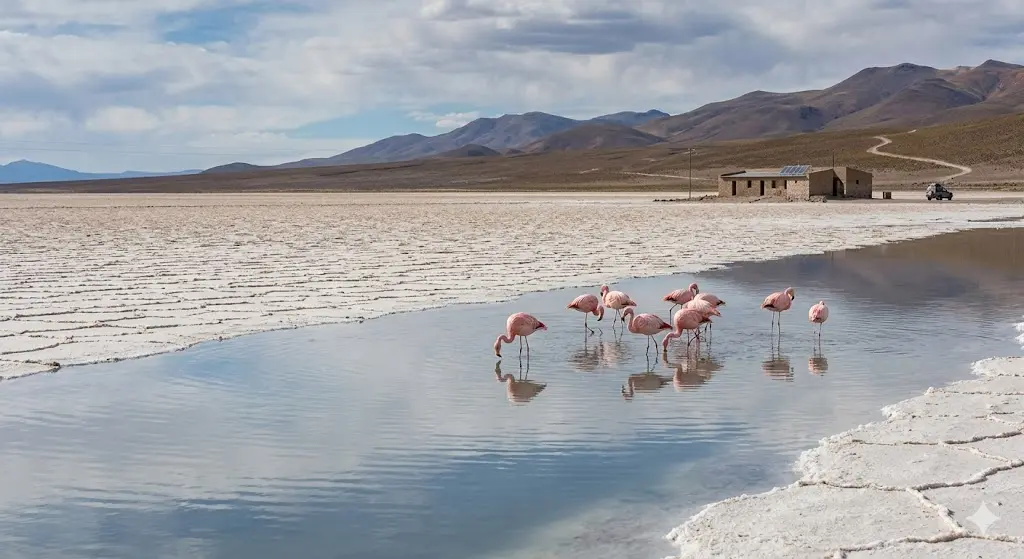
Argentina is in a stabilization and export-expansion phase, but it is not a uniform low-risk market.
GDP increased 2.0 percent year on year in Q2 2026, but declined 0.6 percent from Q1 on a seasonally adjusted basis. Monthly inflation was 1.7 percent in August and the goods-trade surplus reached USD 18.249 billion between January and August.
The durable market case rests on Vaca Muerta, mining, agroindustry, manufacturing and knowledge services. Soy remains one of the clearest examples of the country’s combined agricultural, industrial and logistics scale: August 2026 soybean crushing reached 4.252 million tonnes, while the first-half soybean complex registered 13.7 million tonnes of DJVE export commitments. See Who Controls Argentina’s Soy Export Industry?.
The main company-level constraints remain exchange-rate rules, financing, provincial governance, infrastructure, labour conditions, regulatory continuity and project execution.
Current Argentina snapshot
Argentina’s 2026 profile should be read through current indicators rather than through a permanent-crisis template.
| Indicator | Latest value used | Market reading |
|---|---|---|
| Population | 46,466,688 projected for July 1, 2026 | Large national market with strong geographic concentration and provincial differences. |
| GDP | +2.0% y/y and -0.6% seasonally adjusted q/q in Q2 2026 | Output remained above a year earlier, but the quarterly contraction shows that the recovery path is uneven. |
| Consumer inflation | +1.7% m/m in August 2026 | Substantially lower monthly inflation, while pricing and contract indexation remain relevant. |
| Unemployment | 7.9% in Q2 2026 | Macroeconomic stabilization has not removed labour-market weakness. |
| Goods trade | USD 18.249bn surplus in January–August 2026 | Exports rose strongly year on year while imports remained below the same period of 2025. |
| Economic activity | EMAE +0.8% y/y in June 2026 | Activity remained positive, but the pace and sector composition were uneven. |
| Manufacturing | IPI manufacturing -5.0% y/y in July 2026 | The July reversal underlines that macro stabilization has not produced a uniform industrial recovery. |
| Mining production | IPI mining +3.7% y/y in July 2026 | Mining continued to expand even as manufacturing weakened, reinforcing the divergence between sector cycles. |
Core reading: Argentina’s national indicators matter, but sector economics, provincial regulation, infrastructure and access to foreign currency often decide whether an individual project, supplier strategy or commercial plan works.
Macroeconomy and exchange-rate environment
Argentina entered 2026 with a different macroeconomic profile from the high-inflation regime of 2023 and early 2024. In Q2 2026, GDP was 2.0 percent above the same quarter of 2025 but fell 0.6 percent from Q1 on a seasonally adjusted basis. Monthly inflation slowed to 1.7 percent in August and the country continued to generate a large goods-trade surplus.
The recovery is not complete. Unemployment reached 7.9 percent in Q2 2026. The labour-market data therefore remain weaker than the disinflation and external-trade indicators, and company-level demand conditions still vary sharply by sector and region.
The latest available activity data show a mixed economy rather than a uniform recovery. INDEC reported that the EMAE increased 0.8% year on year in June 2026. In July, the manufacturing production index fell 5.0% year on year, while the mining production index increased 3.7% year on year.
Argentina has operated an exchange-rate band regime since April 2025. From January 2026, the monthly movement of the upper and lower limits is tied to the latest available monthly inflation figure with a two-month lag.
This is more precise than describing Argentina simply as a capital-controls economy. Companies must still evaluate foreign-trade settlement rules, payment timing, access to foreign currency, import procedures and contract currency on a transaction-specific basis.
Argentina’s macro regime improved, but sector economics and foreign-exchange execution still determine the commercial result.
Trade and EU-Mercosur
In August 2026, Argentina exported USD 8.883 billion of goods and imported USD 6.696 billion, producing a monthly surplus of USD 2.187 billion.
Across January–August, exports reached USD 67.248 billion and imports USD 48.999 billion, producing a cumulative goods-trade surplus of USD 18.249 billion. Brazil remained one of Argentina’s central trading relationships, while the overall external balance continued to provide an important stabilizing layer.
EU-Mercosur changed from negotiation to provisional application
The Interim Trade Agreement was signed in Asunción on January 17, 2026. It has applied provisionally between the European Union and Argentina since May 1, 2026.
The practical company questions now concern tariff schedules, rules of origin, agricultural quotas, product standards, public procurement, customs implementation and sector-specific transition periods.
On October 1, the Agriculture Secretariat reported that agroindustrial exports to the EU reached USD 1.922 billion during the first four months of provisional application, 21% above the average for the same May–August period of the previous three years. Products covered by tariff reductions recorded a 44% increase in export value relative to that benchmark.
For European companies, the agreement does not eliminate the need for local analysis. It makes product classification, origin, partner structure, customs procedures and Argentine market conditions more important because preferential access must be implemented transaction by transaction.
Energy and Vaca Muerta
Vaca Muerta is the core of Argentina’s energy and industrial-expansion story. The national government describes it as the world’s second-largest unconventional gas resource and fourth-largest unconventional oil resource, with 31 companies holding positions.
For industrial suppliers, however, the market is not accessed through one Vaca Muerta procurement system. Econosur’s European Suppliers in Vaca Muerta report maps how 24 European supplier cases reach demand through operators, EPC contractors, engineering firms, integrators, distributors, project companies and local service platforms.
The market structure extends far beyond upstream production:
Oil and gas operators
YPF, Vista Energy, Pampa Energía and Pluspetrol represent different ownership, capital-market and integration models.
Pipelines and export systems
Oldelval, Gasoducto Perito Moreno, regional gas pipelines and VMOS determine how quickly production becomes marketable.
Chile and Brazil
Gas exports and cross-border infrastructure connect Neuquén production with industrial and power demand beyond Argentina.
Power, LNG and fertilizers
Generation, Southern Energy LNG and Fértil Pampa show how gas can be converted into electricity, exports and industrial products.
Vaca Muerta’s export geography is also becoming a two-coast system. The revived Trans-Andean oil route gives Neuquén a working Pacific outlet through Chile, while VMOS and Argentina LNG keep the larger-scale export build-out focused on Río Negro and the Atlantic. See Econosur’s Vaca Muerta Pacific Route analysis.
Mining: gold today, lithium growth and copper’s next cycle
Argentina’s mining profile is broader than lithium.
Mining exports reached USD 6.073 billion in 2025. Gold accounted for 67.4 percent of the total, lithium for 15.1 percent and silver for 12.9 percent.
The government reported that four lithium projects entered production during 2024 and 2025, bringing the number of producing lithium mines to seven.
Lithium procurement is also project-specific. Econosur’s Rincón vs. Sal de Oro procurement case compares how Rio Tinto and POSCO retain owner-side supplier control while using different engineering, integration and contractor structures below the first qualification gateway.
Copper is the next major project and infrastructure cycle. Argentina publishes dedicated portfolios for advanced copper, gold, lithium, silver, uranium and other key-mineral projects. Copper development will depend on high-altitude infrastructure, electricity, water, roads, border corridors, provincial permitting and community execution.
Taca Taca in Salta is one of the clearest examples of that project economy. First Quantum's 2026 technical design starts at 40 Mtpa and expands to 60 Mtpa, with approximately US$5.25 billion in total development capital. The project requires a large processing system, new power infrastructure, regional water supply and a rail connection toward Chile. See Econosur's Taca Taca project analysis for project status and infrastructure.
The commercial structure is equally important. Econosur's Taca Taca supply-chain analysis shows how ownership, engineering, technical studies, local suppliers and cross-border logistics can sit with different organizations. Salta reported that 89% of suppliers active during the study phase as of October 2025 were provincial companies; that figure should not be extrapolated to future construction procurement.
September 2026: copper execution is becoming more visible
Salta and First Quantum are now working explicitly on workforce, supplier and community preparation around Taca Taca. In San Juan, Vicuña has awarded construction of the first 63.6 kilometres of its Northern Corridor, launched a new 55,500-metre Filo del Sol drilling campaign and is preparing Coupa as its procurement and contracting platform for 22 September. On 17 September, Vicuña also opened its Capital Semilla 2026 programme for entrepreneurs and SMEs in Iglesia and Jáchal, with grants ranging from US$5,000 to US$50,000 for selected local businesses and a requirement that participating firms employ at least 80% local workers.
Los Azules has also moved further into pre-construction execution. McEwen Copper closed a US$240 million term loan on 27 August to fund engineering and early works. Engineering for the SX/EW plant, sulphuric-acid plant and crushing packages has been awarded to Metso, the mining-fleet tender is in final evaluation and EPCM selection is expected in Q4 2026. McEwen now expects final investment decision and full project financing in mid-2027, with commercial cathode production still targeted for 2030.
Gold and silver
Gold is the dominant current mining export, particularly through Santa Cruz and San Juan.
Lithium
Jujuy, Salta and Catamarca combine operating mines, new projects, water constraints and provincial governance.
Copper
San Juan, Catamarca, Salta and Mendoza are central to advanced projects and cross-border infrastructure questions.
Infrastructure and permitting
Mining competitiveness depends on power, water, logistics, permits, local services and access across the Andes.
External publication: Argentina’s copper buildout
On 14 September 2026, Global Mining Review published Marcus A. Volz’s analysis “Argentina’s copper buildout: Where the supplier opportunity starts before production.” Using Vicuña and Los Azules as the main cases, the article examines why engineering, early works, supplier qualification, infrastructure planning and procurement create commercial opportunities years before a mine reaches production.
Agriculture and food systems
Argentina’s agroindustry is not only a Pampas commodity story. It includes grains, oilseeds, meat, dairy, fisheries, forestry, citrus, wine, peanuts, regional crops and processed food.
In 2025, agroindustrial exports reached a record 115.41 million tonnes and USD 52.337 billion.
Between January and May 2026, exports reached 53 million tonnes and USD 22.383 billion, increasing 18 percent in volume and 17 percent in value from the same period of 2025.
Market access depends on product standards, sanitary approvals, quotas, traceability, logistics, tax treatment and destination-market requirements. The EU-Mercosur agreement adds a new implementation layer rather than removing those requirements.
October 2026: soy processing shows the industrial depth behind agricultural exports
The Agriculture Secretariat reported that soybean crushing reached 4.252 million tonnes in August 2026, 8.81% above August 2025 and the highest August level in the previous ten campaigns. The figure matters because Argentina’s soy position is built not only on crop production but on industrial conversion into meal and oil.
Bolsa de Comercio de Rosario data show 13.7 million tonnes of soybean-complex DJVE export commitments in the first half of 2026. Of that volume, 76% corresponded to soy by-products, 16% to soybean oil and 8% to whole beans. Bunge led the soybean-complex registrations with 4.5 million tonnes, followed by Cargill with 1.8 million and Molinos Agro with 1.5 million.
Those exporter shares do not by themselves identify who controls crushing capacity, terminals or physical shipments. Econosur’s Who Controls Argentina’s Soy Export Industry? separates export registrations from crushing assets, Paraná terminals, joint ventures and waterway exposure. For the upstream cross-border relationship, see Paraguay’s Soy Model, where Argentina is the dominant destination for Paraguayan soybean exports.
Grains and oilseeds
Soy, corn, wheat, barley and sunflower anchor export volume and processing capacity. Soy is especially important because crushing plants and Paraná terminals connect crop production with processed meal and oil exports.
Beef, dairy and fisheries
Market access, sanitary status, quotas and cold-chain execution shape value.
Wine, citrus, peanuts and forestry
Argentina’s export base extends beyond the central grain complex into high-value regional production.
Energy and fertilizers
Gas, power, logistics and Fértil Pampa connect the energy platform with agricultural competitiveness.
Manufacturing, automotive and knowledge services
Argentina retains industrial depth in automotive production, machinery, petrochemicals, pharmaceuticals, food processing, electronics and selected capital goods. Agroindustrial processing is part of that industrial base: the soy complex combines large crushing plants, bulk handling, storage, maintenance, process equipment and export terminals along the Paraná.
Manufacturing conditions differ sharply by sector. Companies must evaluate domestic demand, imported inputs, export integration, tax structure, labour conditions and access to regional markets.
Knowledge services add a separate export layer built around software, professional services, technical talent and digital platforms. This segment is less dependent on physical logistics but remains exposed to labour costs, contract currency, taxation and talent retention.
Regional production systems
Argentina cannot be read as one uniform market. Provincial authority, geography, infrastructure and production systems create different operating environments.
Pampas and industrial corridor
Agriculture, food processing, automotive production, machinery, petrochemicals, logistics and the largest consumer markets. The Gran Rosario–Paraná corridor concentrates major grain terminals and soybean-crushing capacity.
Patagonia
Oil, gas, wind, fisheries, ports, mining and tourism across long distances and infrastructure-intensive geography.
Puna and mining provinces
Lithium, gold, silver, copper projects, high-altitude infrastructure, water governance and community relations.
Cuyo and Andes corridors
Copper, wine, energy, logistics and border connectivity with Chile.
Forestry and regional agriculture
Forestry, biomass, tea, yerba mate, rice, citrus and cross-border trade with Brazil and Paraguay.
Buenos Aires
Finance, services, logistics, national regulation, corporate headquarters and the country’s largest demand centre.
Sustainability, compliance and market access
Sustainability in Argentina is a market-access and project-execution issue rather than a generic reporting category.
The relevant requirements differ by sector:
Methane and export credibility
Measurement, flaring, emissions intensity and buyer standards increasingly influence financing and external markets.
Water, permits and communities
Provincial environmental review, water availability, Indigenous and local communities and infrastructure determine execution.
Traceability and sanitary access
Deforestation, origin, quotas, sanitary approvals and buyer documentation affect export channels.
Carbon data and lender standards
CBAM-relevant sectors and internationally financed projects require increasingly robust emissions and compliance data.
Key companies and Econosur coverage
The Argentina country page functions as the entry point into company, sector and infrastructure analysis.
How to read Argentina
Argentina should be evaluated through separate layers rather than a single national risk score.
National stabilization is the first layer, not the final commercial answer
Working from Argentina, I read the current stabilization as a meaningful change in the operating baseline. Lower monthly inflation, a stronger goods balance and a more structured exchange-rate regime matter for companies. They do not make Neuquén, San Juan, Jujuy, Tucumán, Buenos Aires or Santa Cruz interchangeable business environments.
The next layer is always sector and location. Energy, mining, agroindustry, manufacturing and services depend on different infrastructure, provincial rules, financing structures, buyer networks and execution risks. A positive national indicator does not confirm that a project is financed, a supplier can qualify, a payment route works or the required infrastructure is ready.
Taca Taca illustrates this particularly well. The national investment framework matters, but the commercial reality is shaped in Salta through provincial permitting, water, local supplier participation, engineering ownership and the rail connection toward Chile. The relevant market is therefore national, provincial and project-specific at the same time.
For an international company, the useful question is therefore narrower: which part of Argentina's national improvement changes this specific decision, and what still requires project-, province- or company-level verification?
| Analytical layer | What to verify |
|---|---|
| Macroeconomic regime | Inflation, exchange-rate bands, reserves, financing and foreign-exchange procedures. |
| Province | Permits, royalties, water, infrastructure, local suppliers and political implementation. |
| Sector economics | Prices, operating costs, logistics, inputs, export access and domestic demand. |
| Project status | Operating asset, approved project, submitted application, proposed financing or early concept. |
| Company execution | Balance sheet, partners, contracts, construction capability and market access. |
Argentina is not one market. It is a set of sector and provincial systems operating inside a changing national macroeconomic framework.
Three business questions that require deeper research
1. Which Vaca Muerta, copper, lithium, agroindustrial and industrial projects are moving from announced investment or capacity into actual procurement and supplier demand?
Project pipelines are visible in public sources, but commercial opportunity depends on execution stage, financing, package ownership, contractor appointment, tender timing and whether the project is actually purchasing equipment and services.
2. Which operators, project companies, EPCs and provincial actors control purchasing, qualification and execution in the relevant Argentine market?
Argentina’s federal structure matters commercially. Operators and EPCs may control procurement, while provinces influence permits, water, royalties, infrastructure, local implementation and the conditions around project execution.
3. Where can an international supplier compete directly, and where do provincial rules, local service capacity, infrastructure or Argentine partners materially affect the commercial route?
The answer differs between shale energy, mining, agroindustry and manufacturing. In soy, for example, the relevant buying point may sit with a crusher, terminal operator, trading company or another entity in the Paraná export system. Technical qualification, field service, import procedures, payment structures, buyer relationships and provincial execution can all change the route to a viable contract.
Where Published Information Stops
Public information establishes the macro regime, project pipeline, major companies and regulatory framework. It rarely provides the complete commercial map.
Published sources usually do not show complete procurement calendars, package-level buyer responsibility, approved-vendor gaps, incumbent supplier performance, current decision makers, project-specific financing conditions, local service expectations or the practical consequences of provincial implementation.
In Argentina, deeper research may also need to verify water availability, grid and road readiness, foreign-exchange execution, import procedures, contract currency, local technical capacity and whether an announced project has actually moved into construction or purchasing.
Research services for Argentina
Econosur can structure research around one defined Argentina question: a sector, province, project, supplier category, buyer group, competitor set, procurement route or infrastructure requirement.
Market & sector screening
Compare energy, mining, agriculture, manufacturing and infrastructure markets through demand, investment and commercial structure.
Supplier & competitor mapping
Identify incumbents, distributors, contractors, local suppliers and international competitors around a defined category.
Buyer research
Map operators, industrial buyers, project companies, EPCs, procurement authorities and decision-making structures.
Procurement research
Track package ownership, tender timing, vendor qualification, contractor structures and supplier-access conditions.
Project-status verification
Distinguish announced, permitted, financed, tendering, under-construction, delayed and operating investments.
Provincial & location comparison
Compare provinces and project locations through permits, water, power, logistics, local suppliers and implementation conditions.
Primary market checks
Test assumptions through focused conversations with relevant companies, suppliers, contractors and market participants where practical.
Commercial research synthesis
Combine public evidence, project status, supplier information and market checks into a decision-oriented research brief.
B2B connections in Argentina
Identify and screen potential buyers, suppliers, distributors or business partners against a defined commercial requirement. Where a relevant fit exists, Econosur can facilitate a direct introduction. Explore B2B Connections →
- INDEC — population projection, unemployment, June 2026 economic activity, July 2026 manufacturing and mining production indicators.
- INDEC — August 2026 consumer price index: 1.7% month on month.
- INDEC — Q2 2026 GDP: +2.0% year on year and -0.6% seasonally adjusted quarter on quarter.
- INDEC — August 2026 exports, imports and trade balance; January–August cumulative trade data.
- INDEC — Q2 2026 labour-market indicators, including 7.9% unemployment across 31 urban agglomerations.
- BCRA — exchange-rate band regime and 2026 inflation-linked adjustment.
- Council of the EU — signature and provisional application of the EU-Mercosur Interim Trade Agreement.
- Argentina government — Vaca Muerta resource ranking and company participation.
- Argentina government — 2025 mining exports by mineral and province.
- Argentina government — advanced copper, gold, lithium, silver, uranium and key-mineral project portfolios.
- First Quantum Minerals — Taca Taca NI 43-101 Technical Report, February 2026: project scale, 40-to-60 Mtpa design, development capital, power, water and rail infrastructure.
- Government of Salta — Taca Taca supplier and employment update, November 2025: reports 89% provincial suppliers during the study phase as of October 2025.
- Government of Salta — Taca Taca supplier, workforce and local-development agenda, 10 September 2026.
- Vicuña — Northern Corridor Section A award, September 2026: 63.6 km awarded to Contreras, BBC and Construmin.
- Vicuña — Filo del Sol 2026–2027 drilling campaign, 10 September 2026: approximately 55,500 metres and up to eight rigs.
- Vicuña — Coupa supplier portal: procurement and contracting platform prepared for launch on 22 September 2026.
- Vicuña — Capital Semilla 2026, 17 September 2026: grants for entrepreneurs and SMEs in Iglesia and Jáchal as part of local value-chain development.
- McEwen Inc. — US$240 million Los Azules term loan and project update, 27 August 2026.
- Argentina government — 2025 agroindustrial export volume and value.
- Argentina government — January–May 2026 agroindustrial exports.
- Argentina Secretariat of Agriculture — August 2026 soybean crushing: 4.252 million tonnes, +8.81% year on year and the highest August level in ten campaigns, 29 September 2026.
- Argentina Secretariat of Agriculture — agroindustrial exports to the EU during May–August 2026: USD 1.922 billion, 21% above the same-period three-year average, 1 October 2026.
- Bolsa de Comercio de Rosario — H1 2026 agroexporter ranking: 13.7 million tonnes of soybean-complex DJVE commitments; Bunge 4.5m t, Cargill 1.8m t and Molinos Agro 1.5m t.
- International Monetary Fund — 2026 Article IV Consultation and Second Review, May 2026: analytical assessment of stabilization, growth, inflation, reserves, external risks and the medium-term policy framework.
- World Bank — Argentina country overview, 2026: external assessment of the stabilization process, growth drivers, inflation dynamics and remaining country risks.
- El País — Argentina’s August inflation slows to 1.7%, 10 September 2026: independent reporting on the latest CPI release and the remaining gap between disinflation and broader economic recovery.
- Reuters — Argentina analysts cut 2026 growth forecast, 6 August 2026: independent reporting on the BCRA survey showing a 2.7% median growth forecast and 29.8% year-end inflation expectation.
- Reuters — IMF chief visits Argentina as 2027 debt hurdle looms, 27 July 2026: context on reserve rebuilding, sovereign-risk improvement, financing needs, employment and the durability of the stabilization process.
- Reuters — Argentina eases dollar lending rules to companies, 13 August 2026: context on business credit constraints and the government's attempt to expand foreign-currency lending.
- Global Mining Review — “Argentina’s copper buildout: Where the supplier opportunity starts before production,” 14 September 2026: external publication by Marcus A. Volz on Vicuña, Los Azules and supplier timing before production.
- Evidence note: Econosur uses official Argentine and institutional sources for the page's core quantitative claims. Secondary sources are used to test context, expectations and interpretation rather than to replace the primary data.
- Econosur perspective: the distinction between national stabilization and province-, sector-, company- and project-level execution is an analytical framework developed by Econosur and should not be read as a claim made by INDEC, BCRA, the IMF or Reuters.
- Econosur analysis updated 1 October 2026.
Frequently asked questions about Argentina
What is Argentina's current economic position in 2026?
Argentina entered 2026 with lower monthly inflation and a strong goods-trade surplus. GDP increased 2.0% year on year in Q2 2026 but fell 0.6% from Q1 on a seasonally adjusted basis, while unemployment reached 7.9%. Financing, exchange-rate management, labour-market weakness and policy continuity remain important constraints.
Which sectors define Argentina's strategic relevance?
Energy, mining, agriculture and food systems, manufacturing, automotive supply chains, petrochemicals, knowledge services and regional logistics define the country's strategic market position.
Why does Vaca Muerta matter?
Vaca Muerta connects upstream oil and gas production with pipelines, power generation, regional gas exports, Atlantic oil exports, LNG and industrial conversion projects such as fertilizers.
Is Argentina mainly a lithium market?
No. Gold remains the largest current mining export, followed by lithium and silver. Lithium is expanding, while copper represents a major future investment and infrastructure cycle.
What changed in EU-Mercosur trade relations in 2026?
The Interim Trade Agreement was signed on January 17, 2026 and has applied provisionally between the European Union and Argentina since May 1, 2026.
Why does Taca Taca matter for Argentina's copper market?
Taca Taca is a large development project in Salta with a 40-to-60 Mtpa processing design and approximately US$5.25 billion in development capital. It illustrates how Argentina's copper cycle creates demand for processing, power, water, rail, engineering and suppliers before large-scale production begins.
How important is agroindustry to Argentina?
Agroindustry exported 115.41 million tonnes worth 52.337 billion dollars in 2025. Between January and May 2026, exports reached 53 million tonnes and 22.383 billion dollars. Soy remains a major industrial and export complex: soybean crushing reached 4.252 million tonnes in August 2026, the highest August level in ten campaigns.
Who controls Argentina’s soy export industry?
Control is split across exporter registrations, crushing assets, terminals and logistics. In H1 2026, Bunge led soybean-complex DJVE registrations with 4.5 million tonnes, followed by Cargill with 1.8 million and Molinos Agro with 1.5 million. DJVE shares are export commitments and should not be confused with physical terminal throughput or ownership of crushing capacity. See Who Controls Argentina’s Soy Export Industry?.
How should companies approach Argentina?
Companies should separate national macro conditions from sector and provincial economics, evaluate infrastructure and foreign-exchange execution, and verify buyers, suppliers, contracts and project status before making commercial assumptions.
Need a sector-specific Argentina market analysis?
Country indicators are only the first layer. Econosur analyses provincial structures, company exposure, project status, infrastructure, trade access and sector economics across Argentina.
Explore custom market analysis