
Brazil.
The Southern
Part That Matters
Here.
Brazil is Latin America's largest economy — but not all of Brazil belongs to the Southern Cone. Econosur focuses on the three southern states that are genuinely integrated into the Cono Sur: Rio Grande do Sul, Santa Catarina, and Paraná. This is where the regional logic applies, where the agricultural systems connect, and where the Mercosur framework is most tangible.
A note on scope. This page covers Southern Brazil — Rio Grande do Sul, Santa Catarina, and Paraná — as the Brazilian component of the Cono Sur. Where relevant, we reference São Paulo and the broader Brazilian economy as context, particularly for EU–Mercosur trade dynamics. We do not cover the Amazon region, the Northeast, or Brasília except where directly relevant to southern realities.
An Industrial and Agricultural Powerhouse Within a Continent-Sized Country
Southern Brazil is economically distinct from the rest of the country. The three states together account for a disproportionate share of Brazil's industrial output, agricultural exports, and GDP per capita relative to their size. The region has a strong manufacturing base — particularly in Santa Catarina and Paraná — alongside one of the most productive agricultural corridors in the world.
The cultural and economic orientation of Southern Brazil has historically been shaped by European immigration — German, Italian, and Polish communities established industries and agricultural systems that still define the regional economy today. This gives the region a different character from Brazil's north and northeast, and a closer structural affinity with Argentina and Uruguay.
For European companies, Southern Brazil offers a combination of industrial infrastructure, qualified labour, and proximity to Argentina and Uruguay that makes it a natural hub for regional operations — with the complexity of Brazil's federal tax system and regulatory environment as the primary structural challenge.
"Southern Brazil is not a smaller version of Brazil. It is a different economic system that happens to share a flag with the Amazon."
EU–Mercosur Relevance
Brazil is the largest Mercosur economy and the decisive counterpart in EU–Mercosur negotiations. Southern Brazil's agricultural and industrial sectors are directly affected by the agreement's provisions on tariffs, sanitary standards, and market access — making it essential context for any European company assessing the framework's practical implications.
Temperate, Productive — and Under Pressure
Southern Brazil's ecology is fundamentally different from the Amazon basin. The region is temperate, highly productive agriculturally, and home to distinct ecosystems that are under significant pressure from land conversion, intensive agriculture, and climate variability. The Pantanal — the world's largest tropical wetland — sits further north, but its hydrological connections extend into the southern system.
Atlantic Forest Remnants
The Mata Atlântica once covered much of Southern Brazil. Less than 12% of the original forest remains, fragmented across a landscape dominated by agriculture and urban areas. Its remnants are among the most biodiverse in the world and are subject to growing conservation and restoration pressure from international trade partners.
Water & Hydropower
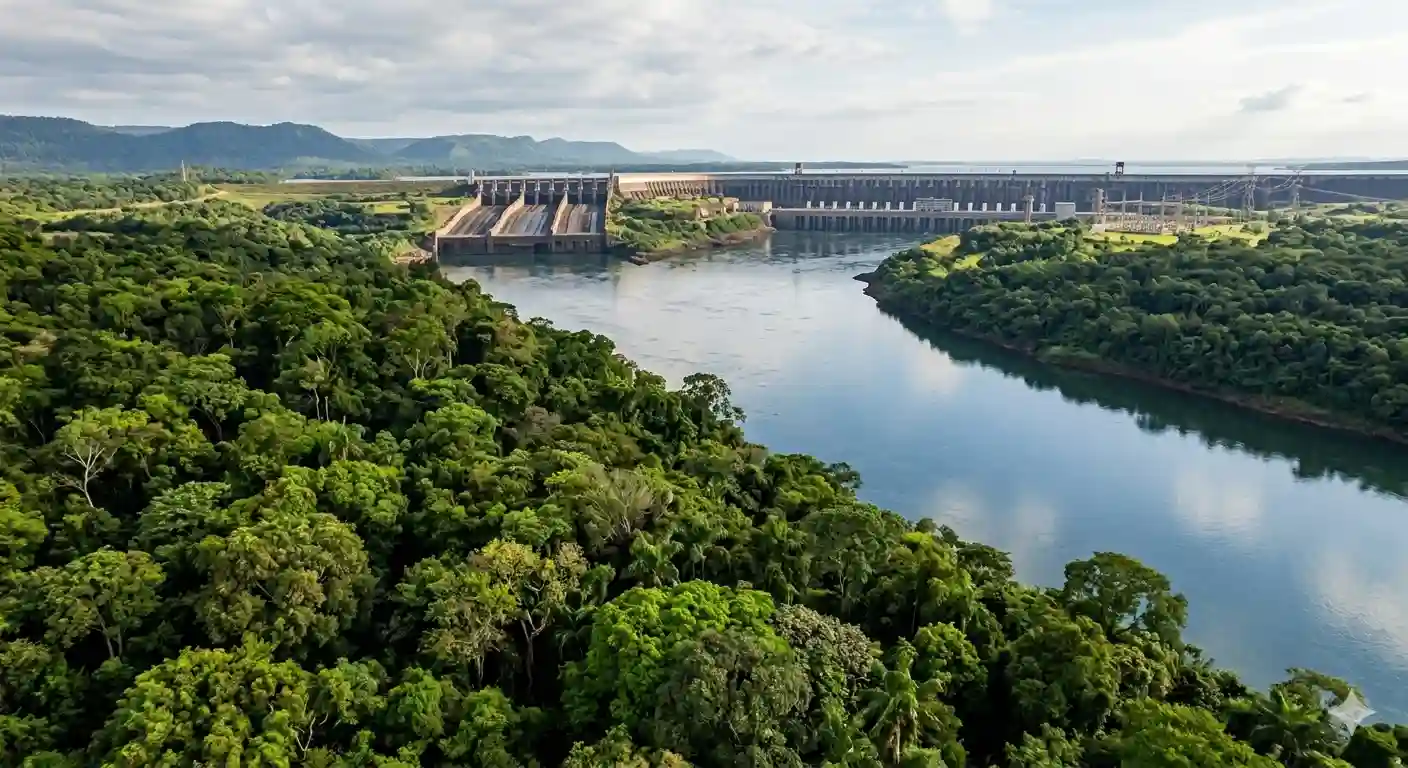
The Paraná River system is the hydrological backbone of the region — and of the broader Cono Sur. The Itaipu dam on the Brazil-Paraguay border generates approximately 15% of Brazil's electricity and 90% of Paraguay's. Water governance, dam management, and downstream effects are shared regional issues, not national ones.
Agricultural Ecosystems
Paraná and Rio Grande do Sul are among Brazil's most intensively farmed states. Soy, corn, wheat, and poultry dominate the landscape. Soil conservation, pesticide regulation, and the transition to more sustainable production systems are active debates — increasingly shaped by EU due diligence requirements on agricultural imports.
Where EU Standards Meet Brazilian Agricultural Reality
Southern Brazil sits at the intersection of two forces that are reshaping its economic relationships: Brazil's push to position itself as a responsible agricultural exporter, and the EU's increasing use of environmental standards as trade conditions. The EU Deforestation Regulation, carbon border adjustments, and supply chain due diligence requirements are not abstract policy debates for this region — they are operational realities for its largest export sectors.
The energy transition is also playing out in Southern Brazil. The region has significant wind potential in Rio Grande do Sul's highlands, a growing solar sector, and the existing hydropower base of the Paraná system. Brazil's national energy transition agenda is more visible in the south than elsewhere in the country.
EU Deforestation Regulation
Southern Brazilian soy, beef, and timber exporters are directly affected by the EU Deforestation Regulation. The regulation requires proof that products have not contributed to deforestation — a standard that applies to the entire Brazilian supply chain, regardless of where production occurs.
Wind & Solar Expansion
Rio Grande do Sul's southern highlands have among the best wind resources in Brazil. Several large-scale wind projects are operational or under development. The state is also one of Brazil's frontrunners in distributed solar generation — a trend driven partly by rural producers seeking energy independence.
European and International Presence in Southern Brazil
Southern Brazil has a long history of European industrial presence — German and Italian companies established manufacturing operations in the region decades ago, and that presence has deepened over time. The region's industrial infrastructure, logistics connectivity, and qualified workforce make it one of Brazil's most attractive locations for international operations.
Manufacturing & Industry
Santa Catarina and Paraná host significant manufacturing clusters — machinery, textiles, food processing, and automotive components. German and Italian industrial companies have been present for generations. The region's industrial base is more export-oriented than Brazil's national average.
Agribusiness
International trading companies, input suppliers, and food processors are deeply embedded in Southern Brazil's agricultural system. The region's soy, corn, poultry, and pork production chains are globally integrated — and increasingly subject to international sustainability standards that require operational adjustments.
Energy & Infrastructure
The energy transition is attracting new investment into the region's wind and solar sectors. Port infrastructure in Paranaguá and São Francisco do Sul makes Southern Brazil a critical logistics hub for Mercosur trade flows — including goods moving between Argentina, Paraguay, and European markets.
Insights on Southern Brazil
Need More Than a Country Profile?
Southern Brazil rewards those who understand its regional logic before they engage. If you are assessing market entry, supply chain exposure, or investment context in the region, direct expertise makes the difference.
Connect via Econosur