
Uruguay.
Small Country,
Serious
Institutions.
Uruguay is the Southern Cone's most stable democracy, its most consistent institutional performer, and — per capita — one of the region's most remarkable energy transition success stories. Small in size, it punches consistently above its weight in governance quality, agricultural exports, and regional reliability — making it a natural reference point and often a first entry market for international companies approaching the Cono Sur.
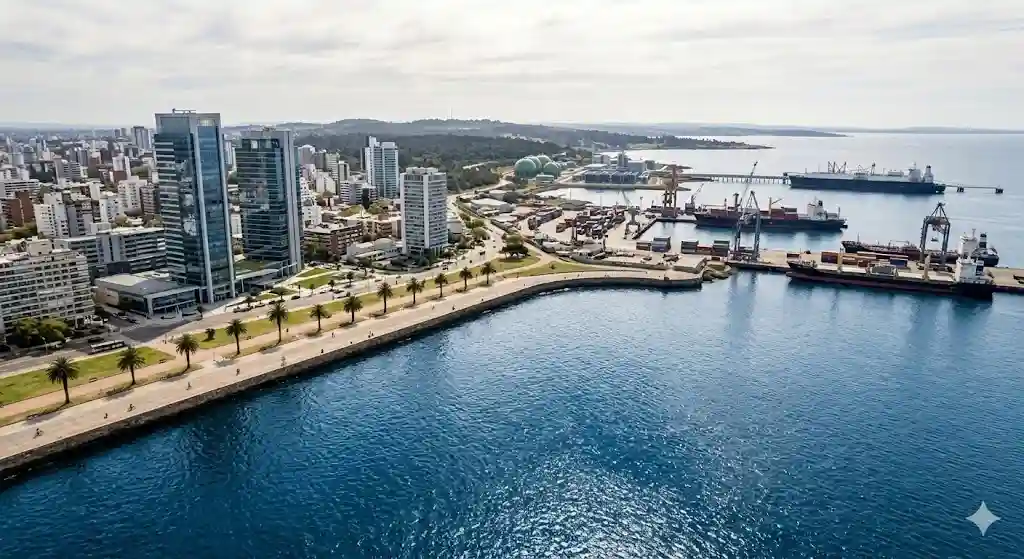
Stable, Open, and Regionally Disproportionate
Uruguay's economy is built on a foundation that most of its neighbours lack: institutional continuity, a functioning rule of law, and a track record of honouring contracts and commitments across political cycles. This makes it an outlier in a region where political volatility frequently disrupts business conditions — and it explains why Montevideo has become the preferred regional headquarters for a disproportionate number of multinational companies.
The country's productive base is agricultural — beef, soy, cellulose, and dairy are its primary exports — but its service economy is more developed than its size would suggest. Financial services, technology, and logistics have grown significantly, partly due to Uruguay's position as a stable platform between Argentina and Brazil.
Uruguay's challenge is not instability — it is scale. A population of 3.5 million limits domestic market depth, and the country's dependence on commodity export prices means that global cycles have outsized domestic effects. Managing this exposure while maintaining institutional quality is the central economic balancing act.
"Uruguay does not offer the market size of Brazil or the resource wealth of Chile. It offers something rarer in the region: predictability. For many international companies, that is enough to start."
Regional Entry Point
Montevideo's free trade zone, its bilingual professional workforce, and its stable regulatory environment have made it the default regional base for companies that want Mercosur access without Argentina's complexity or Brazil's size. For European companies approaching the Southern Cone for the first time, Uruguay is frequently the lowest-friction starting point.
Grasslands, Rivers, and a Managed Landscape
Uruguay is one of the most thoroughly managed agricultural landscapes in South America. The country has no Amazon, no Chaco, and no large wilderness areas — its natural ecosystems are predominantly temperate grasslands, river systems, and coastal wetlands, most of which have been incorporated into productive use over centuries. This makes Uruguay's ecological story different from its neighbours: less dramatic in scale, but significant in terms of land use intensity, water governance, and the sustainability of its export model.
Pampas Grasslands
Uruguay's native grasslands are among the most biodiverse temperate grassland ecosystems in the world — and among the least studied. Cattle ranching has co-existed with these ecosystems for centuries, but intensification, afforestation with eucalyptus, and soy expansion are altering the landscape at a pace that raises long-term questions about soil health and biodiversity.
Río de la Plata & Wetlands
Uruguay's eastern coast and the Río de la Plata estuary support significant wetland ecosystems — important for migratory birds, fisheries, and freshwater regulation. Water quality in the Río de la Plata has become a public issue, with algal blooms linked to agricultural runoff creating periodic crises in Montevideo's water supply.
Forestry & Cellulose
Uruguay has become one of the world's most significant cellulose exporters, driven by large-scale eucalyptus plantations established over the past three decades. The ecological trade-offs of this model — water consumption, native grassland conversion, and biodiversity impacts — are active debates in the country's environmental policy.
The Energy Transition That Actually Happened
Uruguay's energy transition is one of the few genuine success stories in the global renewable energy debate — and one of the least discussed. In less than a decade, the country moved from a fossil fuel and hydropower dependent grid to one where wind, solar, biomass, and hydro together provide over 95% of electricity generation. This was not the result of exceptional natural endowment. It was the result of deliberate policy design, long-term contracts with private investors, and institutional consistency across political administrations.
The lessons from Uruguay's transition are directly relevant to European companies and policymakers working on energy transition in larger, more complex markets. The country offers a real-world case study in what works — and the conditions under which it works — that deserves more attention than it receives.
Uruguay is also positioning itself for the next phase: green hydrogen, electromobility, and the decarbonisation of its agricultural export chains in response to EU standards.
Wind Energy
Wind is Uruguay's single largest source of electricity. The country's wind auction model — competitive, long-term, and backed by stable offtake agreements — attracted significant international investment and delivered some of the lowest wind energy costs in Latin America. The model has been studied by energy policymakers across the region.
Agricultural Decarbonisation
Uruguay's beef sector — a major export earner — is under growing pressure from European buyers to demonstrate carbon credentials. The country has been developing traceability systems and carbon accounting frameworks for its cattle sector, positioning Uruguayan beef as a premium, low-deforestation product in European markets.
Green Hydrogen Potential
Uruguay's renewable electricity surplus and Atlantic coast access make it a credible candidate for green hydrogen export. Early-stage projects are underway, with European interest driven by the same supply diversification logic that is shaping interest in Chile and Argentina.
International Presence in Uruguay
Uruguay's international business community is dense relative to its size. Montevideo hosts regional headquarters for companies across financial services, technology, logistics, and agribusiness. The free trade zone regime has attracted manufacturing and service operations that use Uruguay as a platform for the broader Mercosur market.
Financial Services & Technology
Montevideo's financial sector is the most developed in the Southern Cone outside São Paulo and Buenos Aires. Several European banks and financial institutions use Uruguay as their regional base. The technology sector has grown significantly, supported by a well-educated workforce and favourable conditions for software and service exports.
Agribusiness & Cellulose
International trading companies and processors are active across Uruguay's beef, soy, dairy, and cellulose sectors. Two of the world's largest cellulose plants — operated by Finnish and Chilean companies respectively — are located in Uruguay, making it a significant global player in the pulp and paper supply chain.
Renewable Energy
European energy companies participated in Uruguay's wind auction programmes and maintain operational presence in the country's renewable sector. The green hydrogen pipeline is generating new interest from European utilities and industrial companies seeking long-term supply agreements as part of their decarbonisation strategies.
Insights on Uruguay
Need More Than a Country Profile?
Uruguay is often the right starting point for the Southern Cone — but understanding its role in the regional system requires more than a stable investment climate assessment. Direct regional expertise makes the difference.
Connect via Econosur