
Argentina's Wine Market:
Vino Toro and the Underestimated Logic
of Scalable Demand
While international wine journalists write about terroir, vintages, and 95-point scores from Mendoza, the people who actually built the Argentine wine market made a different decision. They did not bet on premium. They bet on what people drink every day.
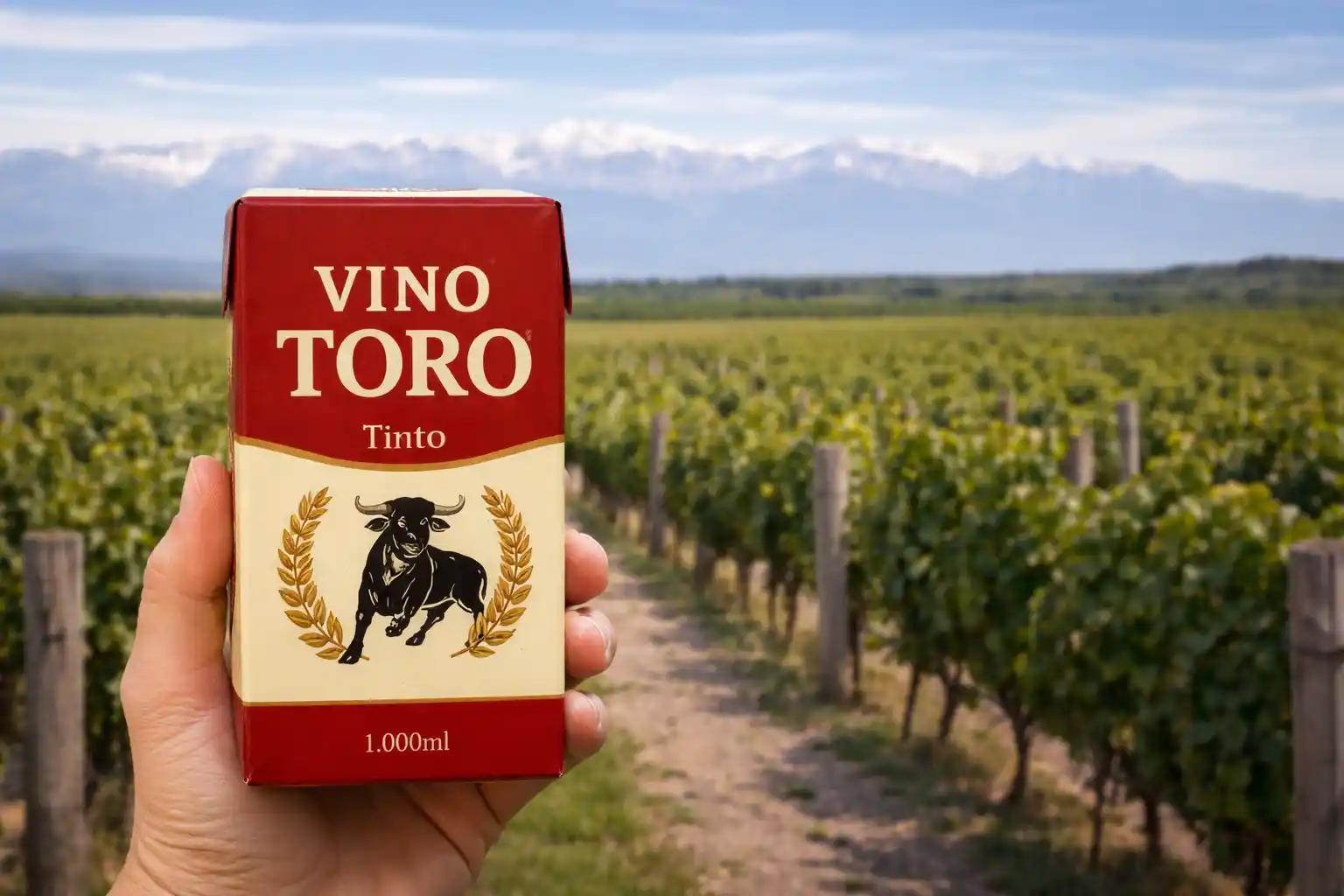
Most international coverage of Argentine wine converges on the same story: Malbec, Mendoza, boutique estates, export awards. That story is real, but it describes a relatively small slice of what the Argentine wine market actually is. The larger story — the one that built the sector's volume and structural depth — looks considerably different, and is rarely told outside Argentina.
Vino Toro, the flagship brand of the Fecovita cooperative federation, is a useful entry point into that other story.
Historical Market Logic
In the late 19th and early 20th century, large waves of migrants arrived in Argentina from Italy and Spain — many carrying winegrowing knowledge from the Old World. What they found was not a market for connoisseurs, but a country under construction, shaped by people who understood wine as a part of daily life rather than a luxury product.
The cooperatives that emerged in that period — and from which Fecovita would later develop — were a rational response to those conditions: a demand for reliability, volume, and affordability at scale. Rather than transplanting European premium models, producers adapted to what the local market actually required. That pragmatic orientation shaped the sector's structure for decades to come.
The Scale Behind the Brand
Vino Toro is not a premium wine — and that is not a criticism. It is the structural core of the business model. Fecovita, the umbrella cooperative that produces it, brings together 29 regional cooperatives and around 5,000 grape growers across roughly 30,000 hectares. By some estimates, Fecovita alone accounts for approximately 22% of total Argentine wine production, making it consistently one of the top two or three producers in the country by volume.
"The cooperative model was not designed for stability — it was designed for a market where instability is the baseline condition. That is a different kind of engineering."
That domestic market has been under pressure. Per capita wine consumption in Argentina has declined by roughly 50% between 2003 and 2023, and in 2024 hit an estimated 16.5 liters — the lowest figure in over 60 years, driven by inflation running at over 100% annually and sustained purchasing power erosion. In that environment, what holds is not prestige — it is price resilience. Everyday wines in formats like bag-in-box have held their position precisely because they offer predictable value when the budget tightens.
The cooperative model distributes that pressure across thousands of producers. No single harvest, no single estate, no single exchange rate shock destabilizes the system. That is structural resilience, not despite the scale, but because of it.
What the Premium Narrative Omits
Argentine wine is internationally framed primarily as a Malbec story: high-altitude vineyards, boutique estates, export values that reached close to USD 933 million in 2024. That export growth is real — and notable. But it represents around 20% of total wine produced. The domestic market, at roughly 7.7 million hectoliters consumed annually, remains the sector's actual foundation.
For investors, this gap between narrative and volume is a relevant distortion. Premium models require longer capital commitment, are export-dependent, and respond sensitively to international demand cycles and currency dynamics — factors that have proven difficult to manage consistently in Argentina. The segment that appears most attractive by margin is also the segment most exposed to external shocks.
What This Means for Capital Allocation
The Fecovita model raises a question that is worth asking more directly in the context of Argentine agribusiness: where does structural resilience actually sit? Cooperative structures with broad producer bases, vertical integration across processing and distribution, and entrenched domestic distribution networks combine scalability with risk distribution in ways that premium models typically do not.
This does not mean the premium segment lacks merit — under the right conditions, the return profile is attractive. But the conditions matter. In a market where inflation has eroded domestic revenues and export values remain subject to peso volatility, the segment that continues to move volume is the one that was built for exactly this kind of environment.
The people who built Vino Toro were not optimizing for press attention. They were reading a market that needed reliability above all else. In 2026, as Argentina navigates another round of macroeconomic adjustment, that logic has not aged poorly.
Further reading: Vino Toro — Official Website (toro.com.ar)