
Mirgor: What a Manufacturer at the Edge of the World Reveals About Argentine Industry
Mirgor was founded in 1983 in Río Grande, Tierra del Fuego — one of the most geographically isolated production locations in Latin America. It now generates USD 2.5 billion in annual revenue and supplies Samsung, Ford, Volkswagen and Mercedes-Benz.
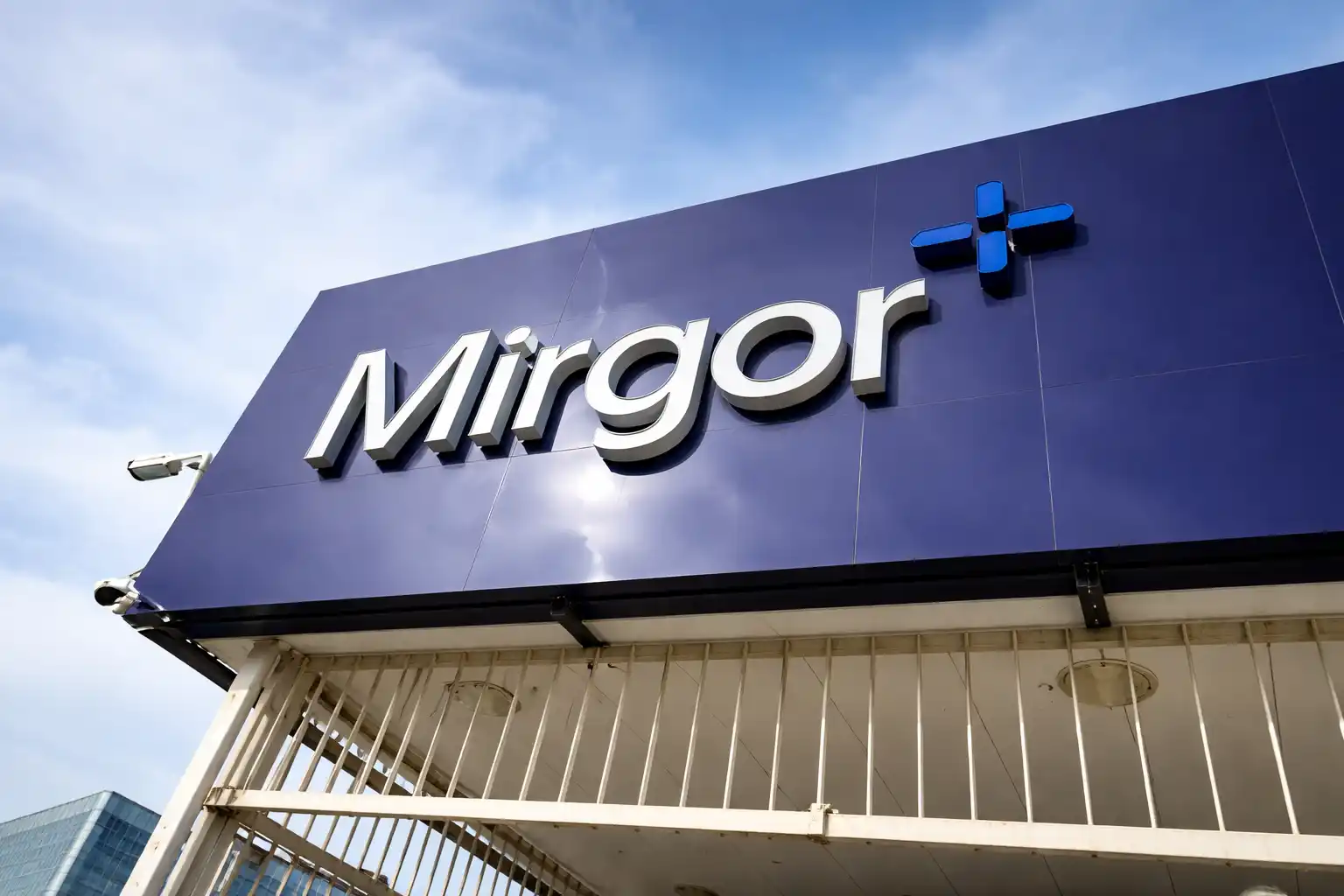
Company-level evidence can reveal industrial structures that aggregate country indicators miss. Mirgor is useful because its activities connect Tierra del Fuego’s promotion framework with electronics, automotive components, retail, services and international operations.
Founded in 1983 in Río Grande, at the southern tip of Argentine Patagonia, the company produced its first product — an air conditioning unit for the Peugeot 504 — in a city that sits closer to Antarctica than to Buenos Aires.
Mirgor’s operations span consumer electronics, automotive components, retail and services. Its supplier and customer relationships should be read by business segment and reporting period; the June 2026 consolidated filing below provides the current financial baseline rather than treating an older dollar-revenue estimate as present scale.
That trajectory is not self-explanatory. It requires understanding the structure that made it possible — and the questions that structure now faces.
Data update · October 4, 2026
Mirgor’s consolidated financial statements for the six months ended June 30, 2026 report revenue of ARS 1,264,522 million, compared with ARS 1,527,252 million for the comparable 2025 period. These are inflation-restated peso figures under IAS 29, not current-dollar sales. Argentina accounted for ARS 798,434 million and operations abroad for ARS 466,088 million.
The port-project disclosure discussed below supports continued analysis of the investment plan. It should not be interpreted as confirmation of an operating terminal or a verified late-2026 commissioning date.
For competitive context, Decree 333/2025 set the extra-zone import duty on the specified smartphones and mobile phones at zero from January 15, 2026. That product-specific change should not be described as abolition of Tierra del Fuego’s industrial regime.
The regime that built the industry
Mirgor’s Río Grande operations exist because of Ley 19.640 — Argentina’s industrial promotion regime for Tierra del Fuego, enacted in 1972 and extended through December 31, 2038 by Decree 727/2021, with a further 15-year extension conditional on the decree’s requirements and the continuation of Brazil’s Manaus benefits.
The law established a special customs area for the province, exempting companies from VAT, income tax, import duties on inputs and several other levies, on the condition that goods produced there enter the Argentine mainland market with those exemptions intact.
The objective was explicitly geopolitical: to populate and economically activate a strategically important border territory at the southern extreme of the continent.
The regime supported an electronics and automotive-components cluster in Tierra del Fuego. Fundar’s original 2023 research examines that industrial structure and its fiscal and productive trade-offs. Its historical estimates should not be treated as a verified 2026 employment census.
Mirgor and Newsan are prominent actors in the promoted electronics cluster. Fundar’s 2023 analysis estimated the subregime’s annual fiscal cost at USD 1.07 billion, or 0.22% of national GDP. This is a dated analytical estimate, not a newly measured 2026 fiscal cost.
Mirgor did not grow despite Argentine economic conditions. It grew because of a specific regulatory architecture — one that is now being renegotiated in real time.
The competitive framework changed under the government’s trade-opening agenda. Decree 333/2025 reduced the extra-zone import duty for specified smartphones and mobile phones to 8%, then to zero from January 15, 2026. This changes import competition while leaving the existence of the Tierra del Fuego subregime a separate matter.
Unions, provincial authorities and industry have pushed back, warning of job losses. The dispute goes to the core of what the regime is for: sovereignty and population retention, or industrial efficiency?
From assembly to infrastructure
Mirgor’s response to this structural pressure is not defensive. In 2022, the company announced plans to build a private port in Río Grande — the first deep-water port infrastructure on the northern coast of the island.
Mirgor’s June 2026 financial statements document FAMP committee approval of the Río Grande port construction project in December 2024 and steps toward a joint group company. This supports project status, but does not confirm an operating port, a current total budget or a late-2026 commissioning milestone.
The proposed port is intended to improve maritime access and reduce logistical dependence for Tierra del Fuego’s industrial cluster. Potential savings and cargo volumes should be assessed against the confirmed construction scope, operating permissions and utilization assumptions; they are not realized operating results.
The strategic logic is clear. Tierra del Fuego’s industrial competitiveness has always been constrained by logistics: everything that arrives and leaves does so by air or by sea via routes that add cost and time.
A dedicated port changes that calculus not just for Mirgor, but for every industrial operator on the island. The company has explicitly positioned the project as infrastructure for the entire sector — including energy projects, green hydrogen development and Antarctic logistics — not only for its own supply chains.
The port project raises a question about Mirgor’s future industrial position. A plan to deepen its physical presence can reflect logistics needs, regulatory strategy and a longer-term diversification effort. Until scope, funding and execution milestones are documented, the announced project should be treated as a strategic commitment to examine rather than a completed competitive advantage.
The diversification pattern
What makes Mirgor analytically interesting beyond the regime question is its diversification trajectory.
The company has moved from automotive air conditioning in 1983 to consumer electronics assembly from 2009 onwards, automotive infotainment through a Pioneer partnership in 2014, agricultural commodity exports in 2018, logistics and distribution infrastructure, retail and software development.
In 2020 it acquired the Argentine subsidiary of Brightstar, the global mobile phone distribution company. In 2023 it acquired Anovo in Uruguay, entering the mobile device aftermarket. It has offices in Paraguay and launched operations in Panama and the Dominican Republic.
The current filing separately reports revenue from operations abroad. This geographic split is different from a business-segment measure and should not be compared directly with older current-dollar figures.
That pattern — systematic expansion across adjacent sectors and adjacent geographies — is not accidental. It is the operational logic of a company that understands its domestic regulatory base is not permanent and is building revenue diversification before it needs to.
Each acquisition extends Mirgor’s value chain beyond the assembly operations that are most exposed to the regime debate.
What this case reveals
Mirgor is not a story about a company that thrived despite Argentina. It is a story about how a specific Argentine policy — controversial, expensive, geopolitically motivated — created the conditions for a company to develop industrial capabilities that have since extended well beyond their original regulatory basis.
The group’s electronics and automotive history is closely connected to the promotion framework. Its newer activities must be assessed on their own operating and financial evidence; the framework alone does not explain every business relationship.
Whether they can survive a meaningful reduction of that framework is the open question.
What the case demonstrates for anyone reading Argentine industry is that regulatory architecture shapes industrial possibility in ways that aggregate statistics miss.
Argentina’s macroeconomic instability is real and well documented. But within that instability, specific policy structures have generated specific industrial actors with specific capabilities.
Those actors are now under pressure to prove those capabilities can stand independently. The port’s documented execution and eventual operating performance would be one test of that proposition.
For international industrial suppliers, Mirgor is also a communication and market-access case. Companies entering Argentina’s supplier systems need more than technical capacity. They need market-specific positioning, Spanish documentation, product terminology, procurement-ready descriptions, technical manuals, service communication and search visibility that matches how Argentine buyers, partners and institutions actually evaluate industrial firms. This is where related work by VolzMarketing’s Automotive Suppliers service and eLengua on technical and business translation connects to the wider industrial-execution problem.
Automotive supplier relevance:
VolzMarketing’s Automotive Suppliers service helps industrial companies translate technical capability into a market-ready position for Argentina and Mercosur.
The work can cover target manufacturers and Tier structures, buyer requirements, supplier positioning, qualification routes, local-partner needs, technical content, procurement communication and search visibility across the automotive value chain.
Marcus A. Volz perspective
Mirgor’s diversification becomes more informative when compared with the current financial perimeter and the status of individual assets. International revenue, retail, electronics and automotive activities expose the group to different commercial cycles. Neither historical dollar revenue nor an announced port budget demonstrates their present performance.
For an industrial supplier, the central question is where a capability fits into an operating production line or a funded investment package. Company structure, local service requirements, technical qualification and the purchasing entity matter more than simply identifying a large Argentine group. The port remains a project to monitor until construction milestones and operational readiness are documented.
Research services for Argentina’s industrial companies and supplier systems
Econosur can turn a defined business question into a sourced brief or a scoped research assignment.
- Company reports: Review business segments, financial reporting, operating assets and investment announcements for a specific company question.
- Sector briefs: Examine automotive, electronics and industrial supplier structures within Argentina’s changing competitive framework.
- Custom analysis: Map relevant group entities, qualification routes and project dependencies for a defined supplier or partner decision.
Public research is the starting point. Direct verification, interviews or additional datasets can be scoped where they are necessary and feasible; they are not implied by this article. The proposal defines deliverables, timing and evidence limits.
Sources and research boundaries
Primary, institutional and company sources
- Mirgor — June 30, 2026 consolidated interim financial statements; revenue, IAS 29 reporting and port-project disclosure.
- Mirgor — Investor disclosures, financial statements and relevant events.
- Argentina — Decree 727/2021, industrial subregime extension and conditional further extension.
- Argentina — Decree 333/2025, product-specific smartphone and mobile-phone import-duty schedule.
- Fundar — Original 2023 research on the Tierra del Fuego subregime, its fiscal cost and possible productive transformation.
Industry and secondary sources
Official statistics and company disclosures establish the dated facts. Secondary coverage provides context and does not independently verify company claims. The Marcus A. Volz perspective is Econosur’s interpretation. No private interviews or client mandates are implied.
FAQ
What does Mirgor reveal about Argentine industry?
Mirgor shows how Argentine industrial capability can emerge from a specific regulatory architecture. Its development in Tierra del Fuego reflects the effects of Ley 19640, geographic isolation, logistics constraints, electronics assembly, automotive supply chains and long-term industrial policy.
Why is Ley 19640 central to the Mirgor case?
Ley 19640 created the special customs and tax framework that made industrial production in Tierra del Fuego viable. The regime was designed to populate and economically activate a strategically important southern territory, but it also created a costly and politically contested industrial structure.
Why is Mirgor investing in a port in Río Grande?
The planned port investment addresses one of Tierra del Fuego’s main structural constraints: logistics. Direct maritime infrastructure could reduce costs, strengthen the industrial cluster and support activities beyond Mirgor’s own supply chains, including energy projects and Antarctic logistics.
Need a sharper view of Argentine industrial execution?
Mirgor is a useful case because it connects regulation, geography, logistics, supplier capacity, consumer electronics, automotive components and political risk. Econosur can prepare focused country, sector or company-context briefs for decision-makers evaluating the Southern Cone.
Request a focused analysis