
Mercosur · Agriculture · Fertilizers · Food Security · Supply Chains
Mercosur Agriculture and the Illusion of Regional Autonomy
The Southern Cone exports food at scale. Yet it depends on imported fertilizers, global supplier concentration and logistics corridors it does not control end-to-end. Argentina is now trying to convert Vaca Muerta gas into fertilizer capacity, showing that resilience depends on industrial execution as much as agricultural output.
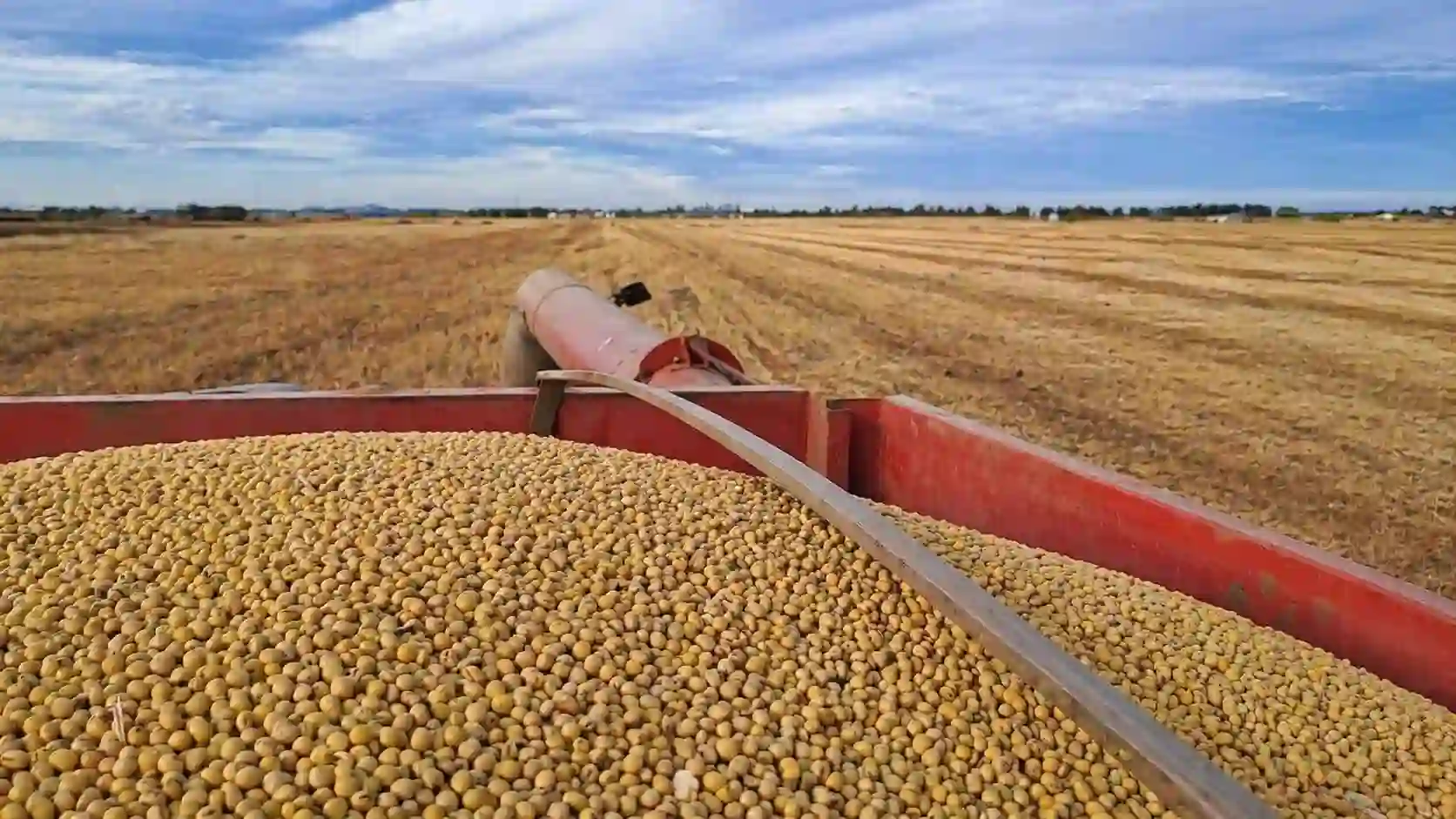
Mercosur agriculture is powerful in output, but dependent in operating structure.
The bloc exports soy, beef, coffee, grains and other food products at large scale. But that production depends on imported fertilizers, dollar-priced shipping, external supplier countries, port infrastructure and river corridors such as the Paraná-Paraguay system.
For broader context, see agriculture and food systems in South America, Southern Cone market structures, the Paraná-Paraguay Waterway and South America’s Strategic Resource Advantage in a Fragmenting World Economy.
Two developments sharpen the argument in September 2026. Brazil imported a record 45.5 million tonnes of chemical fertilizers in 2025, while Argentina approved Fertil Pampa under RIGI: two planned urea plants of 3,000 tonnes per day each plus a 3,450-tonne-per-day ammonia plant using Vaca Muerta gas at Ingeniero White. The region therefore shows both sides of the same problem: persistent import exposure and a concrete attempt to build domestic substitution capacity.
Core market reading:
The Mercosur bloc can be a food-export powerhouse and still lack real supply-chain autonomy. Agricultural sovereignty is not measured only by harvest volumes. It depends on who controls inputs, financing, shipping routes, river corridors and the ability to absorb external shocks.
The Mercosur bloc looks, from the outside, like a formidable agricultural power. Brazil is the world's largest exporter of soybeans, sugar, and beef. Argentina anchors the global soy complex. Paraguay ranks among the world's top soy exporters per capita. The numbers add up to regional scale — a food-producing bloc that feeds well beyond its borders.
That picture describes outputs. It says nothing about the conditions that sustain them.
In April 2026, the Inter-American Institute for Cooperation on Agriculture (IICA) and The Fertilizer Institute (TFI), the principal U.S. fertilizer industry body, announced a formal partnership to secure fertilizer supply across the Western Hemisphere. The backdrop to that announcement was explicit: geopolitical and market shocks — including logistical disruptions linked to the closure of the Strait of Hormuz — had placed the region's agricultural inputs under new and visible stress. The two institutions did not frame this as a hypothetical risk. They framed it as a present one.
That framing matters. Because the Strait of Hormuz is not, at first glance, a Mercosur story. It is a passage between Oman and Iran through which roughly a fifth of global oil and gas transits. But it is also a corridor for ammonia, urea, and other nitrogen-based fertilizers produced in the Gulf region — and that is precisely where it becomes a Mercosur story.
The fertilizer-security question has moved from vulnerability analysis into actual industrial investment.
On September 3, Argentina approved Fertil Pampa’s RIGI application as a long-term strategic export project. The approved plan covers two urea plants with 3,000 tonnes per day of capacity each and one 3,450-tonne-per-day ammonia plant at Ingeniero White, using Vaca Muerta natural gas as the principal feedstock.
The project does not eliminate Mercosur’s fertilizer exposure. It does show what real resilience investment looks like: converting a regional energy resource into an agricultural input, located beside port and petrochemical infrastructure. Financing, construction and commissioning still have to follow before the planned capacity becomes operating supply.
The Invisible Input
Agricultural output is not simply a function of land, rain, and labor. It depends on a continuous supply of external inputs, chief among them nitrogen fertilizers — urea, ammonium nitrate, and their derivatives — which underpin yield levels across the region's key commodity crops. Without them, the soybean fields of Mato Grosso, the maize belts of the Argentine Pampas, and the grain corridors of Uruguay do not produce at current volumes.
The IICA-TFI agreement identifies this dependency plainly. One stated priority is expanding nitrogen production capacity within the hemisphere itself, including facilitating engagement between TFI and Trinidad and Tobago — a Caribbean producer of natural gas, which is the primary feedstock for nitrogen fertilizer manufacturing. The goal is to reduce reliance on production concentrated far from the region, in zones that geopolitical shocks can rapidly render inaccessible or expensive.
The fertilizer market is structurally concentrated. Major production nodes are located in Russia, the Middle East, and China — all of them linked to global buyers through maritime routes that run through or near geopolitical flashpoints. When those routes face disruption, whether through conflict, sanctions, or diplomatic instrumentalization, the cost signal travels quickly into input markets. And from there, it travels into farm economics across the Southern Cone.
"Mercosur produces at scale. It does not produce independently. The inputs arrive from elsewhere, priced by markets the region does not set, shipped through corridors it does not control."
Hormuz as Stress Test
The Strait of Hormuz is no longer only a hypothetical stress test. IICA’s 2026 evidence platform, citing UNCTAD, estimated that roughly one-third of global maritime fertilizer trade passes through the strait. Its fertilizer-market tracking also recorded a collapse in fertilizer-related outbound shipments after the March disruption.
The pressure has persisted. On September 15, Reuters reported that only four commodity vessels had transited Hormuz on the previous day, compared with a pre-war average of roughly 125 daily vessel transits across all commodity categories. That figure is not a fertilizer-only measure, but it shows that the maritime constraint remains material months after the initial shock.
For Mercosur agriculture, the transmission mechanism is direct: shipping disruption affects fertilizer availability and freight, which affects input prices and farm margins. IICA’s August analysis also emphasized that fertilizer supply shocks spread through energy and feedstock markets, while countries respond through alternative suppliers, export restrictions and public-policy measures.
Hormuz matters because agricultural supply chains are longer than the fields suggest.
The risk does not begin at the port of Santos, Rosario, Montevideo or Asunción. It can begin in Gulf fertilizer production, maritime chokepoints, global gas markets and shipping finance — before it appears as a local input price.
Four Countries, One Shared Exposure
The fertilizer dependency is not a Brazilian peculiarity, but Brazil shows the scale most clearly. Official MDIC data record 45.5 million tonnes of chemical-fertilizer imports in 2025, worth about US$15.5 billion. Conab’s 2026 logistics yearbook identifies China and Russia as the leading suppliers and notes that geopolitical uncertainty encouraged earlier purchasing.
Argentina has a different starting point because it combines agricultural demand with domestic natural gas. The September Fertil Pampa approval is therefore strategically important: if built and operated as planned, it would convert Vaca Muerta gas into ammonia and urea at Ingeniero White. Until that capacity is operating, announced substitution should not be treated as achieved autonomy.
Uruguay remains structurally dependent on fertilizer imports and maintains dedicated MGAP authorization and inspection procedures for imported fertilizer products. Paraguay’s exposure is compounded by geography: as a landlocked exporter, its input and export economics depend heavily on the Paraná-Paraguay waterway.
The common exposure is therefore not identical import percentages. It is the combination of external suppliers, freight, storage, ports, river corridors and limited short-term substitution capacity.
Paraguay’s exposure is directly connected to the Paraguay river economy and the wider Paraná-Paraguay Waterway.
For country-level context, see Brazil market profile, Argentina market profile, Paraguay market profile and Uruguay market profile.
Output Is Not Sovereignty
Mercosur’s food-export capacity is real, but output does not remove input exposure. Brazil’s record 45.5 million tonnes of fertilizer imports in 2025 makes the point more directly than an individual crop example: a country can dominate global agricultural exports while relying on very large external flows of the nutrients required to sustain that production.
The same distinction applies to import substitution. Argentina can possess abundant natural gas and still remain exposed until planned ammonia and urea capacity is financed, built, commissioned and operated reliably. Resource endowment, industrial capacity and supply-chain autonomy are separate stages.
Output capacity is not the same as operational autonomy.
A country can lead global exports and still depend on imported inputs, foreign freight conditions, external finance, port bottlenecks or river corridors. That is why agricultural strength must be read together with supply-chain exposure.
Where Regional Strength Ends
Mercosur agriculture is often narrated as a story of natural endowment — land, water, climate, know-how. That endowment is real. But productive capacity is not the same as operational independence. The region's output depends on nitrogen sourced from Russia, the Gulf, and China; on shipping finance priced in dollars; on port infrastructure that remains unevenly developed; and on waterway corridors that no Mercosur government controls end-to-end. Regional strength ends precisely where those external dependencies begin.
When a Gulf conflict raises urea prices, Mato Grosso farmers pay more for inputs the following season. When the Paraná runs low, Paraguayan soy sits in warehouses. When a major supplier faces sanctions, the entire hemisphere's import market reprices. These are not edge cases — they are the normal operating environment of export agriculture in the Southern Cone.
Mercosur’s agricultural strength is best understood as a conversion system.
Land, water and crop yields create the resource base. Fertilizer, gas, storage, processing, ports, waterways, finance and buyer access convert that base into exportable food. Dependence can therefore sit several steps before the farm gate or several steps after it.
The September Fertil Pampa approval is strategically relevant because it links two regional advantages that are usually analysed separately: Vaca Muerta gas and agricultural production. If the project reaches operating scale, Argentina would convert an energy resource into fertilizer capacity and potentially reduce one part of the regional input gap.
The broader conclusion is the same as in South America’s Strategic Resource Advantage in a Fragmenting World Economy: owning resources creates potential. Resilience depends on whether infrastructure, processing, finance, logistics and buyers are aligned.
What Sovereignty Actually Requires
Discussions of agricultural sovereignty in the Mercosur context default to output metrics — production volumes, export rankings, commodity market share. These measure what the region produces. They do not measure whether the region can sustain that production when input supply tightens, when freight costs spike, or when a key corridor becomes politically contested.
The IICA-TFI agenda — hemisphere-level coordination on fertilizer supply, nitrogen production capacity, and strategic sourcing — is a direct response to that gap. Whether it produces durable policy or remains a diplomatic signal is a separate question. That it was necessary at all is the answer to the sovereignty question.
Mercosur agricultural exposure has to be evaluated beyond output data.
The practical questions are input origin, fertilizer substitution, shipping exposure, waterway reliability, port capacity, supplier concentration and the ability of each country to absorb price shocks without losing export competitiveness.
Fertilizer Risk, Business Opportunity & Commercial Questions
Which Mercosur countries are most exposed to fertilizer supply disruptions and external price shocks?
The exposure is regional, but it takes different forms. Brazil carries the largest scale risk because the article cites fertilizer import dependence of about 92%. Uruguay imports nearly all nitrogen fertilizers. Paraguay combines input dependence with a second vulnerability: the Paraná–Paraguay waterway is critical for both incoming inputs and outgoing agricultural exports. Argentina has domestic natural-gas resources and fertilizer-production potential, but remains a net urea importer.
For commercial analysis, the useful comparison is therefore not a single Mercosur average. It is the combination of import share, supplier concentration, domestic substitution capacity, freight exposure and logistics resilience in each country.
Where could Mercosur’s fertilizer dependence create new business opportunities for international suppliers and investors?
The structural opportunity lies in reducing or managing the dependencies described in this article. Potential demand fields include nitrogen-production technology, ammonia and urea projects, fertilizer storage and terminals, blending and distribution, port and river logistics, alternative sourcing, supply-chain monitoring and services that improve resilience around agricultural inputs. Fertil Pampa is now a concrete Argentine project case rather than a generic import-substitution concept.
These are potential market fields, not evidence of open procurement packages. The IICA–TFI agenda and regional import dependence show why investment and sourcing diversification matter; project-level research is still required to identify which initiatives are financed, which buyers are active and which supplier routes are commercially accessible.
What should international agribusiness suppliers verify before evaluating Mercosur’s fertilizer and agricultural-input markets?
Before allocating commercial resources, suppliers should verify country-level import dependence, major incumbent suppliers, domestic producers, importers and distributors, buyer structures, port and waterway exposure, pricing and freight conditions, regulatory requirements, qualification and procurement routes, local stock or service expectations and realistic import-substitution projects.
That verification needs to be country-specific. Brazil, Argentina, Paraguay and Uruguay share fertilizer exposure, but their buyer networks, logistics constraints, domestic production bases and practical routes to market are not interchangeable.
Public trade statistics, policy announcements and industry reports can show import dependence, fertilizer flows, production capacity, shipping exposure and regional infrastructure constraints.
They do not reliably show the live commercial layer: which buyers are actively changing suppliers, which distributors control access, incumbent supplier positions, current qualification requirements, price expectations, local-stock or after-sales requirements, procurement timing, or whether an announced substitution project is actually addressable by an outside company.
Those gaps require company-level research, primary market checks and direct verification rather than another macro summary.
Mercosur Fertilizer & Agricultural-Input Market Research Services
Econosur structures targeted research for international companies evaluating fertilizer, agricultural-input and supply-chain opportunities across Argentina and Mercosur. Public-source analysis is combined with primary-source verification and targeted market checks where published data do not resolve the commercial question.
- Which importers, distributors or producer groups control access to a specific fertilizer or agricultural-input category?
- Which incumbent suppliers are already positioned in Brazil, Argentina, Paraguay or Uruguay?
- Where are buyers seeking alternative sourcing, local stock, technical service or more resilient logistics?
- Which announced fertilizer-production or import-substitution projects have progressed beyond policy or sponsor statements?
- What qualification, documentation, local-presence or distributor requirements apply to a specific supplier?
Research boundary
Import volume is not the same as import dependence. Brazil’s 45.5 million tonnes is a verified trade volume. The exact percentage of domestic fertilizer demand supplied by imports varies by nutrient, methodology and year, so this update avoids using one headline percentage as a universal measure.
Fertilizer exposure differs by nutrient. Nitrogen, phosphate and potash have different production bases, supplier geographies and substitution constraints. Urea should not be used as a proxy for the entire fertilizer market.
Approved capacity is not operating capacity. Fertil Pampa’s RIGI approval establishes a concrete industrial project, while financing, construction, commissioning and sustained production remain future execution stages.
Hormuz shipping indicators need context. Current vessel counts describe overall commodity traffic unless explicitly identified as fertilizer shipments. They demonstrate chokepoint stress but should not be read as a direct measure of fertilizer availability in Mercosur.
- Argentina Ministry of Economy — Resolution 1468/2026, 3 September 2026: RIGI approval for Fertil Pampa, including two 3,000-t/day urea plants and one 3,450-t/day ammonia plant using Vaca Muerta gas at Ingeniero White.
- Brazil MDIC — consolidated foreign-trade data: 45.485 million tonnes of chemical-fertilizer imports in 2025, worth US$15.465 billion.
- Brazil CONAB — Anuário Agrologístico 2026: record 45.5 million tonnes of fertilizer imports in 2025 and continued importance of China and Russia as suppliers.
- Uruguay MGAP — fertilizer import authorization: current official import procedure and operator requirements.
- IICA — IICA/TFI fertilizer-supply initiative, 8 April 2026: hemispheric supply security, long-term investment and nitrogen-production capacity.
- IICA OPSAa / WTO Trade Tracker — fertilizer shipments through Hormuz: collapse in outbound fertilizer-related shipments after the March disruption.
- IICA OPSAa / UNCTAD — fertilizer exposure to Hormuz: estimate that about one-third of global maritime fertilizer trade passes through the strait.
- IICA Blog — fertilizer export restrictions and supply-chain adjustment, updated 10 August 2026.
- U.S. EIA — World Oil Transit Chokepoints, updated 3 March 2026: energy-flow context for the Strait of Hormuz.
- Reuters — Hormuz traffic, 15 September 2026: four commodity-vessel transits on the previous day versus a pre-war average of roughly 125 daily transits.
- Evidence note: trade volumes, project approvals and regulatory procedures are anchored in official sources. Institutional and journalistic sources are used for global fertilizer-market exposure, chokepoint conditions and independent context.
From structural exposure to commercial verification
Public data can identify fertilizer dependency, external supplier concentration, maritime chokepoints and logistics exposure. It does not reliably show which buyers are changing suppliers, which distributors control access, where qualification is open or which announced projects are commercially executable.
Econosur can move from that structural picture to targeted supplier, buyer, distributor, logistics and project verification for specific agricultural-input markets across Mercosur.
Explore custom market analysisFAQ
Why does Mercosur agriculture not equal regional autonomy?
Mercosur exports food at large scale, but its agricultural system depends on imported fertilizers, maritime routes, port infrastructure and waterway corridors that the region does not fully control.
Why are fertilizers a strategic vulnerability for Mercosur?
Fertilizers are strategic because current crop yields depend on continuous access to nitrogen, urea and other imported inputs. When supply routes or producer countries face disruption, costs move quickly into farm economics.
Why does the Strait of Hormuz matter for South American agriculture?
The Strait of Hormuz matters because Gulf-produced ammonia, urea and nitrogen-based fertilizers move through or near geopolitically exposed maritime corridors. A disruption can affect fertilizer prices and availability far from the Gulf, including in South America.
What does Paraguay reveal about Mercosur agricultural exposure?
Paraguay reveals the logistics side of the exposure. As a landlocked exporter, it depends heavily on the Paraná-Paraguay waterway for both input arrivals and soy exports.
Which Mercosur countries are most exposed to fertilizer supply disruptions and external price shocks?
Exposure differs by country. Brazil is highly exposed by import scale: official data show 45.5 million tonnes of chemical-fertilizer imports in 2025. Uruguay remains dependent on imported fertilizer supply, Paraguay combines input exposure with waterway logistics, while Argentina now has a concrete substitution project in Fertil Pampa but must still convert approved capacity into operating production.
Where could Mercosur’s fertilizer dependence create new business opportunities for international suppliers and investors?
Potential fields include nitrogen-production technology, ammonia and urea projects, storage and terminals, blending and distribution, port and river logistics, alternative sourcing and supply-chain monitoring. Fertil Pampa is a concrete current project example, while individual procurement access still has to be verified package by package.
What should international agribusiness suppliers verify before evaluating Mercosur’s fertilizer and agricultural-input markets?
Suppliers should verify import dependence, incumbent suppliers, domestic producers, importers and distributors, buyer structures, logistics exposure, pricing and freight, regulatory requirements, qualification routes, local-service expectations and whether import-substitution projects are commercially executable.