
Mercosur · Agriculture · Fertilizers · Food Security · Supply Chains
Mercosur Agriculture and the Illusion of Regional Autonomy
The Southern Cone exports food at scale. Yet it depends on imported fertilizers, geopolitically controlled sea routes, and corridors it cannot protect. Output and sovereignty are not the same thing.
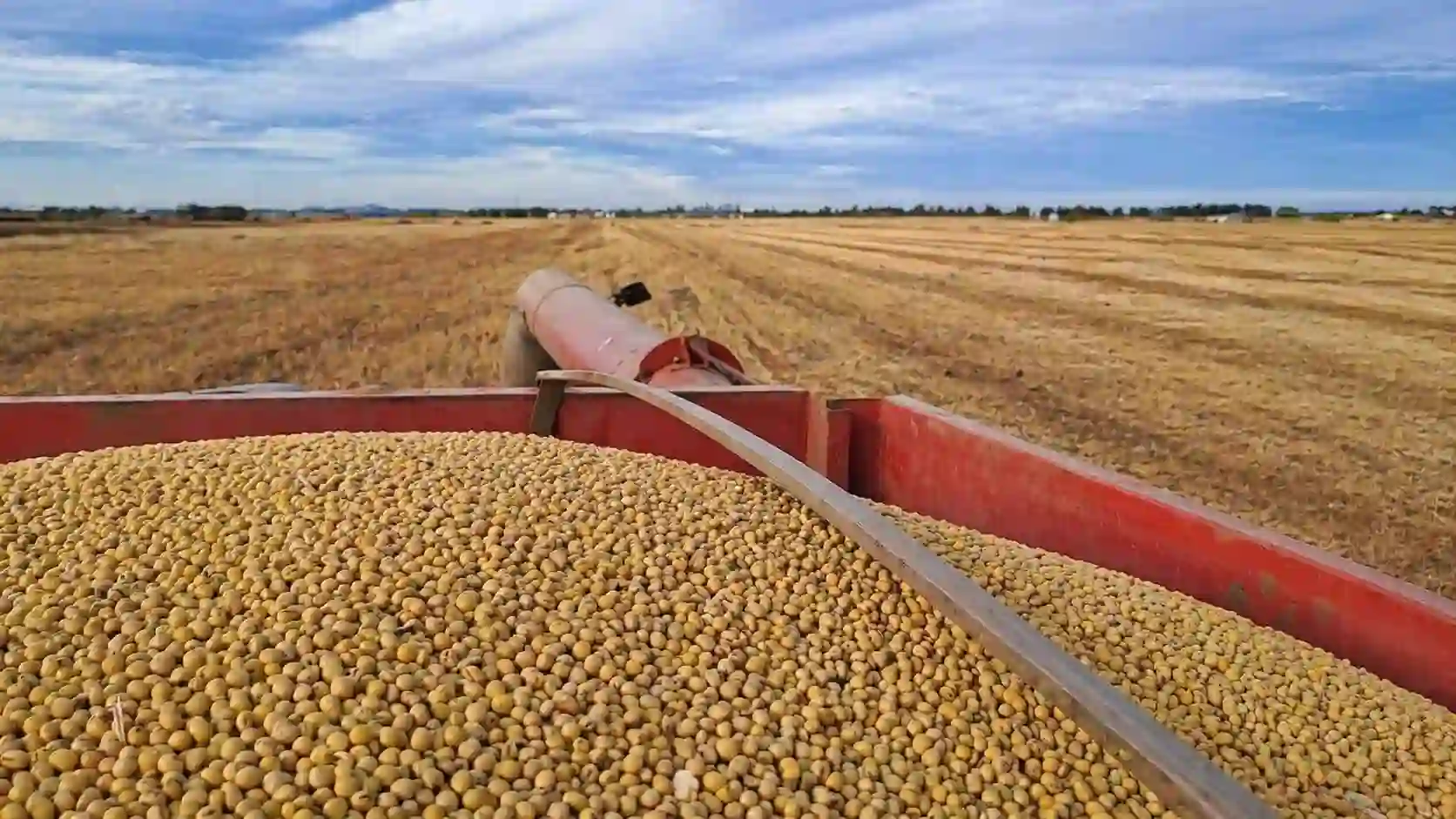
Mercosur agriculture is powerful in output, but dependent in operating structure.
The bloc exports soy, beef, coffee, grains and other food products at large scale. But that production depends on imported fertilizers, dollar-priced shipping, external supplier countries, port infrastructure and river corridors such as the Paraná-Paraguay system.
For broader context, see agriculture and food systems in South America, Southern Cone market structures and the Paraná-Paraguay Waterway.
Core market reading:
The Mercosur bloc can be a food-export powerhouse and still lack real supply-chain autonomy. Agricultural sovereignty is not measured only by harvest volumes. It depends on who controls inputs, financing, shipping routes, river corridors and the ability to absorb external shocks.
The Mercosur bloc looks, from the outside, like a formidable agricultural power. Brazil is the world's largest exporter of soybeans, sugar, and beef. Argentina anchors the global soy complex. Paraguay ranks among the world's top soy exporters per capita. The numbers add up to regional scale — a food-producing bloc that feeds well beyond its borders.
That picture describes outputs. It says nothing about the conditions that sustain them.
In April 2026, the Inter-American Institute for Cooperation on Agriculture (IICA) and The Fertilizer Institute (TFI), the principal U.S. fertilizer industry body, announced a formal partnership to secure fertilizer supply across the Western Hemisphere. The backdrop to that announcement was explicit: geopolitical and market shocks — including logistical disruptions linked to the closure of the Strait of Hormuz — had placed the region's agricultural inputs under new and visible stress. The two institutions did not frame this as a hypothetical risk. They framed it as a present one.
That framing matters. Because the Strait of Hormuz is not, at first glance, a Mercosur story. It is a passage between Oman and Iran through which roughly a fifth of global oil and gas transits. But it is also a corridor for ammonia, urea, and other nitrogen-based fertilizers produced in the Gulf region — and that is precisely where it becomes a Mercosur story.
The Invisible Input
Agricultural output is not simply a function of land, rain, and labor. It depends on a continuous supply of external inputs, chief among them nitrogen fertilizers — urea, ammonium nitrate, and their derivatives — which underpin yield levels across the region's key commodity crops. Without them, the soybean fields of Mato Grosso, the maize belts of the Argentine Pampas, and the grain corridors of Uruguay do not produce at current volumes.
The IICA-TFI agreement identifies this dependency plainly. One stated priority is expanding nitrogen production capacity within the hemisphere itself, including facilitating engagement between TFI and Trinidad and Tobago — a Caribbean producer of natural gas, which is the primary feedstock for nitrogen fertilizer manufacturing. The goal is to reduce reliance on production concentrated far from the region, in zones that geopolitical shocks can rapidly render inaccessible or expensive.
The fertilizer market is structurally concentrated. Major production nodes are located in Russia, the Middle East, and China — all of them linked to global buyers through maritime routes that run through or near geopolitical flashpoints. When those routes face disruption, whether through conflict, sanctions, or diplomatic instrumentalization, the cost signal travels quickly into input markets. And from there, it travels into farm economics across the Southern Cone.
"Mercosur produces at scale. It does not produce independently. The inputs arrive from elsewhere, priced by markets the region does not set, shipped through corridors it does not control."
Hormuz as Stress Test
The Strait of Hormuz functions here as more than a news hook. It is a structural stress test made visible. When diplomatic negotiations in 2026 began to explicitly address fertilizer passage guarantees through that corridor, it confirmed something that analysts had long observed at the margins: the security of agricultural supply chains in the Western Hemisphere is partially determined by events unfolding thousands of kilometers from any soybean field.
A sustained closure or political instrumentalization of Hormuz raises the cost and reduces the availability of Gulf-produced urea across South American import markets. The transmission runs from shipping disruption to input price to farm margin to export volume. The IICA-TFI partnership is, in part, an institutional acknowledgment that this chain exists and that the region sits at its receiving end.
Hormuz matters because agricultural supply chains are longer than the fields suggest.
The risk does not begin at the port of Santos, Rosario, Montevideo or Asunción. It can begin in Gulf fertilizer production, maritime chokepoints, global gas markets and shipping finance — before it appears as a local input price.
Four Countries, One Shared Exposure
The fertilizer dependency is not a Brazilian peculiarity — it runs across the bloc. Brazil, the largest regional consumer, imports approximately 92% of its fertilizer needs, according to data from the International Fertilizer Association. Argentina has domestic gas production but remains a net urea importer; its agrochemical supply chain is priced internationally, not domestically.
Uruguay imports nearly all of its nitrogen fertilizers, with no domestic production base to buffer price shocks. Paraguay's exposure is compounded by geography: landlocked, it moves all exports through the Paraná-Paraguay waterway, making it doubly vulnerable — external inputs arrive by river barge, and soy leaves the same way. A navigation dispute or prolonged low water on the Paraná does not slow Paraguayan exports; it stops them.
Different geographies, same structural position: no member of the bloc controls the inputs it needs to produce, and none controls the corridors through which it sells.
Paraguay’s exposure is directly connected to the Paraguay river economy and the wider Paraná-Paraguay Waterway.
For country-level context, see Brazil market profile, Argentina market profile, Paraguay market profile and Uruguay market profile.
Output Is Not Sovereignty
Brazilian coffee exports fell 21.2% in Q1 2026 compared to the same period in 2025, according to Cecafé — driven by low harvest stocks and producer retention, not logistics failure. The sector will recover when the new crop arrives. The point is not fragility but precision: even the world's dominant exporter of a commodity cannot simply convert production capacity into export volume on demand.
Constraints intervene. When those constraints are domestic and cyclical, recovery is a matter of months. When they are external — input price shocks, contested shipping corridors, sanctions on supplier countries — recovery depends on variables the exporting country does not control.
Output capacity is not the same as operational autonomy.
A country can lead global exports and still depend on imported inputs, foreign freight conditions, external finance, port bottlenecks or river corridors. That is why agricultural strength must be read together with supply-chain exposure.
Where Regional Strength Ends
Mercosur agriculture is often narrated as a story of natural endowment — land, water, climate, know-how. That endowment is real. But productive capacity is not the same as operational independence. The region's output depends on nitrogen sourced from Russia, the Gulf, and China; on shipping finance priced in dollars; on port infrastructure that remains unevenly developed; and on waterway corridors that no Mercosur government controls end-to-end. Regional strength ends precisely where those external dependencies begin.
When a Gulf conflict raises urea prices, Mato Grosso farmers pay more for inputs the following season. When the Paraná runs low, Paraguayan soy sits in warehouses. When a major supplier faces sanctions, the entire hemisphere's import market reprices. These are not edge cases — they are the normal operating environment of export agriculture in the Southern Cone.
What Sovereignty Actually Requires
Discussions of agricultural sovereignty in the Mercosur context default to output metrics — production volumes, export rankings, commodity market share. These measure what the region produces. They do not measure whether the region can sustain that production when input supply tightens, when freight costs spike, or when a key corridor becomes politically contested.
The IICA-TFI agenda — hemisphere-level coordination on fertilizer supply, nitrogen production capacity, and strategic sourcing — is a direct response to that gap. Whether it produces durable policy or remains a diplomatic signal is a separate question. That it was necessary at all is the answer to the sovereignty question.
Mercosur agricultural exposure has to be evaluated beyond output data.
The practical questions are input origin, fertilizer substitution, shipping exposure, waterway reliability, port capacity, supplier concentration and the ability of each country to absorb price shocks without losing export competitiveness.
From food exports to supply-chain exposure
Mercosur agriculture is not only a production story. It is a case of fertilizer dependency, maritime chokepoints, river logistics, input pricing, export resilience and the difference between output scale and real autonomy.
Econosur prepares custom market analysis for companies, analysts and institutions evaluating South American agriculture, fertilizer exposure, logistics corridors, food systems, commodity exports and country-specific supply-chain risks.
Explore custom market analysisFAQ
Why does Mercosur agriculture not equal regional autonomy?
Mercosur exports food at large scale, but its agricultural system depends on imported fertilizers, maritime routes, port infrastructure and waterway corridors that the region does not fully control.
Why are fertilizers a strategic vulnerability for Mercosur?
Fertilizers are strategic because current crop yields depend on continuous access to nitrogen, urea and other imported inputs. When supply routes or producer countries face disruption, costs move quickly into farm economics.
Why does the Strait of Hormuz matter for South American agriculture?
The Strait of Hormuz matters because Gulf-produced ammonia, urea and nitrogen-based fertilizers move through or near geopolitically exposed maritime corridors. A disruption can affect fertilizer prices and availability far from the Gulf, including in South America.
What does Paraguay reveal about Mercosur agricultural exposure?
Paraguay reveals the logistics side of the exposure. As a landlocked exporter, it depends heavily on the Paraná-Paraguay waterway for both input arrivals and soy exports.