Case Analysis · Argentina · Lithium · DLE · Project Execution
Eramet Centenario Lithium Plant: DLE Ramp-Up and Supplier Lessons
Centenario is one of the first industrial-scale Direct Lithium Extraction plants. After producing 6,690 t-LCE in 2025, it reached 8,440 t-LCE in H1 2026, averaged 85% of nameplate capacity in Q2 and ran at a 90% pace in June. The case now shows how an early commissioning bottleneck can evolve into a wider question of reliability, optimisation, utilities and brownfield expansion.
Centenario has moved from a difficult first ramp-up year into a materially stronger operating phase, but the commercial lesson is no longer limited to commissioning.
Eramet reported H1 2026 production of 8,440 t-LCE and sales of 8,320 t-LCE. Production averaged 85% of nameplate capacity in Q2 and reached a 90% pace in June, compared with roughly 75% in December 2025.
The February gas limitation and equipment-related maintenance remain relevant because they show that DLE performance depends on the wider production system: utilities, downstream equipment, maintenance, field support and process integration.
The next supplier question is now broader. Eramet has completed the pre-feasibility study for an initial brownfield expansion adding 11 kt-LCE of annual capacity and has launched detailed studies, with a possible final investment decision by the end of 2027.
The public record still does not identify a named supplier responsible for the 2025 commissioning problem. The evidence supports a case about plant integration, operating resilience and supplier qualification — not an accusation against an unnamed vendor.
What Is the Centenario Plant?
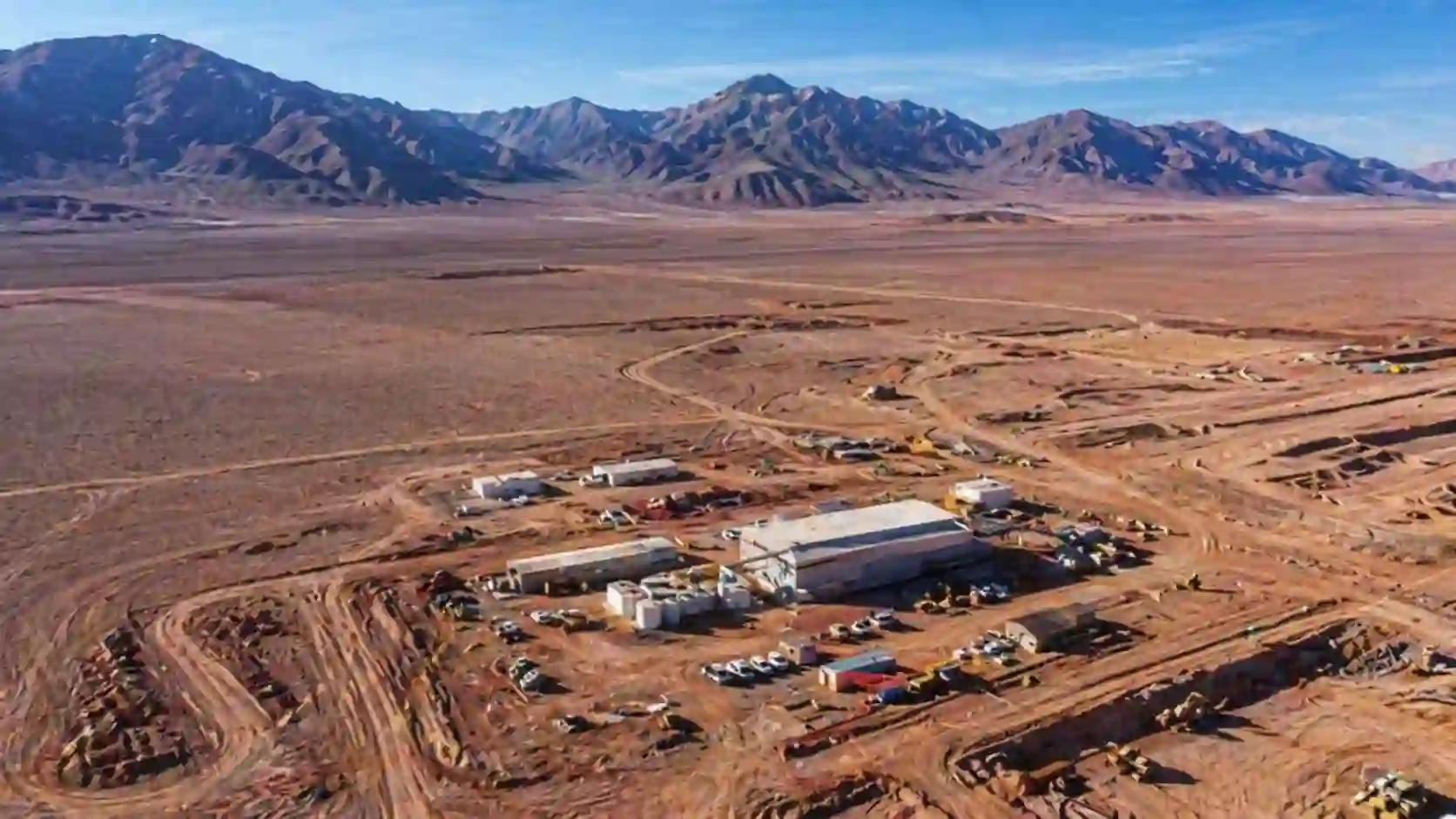
Centenario is Eramet’s lithium operation on the Salar de Centenario-Ratones in Salta Province, Argentina. The plant was commissioned in July 2024, delivered its first lithium carbonate at the end of that year and is designed to produce 24,000 tonnes of lithium carbonate equivalent annually at full capacity.
The project uses a Direct Lithium Extraction process developed by Eramet over a decade of research and tested for five years at an on-site pilot plant. Eramet reports a lithium extraction yield of around 90%, approximately twice less brine pumped than a conventional extraction process and recycling of 60% of the water used in the process.
The company describes a production cycle of roughly one week, compared with 12 to 18 months for traditional natural evaporation. That speed advantage does not eliminate downstream processing. Extracted lithium still has to move through concentration, purification and conversion stages before saleable lithium carbonate leaves the plant.
Ownership, Buyers and Market Role
Centenario was developed with Tsingshan as a 49.9% partner. In October 2024, Eramet acquired Tsingshan’s interest for US$699 million and became sole owner of the project. Full ownership gave Eramet control over the operating ramp-up and future expansion decisions, while concentrating the financial and execution exposure inside the group.
The plant remained in a capital-intensive ramp-up phase during 2025. The commercially stronger indicator is the relationship between production, sales and operating stability rather than a single annual financial figure.
Eramet sold 5,420 t-LCE in 2025, including 4,900 tonnes in the second half, primarily to cathode active material producers in China. Q1 2026 sales reached 3,920 t-LCE, again primarily to Chinese CAM producers. The plant is often framed as a European strategic-supply asset, but its first commercial flows have been tied mainly to the Chinese battery-material chain.
Centenario is a European-owned lithium asset in Argentina whose first reported commercial sales flowed primarily into China’s cathode-material system.
What Happened During the 2025 Ramp-Up?
The first half of 2025 was affected by a technical issue during commissioning of the Forced Evaporation equipment. Eramet reduced its full-year production target in July to between 4 and 7 kt-LCE after the delay.
Performance improved sharply in the second half. Production rose from around 10% of daily nameplate capacity in June to close to 75% in December. Full-year output reached 6,690 t-LCE, of which 5,980 tonnes were produced in the second half.
Centenario Phase 1 is commissioned at the Salar de Centenario-Ratones.
Eramet acquires Tsingshan’s 49.9% interest and becomes sole owner.
The plant delivers its first lithium carbonate production.
A technical issue delays commissioning of the Forced Evaporation equipment.
Daily output is around 10% of nameplate capacity.
Daily output reaches close to 75% of nameplate capacity.
Production runs close to 80% of nameplate capacity.
A gas-supply limitation and a planned extended shutdown reduce output while the design of downstream equipment is improved.
Production returns to close to 80% of nameplate capacity.
Centenario produces 3,720 t-LCE and sells 3,920 t-LCE. February is affected by limited gas supply and equipment-related maintenance.
Production reaches 4,720 t-LCE and averages 85% of nameplate capacity during the quarter.
Operating pace reaches 90% of nameplate capacity.
Production totals 8,440 t-LCE and sales reach 8,320 t-LCE.
Eramet confirms 17–20 kt-LCE full-year guidance and reports completion of the PFS for an initial 11 kt-LCE brownfield expansion.
What H1 2026 Adds to the Case
The first half of 2026 materially changes the Centenario case. Production reached 8,440 t-LCE and sales 8,320 t-LCE. Q2 production was 4,720 t-LCE, up from 3,720 t-LCE in Q1, and the plant averaged 85% of nameplate capacity in Q2.
June is the most important operating signal: Eramet reported a production pace of 90% of nameplate capacity. That does not mean the plant has already demonstrated stable full-capacity operation across an entire quarter or year, but it shows that the 2025 commissioning bottleneck is no longer the dominant description of the project.
The February episode still matters. Limited gas supply and an equipment-related maintenance operation show that plant output depends not only on the DLE extraction step but also on energy supply, downstream equipment, maintenance planning and the integration of the whole production chain.
Updated market reading:
The case has moved from “can the plant ramp up?” toward “can it sustain high utilisation, reduce unit cost and support expansion?” For suppliers, that shifts attention toward reliability, maintenance, field service, process optimisation, utilities and future brownfield packages.
What the Public Record Proves — and What It Does Not
Proven: Eramet reported a technical issue during commissioning of the Forced Evaporation equipment in 2025. In February 2026, the company reported limited gas supply and an equipment-related maintenance operation. By Q2, production averaged 85% of nameplate capacity and reached a 90% pace in June.
Not proven in the reviewed public disclosures: that a named external supplier caused either issue, that the 2025 problem was a supplier-side design fault or that one individual equipment provider was responsible for the wider ramp-up.
The commercially useful conclusion is narrower and stronger: a plant can validate its extraction principle while still encountering serious integration, utilities and downstream-equipment problems elsewhere in the production chain.
This distinction matters for supplier intelligence. Procurement risk cannot be assigned from a general corporate disclosure unless the company identifies the responsible equipment package, contractor or failure mechanism. The evidence supports an analysis of equipment commissioning and process integration, not an accusation against an unnamed supplier.
Why Does High Altitude Change Project Execution?
Centenario operates at approximately 4,000 metres in a remote part of the Andean highlands. Eramet identifies altitude, extreme weather, logistics, missing infrastructure and an international equipment supply chain as core project-execution challenges.
High altitude changes combustion, cooling, pressure relationships, electrical performance, human work capacity and maintenance planning. Extreme aridity and temperature variation affect seals, materials, instrumentation and storage. Long supply routes increase the cost of spare parts, corrective work and specialist deployment.
These conditions do not prove that every standard industrial component will fail. They change the qualification requirement. Equipment has to be evaluated as part of the site, process and maintenance system in which it will operate.
Water, Communities and Assurance
Eramet reports that Centenario recycles 60% of the water used in its DLE process and pumps approximately twice less brine than a conventional extraction process.
In January 2026, Eramine received an Environmental Impact Declaration from Salta for pilot testing of depleted-brine reinjection at Centenario-Ratones. The approval allows the company to begin tests and generate technical information together with the provincial mining authority. It should not be read as evidence that full-scale reinjection is already a routine operating feature of the plant.
Eramet states that free, prior and informed consent was obtained from local communities in February 2020 under the framework of ILO Convention 169. Eramet Eramine also states that it has voluntarily committed to assessment against the Initiative for Responsible Mining Assurance (IRMA).
For suppliers, responsible-mining assurance affects the information package around equipment and services. Material data, maintenance records, safety instructions, water monitoring, performance evidence and change documentation can become part of project assurance rather than administrative paperwork.
Where Are the Supplier Opportunities?
Centenario does not create one generic “lithium supplier market.” It creates a set of technically distinct needs around plant stability, process control, water, maintenance, logistics and documentation.
- Forced evaporation, concentration and crystallisation equipment
- Process-control systems, sensors and industrial automation
- Water-balance monitoring, hydrological measurement and simulation
- Pumps, valves, seals, filtration and corrosion-resistant components
- Reagent optimisation and process-efficiency services
- Gas, power and utility-reliability planning for continuous process operations
- Remote diagnostics combined with field-service capability
- Critical-spares planning and high-altitude logistics
- Safety manuals, operating procedures and technical training
- Audit-ready technical, environmental and maintenance documentation
International suppliers still need to identify the relevant operating company, engineering package, decision-maker, qualification process, incumbent relationships and local service route. Public project information can identify the technical demand, but it does not provide a complete current procurement map.
For a direct comparison of how that procurement layer can differ between Argentine lithium projects, Econosur’s Rincón vs. Sal de Oro procurement case maps owner qualification, engineering roles, contractor networks and package-level buying points at Rio Tinto’s Rincón and POSCO’s Sal de Oro II.
For equipment manufacturers and engineering companies, the commercially relevant layer is therefore not only what the plant needs, but who controls each package, which suppliers are already positioned, what qualification evidence is required and when optimisation or expansion work becomes procurement.
Business Questions Behind the Next Centenario Phase
1. Which equipment and service packages could emerge from the planned 11 kt-LCE brownfield expansion?
The completed PFS confirms a defined expansion concept, but the public H1 update does not disclose package ownership, tender sequence, engineering contractors, prequalification timing or bidder lists. Those points require project and procurement monitoring as detailed studies advance.
2. Which suppliers are positioned around ongoing optimisation and reliability work?
The operating record identifies forced evaporation, downstream equipment, gas supply, maintenance and plant integration as relevant layers. It does not identify the current incumbent supplier field, service agreements, replacement opportunities or local support structure.
3. What qualification evidence will matter for suppliers at a high-altitude DLE operation?
Technical performance is only one requirement. Site conditions, commissioning support, spare-parts strategy, environmental assurance, documentation, local service capacity and responsible-mining expectations can all affect supplier qualification and execution risk.
Public disclosures now establish a stronger operating ramp-up and a planned 11 kt-LCE expansion. They do not provide a complete view of package ownership, tender timing, engineering partners, incumbent suppliers, bidder lists, qualification criteria, local subcontracting or award status.
Those gaps are where targeted supplier, contractor and procurement research can convert a project update into a commercial view of who may buy what, when and under which conditions.
What Comes Next for Centenario?
Eramet maintained 2026 production guidance of 17–20 kt-LCE in its H1 results and continues to target a level close to 100% of the plant’s 24 kt-LCE annual nameplate capacity by the end of 2026. At nameplate capacity, the group is targeting an Ex-Works cash cost of US$5,400–5,800/t-LCE, based on 2025 economic conditions.
The next project phase is also more concrete. Eramet completed the pre-feasibility study for an initial brownfield expansion adding 11 kt-LCE of annual production capacity and launched detailed studies. The company states that a final investment decision could be made by the end of 2027 and that the expansion is eligible for Argentina’s RIGI investment incentive regime.
That changes the supplier opportunity. Centenario is no longer only a new plant being commissioned. It is becoming an operating asset with recurring maintenance and optimisation demand while a defined expansion programme advances in parallel.
Market Reality: Centenario produced 8,440 t-LCE in H1 2026, averaged 85% of nameplate capacity in Q2 and reached a 90% pace in June. The plant is materially closer to stable nameplate operation than it was at the end of 2025.
Execution Question: The remaining test is whether high utilisation can be sustained while unit costs converge toward target levels and while utilities, maintenance and downstream equipment remain reliable.
Commercial Implication: Supplier demand now spans two layers: operating reliability and optimisation at the existing plant, plus engineering, equipment, services and local execution around the planned 11 kt-LCE brownfield expansion.
This project case sits inside Econosur’s Lithium and Mining industry overview. The market comparison is developed in Lithium in Argentina and Chile and Lithium is not one market.
For country context, see the Argentina market profile and Argentina market insights.
- Eramet — H1 2026 results, 29 July 2026: 8,440 t-LCE production, 8,320 t-LCE sales, 85% Q2 average utilisation, 90% June pace, 17–20 kt-LCE guidance, cost target and the planned 11 kt-LCE brownfield expansion.
- Eramet — Lithium and Centenario project information: 24 kt-LCE nameplate capacity, DLE performance, water recycling, resources and project context.
- Eramet — 2025 full-year results: 2025 production and sales, December utilisation, buyers, costs and initial expansion context.
- Eramet — Q1 2026 turnover and operations update, 23 April 2026: 3,720 t-LCE production, 3,920 t-LCE sales, February gas-supply limitation and equipment-related maintenance.
- Eramet — H1 2025 results: technical issue during commissioning of the Forced Evaporation equipment and the resulting ramp-up delay.
- Eramine — depleted-brine reinjection testing approval, 9 January 2026: Salta environmental approval for pilot reinjection tests at Centenario-Ratones.
- Eramet Eramine — company and responsible-mining information: project location, DLE characteristics and voluntary commitment to IRMA assessment.
- Reuters — Eramet acquires Tsingshan’s Centenario stake: US$699 million transaction and full ownership.
- Econosur analysis updated 19 August 2026.
From project headlines to operating reality
Centenario connects ownership, DLE, commissioning, buyers, water, high-altitude logistics, supplier qualification and financial execution. A useful project analysis has to separate proven production, design capacity, public company statements and inferences about the supply chain.
Econosur prepares custom analysis and company reports for businesses, investors and institutions evaluating South American lithium projects, operators, suppliers, procurement structures and execution risk.
Explore Custom Market AnalysisFrequently Asked Questions
What is the Eramet Centenario lithium plant?
Centenario is Eramet’s lithium carbonate plant on the Salar de Centenario-Ratones in Salta, Argentina. It uses Direct Lithium Extraction and has a design capacity of 24,000 tonnes of lithium carbonate equivalent per year.
What happened during the Centenario ramp-up in 2025?
Eramet reported that the first half of 2025 was hampered by a technical issue during commissioning of the Forced Evaporation equipment. Production recovered in the second half and reached close to 75% of daily nameplate capacity in December.
Was the problem proven to be a supplier design fault?
No public Eramet disclosure reviewed for this analysis identifies a named supplier or describes the issue as a supplier-side design fault. The official description is a technical issue during commissioning of the Forced Evaporation equipment.
How did Centenario perform in H1 2026?
Centenario produced 8,440 t-LCE and sold 8,320 t-LCE in H1 2026. Production averaged 85% of nameplate capacity in Q2 and reached a 90% pace in June.
What is Eramet’s 2026 production target?
Eramet maintained guidance of 17,000 to 20,000 t-LCE for 2026 and aims to reach a level close to the plant’s full 24 kt-LCE annual nameplate capacity by the end of the year.
What expansion is Eramet studying at Centenario?
Eramet completed the pre-feasibility study for an initial brownfield expansion adding 11 kt-LCE of annual capacity and launched detailed studies. A final investment decision could be made by the end of 2027, and the company states that the project is eligible for Argentina’s RIGI regime.
Has depleted-brine reinjection become routine at Centenario?
No. Eramine received environmental approval in January 2026 to begin pilot depleted-brine reinjection tests. The approval supports testing and technical data generation; it does not establish full-scale reinjection as a routine operating feature.
What should industrial suppliers learn from Centenario?
Equipment has to be evaluated as part of an integrated high-altitude production system. Reliability, commissioning support, field service, critical spares, gas and utility dependencies, documentation, environmental assurance and performance under remote Andean conditions are part of the delivered solution.