
Cono Sur · Lithium Triangle · Chile · Argentina · Bolivia
Lithium Is Not One Market: Chile, Argentina and Bolivia
The three countries share lithium geology, but not the same reserves, production base, project authority or commercial route. Chile operates at scale through a staged public-private structure. Argentina is moving from parallel project development into parallel ramp-ups. Bolivia remains state-led while attempting an investment-policy transition.
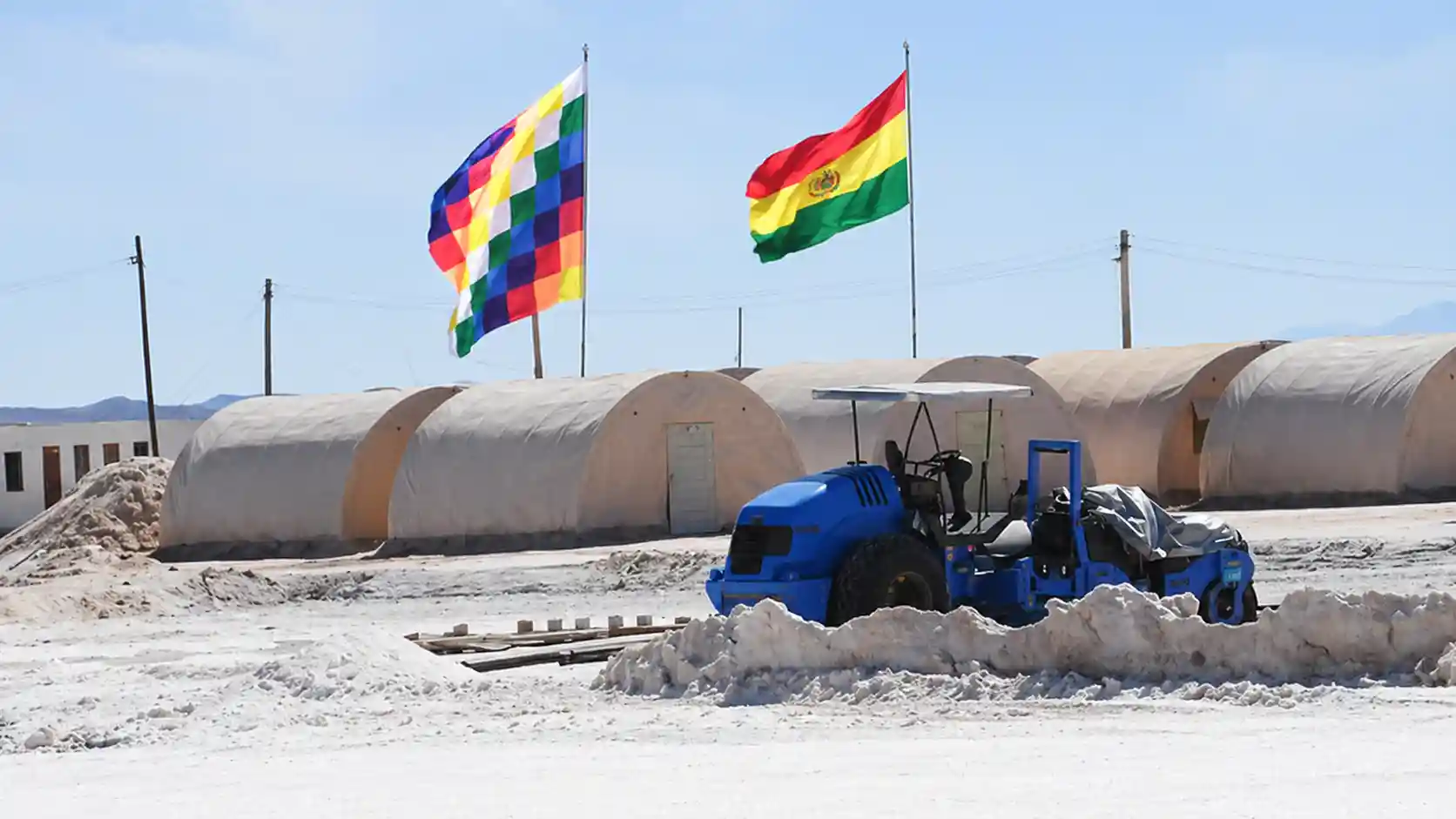
The Lithium Triangle is one resource geography, but it is not one market.
Chile still has the strongest operating position. Argentina has the largest identified resource base of the three and is moving from a project-pipeline story toward several real ramp-ups. Bolivia has a very large resource base but remains far behind in operating scale and still has unresolved legal and institutional questions around its major foreign projects.
The commercial difference is institutional and operational. Chile combines established production with a staged SQM–Codelco governance transition and a new investment cycle around Salar Futuro. Argentina advances through provinces and multiple private operators, with Centenario and Mariana showing how project execution and ramp-up now matter as much as announced capacity. Bolivia remains centred on YLB while the government seeks a more investment-oriented legal framework, but the CBC and Uranium One contracts are still not an operating production base.
For the cluster structure, see Econosur’s Lithium and Mining overview, Argentina–Chile market analysis, NovaAndino Litio, Codelco, the Eramet Centenario case and the Rincón vs. Sal de Oro procurement case.
Core market reading:
Resources explain where lithium exists. Reserves, operating plants, ramp-up performance, authority and infrastructure explain where a lithium market actually exists.
Resources, Reserves, Production and Capacity Are Different
Lithium coverage frequently combines four categories that measure different things.
The unit problem matters as well. Company reports commonly use lithium carbonate or lithium carbonate equivalent. The USGS mine-production table uses lithium content. Those figures cannot be placed side by side without conversion.
USGS 2026 reports reserves of 9.2 million tonnes for Chile and 4.4 million tonnes for Argentina. Bolivia does not have a separate reserve figure in that table.
USGS estimates 2025 mine production of 56,000 tonnes of lithium content in Chile and 23,000 tonnes in Argentina. Bolivia is not reported separately in the country production table.
Bolivian, Argentine and Chilean company figures may use lithium carbonate, lithium chloride or lithium carbonate equivalent. They should not be directly compared with USGS lithium-content figures without conversion.
The Regional Market in August 2026
Chile: Existing Production and a Staged Transfer of Control
Chile’s advantage is not the largest resource figure. It is the combination of reported reserves, existing large-scale production, operating knowledge and established export relationships. The USGS estimated 2025 mine production at 56,000 tonnes of lithium content and reported reserves of 9.2 million tonnes.
The governance structure around NovaAndino Litio requires a precise distinction between ownership, influence and control. Codelco holds 50% plus one share and has significant influence, but Codelco’s 2025 financial statements state that it does not control NovaAndino during the 2025–2030 period. SQM controls and consolidates the joint company through 2030. Codelco is scheduled to assume control at board level from 2031.
This makes Chile’s model a staged transition rather than an immediate transfer from private operation to state operation. Existing operating capability remains in place while ownership, economic participation and future control are reorganised over time.
SQM reported that NovaAndino sold 75,800 tonnes of lithium carbonate equivalent in the second quarter of 2026 and 138,200 tonnes during the first half. For 2026, the company expects production of between 280,000 and 290,000 tonnes of lithium carbonate equivalent and expects production capacity to surpass 300,000 tonnes by the end of 2027. These company figures use lithium carbonate equivalent and are not directly comparable with the USGS mine-production figures reported as lithium content.
The next structural step is Salar Futuro. In July 2026, NovaAndino submitted the environmental and technical documentation required for the project. Subject to the required approvals, Salar Futuro contemplates approximately US$3 billion of investment over about seven years. It combines higher recovery, new processing technologies, renewable energy and the planned elimination of continental-water use from the production process at the Salar de Atacama.
Salar Futuro remains a planned investment programme rather than an operating result. Its future capacity, environmental performance and implementation schedule still depend on regulatory approval and project execution.
Chile is the most mature operating market of the three, but its next phase is more complex than simple production growth. The market is testing whether established operations, higher state participation, new processing technology and tighter environmental constraints can be combined without weakening operating continuity.
Argentina: Parallel Projects Are Becoming Parallel Ramp-Ups
Argentina has the largest identified lithium resource figure of the three at 28 million tonnes. The USGS reports 4.4 million tonnes of reserves and estimated 2025 mine production at 23,000 tonnes of lithium content.
The market is organised through provinces rather than one national operating company. Jujuy, Salta and Catamarca control important resource and permitting environments, while private and international operators advance separate projects. This allows several assets to move in parallel, but it also creates project-specific differences in taxes, infrastructure, roads, energy, water, community relations and procurement.
The Eramet Centenario case now shows more than an early commissioning story. Eramet reported that Centenario reached 90% of nameplate capacity in June 2026. The company continues to target 17,000 to 20,000 tonnes of lithium carbonate equivalent for 2026 and nameplate capacity close to 100% by year-end, while studies for a further expansion of the plant are progressing.
Ganfeng’s Mariana project provides a second current ramp-up case in Salta. The provincial Ministry of Production and Mining reported production of 600.59 tonnes in the first quarter of 2026 and 1,320 tonnes in the second quarter. Mariana has environmental approval for annual production of 20,000 tonnes of lithium chloride. The operation is supplied by its own 120 MW solar park, with environmental approval allowing an additional 30 MW.
The Rincón vs. Sal de Oro procurement case shows another layer of that fragmentation. Rio Tinto’s Rincón and POSCO’s Sal de Oro II both retain owner-side supplier control, but the engineering, integration and package-level buying structures below the owner gateway differ materially. Even within one country, supplier access has to be read project by project.
These company and project figures use different product units and should not be combined mechanically with the USGS lithium-content number. Their analytical value is different: they show whether individual Argentine projects are moving from design and construction toward stable operation.
Argentina is becoming a market of parallel operating tests, not just parallel project announcements. The commercial question is increasingly which projects can stabilise production while solving energy, water, logistics, service and procurement constraints at asset level.
Marcus A. Volz reading:
The most important change in Argentina is not the number of projects. It is that several assets are now being tested in operation at the same time. Centenario and Mariana show that the market is moving from announced capacity toward measurable ramp-up performance. That makes utilities, logistics, operating stability and project-level supplier structures more useful indicators than the size of the national project pipeline alone.
Bolivia: Reform Intent Meets an Unresolved Execution System
Bolivia has 23 million tonnes of identified lithium resources according to the USGS. The same USGS table does not report a separate Bolivian reserve or 2025 mine-production figure.
YLB operates Bolivia’s state lithium production base. In May 2026, the company said its reactivation plan targeted 3,600 tonnes of lithium carbonate production during 2026. That is an operating target from the state company, not a confirmed year-end result, and it remains far below the scale of Chile’s current production base.
The Chinese CBC agreement provides for two DLE plants with combined planned capacity of 35,000 tonnes of battery-grade lithium carbonate per year. The Uranium One agreement provides for another plant with planned capacity of 14,000 tonnes. These are contract capacities, not operating production.
The legal position remains unresolved. In July 2026, the contracts were still stalled in Bolivia’s legislature while the Constitutional Court reviewed judicial actions brought by Indigenous communities from southwestern Potosí. The disputes include questions around consultation, access to information and potential impacts on water, ecosystems and territory.
At the same time, the Rodrigo Paz government is trying to change the investment framework. In January 2026, the government announced work on a new lithium and evaporitic-resources law intended to be more transparent and attractive to investors. This creates a clear separation between policy direction and project execution: the reform signal is real, but it has not yet converted the major foreign contracts into operating plants.
Bolivia should therefore be read as a state-led system in transition rather than either a closed static model or an already liberalised investment market. YLB remains central, while future market access depends on law, contract approval, judicial outcomes, technology validation, environmental legitimacy and implementation capacity.
Bolivia’s geological opportunity is not the unresolved question. The market test is whether a new legal framework, state control and foreign technology can be combined into approved, financed and operating projects.
One Geography, Three Operating Systems
| Measure | Chile | Argentina | Bolivia |
|---|---|---|---|
| Identified resources | 13m t | 28m t | 23m t |
| Reported reserves | 9.2m t | 4.4m t | Not separately reported in USGS 2026 table |
| 2025 mine production | 56,000 t lithium content | 23,000 t lithium content | Not separately reported in USGS 2026 table |
| Current operating structure | Established production plus staged SQM–Codelco governance; SQM control through 2030, Codelco from 2031 | Multiple provincial projects and international operators | YLB-centred state system with a small operating production base |
| Development structure | NovaAndino, Salar Futuro, Maricunga and state-negotiated partnerships | Parallel private projects, expansions and increasingly visible operating ramp-ups | Planned Chinese and Russian DLE contracts plus proposed legal reform; approvals unresolved |
| Main execution risk | Control transition, water, environmental approval, technology integration and operating continuity | Infrastructure, utilities, provincial variation and project ramp-up | Legal approval, judicial review, technology validation and state implementation capacity |
Argentina’s fragmented structure is usually treated as a weakness. In 2026, I increasingly see it as a commercial strength as well.
Multiple operators across several provinces create independent project and procurement routes. A delay at one asset does not stop the entire national market, and suppliers can encounter different buyers, engineering structures and operating needs across projects.
Chile offers the opposite model: a more mature but more concentrated system, where access depends more heavily on a smaller number of large operating and procurement structures. Bolivia is more concentrated still because YLB and state-led contracts remain the central route into the sector.
That changes how I would compare the three countries. The relevant question is not only who has the best geology, the largest reserves or the highest production. It is also how many credible, independent access points each market actually creates for companies.
What the Three Systems Mean for Suppliers
Supplier demand exists in all three countries, but the commercial route is different.
Chile: qualify inside established operating systems
Large operators, state participation and existing production create substantial demand, but entry depends on formal qualification, incumbent procurement systems, environmental performance and the distinction between SQM control through 2030, Codelco’s significant influence and scheduled control from 2031, and project-specific partnerships.
Argentina: identify the project, province and operating stage
A supplier may be relevant to commissioning in Salta, infrastructure in Catamarca or an expansion in Jujuy. The buyer, contractor, technical need and timing differ by asset. Local service, spare parts and field execution are often as important as the equipment itself. The Rincón vs. Sal de Oro case analysis provides a project-level example of how owner qualification, engineering roles and package buyers can diverge inside Argentina’s lithium market.
Bolivia: understand the state, the contract and the policy transition
Commercial relevance runs through YLB, government policy, foreign technology agreements and legislative implementation. The 2026 reform direction may open new structures, but announced national policy is not yet the same as an accessible procurement pipeline.
The Shared Constraint: Water, Energy and Distance
The countries do not share one market, but they do share difficult operating conditions. High-altitude salars require water governance, energy supply, roads, chemical logistics, worker accommodation, monitoring and export infrastructure.
In Chile, the main tension is the relationship between established production, new processing technology and environmental limits in the Salar de Atacama. In Argentina, the constraint often appears during project execution: Centenario has exposed the importance of gas and downstream equipment, while Mariana shows how projects may build dedicated energy infrastructure such as a 120 MW solar park. In Bolivia, infrastructure and technology have to advance inside a central state and legal system that is itself being redesigned.
This is why announced capacity should not be treated as future production. A lithium plant becomes commercially meaningful only when extraction, utilities, processing, logistics, permits, communities and customers function together.
In lithium, geology defines the opportunity. Production systems and institutions define the market.
- U.S. Geological Survey — Mineral Commodity Summaries 2026: Lithium: identified resources, reported reserves and 2025 mine production.
- Codelco — Financial Statements 2025: NovaAndino participation and Codelco’s significant influence without control during the 2025–2030 period.
- Codelco — 2026 Corporate Presentation / 2025 Results: SQM control of NovaAndino in 2025–2030 and scheduled Codelco control from 2031.
- SQM — Second Quarter 2026 Earnings Release: NovaAndino sales volumes, 2026 production guidance, capex and Salar Futuro progress.
- Eramet — Half-Year 2026 Results, 29 July 2026: Centenario reached 90% of nameplate capacity in June, 2026 production guidance and expansion studies.
- Ministry of Production and Mining of Salta — Ganfeng Lithium update, 27 August 2026: Mariana ramp-up, quarterly production, lithium-chloride approval and solar-power infrastructure.
- Argentina SIACAM: official mining indicators, reports and project context.
- Yacimientos de Litio Bolivianos — 2026 production plan, 15 May 2026: YLB target of 3,600 tonnes of lithium carbonate production in 2026.
- YLB — DLE contract summary: CBC and Uranium One planned capacities, investment and contract structure.
- YLB — Government announcement on new lithium law, 26 January 2026: policy direction toward a new investment framework.
- Reuters — CBC and Uranium One agreements: independent reporting on announced capacities, investment structure and legislative requirements.
- Reuters — Bolivia’s operating and political baseline: production context and YLB-centred structure.
- Reuters — Bolivia’s 2026 policy shift: investor-reassurance policy and treatment of existing agreements.
- ERBOL — 12 July 2026: the CBC and Uranium One contracts remained stalled while the Constitutional Court reviewed judicial actions.
- Unit note: USGS mine production is reported as lithium content. Company and Bolivian plant figures may be reported as lithium carbonate, lithium chloride or lithium carbonate equivalent and are not directly comparable without conversion.
- Econosur analysis updated 27 August 2026.
From lithium geography to market intelligence
Chile, Argentina and Bolivia require different readings of production, authority, project control, suppliers, water, infrastructure and legal execution.
Econosur prepares country, sector, company and custom analysis for businesses, investors and institutions evaluating South American lithium and critical-minerals markets.
Explore Custom Market AnalysisFrequently Asked Questions
Is the Lithium Triangle one market?
No. Chile, Argentina and Bolivia share a resource geography but differ in reserves, operating production, authority, project ownership, investment structures and supplier-access routes.
What is the difference between resources, reserves and production?
Resources measure identified geological potential. Reserves are the portion reported as economically recoverable under current conditions. Production is actual output. Announced plant capacity is a design target, not production.
Which country produced the most lithium in 2025?
The USGS estimated 2025 mine production at 56,000 tonnes of lithium content in Chile and 23,000 tonnes in Argentina. Bolivia was not reported separately in the USGS country production table.
How does Chile’s lithium model work?
Chile combines established Salar de Atacama production with a staged public-private governance structure. SQM controls and consolidates NovaAndino Litio through 2030, while Codelco has significant influence and is scheduled to assume control from 2031.
How does Argentina’s lithium model work?
Argentina develops lithium through provincial resource authority and multiple private or international operators. In 2026, the market is increasingly defined by parallel ramp-ups as well as project development, with province- and asset-specific infrastructure, permitting, water and supplier conditions.
How is Bolivia’s lithium model changing in 2026?
Bolivia remains state-led through YLB while the Rodrigo Paz government prepares a new lithium law intended to attract investment. The CBC and Uranium One contracts remain unresolved, with legislative progress blocked while judicial actions are under review.