
Faber-Castell Brazil:
Pine Forests,
Pencils
and Value Chain
Faber-Castell’s Brazilian forest model shows how planted pine forests, certified timber, industrial processing and global pencil production create a resource-based value chain with long-term supply security.
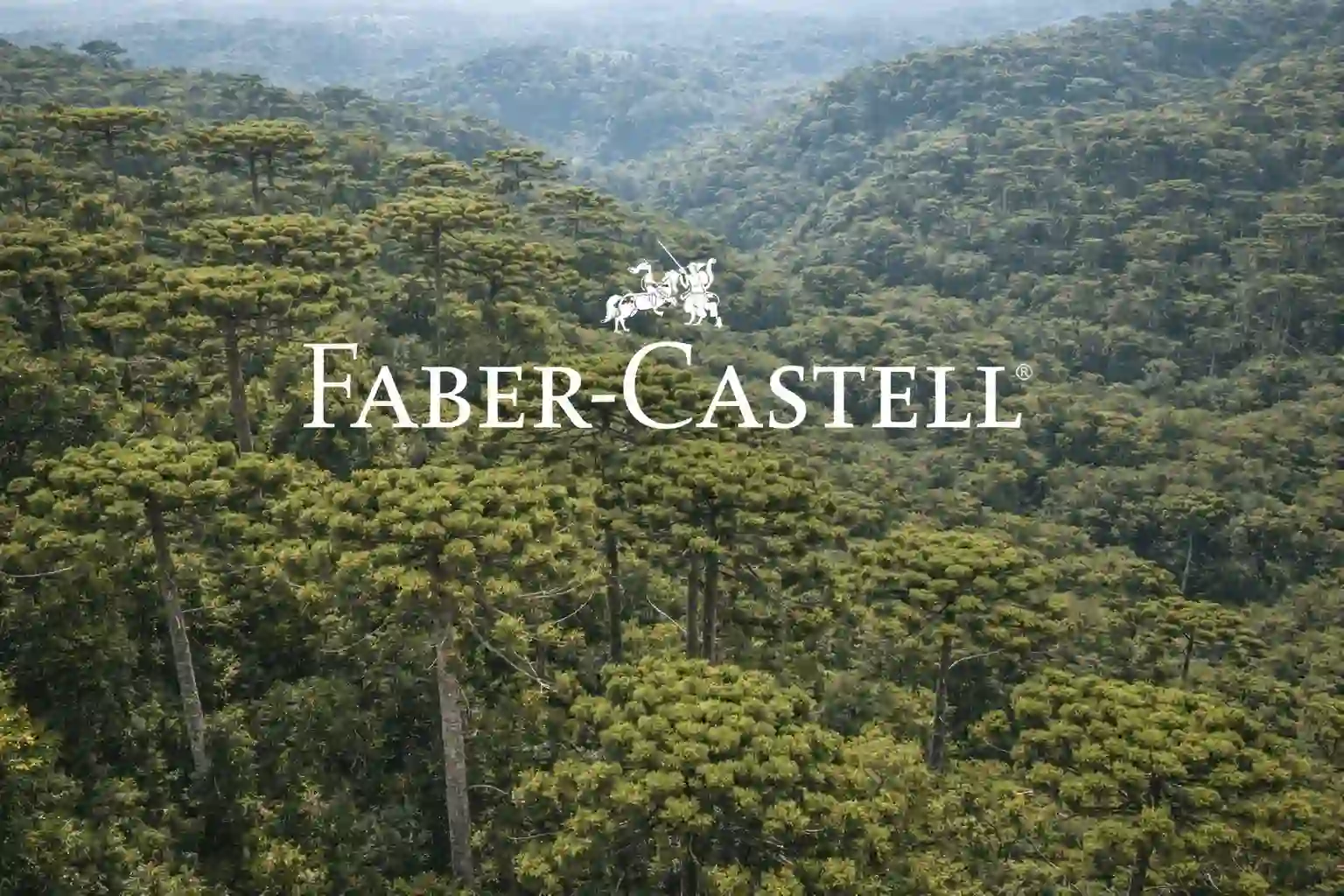
Faber-Castell’s Brazilian advantage is not forest ownership alone. It is the integration of a biological asset with certification, wood processing, industrial capacity and international distribution.
The company links its forestry base in Prata with industrial wood processing and large-scale EcoLápis production in São Carlos. Faber-Castell Brazil reports around 2.0 billion EcoLápis per year and exports to more than 70 countries.
This structure reduces dependence on external timber procurement, but it does not eliminate risk. It relocates part of that risk into forestry management, fire, climate, biological cycles, certification and long-term asset utilisation.
Brazil is often read through scale, commodities and macro volatility. The Faber-Castell case shows a more precise industrial logic: planted forestry, certified timber, processing and manufacturing can form one controlled value chain.
Inside the wider Brazil market context, this case is useful because it links resource management with specialized manufacturing. It also belongs to the broader Forestry, Pulp & Paper sector context, where land, certification, processing capacity and global buyers shape market position.
Market reading: the strategic asset is the controlled chain from forest to factory. Faber-Castell combines a long-cycle biological resource with certification, wood processing, manufacturing and export distribution. The resulting advantage is not simply “own timber”; it is greater control over a critical industrial input and its traceability.
September 2026 update: company sources use different scopes
Faber-Castell’s current public material uses different figures for the Brazilian forestry base depending on the reporting scope. A forest-management document lists 11 forest parks with a total area of 8,223 hectares. The company’s Brazilian B2B profile cites 9,600 hectares of cultivated forest, while the global forestry page describes approximately 10,000 hectares around Prata.
These values should not be treated as interchangeable measures. They appear to refer to different definitions such as forest-park area, cultivated forest and broader forestry-project area. The economic point does not depend on forcing them into one number: the company maintains a large, long-term forestry base directly linked to industrial wood supply.
Current company pages also use different production figures. The Brazilian corporate profile and B2B page report around 2.0 billion EcoLápis per year, while the current virtual tour says more than 2.3 billion. This article keeps 2.0 billion as the conservative headline figure and treats the higher figure as a separate company-page claim rather than silently reconciling the two.
Faber-Castell Brazil reports around 2,000 employees, more than 1,000 products and exports to more than 70 countries. That gives the forest-to-factory model an industrial scale that is more informative than plantation area alone.
A company that controls part of its raw-material base can reduce external procurement risk, but it also takes long-cycle biological and asset risk onto its own operating system.
The forest as a business model
Faber-Castell’s forest-management documentation dates the start of its Prata forestry projects to 1989, in the Brazilian state of Minas Gerais — on previously fallow land, far from the Amazon and outside the rainforest narrative that often dominates international perceptions of Brazilian forestry.
The raw material is Pinus caribaea, a pine species suited to the poor, sandy soils of the Brazilian savanna. In the Faber-Castell model, the forest is not an external environmental project. It is part of the production chain. Timber is grown, harvested, processed and linked to pencil manufacturing.
This is a production system with an environmental logic. That distinction matters. The forest is not a decorative ESG asset; it is part of the input base behind a global manufactured product.
Why this is vertical integration
According to the company, Faber-Castell’s Brazilian forest operations provide certified timber for pencil production and are part of a broader system of sustainable forestry management. The analytical point is not whether the forest looks impressive. The point is the structure: raw material, certification, processing and manufacturing are linked inside one long-term system.
That creates a different type of advantage from a brand campaign. A company that has to buy timber on external markets is exposed to price movements, supply availability, certification gaps and procurement uncertainty. A company that has built its own forestry base over decades controls more of the input equation.
Certification is part of that operating system. Faber-Castell states that more than 90% of the wood used worldwide for its pencil production comes from FSC-certified forests and that it also uses PEFC-certified wood. Chain-of-custody and site certification therefore connect forestry management with traceability and product compliance rather than sitting outside the manufacturing process.
Industrial logic: Vertical integration does not remove all risk. It changes the risk profile. Instead of relying only on external timber markets, the company internalizes part of the raw-material base and turns forestry management into industrial infrastructure.
Supply security before it had a name
The Faber-Castell case is useful because it shows the time horizon of real resilience. Supply security cannot be improvised during a shortage. A certified forest, a sawmill process, a manufacturing link and a reliable wood flow are built over years and decades.
That is why the Brazilian forestry model matters beyond the pencil industry. It is a case of resource control as industrial strategy. The company’s sustainability language may be visible to consumers, but the deeper economic logic is upstream: raw-material security, certification control and cost stability.
When companies today talk about supply-chain resilience, they often mean alternate suppliers, inventories or geographic diversification. Faber-Castell’s Brazil model shows another layer: control of the resource base itself.
Why Brazil matters in this case
Brazil is not just the geographic location of the forest. It is part of the industrial logic. The country offers land, climate, forestry expertise, manufacturing capacity and a large enough operational base to make the model relevant at scale.
The São Carlos production site and the forestry operations in Minas Gerais show a Brazilian industrial pattern that is often overlooked: natural-resource management and manufacturing do not have to be separate stories. Faber-Castell Brazil reports annual production of around 2.0 billion EcoLápis, while its Brazilian operation exports to more than 70 countries.
The current corporate profile also identifies Prata not only as a forestry location but as a site for seedling production, forest operations and industrialisation of wood. That makes the chain more precise: biological asset, wood preparation, large-scale manufacturing and international distribution are connected inside the Brazilian platform.
That matters for how Brazil should be read by international companies. Brazil is often viewed through commodity exports, consumer scale or macro volatility. The Faber-Castell case shows another angle: Brazil as a location where controlled resource systems can support specialized manufacturing over long periods.
| Layer | What Faber-Castell controls | Strategic meaning |
|---|---|---|
| Raw material | Managed pine forests in Brazil linked to pencil timber supply. | Reduced dependence on external timber procurement. |
| Certification | Certified forestry as part of the production input logic. | Supply security and compliance become connected. |
| Processing | Forestry, sawmill and manufacturing connection. | Input quality and production planning become more predictable. |
| Market position | A sustainability claim backed by operational infrastructure. | The brand story rests on a real production asset. |
From company integration to an open supplier market: the Paraná contrast
Faber-Castell is useful precisely because it should not be mistaken for the whole Brazilian wood market. Its core forestry system around Prata in Minas Gerais is highly integrated: the company controls a substantial part of the biological resource, wood preparation and manufacturing chain for a defined product.
Paraná represents a different commercial structure. APRE Florestas reports about 1.17 million hectares of planted forests in the state, including 710,836.77 hectares of pinus, with Paraná producing more than half of Brazil’s pinus wood. ABIMCI reports that Paraná accounted for 67% of Brazil’s pinus plywood export volume in 2025.
That creates a broader processing cluster across sawmilling, plywood, mouldings, doors and other wood products. The supplier question is therefore less about one vertically integrated company and more about which independent processors are investing in automation, material handling, maintenance, scanning, grading, drying, treatment, digital production systems or higher-value processing.
Faber-Castell shows how internal control can secure a critical input. Paraná shows where a wider industrial cluster can create external supplier demand.
The two cases belong in the same forestry cluster because they expose different ways value is organized: vertically integrated resource control versus a multi-company processing ecosystem with external technology and service needs.
See the full Econosur analysis: Brazil’s Wood Industry Is Rebalancing: Where the Supplier Opportunity Sits in Paraná. The wider regional framework is covered in Forestry, Pulp, Wood Processing & Paper in South America.
What companies should take from this
The Faber-Castell model in Brazil illustrates a thesis that extends well beyond pencils: companies that control critical inputs over the long term build advantages that may not appear cleanly in quarterly financial language, but become decisive when markets tighten.
The lesson is that some forms of resilience require long lead times. By the time input scarcity, certification pressure or supply disruption becomes visible, the companies with long-built resource systems already have an advantage.
For companies, industrial suppliers and analysts, the case is a reminder to look beyond headline growth and ESG labels. The important question is where the structural asset sits: in the brand, in the plant, in the logistics network, in the land, in the certification system or in the raw-material base.
Faber-Castell’s Brazil case is therefore not primarily about pencils. It is about how a simple product can reveal a complex competitive structure. That same logic also appears in other South American resource-based industries, including Uruguay’s pulp sector and Chile’s seaweed industry, where resource geography, processing capacity and buyer relationships determine where value is actually created.
Industrial implication: Structural resilience is usually built long before a supply shock reveals its value. The important question is which risks have been reduced and which risks have been internalized.
Faber-Castell’s Brazilian advantage is not forest ownership alone. It is the integration of a long-cycle biological asset with certification, wood processing, industrial production and international distribution.
The company connects a forestry cycle measured in decades with a manufacturing system producing roughly two billion EcoLápis per year. That converts land and forest management into a controlled industrial-input system.
Vertical integration does not eliminate risk. It relocates it. Dependence on external timber markets is reduced, while forestry, fire, climate, biological, certification and long-cycle asset-management risk are carried inside the company’s own operating structure.
The broader Brazil comparison is useful for supplier analysis. Faber-Castell demonstrates the value of internal resource control; Paraná’s wood-processing cluster demonstrates a different model in which multiple processors can create external demand for machinery, automation, maintenance and quality systems. The commercial route depends on which model a supplier is actually facing.
- How much of São Carlos’ current wood demand is supplied internally? Public material confirms a strong forest-to-factory link but does not disclose a current internal-sourcing percentage.
- Which parts of the forest-to-factory chain remain externally supplied? Forestry machinery, harvesting, industrial wood processing, maintenance, logistics, chemicals, packaging and plant equipment can follow different procurement structures.
- Where does vertical integration create an advantage and where does it create fixed exposure? Land, forest cycles, fire, climate, certification, asset utilisation and maintenance all affect the economics of internal resource control.
Verified: Faber-Castell maintains forestry operations in Prata, industrial wood processing in Brazil and large-scale EcoLápis production in São Carlos. Current company material reports around 2.0 billion EcoLápis per year on the corporate and B2B pages, while the virtual tour states more than 2.3 billion; exports are reported to more than 70 countries.
Certification: Faber-Castell states that more than 90% of wood used worldwide for its pencil production comes from FSC-certified forests and that PEFC-certified wood is also used.
Scope difference: current official company sources use approximately 8,223, 9,600 and 10,000 hectares for the Brazilian forestry system under different labels. These figures are presented as different reporting scopes rather than one directly comparable measure.
Not publicly verified: the exact current share of Prata wood in São Carlos production, internal transfer pricing, quantified cost advantage versus external timber procurement, current sawmill or wood-processing capacity, internal versus external supplier shares and procurement responsibility for individual machinery or forestry categories.
Econosur can extend a public company case into a defined commercial research question.
- Company and value-chain analysis: ownership, sites, production logic, raw-material control, certification and downstream exposure.
- Supplier mapping: machinery, maintenance, processing technology, logistics, forestry services and other external supplier categories.
- Procurement-route research: identify which entity specifies, qualifies and buys a defined product or service.
- Cluster comparison: compare an integrated company model such as Faber-Castell with broader processing clusters such as Paraná.
- Primary market checks: where practical, test public-source assumptions with relevant companies, suppliers and sector participants.
For a Brazil-wide view, see the Brazil Country Profile. For industrial supplier cases, see Manufacturing & Industrial Cases.
This analysis uses current Faber-Castell corporate, forestry, certification and Brazilian operating material. Different forestry-area and production figures are retained with their original source scope rather than being silently reconciled. Evidence reviewed through 14 September 2026.
- Faber-Castell — Sustainable forestry project in Latin America: approximately 10,000 hectares in Prata, around 20 m³ of wood growth per hour and direct supply to the São Carlos pencil plant.
- Faber-Castell — Sustainability reporting: current 2024/25 sustainability reporting framework and company-wide metrics.
- Faber-Castell — Certificates and management systems: FSC/PEFC sourcing and more than 90% FSC-certified wood in worldwide pencil production.
- Faber-Castell Brasil — Corporate profile: around 2,000 employees, São Carlos production, Prata forestry and wood industrialisation, 2.0 billion EcoLápis per year and exports to more than 70 countries.
- Faber-Castell Brasil B2B — About the company: 9,600 hectares of cultivated forest and 2 billion EcoLápis per year.
- Faber-Castell Brasil — policy-management summary: 11 forest parks with a total area of 8,223 hectares.
- Faber-Castell Brasil — Virtual Tour: current company description of the São Carlos production base; this page states more than 2.3 billion EcoLápis per year.
- Sector context: the following sources are not evidence about Faber-Castell’s own procurement. They are used only to connect the company case to Brazil’s wider wood-processing market.
- APRE Florestas — Paraná forestry base, July 2026: approximately 1.17 million hectares planted, 710,836.77 hectares of pinus and more than half of Brazil’s pinus wood production.
- ABIMCI — Processed Wood Sector Study 2026: Brazil exported 2.3 million m³ of pinus plywood in 2025; Paraná accounted for 67% of that volume.
From company case to market interpretation
The Faber-Castell Brazil case shows why company-level analysis needs more than brand recognition or sustainability language. The relevant question is where a company controls resources, processing capacity, certification, logistics and industrial know-how.
Econosur prepares sector briefs, company reports and custom market analysis for companies, analysts and institutions evaluating South American resources, manufacturing systems and supply chains. Possible scopes include Brazilian forestry, certified timber, vertical integration, supplier structures, industrial resource control, procurement responsibility and company-level operating models.
Explore custom market analysisFrequently asked questions
Why is Faber-Castell's Brazil forest model strategically relevant?
It is strategically relevant because Faber-Castell controls a major part of its timber input through long-term forestry management in Brazil. That reduces exposure to external timber markets, supply disruptions and raw-material uncertainty.
What does vertical integration mean in this case?
It means that the company does not only manufacture pencils. It also manages the forestry base that supplies the wood used in production, linking raw material, sawmill logic and manufacturing into one system.
How does the Faber-Castell case differ from Paraná’s wider wood-processing cluster?
Faber-Castell is a vertically integrated company case centered on a controlled forestry and manufacturing chain. Paraná is a broader multi-company processing cluster where sawmills, plywood producers and other processors can create external demand for machinery, automation, maintenance and quality systems.
Why does this case matter beyond pencils?
The case matters beyond pencils because it shows how long-term control of a critical input can create industrial resilience. The same logic applies to other sectors where raw materials, land, certification, logistics and processing capacity determine competitiveness.
Is this mainly a sustainability story?
It is also a sustainability story, but the industrial significance is broader. The forestry model works as a supply-security structure, a cost-stability mechanism and a long-term industrial strategy.
What should investors learn from the Faber-Castell Brazil case?
Investors should look at where structural advantage is actually located. In this case, the strategic asset is not only the brand. It is the controlled resource base, the certification system and the production link between forest and factory.
Why is Brazil important in this value chain?
Brazil is important because it provides the land, climate, forestry expertise and manufacturing base that make the integrated forest-to-factory model possible at industrial scale.