
Forestry, Pulp,
Wood Processing & Paper in
South America
South America’s forestry economy now spans two distinct industrial systems: large pulp-and-cellulose platforms and increasingly sophisticated wood-processing clusters. The commercial question is where plantation resources become operating plants, higher-value products, export logistics and accessible supplier demand.
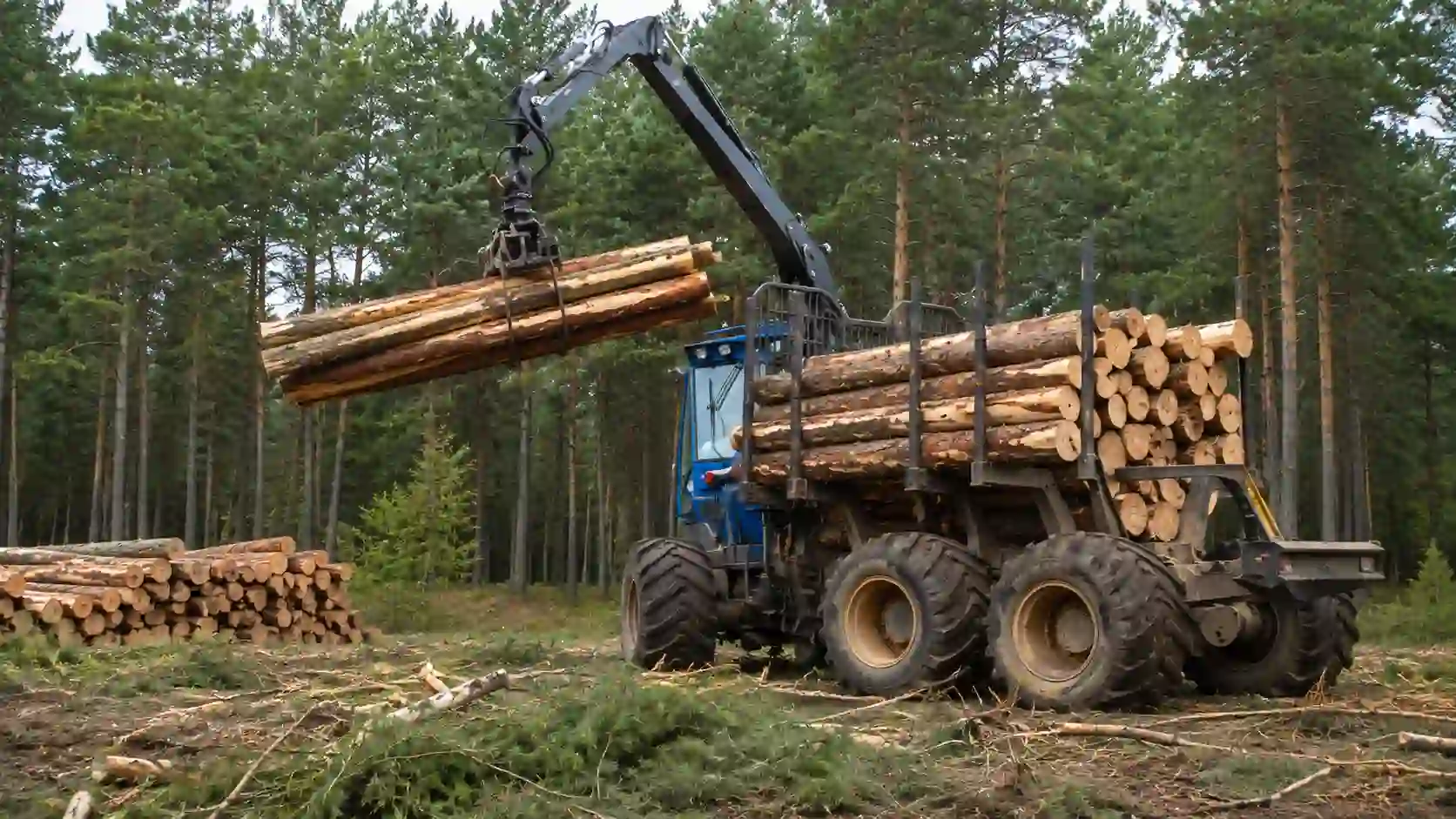
September 2026 market signal: two forestry economies are moving at once
South America’s forestry market should no longer be read mainly through pulp capacity. Brazil’s planted-tree industry exported US$7.5 billion in the first half of 2026, down 5.9% year on year, while wood-panel and plywood exports also weakened. At the same time, large pulp projects such as Arauco’s Sucuriú are adding a new investment cycle.
A second industrial layer is becoming more visible in southern Brazil: solid-wood processing, plywood, automation, engineered wood and plant productivity. Paraná is a strong example because it combines a large pinus resource base with processing capacity, export logistics and a dense supplier market.
Forestry, pulp, paper and wood processing are industrial export systems. Plantation area establishes the resource base, but commercial value depends on what happens afterwards: processing technology, plant reliability, power, water, logistics, product quality, certification, buyer access and the route through which equipment and services are purchased.
The regional market therefore contains several different business models at the same time. Brazil combines global pulp scale with major solid-wood clusters. Uruguay has an unusually concentrated pulp and forestry-export system. Chile has mature forestry production and diversified wood-product exports. Paraguay is still building enabling infrastructure around a future forestry-industrial platform.
Why forestry is more than a land-use story
The forest resource is only the first layer. Industrial forestry converts that resource into pulp, sawn wood, plywood, panels, paper, packaging, biomass and engineered products. Each conversion step changes the technology, logistics and procurement structure around the market.
Brazil’s 2026 data illustrates the distinction. Ibá reported 13.9 million tonnes of pulp production in the first half of the year, while exports of wood panels fell 19.5% and plywood exports fell 21% in value. The sector is therefore not moving as one uniform cycle.
The same distinction matters geographically. Mato Grosso do Sul is experiencing large-scale pulp investment through Arauco’s Sucuriú project. Paraná, by contrast, is especially important for pinus, plywood and solid-wood processing. Uruguay’s system is dominated by pulp and eucalyptus. Chile combines pulp with a broader wood-products export base.
The commercial market begins where the forest resource meets an industrial bottleneck: conversion, quality, uptime, logistics or buyer access.
How country roles differ in the regional forestry map
Brazil
Brazil combines global pulp scale, a large planted-forest base and major regional processing clusters. Mato Grosso do Sul is adding new pulp capacity, while Paraná is particularly important for pinus, plywood and solid-wood processing.
Uruguay
Uruguay produced 4.325 million tonnes of pulp in 2025. Pulp represented 84% of forestry-sector export revenue, making the country a highly concentrated industrial-export system built around eucalyptus, mills and logistics.
Chile
Chile has a mature forestry industry across pulp, sawn wood and other wood products. INFOR recorded US$2.254 billion in forestry exports in January–May 2026, down 15.4% year on year.
Paraguay
Paraguay is an emerging forestry-industrial case. IDB Invest has approved up to US$165 million for forestry and enabling infrastructure linked to Paracel’s industrial hub and future pulp mill.
Argentina
Argentina has selective relevance in forestry, wood products, paper and packaging, especially in the northeast. It is not currently a regional pulp-export platform on the scale of Brazil, Uruguay or Chile.
Regional layer
Across the region, the common variables are processing technology, energy, water, logistics, certification, export-market exposure and the ability to move from resource potential into reliable industrial output.
Paraná adds a different Brazil story: wood processing and supplier demand
Paraná matters because it shows why forestry analysis cannot stop at pulp. APRE Florestas reports roughly 1.17 million hectares of commercial planted forests in the state, including 710,836.77 hectares of pinus. The state produces more than half of Brazil’s pinus wood.
The downstream concentration is equally important. ABIMCI reports that Paraná accounted for 67% of Brazil’s pinus plywood export volume in 2025. This creates an industrial cluster around sawmilling, plywood, mouldings, doors and other processed wood products.
That cluster is now facing two forms of adjustment. The first is geographic: export dependence on a small number of foreign markets has become more visible. The second is industrial: processors need to protect margin through productivity, quality, reliability and higher-value products.
Supplier relevance in Paraná: automation, material handling, scanning and grading, drying, maintenance, power transmission, digital production systems, treatment, quality control and engineered-wood processing.
Evidence boundary: these are structural technology categories, not proof that a named mill currently has an open RFQ or approved capex project.
Econosur examines this supplier layer in detail in Brazil’s Wood Industry Is Rebalancing: Where the Supplier Opportunity Sits in Paraná.
Four industrial models show why “forestry market” is too broad
Arauco Sucuriú: greenfield scale and Industry 4.0
Arauco’s Sucuriú project in Mato Grosso do Sul is a US$4.6 billion pulp investment designed for 3.5 million tonnes per year, with operations targeted by the end of 2027.
- around 400,000 hectares of eucalyptus plantation area planned for the project system
- more than 400 MW of generation capacity, with about 200 MW for internal consumption
- Industry 4.0 controls and connectivity from wood processing through pulp quality control
- logistics agreement for pulp transport to the Port of Santos
UPM: inland mill, railway and specialized terminal
UPM Paso de los Toros has 2.1 million air-dry tonnes of annual production capacity. Its export system connects the inland mill with a specialized pulp terminal through Uruguay’s rail infrastructure.
- industrial operation since 2023
- dedicated logistics for pulp and chemical inputs
- mill maintenance outsourced to Andritz
- FSC and PEFC chain-of-custody certification listed by UPM
Montes del Plata: mill, port, barges and biomass
Montes del Plata operates a 1.3-million-tonne nominal pulp mill at Punta Pereira, integrated with a port terminal and biomass generation.
- industrial production since 2014
- direct maritime export access at the plant
- river-barge logistics for part of the wood supply
- biomass generation integrated into the industrial complex
Paracel: enabling infrastructure before full mill execution
IDB Invest approved up to US$165 million in March 2026 for forestry and essential infrastructure supporting Paracel’s industrial hub and future pulp mill.
- financing covers enabling infrastructure rather than proving complete mill financing
- roads, power and industrial-site infrastructure can advance before commercial pulp production
- the project is relevant to Paraguay’s broader forestry value chain
- project stage must remain separate from Uruguay’s operating systems
Market access: certification is becoming a data and traceability system
Certification and sustainability claims are already embedded in forestry trade. EU market access adds a more formal due-diligence layer. The European Commission states that the EU Deforestation Regulation begins to apply on 30 December 2026 for large and medium operators and for micro and small operators already covered by the EU Timber Regulation; most other micro and small operators follow on 30 June 2027.
Wood remains one of the commodities covered by the regulation, together with a range of derived products. For exporters and importers, this turns origin data, geolocation, legality and supply-chain documentation into an operational market-access issue rather than a generic sustainability claim.
Commercial implication: a forestry exporter can have competitive wood, a functioning mill and a reliable port route and still face buyer friction if product origin, traceability or due-diligence evidence is incomplete.
Where supplier opportunity sits
Supplier opportunity differs by industrial model. A greenfield pulp project creates demand for large process packages, utilities, construction and commissioning. An operating pulp mill creates a recurring market for maintenance, reliability, chemicals, automation and replacement systems. A solid-wood cluster such as Paraná creates a different equipment and integration market.
Process & plant equipment
Pulp lines, wood preparation, drying, cutting, pressing, finishing, treatment and other plant-specific production systems.
Automation & reliability
Controls, sensors, robotics, predictive maintenance, drives, bearings, power transmission and production software.
Water, energy & effluent
Industrial water systems, treatment, recovery, biomass, power generation and environmental-control systems.
Logistics & handling
Internal material handling, roads, rail, barges, terminals, ports, storage and export-flow optimization.
Quality & value addition
Scanning, grading, testing, traceability, engineered wood and systems that raise usable yield or product value.
Compliance & proof
Certification, chain-of-custody, EUDR preparation, origin data and buyer-facing documentation systems.
These categories identify where demand can exist. They do not establish who is buying now. A commercial supplier map requires plant-level work: ownership, project stage, technical gatekeeper, incumbent supplier, service requirements, local partner structure and procurement timing.
Marcus A. Volz perspective: forest area is the wrong starting point for supplier strategy
The most useful distinction is not “forestry country versus non-forestry country.” It is the industrial conversion step.
Brazil illustrates this clearly. Sucuriú is a greenfield pulp-capacity story. Paraná is a solid-wood processing and productivity story. Both start with planted forests, yet the supplier categories, buying points, project timing and technical requirements are different.
Uruguay provides another contrast: its commercial system is already highly integrated around operating pulp mills and export logistics. Paraguay is earlier in the execution chain, where enabling infrastructure and project finance matter before recurring mill procurement can emerge.
For an international B2B supplier, the relevant question is therefore narrower: which industrial conversion step creates the demand, which company controls that step, and what evidence shows that the requirement has moved from sector potential into an actual purchasing process?
Where published information stops
Public sources establish forest resources, export flows, major projects, installed capacity, announced investments, infrastructure and visible supplier categories. They rarely provide the complete commercial map.
Public information normally does not identify all approved capex projects, replacement cycles, RFQs, vendor lists, technical gatekeepers, incumbent supplier performance, service gaps, local-partner requirements or the current person responsible for a purchase decision.
A sector can be attractive while a supplier opportunity is still unverified. The commercial work begins when the analysis moves from industry structure to a named plant, project and buying process.
Research services for forestry, pulp and wood processing
Econosur can structure commissioned research around one defined commercial question in South America, from a regional sector screen to a plant-level supplier or buyer map.
Market & sub-sector screening
Compare pulp, sawmilling, plywood, panels, paper, packaging, engineered wood and related industrial niches across countries and regions.
Buyer & plant mapping
Identify mills, processors, forestry groups, industrial sites and buyer categories relevant to one equipment, component or service offer.
Supplier & competitor mapping
Map incumbent OEMs, distributors, integrators, service providers and competing technologies around a defined technical category.
Procurement-route research
Determine whether technical specifications and purchasing sit with the owner, EPC, engineering firm, local integrator, distributor or maintenance contractor.
Project & capex verification
Separate proposed capacity, financing, construction, commissioning, operating assets and actual purchasing signals.
Trade, logistics & market access
Assess export exposure, ports, inland logistics, product classifications, buyer requirements, certification and due-diligence constraints.
Primary market checks
Where practical, test public-source assumptions through focused contact with relevant companies, suppliers, contractors and market participants.
Decision-oriented synthesis
Combine sector data, company evidence, project status and commercial verification into a defined research brief for one business decision.
Frequently asked questions about forestry, pulp, paper and wood processing
Why do forestry, pulp, paper and wood processing matter in South America?
The sector connects plantation resources with capital-intensive mills, solid-wood processing, machinery, energy, water, ports, logistics, certification and global buyers. The commercial market is created by the industrial system around the forest resource.
Why is Paraná important to Brazil’s wood industry?
Paraná combines a large planted-forest base with more than half of Brazil’s pinus wood production and a major share of national pinus plywood exports. This creates a dense market for processing technology, maintenance, automation, quality control and other industrial systems.
Where is the supplier opportunity?
Supplier relevance includes process equipment, automation, material handling, maintenance, quality control, drying, water and effluent systems, energy, logistics, traceability and higher-value wood processing. A specific commercial opportunity still requires buyer- and plant-level verification.
How do Brazil, Uruguay, Chile and Paraguay differ?
Brazil combines scale, pulp expansion and a large solid-wood processing base. Uruguay is a concentrated pulp and forestry-export system, Chile has a mature forestry export industry, and Paraguay is building enabling infrastructure around an emerging forestry-industrial platform.
What changes for EU market access in late 2026?
The EU Deforestation Regulation begins to apply on 30 December 2026 for large and medium operators and for micro and small operators already covered by the EU Timber Regulation. Wood and many derived products remain within the commodity scope, making traceability and due-diligence systems commercially relevant.
How does Econosur analyze this sector?
Econosur separates resource potential, operating capacity, project status, infrastructure, supplier systems, procurement routes, export exposure and market-access proof. Public evidence establishes the structure; buyer, RFQ and plant-level questions require deeper verification.
Need a forestry or wood-processing market analysis?
Econosur can move from sector structure to target plants, suppliers, competitors, project status, procurement routes, logistics and primary market checks around one defined commercial question in South America.
Explore custom market analysis
About this industry analysis
Econosur connects forestry resources with industrial conversion, supplier systems, project execution, logistics and market access across South America.
Paraná wood industry Uruguay pulp analysis Manufacturing cases Custom market analysis