
South America · Agriculture · Food Systems · Processing · Logistics · Market Access
Agriculture & Food Systems in South America: Production, Processing and Export Systems
South America’s food economy is built from several different systems: Brazil’s production scale, Argentina’s agroindustrial depth, Paraguay’s soy-and-beef export model, Uruguay’s high-export dairy and livestock structure, and Chile’s Pacific-facing food and wine economy. Their strategic value depends on processing, logistics, sanitary access, traceability and reliable links to global buyers.
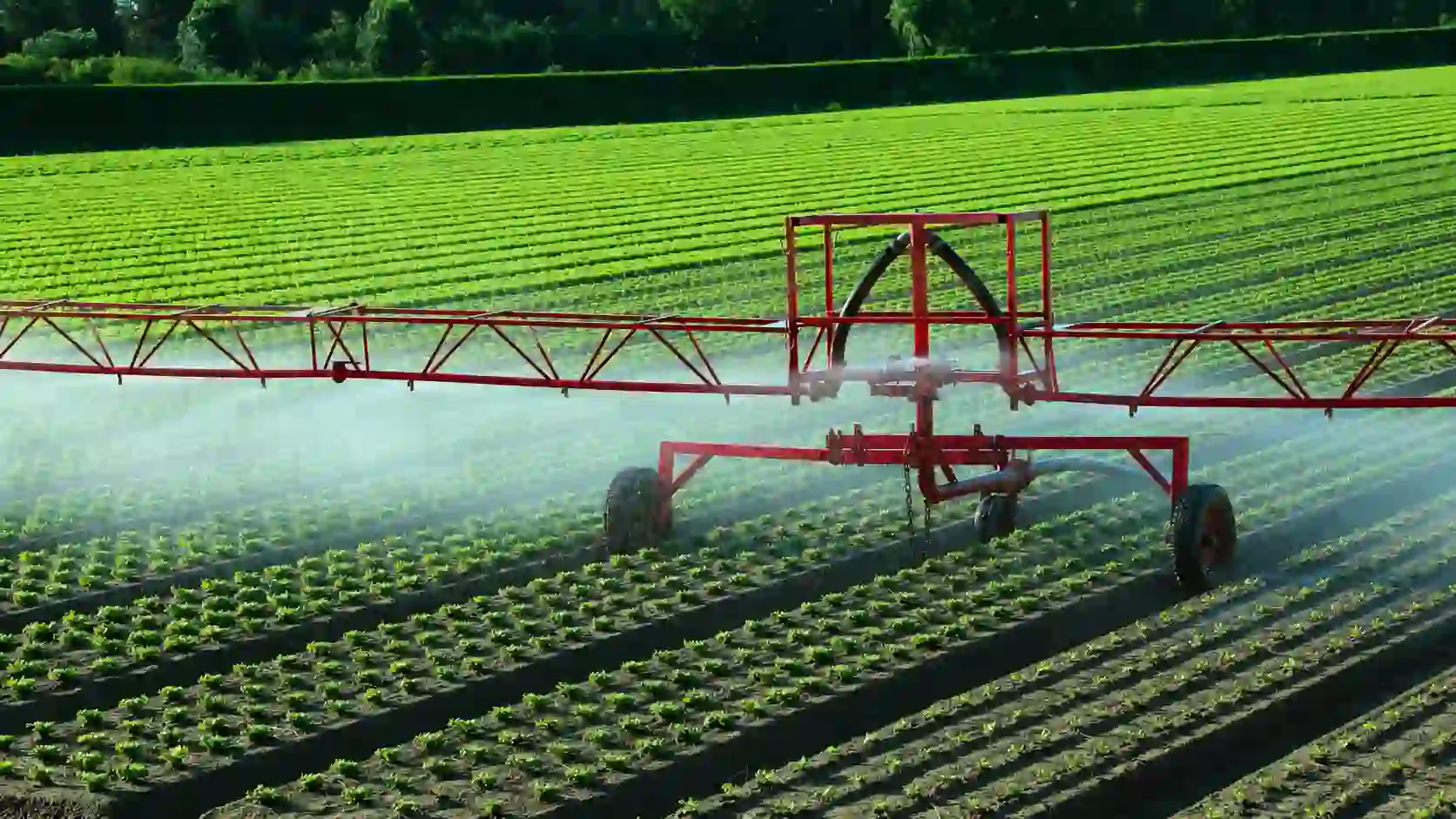
Agriculture and food systems in South America are regional production systems with very different country roles.
Brazil provides the greatest agricultural scale. Argentina combines large production with deep agroindustrial processing and export infrastructure. Paraguay is highly exposed to soy, beef and river logistics. Uruguay has a smaller but strongly export-oriented food system, particularly in dairy and animal protein. Chile is more strongly positioned around fruit, wine, food processing and Pacific-facing export markets.
The commercial question begins after production. Storage, crushing, meat processing, dairy plants, cold chains, sanitary approvals, traceability, ports and waterways determine whether agricultural output becomes reliable market value.
The same system starts before the farm gate. Fertilizer supply, energy and other agricultural inputs shape production economics and supply resilience. That input layer is now visible in Paraguay through the ATOME Villeta fertilizer project.
The wider strategic context is becoming more important as global buyers seek resilient food supply. Latin America and the Caribbean is the world’s largest net food-exporting region, while OECD-FAO data show that the region exported 44% of domestic agricultural production in calorie equivalents in 2023–25. The broader resource-security implications are examined in South America’s Strategic Resource Advantage in a Fragmenting World Economy.
One Region, Several Food-System Models
South America’s agricultural strength is often described through production volumes, but production alone does not explain the sector. The region combines land, processing plants, export corridors, certification systems and buyer relationships that differ by product and country.
Econosur’s Mercosur agriculture analysis provides the wider regional frame. It examines why large agricultural output does not remove dependence on external markets, logistics, inputs, trade rules and buyer requirements.
OECD-FAO’s 2026–2035 outlook gives that role a global dimension. Latin America and the Caribbean exported 44% of its agricultural production in calorie equivalents in 2023–25, while the Near East and North Africa is projected to import about 72% of agricultural consumption by 2035. The figures are broader than South America alone, but they show why reliable Southern Cone grain, oilseed, meat and dairy supply matters to deficit markets.
The regional food system has five connected layers: agricultural inputs, production, industrial processing, logistics and export infrastructure, and proof systems such as sanitary approval, traceability and certification.
Brazil: The Regional Production Scale Anchor
Brazil sets the scale of South American agriculture. Soy, corn, animal protein, sugar, coffee, biofuels and food processing operate inside a large domestic market and a major export economy.
Brazil also shapes neighboring systems. Paraguayan agricultural exports depend heavily on Brazilian demand, regional trade and downstream logistics, while Uruguayan dairy exports face both commercial opportunity and regulatory exposure in the Brazilian market.
Current trade data underline the scale. Brazil’s official MDIC series shows 9.8 million tonnes of soybean exports in August 2026 alone; monthly figures for January through August sum to roughly 92.8 million tonnes. China remained Brazil’s largest overall export destination over the same period. For food-system analysis, production scale and buyer concentration have to be read together.
A newer Brazilian case shows how agriculture can also become part of a carbon-removal value chain. Google and Terradot plan to combine methane reduction in rice cultivation with enhanced rock weathering across more than 200,000 hectares, starting in Rio Grande do Sul. The model connects rice farms with basalt supply, transport, measurement and verification, creating a commercial chain that sits between agriculture, mining materials and carbon markets. Econosur examines that structure in Google and Terradot in Brazil: How Rice Fields and Basalt Are Creating a Carbon Removal Value Chain.
The Brazil market profile provides the broader country context behind this agricultural scale.
Argentina: Agroindustrial Depth Beyond the Farm Gate
Argentina combines agricultural production with large-scale processing, river logistics, food exports and a broad domestic consumer market. Its agroindustrial system includes grains, oilseeds, beef, wine, fisheries, dairy and processed foods.
The 2025/26 corn campaign adds a current example of that strategic role. Argentina’s Agriculture Secretariat reported a record 71.5 million tonnes of production in July. Reuters reported on 9 September that exports were expected to reach about 10 million tonnes across August and September as buyers sought alternatives to disrupted Ukrainian Black Sea supply and weaker export availability elsewhere. The episode shows how production capacity becomes strategic when global trade routes are disrupted.
Argentina’s dairy sector is also expanding its export role. Official data for January–July 2026 show record dairy exports of US$987 million and 1.835 billion litres of milk equivalent, with Brazil, Algeria, Chile and China among the main destinations.
Market-access administration also changed on September 18. Argentina’s Agriculture Secretariat modernised the procedures for several tariff-rate export quotas, including dairy products to Ecuador, beef under Colombia’s Quota II, peanuts and peanut paste to the United States, and selected processed foods to other markets. The change does not alter production capacity, but it is a current example of how export access also depends on administrative execution.
The Vino Toro and Fecovita analysis shows one side of that structure: cooperative production, high-volume wine economics and the difference between affordable domestic demand and Argentina’s premium export narrative.
The Compañía de Tierras Sud Argentino company insight adds the land-and-livestock layer. CTSA connects Patagonian landholding, wool, livestock, agriculture and forestry with long-term supply-chain and territorial risk.
Newsan adds another food-system model through Newsan Food, fisheries, aquaculture and export diversification inside a group better known for manufacturing and consumer goods.
Paraguay: Soy, Beef and River Logistics
Paraguay’s agricultural model is concentrated, export-oriented and highly dependent on logistics. Soy is a core crop, but the country’s food-system relevance also includes cattle, meat processing, certification and cold-chain infrastructure.
Econosur’s Paraguay Soy Model links production efficiency with river dependency, land-use exposure and rising traceability requirements. The model cannot be understood without the Paraguay River economy and the wider Paraná-Paraguay Waterway.
Frigorífico Concepción shows the industrial side of Paraguayan agribusiness. The company connects domestic livestock with meat processing, export certification, refrigeration, cold-chain logistics and regional expansion.
Market access is still moving. SENACSA’s 2026 records show the first Paraguayan poultry shipment to Taiwan in July and the successful completion of a Turkish audit of 11 bovine-meat export establishments in August. These developments are useful reminders that sanitary approval and destination access can create new commercial channels independently of farm output.
Paraguay’s role in the regional food system may extend upstream into fertilizer. IFC says Mercosur currently imports more than 90% of its nitrogen-fertilizer demand. ATOME’s Villeta project is designed to use Paraguayan hydropower to produce low-carbon calcium ammonium nitrate (CAN), creating a potential regional agricultural-input supply source.
IDB Invest describes projected annual production of approximately 262,460 tonnes, with around 90% expected to be exported. That would connect Paraguay’s electricity system directly to agricultural value chains in Paraguay, Argentina and Brazil.
The supply effect remains prospective. On September 17, ATOME served Paraguay with a Notice of Dispute and Intent to Submit a Claim to Arbitration concerning the project and its power framework. Paraguay’s Attorney General’s Office stated that no lawsuit or arbitration had yet been initiated and that a three-month period for an amicable solution is open. Future Villeta output therefore should not be counted as current fertilizer supply.
Econosur examines the project-level question in Paraguay’s Hydropower Dilemma: What the ATOME Dispute Reveals About Industrialisation. The wider regional fertilizer-security question is also connected to Argentina’s Vaca Muerta-to-Urea fertilizer-security analysis.
Paraguay is a useful test of whether agricultural competitiveness survives beyond the farm gate. Soy depends on river access and compliance. Beef depends on processing, sanitary approval, cold chains and destination-market access. Both systems convert natural-resource advantage into export value through infrastructure and proof.
Uruguay: Dairy, Beef and Export Concentration
Uruguay’s food economy is small in absolute terms but highly export-oriented. Dairy illustrates this especially clearly because the domestic production system is concentrated in a small number of processors and a limited number of major product and destination markets.
Econosur’s Uruguay Dairy Export System found that 74% of processed milk was directed to exports in 2025. Four processors — Conaprole, Estancias del Lago, Lactalis and Alimentos Fray Bentos — received 91% of industrial milk intake.
The same case shows why market access matters as much as production. Whole milk powder dominated export revenue, while Algeria and Brazil were the two largest destination markets. INALE reports 2025 dairy export revenue of US$965 million, up 13% year on year. The latest 2026 trade update shows cumulative dairy export revenue through August running 1% above the same period of 2025. Concentration gives Uruguay scale efficiency but also exposes the system to product, buyer and trade-policy risk.
Chile: Pacific-Facing Food and Wine Markets
Chile occupies a different position from the Mercosur agricultural core. Its food-system relevance is more strongly associated with fruit, wine, aquaculture, food processing, export quality and Pacific-facing logistics.
This makes Chile particularly relevant for buyer standards, cold-chain performance, export branding and access to Pacific markets rather than for the river- and grain-based systems that dominate much of the Southern Cone.
ODEPA’s September 2026 fruit bulletin closes the 2025/26 season at US$9.95 billion in fruit exports through August, up 4.4% from the previous season. Fresh fruit accounted for US$6.6 billion, although its value was 1.8% below 2024/25. Wine moved differently: the latest available wine bulletin still shows January–July exports of US$801.4 million, down 10.6% year on year. The contrast matters commercially because “Chile food exports” is not one market cycle; fruit, wine, seafood and processed food can move in different directions at the same time.
See the Chile market profile for the wider country context.
“South America’s food advantage is not only agricultural. It sits in the systems that process, certify, transport and sell what the region produces.”
Current Company and Market Cases in This Hub
| Case | Country | Why it matters | Econosur page |
|---|---|---|---|
| Frigorífico Concepción | Paraguay | Connects livestock, meat processing, certification, cold chain, river geography and export-market access in one operating company. | Read company insight |
| Compañía de Tierras Sud Argentino | Argentina | Shows how landholding, wool, livestock, agriculture, forestry and territorial exposure interact in Patagonia. | Read company insight |
| Newsan / Newsan Food | Argentina | Shows food exports, fisheries and aquaculture as a diversification and foreign-currency layer inside a broader industrial group. | Read company insight |
| Vino Toro / Fecovita | Argentina | Shows cooperative production, volume wine, domestic affordability and the economics behind a mass-market food-and-beverage system. | Read market case |
| Google + Terradot | Brazil | Shows how rice farming, basalt supply, methane reduction, carbon removal, measurement and verification can be combined into one agricultural value chain at large scale. | Read market analysis |
| Uruguay Dairy Export System | Uruguay | Maps production, processor concentration, whole-milk-powder exposure, sanitary access and destination-market risk. | Read dairy analysis |
| Paraguay Soy Model | Paraguay | Connects soybean production with logistics, land-use exposure, traceability and one critical river corridor. | Read soy analysis |
| ATOME Villeta | Paraguay | Shows the upstream input side of the food system: a proposed hydropower-based nitrogen-fertilizer plant aimed at reducing Mercosur import dependence. The project is financed and advanced, but not yet operating and its power framework remains disputed. | Read project analysis |
Logistics, Certification and Market Access
Agricultural production is unusually sensitive to infrastructure because many products are bulky, perishable or both. Soy and grains require storage, terminals and bulk transport. Meat and dairy require refrigeration, sanitary certification and destination-specific approvals.
This is why the Logistics & Waterways industry hub is closely connected to agriculture. The Paraná-Paraguay system is not simply transport infrastructure; it is part of the economics of inland agricultural production and export competitiveness.
Proof systems form another infrastructure layer. Traceability, certification, sanitary approvals, residue standards, buyer documentation and deforestation-related requirements can determine whether a competitive product can actually enter a target market.
South America’s food advantage is becoming more strategic because it combines several independent production systems, export corridors and product categories. Brazil, Argentina, Paraguay, Uruguay and Chile do not provide the same food-security function, which makes the region more valuable as a portfolio of supply options rather than as one agricultural bloc.
The commercial value appears where production can reach the buyer reliably. Storage, crushing, processing, cold chains, waterways, ports, sanitary protocols, traceability and buyer approval determine whether a harvest or livestock base becomes usable supply.
Global disruption can strengthen individual South American exporters, as Argentina’s current corn window illustrates. The same systems remain exposed to fertilizer costs and availability, weather, logistics bottlenecks, sanitary restrictions and concentrated destination markets. Strategic relevance therefore does not remove operating risk.
The ATOME case makes the input dependency particularly concrete. A region can be a major net food exporter and still depend heavily on imported nitrogen fertilizer. Converting Paraguayan hydropower into regional fertilizer supply would change part of that structure, but only once the plant is actually built, powered and operating.
The Google–Terradot case in southern Brazil adds another layer to this picture. Agricultural land can become part of a second value chain alongside food production when farmers, basalt suppliers, logistics companies, laboratories, verification specialists and a carbon buyer are linked through one project structure. The commercial question is not only whether the technology works, but how value and risk are distributed along that chain as it scales.
This is the agriculture and food-system layer of South America’s Strategic Resource Advantage in a Fragmenting World Economy.
What Companies Need to Read Correctly
A South American food-system strategy should identify where value is created and where it can be blocked.
- Input layer: How exposed is production to imported fertilizer, energy, feed, seed or other critical inputs?
- Production layer: Which crops, livestock or food products have a durable cost or quality advantage?
- Processing layer: Where do crushing, packing, dairy, wine, fisheries or other industrial capabilities add value?
- Logistics layer: Which roads, waterways, ports, storage systems and cold chains are critical?
- Proof layer: Which sanitary, traceability, certification and buyer requirements determine market access?
- Market layer: How concentrated are destination markets, buyers and product categories?
The most useful regional food map is functional: Brazil for scale, Argentina for agroindustrial depth, Paraguay for resource efficiency tied to river logistics, Uruguay for high-export dairy and livestock systems, and Chile for Pacific-facing food exports and buyer standards.
Research Services for Agriculture & Food Systems
Econosur can structure custom research around a product chain, processor, exporter, target market, logistics route, buyer question or market-access constraint.
Map production, processing, storage, export routes, key operators and the points where value or bottlenecks emerge.
Identify processors, packers, frigoríficos, dairy companies, crushers, exporters and relevant incumbent relationships.
Map destination markets, importers, distributors, industrial buyers, procurement structures and commercial concentration.
Check approved markets, sanitary protocols, plant eligibility, certification requirements and destination-specific restrictions.
Assess ports, waterways, storage, refrigerated transport, border routes and infrastructure dependencies that shape delivered competitiveness.
Review traceability, deforestation, residue, sanitary, documentation and buyer-proof requirements across a defined product chain.
Compare processors, exporters, regional competitors, market positions, destination exposure and operating models.
Combine official trade and sanitary records, company documents and targeted local checks where public information does not resolve the commercial question.
Identify and screen relevant processors, exporters, importers, distributors, industrial buyers, suppliers and business partners and facilitate direct introductions where the commercial requirement and counterparty fit are clear. Explore B2B Connections.
Where the objective is not only market mapping but a concrete commercial connection, Econosur can combine buyer, processor, exporter or supplier research with direct introductions where a relevant fit exists. See B2B Connections in South America.
The Econosur Reading
Agriculture and food systems are a strong example of why Econosur links industry analysis to company and infrastructure cases. Macro export totals say little about where operational risk sits.
The regional Mercosur agriculture analysis defines the broad strategic frame, while South America’s Strategic Resource Advantage in a Fragmenting World Economy places food supply beside energy and critical minerals in the wider resource-security picture. Google–Terradot in Brazil adds a carbon-removal and agricultural-value-chain layer. ATOME Villeta adds the fertilizer-input and industrial-energy layer. Vaca Muerta-to-Urea adds a second regional fertilizer-security model. Paraguay Soy adds the commodity and compliance layer. Frigorífico Concepción adds processing and cold chain. Uruguay Dairy adds processor and destination concentration. Vino Toro/Fecovita, CTSA and Newsan add cooperative, land, livestock, fisheries and food-export models.
This industry page is a synthesis hub. Detailed evidence remains in the linked regional, country and company analyses, while the current update adds a limited set of verified regional and country indicators.
Geographic boundary: OECD-FAO and World Bank statistics cited for Latin America and the Caribbean are labelled as LAC-wide and should not be read as South America-only figures.
Status boundary: production, project financing, construction readiness, export capacity, sanitary approval and actual sales are different stages. Market access can be technically opened without immediately generating material trade. Likewise, ATOME’s financed Villeta project should not be counted as operating fertilizer capacity while its power framework remains unresolved.
Commercial boundary: public trade and sanitary data do not reveal complete buyer lists, contract terms, processor capacity utilisation, tender timing or private supplier relationships.
- Google + Terradot in Brazil: rice, basalt and carbon-removal value chains
- Mercosur Agriculture: regional framework
- Paraguay Soy Model: production, logistics and compliance
- ATOME Villeta: hydropower, fertilizer and industrial power economics
- Vaca Muerta-to-Urea: regional fertilizer security and gas-based production
- Frigorífico Concepción: Paraguay company insight
- Paraguay River Economy: logistics dependency
- Uruguay Dairy Export System: production, processors and markets
- Vino Toro / Fecovita: Argentina wine-market case
- Compañía de Tierras Sud Argentino: land and livestock company insight
- Newsan: food, fisheries and aquaculture inside a diversified group
- Logistics & Waterways: connected infrastructure hub
- Custom market analysis
- B2B Connections in South America
- Google — Terradot rice methane and carbon-removal agreement, September 16, 2026: long-term purchase covering methane reduction and permanent carbon removal across more than 200,000 hectares, starting in southern Brazil.
- Terradot — Google partnership in Brazilian rice agriculture, September 2026: project structure combining methane reduction with enhanced rock weathering.
- Argentina Secretariat of Agriculture — record 2025/26 corn crop, 22 July 2026: 71.5 million tonnes of production.
- Argentina Secretariat of Agriculture — dairy export record, 8 September 2026: US$987 million and 1.835 billion litres of milk equivalent exported in January–July.
- Brazil MDIC — consolidated trade data: monthly soybean export volumes through August 2026 and partner-country trade data.
- Uruguay INALE — 2025 dairy situation and 2026 outlook: 74% export share, 91% concentration among the four largest processors and US$965 million export revenue.
- Uruguay INALE — dairy exports through August 2026: cumulative export revenue 1% above the same period of 2025.
- Paraguay SENACSA — monthly animal-product export reports: official meat and animal-product export statistics through July 2026.
- Paraguay SENACSA — Turkey audit and 2026 market-access updates: sanitary-market developments for beef exporters.
- Chile ODEPA — Fruit Bulletin, September 2026: the completed 2025/26 season reached US$9.95 billion in fruit exports through August, up 4.4% from the previous season.
- Chile ODEPA — Wine, Pisco and Must Bulletin, August 2026: January–July wine exports of US$801.4 million.
- IDB Invest, March 13, 2026 — Villeta fertilizer financing: approximately 262,460 tonnes of projected annual output, around 90% expected for export and a US$420 million debt package.
- IFC, March 13, 2026 — Villeta and fertilizer supply resilience: Mercosur imports more than 90% of its nitrogen-fertilizer demand.
- ATOME, September 17, 2026 — Notice of Dispute: company notice regarding the Villeta project and its power framework; the allegations have not been adjudicated.
- Paraguay Attorney General’s Office, September 17–18, 2026: no lawsuit or arbitration initiated; three-month period to explore an amicable solution.
- Argentina Agriculture Secretariat, September 18, 2026 — tariff-rate export quota procedures: updated administration for selected dairy, beef, peanut and processed-food export quotas.
- Reuters — Google and Terradot Brazil rice project, September 16, 2026: independent reporting on the scale, methane-reduction component and enhanced-rock-weathering model.
- OECD-FAO Agricultural Outlook 2026–2035: LAC export share of agricultural production, global trade dependence and food-security outlook.
- World Bank — Agrifood Sector in Latin America and the Caribbean: LAC identified as the world’s largest net food-exporting region.
- Reuters — Argentina corn exports, 9 September 2026: expected record 10 million tonnes across August and September as global supply disruptions reshape trade.
- Evidence note: production, export and sanitary-market claims are anchored in government or industry-primary sources where available. OECD-FAO, World Bank and Reuters are used for broader regional context, outlooks and independent interpretation.
South America Agriculture & Food Market Analysis
Econosur prepares custom agriculture and food-system analysis covering production, processors, exporters, supply chains, logistics, sanitary access, traceability, market concentration and company intelligence.
Projects can focus on a country, product chain, processor group, export corridor, buyer structure or market-access question.
Explore custom market analysisFrequently Asked Questions
Which countries anchor agriculture and food systems in South America?
Brazil and Argentina provide the largest production and processing scale. Paraguay is highly relevant through soy, beef and river-dependent export systems. Uruguay has a strongly export-oriented dairy and beef model, while Chile is more prominent in fruit, wine, processing and Pacific-facing food exports.
Why is Paraguay important beyond soy production?
Paraguay combines soybean production with a significant livestock and meat-processing system. Frigorífico Concepción shows how cattle become an industrial export product through processing, certification, cold chains and market access. ATOME’s Villeta project also adds a potential upstream role in regional nitrogen-fertilizer supply, although the plant is not yet operating.
What does Uruguay’s dairy system show about food exports?
Uruguay’s dairy system shows how a small domestic market can become highly export-oriented. In 2025, 74% of processed milk was directed to exports, while four processors handled 91% of industrial milk intake.
What do Vino Toro and Fecovita show about Argentina’s food market?
They show the importance of cooperative production, volume economics and affordable domestic demand. The case provides a counterpoint to the premium-export narrative often associated with Argentine wine.
Why do logistics matter so much in South American agriculture?
Large production volumes only become export value when storage, roads, waterways, ports, cold chains, customs and sanitary documentation work reliably. The Paraná-Paraguay Waterway is especially important for inland agricultural and food-export systems.
Why is South American agriculture becoming more strategically important?
South America sits inside the world’s largest net food-exporting region and supplies globally important volumes of grains, oilseeds, animal protein, fruit, dairy and processed food. Strategic value depends on reliable production, processing, logistics, sanitary access, traceability and diversified buyer relationships.
What agriculture and food-system research does Econosur provide?
Econosur provides product-chain analysis, processor and exporter mapping, buyer and decision-chain research, sanitary and market-access analysis, logistics and cold-chain dependency analysis, traceability research, company and competitor analysis, and primary-source verification.
Which Econosur company cases currently anchor this agriculture hub?
The strongest current company-level cases are Frigorífico Concepción in Paraguay, Compañía de Tierras Sud Argentino in Argentina and Newsan through its food, fisheries and aquaculture activities. Vino Toro and Fecovita provide an additional cooperative-market case.
Why does the ATOME Villeta fertilizer project matter to South American agriculture?
IFC says Mercosur imports more than 90% of its nitrogen-fertilizer demand. Villeta is designed to produce roughly 260,000 tonnes per year of low-carbon CAN fertilizer using Paraguayan hydropower, with about 90% of projected output expected to be exported. The plant is not yet operating, and the September 2026 dispute over its power framework means that future output should not be treated as current regional fertilizer capacity.
Can Econosur help identify agricultural buyers, processors, exporters or business partners in South America?
Yes. For a defined commercial requirement, Econosur can research and screen relevant processors, exporters, importers, distributors, industrial buyers, suppliers and business partners and facilitate an introduction where there is a relevant fit. See B2B Connections in South America.