
Logistics & Waterways in South America
Rivers, roads and ports connect South America’s agricultural, mining, energy and industrial production with customers. Their commercial value depends on usable capacity, reliable operators, border procedures and the infrastructure supporting the complete route.
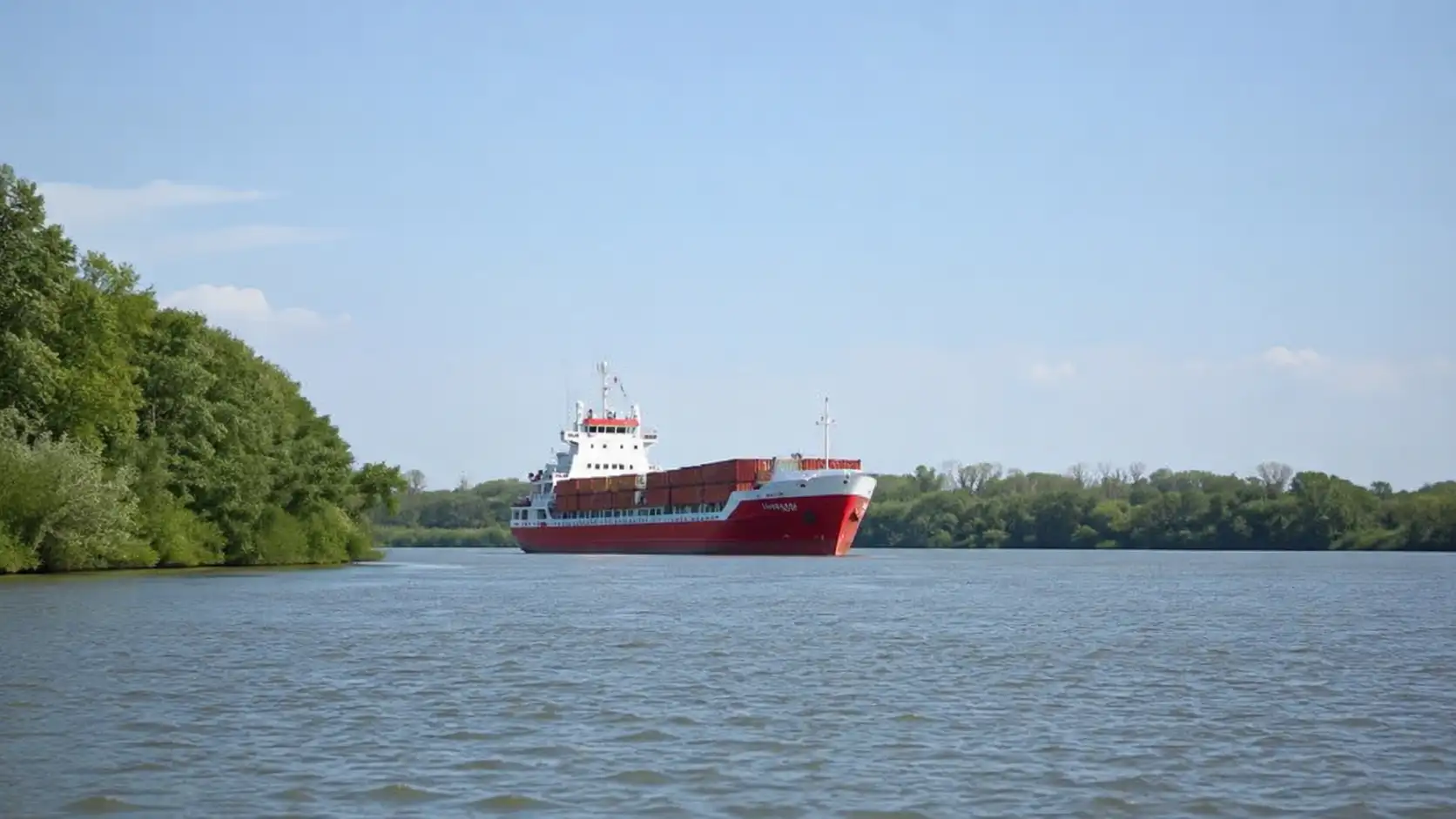
Logistics determines whether production can reach customers at a predictable cost and time.
Agriculture, mining, energy and manufacturing depend on roads, railways, waterways, terminals, ports and customs. A physical connection becomes commercially useful when operators, capacity and procedures work along the entire route.
The Paraná–Paraguay Waterway connects inland South America with the Río de la Plata and Atlantic shipping. Argentina’s soybean industry illustrates its commercial importance: purchasing grain, processing it, registering export sales and loading vessels are different activities with different companies and constraints.
In northern Chile, Antofagasta’s logistics expansion adds a Pacific example. A port dredging tender, inland industrial land and mineral handling create separate opportunities for contractors, logistics operators and suppliers.
Paraguay’s Bioceanic Corridor and Uruguay’s electric-ferry infrastructure provide further examples. A connected bridge requires access roads and border procedures; a delivered ferry requires charging, approvals and reliable terminal operations.
2026 market update: operating milestones and remaining dependencies
Reviewed October 23, 2026. Reporting dates are retained below. Construction progress, historical cargo volumes, future depth targets and operational announcements describe different measures.
Argentina’s trunk waterway: the new 25-year concession was awarded through Resolution 36/2026. The July 7 contract was signed with the Jan De Nul–Servimagnus consortium, which established Vía Navegable Argentina S.A. The concession covers dredging, maintenance, signaling, monitoring and modernization.
Operating transition: Argentina announced the start of private management on September 10, 2026, activating the contractual works timetable and the announced toll change from US$4.30 to US$3.80. The government described initial technical and environmental studies before deepening works. Takeover is therefore distinct from delivery of the planned deeper channel.
Oversight: Resolution 47/2026 created the Vía Navegable Troncal Control Council in August, providing an institutional framework for provinces and users to follow concession execution.
Depth and draft: the later-stage target is a 40-foot channel, approximately 12.2 metres, on the lower Paraná. The referenced clearance explanation associates this with roughly 38 feet, or 11.6 metres, of navigable vessel draft. Actual loading depends on location, water level, clearance requirements and operating notices. See How a Deeper Paraná River Could Reshape Mercosur Trade.
Gran Rosario: the Bolsa de Comercio de Rosario, or BCR, reports 75.7 million tonnes of grains, oils and agricultural by-products shipped in 2025. Its analysis places the approximately 70-kilometre, 30-terminal node first among major global agro-export port areas that year.
Soy processing and export commitments: BCR’s July analysis of official DJVE export-sale registrations reports 13.7 million tonnes of soybean-complex commitments in the first half of 2026. Bunge accounted for 33%, Cargill 13% and Molinos Agro 11%. Separately, Argentina reported 4,252,151 tonnes of soybean crushing in August, up 8.81% year on year. Registrations measure export commitments; crushing measures industrial processing. Neither establishes terminal-throughput share.
Paraguay’s navigation capability: ANNP, the national navigation and ports authority, reported the arrival of its DRM-5 “Paraguay” dredger in June, with approximate capacity of 1,500 cubic metres per hour. Its August Alto Paraná coordination statement identified continuous navigation as an objective, rather than evidence that all sections already operate without interruption.
Updated bridge-access evidence: on September 29, Paraguay’s public works ministry reported 23% overall progress on access works to the Bioceanic Bridge at the end of August. These works connect Carmelo Peralta, in the Paraguayan Chaco, with the Paraguay–Brazil crossing to Porto Murtinho. They are a different package from the PY15 road lots toward Pozo Hondo.
PY15 remains a separate dependency: La Nación’s 5 October report, citing MOPC, puts the third road segment between Mariscal Estigarribia and Pozo Hondo at 40% average execution across its four lots. Lot 2 exceeds 45% and Lot 3 is at 40%; these are distinct measurements. Progress on this 224-kilometre package does not establish corridor-wide operational readiness. Crossings, customs and onward access still require verification.
Paraguay port and river services: MIC’s 6 October account of the Dutch business mission identifies interest in port infrastructure, water management and navigation services. This is a market-development signal, not an awarded contract. See Paraguay Industrial Expansion: Export Logistics and Infrastructure Investment for how factory growth depends on dependable river and road access.
Electric ferry arrival: the Río de la Plata Administrative Commission confirmed that Buquebus’ China Zorrilla reached Colonia on September 13. This updates the vessel-delivery milestone, while regular commercial service and charging performance require separate operating evidence.
Pacific port procurement: Puerto Antofagasta’s September announcements identify dredging tender 019/26 and logistics land at La Negra. The published calendar set technical bids for October 20 and economic bids for October 27, 2026. These dates alone do not confirm that an opening has taken place or a contract has been awarded.
Antofagasta: maritime works and inland logistics have different buyers
Antofagasta is a Pacific coastal city and mining region in northern Chile. Its logistics demand includes mineral exports, equipment imports, spare parts, storage and industrial services.
Puerto Antofagasta’s second-call dredging tender covers a reference volume of 46,678 cubic metres: 35,568 of sediment and 11,110 of rock. Companies may bid for the complete scope or the material-specific work. The announced reference execution period is 365 days, with coordination required around an operating port.
The September 21 tender presentation scheduled technical opening for October 20 and economic opening for October 27. The cited announcement establishes the procurement calendar; it does not confirm that the technical opening took place, that works have started or that a contractor has been awarded.
Inland, the La Negra logistics development area comprises approximately 50 hectares beside Route 5, including around 30 hectares of serviced land. The port company identifies storage, cargo preparation, distribution, heavy transport, mining spare parts and fabrication among relevant activities.
Its reported 75% occupancy applies to the small-business segment, rather than automatically to the entire 50-hectare estate. Available plots, contractual terms, utilities and customer demand need individual verification.
Portezuelo adds an existing cross-border function: receiving and storing Bolivian mineral concentrates, mainly delivered by rail, before dispatch to the port. This operating activity provides a more concrete starting point than assuming future bioceanic cargo will automatically use Antofagasta.
For suppliers, the routes differ. Maritime contractors follow the tender; logistics and service businesses assess land and customers; mine-equipment vendors follow mining procurement. Regional cargo also uses other ports, including Angamos in Mejillones, so terminal choice must be checked for each producer and product.
Read Antofagasta’s Logistics Expansion: Mining, Port Infrastructure and New Supplier Demand.
In South America, production capacity becomes commercially useful when the complete route works.
Uruguay’s pharmaceutical distribution requires more than freight capacity
Uruguay XXI reports US$969 million in pharmaceutical transit during 2025, largely moving medicines from Europe and North America toward Latin American markets. This measures a distribution function, separate from exports of medicines made in Uruguay.
For logistics operators, the relevant requirements include shipment traceability, controlled storage, release documentation and the responsibilities of the receiving importer. Temperature requirements depend on the medicine; cold-chain handling cannot be assumed for every pharmaceutical shipment.
Under Decree 80/025 on pharmaceutical operators in free zones, the operator requires Ministry of Public Health authorization. Storage can be outsourced to an authorized warehouse, and secondary packaging can be contracted to an authorized provider. Customs status and sanitary authorization therefore address different parts of the operation.
The Uruguay pharmaceutical supply-chain analysis explains how manufacturing, free-zone distribution and final-market delivery connect.
Statistical source: Uruguay XXI pharmaceutical sector report, using 2025 transit data.
Logistics is a system, not a transport asset
A port, bridge or river channel cannot create reliable trade execution on its own. Performance depends on infrastructure, operators, documents, storage, financing, regulation and cargo demand. For Brazil’s concessions and public–private investment framework, see Brazil’s election and the route from priorities to transport projects, which separates campaign plans, project preparation, financing and operating assets.
A functioning corridor moves goods predictably between production sites, inland terminals, border points, processing centres and customers. Different organizations may control each step.
Farms, mines, factories and energy projects create cargo demand.
Roads, rail and feeder services link production with terminals.
Storage, loading, inspection and consolidation prepare cargo.
Navigation, transport capacity and border procedures determine passage.
Ports and onward services connect cargo with buyers.
Physical layer: rivers, ports, roads, railways, terminals, fleets and storage.
Operational layer: operators, customs, documentation, handling and service reliability.
Commercial layer: cargo demand, buyer requirements, timing and total delivery cost.
Different countries play different logistics roles
Agro-export and energy corridors
Rosario and upstream terminals connect grain origination, soybean crushing and Atlantic exports. Vaca Muerta adds energy-related equipment and transport requirements. The soy export case separates exporter, crusher and terminal roles.
Continental production scale
Agribusiness, mining and manufacturing depend on long-distance road and rail systems, inland handling and major Atlantic ports.
River access and an emerging east-west route
Barges and river terminals support established international trade. The Bioceanic Corridor adds a prospective road connection through Brazil, Paraguay, Argentina and Chile, subject to completion and operating readiness.
Ports, services and electrification
Montevideo and Nueva Palmira support maritime and river trade. Colonia adds high-power charging and terminal requirements for the passenger connection with Buenos Aires.
River and Pacific connections
Eastern access includes Canal Tamengo and the Paraguay River. Separate western routes connect mineral cargo with Pacific ports, including the existing Portezuelo–Antofagasta chain.
Pacific ports and mining supply
Pacific terminals, inland industrial facilities and mountain crossings connect mining and trade. Antofagasta illustrates how port procurement and local service demand differ.
River corridor: high-volume cargo depends on water levels, maintained channels, fleets and downstream terminals.
Bioceanic corridor: an Atlantic–Pacific road route depends on completed links, border coordination, viable cargo flows and reliable port access.
Mining logistics: equipment, inputs and mineral exports require cargo-specific handling, storage, permits and delivery schedules.
The decision points that determine corridor performance
| Decision point | Operational question | Commercial effect |
|---|---|---|
| Navigable depth | Can vessels and barges load efficiently under current conditions? | Changes capacity, rotations and cost per tonne. |
| Terminal capacity | Can cargo be stored, inspected and loaded without congestion? | Influences waiting times and delivery reliability. |
| Customs execution | Are documentation and clearance predictable? | Affects lead times, inventories and buyer confidence. |
| Border coordination | Do adjoining jurisdictions provide compatible procedures? | Determines whether a route functions as a continuous corridor. |
| Operator capacity | Are suitable vessels, trucks, warehouses and services available? | Shapes scalability and peak-season resilience. |
| Climate exposure | How sensitive is the route to low water, flooding or storms? | Changes timing, usable capacity and disruption risk. |
| Power and charging | Can electrical infrastructure support required operations? | Affects turnaround, maintenance and operating continuity. |
Subsectors within logistics and waterways
Waterways and barge systems
Navigation, dredging, fleets, river terminals, signaling, shipyards and downstream connections.
Ports and terminals
Containers, bulk cargo, fuel handling, storage, maritime access and port services.
Road and rail corridors
Trucking, rail links, dry ports and multimodal connections between production and terminals.
Customs and border systems
Documentation, clearance, inspection, scanning and sanitary and phytosanitary controls.
Cold chain and industrial cargo
Refrigerated products, food, pharmaceuticals, oversized equipment and sensitive industrial inputs.
Tracking and logistics systems
Fleet management, cargo tracking, port software, digital documentation and operational data.
Industrial service facilities
Spare-parts storage, workshops, heavy transport, fabrication and distribution around mining regions.
Port power systems
Grid connections, substations, charging equipment, electrical maintenance and terminal coordination.
Electric maritime transport adds a port-infrastructure layer
Colonia del Sacramento is a Uruguayan port on the Río de la Plata opposite Buenos Aires. Buquebus’ electric China Zorrilla ferry connects vessel delivery with an extensive land-side requirement: grid capacity, charging, terminal infrastructure and passenger and vehicle handling.
Uruguay’s port authority, ANP, described approximately US$20 million in electrical port infrastructure and around 15 megawatts of available power. UTE, the state electricity company, documented transmission-station expansion and approximately nine kilometres of underground network to the port connection.
The latest confirmed arrival milestone is September 13, 2026, when the vessel reached Colonia after delivery through Nueva Palmira. The Río de la Plata Administrative Commission published that confirmation on September 16.
Arrival does not establish a regular operating timetable. Commercial performance depends on authorization, charging cycles, terminal turnaround, grid reliability and readiness at both ends of the route. See Buquebus’ Electric Ferry Infrastructure in Uruguay.
Supplier implications: substations, cables, chargers, electrical protection, monitoring, terminal software and maintenance become part of transport operations.
Operating assessment: delivered infrastructure and a vessel’s arrival are milestones. Reliable service requires evidence from actual operations.
Business opportunities arise around specific operating requirements
Demand spans port and barge operators, forwarders, customs specialists, warehouses, cold-chain providers, construction contractors and software suppliers. The most useful starting point is an identified customer requirement or documented procurement package.
Antofagasta offers a concrete distinction: dredging has a tender route, while a spare-parts warehouse at La Negra needs a viable customer base. Paraguay’s access-road progress identifies construction activity but does not automatically establish demand for an international logistics service.
Capacity and maintenance
Dredging, terminals, warehouses, access roads, rail links and specialized handling equipment.
Reliability services
Fleet capacity, forwarding, customs execution, inspections, maintenance and scheduling.
Operational visibility
Tracking, port systems, digital documents, fleet software and planning tools.
Route and customer assessment
Cargo-specific comparisons, operator mapping, supplier access and local facility feasibility.
India–Mercosur: origin documentation becomes a logistics issue
On September 14, 2026, India and Mercosur signed a protocol intended to give electronically issued and signed certificates of origin the same validity as paper certificates. The official protocol announcement makes entry into force conditional on domestic procedures and mutual notification.
Econosur perspective: Exporters and logistics operators should confirm implementation for the relevant country and product before changing documentation workflows. Digital certificates can reduce administrative friction, while origin eligibility, customs clearance, port handling and freight connections remain separate checks. The protocol does not itself expand the agreement’s tariff coverage.
Mercosur–India Trade Talks: Opportunities for Pharma, Agriculture and Industry connects the negotiation process with sector opportunities and its primary and secondary evidence. For a defined commercial question, see Econosur’s custom market analysis.
The complete route determines commercial value
A deeper channel changes freight economics only when loading, maintenance and downstream handling support its use. A bridge improves connectivity when roads and border procedures permit predictable passage. A port expansion creates supplier opportunities through specific contracts and customer demand.
The relevant unit of analysis is the route from production site or supplier to terminal, border, vessel and buyer. Each transfer point can introduce another operator, authority or constraint that changes cost, timing and capacity.
Argentina’s soybean system adds a company-level distinction: export-sale registrations, crushing assets and terminal access describe separate forms of commercial influence. A leading exporter does not necessarily control the same share of physical shipments.
Antofagasta extends the same assessment to mining. Maritime works, industrial land, existing mineral handling and mine procurement have different decision makers and qualification processes.
Who controls, uses and depends on the corridor
Concessionaires maintain navigation, transport companies move cargo, terminal owners control handling, and industrial customers generate demand. Authorities determine permits and operating requirements.
Three questions companies need answered
Which bottlenecks could change delivery cost, timing or capacity?
Assess the exact cargo, terminal, season, draft, border process, storage requirement and fallback route. Regional connectivity can conceal a single point that changes shipment economics.
Which organizations control the relevant route?
Identify concessionaires, private terminals, public ports, carriers, customs and industrial customers. Their responsibilities differ, and the cargo owner may not be the purchaser of the supporting service.
Where does infrastructure development create accessible demand?
Establish the package, buyer, budget, qualification and schedule. Separate an announced plan from an active tender, a awarded contract, a land offering or a commercially viable operating requirement.
What public sources establish
Official records identify concessions, designs, reported construction progress, permits and public investment. Company-level research is needed to connect these facts with purchasing decisions and actual route performance.
Corridor-specific research for a defined business question
Econosur examines how a route affects a company, supplier category or project, connecting infrastructure evidence with operators, commercial access and delivery requirements.
Need corridor-specific commercial research?
Econosur connects infrastructure changes with operators, buyers, suppliers, delivery risk and commercial access for a defined requirement.
See logistics research servicesFrequently asked questions
Why do logistics and waterways matter in South America?
They determine whether agricultural goods, minerals, fuels, equipment and industrial products can move reliably between production sites, ports, cities and export markets.
Why is the Paraná-Paraguay Waterway strategically important?
It connects inland production with river terminals, the Río de la Plata and Atlantic shipping routes. It is particularly important for Paraguay’s international trade and Argentina’s agro-export system.
Why is Argentina’s soy export industry also a logistics case?
The soybean complex combines origination, crushing, storage, terminals and navigation. Export-sale registrations, industrial processing and terminal throughput measure different activities and should not be treated as interchangeable market shares.
What does Antofagasta’s logistics expansion involve?
Puerto Antofagasta is tendering dredging works and promoting land at La Negra for logistics and industrial services. Portezuelo provides additional inland support for Bolivian mineral concentrates. Tendering, land development and existing cargo handling are separate commercial activities.
Which countries are most relevant to this sector?
Argentina, Brazil, Paraguay and Uruguay are central to Atlantic-facing logistics. Bolivia connects through eastern river infrastructure and land corridors. Chile contributes Pacific ports and cross-border routes.
What matters beyond ports and rivers?
Roads, rail, storage, customs, border procedures, dredging, terminals, cold chains, fleets, digital systems and regulatory coordination also determine logistics performance.
What separates a transport route from a functioning trade corridor?
A route is a physical connection. A functioning corridor also requires operators, services, customs, terminals, financing and cargo demand. Paraguay’s September 29, 2026 bridge-access update reported 23% progress at the end of August; bridge connection alone does not establish end-to-end freight readiness.
What does a planned 40-foot Paraná River channel mean?
It is a later-stage channel-depth target of approximately 12.2 metres. Channel depth differs from vessel draft. The referenced clearance explanation associates it with roughly 38 feet, or 11.6 metres, of navigable draft, subject to actual operating conditions.
Why does port electrification matter for logistics?
It adds grid capacity, charging equipment and electrical maintenance to terminal operations. The China Zorrilla arrived in Colonia on September 13, 2026; arrival and infrastructure provision do not by themselves demonstrate regular commercial service.
How do logistics affect agriculture, mining and energy?
These sectors require reliable movement of output, equipment and inputs. Corridors, terminals, storage, transport services and export routes influence delivery costs, operating continuity and investment feasibility.
How does Econosur analyze logistics and waterways?
Econosur examines complete cargo routes and separates infrastructure plans, contracted works, operating capacity and commercial access. Research connects operators, regulation, delivery risk, buyer requirements and supplier opportunities.
About this industry analysis
This page connects physical infrastructure with trade flows, operators, mining supply, agroindustrial terminals, port electrification and company-level commercial requirements.
Official and company sources establish reported milestones and institutional responsibilities. Commercial implications are analytical assessments; buyer requirements, supplier qualification and usable capacity require route- and company-specific verification.
Prepared by Marcus A. Volz, Market Analyst & International B2B Consultant and founder of Econosur.