
Oil & Gas in
South America
South America’s oil and gas market is shaped by two different operating systems: Argentina’s Vaca Muerta, where upstream, pipeline and LNG projects are moving further into execution, and Brazil’s established offshore pre-salt platform. Rising production in both countries is increasing the region’s strategic weight, while pipelines, processing, LNG, ports, power generation and industrial demand determine how resource growth becomes reliable supply and commercial value.
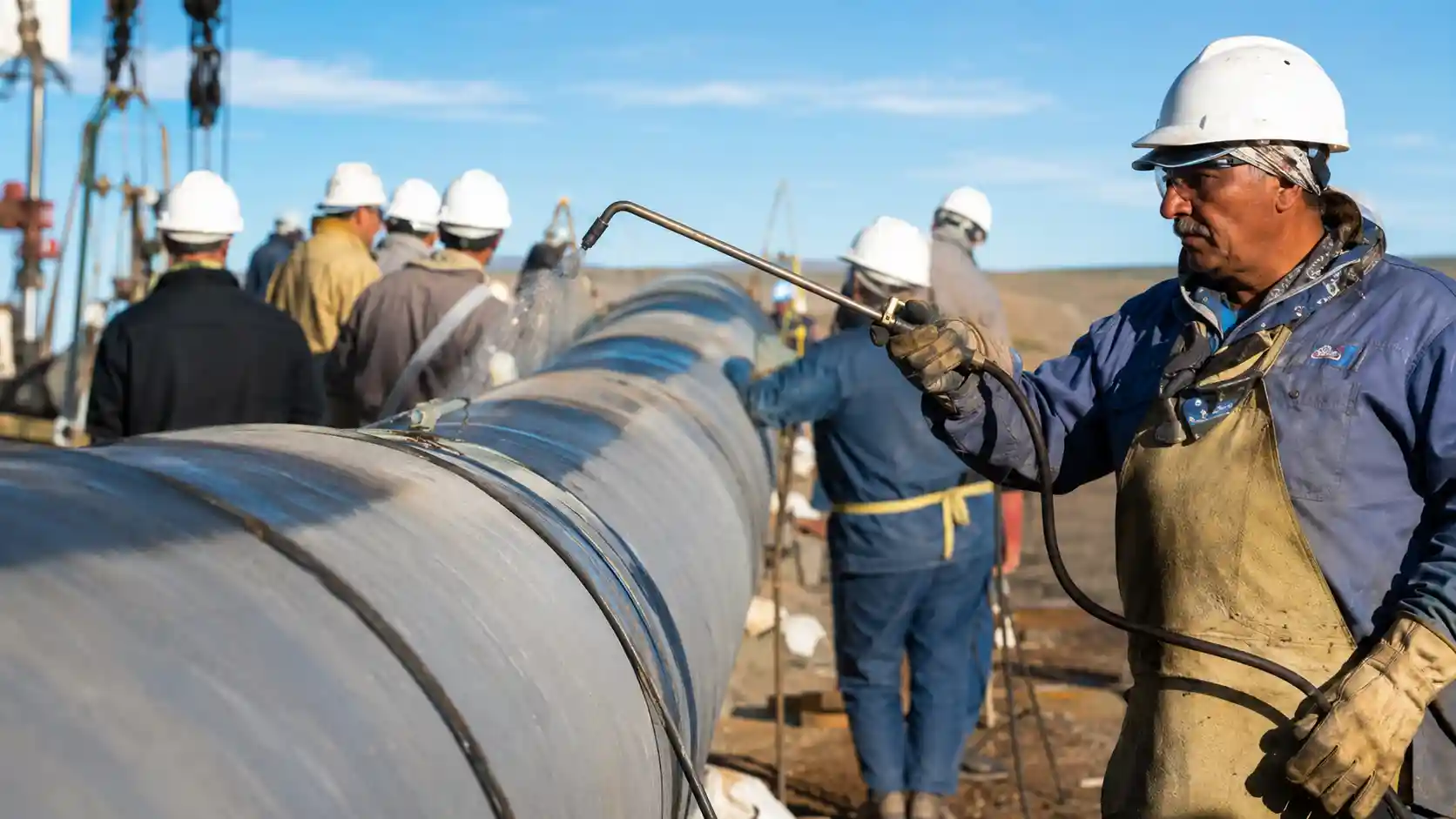
Argentina and Brazil dominate the Southern Cone oil and gas map, but their markets cannot be read through the same model. Brazil is an established offshore operating market. Argentina is an unconventional production and infrastructure-expansion market whose next phase depends on domestic pipeline reconfiguration, regional exports and LNG development.
The central commercial question is therefore not the size of the resource base. It is which infrastructure is operating, which capacity is being expanded, which projects are only approved or planned, and which companies control purchasing and execution at each stage.
The strategic context has also changed. Brazil produced 4.498 million barrels of crude oil per day in July 2026, while Argentina reached a record 916,200 barrels per day. In a global market exposed to shipping chokepoints and supply disruption, diversified South American production has become more relevant to buyers. That broader resource-security argument is developed in South America’s Strategic Resource Advantage in a Fragmenting World Economy.
Market reading: production is only the first layer
Vaca Muerta has moved beyond geological promise and now supports material oil and gas production. Its growing output has also exposed the limits of a transport network designed around older supply geographies, imported Bolivian gas and different domestic flow directions.
Argentina is now rebuilding the commercial meaning of that network. Capacity must be reassigned, expanded or redirected toward domestic demand, thermal power, Chile, Brazil and future LNG exports. Each route has a separate regulatory, financing and construction status.
July 2026 data make the scale change visible: Argentina produced 916.2 thousand barrels of oil per day, including 643.1 thousand barrels per day from Vaca Muerta, while national gas output reached 158.8 million cubic metres per day and Vaca Muerta gas reached 96.5 million cubic metres per day.
Two oil and gas systems shape the regional market
Argentina: production plus infrastructure build-out
Vaca Muerta combines operating shale production with constrained transport, new pipeline capacity, Pacific oil exports, regional gas options, LNG development and industrial gas demand.
Brazil: offshore operating platform
Brazil’s market is built around pre-salt fields, FPSOs, deepwater engineering, long operating chains, refining and Petrobras-led procurement at industrial scale.
Chile: export outlet and demand market
Chile matters through the Pacific crude route, LNG infrastructure, industrial consumption and its role as a potential market interface for Argentine energy exports.
Regional integration
Cross-border value depends on interconnectors, transport contracts, private investment, regulation and reliable supply commitments rather than political declarations alone.
Argentina: from Vaca Muerta to an energy and industrial system
Vaca Muerta is the production base, not the entire market. The operating system begins in Neuquén, where wells, gathering, treatment, roads, camps, equipment, local labor and service yards make production possible. It then extends into pipelines, power generation, refining, petrochemicals, fertilizer feedstock and export infrastructure.
Vaca Muerta production
Shale oil and gas create the physical supply base, but field output remains dependent on drilling cycles, treatment, evacuation capacity and operator investment.
Añelo service economy
Roads, logistics, maintenance, accommodation, safety, equipment and specialized labor determine whether the basin can support sustained operations.
Domestic gas transport
The Perito Moreno pipeline and the wider national system connect Neuquén supply with central and northern demand, while capacity and contracts are being reconfigured.
Export corridors
Crude exports to the Pacific, possible gas routes to Brazil and the planned Atlantic LNG chain create different markets with different infrastructure requirements.
Industrial demand
Thermal power, petrochemicals, fertilizer production and specialized industrial facilities convert gas availability into domestic value when projects are technically and commercially viable.
Argentina’s energy opportunity is now an infrastructure-allocation question: which molecules move through which route, under which contract, to which market?
September 2026 update: execution is moving beyond approvals
Decree 105/2026 extended RIGI to new onshore oil and gas developments. Pampa Energía’s Rincón de Aranda is now formally approved with US$4.521 billion of computable investment and a 259-well development program, while Tecpetrol reports Los Toldos II Este already at roughly 30% construction progress.
At the same time, pipeline and LNG projects are advancing at different speeds. Argentina LNG submitted a US$51 billion RIGI application in August, while Southern Energy and San Matías represent more advanced parts of the export chain. Golar’s second-quarter update says EPC contracts for the roughly 500-kilometre San Matías pipeline and its compressor plant have been awarded, environmental approvals from Neuquén and Río Negro are in hand and financing discussions are advanced. The result is a new market question: whether upstream, EPC, service and infrastructure capacity can scale together.
A separate capital map is also needed because headline investment figures describe different stages. Chevron’s El Trapial filing, approved RIGI projects, VMOS construction and financing, LNG development and service-company investment should not be added together as if they represented the same degree of commitment. Econosur separates those stages in Who Is Investing in Vaca Muerta? Where the Capital Is Actually Going.
Econosur examines the wider execution transition in Argentina’s RIGI Energy Pipeline: The Next Constraint Is Execution.
Argentina’s gas-pipeline system is being structurally reconfigured
Resolution 66/2026 describes a permanent change in Argentina’s gas geography. Production from the Neuquén Basin has grown, Northwest Basin supply and Bolivian imports have declined, and historical north-to-south flow assumptions no longer match the present supply system.
The official name of the trunk pipeline formerly known as the Gasoducto Presidente Néstor Kirchner is now the Gasoducto Perito Francisco Pascasio Moreno. Its first section is operating, while later expansion and contractual use must be read separately.
First pipeline section
The Tratayén–Salliqueló section adds physical evacuation capacity, but it does not mean that every element of the former Transport.Ar programme was completed.
14m m³/day
Resolution 676/2026 approved the TGS expansion project under RIGI to create 14 million cubic metres per day of incremental capacity.
Capacity reassignment
Contracts, routes and transport capacity are being adjusted to new production basins and changed flow directions.
Status discipline: an operating first section, an approved expansion and a fully utilized national transport system are three different conditions. They must not be presented as one completed corridor.
The San Matías corridor gives LNG a concrete infrastructure layer
Argentina’s LNG strategy is no longer only a broad ambition. Resolution 873/2026 approved the San Matías Pipeline project under RIGI. The planned dedicated line would run approximately 480 kilometres from Tratayén to San Antonio Oeste, use a 36-inch diameter and carry up to 27 million cubic metres of gas per day toward future liquefaction installations.
The project creates a defined corridor between Vaca Muerta and Atlantic LNG infrastructure. Its status has advanced since the original RIGI approval: Golar reported in August that EPC contracts for both the roughly 500-kilometre pipeline and compressor plant had been awarded, provincial environmental approvals were secured and financing discussions were at an advanced stage. Construction completion, commissioning and stable gas delivery remain separate milestones.
Southern Energy is also moving the liquefaction and offtake chain forward. FLNG Hilli is being repositioned for modifications ahead of its next long-term contract beginning in 2027. FLNG Esperanza remains under conversion, with Golar reporting the work on schedule and commercial start targeted for the second half of 2028. Southern Energy and Germany’s SEFE have signed an eight-year Heads of Agreement for 2 million tonnes of LNG per year from late 2027. The much larger Argentina LNG project remains at an earlier stage after submitting a US$51 billion RIGI application in August 2026.
Supply
Upstream producers must provide sustained gas volumes under contracts that justify dedicated transport and liquefaction investment.
Pipeline
Construction, compression, route execution and operating reliability determine whether the 27m m³/day design becomes usable capacity.
Liquefaction
Pipeline completion does not by itself create LNG exports; liquefaction trains, marine infrastructure and commissioning are separate stages.
Market
Long-term sales, shipping, pricing and financing determine whether the export chain becomes commercially durable.
Argentina–Brazil gas integration remains a route-selection problem
The bilateral technical report completed in April 2026 assessed alternatives for firm Argentine gas exports to Brazil through Bolivia, Paraguay, Uruguay and a direct connection. It also identified Brazil’s industrial demand as a potential anchor for deeper regional integration.
The report is evidence of technical evaluation and political coordination. It is not evidence that one route has secured financing, capacity, customers or a final investment decision. All options require additional transport infrastructure in Argentina to evacuate larger volumes from Vaca Muerta.
Commercial threshold: a feasible interconnection becomes a gas market only when transport rights, price, volume, duration, credit, regulation and construction responsibility are aligned.
Argentina company and infrastructure cases
YPF
YPF links Vaca Muerta production with national energy policy, pipeline development, refining, fuel markets and the emerging LNG export chain.
Read YPF company insight →Vista Energy
Vista represents the focused shale-oil model: concentrated Vaca Muerta execution, production growth, cost discipline and increasing exposure to export routes.
Read Vista Energy insight →Pampa Energía
Pampa connects upstream gas with electricity generation and petrochemicals, making it a central case for domestic gas monetization beyond the wellhead.
Read Pampa Energía insight →Pluspetrol
Pluspetrol combines Argentine unconventional exposure with a broader regional upstream portfolio and operating model.
Read Pluspetrol company insight →These companies do not share one procurement structure. Operator purchasing, project-company procurement, pipeline EPC, LNG development, power generation and petrochemical demand create separate qualification paths and decision centres.
Brazil is the operating offshore benchmark
Brazil’s oil and gas position is built around active deepwater production rather than a future resource-conversion story. ANP data show national output of 5.851 million barrels of oil equivalent per day in July 2026, including 4.498 million barrels per day of crude oil. Pre-salt production reached 4.821 million boe/d and represented 82.4% of Brazil’s total output.
Petrobras’ own operating scale also increased. In the second quarter of 2026, the company reported record total oil-and-gas production of 3.34 million boe/d and own pre-salt production of 2.78 million boe/d. Búzios reached operated production of 1.219 million barrels per day on 26 June after the P-79 entered production.
New FPSOs, ramp-up performance, subsea systems, offshore support, maintenance, reservoir management and long supplier chains define the Brazilian market. This creates a different opportunity profile from Argentina: more recurring operational demand, but also mature qualification requirements and complex operator structures.
Brazil’s offshore supplier landscape is also expanding beyond the established pre-salt production base. On 14 August, Petrobras announced hydrocarbons at the Morpho exploratory well in block FZA-M-59 in deep waters off Amapá. The discovery does not establish commercial reserves or future production, but it strengthens the case for continued exploration, logistics and supplier-capacity planning in the Equatorial Margin. Petrobras’ 2026–2030 plan allocates US$2.5 billion to the region and foresees 15 new wells.
This remains an exploration market rather than an operating production province. Supplier demand therefore needs to be separated between current drilling and marine logistics, appraisal work and any later development-stage procurement.
Brazil’s second offshore cycle: decommissioning
Brazil’s offshore market is now developing in two directions at once. New FPSOs, pre-salt expansion and Equatorial Margin exploration create growth-related demand, while mature assets are creating a separate procurement cycle around well abandonment, subsea recovery, platform removal, dismantling and materials recycling.
Petrobras’ 2026–2030 Business Plan allocates US$9.7 billion to sustainable asset disposal and well abandonment. Its published decommissioning portfolio identifies 18 platforms for removal, around 500 offshore wells requiring abandonment interventions and approximately 1,800 km of flexible lines to be recovered. A further 50 platform removals are identified for 2031 and beyond.
This creates a supplier market that overlaps with the wider offshore ecosystem but has different package structures. Plugging and abandonment, EPRD, subsea disconnection, ROV work, marine support, heavy lifting, industrial cleaning, waste handling, ports, shipyards and recycling become relevant in ways that new-field development alone does not capture.
The market is visible in the current industry agenda as well. ROG.e 2026 includes a dedicated September 21 Supply Chain Forum session on “Decommissioning in Brazil: Pathways to Overcoming Challenges” with Petrobras, Gerdau, Trident Energy and SBM Offshore. Econosur examines the supplier implications separately in Brazil’s Offshore Decommissioning Market: Where the Next Supplier Cycle Is Starting.
Supplier implication: Brazil should no longer be read only as a production-growth market. International suppliers need to distinguish between development, operations, maintenance and decommissioning packages because each cycle has different buyers, qualification paths and timing.
Petrobras
Petrobras is the central operating platform for Brazil’s offshore production, refining, gas systems and long-term investment programme.
Read Petrobras company insight →Equatorial Margin
New exploration offshore northern Brazil raises questions around logistics bases, marine support, environmental capacity, supplier localization and future procurement.
Read Equatorial Margin analysis →ROG.e 2026
ROG.e concentrates operators, contractors, technology providers and international suppliers at a point when Brazil’s offshore investment cycle is moving into procurement and execution.
Read ROG.e 2026 analysis →Offshore decommissioning
Petrobras’ mature-asset cycle is creating supplier demand across well abandonment, subsea recovery, marine services, ports, shipyards, dismantling and recycling.
Read Brazil decommissioning analysis →Brazil green gas
Brazil’s gas market also includes biomethane and low-carbon gas, connecting regulation, industrial demand and existing distribution infrastructure.
Read Brazil green-gas analysis →Gas monetization also depends on domestic industrial demand
Export infrastructure receives most attention, but domestic gas value also depends on thermal power, petrochemicals, fertilizer feedstock and specialized industrial systems. These users can stabilize demand and deepen local value creation, although each project has its own capital, technology and operating risks.
Power generation
Gas availability affects thermal dispatch, electricity costs and the replacement of liquid fuels. Pipeline allocation therefore has direct power-market consequences.
Fertilizer feedstock
Urea and ammonia projects require reliable gas supply, competitive pricing, financing and operating infrastructure. Resource availability alone does not guarantee fertilizer output.
Petrochemicals
Integrated companies can connect gas production with petrochemical demand, but economics depend on product markets, plant reliability and long-term feedstock conditions.
PIAP
PIAP is a heavy-water industrial facility, not a fertilizer plant. Its reactivation illustrates the separate challenge of restoring specialized, energy-dependent industrial infrastructure.
Marcus A. Volz perspective: South America’s oil advantage is increasingly about optionality. Brazil offers a large offshore operating platform, Argentina is adding unconventional production and export infrastructure, and both can serve buyers looking for alternatives to more concentrated supply routes.
The commercial value sits in the execution chain. A barrel or molecule becomes strategically useful only when processing, pipelines, ports, liquefaction, shipping, financing and offtake can move it reliably to market. For suppliers, that means the relevant opportunity is rarely “South American oil and gas” in the abstract. It is a defined asset, package, buyer and project stage.
Brazil adds another dimension because its offshore market now contains both expansion and retirement cycles. Decommissioning turns mature assets into a new supplier market at the same time that pre-salt growth and frontier exploration continue. That makes project-stage discipline even more important: the same supplier category may face very different buyers and qualification routes depending on whether the package belongs to development, operations or end-of-life work.
That is why the broader resource thesis in South America’s Strategic Resource Advantage in a Fragmenting World Economy connects directly to project-level oil and gas research.
Execution and procurement follow the asset and project stage
A useful supplier map begins with the buyer and the project status. Upstream operators, pipeline concessionaires, dedicated project companies, LNG developers, power generators and industrial users purchase through different systems. The Vaca Muerta investment map adds the capital layer by separating announced plans, approved projects, financing, construction and operating investment.
Operator procurement
Drilling, completions, production equipment, maintenance, safety and field logistics are controlled by operators and their approved service chains.
Pipeline projects
Compression, valves, steel, control systems, civil works and O&M may be purchased through a concessionaire, project vehicle, EPC contractor or financing structure.
LNG development
Liquefaction, marine works, storage, shipping and commissioning form a separate procurement chain from upstream production and pipeline construction.
Industrial users
Power, petrochemicals, fertilizer and specialized plants buy around process reliability, feedstock conditions, maintenance and plant-specific compliance.
Supplier registration is not an order. Market access requires identifying the asset owner, operating company, project vehicle, EPC structure, project stage and technical qualification path.
Three business questions that require deeper research
1. Which oil, gas and LNG projects are moving into actionable procurement rather than remaining investment announcements?
That requires tracking RIGI status, FID, financing, engineering maturity, EPC appointments, drilling schedules, long-lead orders, construction mobilization and whether individual packages remain open or have already been awarded. The distinction between planned, approved, financed, under-construction and operating capital is mapped in Who Is Investing in Vaca Muerta?.
2. Who actually controls procurement for a defined package?
The buyer may be an upstream operator, pipeline concessionaire, LNG project company, project vehicle, EPC contractor or operating partner. Supplier positioning depends on identifying the organization that owns the technical requirement, qualification process and purchasing decision.
3. Where could overlapping project schedules create supplier-capacity gaps?
Execution pressure can move between drilling, completions, processing, compression, pipelines, valves, electrical systems, water handling, logistics, commissioning and field services. The relevant opportunity is often a specific temporary capacity gap rather than a general shortage across the whole market.
Public sources show the asset and investment pipeline, but not the full commercial pipeline. They rarely identify complete tender calendars, incumbent vendor positions, approved-supplier gaps, package-level decision makers or the point at which a technically relevant need becomes commercially addressable.
Research services for South America’s oil and gas market
Econosur can structure custom research around one operator, RIGI project, pipeline, LNG development, supplier category or procurement question.
Where the objective is a concrete commercial connection, Econosur can also identify and screen relevant operators, buyers, suppliers, contractors, distributors and business partners and facilitate introductions where there is a relevant fit. See B2B Connections in South America.
Oil & Gas Supplier & Project Brief: a focused assignment can map one project, asset or supplier category by status, package ownership, likely buyer, EPC or contractor structure, qualification requirements, local execution, incumbent suppliers, infrastructure dependencies and unresolved commercial questions.
The format is designed for market screening, target-account prioritisation, partner research, meeting preparation and go/no-go decisions before committing sales resources.
Official & primary sources
- Argentina Secretariat of Energy — July 2026 oil and gas production: 916.2 thousand b/d oil nationally, 643.1 thousand b/d from Vaca Muerta, 158.8m m³/d national gas and 96.5m m³/d Vaca Muerta gas.
- Brazil ANP — July 2026 production: 4.498m b/d crude oil, 5.851m boe/d total oil and gas, and 82.4% of national production from pre-salt.
- Petrobras — Q2 2026 results: record total production of 3.34m boe/d and own pre-salt production of 2.78m boe/d.
- Argentina Decree 105/2026: extension of RIGI to new onshore oil and gas developments.
- Pampa Energía — Rincón de Aranda RIGI approval: 259 wells, 45,000 b/d crude-processing capacity and about US$4.5bn investment through 2041.
- Tecpetrol — Los Toldos II Este execution update: around 30% construction progress, three rigs operating and a 2027 production target of 70,000 b/d.
- Argentina Resolution 676/2026: RIGI approval for 14m m³/d of incremental capacity on the Perito Moreno pipeline.
- Argentina Resolution 873/2026: San Matías dedicated LNG-export pipeline, approximately 480 km, 36 inches and 27m m³/d design capacity.
- Golar LNG — Q2 2026 update: San Matías pipeline and compressor-plant EPC awards, environmental approvals, financing progress, FLNG Hilli redeployment and FLNG Esperanza conversion status.
- Pan American Energy / Southern Energy — SEFE Heads of Agreement: 2m tonnes of LNG per year for eight years from late 2027.
- YPF — Argentina LNG: US$51bn RIGI application filed in August 2026 and integrated upstream-to-LNG development concept.
- Argentina–Brazil gas-integration work: route alternatives and infrastructure conditions for regional gas exports.
- Petrobras — Morpho discovery, 14 August 2026: hydrocarbons identified in exploratory drilling in block FZA-M-59 off Amapá.
- Petrobras — Equatorial Margin strategy: US$2.5bn planned investment and 15 wells under the 2026–2030 business plan.
- Petrobras — Business Plan 2026–2030: US$109bn total planned investment and US$9.7bn for sustainable asset disposal and well abandonment.
- Petrobras — 2026–2030 decommissioning portfolio: 18 platforms for removal, around 500 offshore wells with abandonment interventions and approximately 1,800 km of flexible lines to recover.
- Petrobras — Offshore Decommissioning: current platform-removal, EPRD, reuse and recycling framework.
- ROG.e 2026 official programme: September 21 Supply Chain Forum session on decommissioning in Brazil with Petrobras, Gerdau, Trident Energy and SBM Offshore.
Secondary & analytical sources
- U.S. EIA — Brazil, Guyana and Argentina support forecast crude-oil growth in 2026: regional production-growth context and non-OPEC+ supply diversification.
- U.S. EIA — World Oil Transit Chokepoints: scale of oil flows through the Strait of Hormuz and limited bypass capacity.
- U.S. EIA — Middle East disruptions in Q2 2026: impact of Hormuz disruption on prices, trade routes and alternative supply sourcing.
- Wood Mackenzie — Vaca Muerta export requirements: analytical estimate of additional upstream capital and well requirements through 2032.
- Reuters — Brazil offshore dismantling and P-32: independent context on execution delays, shipyard capacity and the practical maturity of Brazil’s decommissioning chain.
- Evidence note: project status, production, approvals and company execution are anchored in official or company-primary sources. Institutional and market-analysis sources are used for wider system context rather than as substitutes for project evidence.
Frequently asked questions about South American oil and gas
Why does oil and gas still matter in South America?
Oil and gas shape electricity costs, industrial feedstock, transport, fiscal revenue, export capacity and infrastructure investment. Their market value depends on the systems connecting production with domestic users and external buyers.
How is Vaca Muerta changing Argentina’s gas system?
Vaca Muerta is shifting Argentina from a domestic supply and pipeline-reconfiguration story toward a wider investment and export-execution cycle. New upstream projects can now enter RIGI, while pipeline and LNG projects advance in parallel. The commercial issue is increasingly whether drilling, processing, transport and export capacity can be executed on compatible timelines.
What is the Gasoducto Perito Francisco Pascasio Moreno?
It is the current official name of the trunk pipeline originally inaugurated as the Gasoducto Presidente Néstor Kirchner. Its first section links Tratayén and Salliqueló, and a 2026 RIGI project is designed to add 14 million cubic metres per day of capacity.
What is the San Matías LNG pipeline project?
The approved RIGI project is a planned dedicated 480-kilometre, 36-inch pipeline from Tratayén to San Antonio Oeste with design capacity of 27 million cubic metres per day for future liquefaction and LNG exports. Approval is not construction completion or LNG production.
Can Argentina already export large LNG volumes?
Not yet at the scale implied by the current project pipeline. Southern Energy has RIGI approval and contracted LNG offtake from late 2027, while Argentina LNG submitted a US$51 billion RIGI application in August 2026. Planned capacity, approval, construction and commercial exports remain different stages.
Which routes could carry Argentine gas to Brazil?
The 2026 bilateral technical work examined alternatives through Bolivia, Paraguay, Uruguay and a direct connection. Each option still depends on transport expansion, commercial agreements, regulation and private investment.
How do YPF, Vista Energy, Pampa Energía and Pluspetrol differ?
YPF is the broad national platform linking upstream, pipelines, refining and LNG development. Vista Energy is a focused shale-oil growth operator. Pampa Energía connects gas production with electricity and petrochemicals. Pluspetrol brings a wider upstream and regional operating portfolio.
Why is South American oil becoming more strategically important?
Brazil and Argentina are both increasing production while buyers are placing greater value on diversified supply routes. Brazil provides a large offshore operating base, while Argentina is expanding shale production and export infrastructure. The strategic value depends on whether production can move reliably through pipelines, ports, LNG systems and long-term sales channels.
How does Brazil differ from Argentina?
Brazil is an operating offshore and pre-salt market built around deepwater production, FPSOs and industrial scale. Argentina is an onshore unconventional and infrastructure-expansion market in which pipelines, LNG, regional corridors and domestic industrial demand determine how Vaca Muerta is monetized.
Why does offshore decommissioning matter in Brazil’s oil and gas market?
Brazil’s offshore market now contains both expansion and retirement cycles. Petrobras’ 2026–2030 plan provides US$9.7 billion for sustainable asset disposal and well abandonment, while its published portfolio includes 18 platforms for removal, around 500 offshore wells requiring abandonment interventions and approximately 1,800 km of flexible lines to be recovered. The resulting supplier market spans wells, subsea recovery, vessels, ports, dismantling and recycling.
Can Econosur help identify oil and gas buyers, suppliers or business partners in South America?
Yes. For a defined commercial requirement, Econosur can research and screen relevant operators, buyers, suppliers, contractors, distributors and business partners in South American oil and gas markets and facilitate an introduction where there is a relevant fit. See B2B Connections in South America.
Need project- or supplier-level oil and gas research?
Econosur connects operators, RIGI projects, pipeline systems, LNG developments, EPC structures, suppliers and procurement timing. Custom research distinguishes headline investment from packages that are actually moving through engineering, sourcing and construction.
Explore custom market analysis