
South America · Automotive Industry · Production · Suppliers · EVs · Mercosur
Automotive Industry in South America: Production, Suppliers and EV Competition
South America does not have one automotive model. Brazil is the production and demand anchor, Argentina remains a major manufacturing and export base, Paraguay has become a relevant component-supplier location, and Chile and Uruguay are more strongly shaped by imports, distribution and brand competition.
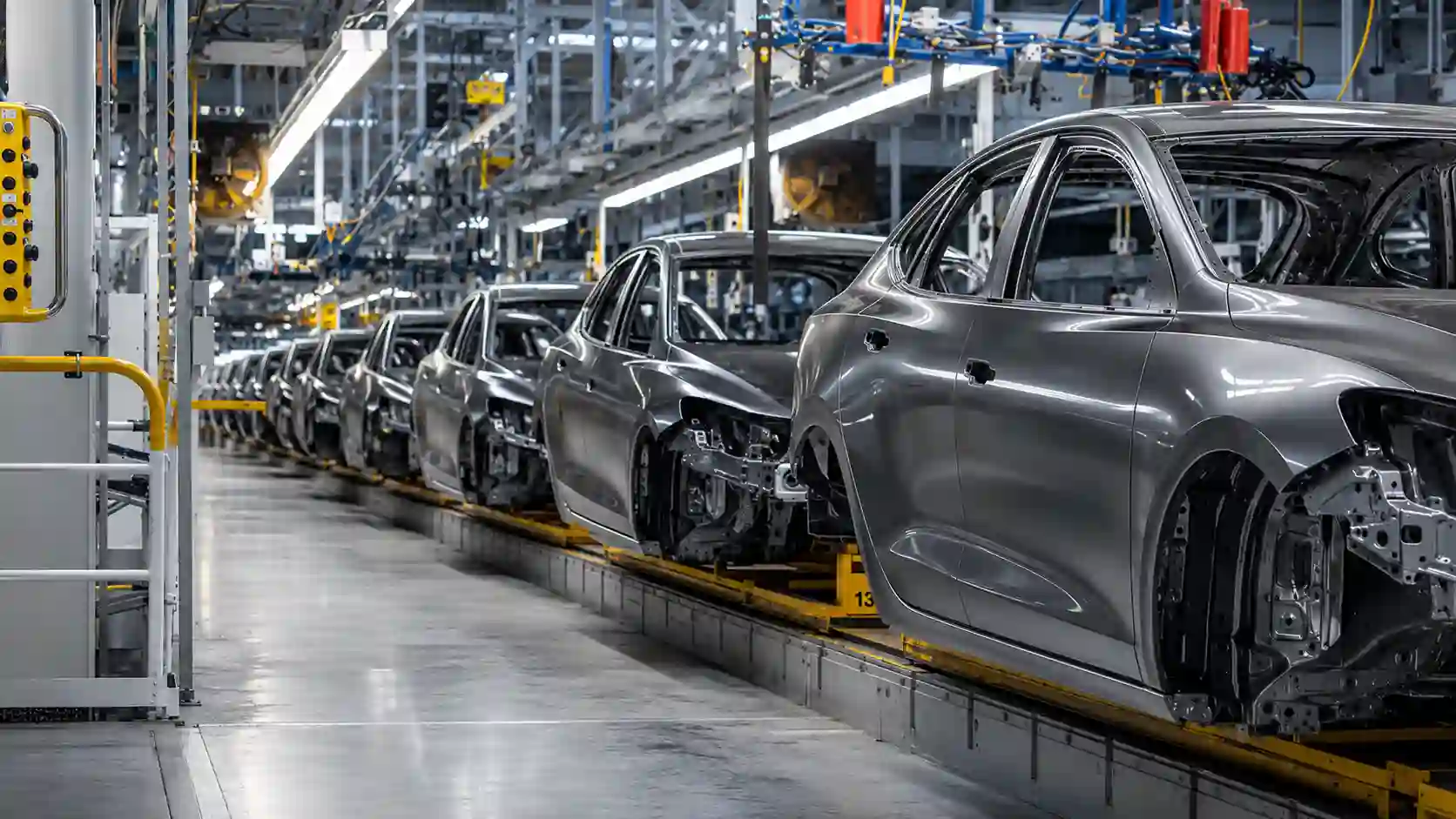
The automotive industry in South America is a regional production and supply-chain system with very different country roles.
Brazil provides the largest production base, consumer market and supplier ecosystem. Argentina remains a major vehicle-production, export and component market. Paraguay has become more important as an export-oriented auto-parts location, especially for wire harnesses and electrical systems linked to Brazil. Chile and Uruguay are more strongly defined by imports, distribution, dealer execution and changing brand competition.
The main competitive shift is now occurring across production, suppliers and market access at the same time. Chinese manufacturers are adding pressure through electric and hybrid vehicles, pricing, product cycles and localization strategies, while established European, US and regional production systems retain deep manufacturing and dealer networks.
One Region, Several Automotive Models
South America’s automotive industry cannot be read as a single market. Production capacity, supplier depth, tariffs, trade rules, consumer demand and import structures differ sharply by country.
The regional system is centered on Brazil and Argentina, but it extends beyond final vehicle assembly. Paraguay has developed a visible supplier layer connected to larger Mercosur vehicle programs, while Chile and Uruguay provide a different test: how brands compete in markets where imports and distribution matter more than local vehicle production.
Econosur’s South America car-market analysis examines this regional competition directly, including the changing positions of European, US and Chinese manufacturers.
The regional automotive system has four layers: large-scale vehicle production, cross-border component supply, import and dealer execution, and the emerging EV and localization contest.
Brazil: The Regional Production and Demand Anchor
Brazil remains the gravitational center of the South American automotive industry. Its importance comes from the combination of vehicle production, a large consumer market, deep supplier networks and industrial-policy capacity.
That scale shapes decisions outside Brazil as well. Paraguayan component plants depend heavily on Brazilian vehicle and supplier demand, while international manufacturers evaluate local production, imports and localization against the economics of serving the Brazilian market.
The Brazil market profile provides the wider country context behind this industrial role.
Argentina: Manufacturing, Exports and Supplier Capability
Argentina remains the second major production base in the Southern Cone. Its automotive role is built around vehicle manufacturing, exports, established supplier relationships and a long industrial-policy history, but domestic demand and production conditions remain more volatile than in Brazil.
The Mirgor industrial case adds an important supplier perspective. Mirgor links electronics, automotive components, logistics and the Tierra del Fuego industrial regime, showing how automotive capability can sit inside a broader manufacturing platform rather than a pure vehicle plant.
For the broader operating environment, see the Argentina market profile and the Argentina company insights.
Paraguay: A Supplier Corridor, Not Just a Distribution Market
Paraguay should no longer be treated only as a small automotive sales or distribution market. Its more important regional role is increasingly industrial: selected labor-intensive automotive components are produced in Paraguay and integrated into larger Brazilian and Mercosur supply chains.
In the first half of 2026, auto parts accounted for 32% of Paraguay’s maquila exports, making them the largest individual product category reported for the period. The auto-parts sector employed 7,865 people, while Brazil received 62% of all maquila exports. These figures make the Brazil-linked supplier relationship economically visible.
Econosur’s Paraguay Auto-Parts Maquila Corridor explains the structure in detail: wire harnesses, electrical systems, maquila, ACE 74, origin rules and the dependence on external vehicle programs.
The related Yazaki Paraguay company insight shows how one global supplier operates inside that model. Yazaki’s Paraguayan operation produces automotive wire harnesses in Mariano Roque Alonso and functions as a production node inside a wider Mercosur network.
Paraguay adds a supplier geography to the regional automotive map. The key question is whether wire-harness and component production can deepen into engineering, tooling, local supplier capability and more durable industrial functions rather than remain concentrated in mobile, labor-intensive production stages.
Chile and Uruguay: Import, Distribution and Brand-Competition Markets
Chile and Uruguay occupy different positions from Brazil, Argentina and Paraguay. Their automotive relevance is more strongly tied to imported vehicles, dealer networks, financing, aftersales, brand positioning and the pace of EV adoption.
Chile is especially useful for reading competition among imported brands because manufacturers can gain market presence without first building a large local vehicle-production base. Uruguay offers a smaller and more controlled distribution environment where market execution, pricing and service networks matter more than manufacturing scale.
See the Chile market profile and Uruguay market profile for the wider country context.
“South America’s automotive market is not one contest. It is a production contest in Brazil and Argentina, a supplier contest in Paraguay and an import-and-brand contest in markets such as Chile and Uruguay.”
Current Company and Supplier Cases in This Hub
| Case | Country | Why it matters | Econosur page |
|---|---|---|---|
| Yazaki Paraguay | Paraguay | Shows how automotive wire-harness production, workforce training, quality requirements and regional logistics connect Paraguay to larger Mercosur vehicle programs. | Read company insight |
| Mirgor | Argentina | Shows how automotive components can sit inside a wider electronics, logistics and policy-shaped manufacturing platform. | Read industrial case |
| Paraguay Auto-Parts Corridor | Paraguay / Brazil link | Maps the broader supplier base around wire harnesses, electrical systems, maquila, ACE 74 and Brazil-dependent automotive demand. | Read corridor analysis |
| South America Car Market | Regional | Connects Brazil, Argentina, Chile and Paraguay to the wider competition between established Western manufacturers and Chinese entrants. | Read regional analysis |
China, EVs and the New Competitive Layer
Chinese automotive expansion adds a second competitive system on top of the traditional production geography. The question is no longer only which brands can sell vehicles. It is also which manufacturers can combine product, price, logistics, dealer execution, local assembly and supplier localization.
Electric and hybrid vehicles intensify this change because they shift part of the competitive advantage toward batteries, software, charging access, electronics and faster product cycles. At the same time, EV penetration remains country-specific because charging infrastructure, tariffs, purchasing power and policy differ across the region.
This transition connects the automotive sector to Econosur’s broader work on energy and infrastructure and manufacturing and industrial systems, but automotive remains its own market because vehicle programs, suppliers, dealers and trade rules create a distinct operating structure.
What Companies Need to Read Correctly
A South American automotive strategy should begin by identifying the role of each country rather than treating the region as a single sales territory.
- Production layer: Is the market relevant for vehicle manufacturing, assembly or export production?
- Supplier layer: Which components can be produced locally, and how are they integrated into regional vehicle programs?
- Trade layer: Which tariffs, origin rules, quotas and customs structures affect cross-border movement?
- Commercial layer: How strong are dealer networks, financing, aftersales and spare-parts availability?
- Transition layer: How fast are EVs, hybrids, charging infrastructure and Chinese brands changing the competitive structure?
The most useful regional automotive map is functional rather than purely national: Brazil for scale, Argentina for established production and supplier capability, Paraguay for selected component manufacturing, and import-led markets such as Chile and Uruguay for distribution and brand competition.
The Econosur Reading
The automotive industry is a strong example of why South American market analysis has to connect company cases with regional systems. Final vehicle sales alone do not explain where industrial value sits or how competitive positions are built.
The regional South America car-market analysis establishes the competitive frame. The Paraguay auto-parts analysis adds the supplier layer. Yazaki Paraguay turns that layer into a company case, while Mirgor shows how automotive supply intersects with a wider Argentine manufacturing system.
Together these pages create a clearer internal structure than the previous hub, where automotive analysis was mixed with several only loosely related retail, logistics and energy pages.
This industry page is a synthesis hub. Detailed evidence remains in the linked regional, country and company analyses. The hub organizes those pages into a single automotive structure rather than duplicating every source and claim.
- South America Car Market: regional competition framework
- Paraguay Auto-Parts Maquila Corridor: supplier-system analysis
- Yazaki Paraguay: company insight
- Mirgor: Argentina industrial and automotive-supplier case
- Paraguay Industrial Side Door: wider maquila and manufacturing context
- Manufacturing & Industrial Cases
- Argentina Company Insights
- Paraguay Company Insights
- Custom market analysis
South America Automotive Market Analysis
Econosur prepares custom automotive market analysis covering production systems, suppliers, auto parts, regional trade, Chinese-brand competition, EV transition, dealer networks and country-specific market-entry questions.
Projects can focus on a single country, a supplier segment, a Mercosur production chain or a regional competitive question.
Explore custom market analysisFrequently Asked Questions
Which countries anchor the automotive industry in South America?
Brazil is the dominant regional production and consumer market, while Argentina remains a major manufacturing and export base. Paraguay is increasingly relevant through automotive-component and wire-harness production connected to Brazil and Mercosur. Chile and Uruguay are more strongly shaped by imports and distribution.
Why is Paraguay relevant to the South American automotive industry?
Paraguay has developed an export-oriented auto-parts base. In the first half of 2026, auto parts accounted for 32% of maquila exports and the sector employed 7,865 people. The model remains strongly connected to Brazilian automotive demand.
What does Yazaki Paraguay show about regional automotive supply chains?
Yazaki Paraguay shows how wire-harness production can be located in Paraguay while remaining integrated into larger Mercosur vehicle and supplier systems. The case links workforce skills, quality requirements, logistics and maquila administration.
How is China changing the automotive market in South America?
Chinese brands are increasing competition through electric and hybrid vehicles, pricing, fast product cycles, logistics and localization strategies. The impact differs by country because production, tariffs, dealer networks and consumer demand are not uniform.
Is the South American automotive market only about vehicle production?
No. Vehicle production is only one layer. Suppliers, imports, dealers, financing, aftersales, logistics, industrial policy, charging infrastructure and regional trade rules all influence market outcomes.
Which Econosur pages currently anchor this automotive hub?
The current core pages are the regional South America car-market analysis, the Paraguay auto-parts maquila corridor, the Yazaki Paraguay company insight and the Mirgor Argentina industrial case.