
Shopping China Paraguay:
Border Commerce
and Retail Logic
Shopping China and Ciudad del Este show how Paraguay’s border retail model links imports, re-export flows, tax differentials and regional consumer demand across the Southern Cone.
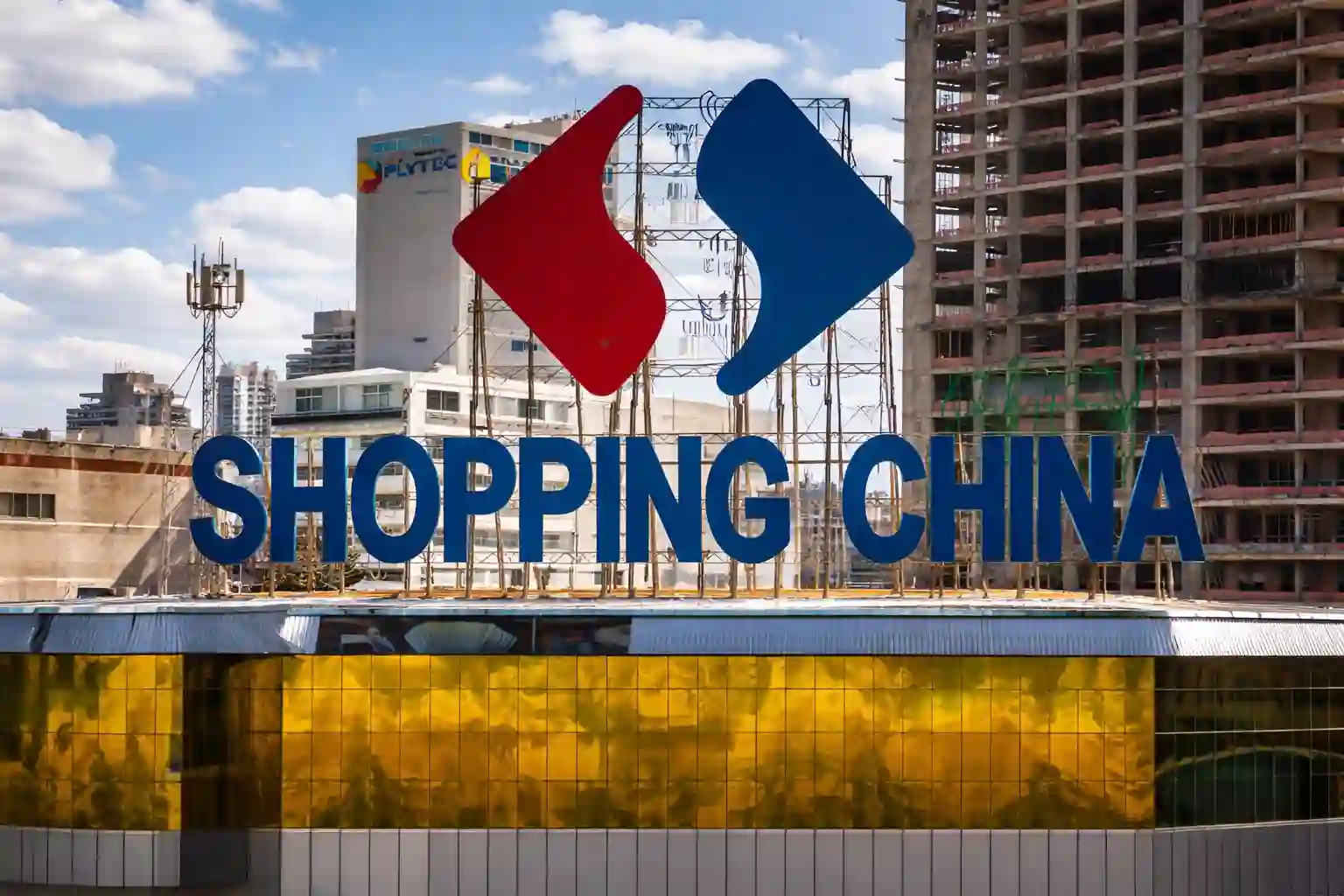
Paraguay is often read as a small domestic market. Ciudad del Este shows a different market logic. Its relevance comes from border commerce, import flows, tax differentials and resale networks that connect Paraguay with Brazil, Argentina and the wider Mercosur consumer economy.
Shopping China belongs inside the broader Paraguay market context as a company case inside that system. The retailer is a Paraguayan family business founded in Pedro Juan Caballero in 1933 and now operates stores in Ciudad del Este, Salto del Guairá and Pedro Juan Caballero. Its Ciudad del Este operation shows how formal retail can serve a market whose demand extends far beyond Paraguay’s resident population.
Market reading: Shopping China is useful as a company-level example of Paraguay’s wider border-commerce system. Ciudad del Este organizes cross-border demand through price gaps, tourist flows, wholesale networks, parcel movement and resale channels, while formal retailers provide inventory, payment, warranty and store infrastructure.
Markets Follow Trade Flows, Not Borders
The city in eastern Paraguay is often described as a shopping destination for Brazilian tourists. What happens there is structurally more interesting: a cross-border trading system that combines imported consumer goods, formal retail, tourism, wholesale purchasing, parcel movement and re-export activity.
Shopping China is one company inside that system, not the name of the system itself. The wider institutional framework is Paraguay’s Tourism Shopping Regime and its re-export economy. Under Decree 2063/2024, the regime applies a specific tax treatment to designated goods imported for sale to foreign individuals not domiciled in Paraguay in selected cities including Ciudad del Este.
By July 2026, the BCP recorded US$2.366 billion of imports under the Tourism Shopping Regime, up 39.3% year on year. Of that total, US$1.6504 billion was classified as capital goods and about US$707 million as consumer goods. The regime accounted for 21.1% of Paraguay’s registered imports during the period.
The broader outward flow is also visible in the export statistics. Re-exports reached US$3.0718 billion in January–July 2026, 18.4% above the same period of 2025. These figures do not measure Shopping China’s own sales; they show the scale of the national commercial system in which Ciudad del Este and similar border cities operate.
The market does not stop at the border. In Ciudad del Este, the border is where the market begins.
The Architecture Behind the Market
What looks from the outside like informal small-scale trade has, on closer inspection, a clear architecture. Ciudad del Este concentrates thousands of registered businesses, with a strong retail and wholesale base in Alto Paraná. Retailers optimize assortments for fast rotation and high demand. Wholesalers serve fixed buyer networks in neighboring countries. Logistics providers specialize in parcel forwarding, visitor packages and cross-border movement.
Each layer has its own economics, and together they form a system that functions without central coordination. The market handles the coordination through price signals, available inventory, buyer routes, transport capacity and resale margins.
The scalability of this system is visible in peak commercial events. During Black Friday 2025, more than 400,000 visitors were reported in the city, with more than USD 610 million in revenue generated in four days. Those figures remain a historical peak-event signal rather than a current 2026 measure.
The 2026 operating signal is different. During the Brazilian and Argentine winter holiday period in July, local reporting described heavy morning flows of Brazilian vehicles and shoppers into Ciudad del Este, with perfumes, mobile phones and notebooks among the leading categories. Traffic dropped sharply again after the school-holiday period and amid tighter Brazilian border controls, illustrating how sensitive local retail turnover can be to calendars and cross-border enforcement.
Market structure point: Ciudad del Este is not only a local retail story. It is a trade-flow structure. The real unit of analysis is the corridor between import access, border movement, consumer demand and resale networks.
Current 2026 signal: Tourism Shopping Regime imports grew 39.3% through July and re-exports grew 18.4%. The two series measure different parts of Paraguay’s trade system, but together they confirm that the border-commerce model remained economically significant in 2026.
Border Commerce as Retail Infrastructure
Shopping China also shows why retail in the Southern Cone should not be read only through domestic consumer markets. In border cities, retail infrastructure can serve foreign demand, wholesale resale, tourist purchasing and informal distribution at the same time.
This puts Ciudad del Este close to the broader platform economy and retail discussion. The system is not digital-first in the way a marketplace is, but it behaves like a platform in practical terms: it aggregates supply, concentrates demand, enables price comparison, supports reseller networks and uses logistics to extend the market beyond the physical point of sale.
| Market layer | Ciudad del Este signal | Why it matters |
|---|---|---|
| Imports | Designated imported goods enter under Paraguay’s Tourism Shopping Regime and other import channels. | Tax and price differentials can create cross-border purchasing incentives. |
| Retail | Large stores and dense commercial networks concentrate high-turnover consumer goods. | The city becomes a regional purchasing node, not only a local shopping district. |
| Resale | Brazilian, Argentine and regional buyers move products into other consumer markets. | Demand extends beyond official local consumption statistics. |
| Logistics | Parcel forwarding, tourism packages and border movement support commercial flows. | Retail and logistics operate as one market system. |
What Standard Analysis Misses
For investors who view the Mercosur region through conventional lenses — stock indices, country ratings and national consumption data — Ciudad del Este can still be underestimated. Important parts of the system are visible in BCP import and re-export statistics, but those aggregates do not show which cities, retailers, buyer groups and product categories generate the flows.
National statistics therefore provide the scale but not the full commercial mechanism. The missing layer is how regulatory differentials, price advantages, holiday cycles, border controls, retailer infrastructure and cross-border demand interact in practice.
This is why border commerce belongs in a more practical South America market brief: the question is not only what the domestic market consumes, but which flows already exist and which actors benefit from them.
Paraguay’s Role: Small Market, Regional Leverage
Shopping China reflects a wider pattern in Paraguay’s economy. Paraguay often appears small when measured by population, domestic consumption or formal capital-market depth. But it can become regionally relevant when geography, regulation and logistics create leverage.
The same pattern appears in other areas of the Paraguayan economy. The Paraguay river economy and Hidrovía system show how waterways create logistical influence beyond national scale. The Paraguay soy model shows how agricultural production and export orientation shape the country’s external role. Ciudad del Este adds the retail and import side of the same structural logic.
That makes Paraguay a market where the important question is often not size. The important question is function: what role does the country play in flows that connect Brazil, Argentina, Uruguay, China and the rest of the Southern Cone?
Marcus A. Volz perspective: My reading is that Ciudad del Este should not be described as an informal anomaly beside Paraguay’s “real” economy. The BCP data show a formal, measurable commercial system: US$2.366 billion of Tourism Shopping Regime imports and US$3.072 billion of re-exports in the first seven months of 2026. What remains less visible is how that volume is distributed across retailers, wholesale buyers, tourists, product categories and resale networks.
Shopping China is useful precisely because it gives that system a company-level face. It is a long-established Paraguayan retailer with physical stores, e-commerce and border locations. The commercial question is therefore not whether the system is formal or informal in the abstract, but which parts of the flow are captured by formal retailers and which continue through smaller wholesale, parcel and resale channels.
What Follows From This
The lesson from Ciudad del Este is analytical. The question for companies and investors active in the Cono Sur — or evaluating entry into the region — is which trade flows already exist, which of them are stable enough to build on and which remain invisible in standard market reports.
Shopping China does not provide a ready answer for every sector. But it demonstrates that markets in South America are not always best understood by looking at borders, GDP tables or formal retail statistics. Some of the most relevant demand patterns appear where regulation, logistics and consumer incentives overlap.
For companies evaluating Paraguay, border commerce, logistics, retail, re-export flows or consumer demand in the Southern Cone, this type of question belongs in a structured custom market analysis.
Primary & Institutional Sources
- Banco Central del Paraguay — Foreign Trade Report, July 2026: total imports, registered imports, re-exports and the July 2026 external-trade balance.
- BCP — Detailed July 2026 Foreign Trade Report: Tourism Shopping Regime imports of US$2.366 billion, +39.3% year on year, 21.1% of registered imports, with US$1.6504 billion in capital goods.
- Paraguay Ministry of Industry and Commerce — trade and import structure through July 2026: sector context and product categories covered by the Tourism Shopping Regime.
- DNIT / Presidency — Decree 2063/2024: legal basis of the Tourism Shopping Regime, eligible foreign buyers and designated cities.
- Shopping China — Institutional history: family-owned Paraguayan retailer founded in Pedro Juan Caballero in 1933 and current border-store network.
- Shopping China — Store locations: current Ciudad del Este, Salto del Guairá and Pedro Juan Caballero retail locations and e-commerce pickup.
Secondary & Analytical Sources
- ABC Color — Paraguay exports through July 2026: independent reporting on BCP data, including US$3.0718 billion of re-exports and 18.4% growth.
- Última Hora — Ciudad del Este winter-shopping flows, 17 July 2026: on-the-ground reporting on Brazilian visitor traffic and leading retail categories.
- Última Hora — lower CDE traffic after the holiday period, 31 July 2026: evidence of sensitivity to school holidays and Brazilian border controls.
- Evidence note: BCP, MIC and DNIT establish the scale and rules of the national tourism-shopping and re-export system. Shopping China’s own site establishes the company’s history and store network. The interpretation of Shopping China as a company-level lens into Ciudad del Este’s broader border-commerce system is Econosur analysis.
- Econosur analysis updated 30 August 2026.
Need a market brief on Paraguay, border commerce or retail flows?
Econosur prepares short market briefs and custom analysis for companies, analysts and institutions evaluating South American countries, trade flows, logistics corridors and cross-border market structures.
Possible scopes include Ciudad del Este, Shopping China, Paraguay retail, re-export flows, border commerce, Brazilian buyer demand, logistics, customs structures or channel questions.
Request a Market BriefFrequently asked questions
What is Shopping China in Paraguay?
Shopping China is a Paraguayan family-owned imported-goods retailer founded in 1933. Its Ciudad del Este store is one company case inside the broader border-commerce system serving Paraguayan, Brazilian, Argentine and other regional buyers.
Why is Ciudad del Este important for Paraguay’s economy?
Ciudad del Este is important because it channels large import, retail and re-export flows through Paraguay. Its commercial model depends on tariff differentials, border demand, logistics networks and regional consumer price gaps.
Why does border commerce matter for market analysis?
Border commerce matters because many real trade flows organize around price differentials, logistics routes and consumer demand rather than formal national market boundaries. Standard country-level statistics can miss these dynamics.
Is Shopping China only informal trade?
No. The system includes formal retailers, wholesalers, logistics providers, tourist flows, parcel movement and semi-formal resale networks. Its importance lies in the interaction between formal retail infrastructure and cross-border demand.
What does Shopping China reveal about Paraguay?
It shows Paraguay’s role as a commercial hinge in the Southern Cone: a smaller economy that can use tax, logistics and border-position advantages to influence trade flows beyond its domestic consumer market.