
Argentina and Paraguay’s
AI Infrastructure Bet:
From Energy to Compute
By September 28, the comparison has widened but the main execution gates remain unchanged. Paraguay continues to promote AI and technology investment internationally, yet the Taiwan sovereign-AI project remains in technical feasibility and HIVE’s additional 100 MW is targeted for Q4 2026 rather than operating today. Argentina has a broader Patagonia data-center pipeline, but most proposals remain early-stage, Stargate still lacks a public final investment decision and Super RIGI remains pending in the Senate.
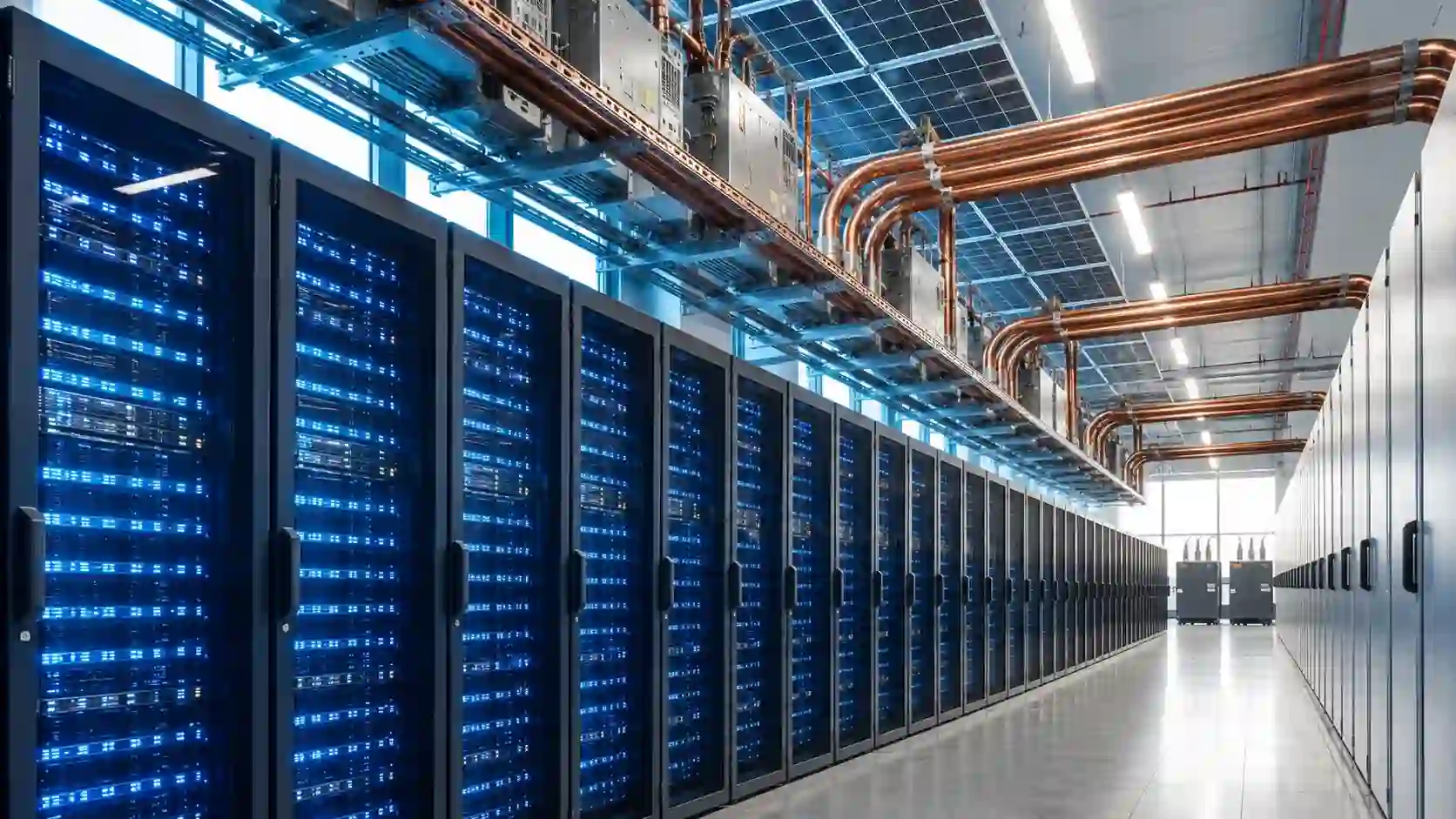
The Argentina–Paraguay comparison is now a question of project maturity, grid execution and demand, not simply cheap power or announced megawatts.
Paraguay still has two visible tracks. The state-led Paraguay–Taiwan proposal has a defined 10 MW first phase, a 50/50 concept and an estimated US$300 million to US$500 million phase-one investment range, but MITIC said on August 25 that it remains in technical-feasibility study. HIVE separately operates 300 MW of Paraguay infrastructure primarily associated with Bitcoin mining and is advancing another 100 MW at Yguazú. Its August disclosure shifted expected energization of the additional capacity to Q4 2026 and left the workload unallocated across hashrate, AI and HPC.
Argentina’s picture has broadened since the August update. Reuters reported on September 7 that Patagonia is attracting multiple early-stage data-center proposals, including Pampa Energía’s proposed facility of up to 500 MW near Loma de la Lata and projects in Chubut, Buenos Aires and elsewhere ranging from roughly 30 MW to 3,000 MW. The same reporting stressed that many remain early-stage and still require financing, formal agreements and infrastructure.
Stargate Argentina has not changed category. OpenAI still describes its arrangement with Sur Energy as a Letter of Intent to explore a large-scale data-center project, with OpenAI as a potential offtaker. There is no public FID or construction start. The separate Super RIGI also remains pending: the Senate failed to produce a committee report on September 2, the expected September 10 session was subsequently dropped and current legislative tracking still shows the proposal awaiting Senate approval on September 28.
The commercial distinction is therefore sharper: Paraguay has more operating powered infrastructure and a defined sovereign-AI feasibility project; Argentina has the larger emerging project pipeline, but most headline capacity remains pre-commitment.
For the wider five-market comparison across Argentina, Brazil, Chile, Uruguay and Paraguay, see Why AI’s Cost Problem Could Reshape Data Center Investment in South America.
For the broader site-selection question, including Brazil, Chile, Uruguay, Colombia and Peru alongside Argentina and Paraguay, see Can South America Compete for the Next Generation of AI Data Centers?.
Market analysis framework
September 28 update: more promotion, but the key execution gates remain unchanged
Argentina is no longer only a Stargate story. Reuters reported on September 7 that technology companies and investors are evaluating multiple Patagonia locations. Pampa Energía is proposing up to 500 MW near Loma de la Lata in Neuquén, while other reported projects in Chubut, Buenos Aires and elsewhere range from roughly 30 MW to 3,000 MW. Most remain early-stage and still need financing, formal agreements, grid and fiber infrastructure.
Stargate itself remains an LOI. OpenAI’s current public page still says that OpenAI and Sur Energy signed a Letter of Intent to explore a large-scale Argentina data-center project. No newer OpenAI project disclosure located by September 28 moves Stargate Argentina to FID, financing or construction.
Paraguay’s sovereign-AI project has not yet moved beyond feasibility in the latest detailed project-status disclosure located. MITIC’s August 25 update still places the planned 10 MW Paraguay–Taiwan project in technical-feasibility study. Paraguay continued to promote AI, renewable electricity and technology investment in September, including at the Taiwan–Paraguay technology forum and during President Santiago Peña’s international investment agenda, but those later statements do not document a new construction, financing or procurement milestone for the 10 MW project.
HIVE’s timing has shifted. A June release expected the new 100 MW Yguazú substation to be energized in September, but HIVE’s later August disclosure targets Q4 2026 and says the added capacity remains unallocated across hashrate services, AI and HPC. The Tier-III AI/HPC build remains a later step, with ready-for-service targeted for H2 2027.
Super RIGI remains pending. The governing coalition failed to secure enough Senate committee signatures on September 2 and the expected September 10 Senate session subsequently fell through. Current legislative tracking still shows the proposal as pending Senate approval rather than enacted law as of September 28.
The market signal has changed
The useful question is no longer whether Argentina and Paraguay want AI data centers. Both clearly do. The market question is now which announced capacity is acquiring the characteristics of an investable project: a site, a power route, a legal structure, financing, procurement responsibility, cooling and fiber design, an operator and a customer.
That distinction matters because AI infrastructure can absorb enormous capital while still remaining optional for years. A political announcement may create visibility. A dedicated tariff or incentive can improve economics, but only while the rule remains in force. Site control, grid studies, equipment orders, permits, financing and binding offtake move the project into a different category again.
The energy-to-compute story is becoming a project-finance and execution story.
Paraguay now has two AI infrastructure tracks
Paraguay’s first track is institutional. The agreement with Taiwan is no longer only a broad technology memorandum. MITIC has described a concrete first stage: 10 MW of compute, a 50/50 model and a phase-one investment estimate of US$300 million to US$500 million. A dedicated binational entity is planned, and the first stage is expected to use the site of Paraguay’s future state data center.
This creates a different type of demand from a private hyperscale project. The government-led model can generate procurement around data-center construction, electrical systems, cooling, networking, cybersecurity, high-performance computing, operations and public-sector AI capacity. The decisive next steps are the legal structure, budget and financing, technical architecture, procurement route and project calendar.
The second track is HIVE. The company has already demonstrated that Paraguay can host large hydro-powered, power-intensive digital infrastructure. It completed a 300 MW Paraguay buildout across Yguazú and Valenzuela, primarily for Bitcoin-mining operations, and is now adding another 100 MW at Yguazú. That makes HIVE relevant to the AI discussion because the power and site infrastructure already exist, while the workload transition remains separate.
But the August disclosure changes how the project should be read. HIVE says the extra 100 MW remains unallocated. Its August disclosure targets energization in Q4 2026 and leaves the capacity available for hashrate services, AI or HPC depending on returns. A separate June roadmap places Tier-III AI/HPC construction after energization and targets ready-for-service in H2 2027. Paraguay therefore has a credible powered-site option for AI, but the full 100 MW is not committed AI capacity.
The power-policy layer is less settled than the earlier version of this analysis suggested. ANDE described special provisions for convergent industries in May, including data centers and AI. On June 9, however, the executive revoked the four decrees associated with that special framework. Public statements since then continue to support digital infrastructure investment, but a supplier, developer or lender should verify the current project-specific tariff and connection regime rather than rely on the earlier special-decree treatment.
The August 13 proposal to create a Ministry of Mines and Energy and a separate electricity regulator adds another layer. It may ultimately strengthen predictability, but for now it means the institutional framework itself is under redesign.
Paraguay’s advantage is operating power-intensive infrastructure plus visible AI project activity, not a permanently fixed cheap-power regime. The June regulatory reset makes commercial due diligence on tariffs, connection terms and long-duration power treatment more important, not less.
Argentina is assembling the conditions before FID
Argentina’s potential project remains much larger. OpenAI and Sur Energy announced Stargate Argentina in October 2025, and OpenAI’s public position still describes a letter of intent to explore a large-scale data-center project. Sur Energy would lead energy and infrastructure development and form a consortium with a cloud-infrastructure partner, while OpenAI has described itself as a potential offtaker.
By September, the national pipeline had broadened beyond Stargate. Reuters reported multiple Patagonia proposals on September 7. Pampa Energía is evaluating a facility of up to 500 MW near its Loma de la Lata power plant in Neuquén, while projects in Chubut, Buenos Aires and other locations range from roughly 30 MW to 3,000 MW. The same reporting stresses that many projects are still early-stage and depend on financing, formal agreements and additional infrastructure, including fiber.
Since then, the project has gained more local detail. Infobae reported in June that site work had focused on Neuquén’s Confluencia department, including Senillosa and Arroyito, and that energy-supply agreements had been reached with Central Puerto and Genneia. Those details make the proposal more tangible, but they remain reported project-development signals rather than a public FID.
Peter Thiel and Palantir: context, not project evidence
Peter Thiel’s growing Argentina exposure adds a technology and capital-market layer to the country’s AI infrastructure story. On April 23, President Javier Milei received Thiel at the Casa Rosada together with representatives of Thiel Capital and Founders Fund. Public information from the Argentine government confirms the meeting but does not establish a Palantir contract, a data-center mandate or a direct Palantir role in Stargate Argentina.
The signal became more concrete in August from a different direction. A U.S. filing reported by Reuters showed that Thiel Macro acquired roughly a 1 percent stake in Vista Energy, one of the largest producers in Vaca Muerta, in a position valued at about US$76 million. That creates a direct capital connection between Thiel and Argentina’s principal energy basin.
For the data-center story, the distinction matters. OpenAI and Sur Energy represent a defined potential infrastructure pathway. Thiel’s Vista investment represents a concrete energy and capital exposure. Palantir remains a strategic technology and data-system signal rather than a confirmed infrastructure participant. The combination is relevant because Argentina’s AI proposition increasingly depends on the intersection of compute, energy and long-duration capital, but current public evidence does not support treating Palantir as part of the Stargate project.
Evidence boundary: the signal is the network around Argentina’s AI and energy positioning, not a confirmed contract. Thiel now has a political relationship with the Milei government and a direct investment in Vaca Muerta, while Palantir itself has no publicly confirmed role in Stargate Argentina.
The policy environment is also moving. Argentina’s existing RIGI framework was extended in 2026, and Decree 105/2026 explicitly includes artificial intelligence within the technology sector. A separate “Super RIGI” for investments above US$1 billion passed the Chamber of Deputies in June with proposed long-duration fiscal, customs and foreign-exchange benefits. But the proposal has not advanced to enactment: on September 2 the governing coalition failed to secure enough Senate committee signatures for a report, and the expected September 10 Senate session was subsequently dropped. As of September 28, current legislative tracking still shows Super RIGI pending Senate approval.
Financing capacity is beginning to enter the public discussion as well. On August 3, CAF said it is evaluating ways to finance data centers and other digital-infrastructure projects in Argentina, including the possibility of syndicated financing with other multilateral and international institutions. CAF did not identify Stargate as a specific financing mandate, so this should be read as a broader market signal rather than project financing already secured.
Argentina’s position has improved, but the key category has not changed: Stargate Argentina is still a project-development option rather than a sanctioned construction program. The next meaningful threshold is public evidence of site closure, financing, FID, permits and binding procurement.
Two different execution models
| Dimension | Paraguay | Argentina |
|---|---|---|
| Primary 2026 model | Smaller sovereign-AI project plus private powered infrastructure. | Potential hyperscale Stargate project led by private developers. |
| Defined project scale | 10 MW first phase for Paraguay–Taiwan; separate 100 MW HIVE expansion. | Up to 500 MW reported for Stargate Argentina. |
| Project structure | 50/50 bilateral model planned for sovereign AI; HIVE operates separately. | Sur Energy-led consortium; OpenAI described as potential offtaker. |
| Physical execution signal | State-data-center site visited; HIVE 100 MW expansion under construction with energization targeted for Q4 2026. | Possible Neuquén sites and energy arrangements reported, but no public FID. |
| Policy / utility layer | Special convergent-industry decrees revoked June 9; project-specific power terms must be re-verified while broader electricity-sector reform is discussed. | RIGI includes AI; Super RIGI has half-passage and remains under Senate treatment. |
| Main open question | Whether feasibility, legal structure and a durable power regime convert project definitions into procurement and bankable compute. | Whether the mega-project reaches FID and converts policy support into construction. |
The next bottleneck is bankable compute demand
Power is only one side of the business model. AI infrastructure needs customers willing to commit to expensive compute capacity for long periods. The distinction between “available megawatts” and “bankable megawatts” is becoming central.
Paraguay has a sovereign-demand route through the Taiwan partnership, but the long-term customer and workload model for a much larger regional AI market remains to be proven. HIVE has demonstrated that BUZZ HPC can win large AI cloud contracts internationally, including new long-term enterprise agreements in Canada, but its August disclosure does not commit the additional Yguazú power to those workloads.
Argentina has a potentially powerful demand signal because OpenAI has positioned itself as a possible offtaker. But “potential offtaker” is different from a disclosed long-term capacity contract. For lenders, developers and equipment suppliers, the commercial threshold will be the point at which demand becomes contractual enough to support financing and procurement.
What companies should watch next
Three business questions that require deeper research
Which projects will actually enter supplier procurement in the next 12 to 24 months?
Public announcements reveal target capacity. Commercial research has to establish package definition, engineering status, tender timing, buyer responsibility and which parts of the build are already committed.
Who controls the purchase of power, cooling, electrical, networking and data-center packages?
The buyer may sit with a government entity, project developer, utility, EPC, cloud-infrastructure partner, operator or technology provider. That structure differs sharply between the Paraguay–Taiwan model, HIVE and Stargate Argentina.
Which customer commitments are strong enough to make new capacity bankable?
AI infrastructure can be technically feasible and still fail commercially. The relevant evidence is binding offtake, cloud contracts, sovereign workloads, enterprise demand and financing structures tied to actual utilization.
Where Published Information Stops
Public sources now reveal far more than they did earlier in 2026: Paraguay’s first-phase scale and institutional model, a physical site, HIVE’s power expansion and timing, the reversal of the special convergent-industry decrees, and a broader Argentina project pipeline extending beyond Stargate. They still do not provide a complete package-level procurement calendar or a durable project-specific power contract for the Paraguayan AI projects.
Key gaps include approved vendor lists, EPC responsibilities, detailed grid-connection studies, power pricing and indexation, final cooling architecture, fiber routes and redundancy, GPU or server procurement, construction package timing, binding customer commitments, financing terms and the exact boundary between public infrastructure and private investment.
Those gaps are where direct project validation, supplier mapping, buyer research and market interviews become necessary.
AI infrastructure and data-center research
Econosur can extend the public analysis with targeted market and project research for companies evaluating Argentina, Paraguay or the wider South American digital-infrastructure market.
Strategic conclusion
The strongest 2026 signal is not that one country has “won” the AI-infrastructure race. It is that the two markets now fail at different gates.
Paraguay has proven that large renewable-powered digital infrastructure can be built and has defined a sovereign-AI concept with Taiwan. But the June repeal of the convergent-industry decrees and the August confirmation that the 10 MW project remains in feasibility mean that physical tangibility is ahead of regulatory and commercial closure.
Argentina has the opposite profile. Its incentive architecture is becoming more supportive and the potential Stargate scale is much larger, but the flagship project remains an LOI without public FID. Here, policy optionality is ahead of project commitment.
Core project-status, regulatory and policy claims are anchored first in government, legislative, utility and company disclosures. Media reporting is used separately for project-development detail, financing context and signals not yet confirmed in primary documentation. Status checked and updated September 28, 2026.
Government, legislature, utility, regulator and company disclosures used for core status, policy and project claims.
- OpenAI — Stargate Argentina remains publicly framed as a Letter of Intent with Sur Energy; OpenAI is described as a potential offtaker.
- Argentina Decree 105/2026 — RIGI extension and explicit inclusion of artificial intelligence within the technology sector.
- MITIC Paraguay, May 20, 2026 — 10 MW first phase, 50/50 Paraguay–Taiwan concept and US$300–500 million phase-one estimate.
- MITIC Paraguay, June 15, 2026 — visit to the future state data-center site intended to host the first bilateral AI phase.
- MITIC Paraguay, August 25, 2026 — 10 MW project remains in technical-feasibility study.
- MITIC Paraguay, September 11, 2026 — Taiwan–Paraguay technology forum confirms continued strategic cooperation on AI, but does not document a new construction or financing milestone for the sovereign-AI data center.
- MITIC Paraguay, September 24, 2026 — government investment promotion highlights renewable electricity, technology infrastructure and AI opportunities; used as current positioning evidence rather than project-status evidence.
- ANDE, May 7, 2026 — historical special provisions for electricity supply to convergent industries, including data centers and AI.
- Presidency of Paraguay, June 9, 2026 — Decrees 5306, 5307, 5860 and 5861 related to convergent industries revoked.
- ANDE, June 9, 2026 — utility confirmation of the repeal and stated rationale around system sustainability and competitiveness.
- Presidency of Paraguay, August 13, 2026 — proposal for a Ministry of Mines and Energy and a dedicated electricity regulator.
- HIVE, June 22, 2026 — Yguazú 100 MW substation and planned Tier-III AI/HPC path.
- HIVE, August 2026 — additional Yguazú capacity remains unallocated across hashrate, AI and HPC workloads.
- HIVE Form 10-Q, August 2026 — Yguazú expansion remains under construction with key infrastructure components ordered.
- Argentine Chamber of Deputies — official Super RIGI file: half-passage on June 24, 2026 and referral to Senate committees.
- Argentine Senate — official committee treatment of Super RIGI in August 2026.
- Argentina Presidency, April 23, 2026 — Milei meeting with Peter Thiel, Thiel Capital and Founders Fund representatives.
- CABASE — Argentine digital-infrastructure and data-center sector context.
Used for reported site development, financing signals, political negotiations and strategic context where no equivalent primary project disclosure was located.
- Reuters, September 7, 2026 — broader Patagonia data-center pipeline, including Pampa Energía’s proposed 500 MW Neuquén project and other early-stage projects ranging from roughly 30 MW to 3,000 MW.
- TN, September 2, 2026 — Senate committee failed to produce a Super RIGI report after allied blocs demanded further changes.
- C5N, September 9, 2026 — the expected September 10 Senate session was dropped.
- Infobae, June 21, 2026 — reported Neuquén site work and energy arrangements involving Central Puerto and Genneia.
- LA NACION, August 3, 2026 — CAF interest in financing data centers and digital infrastructure in Argentina.
- Reuters, August 16, 2026 — Thiel Macro’s roughly 1% Vista Energy stake.
- WIRED en Español, April 24, 2026 — Palantir/Thiel context around the Milei meeting; no confirmed Stargate infrastructure role.
- El Liberal, August 26, 2026 — reported agreement by the governing coalition to accept Senate changes, implying return to Deputies if the amended text passes.
- RIGI.ar — current legislative-status tracking checked September 28, 2026: Super RIGI has half-passage from Deputies and remains pending Senate approval; it is not enacted law.
From announced megawatts to commercial evidence
The next AI infrastructure opportunities in Argentina and Paraguay will be decided by project structure, power contracts, sites, fiber, cooling, financing, procurement and real customer demand.
Econosur prepares custom market and project research for companies, investors and technology providers evaluating digital infrastructure in South America, including project validation, supplier mapping, buyer research, power and site conditions, connectivity, operators and commercial execution.
Discuss custom researchFrequently asked questions
What has changed in Argentina and Paraguay’s AI data-center story by September 28, 2026?
Paraguay’s 10 MW sovereign-AI proposal with Taiwan remains in technical feasibility in the latest detailed project-status disclosure located. HIVE is still advancing another 100 MW at Yguazú, with energization targeted for Q4 2026 and the final workload allocation open across hashrate, AI and HPC. September government statements continue to promote AI and renewable-powered technology investment, but do not document a new construction or financing milestone for the sovereign-AI project. Argentina now has a broader Patagonia pipeline, but many proposals remain early-stage, OpenAI still publicly describes Stargate as an LOI and Super RIGI remains pending.
What is the Paraguay–Taiwan sovereign AI data-center project?
MITIC describes a 50/50 project with a 10 MW first phase and an estimated US$300 million to US$500 million investment. Paraguay would contribute energy and site infrastructure, while Taiwan would provide high-performance AI equipment. On August 25, MITIC said the project remained in technical-feasibility study. A binational operating entity is planned and still requires legislative approval.
Is HIVE’s additional 100 MW in Yguazú committed to AI?
Not yet. HIVE’s August 2026 disclosure says the additional 100 MW remains unallocated and can support hashrate services, AI or HPC depending on returns. The same disclosure targets energization in Q4 2026; a separate Tier-III AI/HPC build is planned after energization, with ready-for-service targeted for H2 2027.
What is the current status of Stargate Argentina?
OpenAI still publicly describes Stargate Argentina as a letter of intent with Sur Energy to explore a large-scale data-center project, with OpenAI as a potential offtaker. Argentine reporting has added possible Neuquén locations and power-supply planning, but there is no public final investment decision or construction start.
What is Palantir’s role in Argentina’s AI infrastructure story?
Peter Thiel met President Javier Milei in April 2026 and later acquired roughly a 1 percent stake in Vista Energy through Thiel Macro, creating a direct capital connection to Vaca Muerta. Public information does not establish a Palantir contract, a direct role in Stargate Argentina or a confirmed data-center infrastructure mandate.
What is the status of Argentina’s Super RIGI?
The Chamber of Deputies approved the bill in June 2026. On September 2, the governing coalition failed to secure the Senate committee signatures required for a report, and the expected September 10 Senate session was subsequently dropped. As of September 28, current legislative tracking still shows the bill pending Senate approval and it is not enacted law.
What happened to Paraguay’s special rules for convergent industries?
On June 9, 2026, the executive revoked Decrees 5306, 5307, 5860 and 5861, all related to convergent industries. The government said the reset was intended to protect the sustainability of the power system and national competitiveness. The earlier special-decree framework should therefore not be treated as the current settled commercial regime for data-center projects.
What is the main commercial question for companies?
The relevant question is which projects can become bankable, procurement-ready capacity. That depends on site control, grid connection, cooling, fiber, financing, operator structure, permits, equipment packages and binding compute demand.