
Argentina · Patagonia · Land · Wool · Supply Chains · Territorial Risk
Benetton in Patagonia: Land, Wool and Corporate Due Diligence
CTSA links one of Patagonia’s largest corporate land positions with livestock, agriculture, forestry, indigenous territorial claims and changing foreign-land regulation. The business question is what can be verified, what remains uncertain and where that uncertainty becomes commercially material.
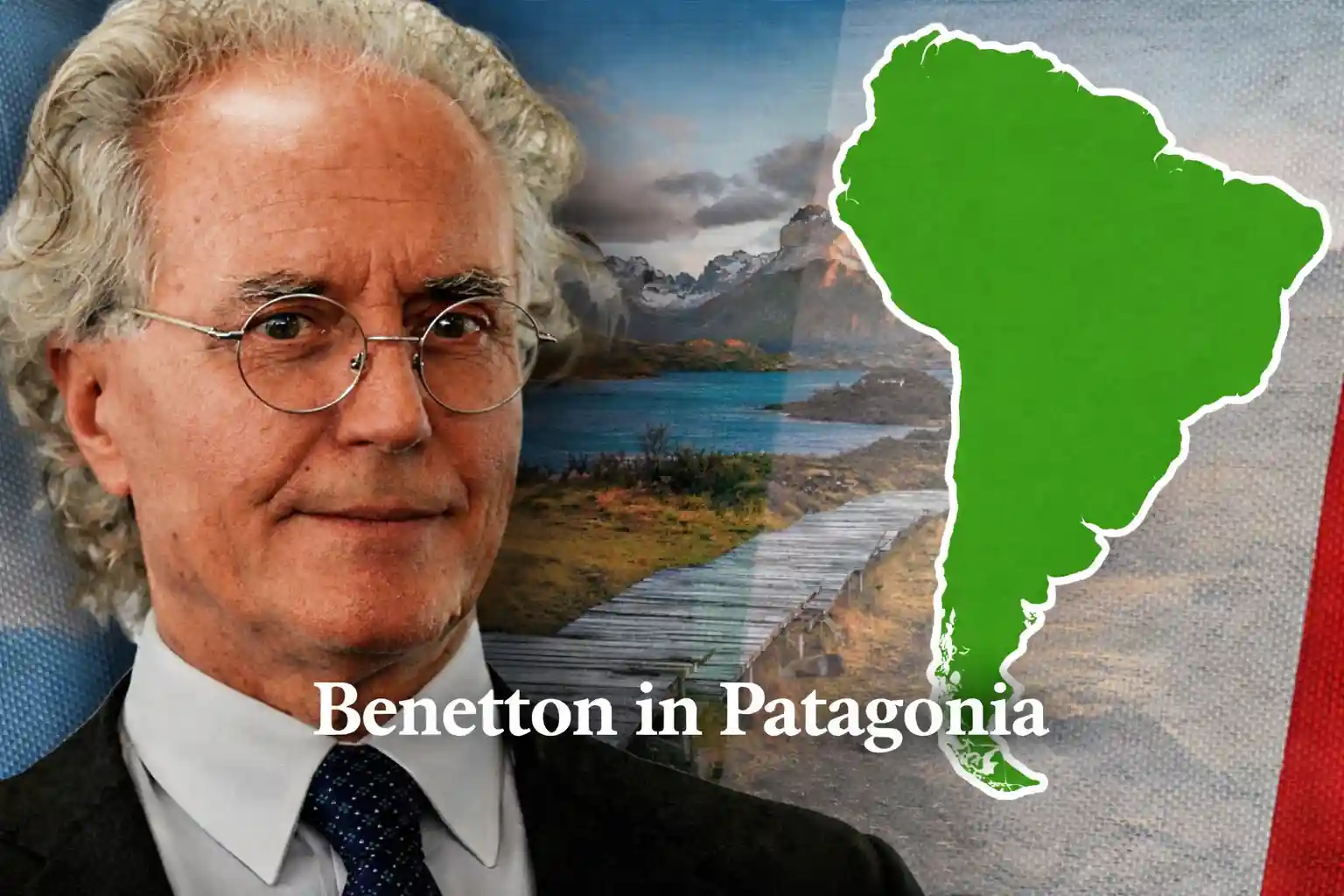
Benetton’s Patagonia exposure is best read as a live corporate due-diligence case.
Through Compañía de Tierras Sud Argentino (CTSA), Edizione controls an integrated rural operating business spanning livestock, wool, agriculture and forestry across approximately 920,000 hectares. Edizione’s latest published figures show more than 300,000 livestock, more than 250 employees and €20.5 million in 2025 revenue.
The commercial issue is wider than formal ownership. Buyers, investors and counterparties may need to understand the ownership chain, territorial claims, regulatory change, supply-chain origin, stakeholder exposure and which parts of the public ESG narrative can be independently verified.
See Econosur’s CTSA company profile, Agriculture & Food Systems and Forestry, Pulp & Paper coverage for adjacent market context.
Market Analysis Framework
Current CTSA Scale: The Published Operating Base
Edizione’s current portfolio page describes CTSA as a 100%-owned agricultural company active across approximately 920,000 hectares. The business combines cattle and sheep breeding, wool, crops including wheat, maize, soya, barley and sunflower, and forestry activities.
The latest published figures, stated as of 31 December 2025, are more useful than older press estimates: more than 300,000 livestock, more than 250 staff and €20.5 million in 2025 revenue. Edizione also states that CTSA has planted more than five million trees over the last 35 years on more than 10,000 hectares near the Andes for silvopastoral use.
Current-data rule: aggregate figures such as land area, livestock, staff and revenue can be sourced from Edizione. Older figures for annual wool output, slaughter capacity or the share of Benetton’s wool needs should be treated as historical unless reconfirmed by current disclosures.
The Ownership Chain Still Matters
The operating company is current. The ownership history is much older. The Argentine Southern Land Company was incorporated in London in 1889 and became part of the chain that later led to CTSA. Edizione, the Benetton family holding company, acquired CTSA in 1991.
The historical context remains commercially relevant because Patagonian landholding is tied to the 19th-century territorial expansion of the Argentine state and the dispossession of indigenous peoples. That history continues to shape public claims, litigation, activism and reputational interpretation around some landholdings.
The Conquista del Desierto restructures control over large areas of Patagonia through military expansion and dispossession of indigenous peoples.
The Argentine Southern Land Company is incorporated in London and becomes part of the historical ownership chain behind later CTSA assets.
Edizione acquires CTSA. The company remains part of Edizione’s portfolio today.
Land occupations, evictions and the Cushamen conflict make the territorial layer internationally visible, including the 2017 Santiago Maldonado case.
Argentina changes the indigenous land-possession framework, RAM is entered into RePET, and foreign-rural-land rules return to Congress as an active policy issue.
Production Logic: Land, Livestock, Crops and Forestry
CTSA is more than a passive landholding vehicle. Edizione describes an integrated operating model combining animal husbandry, agriculture and forestry. Wool remains part of the company’s productive identity, while the agricultural portfolio includes grains and oilseeds and the forestry layer extends into silvopastoral management.
That mix creates several due-diligence layers: origin and traceability of agricultural products, land title and land-use history, environmental certification, workforce and local-community relationships, forestry and carbon claims, and the extent to which different assets are commercially connected to Benetton or other buyers.
Territorial Risk: Legal Title Is Only One Layer
Public disputes around CTSA land have included Mapuche territorial claims, occupations, court proceedings, evictions and political controversy. The historical record therefore matters for companies that need to distinguish formal legal title from broader stakeholder and reputational exposure.
The 2017 Santiago Maldonado case remains part of that public history. Official investigations concluded that he drowned and did not attribute criminal responsibility to security forces; his family and human-rights organizations challenged aspects of that conclusion. For due diligence, the relevant point is that the conflict generated persistent national and international scrutiny around the territory.
Legal ownership, stakeholder legitimacy and commercial materiality are separate questions.
A title check can establish current legal ownership. It does not by itself establish whether an asset is free of territorial claims, community conflict, reputational exposure or future regulatory risk.
The Regulatory Layer Changed, and It Is Still Moving
Decree 1083/2024 ended the emergency on possession and ownership of lands traditionally occupied by indigenous communities that had been declared under Article 1 of Ley 26.160, and it ended the related suspension of evictions under Article 2. The decree also repealed Decree 805/2021. The precise formulation matters: the emergency and eviction suspension were declared finished; Ley 26.160 remains part of Argentina’s legal framework.
In February 2025, Resolution 210/2025 declared that the legal requirements were met to seek the inscription of Resistencia Ancestral Mapuche (RAM) in RePET. A later 2025 national decree described RAM as having been entered into that register.
Foreign rural-land ownership is another live layer. Ley 26.737 establishes a 15% limit on foreign ownership or possession of rural land under the cases regulated by the law. In July 2026, bill 3247-D-2026 was introduced in the Chamber of Deputies to modify acquisition limits for foreign individuals and companies. The bill has been referred to the Legislation, Constitutional Affairs and Agriculture committees.
For CTSA, the key due-diligence question is therefore not whether one law “settles” the case. It is how current ownership, historical acquisition, land-use rules, indigenous-possession rules and foreign-land regulation interact with the specific asset or transaction being assessed.
What Companies Should Watch
Follow bill 3247-D-2026 and any subsequent proposals affecting foreign-controlled rural landholding structures.
Track court, provincial and community developments at the estate or parcel level rather than assuming aggregate corporate land data tells the whole story.
Separate CTSA’s operating output from assumptions about which products are currently purchased by Benetton or other counterparties.
Check the scope, date and asset coverage of certifications, carbon claims and community-development statements.
Identify which communities, provincial authorities, courts and local actors are relevant to the specific asset under review.
Translate a public controversy into the commercial question: does it affect title, operations, sourcing, insurance, financing, buyer policy or reputation?
Three Business Questions That Require Deeper Research
Where Published Information Stops
Public information is strong enough to establish CTSA’s current ownership, aggregate operating area, current company-level livestock, staff and revenue figures, important parts of the historical ownership chain, the applicable national legal framework and major public disputes.
The commercial gaps sit below that level. Public sources generally do not provide a complete parcel-by-parcel title file, current buyer and supply contracts, internal ESG risk assessments, insurance terms, community agreements, vendor and customer lists, asset-specific environmental liabilities or a reliable measure of how a particular dispute affects a specific transaction.
That is the point where targeted research becomes useful: defining the exact asset, counterparty, product flow or investment decision first, then validating the evidence around it.
Focused Econosur Research Modules
Map companies, shareholders, estates, production units and relevant operating assets.
Review title context, applicable federal and provincial rules, known proceedings and regulatory changes.
Trace wool, livestock, crops, forestry output, processing stages and known buyer relationships.
Identify communities, authorities, courts, land claimants and other actors relevant to the specific asset.
Compare corporate claims with public records, certification evidence and independent sources.
Determine which risks are actually material for a named buyer, investor, supplier or transaction.
- Edizione — current CTSA portfolio data, figures at 31 December 2025.
- Argentina — Decree 1083/2024 on the end of the Ley 26.160 emergency and eviction suspension.
- Argentina — Resolution 210/2025 concerning RAM and the RePET inscription process.
- Argentina — Decree 366/2025, which refers to RAM as entered in RePET.
- Argentina — updated text of Ley 26.737 on rural land.
- Argentine Chamber of Deputies — bill 3247-D-2026 on foreign acquisition limits for rural land.
Need a defined ownership, supply-chain or due-diligence question answered?
Econosur researches company structures, assets, land and regulatory context, supplier and buyer relationships, stakeholder exposure and the gap between published claims and transaction-relevant evidence.
Discuss a custom research questionFAQ
Why does the Benetton case matter for corporate due diligence in Argentina?
Because CTSA combines large-scale rural land ownership, livestock, agriculture and forestry with a contested territorial history, indigenous claims and a changing regulatory environment. Legal title is one part of the risk picture; ownership history, stakeholder conflict, regulation and supply-chain traceability are others.
What are the latest published CTSA operating figures?
Edizione reports that CTSA operates across approximately 920,000 hectares, has more than 300,000 livestock, employs more than 250 people and generated €20.5 million in revenue in 2025. The figures are stated as of 31 December 2025.
What changed under Argentina’s Ley 26.160 framework?
Decree 1083/2024 ended the emergency on indigenous land possession and the associated suspension of evictions that had been established under Articles 1 and 2 of Ley 26.160. The law remains in the legal framework, but the emergency and eviction suspension were declared finished by the decree.
Why does Argentina’s Rural Land Law matter to this case?
Ley 26.737 limits foreign ownership or possession of rural land and remains relevant to foreign-controlled landholding structures. A July 2026 bill in Congress proposes changes to acquisition limits for foreign individuals and companies, making the regulatory layer a current watchpoint.
Where does published information stop?
Public sources show ownership structure, aggregate land area, current company-level operating figures, the legal framework and major public disputes. They generally do not reveal parcel-level title files, current commercial buyers, internal ESG risk assessments, insurance terms, community agreements, supplier contracts or the commercial materiality of individual disputes.