
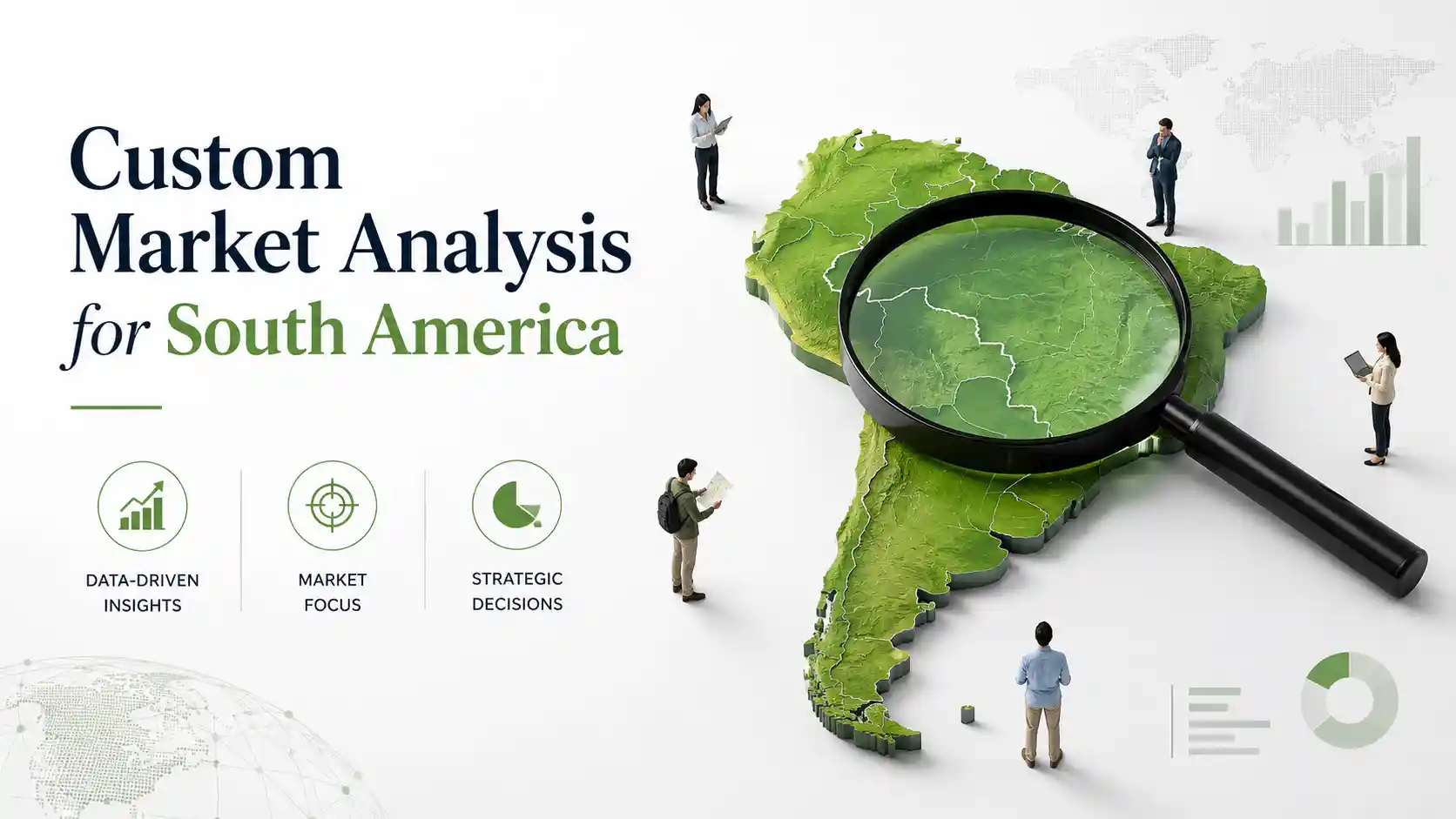
Custom Market Analysis
for South America:
From Public Evidence to Commercial Verification
Econosur starts with documented public evidence and goes deeper only where the question requires it. Research can extend to direct company or authority verification, interviews, local market checks and restricted or commercial data when these can resolve a material evidence gap.
When the public record does not answer the business question
Public sources can establish that a project exists, a permit has been issued, investment has been announced or a market is growing. They do not automatically establish who controls procurement, whether a supplier relationship exists, whether financing is complete or whether an apparent opportunity is commercially accessible.
Custom research is useful when the decision depends on those additional layers: which companies matter, who buys or specifies, how procurement is structured, which suppliers are already active, how advanced a project really is, how ownership is structured or whether an internal market assumption is supported by current evidence.
Research logic: establish the public evidence first, identify the exact evidence gap, then choose the research method most likely to close it. Additional databases, interviews or direct verification are tools — not automatic components of every assignment.
Typical B2B questions that require a custom scope
Commercial opportunity analysis
Test whether an apparent market, sector or project opportunity is relevant for a specific product, capability, supplier position or investment assumption.
Buyer and procurement research
Identify relevant buyers, operators, EPCs, integrators, procurement structures, qualification requirements and documented purchasing signals.
Supplier and competitor mapping
Map active suppliers, distributors, competitors, local partners and other actors shaping the commercial landscape.
Project and investment pipeline research
Assess project status, permitting, financing, operators, contractors, execution milestones and when commercial demand may realistically emerge.
Supply chain and infrastructure analysis
Analyse logistics corridors, ports, energy access, local capacity, bottlenecks and infrastructure dependencies affecting project or market execution.
Internal assumption check
Test whether internal market assumptions are supported by documented evidence, local context and current company or project signals.
The format follows the question
Econosur does not force every question into the same report structure. Scope, evidence requirements, verification needs and deliverables are defined according to the decision the research needs to support.
Focused Market Check
A tightly scoped analysis of one commercial question or assumption using the most relevant available evidence.
Custom Market Analysis
Custom research across companies, buyers, suppliers, competitors, projects, procurement structures and other relevant market layers.
Strategic Research
In-depth research for complex industrial questions, multiple markets, specialist evidence requirements, direct verification or primary research.
What needs to be clear before research starts
A useful project starts with the decision, product, company or assumption that needs to be tested.
-
01
Commercial question: What exactly needs to be known, tested or verified?
-
02
Product or capability: Which equipment, service, technology, investment thesis or supplier position is being assessed?
-
03
Market scope: Country, province/state, sector, project, buyer group, supplier market or defined regional comparison.
-
04
Relevant actors: Buyers, operators, EPCs, distributors, suppliers, competitors, public institutions or other decision-makers.
-
05
Evidence requirement: What needs to be documented, and which unknowns would materially affect the decision?
-
06
Research escalation: Would public evidence be sufficient, or could direct verification, interviews or additional data materially improve the answer?
Public evidence first. Deeper research where it adds value.
Econosur starts by establishing what can already be documented. The next research step is determined by the specific evidence gap rather than by a fixed methodology package.
Document the baseline
Official records, regulators, procurement portals, company disclosures, project documents, public datasets, trade data and local reporting establish the initial evidence base.
Determine what the source proves
A permit is not financing, a tender is not an award and supplier registration is not an order. Each source is assessed according to what it can support — and what it cannot.
Close specific information gaps
Restricted or commercial databases can be used selectively when public evidence cannot establish information such as buyer, supplier, consignee or cross-border ownership structures.
Ask the relevant market actors
Direct checks with relevant companies or institutions can be scoped where confirmation is needed. Findings distinguish public documentation, direct responses and questions that could not be confirmed.
Add primary evidence where useful
Interviews, trade-fair research or local checks can be agreed where feasible and useful. The scope defines the questions to investigate; access to respondents and confirmation of every point cannot be assumed.
Reconstruct the commercial picture
Evidence from different institutions, countries and source types is compared before drawing conclusions about projects, companies, procurement or market structures.
What the research can establish
Agree the output before research starts: a written assessment, an accompanying company or project table, or another useful format. Findings explain the evidence, its relevance to your decision and the questions still unresolved.
-
01
Relevant companies and actors: an agreed company or actor set, with market role, relevance to your product or requirement, supporting sources and unresolved points.
-
02
Buyer and procurement structure: documented roles in specification, qualification and purchasing, the access routes relevant to your product and any gaps requiring confirmation.
-
03
Supplier and competitor landscape: a comparison of relevant suppliers or competitors, their documented activities, local presence and fit with the agreed commercial question.
-
04
Project status and commercial timing: an assessment separating announced investment, permits, financing, construction and operation, with source dates and unresolved procurement or timing questions.
-
05
Interpretation and implications: a reasoned assessment of the opportunity for your company or product, including constraints, assumptions and priorities for further investigation.
-
06
Evidence gaps: an explicit record of unanswered questions, conflicting signals and missing evidence, with proposed checks where they could improve the decision.
Indicative starting prices
Pricing reflects the research question, evidence required and scope — not the number of pages. Direct verification, interviews, specialist datasets and wider country coverage can increase the required research depth.
Focused Market Check
Focused research for one clearly defined commercial question or assumption.
- Defined decision question
- Targeted evidence review
- Conclusion, uncertainties and implications
Custom Market Analysis
Broader custom research across the companies, buyers, suppliers, competitors, projects or procurement structures relevant to the question.
- Custom research scope
- Multiple evidence layers
- Structured decision-relevant findings
Strategic Research
In-depth work for complex industrial questions, multiple markets, specialist evidence requirements or higher verification depth.
- Expanded company and project research
- Multi-country or multi-layer analysis where required
- Direct verification or primary research where appropriate
Public sources establish the documented baseline
Official sources, institutional records and public company information are the starting point. Econosur then determines what those sources actually establish and whether the business question requires additional verification or data.
-
01
Brazil Macro Monitor — official macroeconomic and trade context used as one evidence layer.
-
02
Argentine Trade Exchange — official trade evidence that can be combined with company, project and sector research.
-
03
European Commission — primary policy and trade-agreement context for regional analysis.

Questions before requesting custom research
What information is needed to scope custom B2B market analysis for South America?
A useful scope normally includes the country or countries, sector or product category, the commercial question or assumption to be tested, relevant customer or supplier groups, available internal information and the required research depth.
What types of questions can Econosur analyse?
Econosur can investigate companies, buyers, procurement structures, suppliers, competitors, projects, infrastructure, logistics, value chains and commercial assumptions across South America.
How does Econosur handle different data quality across South American countries?
Econosur begins with public primary and official evidence, company and project documents, public datasets and local reporting. Each source is assessed according to what it can actually prove. Data gaps, assumptions and unresolved questions are documented rather than hidden.
What is included in custom market analysis?
Depending on scope, deliverables can include relevant companies and actors, buyer or procurement structures, supplier and competitor landscapes, project status and timing, evidence gaps, constraints, interpretation and decision implications.
How long does custom research take?
Timing depends on scope, country coverage, data availability, evidence requirements and whether direct verification, interviews or other primary research are needed. Timing is defined after the research question has been scoped.
Which South American countries are covered?
Econosur’s core focus is Argentina, Brazil, Chile, Paraguay and Uruguay. Wider South American questions can be scoped case by case depending on research depth, source availability and required country coverage.
Does Econosur provide direct verification or interviews?
Yes, where appropriate. Direct company, supplier, contractor, association or authority checks, interviews and local verification can be included when they are relevant, feasible and likely to resolve a material evidence gap.
Does every project require interviews or commercial databases?
No. Public evidence remains the starting point. Direct verification, interviews and restricted or commercial data are added only when the research question requires information that reliable public sources cannot establish.
How much does custom market analysis for South America cost?
Indicative pricing starts at USD 650 for a focused market check, USD 1,500 for custom market analysis and USD 2,900 for in-depth strategic research. Final pricing depends on scope, evidence requirements, data availability and research depth.
How is Econosur different from general country or sector information providers?
General sources provide economic and sector context. Econosur focuses on narrower questions: which companies matter, how procurement works, which suppliers or competitors are active, what a project means for a specific product category, what the evidence actually proves and where further verification is required.
Start with the question you need answered
Send the commercial context, the assumption or decision that needs to be tested and the market involved. Econosur can then define the evidence required and the most useful research scope.
Helpful briefing points
- What product, capability, investment or commercial assumption is being assessed?
- Which country, sector, project, buyer group or supplier market matters?
- What decision should the research support?
- Which companies, buyers, suppliers or competitors are already known?
- Are there internal data, documents or assumptions that should be tested?
- Would direct verification, interviews or additional data materially improve the answer?
Need a South America business question verified?
Define the company, project, buyer, supplier, competitor or procurement question. Econosur can establish what the public evidence shows, identify what remains unresolved and determine which additional research is justified.
Contact Econosur