
Company Insight · Uruguay · Telecom · Fiber · Cloud · Data Centers · State Infrastructure
Antel: Uruguay’s State Digital Infrastructure Company
Antel is moving beyond the role of a national telecom operator. Fiber, 5G, submarine cables, Google Distributed Cloud, AI compute, a new US$70 million data center and regional service ambitions are turning the state-owned company into a broader digital-infrastructure platform.
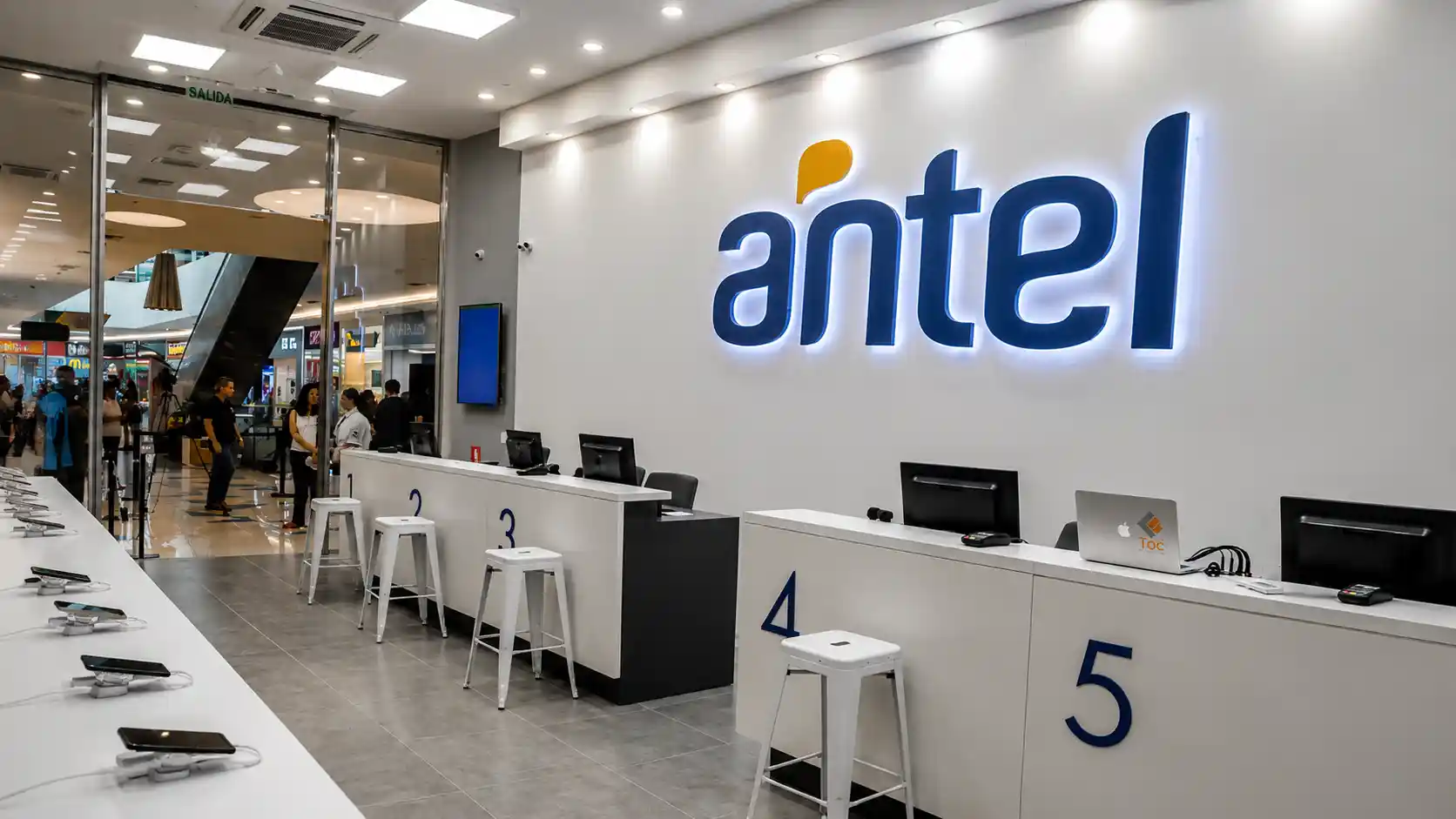
Antel is becoming more than Uruguay’s state telecom operator. Its current strategy increasingly combines connectivity, cloud, compute and regional digital services inside one public infrastructure platform.
Since this company insight was first published in July 2026, Antel has sharpened that direction. The company now describes its own transformation as a move from Telco to Techco, has reiterated a five-year investment plan of about US$750 million, is adding AI-compute capacity in Pando and plans a new US$70 million data center.
The commercial question is whether these assets translate into sustained enterprise demand, regional service exports and a deeper supplier ecosystem around data centers, cloud, cybersecurity, AI infrastructure and network services.
The public record verifies the infrastructure strategy more clearly than the future revenue contribution of these newer digital services.
Core market reading:
Antel’s strategic direction is now explicit: the company is moving from a traditional telecommunications identity toward a broader technology-infrastructure role. The relevant market test is whether fiber, 5G, cloud, AI compute, data centers and international connectivity can be converted into enterprise services and regional digital exports.
Latest Developments: From Telco to Techco
Antel’s positioning has become more explicit since this company insight was first published in July 2026.
At the Antel Summit on 12 August 2026, company president Alejandro Paz described the next stage as a transformation from a telecommunications company, or Telco, into a technology company, or Techco. The company linked that shift to data centers, 5G, fiber, technology partnerships and a broader role as a business partner for Uruguayan companies.
The investment programme also became clearer. On 24 July, Antel said it expected to invest around US$150 million in 2026 and US$180 million in 2027, within a five-year plan of approximately US$750 million. The stated investment fields include the new data center, artificial intelligence, technology, nationwide infrastructure expansion and new digital services.
AI infrastructure is becoming a distinct component. Antel said it plans to invest more than US$10 million before the end of 2026 in equipment capable of running artificial-intelligence workloads inside the Pando data center for Antel, companies and government institutions.
Another signal appeared on 26 August, when Antel, ITC and Uruguay’s Foreign Ministry signed a framework agreement around the Consulado Digital. The arrangement covers platform development, connectivity, storage, cybersecurity and process redesign, while the diplomatic network is also expected to support the internationalization of Antel-developed technology.
The July version of this page treated Antel mainly as the infrastructure company behind Uruguay’s digital strategy. The August evidence strengthens that thesis: Antel itself is now framing the company as a technology platform with enterprise, AI and international-service ambitions.
Why Antel matters for Uruguay
Antel matters because Uruguay’s digital-positioning story needs an operating company behind it. Public strategies, renewable electricity and AI governance matter, but without telecom networks, data centers, submarine cables and cloud infrastructure they remain policy language. Antel is the company that makes a large part of that system operational.
The company is also analytically useful because it challenges a simple public-versus-private narrative. Antel is state-owned, politically visible and exposed to the normal risks of public-sector governance. At the same time, its financial statements show substantial operating revenue and profit, and its current infrastructure role is central to Uruguay’s competitive positioning.
In a small economy, the institutional weight of a telecom company can be larger than its sector label suggests. Antel affects household connectivity, business services, cloud capacity, data sovereignty, mobile coverage, regional interconnection and the country’s ability to host data-sensitive operations.
Uruguay’s digital competitiveness depends on a state-owned infrastructure company.
Antel gives Uruguay a practical mechanism for turning connectivity, data centers, cloud services and international links into a national positioning asset.
Company profile: state telecom as infrastructure policy
Antel, formally Administración Nacional de Telecomunicaciones, is Uruguay’s state telecommunications company. Its public role spans fixed telecommunications, mobile services, broadband, data services, business connectivity and digital infrastructure.
As of Antel’s current authorities page, the company is led by president Alejandro Paz, with Pablo Álvarez as vice president, Laura Raffo as director and Laura Saldanha as general manager. This leadership should always be checked before publication because Antel’s top positions are political and can change with government cycles.
The company’s headquarters are associated with the Torre de las Telecomunicaciones complex in Montevideo, one of the country’s most visible infrastructure symbols. But the more important point for this analysis is not the building. It is the way Antel combines household connectivity, enterprise services, mobile networks, data centers and international connections inside one state-owned operator.
Fiber and 5G as productive infrastructure
The strongest Antel signal for Uruguay’s domestic economy remains fiber. Presidencia Uruguay cited Antel officials saying fiber-to-the-home coverage reaches 94 percent of households. Antel has also maintained its goal of extending fiber to every Uruguayan town with more than 500 inhabitants by the end of 2026.
Mobile infrastructure is expanding alongside it. In its July 2026 corporate update, Antel reported 878 5G radio bases and said it would continue expanding the network. The combination matters because Uruguay’s digital proposition increasingly depends on fixed and mobile infrastructure operating as one platform for enterprise, cloud and public-sector services.
This is not only a consumer-internet story. Fiber becomes productive infrastructure when it supports business services, public digital services, software exports, cloud access, remote work, education platforms, fintech, data exchange, regional support centers and AI-related applications.
For a small country, fiber coverage changes the geography of opportunity. It reduces the need for everything to concentrate in Montevideo. It also makes Uruguay’s small-market argument more credible: smaller scale can be partly offset by high service quality, connectivity, public infrastructure and institutional reliability.
Pando, Google Distributed Cloud and sovereign cloud
Antel’s agreement with Google Cloud is the current anchor for the company’s cloud-infrastructure story. Antel announced that it would be the first local provider enabled to offer Google Distributed Cloud in Uruguay, hosting the infrastructure in its Pando data center.
The company framed the move around data sovereignty, low latency and high security. Antel also described the service as a hybrid-cloud proposal for Uruguayan corporate clients, designed to let companies run critical workloads with Google Cloud technology inside Antel’s ecosystem.
The cloud signal is important because it turns Uruguay’s digital-positioning language into operational capacity. Sovereign cloud is not the same as isolation from global platforms. It means local hosting, local control conditions, lower latency and the possibility of using advanced cloud and AI tools under a domestic infrastructure framework.
Publication note:
Do not describe the Google Distributed Cloud announcement as a Google hyperscale data center in Uruguay. The relevant point is that Antel hosts Google Distributed Cloud infrastructure in Antel’s Pando data center, creating a sovereign-cloud and hybrid-cloud offer for the corporate market.
New Data Center and AI Compute
Antel’s most important infrastructure expansion is the planned new data center. The company announced an investment of approximately US$70 million and said construction should begin between the end of 2026 and the beginning of 2027.
The project is separate from the additional AI-compute equipment being installed at Pando. Antel’s May announcement put that Pando investment at US$8–10 million; by July, the company said the investment would exceed US$10 million. The equipment is intended to support AI workloads for Antel itself, private companies and government institutions while keeping data processing inside Uruguay.
Secondary industry reporting in August added a more specific location and timetable for the new facility, but Econosur treats those details as secondary until they are consistently confirmed in Antel’s own public documentation. The US$70 million investment figure and the plan to begin construction around the turn of 2026/2027 are directly supported by Antel.
Verified by Antel: a new US$70 million data center is planned; construction is expected to begin between late 2026 and early 2027.
Verified by Antel: additional AI-compute equipment is planned for the existing Pando data center before the end of 2026, with the latest public investment figure exceeding US$10 million.
Secondary-source detail: Data Center Dynamics reported a Canelones location and an operating horizon of 2028–2029 for the new AI-oriented facility.
Unresolved: final technical capacity, power density, anchor customers, contracted utilization, supplier packages and the revenue contribution of the new facility.
Submarine cables, 5G and regional connectivity
Presidencia Uruguay reported that Antel’s vice president Pablo Álvarez framed the company as well positioned in the region because of its submarine cable network. The same report states that Uruguay has had a consolidated submarine-cable network since 2017, with direct access to the United States, supporting connectivity, redundancy and high speed.
The same official report says Antel plans 750 million dollars in investment over the five-year period, with part of that investment aimed at strengthening connectivity infrastructure. It also says Antel will deploy a new AI data center because the Pando data center installed in 2016 is nearly at capacity.
Antel’s regional ambition is explicit. The company wants to extend services to neighboring countries such as Brazil and Argentina, especially southern Brazil, where Antel officials argue that the best connectivity runs through Antel’s network.
For Uruguay, this matters because the country’s digital role is not just domestic. The market thesis is that Uruguay can become a trusted node for regional services, cross-border connectivity, cloud workloads, corporate data services and AI-ready infrastructure.
Antel is Uruguay’s digital-infrastructure state in company form: fiber, cloud, cables, 5G, data centers and regional connectivity.
Financial signal: profitable state infrastructure
Antel is also useful because it is a financial counterexample to a common assumption about state-owned companies. The company’s 2024 consolidated financial statements show net operating revenue of 45,864,769 thousand Uruguayan pesos and a result for the year of 9,676,006 thousand Uruguayan pesos.
The statements also show a contribution to general revenues of 7,540,174 thousand Uruguayan pesos in the 2024 equity-change statement. That is important because Antel is not only a telecom operator. It is also a public asset that can generate returns for the state.
For analysis, these figures should be treated carefully. Antel lists 2025 financial statements as submitted to the Tribunal de Cuentas for external review, so the audited 2024 consolidated statement remains the cleaner anchor for hard financial data on this page. Aggregator estimates are unnecessary when official company accounts are available.
| Financial item | 2024 figure | Why it matters |
|---|---|---|
| Net operating revenue | 45,864,769 thousand UYU | Shows Antel’s operating scale as a state-owned telecom infrastructure company. |
| Operating result | 9,954,321 thousand UYU | Indicates profitability before financial items and tax effects. |
| Result for the year | 9,676,006 thousand UYU | Shows the company’s net result in audited consolidated statements. |
| Contribution to general revenues | 7,540,174 thousand UYU | Connects Antel’s profitability to the state’s fiscal framework. |
Group structure and regional reach
Antel’s company structure extends beyond the parent telecom entity. Its official “Antel en otras empresas” page lists ITC S.A., HG S.A., ACCESA S.A., Antel Telecomunicações Brasil Ltda., Antel Telecomunicaciones Argentina S.A., Antel Participações Ltda. and Antel USA Inc.
ITC S.A. is described as Antel’s consulting company, supporting digital transformation for Antel and state companies. HG S.A. is fully owned by Antel and works on technology integration and web and portal operations. ACCESA S.A. provides customer support and service operations.
The international subsidiaries are especially relevant for the regional-connectivity angle. Antel Telecomunicaciones Argentina S.A. is 95 percent owned by Antel. Antel Participações Ltda. is 99 percent owned by Antel. Antel USA Inc. is fully owned and is described as providing IP data interconnection from the United States to telecom companies in Latin America.
| Subsidiary / related company | Role | Market signal |
|---|---|---|
| ITC S.A. | Consulting and digital-transformation support. | Links Antel to state modernization and enterprise technology projects. |
| HG S.A. | Technology integration, web and portal operation. | Extends Antel’s role into digital-service infrastructure. |
| ACCESA S.A. | Customer-service and support operations. | Creates a service layer around telecom and digital activity. |
| Antel Argentina | Telecom services and regional presence in Argentina. | Supports cross-border connectivity and regional business logic. |
| Antel Brazil / Participações | Brazilian telecom-related activities and participation vehicle. | Connects Antel to the larger Brazilian connectivity market. |
| Antel USA Inc. | IP interconnection from the United States to Latin America. | Links Uruguay’s state telecom to international data routes. |
Risk map: public company, market competition and execution
The first risk is political governance. Antel’s leadership changes with political cycles, and investment priorities can shift with government agendas. This does not weaken the company’s strategic importance, but it means leadership and policy context must be verified at publication date.
The second risk is competition and regulatory interpretation. Antel has a strong position in fixed infrastructure and public telecom policy, but mobile and digital services are competitive markets. It is better to distinguish monopoly legacy, infrastructure dominance, public mandate and competitive market segments instead of using one broad monopoly label.
The third risk is execution. Data centers, sovereign cloud, 5G and regional connectivity require capital expenditure, technical reliability, cybersecurity, business uptake and international service sales. Antel’s positioning is strong, but positioning only becomes market power if enterprise clients, public agencies and regional partners actually use the infrastructure.
Antel links public telecom ownership with fiber, 5G, cloud, data centers, submarine cables and regional service ambition.
New AI data-center capacity and sovereign cloud services need enterprise uptake, technical reliability and sustained investment.
Antel’s public-company role creates political visibility around leadership, pricing, investment priorities and competition policy.
Supplier-market signal
Antel is also useful as a supplier-market signal. The company creates demand around telecom equipment, fiber deployment, network maintenance, data-center construction, cooling systems, cybersecurity, cloud services, backup power, AI infrastructure, enterprise software, professional services, monitoring tools and customer-service technology.
The Google Distributed Cloud move adds another supplier layer: hybrid-cloud implementation, compliance, data-governance architecture, identity management, managed services, AI tools, analytics, security operations and corporate migration projects.
The regional-connectivity ambition matters for international firms. Suppliers and service providers looking at Uruguay should not read Antel only as a local telecom company. It is a state infrastructure buyer, a cloud-services platform, a data-center operator, a regional connectivity actor and a public-sector digitalization partner.
The key change is that Antel is no longer only defending a national telecom-infrastructure position. It is trying to turn that infrastructure into a broader technology and enterprise-services platform.
Uruguay already has many of the underlying assets: extensive fiber, 5G, international cable connectivity, a functioning data-center base, relatively clean electricity and institutions that support digital public services. Antel is now adding cloud, AI compute and additional data-center capacity to that stack.
The commercial threshold is different from the infrastructure threshold. Building compute capacity does not prove regional demand. Hosting Google Distributed Cloud does not automatically make Uruguay a regional cloud hub. International subsidiaries do not by themselves establish meaningful service exports.
The decisive evidence will be enterprise uptake: which workloads move onto Antel infrastructure, which companies buy sovereign or hybrid-cloud services, how much regional business is generated and which supplier ecosystems form around the new capacity.
That is where Antel becomes commercially interesting beyond Uruguay: as a test of whether a small market can convert reliable public infrastructure into exportable digital services.
Three Business Questions
1. Which parts of Antel’s new technology stack create external supplier demand?
Data-center construction, AI compute, cooling, power systems, cybersecurity, cloud integration, storage, networking and managed services create different procurement routes.
2. Where does technical approval and procurement authority sit?
Antel is a state-owned group with operating units and subsidiaries. Public announcements identify demand fields, but they do not automatically reveal current tenders, approved vendors or the internal buying path.
3. Can regional ambition become measurable service exports?
The relevant indicators are enterprise contracts, cross-border workloads, international connectivity sales, cloud adoption and actual utilization of the new infrastructure.
Research Boundary
Verified: Antel is Uruguay’s state-owned telecommunications company; it operates fiber, mobile, 5G, data-center and international-connectivity infrastructure and has subsidiaries in Argentina, Brazil and the United States.
Verified: Antel hosts Google Distributed Cloud infrastructure in Pando and is developing a sovereign/hybrid-cloud offer for corporate clients.
Verified: Antel publicly describes its strategic transformation from Telco to Techco and has reiterated a five-year investment plan of approximately US$750 million.
Officially announced / planned: a new US$70 million data center, more than US$10 million in additional AI-compute equipment for Pando, continued fiber and 5G expansion and greater internationalization of digital services.
Financial anchor: 2024 audited consolidated accounts remain the hard financial reference used here. 2025 statements are available through Antel but are listed as submitted for external review.
Unresolved: final capacity and customer mix of the new data center, actual utilization of AI infrastructure, revenue contribution from cloud/AI services, scale of regional service exports, current supplier packages, approved-vendor structure and procurement ownership.
Analytical boundary: public information establishes Antel’s strategic and infrastructure direction. It does not provide a complete map of live procurement opportunities, purchasing authority or commercial customer uptake. Those questions require project-specific verification.
Why this company case matters for Uruguay
Antel matters because it shows how Uruguay competes with infrastructure quality rather than market size. The company is part telecom operator, part state infrastructure platform, part cloud enabler and part regional-connectivity actor.
The case also shows why Uruguay’s digital positioning cannot be separated from public companies. Antel, UTE, AGESIC and other institutions form a credibility stack: connectivity, electricity, governance, data protection, public digital services and business infrastructure.
For Econosur’s wider Uruguay coverage, Antel belongs next to the country’s digital bet, its small-market logic, renewable electricity profile, data-center opportunities and Mercosur service-positioning debate.
Antel is Uruguay’s digital-infrastructure thesis in company form: public ownership, profitable operations, fiber, cloud, data centers and regional connectivity.
- Antel — Antel Summit 2026, 12 August 2026: explicit Telco-to-Techco positioning, data centers, 5G, fiber and Antel’s role as a technology/business partner.
- Antel — 52nd anniversary corporate update, 24 July 2026: US$750 million five-year investment plan, 2026/2027 capex, 878 5G radio bases, AI infrastructure and new digital services.
- Antel — US$70 million new data center, 11 May 2026: new facility planned for construction between late 2026 and early 2027, plus AI-compute investment at Pando.
- Antel — Google Distributed Cloud in Pando: sovereign/hybrid-cloud infrastructure for the Uruguayan corporate market.
- Antel — current authorities: current board and executive leadership used for publication-date verification.
- Antel — official financial-statement archive: 2024 audited accounts and 2025 statements submitted for external review.
- Antel — 2024 audited consolidated and individual financial statements: revenue, operating result, annual result and contribution to general revenues.
- Antel — group companies: ITC, HG, ACCESA and international subsidiaries in Argentina, Brazil and the United States.
- Antel — fiber rollout: target of fiber access for all towns with more than 500 inhabitants by end-2026.
- Antel — Consulado Digital agreement, 26 August 2026: digital platforms, connectivity, storage, cybersecurity and internationalization of Antel-developed technology.
- Presidencia Uruguay — AI data center and regional services: institutional context on Pando, submarine cables, FTTH, 5G and regional expansion.
- Data Center Dynamics — Antel’s US$70 million AI data-center project, 17 August 2026: sector reporting on location, construction timing and the wider AI/cloud context.
- Data Center Dynamics — Antel and Uruguay as a digital hub, 23 February 2026: sector context for AI infrastructure in Pando, high-performance compute and regional positioning.
- Evidence note: Econosur uses Antel and Uruguay government sources for core company, investment, infrastructure and financial facts. Secondary reporting is used for industry context and details that remain clearly identified as secondary-source information.
From digital-infrastructure strategy to the real commercial architecture
For technology and infrastructure suppliers, the relevant question is not simply how much Antel plans to invest. It is which projects translate into procurement, who controls technical approval, where vendor qualification sits and which services generate sustained enterprise demand.
Econosur can extend the public research into company-specific supplier mapping, procurement ownership, competitor validation, digital-infrastructure projects, regional connectivity, partner structures and direct local verification.
Explore custom market analysisFAQ
What is Antel?
Antel, the Administración Nacional de Telecomunicaciones, is Uruguay’s state telecommunications company. It is central to the country’s fixed-line, mobile, fiber, data-center, cloud and digital-infrastructure strategy.
Why does Antel matter for Uruguay market analysis?
Antel matters because it shows how Uruguay uses a state-owned telecom company as digital infrastructure policy. Fiber coverage, submarine cables, 5G, data centers, Google Distributed Cloud and regional service ambitions make Antel a strategic company case.
How is Antel linked to Google Cloud?
Antel announced that it would host Google Distributed Cloud infrastructure in its Pando data center, offering sovereign cloud services, low latency, security and AI-ready capabilities to the Uruguayan corporate market.
What is Antel’s role in fiber infrastructure?
Antel is central to Uruguay’s fiber infrastructure. In 2025, Presidencia Uruguay cited Antel officials saying fiber-to-the-home coverage reached 94 percent of households, and Antel announced that all towns with more than 500 inhabitants should have fiber optic access by the end of 2026.
Is Antel a profitable state company?
Antel’s 2024 consolidated financial statements show net operating revenue of 45,864,769 thousand Uruguayan pesos and a result for the year of 9,676,006 thousand Uruguayan pesos.
Does Antel operate outside Uruguay?
Antel lists several regional and international companies, including Antel Telecomunicaciones Argentina S.A., Antel Telecomunicações Brasil Ltda., Antel Participações Ltda. and Antel USA Inc. These subsidiaries support its wider regional and international connectivity role.
What is the main analytical point about Antel?
The main analytical point is that Antel is trying to convert Uruguay’s connectivity advantages into a broader technology platform: fiber, 5G, data centers, cloud, AI compute, submarine cables and regional enterprise services.
What does Antel mean by moving from Telco to Techco?
At the Antel Summit in August 2026, Antel president Alejandro Paz described the company as moving from a traditional telecommunications identity toward a broader technology-company role. The strategy connects fiber, 5G, data centers, cloud, AI capabilities, partnerships and enterprise services.
What is Antel’s new data-center plan?
Antel has announced a new data center with an investment of approximately US$70 million, with construction expected to begin between late 2026 and early 2027. Separately, the company plans to add more than US$10 million in AI-compute equipment to the existing Pando data center before the end of 2026.