
Paraguay · Industry · Power · Logistics · October 2026
Paraguay’s Industrial Ambitions: What Investment Is Needed in Power and Logistics?
Paraguay wants to expand industrial production and its role in regional supply chains. Delivering that ambition requires electricity at the factory gate, finance for productive assets and dependable routes to customers in Brazil, Argentina and overseas markets.
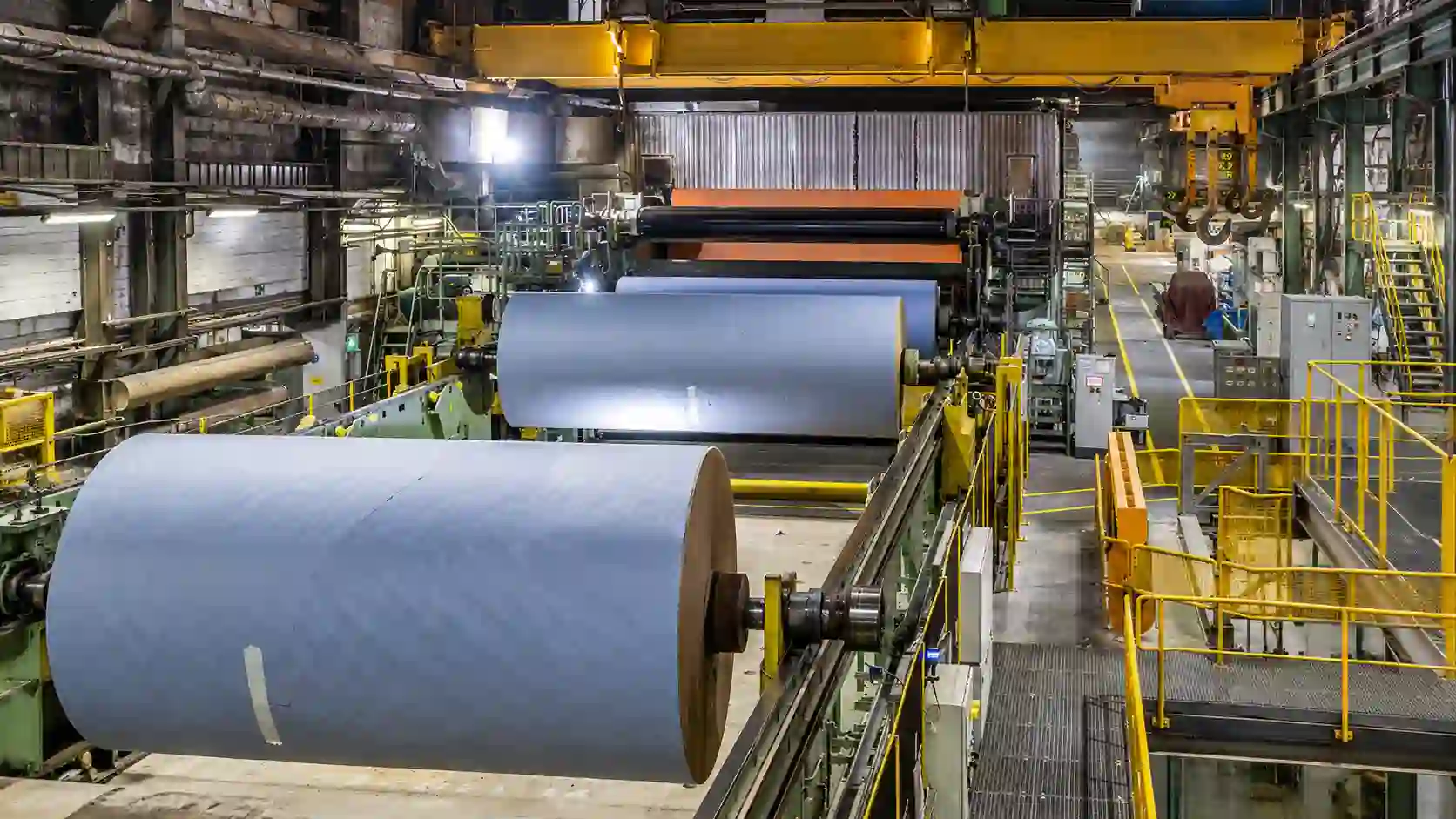
Paraguay’s industrial expansion requires coordinated investment in factories, electricity delivery and export logistics.
Industrial finance and location planning are receiving new policy attention. The commercial test is whether an individual project can obtain a suitable site, reliable power, financing and a workable route to its buyers.
These requirements create potential demand for electrical equipment, industrial machinery, engineering and logistics services. Accessible supplier opportunities depend on project financing, technical decisions and procurement status.
Paraguay’s National Logistics Council has discussed waterway projects, railway initiatives, border crossings and the Bioceanic Route. Its latest communication reinforces the importance of transport alternatives for producers, but does not establish financing or construction commitments for every initiative discussed. [P1]
Industrial Growth Is Becoming a Regional Supply-Chain Question
Paraguay’s maquila regime supports production for export under a specific legal and tax framework. Its performance provides a concrete measure of activity beyond investment announcements. According to the Ministry of Industry and Commerce, auto parts, apparel, beverages and alcoholic liquids, and aluminium manufactures represented 70% of maquila exports in January–August 2026. Mercosur countries received 77% of shipments. [P3]
The analytical implication is that Paraguay’s industrial prospects depend partly on purchasing decisions made outside its domestic market. A component plant serving a Brazilian manufacturer must meet that customer’s delivery schedule, qualification process and product specifications. Its operating case therefore includes border logistics and customer integration alongside factory costs.
This makes the country relevant to international suppliers in several different ways. Some may sell directly to a Paraguayan producer. Others may need to work through a regional purchasing organisation, a machinery integrator or the contractor responsible for a new plant. The location of production does not automatically identify the location of procurement.
Industrial Location Planning Must Connect Land, Labour and Infrastructure
At Expo Negocios on September 30, the Ministry of Industry and Commerce described a strategy for industrial integration with Brazil and Argentina. It presented MIC MAP as a tool bringing together information on industrial potential, labour, energy, infrastructure, training and logistics. The ministry also outlined plans for industrial parks and further legislation. [P2]
These tools can improve the first stage of site selection. A company can compare locations before committing resources to detailed engineering, land acquisition and permitting. However, a location’s presence on a map does not establish the electrical capacity available at a particular plot, the condition of its access road or the timing of a network connection.
Plot size, labour availability, water, permits, process layout and room for future expansion.
Connection voltage, firm capacity, outage exposure, connection works and the supply agreement.
Freight routes, terminal access, border procedures, delivery reliability and total transport cost.
Rising Electricity Demand Changes the Investment Calculation
ANDE, Paraguay’s national electricity utility, reported that January 2026 electricity demand increased 13.3% compared with January 2025. The system reached its then-record peak of 5,752 MW on January 26, an increase of 816 MW against the January 2025 peak. [P5]
These figures describe two different requirements. Energy consumption measures electricity used over a period; peak demand measures the power required at a particular moment. A system can have substantial annual generation while experiencing pressure at specific hours or at individual network locations.
Higher consumption also needs to be interpreted by customer type. ABC Color’s account of an ANDE tariff study reported average annual growth of 8.2% in demand and 10.4% in required energy between 2020 and 2025. It also identified a substantial cryptocurrency-mining load. [S1]
Electricity growth cannot be used on its own as a measure of manufacturing expansion. Household demand, services, weather and cryptocurrency mining can all affect the total. Industrial production, exports and company activity need separate verification.
Power Investment Has to Reach the Factory Gate
ANDE’s published planning documents cover generation for 2024–2043 and transmission and distribution for 2024–2033. The utility also lists an update to its generation plan. Together, these documents provide the official framework for examining future supply and network requirements. [P6]
A concrete transmission example is the planned Emboscada 500 kV substation and associated line works supporting the metropolitan system. ANDE’s November 2025 announcement identified US$70 million from the Inter-American Development Bank, US$70 million in European Investment Bank co-financing, a US$11.5 million EU grant and a US$16.4 million local contribution. These are the financing components described in the announcement, rather than evidence that all works have been completed. [P7]
In July 2026, ANDE described final preparations for an international tender to purchase electricity from a 140 MW photovoltaic plant in Loma Plata, in the western department of Boquerón. ANDE identified it as the first project under Law 7599/2025, which allows private generators to supply the utility. Publication was expected towards the end of 2026. [P8]
ANDE’s planned tender concerns electricity procurement from a private plant. Equipment purchasing would therefore be expected through the successful private developer or its engineering and construction contractors. Suppliers need to verify the final tender structure, project ownership and purchasing responsibilities.
For an industrial investor, the practical sequence runs from system planning to local delivery: generation availability, transmission capacity, the supplying substation, the final connection and the contractual conditions. Each stage can involve a different timetable and decision-maker. A national power advantage becomes commercially useful when these stages fit the factory’s commissioning schedule.
Competitive Electricity Prices Need a Financeable Network
The financing question extends beyond securing loans for individual projects. ANDE needs revenue for operation, maintenance and investment. ABC Color reported US$349.2 million in executed infrastructure investment in 2025 and described a tariff study prepared by the University of Buenos Aires’ CEARE with IDB support. [S1]
The study proposed an average tariff increase of 39.4% for 2026–2030, with 45.6% for high- and very-high-voltage customers. Those percentages describe a study proposal, not an approved tariff change established by the cited report. [S1]
The business issue is the relationship between price, reliability and investment. A manufacturer needs to know what it will pay, how that price may change and whether the network can sustain the required service. A low initial tariff can become less attractive if connection delays or interruptions reduce production.
Supplier and investor assessments should therefore examine the specific agreement: contracted capacity, voltage, adjustment mechanisms, interruption conditions, connection costs and responsibility for additional infrastructure. These conditions determine the operating economics more directly than a national average electricity price.
Industrial Finance Can Turn Expansion Plans into Equipment Demand
MIC and the Agency for Development Finance, AFD, launched Paraguay Industrial on September 17. The programme offers terms of up to 15 years and grace periods of up to three years. Announced final rates are 10.5% in guaraníes and 8.5% in US dollars. [P4]
Eligible uses include machinery, equipment, plant construction, factory expansion and operating capital. The programme targets industrial companies with export capacity, prioritising food and agroindustry, metalworking, textiles and apparel, and wood products. Optional guarantees are available through the Industrial Guarantee Fund, FOGAIN. [P4]
Financial institutions assess credit operations and MIC verifies project eligibility. Programme availability therefore does not establish that a particular company has secured funding. [P4]
This creates a useful distinction for equipment suppliers. A financing programme can make purchases possible, but it does not identify which factories have approved funding or which machines they intend to buy. The next research step is to establish the borrower, investment scope, supplier-selection process and expected purchase date.
The priority sectors help narrow that research. A food processor, textile producer and metalworking company require different equipment, technical support and installation schedules. A supplier’s relevance depends on the production process and planned investment at the company, alongside its eligibility for financing.
Waterways and New Corridors Serve Different Industrial Needs
Paraguay’s October logistics agenda combines the Paraguay–Paraná Waterway, railway initiatives, border crossings and the Bioceanic Route. The National Logistics Council’s discussion shows interest in transport alternatives and regional freight, without confirming that each option is ready for commercial use. [P1]
River transport, roads and rail should be assessed against the cargo they would carry. Agricultural bulk, manufactured components, packaged consumer products and industrial equipment have different requirements for handling, speed, shipment size and delivery frequency. A new route can be valuable for one production model while offering little immediate benefit to another.
On the Argentine section of the waterway, the government announced the start of the new private concession on September 10, 2026. Its communication reported a toll reduction from US$4.30 to US$3.80 and outlined planned studies, dredging and navigation technology. [P10]
For Paraguayan cargo owners, downstream changes warrant examination at route level. Savings depend on which sections a shipment uses, the carrier’s pricing and handling costs. Improvements to one part of the system do not remove exposure to river conditions, terminal capacity or delays elsewhere.
A Dutch business mission received by MIC on October 6 also examined port infrastructure, water management and river-navigation opportunities. This provides evidence of international commercial interest, rather than awarded contracts. [P9]
La Nación reported on October 5 that the third PY15 section between Mariscal Estigarribia and Pozo Hondo had an average execution rate of 40%, citing the public works ministry. This is a dated construction indicator for one section, not a measure of readiness for the entire international corridor. [S2]
Road completion, bridge access, border procedures and actual freight services must be checked separately before assuming a dependable new export route.
Investment Announcements Need to Be Read by Stage
Public communications cover several stages of investment. A strategy establishes an objective. Financing can support implementation. A tender creates a purchasing process. Construction delivers assets. Commissioning establishes whether those assets can serve producers. Commercial analysis needs to identify which stage has actually been reached.
| Initiative | Evidence in the cited source | Next verification |
|---|---|---|
| MIC MAP and industrial parks | Location-planning tool and policy intentions presented in September. [P2] | Specific site availability, utility capacity and implementation status. |
| Paraguay Industrial | Financing programme announced with eligibility and credit assessment. [P4] | Approved borrower, disbursement and equipment-purchasing schedule. |
| Emboscada grid investment | Transmission scope and financing package announced. [P7] | Current procurement, construction and energisation milestones. |
| Loma Plata solar project | Preparation of a tender for electricity purchases from a private plant. [P8] | Published tender, award, developer and equipment-procurement structure. |
| Argentine waterway concession | Start of private management announced in September. [P10] | Execution of works and actual costs for a Paraguayan cargo route. |
| PY15 third section | October report describes works in progress. [S2] | Updated lot progress, connecting infrastructure and operational opening. |
What International Suppliers Should Investigate
Paraguay’s industrial plans can guide the selection of companies and projects for further research. They are most useful when translated into specific purchasing questions. Electrical equipment, machinery, automation and freight services enter the investment process through different buyers and contracting routes.
- Which company owns the investment? Establish the local operator, parent company and responsible project team.
- What is the production requirement? Identify the process, capacity, technical standards and equipment already installed.
- Is financing available? Separate applications and indicative funding from approved finance and disbursement.
- Who chooses suppliers? Determine whether purchasing sits with the factory, a regional headquarters, a private developer, an engineering contractor or an integrator.
- When does the purchase decision occur? Track design, specification, tender, award and installation milestones.
- What local support is necessary? Examine maintenance, spare parts, commissioning, training and response-time requirements.
- What could delay implementation? Check connections, permits, site works and dependencies on external infrastructure.
Paraguay’s industrial opportunity becomes clearer at the level of a factory, its electricity connection and its route to the customer.
National investment promotion can attract attention and financing programmes can improve the conditions for expansion. The outcome still depends on decisions made at individual sites. A plant needs the right equipment, an adequate power agreement and transport that fits its product and delivery commitments.
These decisions are connected. A site with cheaper land may require more connection work. A larger production line may change the electricity requirement. A new export customer may require a different shipment schedule, packaging format or quality process. Each decision changes the value of the others.
Purchasing responsibilities are equally important. A utility buying electricity, a developer building a power plant and a manufacturer buying machinery are separate commercial actors. Identifying the investment alone does not establish which organisation selects equipment or when that decision will be made.
This is where the economic story becomes useful for B2B research. The relevant questions concern the companies implementing projects, the constraints they face and the purchasing decisions they still need to make. Progress can be measured through financed assets, commissioned connections, operating factories and dependable deliveries.
Research Services for Paraguay’s Industrial Expansion
Econosur investigates defined questions about Paraguayan companies, industrial projects, suppliers, electricity conditions and export logistics. Research combines public evidence with targeted verification of the commercial details relevant to the assignment.
Assess production models, competitors, manufacturing activity, operating locations and regional customer relationships.
Examine ownership, financing, permits, technical scope, implementation milestones and publicly confirmed project status.
Identify relevant companies, purchasing responsibilities, qualification requirements, contracting routes and local service needs.
Investigate electricity delivery, connection dependencies, freight routes, terminals, border processes and operating constraints.
For a defined company, project, supplier or market question, see Custom Market Analysis South America or contact Econosur.
Data periods: export figures, electricity demand and investment amounts retain their stated source periods. They are not full-year forecasts.
Power: MW measures power; MWh and GWh measure energy over time. Peak demand and annual consumption should not be treated as interchangeable.
Tariffs: the CEARE adjustments are reported study proposals. This article does not establish their adoption as current tariffs.
Loma Plata: the cited announcement concerns a planned electricity-purchase tender. Supplier access depends on the eventual developer, contractors and final procurement structure.
Project status: financing announcements and planning documents do not establish contract awards, completed works or commissioning.
Logistics: corridor components and river sections are assessed separately. Proposed savings require shipment-specific verification.
Commercial access: public evidence rarely establishes current supplier shortlists, purchasing budgets or procurement access. These require further research.
Primary and Secondary Sources
- P1 · MIC · October 9, 2026. National Logistics Council examines infrastructure and transport alternatives . Official account of discussions covering waterways, railways, border crossings and the Bioceanic Route.
- P2 · MIC · September 30, 2026. Expo Negocios: industrial strategy and regional production . Government account of MIC MAP, industrial parks and industrial policy intentions.
- P3 · MIC · September 11, 2026. Maquila exports through August 2026 . Official export totals, growth, product composition and destination data.
- P4 · AFD · September 17, 2026. Paraguay Industrial financing programme . Programme terms, priority sectors, eligible investments, optional guarantees and credit assessment.
- P5 · ANDE · February 12, 2026. Electricity demand at the start of 2026 . January energy growth and the January 26 system peak.
- P6 · ANDE · Official planning documents. ANDE master plans. Generation, transmission and distribution planning, with a separately listed generation update.
- P7 · ANDE · November 25, 2025. High-voltage transmission expansion with IDB, EIB and EU support . Announced financing and infrastructure scope for the metropolitan electricity system.
- P8 · ANDE · July 13, 2026. Preparation of the Loma Plata electricity-purchase tender . Official announcement of private generation supplying ANDE and anticipated tender timing.
- P9 · MIC · October 6, 2026. Dutch companies explore port and river-sector opportunities . Official account of a business mission; evidence of interest rather than awarded work.
- P10 · Government of Argentina · September 10, 2026. Start of private management of the trunk waterway . Official announcement of concession commencement, toll changes and planned works.
- S1 · ABC Color · August 6, 2026. ANDE tariff study and proposed adjustments . Reporting on the CEARE study, electricity-demand composition, investment execution and tariff proposals. Used as a secondary account of the study.
- S2 · La Nación · October 5, 2026. Construction progress on the third PY15 section . Dated progress report citing the Ministry of Public Works and Communications.
- Evidence note: Government sources establish published policy, programme terms and official project statements. News reports provide attributed secondary evidence. Supplier implications and the relationship between investment requirements are Econosur’s analysis.
- Research date: October 9, 2026.
Paraguay Industry, Project and Supplier Analysis
Econosur prepares custom research on Paraguayan manufacturers, infrastructure projects, power conditions, logistics, competitors and purchasing requirements.
An assignment can focus on a specific investment, industrial location, potential buyer, supplier market or cross-border operating question.
Explore custom market analysisFrequently Asked Questions
Why does Paraguay need power investment if it has hydropower?
Hydropower generation and reliable delivery to a factory are different requirements. Industrial projects need suitable transmission, substations, distribution capacity and durable commercial supply conditions at their chosen location.
What is Paraguay Industrial?
Paraguay Industrial is a financing programme announced by MIC and AFD in September 2026. It supports eligible industrial investment through participating financial institutions, subject to project eligibility and credit assessment.
What is ANDE planning to tender in Loma Plata?
ANDE’s July 2026 announcement described preparations for an international tender to purchase electricity from a privately developed 140 MW solar plant in Loma Plata. Equipment procurement would be expected through the successful private developer or its contractors, subject to the final tender and project structure.
Does higher electricity consumption prove manufacturing growth?
No. Electricity consumption includes households, services and energy-intensive activities such as cryptocurrency mining. Manufacturing growth must be examined separately through production, trade, employment and company evidence.
How should the Bioceanic Corridor be assessed?
Road construction, bridge completion, access roads, border opening and dependable freight services should be checked separately. Progress on one component does not establish that the full corridor is operational.
What should international suppliers verify before pursuing projects?
Suppliers should verify the project owner, financing, technical scope, procurement stage, purchasing route and local service requirements before treating an announced investment as an accessible sales opportunity.