
South America · Pharmaceuticals · Biologics · Biosimilars · Manufacturing · Regional Platforms
Pharma in South America: Markets, Biologics and Regional Platforms
South America does not have a single pharmaceutical market. What it has instead is a set of linked but nationally structured systems: Brazil as the scale anchor, Argentina as a biosimilar and industrial case, Paraguay as an upgrading local manufacturing base, and Uruguay as a regional production, R&D and distribution platform.
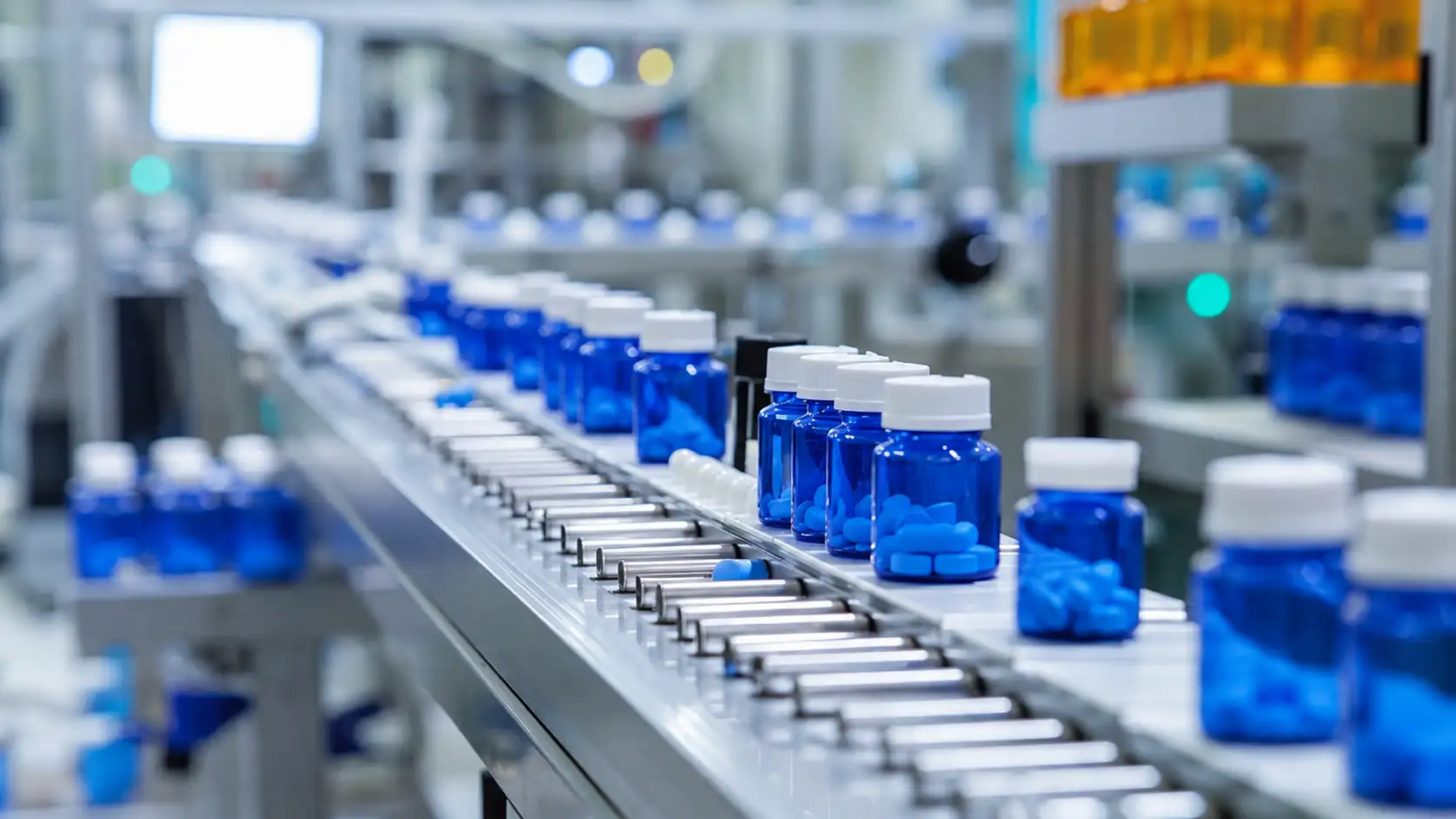
The South American pharmaceutical industry is not one market but several connected systems.
Brazil is the region’s scale anchor and the clearest demand centre for pharmaceuticals and biologics. Argentina combines a large domestic industry with internationally relevant biosimilar and biologics production. Paraguay shows how even a smaller market can build meaningful pharmaceutical manufacturing and regulatory upgrading. Uruguay demonstrates a different model: a small domestic market used as a regional platform for production, R&D, corporate functions and distribution.
The commercial problem is not simply where demand exists. It is how companies navigate registrations, pricing systems, procurement structures, imports, local production, partners and regulatory fragmentation across several countries at once.
Why Pharma Matters in South America
Pharmaceuticals matter because they sit at the intersection of public health, industrial policy, imports, advanced manufacturing, regulation and trade. In South America, the sector is shaped not only by medicine demand, but also by how local industries position themselves within higher-value segments such as biologics, biosimilars, specialty therapies and regional distribution.
The industry is also a useful test of how far South American economies can move from simple market consumption to higher-value activity. Some companies manufacture basic formulations. Others produce biologics, manage regional product portfolios, develop R&D assets or coordinate cross-border supply systems.
The region’s pharmaceutical value does not come from one uniform growth story. It comes from four different logics: scale demand, industrial capability, regulatory upgrading and regional operating-platform design.
Four Market Models Structure the Sector
Brazil matters because it is the largest market and a major demand centre for complex and high-value therapies, including biologics.
Argentina matters because its pharmaceutical industry combines local scale with international biosimilar and biologics capability.
Paraguay matters because it shows that even a smaller economy can support meaningful domestic pharmaceutical production and export qualification.
Uruguay matters because companies can use it as a stable production, R&D, corporate and distribution node for larger regional markets.
Brazil: The Region’s Pharmaceutical Scale Anchor
Brazil is the country that most clearly defines pharmaceutical scale in South America. It combines a large domestic market, strong commercial relevance for multinationals, large national companies and growing weight in higher-value categories such as biologics.
That is why Brazil is essential to regional pharmaceutical strategy even when a company produces elsewhere. Demand growth in Brazil can determine where regional portfolios, partner structures and investment priorities go next.
In Econosur’s current company set, Eurofarma is the best illustration of how a Brazilian pharmaceutical company can turn domestic scale into a wider Latin American operating platform.
ANVISA’s September publication puts Brazil’s 2025 pharmaceutical revenue at approximately R$182 billion, with 6.3 billion packages sold. The total covers the medicine market, rather than biosimilars alone. Official 2025 market results.
Argentina: Industrial Depth and Biosimilar Capability
Argentina brings a different industrial profile. It combines a significant local pharmaceutical sector with more specialized capabilities in biologics and biosimilars. At the same time, the country still reflects a deeper tension: strong finished-product capability does not automatically mean industrial autonomy, especially when APIs and upstream inputs remain import-dependent.
That combination makes Argentina especially relevant in discussions about a possible South American biosimilar corridor. It is not simply a market. It is also a production and development case.
mAbxience captures that logic most clearly. The company links Argentine production to international regulatory and commercialization chains, including EU- and US-relevant biosimilar pathways.
In January–August 2026, Argentina exported US$814.4 million in medicines and imported US$2.441 billion, according to CILFA’s processing of INDEC data. Industrial capability therefore coexists with a substantial sector trade deficit. mAbxience became wholly owned by Fresenius in September 2026. Its Sandoz licensing agreement excludes Argentina, Uruguay and Paraguay from Sandoz’s global commercial rights, showing why ownership and territorial rights require separate analysis.
Paraguay: Smaller Market, Real Industrial Upgrading
Paraguay is easy to underestimate because its domestic market is much smaller than Brazil’s or Argentina’s. But the country has a genuine local pharmaceutical industry, and some firms have moved beyond basic domestic production toward regulatory upgrading and export capability.
The Paraguayan case matters because it shows a different path to pharmaceutical relevance: a smaller market can still build domestic manufacturing depth, selected higher-value production and regional commercial links.
Laboratorios LASCA is the clearest current example. It combines long-standing manufacturing with biologics capability and external regulatory recognition through Colombia’s INVIMA for part of its production system.
GMP qualification applies to a defined plant and inspection scope. LASCA’s 2023 INVIMA milestone should not be read as an automatic regional product authorization or proof that every certificate remains current. The LASCA company analysis separates manufacturing, certification, registration and export evidence.
Uruguay: A Regional Operating Platform Disguised as a Small Market
Uruguay’s pharmaceutical role is structurally different again. Its domestic market is small, but the country can create value as a platform. Companies use Uruguay for production, development, quality systems, corporate coordination and cross-border logistics into larger Latin American markets.
This is why Uruguay is disproportionately relevant in the pharmaceutical sector compared with the size of its domestic demand. The value lies in functions that sit around the market itself.
Megalabs is the strongest current company case for this model. Its Uruguay base integrates plant operations, regional R&D, quality control, corporate functions and a wider regional supply structure.
“South America’s pharmaceutical story is not one market becoming bigger. It is several different operating models coexisting under one regional label.”
Anchor Company Cases in This Hub
| Company | Country base | Why it matters | Company insight |
|---|---|---|---|
| mAbxience | Argentina | Shows how Argentine biologics and biosimilar production can plug into international ownership, regulatory and commercialization chains. | Read company insight |
| Eurofarma | Brazil | Shows how a Brazilian pharmaceutical group can build a wider Latin American platform through manufacturing, acquisitions and regional commercialization. | Read company insight |
| Laboratorios LASCA | Paraguay | Shows how a smaller market can build local pharmaceutical manufacturing, biologics capability and export-grade regulatory upgrading. | Read company insight |
| Megalabs | Uruguay | Shows how Uruguay works as a regional production, R&D, corporate and distribution platform rather than only a domestic medicines market. | Read company insight |
What Companies Need to Read Correctly
A market-entry or partner strategy for South American pharmaceuticals cannot be reduced to GDP or population size. Companies need to understand which layer they are targeting:
- Demand layer: Where does the addressable market sit, and in which therapy areas?
- Industrial layer: Where does meaningful local production exist?
- Regulatory layer: Which countries require the hardest navigation and which offer useful platform roles?
- Partner layer: Is the right move to manufacture locally, license, distribute, acquire or use a regional platform?
- Segment layer: Are we dealing with basic formulations, specialty medicines, biologics or biosimilars?
In pharmaceuticals, “South America” is not a single market-entry decision. It is a portfolio of country roles. The right strategy often involves combining several of them: Brazil for demand, Argentina for capability, Paraguay for selected manufacturing and Uruguay for regional coordination.
Chile: a distinct national market
Chile also belongs in a South American pharmaceutical assessment. It is outside Mercosur’s founding four-country framework and requires its own market-access analysis. The Chile company hub connects the wider industrial context; pharmaceutical product and establishment checks should use the Instituto de Salud Pública de Chile.
India–Mercosur: pharmaceutical access depends on regulation
India and Brazil placed pharmaceuticals among the priorities of their August 2026 trade dialogue. The Indian government’s August 31 statement identifies the February CDSCO–ANVISA memorandum as a basis for cooperation and calls for more predictable regulatory pathways. This supports a market-access agenda; it does not establish automatic recognition of Indian product approvals.
Econosur perspective: Commercial screening should connect each medicine and manufacturing site with national registration requirements, distribution partners and procurement channels. A wider tariff agreement would leave these operating questions to be resolved.
Mercosur–India Trade Talks: Opportunities for Pharma, Agriculture and Industry connects the negotiation process with sector opportunities and its primary and secondary evidence. For a defined commercial question, see Econosur’s custom market analysis.
The pharmaceutical industry is one of the best examples of how South American market analysis has to move beyond country averages. Regional integration in this sector is partial and indirect. Companies integrate the market operationally long before regulation fully converges.
That is the point of linking this industry hub to Mercosur Pharma Futures. The main question is not whether Mercosur has already created a pharmaceutical market. It has not. The question is which company models are already building regional pharmaceutical systems despite fragmentation.
The four anchor cases show four different answers: international biosimilar integration in Argentina, scale-based regionalization from Brazil, industrial upgrading in Paraguay and platform logic in Uruguay.
Research services for South American pharmaceutical markets
Econosur can investigate a defined company, product, sector or market question using traceable public evidence and focused verification.
Build country and segment comparisons for pharmaceuticals, biosimilars, manufacturing inputs or services.
Identify manufacturers, commercial partners, distributors and competitors with traceable company evidence.
Verify project status, public market-access records and the route to relevant buyers.
Verify open questions through focused company and market checks, with findings separated from unconfirmed indications.
For a defined research question, see Custom Market Analysis South America.
Public sources establish ownership, disclosed assets, market figures and regulatory records. They do not by themselves confirm current capacity utilization, open purchasing requirements, contacts or commercial terms. Product approval, plant qualification and market launch remain separate milestones.
Primary, Institutional and Secondary Sources
Regulators and official records establish the stated facts. Company disclosures are primary evidence of what the company reports; they do not independently verify market share, operating output or commercial availability.
- ANVISA / CMED: 2025 medicine-market totals
- Fresenius: mAbxience ownership after September 2026
- mAbxience: Sandoz licensing scope
- Megalabs: current manufacturing and development network
- REDIEX: LASCA’s 2023 INVIMA GMP milestone
Research reports, interviews and press coverage provide interpretation or reported statements. Management interviews retain attribution, and repeated corporate announcements are not additional independent confirmation.
Related Econosur analysis
South America Pharma Market Analysis
Econosur prepares custom pharmaceutical market analysis for South America covering market structure, local partners, manufacturing assets, regional distribution models, investment opportunities and company intelligence.
Projects can focus on a single country, a Mercosur-wide market question or a company-centered research brief across the region.
Explore custom market analysisFrequently Asked Questions
Is there a single pharmaceutical market in Mercosur?
No. Mercosur does not function as a unified pharmaceutical market. Trade links matter, but regulation, registrations, pricing systems and procurement structures remain largely national.
Which countries matter most in South American pharmaceuticals?
Brazil is the largest anchor market. Argentina is a major industrial and biosimilar case. Paraguay is smaller but has meaningful local pharmaceutical manufacturing, and Uruguay functions as a regional production, R&D and distribution platform.
Why do biologics and biosimilars matter in the region?
They are high-value segments that illustrate industrial upgrading, regulatory complexity and the possibility of deeper regional value creation beyond basic formulations.
Why is Uruguay relevant despite its small domestic market?
Uruguay’s value lies in its role as a regional operating platform. Companies use it for manufacturing, research and development, corporate functions and pharmaceutical distribution into larger markets.
What does Paraguay add to the regional pharmaceutical picture?
Paraguay shows that a smaller market can still build meaningful domestic pharmaceutical manufacturing and even higher-value production, while remaining more import-dependent in the most expensive therapy categories.
Which Econosur company insights currently anchor this hub?
The current anchor company cases are mAbxience in Argentina, Eurofarma in Brazil, Laboratorios LASCA in Paraguay and Megalabs in Uruguay.