
Company Insight · Argentina · Patagonia · Land · Wool · Agribusiness · Supply-Chain Risk
Compañía de Tierras Sud Argentino: Patagonia’s Land-and-Wool Company
Compañía de Tierras Sud Argentino is the operating company behind Benetton’s Patagonia exposure: approximately 920,000 hectares, livestock, wool, agriculture, forestry, Edizione ownership and a territorial-risk layer that does not disappear because legal title exists.
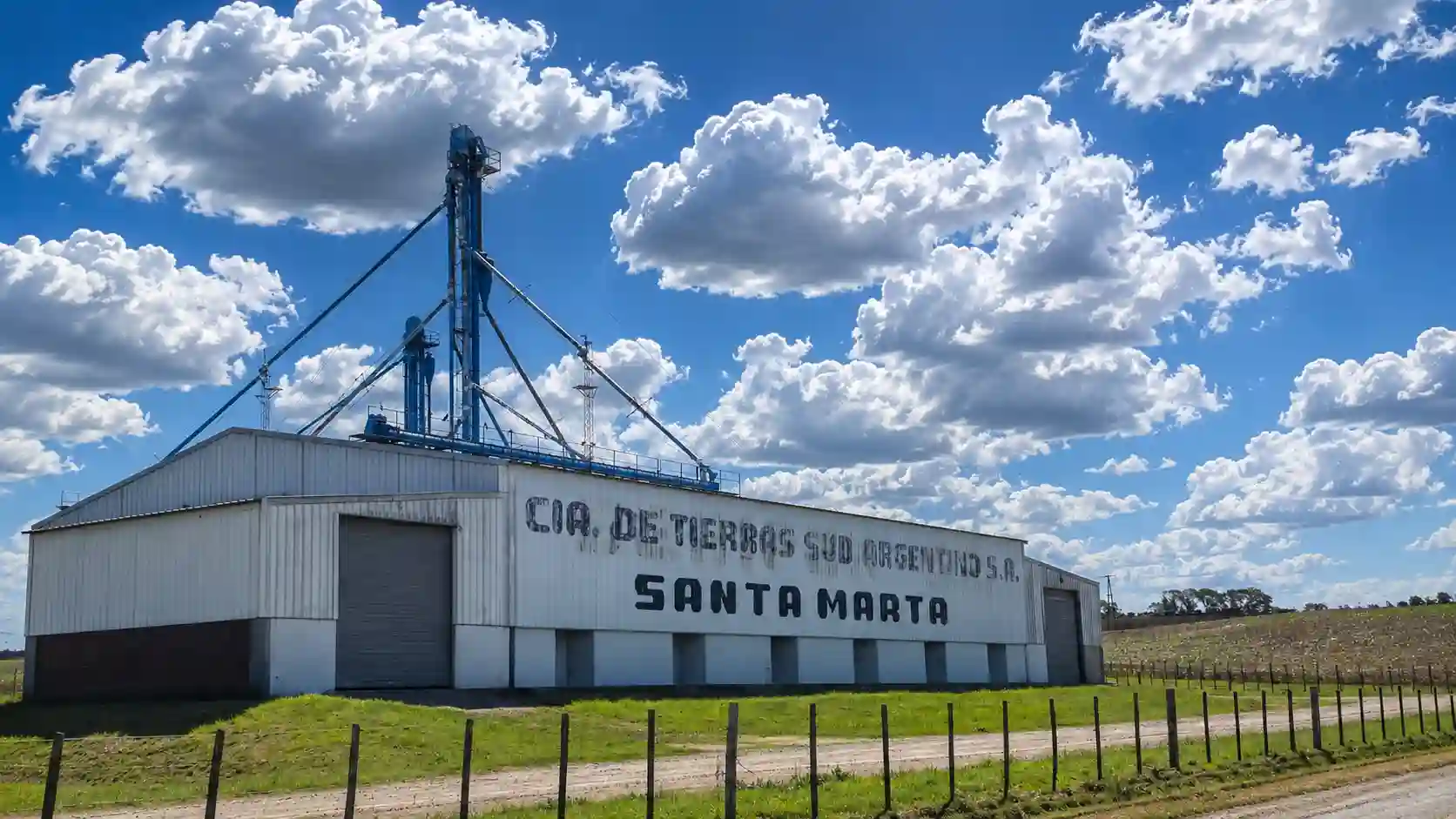
Compañía de Tierras Sud Argentino is the operating company behind Benetton’s Patagonia land-and-wool exposure.
CTSA connects approximately 920,000 hectares of Argentine land, livestock, wool, agriculture, forestry, processing assets and Edizione ownership with a long territorial-risk layer rooted in Patagonia’s land history.
The company is more precise than a generic “Benetton in Patagonia” profile because CTSA is the operating structure: land, animals, wool, crops, planted forests, staff, revenue, certification and conflict exposure are organized there.
For the broader brand and conflict context, see Econosur’s Benetton in Patagonia analysis.
Core market reading:
CTSA is not only a landholding vehicle. It is an agribusiness platform whose assets combine Patagonian land, livestock, wool, crops, forestry, processing and a risk layer shaped by history, legal title, territorial claims and public scrutiny.
Why CTSA matters
CTSA matters because it turns the Benetton Patagonia story into a measurable company structure.
Brand-level discussions often focus on Benetton, Mapuche claims and Patagonia land. Company analysis needs a tighter object. That object is Compañía de Tierras Sud Argentino: the company through which the land, livestock, wool, agriculture, forestry and operational infrastructure are managed.
Edizione lists CTSA as a 100% portfolio company, active across approximately 920,000 hectares, with more than 300,000 livestock, €20.5 million in 2025 revenue and more than 250 staff. Those figures give the company a current operating profile rather than only a historical controversy.
CTSA is a company lens, not only a conflict label.
Its relevance lies in the overlap between production assets and territorial exposure: wool, livestock, crops, forestry, processing, land tenure and corporate ownership in one structure.
Company profile: Edizione’s Patagonia land-and-wool company
Compañía de Tierras Sud Argentino is part of Edizione’s agricultural-company portfolio. Edizione describes CTSA as a benchmark for livestock breeding and wool production, with activities in animal husbandry, agriculture and forestry.
The company’s production activities include cattle and sheep breeding, wool, wheat, maize, soya, barley, sunflower and forestry. Edizione also states that CTSA has planted more than five million trees over the last 35 years, covering more than 10,000 hectares near the Andes Mountains for silvopastoral use.
This makes CTSA broader than a sheep-and-wool company. It is a mixed agribusiness and land-management platform that combines Patagonian livestock operations with agricultural production and forestry assets.
Ownership chain: from Argentine Southern Land Company to Edizione
CTSA’s ownership chain is central to the company’s risk profile.
The historical predecessor was the Argentine Southern Land Company, incorporated in London in the late nineteenth century. The company’s landholding history is tied to the redistribution of Patagonian land after the Argentine state’s military conquest of the region, commonly referred to as the Conquista del Desierto.
Later, the company passed through Argentine ownership and was eventually acquired by Edizione, the Benetton family holding company, in 1991. Benetton’s own position statement says Edizione acquired CTSA in 1991 from three Argentine families and frames the company’s legal title as confirmed by Argentine judicial proceedings in specific disputes.
This chain matters because CTSA’s formal ownership is not the same thing as the historical origin of the land. A company can have valid legal title while still carrying reputational and territorial exposure because the original land distribution remains contested.
The Argentine Southern Land Company is incorporated in London and becomes the historical predecessor of the later Argentine landholding company.
The company’s shareholding passes to Argentine business interests, according to historical accounts of the ownership chain.
The company is registered locally under the Compañía de Tierras Sud Argentino name, with the exact “Sud” / “del Sud” wording varying across sources.
Edizione acquires CTSA. Edizione’s current portfolio page states that CTSA has been part of the group since 1991.
Benetton announces a proposed 7,500-hectare donation to Chubut province for indigenous communities; the episode becomes part of the public conflict history.
Edizione reports CTSA with 920,000 hectares, more than 300,000 livestock, €20.5m revenue and more than 250 staff at year-end.
Land map: Chubut, Santa Cruz, Río Negro and Buenos Aires
Edizione lists CTSA as active across approximately 920,000 hectares of Argentine territory. Argentine agribusiness sources commonly describe the company’s land as distributed across Chubut, Santa Cruz, Río Negro and Buenos Aires province.
Bichos de Campo reports a distribution profile of approximately 33% in Chubut, 5% in Río Negro, 60% in Santa Cruz and 2% in Buenos Aires. Buenos Aires Times / Perfil also lists Grupo Benetton through CTSA with 920,000 hectares across Chubut, Santa Cruz, Río Negro and Buenos Aires.
For market analysis, the exact hectare number should be handled carefully. Edizione’s current portfolio figure is the cleanest official reference: approximately 920,000 hectares. Older activist or historical sources use lower figures such as 844,200 hectares, while several agribusiness media sources use “more than 900,000 hectares.”
| Province / area | Reported role | Market interpretation |
|---|---|---|
| Chubut | Central Patagonia land and conflict exposure; Leleque and related estancias are part of the wider case. | Most visible territorial-risk layer. |
| Río Negro | Part of the Cordillera production system with sheep, cattle and wool-related activity. | Links Patagonian production and land-tenure questions. |
| Santa Cruz | Large surface area and livestock/meat-processing relevance, including Río Gallegos processing context. | Production scale beyond the Chubut conflict focus. |
| Buenos Aires Province | Agricultural production layer, including Pampas-facing crop activity. | Shows CTSA is not only a Patagonian pastoral company. |
Production system: sheep, cattle, crops, forestry and processing
CTSA’s production system has several layers.
The first layer is livestock. Infocampo’s interview with CEO Agustín Dranovsky describes the company as managing more than 900,000 hectares and close to 300,000 animals, including Hereford cattle, with almost one million kilograms of wool produced per year. Bichos de Campo separately reports around 260,000 sheep and 22,000 cattle.
The second layer is agriculture. Edizione lists wheat, maize, soya, barley and sunflower among CTSA’s agricultural activities. Bichos de Campo and later agribusiness coverage place the Santa Marta establishment in Buenos Aires province as a particularly relevant agricultural asset.
The third layer is forestry. Edizione states that CTSA has planted more than five million trees over the last 35 years, covering more than 10,000 hectares near the Andes for silvopastoral use. Infocampo also refers to pine plantations covering around 10,000 hectares.
The fourth layer is processing. Bichos de Campo describes the Faimali frigorífico in Río Gallegos, with a slaughter capacity of up to 2,500 lambs per day. This processing layer makes CTSA more than a passive owner of rural surface area.
CTSA combines livestock, wool, crops, forestry and processing rather than only holding land.
Patagonian land surface is large, but productivity per hectare differs sharply from Pampas agriculture.
Legal production assets coexist with claims, conflict narratives and reputational exposure.
Updated 2025 figures: why Edizione is the cleanest baseline
For the current company profile, Edizione’s 2025 portfolio data should be the baseline.
Edizione lists CTSA with a 100% stake, approximately 920,000 hectares, more than 300,000 livestock, €20.5 million in 2025 revenue and more than 250 staff. The figures are dated December 31, 2025.
Older media figures remain useful, but they should be read as production-context data rather than the current master dataset. Infocampo’s 2022 interview provides management commentary and operational scale, while Bichos de Campo provides more granular agribusiness and land-distribution details. Buenos Aires Times / Perfil is useful for English-language readers and for the national landowner context.
| Data point | Best current source | How to use it |
|---|---|---|
| 920,000 hectares | Edizione portfolio page. | Main current land-surface figure. |
| 300,000+ livestock | Edizione portfolio page. | Main current livestock-scale figure. |
| €20.5m revenue 2025 | Edizione portfolio page. | Main current revenue figure. |
| 250+ staff | Edizione portfolio page. | Main current employment figure. |
| Nearly 1m kg wool / year | Infocampo 2022 interview. | Management-context production figure, not a current official 2025 baseline. |
| 260,000 sheep / 22,000 cattle | Bichos de Campo 2023. | Useful agribusiness media detail for the production system. |
Wool and Benetton: the supply-chain connection
Wool is the reason CTSA remains more than an Argentine landholding story.
Edizione describes CTSA as a benchmark for livestock breeding and wool production. Benetton’s 2005 donation statement also framed CTSA as part of a production system linked to the group’s wool-consuming textile business and noted significant investment in production infrastructure after acquisition.
That does not mean CTSA’s wool output alone defines Benetton’s global supply chain today. The current share of Benetton’s wool needs supplied by CTSA is not clearly confirmed by recent company disclosures. Older reports and commentary should therefore be used with attribution and caution.
The stronger point is structural: CTSA turns textile supply into a land-origin question. Wool is not just a commodity input. In this case, it is tied to land tenure, livestock, corporate ownership and the public visibility of Patagonian territorial history.
Supply-chain reading:
CTSA shows why origin risk is not only about supplier audits. When the supplier is a landholding company, the supply chain begins with title, territory, production history and local conflict exposure.
Conflict layer: Mapuche claims, legal title and corporate exposure
The CTSA case cannot be separated from the Mapuche land-conflict layer, but it should be handled carefully.
Benetton’s position statement says Argentine courts confirmed CTSA’s ownership in the Santa Rosa dispute and frames the broader Mapuche claims as a historical conflict that predates Edizione’s 1991 acquisition. The same statement argues that CTSA presented land titles and required evidence in judicial proceedings.
Business & Human Rights Resource Centre lists CTSA / Benetton in connection with human-rights reporting on the Santiago Maldonado case and Mapuche land claims. That makes the issue part of the corporate-risk record, even where interpretations differ sharply.
For a neutral company profile, the safest analysis is not to treat activist narratives as company facts, and not to treat legal title as a complete risk answer. Both sides matter: CTSA has legal-title arguments and court references; the case also carries unresolved historical, reputational and territorial exposure.
Legal title and risk profile are not the same thing.
A company can hold recognized legal title and still carry reputational, political and territorial risk when the historical basis of land ownership remains contested.
Risk layer: what can go wrong
CTSA’s risk layer is not a normal agribusiness risk layer.
The first risk is territorial. Land conflicts, contested historical memory and Mapuche claims can affect public perception, political pressure and the long-term stability of the operating environment.
The second risk is reputational. CTSA is tied to Benetton, an internationally visible consumer brand. That makes local land-tenure disputes more visible than they would be for a purely local agribusiness company.
The third risk is data interpretation. Hectare figures, animal counts, wool production numbers and company-name variants differ across sources. Current company analysis should prioritize Edizione’s 2025 figures while clearly labeling older production data.
The fourth risk is ESG framing. Edizione presents sustainability, RTRS certification, precision farming and carbon-capture potential. Those claims sit alongside the land-tenure and human-rights scrutiny layer. Both are part of the company’s public profile.
The fifth risk is political context. Indigenous land protection, eviction policy, security-force operations and the legal treatment of territorial claims can change the operating environment quickly.
| Risk layer | How it affects CTSA | Market interpretation |
|---|---|---|
| Territorial exposure | Claims and conflict can persist even with formal legal title. | Land tenure is part of the supply-chain-risk profile. |
| Reputation | Benetton’s brand visibility globalizes local disputes. | Consumer-brand linkage raises risk salience. |
| Data inconsistency | Sources vary on hectares, livestock, wool and name form. | Use Edizione 2025 figures as the current baseline. |
| ESG scrutiny | Sustainability claims coexist with human-rights and land-tenure scrutiny. | ESG analysis must include both environmental and territorial layers. |
| Political context | Eviction policy and indigenous land protections can shift. | Regulatory context affects the risk profile beyond production metrics. |
How CTSA connects to wider Patagonia and agribusiness questions
CTSA connects several Argentina themes in one operating structure: land concentration, Patagonian livestock, wool, agriculture, forestry, foreign ownership, certification and territorial exposure.
It links directly to the Benetton in Patagonia insight. That article explains the brand-level case. This company profile isolates the operating entity that makes the case measurable.
It also links to agriculture and food systems in South America. CTSA is not only a Patagonia conflict story. It is a company with livestock, wool, crops, forestry, staff, revenue and certification signals.
Finally, CTSA connects to the broader Southern Cone question: how do foreign-owned corporate assets become embedded in land, infrastructure and historical claims across South America?
CTSA is where Benetton’s Patagonia story becomes a company structure.
The relevant unit is not only the fashion brand. It is the land-and-production company that holds the operating assets and carries the exposure.
The larger market question
The larger market question is not whether CTSA is legally established. It is.
The question is how a company with recognized legal title, productive assets and sustainability claims should be analyzed when its land-origin story remains contested and politically visible.
That makes CTSA a useful company case for South America. It shows that supply-chain risk is not limited to suppliers, factories or transport routes. It can begin with land itself.
For investors, brands and market observers, CTSA is a reminder that corporate exposure in Argentina can be operational, historical and reputational at the same time.
CTSA is the operating company behind Benetton’s Patagonia exposure: land, wool, livestock, forestry and territorial risk in one structure.
Business questions behind CTSA’s Patagonia supply chain
1. Who actually buys CTSA’s wool, livestock, agricultural and forestry output, and how concentrated are those customer relationships?
Public information establishes CTSA’s scale and production system: wool and livestock sit alongside crops, forestry and processing assets. The Benetton connection also makes wool commercially important, but recent public disclosures do not clearly establish what share of CTSA’s wool is sold to Benetton today or provide a complete current buyer list across the company’s other outputs.
A commercial assessment therefore needs to map buyer groups, major counterparties, domestic versus export channels, the role of processors or intermediaries, customer concentration, purchasing criteria and the relative importance of individual product lines. Buyer interviews and channel research can test where CTSA’s revenues and commercial dependencies actually sit.
2. How traceable is CTSA’s wool and agribusiness supply chain from Patagonian land to the final industrial buyer?
The public record identifies CTSA’s land base, livestock and wool activities, agricultural production, forestry, processing exposure and selected certification references. That establishes important origin context, but it does not by itself provide a complete chain-of-custody map from individual estates and production lots through grading, processing, transport, intermediaries and final industrial customers.
Traceability research can examine production origin, certification scope, processing and logistics steps, buyer requirements, documentation practices and the points where ownership, land history or territorial exposure enter a customer’s supply-chain review. This is especially relevant for international textile, food and agribusiness buyers that need to understand more than a supplier name.
3. What should international buyers and business partners verify before treating CTSA as a low-risk Patagonian supplier?
CTSA combines productive assets with a risk profile that includes land tenure, historical ownership, public controversy, certification claims and shifting political context. Formal legal title is an important part of the picture, but the existing analysis also shows why legal title alone does not resolve reputational, territorial or stakeholder exposure.
Useful verification can include current production and delivery capacity, relevant estates and processing assets, buyer and counterparty relationships, certification and audit scope, traceability practices, land-title documentation, the status of material disputes or claims, local stakeholder views and the distinction between company statements, court findings, media reporting and advocacy claims. That allows buyers and partners to assess the operational and reputational dimensions together.
Edizione, Benetton statements, agribusiness reporting, certification references and human-rights sources establish CTSA’s ownership, approximate scale, production activities, selected operating figures and the existence of territorial and reputational scrutiny. They do not provide a complete current view of CTSA’s buyer list, customer concentration, product-level revenues, current Benetton wool sourcing, chain-of-custody documentation, commercial terms, processing routes, certification coverage by production unit or the present status of every local stakeholder issue.
Those gaps are where targeted market research becomes useful: buyer and counterparty checks, supply-chain mapping, interviews, traceability research, certification review, production verification and local stakeholder research can turn a broad company profile into a more practical commercial assessment.
CTSA buyer, supply-chain and counterparty research
Econosur can extend this public company analysis into targeted research for textile companies, agribusiness buyers, suppliers, investors, ESG teams and institutions evaluating CTSA or related Patagonia supply chains.
This company insight uses Edizione portfolio data, Benetton Group statements, Argentine agribusiness media, Buenos Aires Times / Perfil, Responsible Soy and Business & Human Rights Resource Centre. Because CTSA’s public profile mixes company data, historical land questions and politically contested narratives, current official figures are separated from older media and conflict-context sources.
Source note: The factual source base of the original July 3, 2026 company insight is retained. Page structure, research framing and service information were updated on August 17, 2026.
- Edizione: CTSA portfolio page with 100% stake, approximately 920,000 hectares, more than 300,000 livestock, €20.5m revenue 2025 and more than 250 staff.
- Benetton Group: position statement on Mapuche claims, CTSA legal-title position and the 1991 acquisition by Edizione.
- Benetton Group: 2005 statement on the proposed 7,500-hectare donation in Chubut and CTSA production-investment context.
- Bichos de Campo: CTSA agribusiness profile, land distribution, sheep, cattle and Faimali processing context.
- Infocampo: interview with CEO Agustín Dranovsky on CTSA land, animals, wool, forestry and company investment.
- Buenos Aires Times / Perfil: English-language landowner ranking with CTSA / Grupo Benetton land, wool, sheep and cattle figures.
- Responsible Soy: CTSA Santa Marta certification and audit reference.
- Business & Human Rights Resource Centre: CTSA / Benetton reference page for human-rights and Mapuche land-claim reporting.
- Revista LIDE: Agustín Dranovsky profile and management context for CTSA.
CTSA raises practical research questions for buyers, brands, suppliers, investors, ESG teams and agribusiness companies evaluating Patagonia exposure.
- How should CTSA be analyzed separately from the Benetton consumer brand?
- Which figure should be used for current company scale: Edizione’s 2025 figures or older media data?
- How does CTSA combine livestock, wool, agriculture, forestry and processing?
- What does the Argentine Southern Land Company history mean for current corporate risk?
- How can legal title coexist with territorial and reputational exposure?
- What role does wool play in the connection between Patagonia land and textile supply chains?
- How should ESG analysis handle sustainability claims and land-tenure scrutiny together?
- What does CTSA show about foreign-owned corporate assets in the Southern Cone?
- Which parts of the conflict layer are company positions, court facts, media claims or activist interpretations?
- Why does CTSA make the Benetton Patagonia case more measurable?
From public company data to verified supply-chain exposure
CTSA shows how a supply chain can begin with land: production origin, livestock, wool, crops, forestry, processing, ownership history and territorial exposure in one company structure.
Econosur provides targeted research for companies evaluating Argentina agribusiness, wool supply, buyer structures, traceability, land tenure, certification, counterparties and commercial risk.
Research ServicesFAQ
What is Compañía de Tierras Sud Argentino?
Compañía de Tierras Sud Argentino, or CTSA, is the Argentine agribusiness and landholding company in Edizione’s portfolio that operates livestock, wool, agriculture and forestry activities across approximately 920,000 hectares.
Who owns CTSA?
CTSA is part of Edizione, the Benetton family holding company. Edizione lists a 100% stake and states that CTSA has been part of the group since 1991.
How much land does CTSA control?
Edizione lists CTSA as active across approximately 920,000 hectares of Argentine territory. Other sources also refer to more than 900,000 hectares, while some older or activist sources use lower figures.
What does CTSA produce?
CTSA produces wool and livestock, and it also operates agricultural and forestry activities. Its portfolio includes sheep and cattle breeding, wheat, maize, soya, barley, sunflower and planted forestry areas.
Why is CTSA relevant for supply-chain risk?
CTSA is relevant because it connects landholding, wool supply, livestock, agriculture, forestry, Edizione ownership and contested Patagonian land history. The company’s legal title can coexist with reputational and territorial-risk exposure.
How is CTSA connected to Benetton in Patagonia?
CTSA is the operating company behind Benetton’s Patagonia exposure. The broader Benetton case is a brand and ownership story; CTSA is the land, livestock, wool, agriculture and forestry structure behind it.
Who actually buys CTSA’s wool, livestock, agricultural and forestry output?
Public sources identify CTSA’s production activities and scale, but they do not provide a complete current buyer list or customer-concentration profile. Recent disclosures also do not clearly confirm what share of CTSA’s wool is currently supplied to Benetton, so buyer and channel research is needed for a fuller commercial view.
How traceable is CTSA’s wool and agribusiness supply chain?
Public information establishes important origin context, including land, livestock, wool, crops, forestry, processing and selected certification references. A complete chain-of-custody assessment would still need to map production units, processing, logistics, intermediaries, documentation and final buyers.
What should international buyers and business partners verify before treating CTSA as a low-risk Patagonian supplier?
Buyers and partners should verify current production and delivery capacity, relevant estates and processing assets, buyer relationships, certification and traceability scope, land-title documentation, material disputes or claims, local stakeholder context and the distinction between company statements, court findings, media reporting and advocacy claims.