
Company Insight · Paraguay · Nissei · Ciudad del Este · E-Commerce · B2B Technology
Nissei Paraguay: Border Retail to E-Commerce Infrastructure
Nissei is a Paraguayan technology retailer rooted in Ciudad del Este. Its market signal is the formalization of a border-commerce model: electronics, authorized brands, physical stores, e-commerce, nationwide delivery and corporate technology supply.
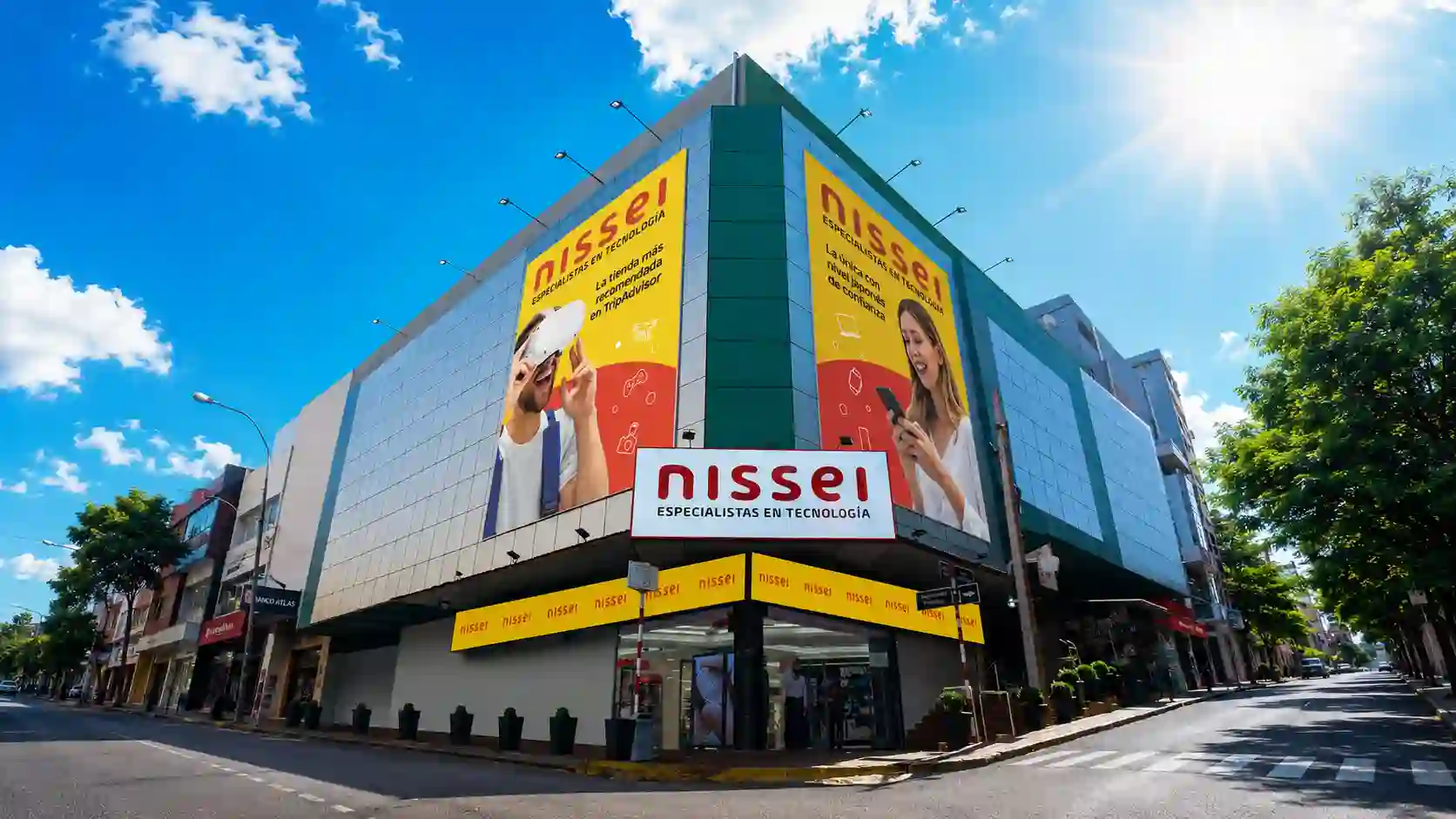
Nissei is the formal technology-retail case inside Paraguay’s border-commerce economy.
The company’s official timeline places its first operations on October 15, 1981 and the first Nissei store in Ciudad del Este in 1985. Its current company page positions Nissei as a national technology reference in cellphones, photography and IT and describes its e-commerce platform as one of the most widely used in Paraguay.
Its importance for market analysis is the shift it represents: from border shopping and electronics import flows toward formal retail branding, authorized distribution, online sales, nationwide delivery and corporate technology supply.
For broader context, see Econosur’s Shopping China Paraguay, Paraguay’s role in Mercosur, Paraguay insights and South America Company Reports.
Core market reading:
Nissei is useful because it shows the formal side of Paraguay’s border-commerce economy. The company links Ciudad del Este’s import-retail base with authorized technology brands, an e-commerce platform, physical expansion in Asunción and a B2B technology-supply channel.
Why Nissei matters now
Nissei matters because Paraguay’s border-commerce story is often told through informality, arbitrage and visitor flows. That framing is incomplete. Ciudad del Este also produces formal retail operators that can build brand trust, online infrastructure, authorized distribution and corporate sales channels.
This makes Nissei analytically different from the anonymous electronics trader or the small importer. The company is rooted in the same geography as Paraguay’s border-shopping economy, but it has moved into a more institutional layer: physical stores, e-commerce, workplace certification, authorized brand representation and B2B supply.
That is why Nissei belongs next to Econosur’s Shopping China analysis. Shopping China explains the border-commerce system. Nissei shows how part of that system can become a formal technology-retail and business-supply platform.
Nissei is a formalization signal.
The company shows how Paraguay’s import-price and border-demand advantages can evolve into brand-based retail, marketplace-style online distribution and technology services for companies.
Company profile: from small distributor to technology retailer
Nissei’s official company history states that the business began operations on October 15, 1981 as a small distributor. In 1985, the first Nissei store opened in Ciudad del Este. That origin matters because it places the company inside the commercial ecosystem that later made Ciudad del Este a regional retail and import node.
Nissei’s dated timeline provides the cleaner chronology: operations began on October 15, 1981, followed by the first Ciudad del Este store in 1985, the first Asunción store in 2020 and Great Place to Work certification in 2022. Its current site positions the company as a national reference in cellphones, photography and IT and describes its e-commerce platform as one of the most widely used in Paraguay.
Great Place to Work Paraguay describes Nissei as a Paraguayan company with Japanese roots and a national technology reference with stores in Asunción and Ciudad del Este, one of the country’s important e-commerce operations, and Authorized Reseller status for Apple and Starlink. Its published profile lists 694 collaborators; the workplace-survey figures displayed on the page are explicitly sourced to the 2024 national study, so they should not be read as a 2026 headcount update.
Border-commerce origin: Ciudad del Este as operating logic
Ciudad del Este is more than a location in Nissei’s history. It is the operating logic that explains the company’s original market. The city sits at Paraguay’s most important border-commerce interface with Brazil and Argentina. Electronics, photography equipment, cellphones and consumer technology fit naturally into that environment because price gaps, import channels and visitor flows create demand beyond the local population.
In that sense, Nissei belongs to the same commercial geography as Shopping China, Cellshop, Monalisa and other large Ciudad del Este retail references. The difference is analytical: Nissei illustrates how the border-commerce model can produce a formal brand with e-commerce, authorized brands and corporate services.
That is the deeper market signal. Border commerce does not always remain informal. In some cases it creates operators that can professionalize assortment, customer service, logistics, after-sales support, product trust and business sales.
The 2026 trade data confirms that the commercial system around this model remains large. Paraguay’s central bank reported US$3.0718 billion of re-exports in January–July 2026, up 18.4% year on year. Separately, the Ministry of Industry and Commerce reported US$1.6504 billion of capital-goods imports under the Tourism Shopping Regime through July, up 40%. These are system figures, not Nissei revenue, but they show the scale of the border- and re-export environment in which the company’s Ciudad del Este operation sits.
| Market layer | Nissei signal | Why it matters |
|---|---|---|
| Border retail | Ciudad del Este origin and electronics categories linked to cross-border demand. | Shows how Paraguay can serve buyers beyond its domestic consumer base. |
| Formal brand | Recognized technology retailer with official store network and brand positioning. | Creates trust in a market often described through informal trading alone. |
| E-commerce | Online platform, marketplace categories, eLockers and delivery model. | Turns border retail into a national and digital distribution system. |
| B2B supply | Nissei Empresas offers corporate technology sales, hardware, support and financing options. | Moves the company beyond visitor shopping into enterprise procurement. |
| Authorized brands | Apple, Starlink and official distributor references help structure formal technology retail. | Separates Nissei from anonymous import resale and strengthens institutional positioning. |
The formal retail layer: authorized brands, trust and differentiation
The most important distinction in this company case is formalization. Paraguay’s border-commerce economy is often associated with price arbitrage and re-export flows. Nissei shows a different layer: formal stores, brand authorization, recognizable customer experience and corporate infrastructure.
That matters because technology retail depends on trust. Consumers and companies buying cellphones, cameras, notebooks, routers, gaming devices, drones, storage, smart-home products or networking equipment need reliability around authenticity, warranty, support and delivery.
Nissei’s current site lists ten official distributor brands: Apple, Canon, Case Logic, Garmin, Intel, Nikon, Sandisk, Sony, Thule and Western Digital. Great Place to Work Paraguay separately describes Nissei as an Authorized Reseller of Apple and Starlink and also names Sony, Canon, Nikon, Sigma, Garmin and Asus. The company’s own current list is used here for the primary brand count; the GPTW profile is treated as an institutional secondary company description.
Nissei is the part of the Ciudad del Este story where border retail becomes formal technology infrastructure.
E-commerce and stores: from visitor flows to national distribution
Nissei’s official company page describes its e-commerce operation as one of the most used portals in the Paraguayan market. It also says the platform operates with a marketplace format, online-exclusive categories, eLockers and fast delivery in Paraguay.
This is important for reading Paraguay’s retail development. The company’s origin is in a border-shopping geography, but its current model extends into a national retail and logistics system. The store network listed by Nissei includes Ciudad del Este, Nissei España in Asunción and Nissei Distrito Perseverancia in Asunción.
That changes the company’s meaning. It is no longer only a Ciudad del Este retailer exposed to Brazilian shopping flows. It also becomes a Paraguayan digital-retail operator with capital-city expansion, delivery infrastructure and a broader assortment that reaches beyond classic electronics.
The current eLocker page makes that distribution layer visible. Nissei lists pickup points across Asunción and Central, Alto Paraná, Itapúa and Caaguazú, using its own stores as well as third-party locations such as fuel stations and retail sites. This is a more concrete indicator of national omnichannel infrastructure than the generic claim of “nationwide delivery” alone.
A July 2026 Nissei campaign reported by ABC Color also connected the Asunción stores and nissei.com with home delivery, store pickup, eLockers and bank-linked installment and cashback offers. The article is promotional rather than independent market research, but it provides a current operating example of how Nissei combines stores, online sales, logistics and payment incentives.
B2B technology channel: Nissei Empresas
The B2B channel is strategically important because it moves Nissei beyond consumer electronics. The current Nissei Empresas page describes corporate sales of hardware and technology supplies and explicitly lists personalized advice, credit and payment facilities, training and technical support, warranty of up to 12 months and post-sale support.
The visible corporate categories include IT, monitoring and security, audio, connectivity and networks, photography and filming, and sports and fitness. This is a broader procurement proposition than a standard electronics checkout and gives the company a practical role in SME and institutional technology supply.
This makes the company relevant to Paraguay’s business-services and procurement environment. In a smaller market, a trusted technology retailer can also become a supplier for offices, SMEs, institutional buyers and corporate IT needs.
For international firms evaluating Paraguay, that is a useful signal. Nissei is more than a retail brand. It also indicates how technology procurement, support and after-sales infrastructure are being organized in a market that is often underestimated because of its domestic scale.
Nissei shows that Paraguay’s border-commerce economy can support formal, brand-based, technology-focused retailers with national reach.
Public data on revenue, market share and ownership structure is limited, so company analysis should avoid hard market-leadership claims unless directly sourced.
Currency shifts, Brazilian demand, customs rules, import controls, logistics costs and competition from other Ciudad del Este retailers can affect the model.
Risk map: private data, competition and border exposure
The first analytical limitation is data. Nissei is not a publicly listed company, and there are no broadly available audited revenue, margin or market-share figures. Company claims and rankings are useful for positioning, but they should not be treated as audited market data.
The second risk is competitive density. Ciudad del Este contains several large electronics and import-retail references. Shopping China, Cellshop, Monalisa and local specialist retailers all compete for similar demand layers: visitors, Brazilian buyers, Paraguayan consumers, resellers and online customers.
The third risk is exposure to regional incentives. Border retail depends on price gaps, customs rules, exchange rates, import availability and consumer purchasing power in neighboring countries. A company can formalize and diversify, but it does not completely escape the economic logic of the border.
| Risk layer | What it means for Nissei | Why it matters for market analysis |
|---|---|---|
| Data opacity | Revenue, margins and market share are not publicly visible in a detailed audited form. | Analysis should rely on sourced company signals, not unsupported market-leader claims. |
| Border dependence | Ciudad del Este demand remains linked to Brazilian buyers, price gaps and customs conditions. | The company’s roots are in a market shaped by cross-border incentives. |
| Retail competition | Other large electronics and import retailers compete for visitor, online and reseller demand. | Differentiation depends on trust, service, authorized brands and logistics. |
| Technology cycles | Cellphones, cameras, IT equipment, gaming and connectivity products move through fast replacement cycles. | Inventory management and category timing are central to profitability. |
| B2B execution | Corporate technology supply requires service, financing, warranties and technical support. | The business channel expands the company’s market, but also raises operating complexity. |
Supplier-market signal
Nissei is also useful as a supplier-market signal. The company’s position suggests demand for logistics, after-sales service, warranty management, e-commerce systems, payment processing, inventory planning, marketplace integrations, customer support and corporate procurement workflows.
Its B2B channel adds another layer: companies need notebooks, monitors, networking equipment, security systems, storage, connectivity, peripherals, office technology and support. That means Paraguay’s retail infrastructure is also a business-infrastructure channel.
For international technology brands, Nissei represents the kind of local operator that can bridge official distribution, visitor demand, national e-commerce and business customers. For market analysts, it shows how a border city can produce formal retail infrastructure rather than only price-arbitrage flows.
My reading is that Nissei is most useful as evidence of how a border-retail business can reduce its dependence on the border without abandoning the advantages that created it.
Ciudad del Este gave the company access to cross-border demand and imported technology categories. The current model adds two Asunción locations, e-commerce, pickup infrastructure across several parts of Paraguay and a corporate channel with financing, support and warranty. That broadens the customer base from visitors and retail buyers toward domestic households and companies.
The important distinction is between the company and the wider trade system. Paraguay’s re-export and Tourism Shopping Regime figures show that border commerce remained strong in 2026, but they do not tell us Nissei’s own revenue or customer mix. For a commercial assessment, the next questions would be how much sales now come from domestic e-commerce and B2B customers, how the Ciudad del Este store depends on Brazilian demand, and whether the national logistics layer is changing that balance.
Why this company case matters for Paraguay
Nissei matters because it changes the way Paraguay’s retail economy should be read. The country is often seen as a small domestic market. Ciudad del Este already complicates that view because it serves cross-border demand. Nissei adds another layer: formal technology retail that operates across visitor demand, local consumers, online buyers and corporate customers.
That makes Nissei a stronger company case than a normal electronics retailer. It is a sign of how Paraguay’s border-commerce advantages can become an institutional business platform.
For Econosur’s wider Paraguay coverage, the company connects directly to Shopping China, Mercosur asymmetry, tax differentials, logistics, retail platforms and the country’s role as a smaller market with regional leverage.
Nissei is a Paraguayan example of border-commerce formalization: from electronics flows to brand trust, e-commerce and B2B technology supply.
Because Nissei is privately held, public revenue, margin and audited market-share data are limited. This company insight therefore distinguishes company-operating evidence from system-level trade context.
- Nissei — Company history: dated timeline from 1981, first Ciudad del Este store in 1985, Asunción expansion in 2020, current e-commerce positioning and official distributor references.
- Nissei — Current store locations: Ciudad del Este, Nissei España in Asunción and Nissei Distrito in Distrito Perseverancia.
- Nissei — eLockers: current pickup network across Asunción/Central, Alto Paraná, Itapúa and Caaguazú.
- Nissei Empresas — Corporate technology channel: hardware and technology supplies, personalized advice, credit/payment facilities, training, technical support, warranty of up to 12 months and post-sale support.
- Nissei — Current e-commerce platform: product categories, online commerce and official distributor list.
- Great Place to Work Paraguay — Nissei profile: 694 collaborators in the published profile, stores in Asunción and Ciudad del Este, Japanese roots and Apple/Starlink Authorized Reseller description. Employee feedback shown on the page is based on the 2024 national workplace survey.
- Banco Central del Paraguay — Foreign Trade Report, July 2026: US$3.0718 billion of re-exports through July, up 18.4% year on year.
- Paraguay Ministry of Industry and Commerce — trade/import structure through July 2026: US$1.6504 billion of capital-goods imports under the Tourism Shopping Regime, up 40%, and the product categories covered by the regime.
- ABC Color — Nissei “Invierno conectado”, 15 July 2026: promotional company coverage showing current use of Asunción stores, nissei.com, home delivery, store pickup, eLockers and bank-linked payment incentives.
- Econosur — Shopping China Paraguay: border-commerce and Tourism Shopping Regime context for Ciudad del Este.
- Econosur — Platform Economy & Retail: regional framework for marketplaces, payments, logistics and cross-border retail.
- Evidence note: Nissei’s own pages establish its history, stores, e-commerce, eLockers, official distributor list and corporate services. BCP and MIC figures establish the scale of Paraguay’s broader re-export and Tourism Shopping Regime system; they are not Nissei financial figures. The interpretation that Nissei is reducing its dependence on pure border retail through domestic e-commerce, logistics and B2B supply is Econosur analysis.
- Econosur analysis updated 30 August 2026.
Nissei raises practical questions for technology brands, electronics suppliers, B2B service providers, logistics firms, payment companies and international analysts evaluating Paraguay’s retail and distribution market.
- How much of Paraguay’s technology retail demand is local, and how much is linked to cross-border flows?
- Can formal retailers continue to differentiate through authorized brands, warranties and after-sales support?
- How quickly can Paraguay’s e-commerce and delivery infrastructure scale beyond Asunción and Ciudad del Este?
- Will B2B technology procurement become a larger part of Paraguay’s retail-technology market?
- How exposed are Ciudad del Este retailers to changes in Brazilian customs rules, currency movements and visitor demand?
- Which technology brands need local partners that combine formal retail, online sales and corporate supply?
- Can Nissei’s model become a reference for other Paraguayan companies moving from border trade into formal distribution?
From border retail to market structure
Nissei is not simply a Paraguayan electronics retailer. It is a company-level view of how Ciudad del Este border commerce can evolve into formal technology retail, e-commerce infrastructure and B2B supply.
Econosur prepares custom market analysis for companies, analysts and institutions evaluating Paraguay, Ciudad del Este, border commerce, technology retail, e-commerce, logistics, B2B supply and Southern Cone commercial structures.
Explore custom market analysisFAQ
What is Nissei in Paraguay?
Nissei is a Paraguayan technology and electronics retailer with roots in Ciudad del Este. It operates physical stores, e-commerce and a corporate technology-sales channel.
Why does Nissei matter for Paraguay market analysis?
Nissei matters because it shows how Paraguay’s Ciudad del Este border-commerce model can evolve into formal technology retail, e-commerce, nationwide delivery and B2B supply.
How is Nissei linked to Ciudad del Este?
Nissei’s official company history states that its operations began in 1981 and that the first Nissei store opened in Ciudad del Este in 1985.
Does Nissei only serve consumers?
No. Nissei also operates Nissei Empresas, a corporate channel focused on hardware, technology supplies, personalized advice, financing options, technical support and after-sales service.
What does Nissei reveal about Paraguay’s retail model?
Nissei reveals that Paraguay’s border retail model is more than informal or visitor-driven trade. It can also produce formal retail brands with authorized distribution, online sales, physical stores and corporate supply channels.