
Company Insight · Paraguay · Paracel · Pulp · Forestry · River Logistics
Paracel: Paraguay’s Pulp Mill and Forestry Industrial Hub
Paracel is building the physical and commercial base for a new forestry economy in northern Paraguay. Its 2026 story combines plantations, port and power infrastructure, logistics, supplier onboarding, Sudati and an industrial hub intended to support Paraguay’s first large-scale pulp mill.
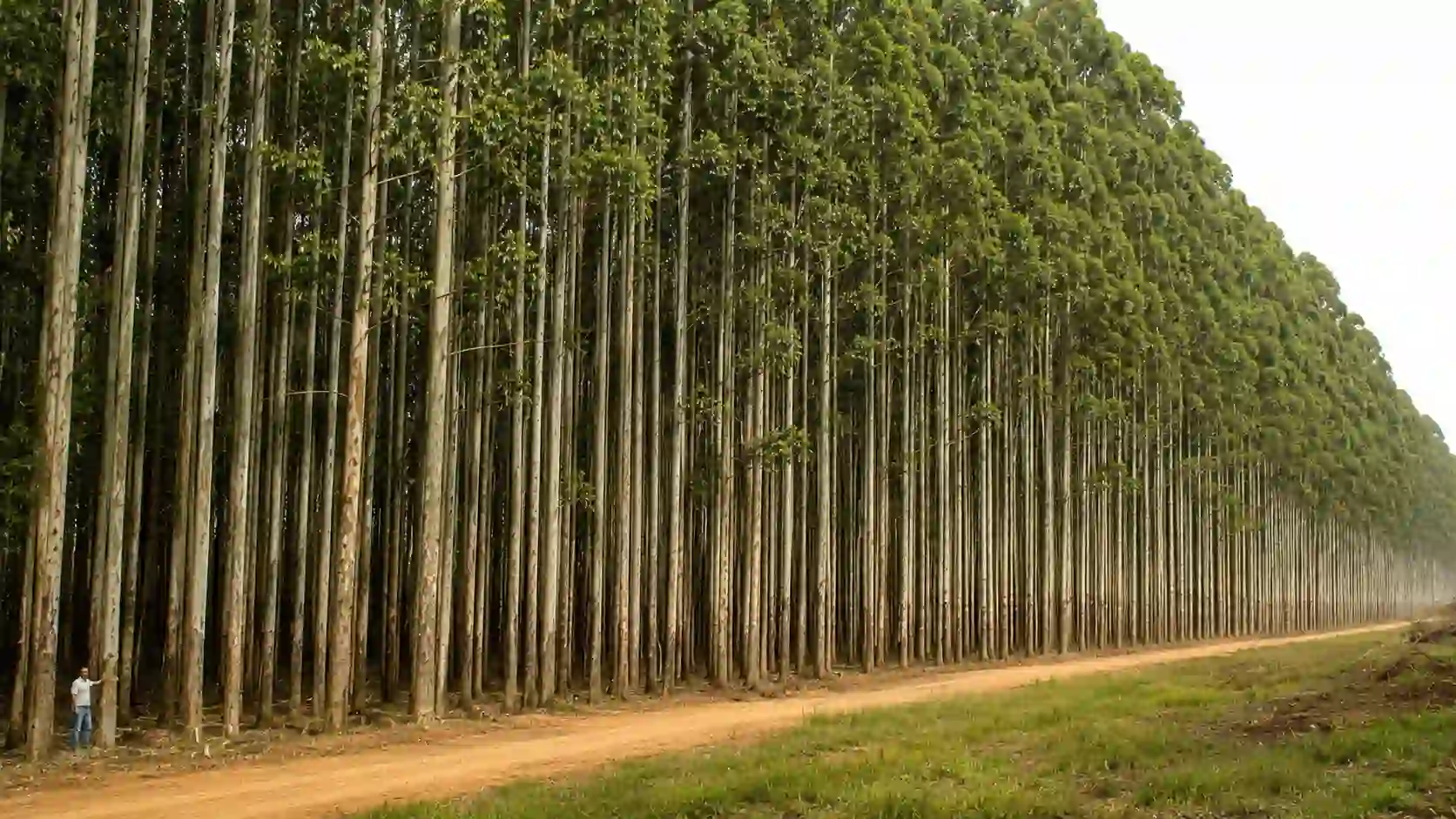
Paracel is building an integrated forestry-industrial platform before commercial pulp production begins.
The verified 2026 phase includes forestry development, enabling infrastructure, an industrial hub, the Sudati plywood project and a formal supplier-onboarding framework. Paracel also published its Sustainability Report 2025 in July 2026, adding current environmental and social indicators to the public evidence base.
IDB Invest approved financing of up to USD 165 million for the infrastructure operation in March 2026. The current IDB project page lists a USD 120 million loan amount and still shows the signed date as N/A. These figures should therefore be distinguished rather than presented as one fully signed and disbursed amount.
The planned pulp mill remains designed for up to 1.8 million tonnes of bleached eucalyptus kraft pulp per year, but the current public evidence does not establish commercial pulp production or a final commissioning date.
Core market reading:
Paracel is attempting to build the missing industrial system around Paraguayan forestry before the pulp mill reaches production. The company should therefore be evaluated through four linked layers: plantation scale, infrastructure completion, industrial-cluster formation and final mill execution.
Latest update: sustainability data and supplier access
Paracel published its fourth Sustainability Report on 17 July 2026, covering the 2025 reporting period. The company reported that its sustainable forestry certification had expanded to 180,792 hectares, that approximately 87,000 hectares were designated for conservation, that registered forest-fire hotspots had fallen by 52 percent and that 14 social programs reached more than 22,000 beneficiaries across Concepción and Amambay.
These figures add useful evidence, but they should remain identified as company-reported sustainability indicators rather than independent performance measurements.
Paracel’s current homepage also reports 203,515 hectares of owned forestry land, 30,331 hectares under signed forestry-promotion contracts, 1,013 direct jobs across forestry, industrial and logistics components and 84,794 hectares planted through June 2026.
Those figures do not align perfectly with the May 2026 project communication, which reported approximately 100,000 planted hectares across owned and third-party land and more than 1,200 direct employees. The likely explanation is a difference in scope or reporting date, but the public sources do not define the reconciliation clearly enough to merge the numbers.
May 2026 company communication: approximately 100,000 planted hectares across company-owned and third-party land; more than 1,200 direct employees.
Current company homepage: 84,794 hectares planted through June 2026; 1,013 direct jobs across forestry, industrial and logistics components.
Econosur treatment: both figures remain dated to their original source and are not treated as directly comparable without a clearer definition of scope.
Why Paracel matters now
Paracel has been discussed for years as Paraguay’s future first large-scale pulp mill. That description remains directionally correct, but it no longer captures the most important current development. The project entered a concrete infrastructure phase in 2026 after delays affected the original mill schedule.
IDB Invest approved financing of up to USD 165 million in March 2026 to support forestry and enabling infrastructure associated with the industrial park and future pulp mill. The assets include transmission infrastructure, substations, a river port, access roads and logistics.
Paracel and the Paraguayan government marked the beginning of works in Paso Horqueta in May 2026. This establishes a visible project phase, but it does not mean the full pulp mill is already completed, fully financed or operating. The distinction is central to a credible company analysis.
The infrastructure-first model reduces the project’s dependence on one single event. If the shared assets attract plywood, board, biofuel, chemical or biomass investors, the site could gain economic substance before the pulp mill reaches full operation.
Paracel is building the industrial platform before it delivers the final export product.
The 2026 financing and construction phase focuses on infrastructure that can support several forestry industries. The project’s success therefore depends on whether shared assets convert northern Paraguay into a functioning industrial cluster and whether the pulp mill later reaches its announced capacity.
Company profile: Paraguayan platform, European pulp experience
Paracel combines Paraguayan project development with European forestry and pulp-industry experience. Current IDB Invest and company information identifies Grupo Zapag, Heinzel Holding GmbH and Girindus Investments as the three companies leading the project.
Grupo Zapag provides the Paraguayan business base. Girindus Investments is linked to Sweden and contributes forestry and pulp-chain experience. Heinzel Group joined the project in 2022 and adds industrial operations, commercial access and experience in pulp and paper markets.
This structure matters because Paracel is not only a plantation project. Its business model requires forestry management, long-term project finance, industrial engineering, export logistics and access to international pulp buyers.
The 2026 infrastructure phase
IDB Invest describes the current operation as support for forestry and competitive infrastructure. The financing is intended to create the physical conditions required for the future mill and for additional industries connected to wood processing.
IDB Invest announced approval of financing of up to USD 165 million for the infrastructure operation in March 2026. The current project page separately lists a USD 120 million loan amount and shows the signed date as N/A. Econosur therefore treats USD 165 million as the approved package ceiling and USD 120 million as the loan amount currently displayed on the project page; neither figure is presented as proof that the entire package has already been signed and disbursed.
The infrastructure package covers the private port and river terminal, electricity transmission, access roads and logistics. These assets solve different parts of the same industrial problem: moving wood to the site, supplying large-scale industry with energy and moving pulp or other wood products out of a landlocked country.
| Infrastructure layer | Current project function | Wider cluster relevance |
|---|---|---|
| Private river port | Supports the receipt of inputs and outbound pulp shipments by barge. | Creates a dedicated interface between the industrial site and the Paraguay-Paraná waterway. |
| Transmission infrastructure | Provides the electrical connection required by large industrial operations. | Improves the feasibility of additional energy-intensive wood-processing activities. |
| Access roads | Connect plantations, suppliers, workers and industrial facilities. | Supports broader industrial and service development in the Concepción area. |
| Logistics systems | Coordinate wood intake, industrial inputs and export flows. | Create demand for transport, storage, maintenance, safety and digital-management suppliers. |
Project-status distinction:
The start of port, road, energy and logistics works is a major advancement. It should not be presented as proof that the entire 1.8-million-tonne pulp mill is already built or commercially operating.
From pulp project to industrial cluster
The industrial-cluster concept is the most important change in Paracel’s positioning. Earlier descriptions centered almost entirely on the future pulp mill. The current model seeks to attract several industries that can use the same forestry base, energy connection, roads, logistics and port environment.
IDB Invest has identified possible activities including biofuels, textiles and cardboard, MDF boards, biochar, metallurgical biocarbon and sustainable chemicals. These are not all confirmed investments. They show the intended direction of the hub and the possible uses for wood, residues, biomass and industrial by-products.
Sudati is the first strong test of this strategy. Paracel announced in May 2026 that the Brazilian plywood producer would join the industrial hub with an estimated investment of USD 215 million. The company announcement projects construction from 2027, a first operational phase in 2028 and more than 2,000 direct and indirect jobs.
Paracel and Sudati also announced plans for more than 30,000 additional hectares of plantations. The proposed relationship creates a more integrated wood-use model: different tree sections and qualities can be directed toward pulp, plywood, energy or other industrial applications.
Sudati matters because it turns the industrial-hub concept from a list of possible industries into the first announced additional factory.
The forestry base: scale before the mill
Large pulp mills depend on a predictable wood supply accumulated over several planting cycles. Paracel has therefore developed the plantation base before industrial production begins. The company’s current homepage reports 203,515 hectares of owned forestry land, 30,331 hectares under signed forestry-promotion contracts and 84,794 hectares planted through June 2026.
A May 2026 Paracel communication used a broader figure of approximately 100,000 planted hectares across company-owned and third-party land and reported roughly 110 million trees. Because the scope definitions differ, this page preserves both dated figures rather than forcing them into a single series.
Paracel’s Sustainability Report 2025 adds another measure: the company says sustainable forestry certification covered 180,792 hectares and approximately 87,000 hectares were designated for conservation. These figures describe certification and conservation scope, not planted area, and should not be compared directly with plantation hectares.
The broader Paraguayan forestry sector is expanding. INFONA reported approximately 70,000 hectares of new plantations per year and identified Concepción, Caazapá, San Pedro, Caaguazú and Itapúa as a forestry corridor containing most of the country’s plantation area.
INFONA’s preliminary figures presented at Expo Madera 2025 described around 500 forestry industries operating at roughly half of installed capacity, with insufficient raw material identified as a central constraint. These dated estimates do not establish current utilization. This creates a complex relationship between Paracel and the existing sector. The project could expand the national plantation base and support new suppliers, but it could also intensify competition for timber, contractors and skilled workers.
A separate financing route for Paraguay’s wider forestry economy
Paracel’s project sits within a wider market of growers, processors and competing wood uses. INFONA’s 2025 sector findings identify 554 forestry establishments, 70% of them sawmills. The earlier estimate of approximately 500 businesses at half capacity was preliminary; it should not be read as an audited October 2026 utilization rate.
The separate AFD–World Bank programme connects agroforestry finance with producer participation and local processing. See Paraguay’s agroforestry financing and value chains. Its existence establishes neither a financing allocation to Paracel nor a supply contract with its industrial hub.
Financing record checked October 17, 2026: the IDB Invest infrastructure record still lists Approved status, USD 120 million and signed date N/A. This remains distinct from the announced package of up to USD 165 million.
The planned pulp mill would change the sector’s scale
Paracel’s planned mill is designed to produce up to 1.8 million tonnes of bleached eucalyptus kraft pulp per year. This would place a new Paraguayan plant directly inside the industrial scale used by major South American pulp producers.
The comparison with current forestry exports shows the size of the proposed change. INFONA reported that Paraguay exported 197,118 tonnes of forestry products in 2025, with a total FOB value of USD 101.3 million. These exports included charcoal, plywood, veneers, sawn timber and other products.
Paracel’s planned annual pulp capacity would therefore be more than nine times the total physical volume of Paraguay’s 2025 forestry exports. This is not a direct product or value comparison because pulp, charcoal and processed wood have different prices, weights and markets. The ratio nevertheless shows that Paracel would represent a structural step change rather than an incremental addition to the current export basket.
| Scale indicator | Current or planned figure | Analytical meaning |
|---|---|---|
| Paraguay forestry exports, 2025 | 197,118 tonnes and USD 101.3 million FOB across several forestry products. | Shows the present size and composition of the national export sector. |
| Paracel planned capacity | Up to 1.8 million tonnes of pulp annually. | Would create a single industrial flow several times larger than the country’s current forestry-export volume. |
| Paracel forestry program | Approximately 203,000 hectares. | Shows the feedstock scale required for continuous industrial production. |
| Sudati expansion | More than 30,000 additional hectares announced with Paracel. | Adds pressure to expand plantations while improving the possibility of fuller wood utilization. |
The private port and the Paraguay River
Paracel’s export model depends on the Paraguay-Paraná waterway. Its location on the Paraguay River allows pulp to move south by barge toward the Río de la Plata and an ocean terminal in Uruguay. From there, the product would be transferred to seagoing vessels serving international markets.
Paracel’s logistics information lists 19 company barges and describes road transport as a contingency for extreme low-water conditions. Under that contingency, pulp would move by road to another Paraguayan port south of Asunción before being loaded onto barges for the remaining route.
The private port is designed specifically for pulp loading and the receipt of wood and industrial inputs. It is not a general-purpose regional port. Its wider economic effect comes from supporting the industrial site and generating connected demand for barges, maintenance, storage, navigation services, road transport and port systems.
River dependence creates a cost advantage and a vulnerability. Barges are central to Paraguay’s international competitiveness, but low water, dredging requirements, navigation restrictions and transshipment arrangements can affect reliability. Paracel’s logistics performance will depend on the same waterway conditions examined in Econosur’s Paraguay River economy.
The port, terminal and barge model create a direct export route for a high-volume industrial product from northern Paraguay.
Low water, dredging, navigation constraints and transshipment capacity can affect transport cost and delivery reliability.
A large pulp operation would depend on uninterrupted links between plantations, mill, port, barges, Uruguay and overseas buyers.
Paraguay enters a market shaped by Brazil and Uruguay
Paracel is entering a South American pulp market dominated by experienced producers, established forestry systems and large export platforms.
Brazil’s advantage is industrial depth and scale. Global producers operate large plantations, mills, port terminals and commercial networks. Supplier ecosystems already exist around machinery, chemicals, forestry technology, maintenance, logistics and engineering.
Uruguay offers a different comparison. The country built a long-term forestry regime, attracted UPM and Montes del Plata and connected plantation regions to industrial plants and export terminals. Its pulp model has become central to national exports and has required major public and private infrastructure.
Paraguay enters later, with abundant renewable electricity, fast eucalyptus growth, available land and access to the Paraguay-Paraná waterway. Its disadvantage is that it must still assemble the industrial workforce, supplier density, technical training and logistics reliability that established pulp regions already possess.
| Market | Established advantage | Paracel comparison |
|---|---|---|
| Brazil | Global-scale producers, deep supplier markets, large plantations and specialized ports. | Paracel must compete through plantation productivity, renewable energy, costs and a newer industrial platform. |
| Uruguay | Stable forestry regime, experienced workforce and dedicated logistics infrastructure. | Paraguay can study the Uruguay model but must adapt it to an inland river-export system and a less mature forestry base. |
| Paraguay | Fast biological growth, renewable electricity, available land and river access. | The challenge is converting natural advantages into reliable industrial execution. |
For the Uruguay comparison, see Econosur’s pulp-market analysis, the UPM company insight and the Montes del Plata company insight.
Concepción: jobs, formalization and regional concentration
Paracel presents the project as a way to decentralize industrial development away from Paraguay’s dominant metropolitan and eastern commercial centers. In May 2026, the company reported more than 1,200 direct employees, with 95 percent Paraguayan, 70 percent from the Department of Concepción and 47 percent previously working in informal employment.
Paracel’s current homepage now displays 1,013 direct jobs across the forestry, industrial and logistics components. The difference should not automatically be interpreted as a decline because the public sources do not provide a fully comparable definition or reference date. Econosur therefore retains both figures with their source date and scope.
IDB Invest projects approximately 7,000 direct and indirect jobs for the wider industrial hub. This remains a project expectation rather than an achieved employment count.
The lasting regional effect will depend on the type of employment created. Plantation work, construction, port operations, mill maintenance, laboratory services, industrial automation and management require different skills and create different wage and career structures.
A large industrial site can strengthen local suppliers and formal employment, but it can also create dependence on one dominant project. Concepción’s economic diversification will be stronger if independent transport, maintenance, forestry, engineering, training and processing companies develop around Paracel.
Employment reading:
The most important number is not the highest projected job total. The stronger test is whether Paracel creates durable technical employment, local suppliers and transferable industrial skills beyond the construction phase.
Environmental and social questions
IDB Invest classifies the current financing as Category A. This category is used for projects that may involve significant, diverse or potentially irreversible environmental and social risks. The classification does not establish non-compliance. It indicates the scale of review, mitigation and monitoring required.
The disclosure page includes environmental and social review documents, an action plan, studies for the pulp plant and river port, plantation assessments, a cumulative-impact evaluation, a critical-habitat assessment and documentation related to dredging in the Paraguay River.
The environmental questions extend across the whole production chain. Plantation expansion affects land use, biodiversity, soil, water, fire management and nearby communities. The mill and port add industrial water, effluent, air-emission, chemical-management, dredging and transport questions.
Older civil-society and project-monitoring reports raised concerns about land requirements, water use, biodiversity, effluent management and indigenous communities. Because several of those reports predate the 2026 financing phase, they should be used as a list of issues to verify against the newest project documents rather than treated as a complete description of current conditions.
Risk map: execution, wood, water and market cycles
The first risk is execution. Paracel’s earlier mill plan experienced delays, and the current phase separates enabling infrastructure from the full industrial plant. Analysts should distinguish between approved infrastructure financing, active construction, final mill financing, mechanical completion and commercial production.
The second risk is wood supply. A 1.8-million-tonne pulp mill requires a stable, large-volume feedstock system. Plantation growth, harvest schedules, third-party growers, road conditions, fire risk and competition with plywood and existing processors all affect the available wood balance.
The third risk is river logistics. The project depends on the Paraguay River, the Río de la Plata and an ocean terminal in Uruguay. Water levels and transshipment efficiency will influence export cost and reliability.
The fourth risk is the global pulp cycle. Pulp is a traded commodity exposed to new capacity, Chinese demand, inventory movements, freight costs and price cycles. A low-cost biological and energy base does not remove exposure to global market conditions.
| Risk layer | What it means for Paracel | What to monitor |
|---|---|---|
| Project execution | Infrastructure progress does not automatically equal full mill completion. | Financing signatures, construction packages, engineering milestones and commissioning schedule. |
| Wood supply | The mill and Sudati require plantation growth and coordinated harvesting. | Planted hectares, tree maturity, third-party supply, fire losses and competing demand. |
| Waterway | Exports depend on barges, river depth and transfer to ocean vessels. | Water levels, dredging, barge capacity, port performance and contingency costs. |
| Environmental compliance | Category A status requires extensive management and monitoring. | Action-plan implementation, permits, biodiversity measures, effluent controls and community engagement. |
| Pulp prices | Revenue would be exposed to global commodity and capacity cycles. | Chinese demand, global inventories, new capacity, freight and BEKP pricing. |
| Cluster formation | The hub strategy depends on attracting industries beyond Paracel. | Sudati milestones, additional investors and local supplier growth. |
Supplier-market signal
Paracel now provides a stronger public supplier-access signal than a generic industrial-project announcement. Its official document repository includes a Supplier Code of Conduct, Instructions for Potential Suppliers and a guide explaining how to become a Paracel supplier. The company also documents meetings with potential supplier companies, including industrial-sector sessions.
This verifies the existence of a formal supplier-registration and onboarding framework. It does not prove that every supplier category listed below has an open RFQ, active tender or current purchase order.
Paracel creates a broad supplier-market signal because the project combines plantations, civil works, energy infrastructure, industrial processing, port operations and river logistics.
The forestry layer requires nurseries, seedlings, genetics, silviculture, harvesting equipment, fire monitoring, soil analysis, satellite systems, fleet management, road maintenance and contractor coordination.
The infrastructure and industrial layers require engineering, concrete and steel construction, substations, transmission equipment, pumps, valves, boilers, water treatment, chemical systems, process control, laboratories, industrial cybersecurity, fire protection and occupational safety.
The logistics layer requires barges, navigation systems, terminal equipment, cranes, storage, conveyor systems, truck fleets, maintenance, dredging support and transport-management software.
Verified: Paracel publishes formal onboarding documents for potential supplier companies.
Verified: the project structure creates demand fields across forestry, civil works, power, port infrastructure, industrial systems and logistics.
Not established by the public documents: which individual categories currently have open RFQs, which suppliers have been awarded packages, where final purchasing authority sits or which packages relate specifically to the future pulp mill rather than enabling infrastructure.
Paracel should be read less as a pulp-mill project in isolation and more as an attempt to build an integrated forestry-industrial system in a country that does not yet have an established large-scale pulp ecosystem.
Plantations, power, roads, the private river port, supplier onboarding and the Sudati agreement already create parts of that system. Those assets can have economic value before the pulp mill produces its first commercial tonne.
The unresolved step is still decisive: whether the planned 1.8-million-tonne mill reaches final financing, full construction, commissioning and stable commercial production. Until then, enabling infrastructure and industrial-cluster formation should not be confused with an operating pulp complex.
The commercial significance for suppliers is similarly layered. A public supplier-registration process makes access more concrete, but the real opportunity depends on which packages are active, who controls technical approval and purchasing, and how procurement is divided between infrastructure, forestry, Sudati and the future mill.
The strongest evidence milestone will therefore be the transition from platform-building to repeatable industrial output: completed infrastructure, awarded industrial packages, a financed and constructed mill, and an operating export chain through the Paraguay–Paraná system.
Three business questions
1. Which procurement packages are active now?
Infrastructure, forestry, port systems, energy and future pulp-mill equipment follow different procurement schedules. Supplier registration alone does not identify the current buying window.
2. Where does technical and purchasing authority sit?
The project combines Paraguayan ownership, European pulp-sector experience, IDB financing requirements and multiple industrial components. Vendor approval and purchase-order ownership may differ by package.
3. How much of the cluster becomes independent of the pulp mill?
Sudati, shared infrastructure and future tenants could create a broader forestry-industrial market even before Paracel reaches full pulp production.
Research Boundary
Verified: infrastructure works have begun; IDB Invest approved an infrastructure financing package of up to USD 165 million; the current IDB project page lists a USD 120 million loan amount and signed date N/A; Sudati has been announced as an additional industrial investor; Paracel publishes formal supplier-onboarding documents.
Verified project scope: the planned pulp mill is designed for up to 1.8 million tonnes of BEKP per year; the project includes forestry, power lines, substations, a private river port and access roads.
Company-reported: planted-area, employment, certification, conservation, fire-reduction and social-program indicators. Current company sources use different scope definitions for some plantation and employment figures, so dated values are preserved separately.
Planned: Sudati construction from 2027 and initial operation from 2028; further industrial tenants; commercial pulp production at the announced scale.
Unresolved: final full-mill financing, EPC and procurement architecture, construction schedule for the complete pulp mill, commissioning date, commercial production start, complete supplier awards, long-term wood balance and final Uruguay ocean-terminal arrangements.
Analytical boundary: the public supplier framework proves access infrastructure for potential vendors, not current demand for every supplier category or an open RFQ for each item mentioned in this analysis.
Why this company case matters for Paraguay
Paracel matters because it tests whether Paraguay can move from land- and commodity-based production into large-scale industrial forestry. The country has favorable biological growth, renewable electricity and river access, but those advantages must be converted into reliable infrastructure, technical capabilities and international customer relationships.
The project also tests a new regional-development model. Concepción could become a northern industrial center linked to forestry, energy, logistics and processing. The economic effect will be stronger if the shared infrastructure attracts independent companies and supports local suppliers.
Paracel’s importance therefore extends beyond the future pulp mill. It is a company-level case of how Paraguay attempts to build a new export sector: first plantations, then infrastructure, then industrial partners, then large-scale production.
Paracel’s decisive product in 2026 is not yet pulp. It is the industrial system intended to make pulp and a wider forestry cluster possible.
- IDB Invest — financing approval, 10 March 2026: up to USD 165 million for enabling infrastructure and the sustainable forestry industrial hub.
- IDB Invest — Sustainable Forestry and Competitive Infrastructure Financing: USD 120 million loan amount currently displayed, signed date N/A, Category A classification and environmental/social documentation.
- IDB Invest — original Paracel project profile: planned 1.8-million-tonne annual BEKP capacity and project background.
- IDB Invest — industrial-hub mandate: infrastructure and potential additional forestry-linked industries.
- Paracel — Sustainability Report 2025 launch, 17 July 2026: certification, conservation, fire and social-program indicators.
- Paracel — current corporate homepage: current planted-area, land, forestry-promotion and direct-employment figures displayed in September 2026.
- Paracel — official documents repository: supplier code, potential-supplier instructions, supplier-registration guide, supplier meetings, environmental studies, licenses and sustainability reports.
- Paracel — May 2026 infrastructure launch: Paso Horqueta works, company-reported employment and broader planted-area figure.
- Paracel — Sudati agreement: planned plywood investment, timing and additional plantation plans.
- Paracel — logistics component: river transport, barge fleet, Uruguay transshipment route and low-water contingency.
- Paraguay MOPC — official report on the May 2026 start of works.
- INFONA — Paraguay forestry exports in 2025: 197,118 tonnes and USD 101.3 million FOB.
- ResourceWise — Latin American greenfield pulp context: regional capacity and project benchmark.
- UPM Pulp — Uruguay operating benchmark: company-side context for an established integrated forestry and pulp system.
- Evidence note: Econosur uses Paracel, IDB Invest, MOPC and INFONA for core project status. Secondary and company-benchmark sources are used for regional comparison, not to establish Paracel’s current construction or financing status.
Paracel raises practical questions for forestry companies, industrial suppliers, logistics operators, environmental specialists, investors and companies evaluating northern Paraguay.
- Which parts of the USD 165 million infrastructure package have been signed, contracted and completed?
- When will the full pulp mill reach final financing, construction and commercial-production milestones?
- Can plantation growth supply Paracel, Sudati and existing Paraguayan wood processors simultaneously?
- Which additional industries will make binding commitments to the industrial hub?
- How resilient is the river-export system during extreme low-water periods?
- How will environmental and social action-plan requirements be measured and reported?
- How much procurement and technical employment will remain in Concepción after construction?
- Can Paraguay compete with Brazil and Uruguay on delivered pulp cost, reliability and industrial expertise?
From public project data to the real procurement structure
Paracel already exposes a formal supplier-onboarding route, but commercial relevance depends on which packages are active, who controls technical approval and purchasing, and how infrastructure, forestry, Sudati and the future pulp mill divide procurement.
Econosur can extend the public evidence into project-specific supplier mapping, procurement ownership, competitor analysis, local partners, logistics, infrastructure and direct local verification.
Explore custom market analysisFAQ
What is Paracel?
Paracel is a Paraguayan forestry and pulp company developing eucalyptus plantations, industrial infrastructure, a private river port and Paraguay’s planned first large-scale bleached eucalyptus kraft pulp mill.
Is the Paracel pulp mill already operating?
No. As of 9 September 2026, the public evidence still places Paracel in an infrastructure, forestry and industrial-hub development phase. Commercial pulp production has not been established.
How large will the Paracel pulp mill be?
The planned industrial plant is designed for annual production of up to 1.8 million tonnes of bleached eucalyptus kraft pulp.
Who leads Paracel?
Current IDB Invest and Paracel information identifies Grupo Zapag, Heinzel Holding GmbH and Girindus Investments as the three companies leading the project.
What did IDB Invest finance?
IDB Invest approved up to USD 165 million for forestry and enabling infrastructure, including a private river port, transmission infrastructure, roads and logistics. The amount should not be described as financing the entire pulp mill.
Why is Sudati important?
Sudati is the first announced additional industrial investor joining the Paracel hub. Its planned plywood plant supports the idea that the site could become a broader wood-processing cluster.
Does Paracel have a formal supplier-registration process?
Yes. Paracel publishes a supplier code of conduct, instructions for potential suppliers and a guide explaining how companies can become suppliers. This verifies a formal onboarding framework, but not an open RFQ for every supplier category.
How will Paracel export pulp?
Paracel plans to transport pulp by barge along the Paraguay River and the Río de la Plata to an ocean terminal in Uruguay. The pulp would then be transferred to seagoing vessels for international markets.
What is the main risk for Paracel?
The project combines several risks: completion of the full mill, sufficient wood supply, river reliability, environmental compliance, global pulp prices and the ability to attract additional industries to the hub.