
Argentina · Biopharma · Biosimilars · Manufacturing · Company Insight
mAbxience Argentina: Biosimilar Manufacturing in a Global Pharma Network
mAbxience began as an Argentine biotechnology platform and now sits inside an international chain of ownership, regulated manufacturing, biosimilar development and licensing. Its Garín and Munro sites show how Argentina can participate in global biopharma without controlling the entire commercial value chain.
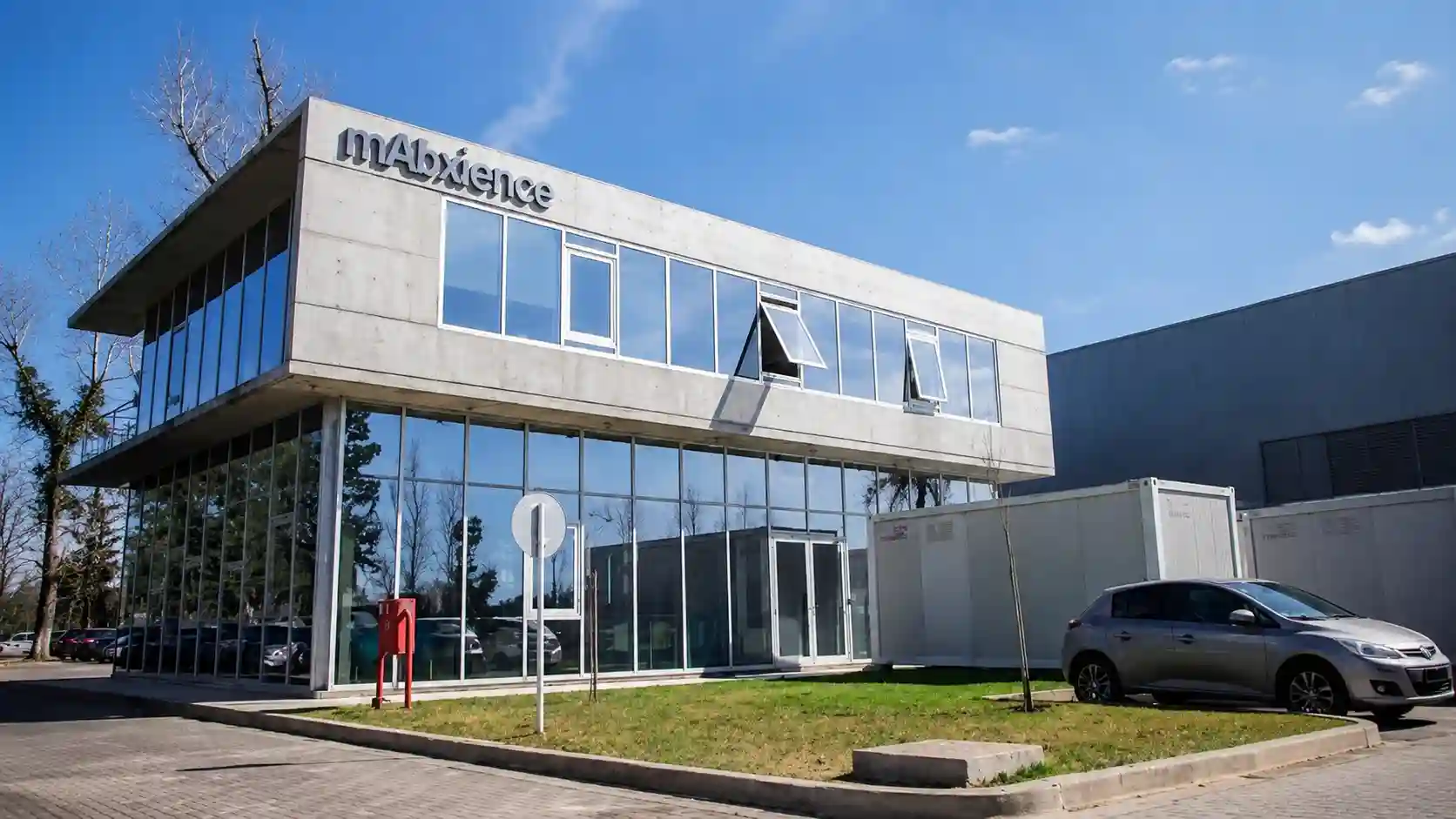
mAbxience is one of the clearest examples of Argentina participating in global biosimilar manufacturing without operating as an autonomous national pharma chain.
The company originated in Argentina in 2010 and today operates biologics sites in Garín and Munro, Buenos Aires Province, alongside its Spanish manufacturing platform. Fresenius Kabi acquired a 55% majority stake in 2022; current company materials still describe mAbxience as majority-owned by Fresenius Kabi with partial ownership from Insud Pharma.
The regulatory link is concrete. Alymsys, mAbxience’s bevacizumab biosimilar, is authorised in the European Union and the United States. EMA product information identifies mAbxience S.A.U. in Garín as a manufacturer of the biological active substance. In 2025, the EU also authorised the mAbxience denosumab biosimilars Denbrayce and Izamby; in December 2025 the FDA approved the related U.S. products Boncresa and Oziltus under mAbxience’s partnership with Amneal.
The commercial model is international: mAbxience develops and manufactures biologics while partners such as Amneal, Abbott and Teva take defined regulatory or commercialization roles in specific markets. Argentina therefore contributes regulated biomanufacturing capacity to a value chain whose ownership, approvals and sales channels extend well beyond Mercosur.
mAbxience should not be read as a conventional domestic laboratory that manufactures, registers and sells the same portfolio through one national organization. Its value sits in a different configuration: development + biologics manufacturing + regulatory-grade production + licensing partnerships + CDMO services.
That structure makes mAbxience relevant to Econosur’s wider Mercosur Pharma Futures analysis. The company is evidence that Argentina can host sophisticated biologics production and export regulated products. It is not evidence that Mercosur has become an integrated pharmaceutical market.
Fresenius Kabi Controls the Majority, but mAbxience Retains Its Insud Link
Fresenius Kabi announced in March 2022 that it would acquire 55% of mAbxience Holding S.L. for approximately €495 million upfront plus milestone payments linked to commercial and development targets. The transaction closed in August 2022. Fresenius also disclosed a put/call structure covering the remaining 45% held by the sellers.
The industrial logic was explicit. Fresenius wanted additional biosimilar pipeline, biologics drug-substance manufacturing and a larger CDMO platform. It described mAbxience as two businesses in one company: its own biosimilar development and manufacturing platform plus third-party biologics CDMO services.
Current mAbxience communications describe the company as a Fresenius Kabi majority-owned group with partial ownership from Insud Pharma. For market analysis, this distinction matters: mAbxience has Argentine origins and major Argentine assets, but strategic ownership is now international.
| Company | Relationship to mAbxience | Market significance |
|---|---|---|
| Fresenius Kabi | 55% majority shareholder since 2022 | Connects mAbxience to a global biopharma group and vertically integrated biosimilar strategy. |
| Insud Pharma | Founder group and current minority shareholder according to mAbxience | Links the company back to Argentina’s broader biotech and pharmaceutical ecosystem. |
| mAbxience Holding S.L. | International holding structure | Shows why the Argentine manufacturing footprint should be separated from group-level corporate domicile and ownership. |
Garín and Munro Are the Industrial Core of the Argentina Case
mAbxience’s current facility overview lists three biologic drug-substance plants across Spain and Argentina. In Argentina, the company operates Garín and Munro, both in Buenos Aires Province.
The Garín site was inaugurated in February 2020 after a reported US$40 million investment. Insud Pharma described it as a monoclonal-antibody biosimilar plant designed to expand Argentina’s capacity for biologics production and international supply. The site later participated in manufacturing the drug substance for the AstraZeneca/Oxford COVID-19 vaccine for Latin America.
mAbxience currently states that Garín has a first installed line of six 2,000-litre single-use bioreactors and lists a second six-reactor line as an expansion. The same page still says that expansion was “to be completed 2Q 2024”. Because the company’s 2026 page does not separately confirm completion, Econosur does not treat the full 24,000-litre figure as independently verified operating capacity.
Munro is smaller and more flexible. mAbxience reports two 1,000-litre units plus R&D and pilot capabilities for process improvement, clinical batches and new technologies. The two sites therefore play different roles inside the Argentine platform: Garín provides commercial-scale manufacturing, while Munro combines biomanufacturing with development flexibility.
Monoclonal antibodies, vaccine experience, EMA/ANMAT-linked GMP approvals and the strongest direct connection to regulated export markets.
Smaller installed bioreactor capacity combined with pilot and development functions for multiple biologic products.
Alymsys Turns the Argentina Story Into a Regulated-Market Supply Chain
The strongest independent evidence for mAbxience’s Argentine manufacturing role comes from the European Medicines Agency. Alymsys, a biosimilar of bevacizumab, received EU marketing authorisation on 26 March 2021. EMA product information identifies mAbxience S.A.U. in Garín, Buenos Aires, among the manufacturers of the biological active substance.
That point is commercially more important than a generic statement that Argentina “has biotech capability”. It connects a physical Argentine plant to an EU-authorised biological medicine under a named regulatory dossier.
Alymsys was subsequently approved in the United States in April 2022. mAbxience then broadened its regulated-market portfolio with denosumab. The European Commission approved Denbrayce, referencing Xgeva, and Izamby, referencing Prolia, in 2025. Both EMA product pages identify Mabxience Research S.L. as the applicant/marketing-authorisation company.
In December 2025, the FDA approved Boncresa and Oziltus, the U.S. denosumab biosimilars developed and manufactured under the mAbxience–Amneal partnership. Amneal holds exclusive U.S. commercialization rights while mAbxience is responsible for development and manufacturing.
| Product | Reference biologic | Regulatory milestone | What it proves |
|---|---|---|---|
| Alymsys | Avastin / bevacizumab | EU 2021; U.S. 2022 | Argentine drug-substance manufacturing is connected directly to EU-regulated supply. |
| Denbrayce | Xgeva / denosumab | EU 2025 | mAbxience expanded beyond its original bevacizumab/rituximab platform. |
| Izamby | Prolia / denosumab | EU 2025 | Same denosumab platform targets a second reference-product market. |
| Boncresa / Oziltus | Prolia / Xgeva | FDA 2025 | mAbxience development/manufacturing combines with Amneal’s U.S. commercialization rights. |
The Business Model Separates Manufacturing From Commercial Control
mAbxience’s partnerships show how the company scales without building its own full commercial organization in every market. The company keeps a strong role in development and manufacturing, while partners contribute regulatory execution, local market access and distribution.
Amneal is the clearest U.S. example. For the denosumab biosimilars, mAbxience develops and manufactures while Amneal holds exclusive U.S. commercialization rights. Abbott has a broader emerging-market arrangement covering biosimilar molecules for selected markets in Latin America, Southeast Asia, the Middle East and Africa; mAbxience develops, manufactures and supplies the products while Abbott registers and commercializes them.
Teva provides another version of the same model. Agreements announced in 2024 cover oncology biosimilar candidates for multiple markets including Europe and the United States. mAbxience leads development and production in its Spanish and Argentine facilities, while Teva takes regulatory and commercialization responsibilities in designated territories.
Historically, Laboratorio Elea commercialized mAbxience’s rituximab and bevacizumab products in Argentina, while the AstraZeneca/Oxford vaccine contract demonstrated that the same industrial platform could also serve a multinational originator as a manufacturing partner.
Exclusive commercialization rights for approved denosumab biosimilars while mAbxience develops and manufactures.
Registration and commercialization across selected markets, with mAbxience manufacturing in Spain and Argentina.
Global oncology licensing model combining mAbxience development and manufacturing with Teva regulatory and commercial capabilities.
mAbxience Is Also a Biologics CDMO Platform
The company’s strategic relevance extends beyond its own biosimilar molecules. Fresenius explicitly identified mAbxience’s biologics Contract Development and Manufacturing Organization business as part of the acquisition logic in 2022. The platform allows third parties to use mAbxience development and drug-substance manufacturing capabilities rather than building a complete biologics plant themselves.
This changes how the Argentine facilities should be read. Their potential market is not limited to products owned by mAbxience. CDMO activity can connect Garín and Munro to development programs, manufacturing contracts and licensing structures controlled by companies elsewhere.
That model also increases the importance of regulatory inspection history, quality systems, process development, technology transfer and manufacturing reliability. For a biologics CDMO, the plant is only one layer; the commercially valuable asset is the ability to move a molecule through reproducible development and regulated production.
What mAbxience Means for the Mercosur Pharma Scenario
mAbxience strengthens the Biosimilar Corridor scenario in Econosur’s Mercosur pharma analysis, but in a specific way. The company demonstrates that Argentina can host biologics development and manufacturing that reaches highly regulated markets.
It does not show that Mercosur already functions as an integrated pharmaceutical production system. Fresenius Kabi controls the majority stake, European and U.S. regulators determine access to key markets, and partners such as Amneal, Abbott and Teva control important commercialization channels. The value chain is international rather than regionally self-contained.
This is the larger industrial lesson. Argentina does not need to own every stage of a pharmaceutical value chain to capture sophisticated manufacturing activity. But manufacturing capability alone does not create regulatory sovereignty, API independence, regional market integration or control over final-market access.
“mAbxience shows that Argentina can be a high-value node in global biopharma without the value chain becoming Argentine — or Mercosur-autonomous.”
Capacity is not output. mAbxience reports combined global bioreactor capacity and site-level design figures. The Garín page still carries an old completion target for its second line, so Econosur does not infer that all stated expansion capacity is fully commissioned and operating.
Approval is not commercialization performance. EMA and FDA authorisations establish regulatory access, not market share, reimbursement, launch timing or commercial success.
Argentina manufacturing is not the same as Argentina ownership. The facilities remain strategically important Argentine industrial assets, but mAbxience has been majority-owned by Fresenius Kabi since 2022.
Partner agreements divide the value chain. Development, manufacturing, regulatory ownership, distribution and commercialization can sit with different companies depending on the product and territory.
The Econosur Reading
mAbxience is a stronger industrial case than a simple “Argentina has a biotech sector” narrative. The company supplies a traceable chain from Argentine R&D and biomanufacturing to EU and U.S. regulatory approvals, international ownership and licensing structures.
The Garín–Alymsys link is the critical evidence point. It demonstrates that an Argentine site is embedded directly in a regulated biological-medicine dossier. The Fresenius transaction then shows what international capital valued: pipeline, manufacturing capability and CDMO capacity. The Amneal, Abbott and Teva agreements show how that capability is commercialized globally.
For companies evaluating Argentina, the case suggests that the country’s pharmaceutical opportunity is less about building a closed domestic value chain than about participating in specialized stages where local scientific capability, production economics and regulatory-grade manufacturing can connect to global owners and market-access partners.
The broader country context sits in Econosur’s Argentina Market Insights and Argentina Country Profile. Company-level cases are collected in the Argentina Company Insights section.
This analysis prioritizes regulatory agencies, Fresenius disclosures and current mAbxience corporate information. Company-reported capacity, partner-network and facility claims are identified as such and are not treated as independent operating statistics.
- mAbxience — company history, facilities and current leadership
- Fresenius — 55% mAbxience acquisition, transaction value and industrial logic
- Fresenius — completion of the majority-stake acquisition
- EMA — Alymsys EU authorisation
- EMA — Alymsys product information and manufacturing information
- EMA — Denbrayce
- EMA — Izamby
- mAbxience — European Commission approval of Denbrayce and Izamby
- mAbxience / Amneal — FDA approval of Boncresa and Oziltus
- mAbxience — Abbott emerging-markets partnership
- mAbxience — Teva global oncology licensing agreement
- Insud Pharma — Garín plant opening and US$40m investment
- mAbxience — Jurgen Van Broeck appointment as CEO
Argentina Pharmaceutical & Company Analysis
Econosur prepares custom analysis for companies evaluating pharmaceutical manufacturing, local partners, ownership structures, regulatory exposure and market-entry conditions in Argentina and the wider Mercosur market.
The work can map companies, manufacturing assets, commercial partners, regulatory dependencies, project status and competitive positioning.
Explore custom market analysisFrequently Asked Questions
What is mAbxience?
mAbxience is a global biotechnology company focused on biosimilar development, biologics manufacturing and CDMO services. It originated in Argentina and today operates biomanufacturing facilities in Argentina and Spain.
Who owns mAbxience?
Fresenius Kabi acquired a 55% majority stake in mAbxience Holding S.L. in 2022. Current mAbxience materials describe the group as majority-owned by Fresenius Kabi with partial ownership from Insud Pharma.
Where does mAbxience manufacture in Argentina?
mAbxience operates biologics facilities in Garín and Munro, Buenos Aires Province. Garín is the larger commercial biomanufacturing platform; Munro combines smaller-scale manufacturing with R&D and pilot capabilities.
Does mAbxience supply EU-authorised biosimilars from Argentina?
Yes. EMA product information for Alymsys identifies mAbxience S.A.U. in Garín, Buenos Aires, as a manufacturer of the biological active substance for the EU-authorised bevacizumab biosimilar.
Which mAbxience biosimilars are authorised in Europe?
Alymsys, a bevacizumab biosimilar, received EU marketing authorisation in 2021. Denbrayce and Izamby, denosumab biosimilars referencing Xgeva and Prolia respectively, were authorised in 2025.
How does mAbxience commercialize products internationally?
The company frequently combines its own development and manufacturing with partners that handle regulatory and commercialization roles in defined markets. Public examples include Amneal in the United States, Abbott in emerging markets and Teva for oncology biosimilar candidates.