
Brazil · Pharmaceuticals · Latin America · Manufacturing · M&A
Eurofarma: From Brazilian Manufacturer to Latin American Pharma Platform
Eurofarma has expanded from a Brazilian contract manufacturer into a 24-country pharmaceutical group with factories, local commercial organizations, acquisitions and global licensing partnerships. Its structure shows how regional pharmaceutical integration can develop commercially even when regulation remains national.
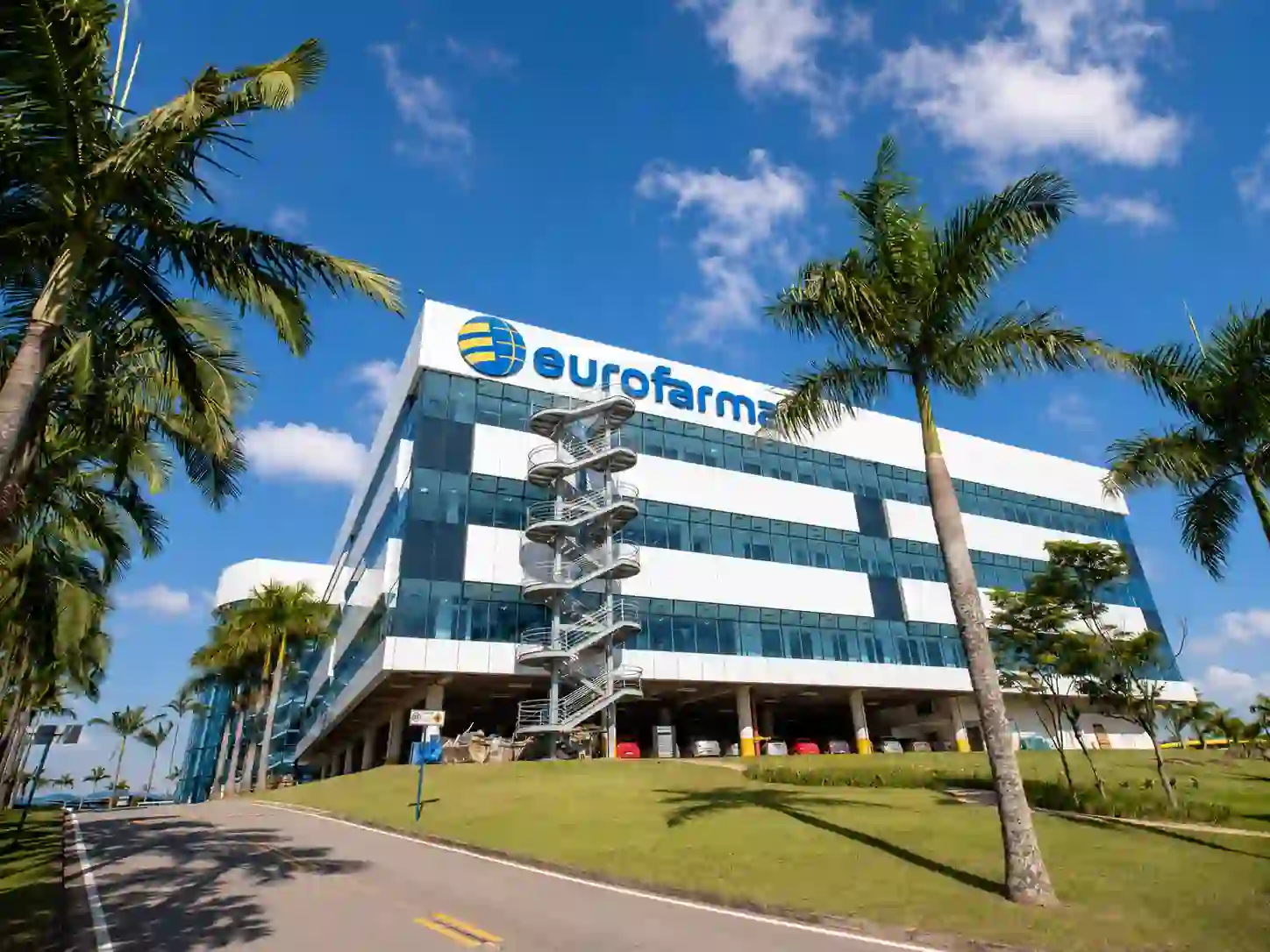
Eurofarma is one of the clearest examples of a Latin American pharmaceutical platform built without a single Latin American pharmaceutical market.
The Brazilian group reported R$12.5 billion in net sales in 2025 and describes a footprint of 24 countries, 11 factories and more than 13,000 employees. It produced 630 million units in 2025.
The platform was assembled through a combination of Brazilian manufacturing, acquisitions, local subsidiaries and licensing or distribution agreements. The 2023 acquisition of Genfar added a Colombian plant, a development centre in Cali and commercial positions in Colombia, Peru and Ecuador. Partnerships with Pfizer/BioNTech, Novo Nordisk and SK Biopharmaceuticals show a second layer: Eurofarma can also act as a manufacturing, distribution or regional commercialization partner for global pharmaceutical companies.
Eurofarma's regionalization model is operational rather than institutional. The company does not depend on Mercosur becoming a single medicines market. It builds local regulatory, manufacturing and commercial capability country by country, then connects those national operations through ownership, brands, supply agreements and shared corporate infrastructure.
That distinction matters for Econosur's Mercosur Pharma Futures analysis. Eurofarma is evidence that commercial integration can progress faster than regulatory harmonization.
Eurofarma Started as a Contract Manufacturer
The company traces its origins to Billi Farmacêutica, founded in 1972 by Galliano Billi. Eurofarma's current corporate history states that the original business was created to manufacture medicines for other pharmaceutical companies.
That origin matters because contract manufacturing never disappeared from the business model. Eurofarma later developed its own brands, entered generics, built prescription and hospital portfolios, expanded through acquisitions and created international subsidiaries, while third-party manufacturing remained part of the industrial platform.
The company describes itself as a pharmaceutical multinational with 100% Brazilian capital. The current structure therefore differs sharply from the mAbxience model in Argentina: Eurofarma's regional expansion has been driven from a Brazilian-controlled corporate base rather than through acquisition by a global pharmaceutical parent.
The 2025 Numbers Show a Large Operating Platform
Eurofarma's 2026 integrated-report release gives R$12.5 billion in net revenue for 2025. The same source reports more than 13,000 employees, 11 factories and 630 million units produced during the year.
The scale is relevant because regional pharmaceutical expansion requires more than a sales office. Manufacturing capacity, regulatory teams, medical promotion, distribution, product registration and local portfolios all have to be reproduced across markets with different approval systems and reimbursement structures.
Eurofarma's Brazilian home market supplies the industrial and commercial base for that expansion, while the company's foreign operations reduce dependence on a single national market.
Regional Integration Was Built Through Local Operations
Eurofarma's investor disclosures document a long sequence of Latin American expansion. The group entered Argentina in 2009 through the acquisition of Quesada Farmacêutica. It expanded into Uruguay, Chile and Bolivia in 2010, followed by operations in Paraguay, Ecuador and Mexico in 2012 and Peru and Guatemala in 2013.
Current company disclosures describe production plants in multiple Latin American countries. That structure gives Eurofarma a different form of regional integration from a pure export model: local industrial assets and commercial organizations sit inside the same corporate system even though national regulators continue to control market authorization.
| Market layer | Visible Eurofarma mechanism | Why it matters |
|---|---|---|
| Brazil | Core manufacturing, commercial scale, Itapevi and new Montes Claros capacity. | Provides the financial and industrial base for regional expansion. |
| Argentina | Local subsidiary and manufacturing presence developed from the 2009 Quesada acquisition. | Shows that the regional model includes production and market presence outside Brazil. |
| Colombia | Genfar manufacturing plant and development centre in Cali. | Creates a northern South American production and generics platform. |
| Peru & Ecuador | Genfar affiliates integrated through the 2023 acquisition. | Extends the same product and commercial platform across separate regulatory markets. |
| Chile, Uruguay, Guatemala and others | Local operations and, in several countries, manufacturing assets. | Broadens regional reach without requiring a unified regulatory framework. |
Genfar Was a Regional Platform Acquisition, Not Just a Product Deal
Eurofarma completed the acquisition of Genfar from Sanofi on 29 September 2023. The acquired business was headquartered in Colombia and included affiliates in Peru and Ecuador.
The disclosed asset included 144 molecules across 12 therapeutic classes, 350 products, more than 500 employees, a manufacturing plant and a development centre in Cali. Eurofarma then positioned Genfar as its generics brand for Latin America outside Brazil.
This is the clearest evidence of the platform strategy. A single acquisition added products, people, manufacturing, R&D capability and commercial access across three national markets. Eurofarma's 2024 interim results also showed that Genfar materially increased revenue outside Brazil, demonstrating that the acquisition changed the geographic economics of the group rather than merely adding a brand name.
“Eurofarma's regional integration is built company by company, plant by plant and registration by registration.”
Montes Claros Adds a New Brazilian Capacity Layer
Eurofarma began operations at its new Montes Claros, Minas Gerais complex on 8 October 2025. The company describes it as its largest industrial complex and one of the largest pharmaceutical facilities in the Western Hemisphere's southern half.
The site covers about 515,000 m², with approximately 250,000 m² of built area, and was designed as a modular complex that can be expanded in phases. Eurofarma states that full implementation is expected to at least double global production relative to the scale before the expansion.
The first operating lines are packaging lines, with medicine manufacturing planned to expand progressively. That distinction is important: the entire future capacity of Montes Claros should not be treated as already operating simply because the complex has started operations.
Eurofarma's headline numbers on country presence, factories, output and future capacity are corporate disclosures. They describe the company's reported operating scale and plans; they are not independent market-share verification.
The 2026 integrated-report release reports R$712 million invested in innovation in 2025. Other Eurofarma webpages currently display different innovation totals. Econosur therefore does not use innovation spending as a core comparative metric in this analysis.
Global Partnerships Add Technology and Products Without Requiring Full Ownership
Eurofarma's regional platform also works as an interface for global pharmaceutical companies that need manufacturing or commercial reach in Latin America.
| Partner | Eurofarma role | Market reading |
|---|---|---|
| Pfizer / BioNTech | Selected in 2021 to manufacture finished Comirnaty doses for Latin America as part of the global vaccine manufacturing network. | Demonstrated that Brazilian manufacturing could be integrated into a global regulated supply chain. |
| Novo Nordisk | Exclusive Brazilian distribution, commercialization and promotion partner for Poviztra and Extensior semaglutide brands from October 2025. | Shows the value of Eurofarma's domestic commercial reach; the agreement should not be described as independent Eurofarma production of the semaglutide molecule. |
| SK Biopharmaceuticals | Regional licensing partnership for cenobamate; XCOPRI entered the Brazilian market in 2026 after Anvisa approval. | Shows how the same platform can regionalize an externally developed innovative product across multiple Latin American markets. |
The Pfizer/BioNTech agreement is particularly useful as an industrial benchmark. Pfizer stated that Eurofarma would receive drug product from U.S. facilities and manufacture finished doses in Brazil, with planned annual capacity above 100 million finished doses at full operational scale. The arrangement placed Eurofarma inside a global manufacturing network rather than simply making it a local distributor.
The Novo Nordisk agreement illustrates a different model. Eurofarma's role is commercial and promotional in Brazil. Keeping those roles separate prevents a common analytical error: a distribution agreement does not automatically prove ownership of the underlying technology or manufacturing process.
Eurofarma Tests the Difference Between Commercial and Regulatory Integration
Eurofarma fits two of the scenarios in Econosur's Mercosur pharmaceutical analysis at the same time.
It supports the integration case because a Brazilian-controlled company has built manufacturing and commercial positions across the region, can move brands and partnerships through multiple national markets and can use acquisitions such as Genfar to deepen regional scale.
It also supports the fragmentation case because every market still requires local regulatory execution. Eurofarma's platform succeeds by managing that fragmentation rather than waiting for it to disappear.
Factories, subsidiaries, brands, acquisitions and distribution partnerships create a regional operating system.
National medicine approvals and market-access rules remain separate, so regional scale still requires country-by-country execution.
Global companies can use Eurofarma's manufacturing or commercial network without transferring full product ownership or technology control.
The Econosur Reading
Eurofarma is best understood as a regional pharmaceutical operating system anchored in Brazil. Its competitive asset is the combination of manufacturing, local regulatory execution, medical promotion, acquisitions and cross-border commercial reach.
The Genfar acquisition is the clearest example of how Eurofarma converts M&A into geographic infrastructure. The Pfizer/BioNTech and Novo Nordisk agreements show the complementary partner model: international pharmaceutical groups can plug products or manufacturing steps into Eurofarma's regional capabilities without replicating the entire network themselves.
That makes Eurofarma a useful counterpart to the broader Brazil market analysis and Brazil Country Profile. Company-level cases are collected in the Brazil Company Insights section.
“Eurofarma shows that Latin American pharma integration can be built operationally before it exists institutionally.”
This analysis prioritizes Eurofarma investor and corporate disclosures and uses partner-company sources where they provide stronger evidence for the role assigned to Eurofarma.
- Eurofarma — company profile, footprint, ownership positioning and current scale
- Eurofarma — 2026 integrated-report release for 2025 results
- Eurofarma Investor Relations — corporate history and regional manufacturing structure
- Eurofarma — completion and scope of the Genfar acquisition
- Eurofarma — start of operations at the Montes Claros industrial complex
- Pfizer / BioNTech — Eurofarma manufacturing collaboration for Latin America
- Novo Nordisk — Eurofarma distribution and promotion agreement for semaglutide brands in Brazil
- Eurofarma — 2026 Brazilian launch of XCOPRI under the SK Biopharmaceuticals partnership
Brazil Pharmaceutical & Company Analysis
Econosur prepares custom analysis for companies evaluating pharmaceutical markets, manufacturers, local partners, regulatory structures and distribution networks in Brazil and the wider South American market.
The work can map company structures, manufacturing footprints, acquisitions, licensing relationships, market-entry routes and cross-border commercial dependencies.
Explore custom market analysisFrequently Asked Questions
What is Eurofarma?
Eurofarma is a Brazilian pharmaceutical group founded in 1972. It operates across prescription medicines, generics, hospital products, oncology, consumer health and contract manufacturing, with a multi-country footprint across Latin America.
How large is Eurofarma?
Eurofarma reported R$12.5 billion in net sales for 2025. The company reports operations in 24 countries, 11 factories, more than 13,000 employees and 630 million units produced during 2025.
Why was the Genfar acquisition important?
The 2023 acquisition added a Colombian manufacturing plant and development centre, affiliates in Peru and Ecuador, more than 500 employees, 144 molecules and 350 products. Genfar became Eurofarma's generic brand for Latin America outside Brazil.
Does Eurofarma manufacture for global pharmaceutical companies?
Yes. Pfizer and BioNTech selected Eurofarma in 2021 to manufacture finished Comirnaty doses in Brazil for Latin American distribution as part of their global manufacturing network.
Does Eurofarma manufacture Novo Nordisk semaglutide?
The October 2025 agreement makes Eurofarma the exclusive Brazilian distributor for commercialization and promotion of the Poviztra and Extensior brands. The agreement should not be interpreted as proof that Eurofarma owns or independently manufactures the underlying semaglutide molecule.
What does Eurofarma show about pharmaceutical integration in Latin America?
Eurofarma shows that industrial and commercial integration can advance through acquisitions, local subsidiaries, factories, licensing and distribution partnerships even while pharmaceutical regulation remains nationally fragmented.