Company Insight · Brazil · Viridis Mining · Rare Earths · Critical Minerals
Viridis Mining: Brazil’s Colossus Rare-Earth Project
Viridis Mining and Minerals is an Australian-listed mining company whose main development asset is the Colossus rare-earth project in Minas Gerais, Brazil. Colossus is based on ionic-adsorption clay containing neodymium, praseodymium, dysprosium and terbium, rare earths used in permanent magnets. Viridis completed the project’s Definitive Feasibility Study in August 2026, but the commercial mine and full-scale processing plant have not yet been built.
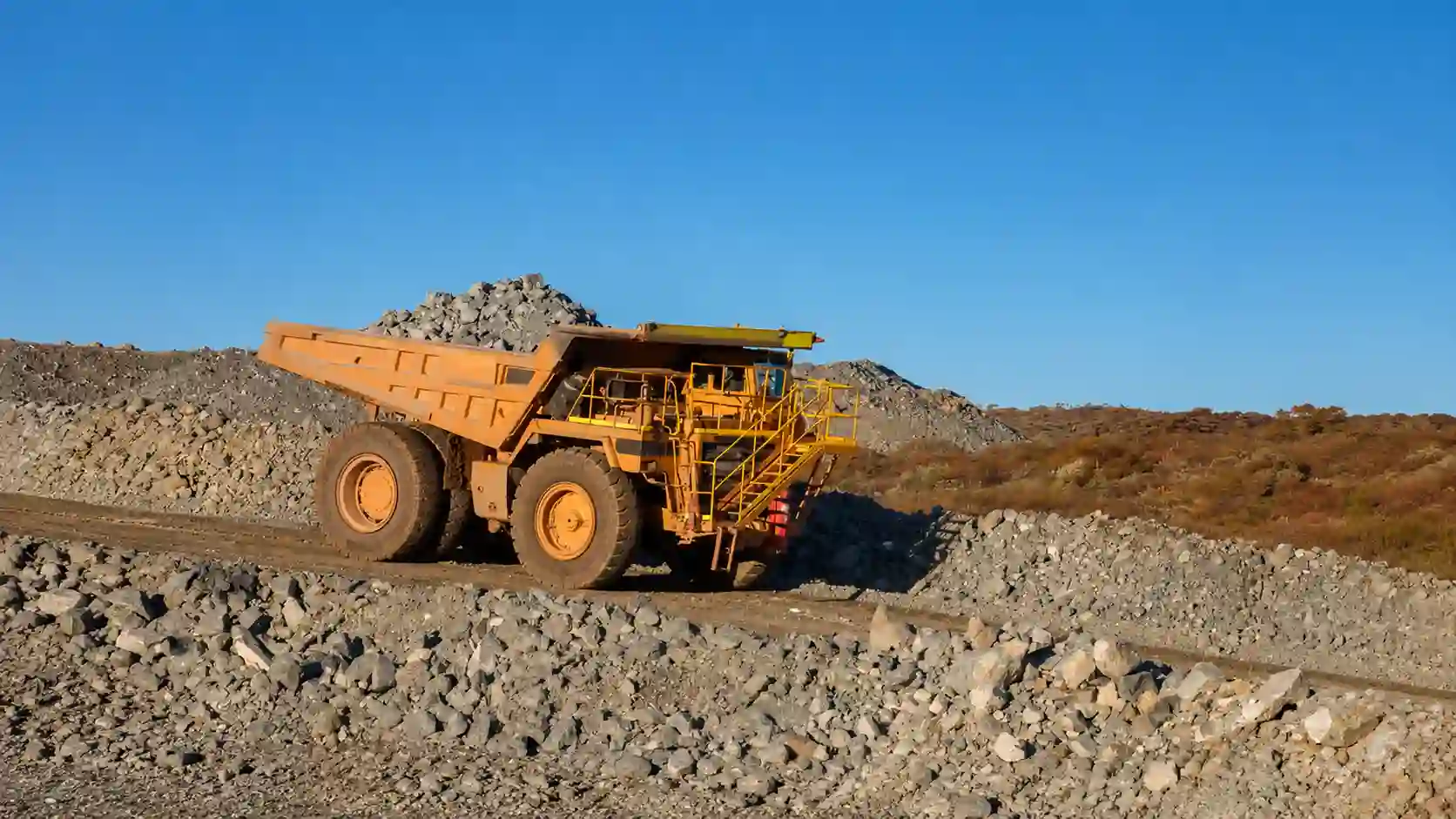
Viridis Mining and Minerals is an Australian-listed developer focused primarily on the Colossus rare-earth project in Minas Gerais, Brazil.
Colossus lies in the Poços de Caldas alkaline complex and contains ionic-adsorption clay enriched in the magnet rare earths neodymium, praseodymium, dysprosium and terbium. Viridis plans to mine and process the clay into mixed rare earth carbonate, or MREC, for further separation and refining.
The project is not yet in commercial production. Viridis completed a Definitive Feasibility Study on August 20, 2026. The DFS reports approximately US$449 million in initial development capital including contingency, an Ore Reserve of approximately 200.1 million tonnes at 2,894 ppm TREO, a 25-year production target at 5 million tonnes per year, an after-tax NPV8 of US$1.196 billion, a 36.4% after-tax IRR and a 2.7-year payback period.
Viridis has also built a demonstration processing centre in Poços de Caldas, secured a binding power-infrastructure package with DME, announced up to US$120 million in new strategic equity commitments, and is qualifying Colossus material with Solvay in France. In Brazil, the company is testing a domestic route from Colossus MREC through oxide separation, alloy production and permanent-magnet manufacturing.
The company still needs the Installation Licence, the senior-debt package, binding customer agreements, final investment decision, construction and commercial-scale commissioning. Viridis currently targets commercial production in 2028.
Core company reading:
Viridis has progressed further than a typical early-stage rare-earth developer in building the commercial structure around its main asset. It has a DFS, demonstration processing, strategic equity, power infrastructure, prospective Western buyers and a Brazilian downstream development route. The company remains pre-production, however, and still has to convert those preparations into a permitted, fully financed and operating mine.
Company profile: Australian-listed developer, Brazilian core asset
Viridis Mining and Minerals Limited is listed on the Australian Securities Exchange under the ticker VMM. The company holds exploration and development assets in several jurisdictions, but Colossus in Minas Gerais is its principal development project and the asset around which its current financing, processing and commercial strategy is concentrated.
Viridis acquired the original Colossus rare-earth rights in 2023 and subsequently expanded its licence position to approximately 228.62 square kilometres in and around the Poços de Caldas alkaline complex.
The company combines Australian capital-market access with a Brazilian operating base. Its project companies, demonstration processing centre, environmental licensing, power-infrastructure work and much of its technical activity are located in Minas Gerais.
Viridis has also added rare-earth industry experience at board level. The appointment of Geoff Bedford, formerly chief executive of Neo Performance Materials and Molycorp, is relevant because Colossus will depend not only on mining but also on separation markets, customer qualification and non-Chinese downstream relationships.
Colossus: what Viridis is trying to build
Colossus is an ionic-adsorption-clay rare-earth project in the Poços de Caldas alkaline complex. The deposit contains neodymium, praseodymium, dysprosium and terbium, four rare earths with particular importance for permanent magnets.
The proposed mine is designed around a nominal processing rate of five million tonnes of clay per year. Viridis plans to leach rare-earth ions from the clay, recover them into mixed rare earth carbonate and sell or further process that intermediate material through downstream partners.
This is important for understanding the company. Viridis is not planning to produce finished magnets at the mine itself. Its core mining project would produce an intermediate rare-earth product. The company is therefore developing customer and processing relationships in parallel with the mine so that Colossus output has a route into separation, refining and eventually magnet production.
The commercial mine and full-scale plant have not yet been built. The current project stage is DFS-complete and pre-FID.
Resource and reserve: the geological base is large, but the DFS defines the current mine case
The July 2026 Mineral Resource estimate totals approximately 473 million tonnes at 2,505 ppm TREO and 592 ppm MREO. It includes approximately 305 million tonnes in the Measured and Indicated categories, including a 31-million-tonne Measured component.
The August 2026 DFS reports an updated Ore Reserve of approximately 200.1 million tonnes at 2,894 ppm TREO. The reserve now includes both Proved and Probable material and replaces the earlier 200.6-million-tonne Probable Reserve as the current economic reserve reference.
Resource, reserve and production schedule should not be treated as the same number. The Mineral Resource describes the wider geological inventory. The Ore Reserve applies economic and technical assumptions. The DFS then uses a 25-year production target at 5 Mtpa as the current operating case.
The reserve inventory could theoretically support more feed than the 25-year DFS schedule at the planned processing rate. That does not establish a longer commercial mine life until Viridis incorporates additional material into a future economic mine plan.
| Category | Current figure | What it means |
|---|---|---|
| Mineral Resource | ~473 Mt at 2,505 ppm TREO | Wider geological inventory reported in July 2026. |
| Measured + Indicated | ~305 Mt | Higher-confidence portion of the resource. |
| Ore Reserve | ~200.1 Mt at 2,894 ppm TREO | Material incorporated into the current economic reserve basis. |
| DFS production target | 25 years at 5 Mtpa | Current commercial production schedule used in the DFS. |
The July 2026 resource estimate and the August 2026 DFS reserve are separate reporting measures. The DFS supersedes the July 2025 PFS as the current economic project study.
Higher-grade early feed remains relevant to the first operating years
The July 2026 resource update identified approximately 97 million tonnes grading above 4,000 ppm TREO and above 1,000 ppm MREO.
For Viridis, the main relevance is mine sequencing. Higher-grade material available early in the mine plan can lift contained rare-earth output without immediately increasing plant throughput, which in turn can strengthen early cash generation during the period when project debt is being repaid.
The inventory does not remove operating risk. Actual grade delivery, recovery, dilution, plant availability and product quality will determine whether the modeled early production profile is achieved.
The August 2026 Definitive Feasibility Study
Viridis completed the Colossus Definitive Feasibility Study on August 20, 2026. The DFS replaces the July 2025 pre-feasibility study as the current economic project case.
The study is based on a 5 Mtpa processing rate and a 25-year production target. It reports approximately US$449 million in initial development capital including contingency.
Under the company’s spot-price case, the DFS reports an after-tax NPV8 of US$1.196 billion, an after-tax IRR of 36.4% and a 2.7-year payback period. Viridis also reports C1 operating costs of approximately US$9.84 per kilogram of rare-earth oxide.
The production profile includes approximately 2,967 tonnes per year of magnet rare-earth oxides, including neodymium, praseodymium, dysprosium and terbium. These are contained-oxide figures rather than the physical mass of mixed rare earth carbonate shipped from the project.
The DFS is a company feasibility study, not operating evidence. The capital cost, NPV, IRR, recovery assumptions and production schedule remain forward-looking until the project is financed, built, commissioned and operated at commercial scale.
| DFS indicator | Reported figure | Meaning for Viridis |
|---|---|---|
| Processing rate | 5 Mtpa | Commercial plant design basis. |
| Production target | 25 years | Current economic mine schedule. |
| Development capex | US$449m incl. contingency | Current construction-capital benchmark. |
| After-tax NPV8 | US$1.196bn | Company-study valuation under the stated price case. |
| After-tax IRR | 36.4% | Company-study return under stated assumptions. |
| Payback | 2.7 years | Modeled payback after production starts. |
| Average MREO output | ~2,967 t/y | Contained Nd, Pr, Dy and Tb oxide production. |
The demonstration processing centre gives Viridis operating data before mine construction
Viridis inaugurated its research and processing centre in Poços de Caldas in May 2026. The semi-industrial demonstration plant has a run-of-mine feed capacity of approximately 100 kilograms per hour and is designed for continuous operation.
By July, the plant had moved into steady-state continuous MREC production. Viridis reported average recoveries of approximately 79% MREO and 64% TREO, above the assumptions used in the earlier PFS.
The centre is useful to the company for several reasons: it produces customer samples, supports process optimisation, provides data for lenders and engineering teams, and allows equipment and reagent performance to be tested before the commercial plant is built.
Viridis has also demonstrated water treatment, reagent recovery and zero-liquid-discharge operation at demonstration scale. Colossus material has been sent to Solvay in La Rochelle for product qualification.
The limit is scale. A 100-kilogram-per-hour demonstration line does not prove that a commercial plant processing five million tonnes per year will achieve the same recovery, reagent consumption, water balance, product quality and availability.
Customers and downstream strategy
Viridis’ commercial model does not end at the mine gate. Colossus is designed to produce MREC, an intermediate product that still requires separation into individual rare-earth oxides before metals, alloys and magnets can be made.
The company is therefore developing downstream routes before commercial production starts. At present, three strands are visible: a prospective European processing and customer relationship through Solvay, a Brazilian refining and recycling platform through Viridion, and a domestic technical test chain involving SENAI, CETEM and IPT-USP.
Viridis has also stated that it is prioritising customers in Europe and the United States rather than building its sales strategy around China. That positioning can support access to Western industrial customers and export-credit finance, but it also means the company must establish reliable non-Chinese separation and purchasing capacity.
| Route | Current status | Role for Viridis |
|---|---|---|
| Solvay | Non-binding LOI + product qualification | Potential European separation and customer route. |
| Viridion | Development / pilot platform | Potential Brazilian refining, separation and recycling capability. |
| SENAI–CETEM–IPT | 5 kg Colossus MREC test chain | Technical validation of a Brazilian route from MREC toward magnets. |
Solvay and the European customer route
European Commissioner for International Partnerships Jozef Síkela visited the Poços de Caldas processing centre in June 2026, and Colossus has been identified as one of the priority projects for EU-Brazil cooperation on critical minerals.
The institutional interest matters because Europe is trying to diversify rare-earth supply and processing away from China. It does not itself represent a purchase contract or project-finance commitment.
Viridis and Solvay signed a non-binding letter of intent in June 2026. Solvay operates rare-earth separation and chemical-processing capacity at La Rochelle in France.
Viridis has shipped MREC samples from its Poços de Caldas demonstration plant to La Rochelle for product qualification. That gives the relationship a real technical basis.
As of September 1, 2026, Econosur had not identified a public announcement confirming a binding Solvay offtake agreement. The company therefore has a credible prospective processing and customer route, but not yet enforceable commercial volumes, pricing or delivery obligations.
The Brazilian mine-to-magnet test
At the end of August, Viridis delivered the first 5 kg batch of refined Colossus MREC from its Poços de Caldas processing centre to CIT SENAI ITR in Minas Gerais.
The planned test route is concrete: the material is to move to CETEM in Rio de Janeiro for separation into rare-earth oxides, then to IPT-USP in São Paulo for alloy production, and finally back to CIT SENAI ITR for permanent-magnet manufacturing and testing.
For Viridis, this matters because it tests whether Colossus material can move through several Brazilian processing stages instead of being exported immediately after MREC production.
The scale must be kept in perspective. Five kilograms is a technical-validation batch. It does not demonstrate commercial downstream capacity capable of handling the future output of a 5 Mtpa mine.
Viridion: Viridis’ longer-term Brazilian refining and recycling platform
Viridion is a 50/50 joint venture between Viridis and Ionic Rare Earths intended to develop rare-earth separation, refining and recycling capability in Brazil.
The venture gives Viridis a route to participate in more of the value chain than MREC production alone. It also supports Brazil’s objective of retaining more technical know-how and processing value inside the country.
Viridion remains at development and pilot scale. It should therefore be treated as a downstream capability platform, not as an existing commercial facility able to process the full future Colossus output.
Solvay and Viridion are not mutually exclusive. Solvay can provide access to established European separation capacity, while Viridion represents a Brazilian route that could expand over time if technology, financing and customers are secured.
Financing: the equity side has advanced, senior debt remains open
The financing picture changed materially in August 2026. Alongside the DFS, Viridis announced commitments for up to US$120 million in new strategic equity funding.
The package comprises up to US$75 million from One Investment Management, approximately US$40 million from institutional investors and an accelerated US$5 million tranche from ORE Investments and Régia Capital.
Viridis said the new commitments, existing cash and remaining availability under earlier arrangements gave the company approximately US$154 million in identified equity sources, above the approximately US$135 million indicative equity requirement under a proposed financing structure of roughly 70% senior debt and 30% equity.
This does not mean the US$449 million project is fully financed. The company still needs to close the senior-debt package and satisfy lender conditions around permits, engineering, environmental review, customer contracts and project execution.
Export Development Canada, Export Finance Australia and Bpifrance have previously provided conditional or non-binding support signals. BNDES and FINEP have also selected Colossus for coordinated support under Brazil’s strategic-minerals programs. These relationships can support the debt process, but they are not equivalent to a closed financing package.
| Financing source | Amount / status | What it means |
|---|---|---|
| One Investment Management | Up to US$75m | Cornerstone strategic equity commitment in two tranches. |
| Institutional investors | ~US$40m | Additional strategic equity commitments. |
| ORE / Régia | US$5m accelerated tranche + earlier availability | Existing strategic-investor support remains part of the equity structure. |
| Identified equity sources | ~US$154m | Above Viridis’ indicative ~US$135m equity requirement. |
| Senior debt | Not yet closed | Still required to complete the overall project-finance package. |
Licensing: the Installation Licence is still required before full construction
Brazil’s environmental licensing process separates preliminary approval, installation approval and operating approval.
COPAM granted the Colossus Preliminary Licence on December 19, 2025. Viridis then submitted its Installation Licence application in May 2026.
The DFS does not replace the Installation Licence. Viridis still needs that approval before it can begin full commercial construction within the licensed scope.
An Operating Licence would be required before commercial operation. Viridis is therefore trying to advance financing, engineering, customer agreements and selected long-lead procurement while the licensing process continues.
Environmental issues: water, processing and licensing jurisdiction
The environmental dispute around Colossus is material because the project sits within the Poços de Caldas volcanic plateau and near an interconnected regional water system.
Brazil’s Federal Public Prosecutor has raised concerns over springs, groundwater, the Poços de Caldas alkaline aquifer, nitrate contamination, processed-clay behaviour, cumulative regional impacts and whether environmental licensing should be handled federally rather than only by Minas Gerais.
Viridis disputes several of these claims. The company says its hydrogeological work mapped 98 springs across the study area but identified only three that would be directly affected. It also says numerical modelling found no significant local or regional reduction in water availability.
The company describes its processing route as ammonium-based leaching at near-neutral pH followed by washing and reagent recovery. Processed clay would be returned progressively to mined areas as dry material rather than stored in a conventional wet tailings dam.
The unresolved issue is not simply whether one side is “right.” The final licence conditions, jurisdiction, commercial-scale water performance and residue behaviour can alter project timing, engineering requirements and financing conditions.
| Issue | Concern raised | Viridis position | What remains open |
|---|---|---|---|
| Springs | Potential impacts on mapped springs. | Only three of 98 mapped springs would be directly affected. | Final licensed footprint and observed impacts. |
| Aquifer | Recharge-zone and groundwater effects. | Company modelling shows no significant regional reduction. | Construction and operating monitoring. |
| Nitrates / reagents | Potential groundwater contamination. | Viridis cites washing, recovery and near-neutral processing. | Commercial-scale performance and licence conditions. |
| Processed clay | Long-term chemical and physical behaviour. | Dry backfilling and progressive rehabilitation are planned. | Commercial-scale residue and rehabilitation data. |
| Licensing jurisdiction | MPF questions whether federal licensing is required. | Project continues through the Minas Gerais process. | Administrative or judicial decisions. |
Federal critical-minerals policy: PL 500 is archived, PL 2780 is the relevant process
The previous version of this company insight treated PL 500/2026 as a standalone legislative risk because it proposed creating a National Rare-Earth Mineral Reserve across the Poços de Caldas region.
That is no longer the current legislative status. The Chamber of Deputies attached PL 500/2026 to PL 2780/2024, and the Chamber now lists PL 500 as archived.
The relevant federal process is PL 2780/2024, which would establish the National Policy for Critical and Strategic Minerals and create the National Council for Industrialisation of Critical and Strategic Minerals.
As of September 1, 2026, the bill remained under consideration in the Federal Senate and was scheduled for plenary consideration on September 2.
For Viridis, the policy issue is therefore broader than the former PL 500 proposal. Future rules could affect incentives, processing policy, traceability, industrialisation and strategic-mineral governance. Econosur does not assume that the specific suspension provisions proposed in PL 500 survive unless they appear in the final enacted text.
Infrastructure: Viridis has already moved one project package into binding delivery
Colossus requires dedicated electricity, water systems, roads, laboratories, chemical handling and product logistics.
Viridis signed a binding project-delivery agreement with DME Energética for a dedicated 3.2 km, 138 kV transmission connection from the Saturnino substation to Colossus. The package includes licensing, engineering, procurement and construction.
The initial allocation is 27 MW for Stage 1 operations, while the transmission and substation infrastructure is designed for up to 90 MVA. Reserved grid capacity is scheduled from December 2027.
DME had already begun procurement of critical long-lead electrical equipment when the agreement was announced. This is one of the clearest pieces of evidence that Viridis has moved beyond studies into selected physical project preparation before FID.
Other project requirements include process-plant electrical systems, water and reagent systems, laboratories, roads, residue handling, product packaging and logistics. The final procurement structure will depend on the EPCM model, vendor selection and timing of FID.
Serra Verde is the best operating comparison for Viridis
Serra Verde’s Pela Ema operation in Goiás is already in commercial production, while Viridis remains a pre-production developer. The comparison is useful because both companies are working with Brazilian ionic-clay rare-earth deposits and MREC production, but they face different company-level questions.
| Company | Current stage | What has already been demonstrated | Main question now |
|---|---|---|---|
| Serra Verde | Commercial production / optimisation | A Brazilian ionic-clay project can reach commercial MREC production. | Can ramp-up, recovery and downstream separation reach stable commercial performance? |
| Viridis Mining | DFS completed / pre-FID | A detailed technical project, demonstration process, equity structure and infrastructure preparation have been assembled. | Can Viridis secure the remaining permits, senior debt and binding customers and then build the mine? |
For the wider Brazilian comparison, see Econosur’s Rare Earth Project Pipeline and Serra Verde company insight.
What distinguishes Viridis is not only the size of Colossus.
The company has tried to build several parts of the future business before the mine exists: demonstration processing, power infrastructure, strategic equity, prospective buyers and downstream processing routes.
That makes Colossus more prepared than many projects at a similar stage. It does not make Viridis an operating producer. The company still has to secure the Installation Licence, senior debt and binding customer agreements, make the final investment decision, build the mine and prove the process at commercial scale.
The Brazilian downstream work is strategically relevant for the same reason. It shows that Viridis is testing whether more value can remain in Brazil, but the current kilogram- and pilot-scale work is still far from the capacity required for future Colossus output.
Risk map: what can still change the Viridis investment case
| Risk | Current company position | What to monitor |
|---|---|---|
| Installation Licence | Preliminary Licence granted; Installation Licence application submitted. | Approval timing, conditions and any additional studies. |
| Senior debt | Equity requirement substantially covered; export-credit support exists. | Binding debt commitments and financing conditions. |
| Binding offtake | Solvay LOI and product qualification; Western buyer strategy. | Volumes, pricing, specifications, credit terms and final contracts. |
| Construction schedule | DFS complete; selected infrastructure and long-lead work advancing. | FID, EPCM award, equipment orders and construction mobilisation. |
| Process scale-up | Continuous demonstration production with strong recoveries. | Recovery, reagent use, water balance, uptime and product quality at 5 Mtpa. |
| Water & residues | Company has modelling and demonstration-scale treatment data. | Licence conditions and observed commercial-scale performance. |
| Licensing jurisdiction | Project continues through Minas Gerais licensing. | MPF, IBAMA or court decisions affecting state-versus-federal competence. |
| Domestic downstream scale | Viridion and a 5 kg mine-to-magnet test provide technical evidence. | Whether Brazil-based processing advances to commercial capacity. |
| Rare-earth prices | DFS economics depend on NdPr, Dy and Tb assumptions. | Chinese supply policy, Western floor-price mechanisms and customer pricing. |
Supplier relevance: which parts of the project are becoming commercially actionable
For suppliers, Viridis is more relevant now than when Colossus was only a study-stage project. The DFS is complete, the DME power package is binding, long-lead procurement has begun in selected areas and the company is preparing for FID.
The most relevant supplier categories include electrical systems, process equipment, water treatment, chemical handling, automation, laboratories, environmental monitoring, civil works, EPCM services and commissioning support.
The key commercial question is not whether a rare-earth mine eventually needs these products. It is which package is being released now, who controls the specification, which suppliers have already been approached and whether procurement sits with Viridis or an EPCM contractor.
Three business questions public disclosures do not fully answer
Which Colossus packages are moving toward orders before FID, who owns those packages and which suppliers are already qualified or shortlisted?
Which equipment, engineering and specialist-service requirements can be sourced competitively in Brazil, and where does Viridis still depend on international technology or vendors?
How much future Colossus output could realistically be processed in Brazil, and how much is likely to depend on Solvay or other foreign separation capacity?
Research services around Viridis and Colossus
Econosur can investigate company- and project-level questions that Viridis’ public disclosures do not resolve, including procurement, supplier access, contractor structures, permitting, financing and downstream processing.
Why Viridis matters in Brazil’s rare-earth sector
Viridis matters because Colossus combines three issues that are central to Brazil’s rare-earth sector: the development of a large ionic-clay mine, the attempt to finance it through a Western-oriented capital structure, and the question of how much downstream processing can take place inside Brazil.
The company has already created more than a paper project. It operates a demonstration processing centre, has a binding power-infrastructure package, has secured substantial strategic equity commitments and is testing Colossus material with both European and Brazilian downstream institutions.
The remaining gap is equally clear. Viridis is not yet a producer. Whether Colossus becomes a commercially important Brazilian rare-earth supplier depends on permits, senior debt, binding customers, construction and industrial-scale process performance.
This company insight prioritises Viridis and ASX disclosures, Brazilian government and environmental sources, Solvay information and independent reporting. The September 2026 update incorporates the completed Colossus DFS, the new strategic-equity package, the Brazilian 5 kg mine-to-magnet test and the current legislative status of PL 500/2026 and PL 2780/2024. Company projections are treated as estimates or targets, and pilot or demonstration work is kept separate from commercial production.
- Viridis Mining and Minerals — corporate and project information.
- Viridis Mining and Minerals — current ASX announcements.
- Argus, August 20, 2026 — Colossus DFS metrics, 25-year production horizon, MREO output and US$120 million strategic equity package.
- Viridis, August 31, 2026 — first 5 kg refined Colossus MREC batch delivered into the Brazilian downstream test chain.
- Viridis, July 23, 2026 — continuous demonstration production and recovery performance.
- Viridis, June 4, 2026 — binding DME transmission package and long-lead electrical procurement.
- Solvay — non-binding LOI with Viridis.
- Brazilian Federal Public Prosecutor — environmental and jurisdictional concerns around Colossus and Caldeira.
- Brazilian Chamber of Deputies — PL 500/2026 current status: archived.
- Federal Senate — PL 2780/2024 current status.
Need company- or project-level research on Viridis?
Econosur can investigate current procurement packages, long-lead equipment, EPCM and contractor structures, permitting, financing, local supplier capacity and downstream processing routes around Colossus.
Discuss Custom ResearchFAQ
What is Viridis Mining?
Viridis Mining and Minerals is an Australian-listed mining and critical-minerals developer. Its main development asset is the Colossus ionic-adsorption-clay rare-earth project in Minas Gerais, Brazil.
What is the Colossus project?
Colossus is a proposed rare-earth mine and processing operation based on ionic-adsorption clay containing neodymium, praseodymium, dysprosium and terbium. Viridis plans to process the clay into mixed rare earth carbonate for further separation and refining.
Is Colossus already producing commercially?
No. Viridis operates a demonstration processing centre in Poços de Caldas, but the commercial mine and full-scale plant have not yet been built.
What did the August 2026 DFS establish?
The DFS reports approximately US$449 million initial development capital including contingency, a 25-year production target at 5 Mtpa, an after-tax NPV8 of US$1.196 billion, a 36.4% after-tax IRR and a 2.7-year payback period.
How large are the Colossus resource and reserve?
The July 2026 Mineral Resource totals approximately 473 million tonnes at 2,505 ppm TREO. The August 2026 DFS reports an Ore Reserve of approximately 200.1 million tonnes at 2,894 ppm TREO.
How is Viridis financing Colossus?
Viridis announced up to US$120 million in new strategic equity commitments in August 2026 and said identified equity sources exceeded the project’s indicative equity requirement. Senior debt and full project financing remain to be completed.
Does Viridis have a binding agreement with Solvay?
No binding Solvay agreement had been publicly confirmed as of September 1, 2026. Viridis and Solvay have a non-binding LOI and Colossus MREC has been sent to La Rochelle for product qualification.
What is Viridion?
Viridion is a 50/50 joint venture between Viridis and Ionic Rare Earths intended to develop rare-earth separation, refining and recycling capability in Brazil. It remains a development and pilot-scale platform rather than commercial capacity for the full Colossus output.
What is the Brazilian mine-to-magnet test?
Viridis delivered 5 kg of refined Colossus MREC into a Brazilian test chain involving CIT SENAI ITR, CETEM and IPT-USP for oxide separation, alloy production and permanent-magnet manufacturing and testing. It is a technical validation exercise, not commercial-scale production.
What permits are still missing?
Colossus has a Preliminary Licence and Viridis has applied for the Installation Licence. The Installation Licence is still required before full commercial construction, and an Operating Licence would be required before commercial operation.
What are the main environmental issues?
The Federal Public Prosecutor has raised questions about springs, groundwater, the alkaline aquifer, nitrate contamination, processed clay, cumulative regional impacts and licensing jurisdiction. Viridis disputes several claims.