
Argentina · Vaca Muerta · LNG · Steel Pipes · November 2026
Argentina LNG’s $2 Billion Steel Pipe Tender: Who Can Supply the Export System?
The Vaca Muerta–Río Negro project has named suppliers for its liquids and gas lines. Here is how the packages were split and what the awards mean for construction, financing and local manufacturing.
 Econosur · Argentina
YPF chief executive Horacio Marín named Tenaris as the supplier for the 24-inch liquids line. Industry reporting identified Grupo Cuñado and Corinth Pipeworks for the 48-inch gas line. The US$2 billion and 500,000 tonnes were early tender estimates. Signed prices and delivery schedules were not established in the sources reviewed. La Nación, 17 November · Shale24, 17 November
Argentina’s government announced RIGI admission for the YPF–Eni–XRG project on 20 November. Río Negro closed its public environmental hearing on 17 November. The partners were targeting 30 November for their final investment decision. Reuters · Government of Río Negro · Diario Río Negro
The export corridor connects several physical businesses
The YPF Argentina LNG project overview describes an integrated value chain rather than a single gas pipeline. Unconventional gas from Vaca Muerta would be gathered and treated, moved along a dedicated inland corridor, processed to recover liquids and condensate, and then supplied to floating liquefaction facilities offshore Río Negro. The system is intended for export and is described by YPF as separate from Argentina's domestic natural-gas transmission network. [1]
YPF's English project material specifies a 48-inch rich-gas pipeline and 24-inch liquids-related infrastructure across approximately 527 kilometres between the Vaca Muerta area and Sierra Grande. Bonatti's EPC announcement independently describes a 48-inch natural-gas line and a parallel liquids pipeline of roughly that length. The Río Negro environmental summary uses approximately 525 kilometres. These are closely related project descriptions, but the published figures should not be used to derive a final engineering bill of materials. [1] [4] [5]
Some secondary reporting refers to two 48-inch lines in addition to a 24-inch line. Because the operator's current overview and the EPC contractor's description establish a 48-inch gas line plus a parallel liquids line, this analysis uses that narrower, documented scope. Final route, diameter and material quantities must be checked against the definitive technical specification before bidding or estimating supply potential.
Upstream gas production and gathering determine volumes and feedstock availability.
Dedicated gas and liquids transportation requires pipes, stations, controls and linked processing facilities.
Two proposed floating units, each nominally 6 Mtpa, would support initial capacity of 12 Mtpa if commissioned.
Eni confirms that the two planned floating LNG units would offer a total nominal capacity of 12 million tonnes per year. This is a project design target, not observed LNG exports or an operating terminal in November 2026. [3]
A very large pipe order is a market signal—not a confirmed shipment
Early-November reports put the proposed purchase at approximately 500,000 tonnes of steel pipe and US$2 billion. Those were tender estimates. The supplier selections reported on 17 November identify the parties by line diameter. The reviewed sources did not establish the signed price or shipment volume for each package. [8]
The reported purchase is large enough to affect competing tube mills, steel-feedstock procurement, transport, port handling, coating and inspection logistics. Yet the headline amount is not an addressable market for every industrial provider. Pipe fabrication, coating, testing, logistics and construction can be contracted by different entities, under different technical, contractual and financial conditions.
Tender estimate: about US$2 billion, according to press reports. Reported material quantity: approximately 500,000 tonnes. EPC construction award: a separate contract already announced for the pipeline system. Final project capital commitment: dependent on the consortium's investment decision and associated financing. None of these numbers can be substituted for the others.
For steel producers, the cost model starts at specifications—steel grade, pipe diameter and wall thickness, welding, coating, inspection, delivery sequence and compliance documents. For the buyer, the cheapest nominal price per tonne does not necessarily produce the lowest installed cost if delivery, testing or interface failures delay construction.
Who won the 24-inch and 48-inch packages?
Tenaris plans to produce the 24-inch liquids-line pipe at SIAT in Valentín Alsina, Buenos Aires Province. Trade reporting places Grupo Cuñado of Spain and Corinth Pipeworks of Greece on the 48-inch gas line. La Nación · Shale24
| Package | Suppliers | Evidence |
|---|---|---|
| 24-inch liquids line | Tenaris / Techint | Selection announced by YPF’s chief executive. Local production is planned. |
| 48-inch gas line | Grupo Cuñado and Corinth Pipeworks | Suppliers identified in industry reporting. Signed terms remain undisclosed. |
Welspun’s earlier pipe award belongs to Southern Energy, a separate LNG project.
The construction contract is not the same as pipe supply
In July 2026, Bonatti announced that a joint venture with U.S.-based Pumpco, including Argentine contractor Contreras Hermanos, had been awarded the engineering, procurement and construction (EPC) contract for the complete Argentina LNG pipeline system. Bonatti specified the route between Meseta Buena Esperanza and Sierra Grande, including a 48-inch gas pipeline and a parallel liquids pipeline. [4]
The EPC contract establishes a named delivery team and an important procurement interface. It does not, by itself, demonstrate that every line-pipe manufacturer, ancillary equipment provider or services subcontractor has been selected. Nor does it prove that the development consortium has signed its final investment sanction and released every construction work order.
Pipe makers compete on technical specifications, manufacturing capability, qualification, price and delivery capacity.
Project engineers and contractors coordinate line construction, right-of-way, interfaces, testing and commissioning.
The distinction matters for B2B market access. A vendor supplying inspection systems, lifting equipment, coatings, transport or field services must identify the actual purchasing entity and work package. Being relevant to the pipeline's physical construction does not guarantee direct purchasing access to YPF, Eni or XRG.
A reverse auction changes price competition, not technical responsibility
Marín described the completed competition as a reverse auction. Final price schedules, delivery obligations and the complete set of binding terms remain undisclosed in the sources reviewed. Shale24, 17 November
The underlying commercial logic is straightforward: prequalification is meant to screen suppliers before bidding on price, while the auction tests how far qualified providers can reduce their offers. That does not remove the need for independent technical compliance, traceability, factory acceptance, coatings, transport sequencing and schedule assurance after award.
Large-diameter line pipe is delivered through a chain of mill production, testing, coating, inspection, customs, transport, storage and field installation. A nominal tube price must be assessed alongside the probability and cost of late delivery, rejected product, rework and construction downtime. A reverse auction can compress price, while contract specifications and execution controls still determine project risk.
RIGI, financing and the final investment decision
The government announced RIGI admission on 20 November. Economy Minister Luis Caputo reported planned investment of US$25 billion in 2027–2030 and US$50.75 billion in total through 2050. These figures cover the integrated project. Sponsor sanction, financing and actual spending have separate milestones. Reuters, 20 November
YPF’s chief executive said the partners were targeting 30 November 2026 for the final investment decision. As of 22 November, a signed decision was still pending in the sources reviewed. Diario Río Negro, 20 November
Broader reported investment figures for Argentina LNG refer to multiple levels of the integrated production, pipeline, treatment and liquefaction system, over different periods. They should not be treated as the amount available for steel-pipe procurement or automatically allocated to immediate contracts. Any indicative export-credit support also needs to be distinguished from signed loan agreements and funds drawn.
For a wider view of Argentine investment approvals and supplier participation, see Econosur's RIGI project analysis and Vaca Muerta capital allocation analysis.
Río Negro's environmental process is a separate gateway
Río Negro closed the public hearing in Sierra Grande on 17 November, after two days. The four studies covered the gas pipeline, liquids line, floating liquefaction units and industrial complex. The province will consider public submissions in its technical evaluation. Component-level environmental permits still require verification. Government of Río Negro, 17 November
Transport and industrial construction plans will depend on final technical parameters, access permissions, route implementation, environmental conditions, installation sequence and interface readiness. This matters especially where the inland pipes meet coastal processing and offshore infrastructure. A pipeline can have identified contractors while still facing material permitting and investment conditions.
Econosur's Argentina port-investment analysis places the emerging Río Negro export infrastructure in the broader context of distinct Atlantic oil, bulk and container investments. The LNG project's proposed offshore system must not be confused with the separate Vaca Muerta Oil Sur crude-export terminal.
Where the industrial opportunity could materialise
The most visible procurement prize is line pipe. The wider investment system may also require engineering, field welding, inspection, coating, corrosion protection, pumping or compression, valves, automation, electrical systems, road logistics, maintenance, environmental services and specialist construction equipment. Those are plausible categories based on the pipeline and export infrastructure process, not independently verified tender packages available to new suppliers today.
Río Negro and YPF announced a supplier-development plan in October 2026, drawing on a survey of 490 provincial firms. The initiative indicates institutional interest in local capacity. A survey or development programme is not evidence that those companies have met project-specific qualifications or secured contracts. [6]
The competitive test is likely to differ across material supply, construction and local services. Steel pipe may be manufactured abroad and delivered to Argentine ports; some site, logistics and installation work may be delivered domestically; and qualification for high-risk critical components may be stricter than for general services. Supplier access cannot be inferred from a general local-content announcement or a single headline investment figure.
| Workstream | Typical commercial question | Evidence needed before outreach |
|---|---|---|
| Line pipe | Which mills can meet diameter, volume, grade and delivery requirements? | Final specifications, bidder qualifications, lot allocation and award notices |
| Coatings and inspection | Which party controls testing, protective systems and acceptance? | Product standards, manufacturing plan and contract scope |
| Pipeline EPC services | Which work packages sit with Pumpco, Bonatti and local subcontractors? | Signed subcontracting rules, construction release and vendor procedures |
| Transport and storage | Where are large-volume pipes handled and sequenced for installation? | Mill locations, ports, delivery incoterms, laydown areas and route schedule |
| Equipment and controls | Who orders instrumentation, valves and electrical systems? | Package list, detailed engineering, qualified manufacturers and buyer entity |
| Environmental and site services | What permits and local conditions govern work commencement? | Approved EIA conditions, land access and executed work orders |
Which project milestones matter now?
| Milestone | Documented stage | Outstanding verification |
|---|---|---|
| Project partners | YPF, Eni and XRG jointly advancing development | Final sanction and binding capital commitments [2] |
| Export corridor | Approximately 527 km described by YPF; 48-inch gas and 24-inch liquids-related pipes | Final technical quantities and material schedule [1] |
| Steel pipe procurement | Tenaris announced for 24 inches. Grupo Cuñado and Corinth Pipeworks reported for 48 inches. | Signed terms, lot prices and deliveries. Shale24 |
| Pipeline EPC | Bonatti and Pumpco venture with Contreras Hermanos publicly announced | Execution release, subcontracting scope and construction progress [4] |
| RIGI | Government announced approval on 20 November | Published resolution and conditions. Reuters |
| Environment | Public hearing held on 16–17 November | Technical assessment and component permits. Río Negro |
| Final investment decision | YPF’s chief executive gave 30 November as the target | Executed FID documents and financing commitments [7] [8] |
This sequence explains why the most useful reporting metric is not simply announced spending. A manufacturer needs verified scope and delivery obligations. A contractor needs authorization to mobilise. A financial stakeholder needs a sanctioned and financeable asset. An industrial service firm needs an identifiable purchasing route.
The Argentina LNG pipe competition is a test of whether the country's emerging export infrastructure can attract global manufacturing capacity while creating commercially credible roles for Argentine industry. A very large order generates attention, yet the procurement structure is more informative than the headline US$2 billion estimate.
The physical project involves different types of value creation. Pipe mills manufacture to strict specifications and capacity constraints. EPC contractors turn materials into a functioning corridor. Local service firms support logistics, site preparation and execution. None of these positions is interchangeable, and a company relevant to the project is not necessarily a company eligible to bid for the principal pipe contracts.
The international bidding structure also makes simple claims about local versus imported supply inadequate. An Argentine corporate group may source some pipe from domestic facilities and some from overseas plants. A foreign manufacturer may rely on local coating, inspection, handling and construction services. The actual allocation of work can only be determined after the contract scopes and delivery plans are known.
For an international industrial firm, the immediate question is therefore not which manufacturer will 'win' the project. It is where a specific product or service fits in the purchasing chain, what has been approved, who controls the relevant decision, and when contractual demand becomes real. The next milestones are investment sanction, environmental decisions and release of work orders.
Econosur Research Services: LNG, Pipeline Supply and Project Procurement
Econosur researches defined questions about South American industries, companies, export corridors, investment execution and procurement. Argentina LNG can be examined at the level of a supplier class, project contract, buyer chain, construction interface or broader gas-export market.
Evidence on approvals, FID, financing, EPC awards, environmental processes, construction and commissioning.
Relevant line-pipe producers, contractors, integrators, operators, local service platforms and market positioning.
Purchasing entities, technical qualification, route to market, contract packaging and documented opportunity windows.
Vaca Muerta feedstock, transportation, processing, terminals, international supplier inputs and commercial constraints.
A bounded project question can start with South America Market Briefs. For industry structure, see Sector Briefs; for manufacturers and contractors, Company Reports. More complex purchasing-chain and competition questions can be scoped through Custom Market Analysis South America.
Procurement: The reported tender estimates were US$2 billion and roughly 500,000 tonnes. Signed values and delivered volumes require separate verification.
Technical description: This analysis follows YPF's and Bonatti's documented 48-inch gas and parallel liquids line. Secondary reports differ on pipe count and final dimensional scope.
Companies: Tenaris was announced by YPF’s chief executive. Trade reporting identified Grupo Cuñado and Corinth Pipeworks for the larger pipe.
Milestones: The EPC award, pipe selection, RIGI admission, environmental consultation and final investment decision describe different stages.
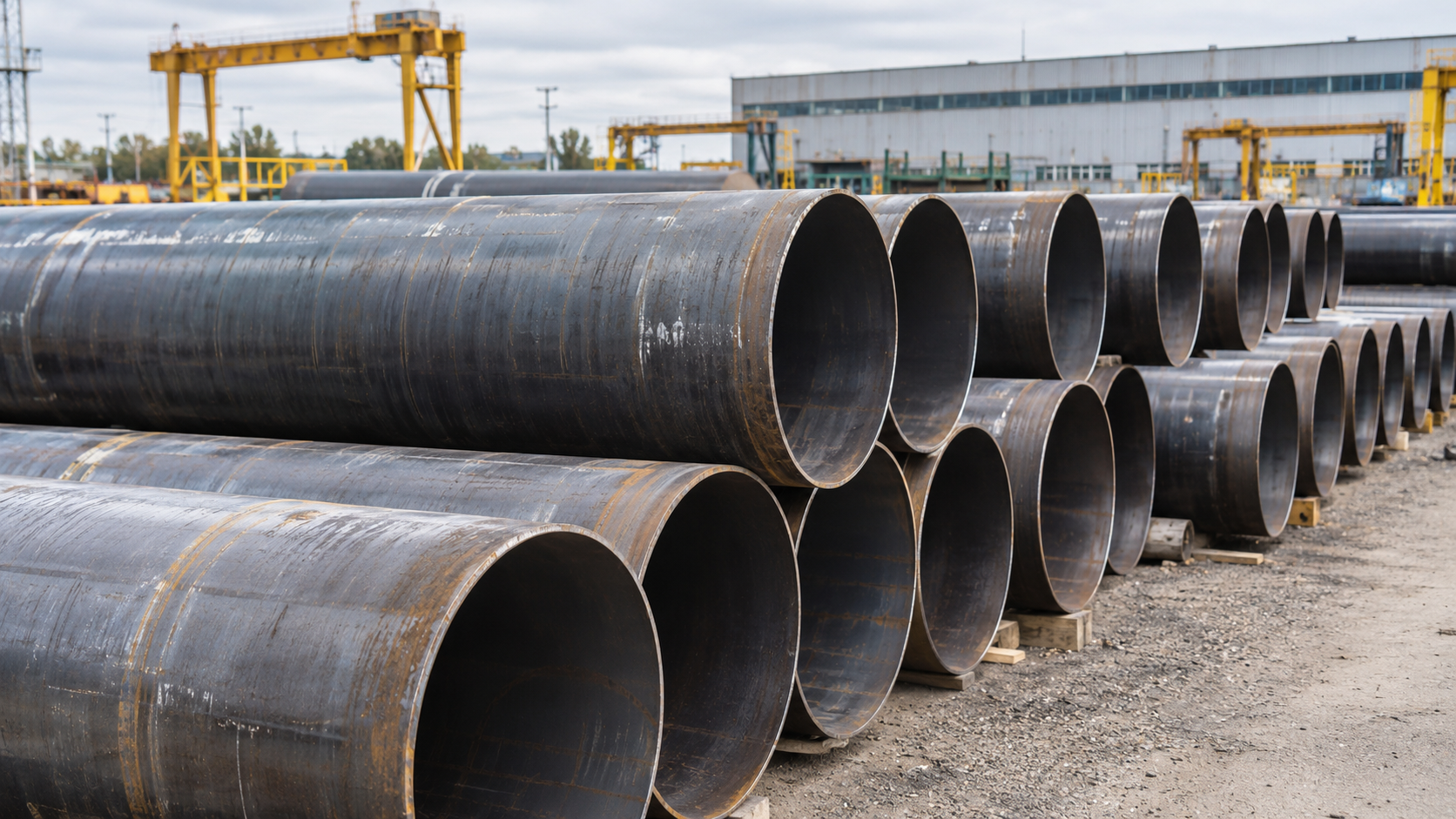
Image: The hero is a conceptual AI-generated illustration and does not depict actual Argentina LNG pipes or a confirmed manufacturing source.
Primary and Secondary Sources
- YPF — Argentina LNG Project: Integrated Export System (2026): Operator project description and infographic: the approximately 527-km dedicated 48-inch gas and 24-inch liquids pipelines, FLNG configuration and business model.
- Eni — Argentina LNG Applies for RIGI, 14 August 2026: Primary evidence for the RIGI application, partner structure, 12-MTPA capacity and intended year-end FID. Application is not approval.
- Eni — Argentina LNG Development and Investment Status, 2 October 2026: Eni reiterates YPF, Eni and XRG partnership, two planned 6-MTPA FLNG units and expected investment decision before year-end.
- Bonatti — EPC Award for Argentina LNG Pipelines, 30 July 2026: Contractor confirmation of the Pumpco–Bonatti joint venture with Contreras Hermanos and construction scope for the 48-inch gas and parallel liquids lines.
- Government of Río Negro — Public Hearing for Argentina LNG, 16 November 2026: Official hearing notice and environmental components: gas pipeline, FLNG infrastructure, liquids pipeline and onshore industrial complex. The provincial summary cites approximately 525 km.
- Government of Río Negro — YPF Supplier Development Plan, 15 October 2026: Provincial announcement of a supplier-development initiative based on surveying 490 firms; it is not a list of awarded or approved line-pipe suppliers.
- Eni — Third Quarter 2026 Results, 23 October 2026: Company disclosure of Argentina LNG as a project targeting an investment decision around the end of 2026.
- La Nación — YPF Prepares Argentina LNG Pipe Tender, 8 November 2026: Original reporting on the estimated US$2bn, 500,000 tonnes, proposed reverse auction, prospective manufacturers and reported 30 November FID target.
- Diario Río Negro — Argentina LNG Pipe Purchase, updated 11 November 2026: Regional news follow-up reporting on procurement, supply chain and the planned project decision.
- Infobae — YPF Postpones Pipe Tender, 19 October 2026: Independent report documenting earlier tender schedule changes following technical qualification work.
- EconoJournal — Pumpco, Bonatti and Export-Credit Finance, October 2026: Industry reporting on the EPC contract, prospective export-credit finance and distinction between project award and final sanction.
Frequently Asked Questions
What is being purchased for Argentina LNG?
The reported procurement covers approximately 500,000 tonnes of steel line pipe with an indicative value near US$2 billion for the proposed export pipeline system. These are reported tender estimates, not verified final contract prices or shipment volumes.
What pipelines link Vaca Muerta to Río Negro?
YPF's project overview describes an approximately 527-km dedicated export corridor with a 48-inch rich-gas pipeline and a 24-inch line for associated liquids and condensates between the Vaca Muerta region and Sierra Grande.
Has the pipe tender been awarded?
YPF’s chief executive announced Tenaris for the 24-inch liquids line. Trade reporting identified Grupo Cuñado and Corinth Pipeworks for the 48-inch gas line. Signed prices and delivery terms were not verified.
Who will supply the pipes?
Tenaris was announced for the 24-inch liquids line, with production planned at SIAT in Valentín Alsina. Grupo Cuñado and Corinth Pipeworks were reported for the 48-inch gas line.
Who is building the pipeline system?
Bonatti confirmed an EPC award to a venture involving Pumpco and Bonatti, with Contreras Hermanos participating. The construction-contract award is a different decision from the supply of steel line pipe and does not alone prove the LNG project's final sanction.
When is the final investment decision due?
YPF’s chief executive gave 30 November 2026 as the target. As of 22 November, a signed decision was still pending in the sources reviewed.
Has Argentina LNG received RIGI approval?
The government announced the project’s admission to RIGI on 20 November 2026. Project sanction, financing and environmental permits are separate milestones.
What should foreign suppliers verify first?
Identify the exact technical package, purchasing entity, EPC and procurement interfaces, local certification and delivery requirements, real tender timing, relevant environmental permits and financing conditions before treating an announced procurement value as addressable business.
Research a Defined LNG or Industrial Procurement Question
Map a line-pipe market, project contractor, tender stage, supplier qualification or Argentine gas-export opportunity using documented evidence and targeted commercial analysis.
Discuss your research question