
Paraguay · Auto Parts · Maquila · Alto Paraná · Brazil · Automotive Supply Chains
Paraguay’s Auto-Parts Maquila Corridor
Paraguay has become a production base for automotive wire harnesses and electrical components connected to Brazilian vehicle factories. The corridor combines maquila incentives, labor-intensive assembly, cross-border logistics and product-specific trade rules.
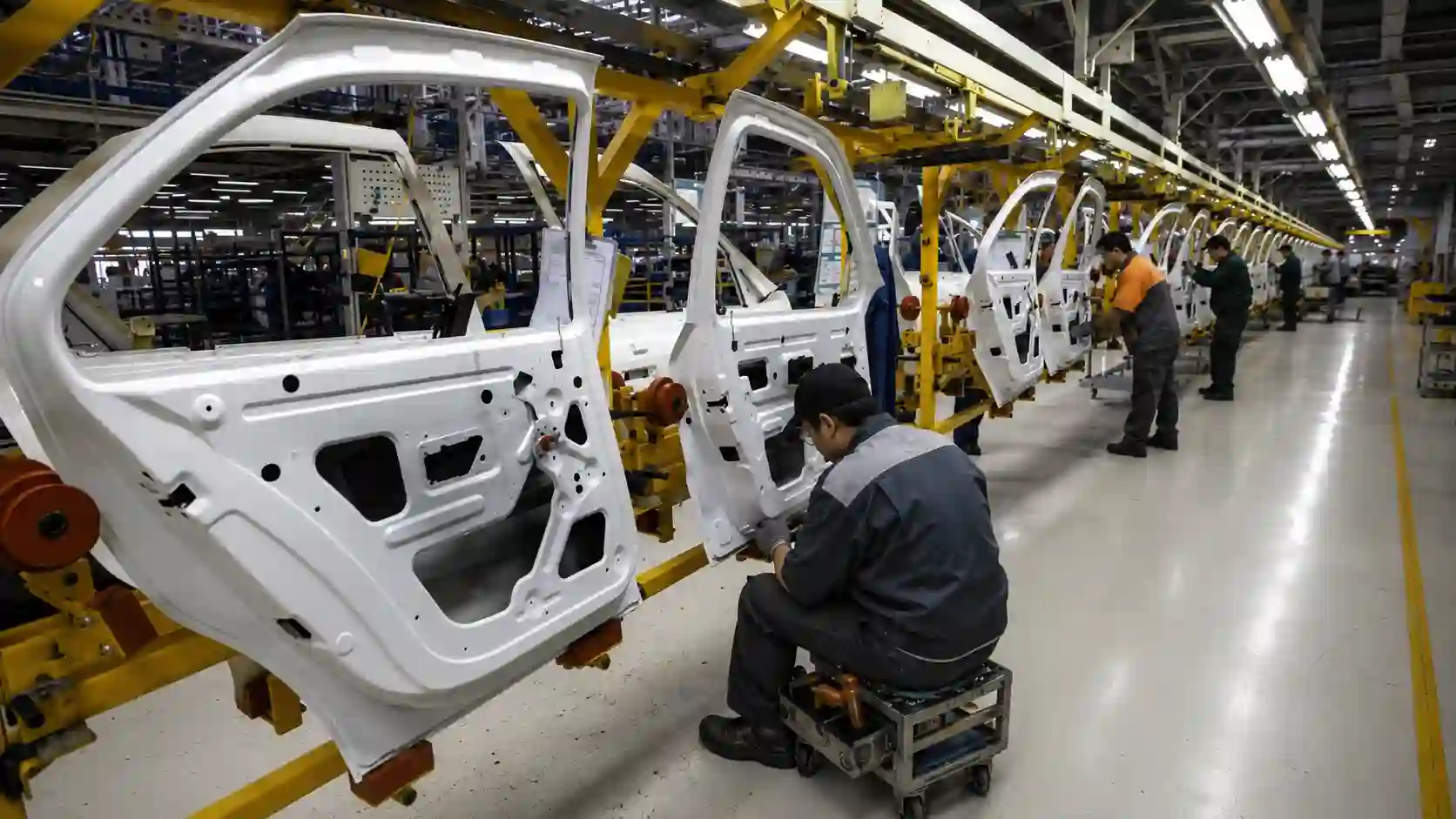
Paraguay has built a specialized auto-parts production corridor rather than a complete national automotive industry.
Wire harnesses and electrical components are manufactured in Paraguay under export-oriented production systems and delivered into larger regional automotive chains. Brazil provides the main vehicle market, industrial customer base and supplier ecosystem.
During the first half of 2026, auto parts accounted for 32% of Paraguay’s maquila exports. Brazil absorbed 62% of total maquila exports, while the MIC reported 7,865 jobs in the auto-parts segment at the end of the period.
The opportunity is real but concentrated. Paraguay benefits from production costs, workforce availability, hydropower, maquila rules and proximity to Brazil. The model remains dependent on Brazilian vehicle production, regional trade rules and labor-intensive component manufacturing.
This corridor is one operating layer within the wider Paraguay maquila and Brazil-linked manufacturing system.
Auto parts were Paraguay’s largest individual maquila export category during the first half of 2026.
The figure shows that automotive components are no longer a minor industrial experiment. They have become one of the main operating systems inside Paraguay’s export-oriented manufacturing sector.
The same numbers reveal the corridor’s central vulnerability. Brazil remains the dominant destination for maquila production, linking Paraguayan factory utilization to Brazilian industrial demand.
Paraguay Hosts a Production Stage Inside a Larger Automotive System
Paraguay’s auto-parts model does not depend on building a complete domestic vehicle industry. The country participates by hosting selected stages of automotive component production.
Vehicle manufacturers and large suppliers retain engineering systems, customer relationships, product platforms and final assembly operations elsewhere. Paraguayan factories perform production processes that can be separated geographically while remaining tightly controlled through specifications, testing and delivery schedules.
Wire harnesses fit this model particularly well. Their production combines large numbers of individual cables, connectors, protective materials and vehicle-specific assembly steps. The work is labor-intensive but must follow strict technical documentation and quality systems.
Paraguay is not replacing Brazil’s automotive industry. It is extending that industry across the border through selected production stages.
The corridor therefore depends on integration rather than autonomy. Its commercial value comes from operating inside Brazilian and regional supplier systems.
Why Wire Harnesses Dominate the Corridor
Automotive wire harnesses distribute electrical power and data through a vehicle. Each harness combines wires, terminals, connectors, protective sleeves, clips and vehicle-specific routing.
The product appears simple from outside, but production requires a large number of manual steps. Wires must be cut, stripped, crimped, grouped, routed, taped, tested and documented according to precise specifications.
This creates a specific location logic. Labor costs matter, but low wages alone are insufficient. Vehicle manufacturers and first-tier suppliers require consistent quality, traceability, testing, delivery reliability and the ability to manage frequent model changes.
Many wire-harness processes remain difficult to automate fully and require trained manual assembly.
Harnesses are designed around individual platforms, models, engine configurations and equipment packages.
Incorrect routing or electrical connections can create production stops, failures and vehicle-safety risks.
Paraguay’s role is based on a combination of workforce cost, trainability, quality systems and physical proximity to larger vehicle-production markets.
“Wire-harness production shows the strength and the limit of Paraguay’s factory model: large employment and export value, but engineering and final demand remain concentrated abroad.”
The Company Map Is Larger Than One Yazaki Case
Yazaki is the most useful company case for understanding the corridor, but Paraguay’s automotive component sector includes several international wire-harness and electrical-system manufacturers.
Historical reporting identifies THN as an early entrant in 2012, followed by Yazaki in 2013, Sumidenso in 2014 and Leoni in 2015. Fujikura was also established in Paraguay through a free-trade-zone structure.
Approved maquila-program lists and industrial reporting also include Kromberg & Schubert and other automotive suppliers. The sector has therefore developed into a multi-company production base rather than a single isolated factory.
In October 2025, CNIME representatives reported ten auto-parts companies operating under the maquila regime. Wire harnesses and electrical cabling still led the sector, but the product base also included leather seats, valve covers, radiator caps and articulated impact-absorption systems.
| Company | Paraguay role | Production model | Analytical status |
|---|---|---|---|
| THN Paraguay | Early automotive wire-harness producer in Paraguay. | Maquila-linked export production. | Historical corridor formation. |
| Yazaki Paraguay | Automotive wire-harness production since the group established its Paraguayan operation in 2013. | Export-oriented automotive component production. | Central Econosur company case. |
| Sumidenso Paraguay | Wire-harness manufacturing connected to regional automotive supply chains. | Maquila-linked production. | Established sector participant. |
| Leoni Paraguay | Automotive wiring and electrical-system manufacturing. | Maquila-linked production. | Established sector participant. |
| Kromberg & Schubert | Wire-harness operation with investment, employment and production figures reported through a CNIME verification visit. | Maquila export production serving mainly Brazil. | Strong official operating evidence. |
| Fujikura Automotive | Automotive component production in Ciudad del Este. | Free-trade-zone structure. | Separate customs and trade model. |
| Motherson / PKC Group | New automotive electrical-wiring factory announced in 2025. | Planned maquila investment. | Announced project, not established output. |
Kromberg & Schubert provides the clearest operating numbers
According to a CNIME verification and technical-assistance visit reported by the MIC, Kromberg & Schubert has operated in Paraguay since 2019 and had invested more than US$21 million by January 2024.
The same official report described a workforce of 800 employees, monthly production of approximately 8,160 complete wire harnesses and approximately 576,000 partial harnesses. Production was described as directed mainly toward Brazil.
These are CNIME- and company-reported operating figures rather than independently audited production statistics. They nevertheless provide concrete evidence of the corridor’s employment and manufacturing scale.
Motherson is a concrete wire-harness project, not yet operating proof
Motherson announced a US$15 million investment through its PKC Group subsidiary in October 2025. The project is intended to establish a new factory for automotive electrical wiring under the maquila regime.
The announcement described the creation of more than 2,000 direct jobs over three years. The project fits the existing corridor model precisely, but the announced investment and employment targets should not be presented as completed production or current employment.
Alto Paraná Is the Geographic Core
Alto Paraná concentrates much of Paraguay’s auto-parts and maquila activity because it sits directly next to Brazil.
Ciudad del Este, Hernandarias and nearby industrial locations provide access to the Friendship Bridge, Brazilian highways, regional logistics companies, industrial parks and a workforce shaped by decades of cross-border activity.
Industrial representatives reported in late 2025 that approximately 47% of Paraguay’s maquila companies were located in Alto Paraná. The reason is structural: the region shortens the connection between Paraguayan factories and Brazilian industrial customers.
Plants can serve Brazilian automotive customers without being located deep inside Paraguay.
Delays, customs procedures, road congestion and policy changes can affect delivery reliability.
The corridor should therefore be read as a cross-border industrial location. The factory is Paraguayan, but its demand, logistics and technical operating system may remain primarily Brazilian or global.
The New Maquila Law Defines the Production Framework
Paraguay replaced its previous maquila framework with Law 7547 in 2025. The law regulates production and services carried out in Paraguay on behalf of a foreign contracting company.
Approved operations can temporarily import materials, parts, machinery and equipment for use in export-oriented production. The regime applies a single maquila tax of 1% to the applicable tax base defined by the law.
The framework supports foreign-controlled production without requiring the Paraguayan factory to own the final brand or destination market.
Law 7547 formed part of a wider industrial package published in September 2025. Law 7548 covers investment incentives, while Law 7546 concerns electrical, electronic, electromechanical and digital equipment. Law 7546 should not be interpreted as a new general vehicle-assembly law.
Inputs and equipment can enter Paraguay for approved export-oriented production processes.
Production is carried out in Paraguay for a contracting company located outside the country.
The regime applies a single maquila tax under the basis established by the law.
The tax framework makes the production location attractive. It does not determine whether a product can enter Brazil under a preferential automotive trade arrangement. That question is governed by the applicable product and origin rules.
ACE 74 Creates the Automotive Trade Channel
The Automotive Complementation Agreement between Paraguay and Brazil, known as ACE 74, provides the bilateral framework for trade in vehicles and automotive parts.
The agreement covers hundreds of automotive tariff positions, defines product-specific origin requirements and includes special treatment for selected Paraguayan automotive production.
The agreement is important because maquila status alone does not create automatic unrestricted access to Brazil. A product must fit the relevant tariff classification, quota, regional-content requirement and customs procedure.
Maquila is the production framework inside Paraguay. ACE 74 is part of the trade-access framework for qualifying automotive products entering Brazil.
A company may operate under maquila rules and still need to satisfy separate origin, quota and product requirements before receiving automotive trade preferences.
| Layer | What it regulates | Why it matters |
|---|---|---|
| Law 7547 | Maquila production, temporary imports, tax treatment and operating obligations inside Paraguay. | Determines how the Paraguayan production operation is structured. |
| ACE 74 | Bilateral automotive trade between Paraguay and Brazil. | Determines which automotive products can receive agreed trade treatment. |
| Origin rules | Regional content and permitted use of non-originating inputs. | Influences sourcing, product design and eligibility for preferences. |
| Quotas | Quantitative limits for products receiving specific transitional treatment. | Prevents the arrangement from being treated as unlimited automatic access. |
| Customs execution | Documentation, product classification, border control and verification. | Determines whether the theoretical preference works in practice. |
The Corridor Includes Two Different Production Regimes
Paraguay’s auto-parts sector should not be described as one uniform maquila system.
Yazaki, Kromberg & Schubert, THN, Sumidenso and Leoni are connected to maquila-based automotive production. Fujikura represents a different case because its operation has been associated with the Ciudad del Este free-trade-zone structure.
Paraguay’s Ministry of Industry and Commerce states that the relevant ACE 74 automotive treatment does not apply to products originating from free-trade zones in the same way as it applies to qualifying maquila auto parts.
| Production model | Examples | Customs structure | Brazil access question |
|---|---|---|---|
| Maquila production | Yazaki, THN, Sumidenso, Leoni and Kromberg & Schubert. | Export-oriented production under the Paraguayan maquila regime. | Product must meet the applicable ACE 74 conditions, origin rules and quotas. |
| Free-trade-zone production | Fujikura Automotive Paraguay. | Production inside a separate free-zone customs framework. | Products should not be assumed to use the same ACE 74 treatment as maquila goods. |
This difference matters for investors, suppliers and market analysts. Two factories may produce similar components in the same region while operating through different customs, origin and market-access structures.
Brazil Is Both the Market and the Concentration Risk
Brazil is the economic centre of Paraguay’s auto-parts corridor. Brazilian vehicle factories and supplier networks provide the scale that Paraguay’s domestic market cannot offer.
The dependence is visible in the wider maquila figures. Brazil absorbed 62% of Paraguayan maquila exports during the first half of 2026. Argentina accounted for another 15%.
This creates a powerful industrial opportunity. Paraguay can participate in a much larger automotive economy without duplicating Brazil’s entire production system.
It also creates concentration risk. Changes in Brazilian vehicle output, model allocation, supplier strategy, exchange rates, import policy or regional-content rules can directly affect Paraguayan factories.
Paraguay’s factories are connected to an existing automotive production system rather than dependent on domestic vehicle demand.
The announced Motherson and PKC Group project extends the existing specialization in automotive electrical wiring.
Factory utilization in Paraguay depends on vehicle output, model allocation and customer demand in Brazil.
A larger Brazilian shift toward imported vehicle kits could change demand for regionally manufactured components.
Brazilian industry groups have raised concerns about the treatment of imported CKD and SKD vehicle kits linked to new Chinese-brand assembly projects.
The effect on Paraguayan suppliers is not yet established. The issue matters because a production system based on imported kits may use a different local and regional component structure than traditional Brazilian vehicle manufacturing.
The Next Step Is Industrial Capability, Not More Assembly Alone
Paraguay has proved that it can attract labor-intensive automotive component production. The next question is whether that production creates deeper technical capacity.
Wire-harness factories generate employment, production discipline, quality-control experience and export capacity. They do not automatically transfer engineering authority, tooling, product development or procurement power to Paraguay.
The OECD identified this issue in its analysis of Paraguayan industrial development. Labor-intensive wire-harness production can attract investment, but it is also relatively mobile if cost conditions or customer strategies change.
A more durable automotive sector would require additional capabilities: mould and tooling production, engineering services, maintenance, testing, materials processing, local suppliers and technical management.
Paraguay already supports large-scale manual production, quality systems and export-oriented factory operations.
Vehicle-specific design, product development and major purchasing decisions remain concentrated outside Paraguay.
Moulds, fixtures, testing, maintenance and locally supplied industrial inputs would deepen the production base.
Centro TASK is moving toward operation, but it is not yet proof of mature automotive engineering capacity
Paraguay and South Korea have developed the Centro TASK project in Hernandarias to support automotive technology, mould and tooling capability, engineer training and electromobility.
In September 2025, the MIC reported that the centre’s infrastructure had reached approximately 80% completion and that industrial machinery was expected for installation during October and November.
In January 2026, PTI described the industrial building as being in its final construction phase, with a large share of the machinery already installed and the remaining equipment still to be received.
An April 2026 PTI update still referred to works in execution and the installation of high-technology equipment. The centre was already supporting technical training, but the available evidence does not yet establish mature automotive engineering and tooling capacity operating at industrial scale.
The Corridor Creates a Wider Supplier Market
Auto-parts factories create demand beyond direct automotive production. Plants require machinery, cable-processing systems, crimping equipment, testing systems, industrial electrical installations, packaging, maintenance and spare parts.
The quality system creates another service layer. Suppliers may need to provide traceability software, inspection tools, calibration, laboratory services, documentation, workforce training and audit support.
Logistics providers also matter. Wire harnesses must move according to vehicle-production schedules, making customs reliability, road transport, inventory control and cross-border coordination part of the industrial system.
Cutting, stripping, crimping, taping, testing, workstations, fixtures and production-line equipment.
Traceability, testing, calibration, documentation, audit support and production-management systems.
Transport, customs, warehouses, spare parts, maintenance and rapid technical response.
International suppliers must identify where purchasing decisions are made. A factory may operate in Paraguay while equipment standards and procurement approval remain with regional or global management.
Supplier Opportunities, Procurement & Market-Entry Questions
Which industrial capability gaps create the strongest supplier opportunities in Paraguay’s auto-parts corridor?
The clearest opportunity areas sit around the factories rather than in vehicle assembly itself. Existing plants require cable-processing and crimping equipment, testing systems, workstations, fixtures, industrial electrical installations, maintenance, spare parts, packaging, traceability, calibration and logistics support.
Paraguay’s larger capability gap points to higher-value fields as well: mould and tooling production, engineering services, testing, materials processing, technical management and locally available industrial inputs. These are structural demand fields identified by the operating model. They should not be read as evidence that a particular plant has an open tender or purchasing package today.
Where are procurement and supplier-approval decisions made for Paraguay-based automotive plants?
Not necessarily in Paraguay. The local factory can control day-to-day operations while equipment standards, engineering authority, approved-vendor decisions or purchasing approval remain with regional or global management. The article’s own capability analysis shows that major product-development and purchasing functions remain concentrated outside Paraguay.
For a supplier, the practical task is therefore to identify the real decision point for each category: the Paraguayan plant, a regional organization, global purchasing, engineering management or another corporate approval function. A local company name alone does not reveal the procurement route.
What should international automotive suppliers verify before entering Paraguay’s auto-parts market?
Suppliers should first verify which production regime the target plant uses, whether ACE 74 applies to the product, which origin or quota conditions matter and which Brazilian vehicle factories or first-tier suppliers ultimately receive the output. Maquila and free-trade-zone operations should not be treated as commercially identical.
They should then verify procurement ownership, supplier-approval procedures, incumbent suppliers, local or regional maintenance requirements, spare-parts expectations, border-logistics exposure and the plant’s dependence on specific Brazilian vehicle programs. Changes in Brazilian CKD and SKD strategies can also alter the regional component structure.
Public sources can show export volumes, named manufacturers, legal regimes, ACE 74 rules, announced investments and selected operating figures. They do not reliably show which categories are being sourced now, who owns the budget, which suppliers are already approved, how incumbent vendors are positioned, when qualification windows open, what technical specifications control the purchase or how much local service capacity a buyer expects.
Those gaps require company-level research, interviews, supplier and distributor checks, procurement mapping and direct commercial verification.
Paraguay’s auto-parts sector has reached meaningful export and employment scale. Its operating core remains concentrated in wire harnesses and other labor-intensive components connected to Brazil.
Yazaki is the most visible company name, but the corridor includes THN, Sumidenso, Leoni, Kromberg & Schubert, Fujikura and new investors. Trade-regime differences between maquila and free-zone operations are rarely explained clearly.
The corridor becomes strategically stronger when Paraguay adds tooling, engineering, local suppliers and technical services. Export growth alone does not show whether those higher-value functions are moving into the country.
The Main Risks Are Concentration, Mobility and Market Access
| Risk | Corridor exposure | Commercial consequence |
|---|---|---|
| Brazil dependence | Brazilian vehicle factories and suppliers provide most of the relevant regional demand. | Production changes in Brazil can directly affect Paraguayan factory utilization. |
| Product concentration | Wire harnesses and electrical components dominate the established company base. | Limited diversification increases exposure to specific technologies and vehicle platforms. |
| Origin and quota rules | Automotive preferences depend on ACE 74 conditions rather than maquila status alone. | Incorrect sourcing or product classification can reduce the trade advantage. |
| Mobile production | Labor-intensive assembly can be relocated if cost, customer or policy conditions change. | Long-term stability depends on deeper capabilities and customer integration. |
| Border logistics | Factories depend on predictable road, bridge, customs and inventory systems. | Delays can disrupt vehicle-production schedules and supplier performance. |
| Engineering gap | Product development and major purchasing functions remain mainly outside Paraguay. | Export growth may not create equivalent growth in local technical value. |
Paraguay Auto-Parts and Automotive Supplier Market Research
Econosur combines public-source market analysis with primary research and targeted commercial verification for companies evaluating Paraguay’s automotive-component market and Brazil-linked supply chains.
Targeted conversations with market participants to test demand, operating conditions, sourcing structures and commercial assumptions.
Profiles of manufacturers, international suppliers, competing solutions, corporate structures and relevant decision centres.
Verification of incumbent suppliers, local distributors, technical partners, service capacity and realistic routes into the market.
Identification of purchasing responsibility, regional decision structures, target plants, buyer roles and category ownership.
Research into supplier-approval routes, technical requirements, documentation, maintenance expectations and vendor-access conditions.
Checks on announced factories, capacity additions, tooling initiatives and the difference between planned investment and operating reality.
Company, supplier and market intelligence around relevant automotive, manufacturing and industrial events in Mercosur.
On-the-ground verification in Paraguay, Argentina and the Southern Cone where feasible, focused on companies, industrial locations and market conditions.
Combining company, procurement, trade-regime, logistics and competitor findings into a practical view of commercial accessibility.
Mapping how Paraguayan plants connect to Brazilian customers, vehicle programs, first-tier suppliers and regional industrial demand.
- Which Brazilian vehicle factories and first-tier suppliers receive components produced in Paraguay?
- Which plants operate under maquila and which use a free-trade-zone structure?
- Where are engineering, purchasing and supplier-approval decisions made?
- Which incumbent equipment and service suppliers are already positioned?
- Which categories require local maintenance, stock or rapid technical response?
- Which products qualify under ACE 74 and which origin or quota conditions apply?
- Which announced investments are operating, under construction or still at project stage?
- Where does structural supplier demand translate into a realistically addressable commercial opportunity?
The Econosur Reading
Paraguay’s auto-parts corridor is one of the country’s strongest examples of regional industrial integration.
The factories are located in Paraguay, but the economic system crosses the border. Brazilian vehicle production provides demand. Global suppliers provide standards and engineering. Paraguay provides labor, industrial operations, export incentives and geographic proximity.
The model has already generated significant exports and employment. The next development stage is more difficult: deeper engineering, local tooling, supplier development and greater control over industrial decisions.
Paraguay does not need to build an entire national vehicle industry to strengthen its position. It needs to capture more value around the component factories that already operate there.
“The corridor is real. Its long-term value depends on whether wire-harness assembly becomes a foundation for deeper industrial capability.”
This analysis uses official Paraguayan maquila data, national legislation, the Paraguay–Brazil automotive agreement, company information, industrial reporting and independent structural analysis. Figures refer to the periods stated by each source.
- Ministerio de Industria y Comercio — maquila exports, product categories, destinations and employment, first half of 2026
- ABC Color — independent reporting on first-half 2026 maquila exports and sector shares
- Biblioteca y Archivo Central del Congreso — Law 7547/2025 on the maquila regime
- Berke — overview of Paraguay’s 2025 industrial package: Laws 7546, 7547 and 7548
- Ministerio de Industria y Comercio — ACE 74 automotive agreement between Paraguay and Brazil
- Government of Brazil — ACE 74 product coverage, origin rules, quotas and automotive trade
- MIC and CNIME — Kromberg & Schubert investment, employment and reported production
- ABC Color — historical development of Paraguay’s international auto-parts manufacturers
- Paraguayan public-information register — approved maquila programs and automotive-sector companies
- Radio Nacional del Paraguay — Motherson and PKC Group wire-harness factory announcement
- La Nación — ten maquila auto-parts companies, employment and product diversification, October 2025
- OECD — Paraguay industrial development, automotive components and capability constraints
- Ministerio de Industria y Comercio — Centro TASK at 80% infrastructure completion, September 2025
- PTI Paraguay — Centro TASK machinery installation and final construction phase, January 2026
- PTI Paraguay — continuing works and high-technology equipment installation, April 2026
- Infobae — regional automotive pressure from Chinese CKD and SKD vehicle imports
From Automotive Export Data to Commercial Verification
Public sources show Paraguay’s automotive export scale, named manufacturers, production regimes, ACE 74 rules and selected investment projects. They do not reliably show current purchasing demand, approved vendors, incumbent supplier positions, procurement ownership or qualification timing.
Econosur can investigate those company-level questions through primary interviews, supplier and distributor checks, procurement research, project verification and targeted market research by Marcus A. Volz.
Explore custom market researchFrequently Asked Questions
Why has Paraguay attracted auto-parts manufacturers?
Paraguay combines an export-oriented maquila regime, labor availability, hydropower, operating-cost advantages and proximity to Brazil. This supports selected labor-intensive automotive production stages, particularly wire harnesses and electrical components.
How important are auto parts to Paraguay’s maquila exports?
Auto parts accounted for 32% of Paraguay’s maquila exports during the first half of 2026, making them the largest individual product category reported for the period.
Why is Brazil central to Paraguay’s auto-parts corridor?
Brazil provides the larger automotive market, vehicle factories, supplier networks and regional demand. Paraguay hosts selected production stages that remain commercially and operationally connected to Brazilian automotive systems.
Does the maquila regime automatically guarantee duty-free access to Brazil?
No. Access depends on the applicable automotive agreement, product classification, quotas, origin rules, regional-content requirements and customs procedures.
Why are wire harnesses important in Paraguay?
Wire-harness production is labor-intensive, quality-sensitive and integrated into vehicle-specific production systems. These characteristics allow selected assembly stages to be located in Paraguay while engineering, vehicle production and final demand remain abroad.
What is the main risk in Paraguay’s auto-parts model?
The main structural risk is dependence on Brazilian vehicle production and on relatively mobile, labor-intensive manufacturing. Long-term industrial depth depends on engineering skills, tooling, local suppliers, logistics reliability and regional demand.
Which industrial capability gaps create the strongest supplier opportunities in Paraguay’s auto-parts corridor?
The clearest structural opportunity areas are factory equipment, cable-processing and crimping systems, testing and traceability, calibration, maintenance, tooling, engineering services, industrial inputs, spare parts and logistics support. These are demand fields identified by the operating model, not evidence that specific procurement packages are currently open.
Where are procurement and supplier-approval decisions made for Paraguay-based automotive plants?
They are not necessarily made in Paraguay. A plant may operate locally while equipment standards, engineering authority, approved-vendor decisions or purchasing approval remain with regional or global management. Supplier research therefore has to identify the real procurement owner for each plant and category.
What should international automotive suppliers verify before entering Paraguay’s auto-parts market?
Suppliers should verify the target plant’s production regime, ACE 74 and origin requirements, Brazilian customer links, procurement and supplier-approval location, incumbent suppliers, local service expectations, border-logistics exposure and sensitivity to changes in Brazilian vehicle programs and CKD or SKD strategies.