
Brazil · Offshore · Decommissioning · Supply Chain · ROG.e 2026
Brazil’s Offshore Decommissioning Market: Where the Next Supplier Cycle Is Starting
Brazil is entering a larger offshore retirement cycle. The spending pipeline and the first major contracts are already visible. The market question is no longer whether decommissioning will create demand, but which suppliers, ports, shipyards and recyclers can execute it at scale.
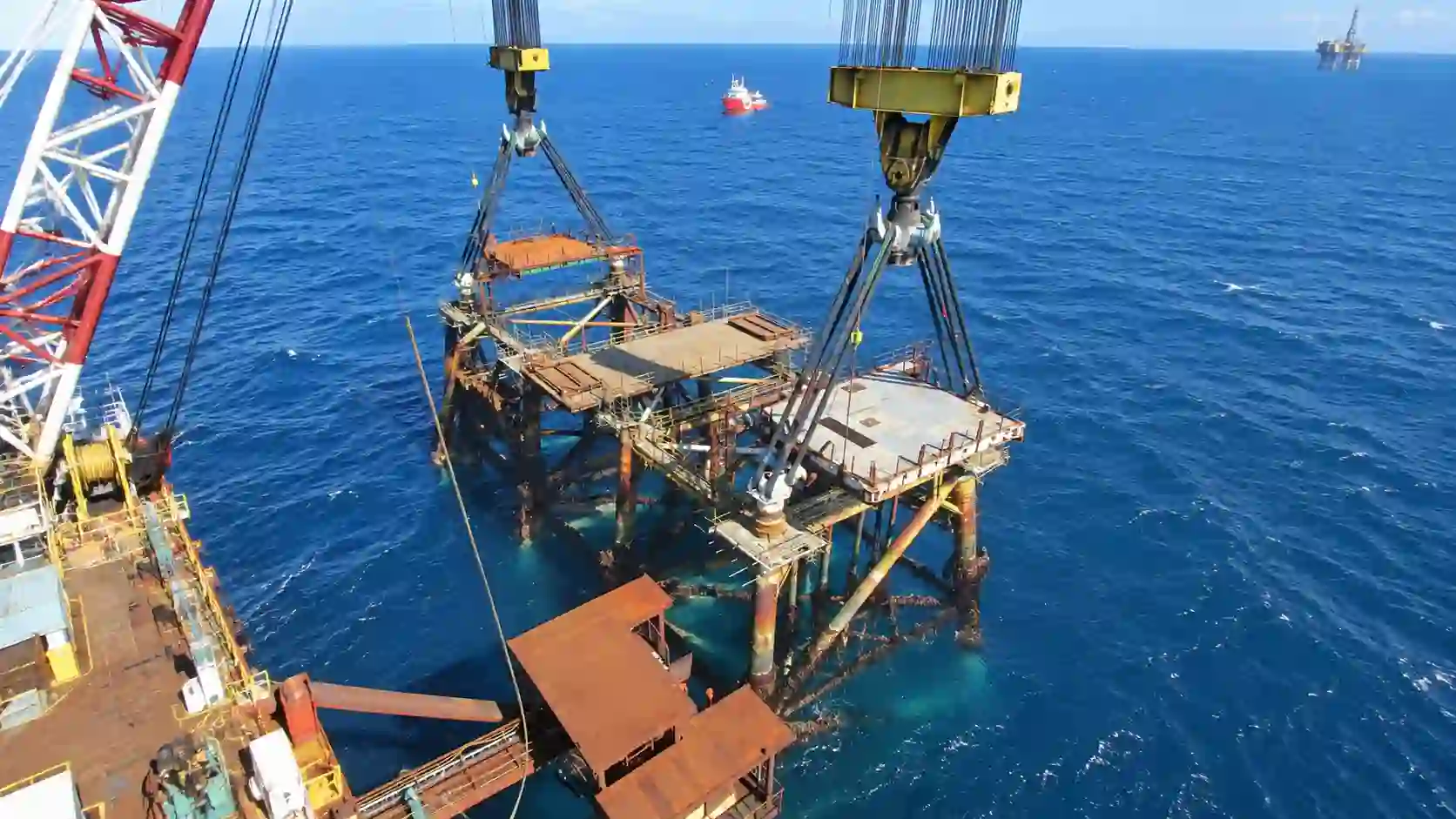
Brazil does not have to create an offshore decommissioning market from scratch. The spending, retiring assets and awarded contracts are already visible.
ANP projects approximately R$70 billion — around US$13 billion — of upstream decommissioning investment between 2025 and 2029, based on operators’ investment plans. Petrobras separately says sustainable equipment disposal and well abandonment will require US$9.7 billion during 2026–2030.
The supplier market extends far beyond dismantling a platform. It includes permanent well abandonment, subsea engineering, ROV and vessel work, pipeline and equipment recovery, cleaning, waste handling, ports, shipyards, recycling, environmental services and project management.
The open question is therefore not whether Brazil has a decommissioning pipeline. It is how much of that value can be captured and executed by a sufficiently mature supplier, port, shipyard and recycling system.
For wider context, see Econosur’s ROG.e 2026 offshore supply-chain analysis, Equatorial Margin supplier analysis, Oil & Gas sector page and Petrobras company profile.
Core thesis:
Brazil’s next offshore supplier cycle is not only about building new production systems. A parallel market is forming around the retirement of mature assets. The demand is already visible; the constraint is whether engineering, marine services, ports, dismantling capacity, recycling and regulation can mature together.
Why ROG.e 2026 Puts Decommissioning on the Supplier Agenda
ROG.e 2026 opens at Riocentro in Rio de Janeiro on September 21 and runs through September 24. Decommissioning appears twice on the first-day official program. At 14:30–15:30, the technical session “Integrated Strategies and Offshore Decommissioning Project Management” includes Karen Alves de Souza, head of ANP’s Decommissioning Economic Planning Unit. At 17:10–18:00, the Supply Chain Forum hosts “Decommissioning in Brazil: Pathways to Overcoming Challenges”.
The afternoon program therefore connects two different layers of the market. The technical session focuses on integrated project management and regulatory planning. The later Supply Chain Forum brings together Petrobras, Gerdau, Trident Energy and SBM Offshore, representing the operator, materials/recycling, independent-operator/subsea and floating-production sides of the chain.
This makes decommissioning relevant to ROG.e for a reason that goes beyond conference programming. It is becoming a procurement issue. Petrobras also listed a dedicated live session with the decommissioning supplier market in March 2026, another indication that operators are increasingly communicating demand directly to contractors and suppliers.
Analytical premise:
The commercial story begins when end-of-life obligations become procurement packages.
The Market Is Already Large Enough to Be Treated as Its Own Supplier Cycle
The strongest market-size signal comes from the regulator. ANP estimates approximately R$70 billion, around US$13 billion, of decommissioning investment between 2025 and 2029 on the basis of operators’ upstream investment plans.
ANP defines the scope broadly: permanent well abandonment, removal of subsea pipelines and equipment, platform decommissioning and dismantling, site clearance and environmental restoration. In other words, the addressable market is distributed across multiple technical and industrial packages rather than concentrated in one dismantling contract.
Petrobras adds a second scale signal. Its 2026–2030 Business Plan allocates US$9.7 billion to sustainable asset disposal and well abandonment over five years. The company also says that mature assets are first evaluated for life extension or revitalization; decommissioning follows when continued production is no longer the preferred option.
Timing may also accelerate. In March 2026, Petrobras decommissioning manager Carlos Castilho said the company intended to bring forward work on the FPSO Cidade de Santos from 2027 into 2026 and was already consulting the market about receiving capacity. That is a useful signal that supplier readiness can influence where and when end-of-life packages are executed.
This qualification matters. Decommissioning demand is structurally visible, but project timing can move. Field-life extension, production economics, regulatory approvals and execution capacity can change when individual packages reach the market.
The Supply Chain Is Wider Than Platform Dismantling
Petrobras describes an offshore decommissioning project as three large technical systems: the platform, the wells and the subsea system. Each creates a different procurement logic, asset base and supplier universe.
| Stage | Typical demand | Supplier opportunity |
|---|---|---|
| Well abandonment | Permanent plugging, integrity work, intervention planning and verification. | Well services, cementing, intervention tools, engineering, vessels and specialist contractors. |
| Subsea removal | Mapping, disconnection, cutting, retrieval of flexible lines, umbilicals and subsea equipment. | ROVs, RSVs, offshore construction vessels, subsea engineering, lifting, cutting and recovery systems. |
| Platform preparation | Cleaning, hydrocarbon removal, hazardous-material inventories and preparation for tow or dismantling. | Industrial cleaning, waste treatment, inspection, environmental services and marine logistics. |
| Port & yard interface | Temporary berthing, hull cleaning, utilities, heavy handling and transfer into dismantling facilities. | Ports, terminals, tug services, heavy-lift providers and shipyards. |
| Dismantling & recycling | Controlled dismantling, material separation, traceability and final destination. | Shipyards, steelmakers, recyclers, hazardous-waste specialists and circular-economy operators. |
The commercial implication is important. A company does not enter “the decommissioning market” in the abstract. It enters one or more technical packages inside a chain whose procurement lead may be an operator, an EPRD contractor, a marine-services company, a port, a shipyard or a recycler.
The Supplier Cycle Has Already Produced Large Contracts
The OceanPact–Trident Energy contract is one of the clearest examples. OceanPact disclosed a contract worth more than R$1 billion for decommissioning the subsea infrastructure associated with the remaining production systems of P-07, P-12 and P-15 in the Campos Basin.
The project uses the EPRD model — engineering, preparation, removal and disposal — and is scheduled to run for up to three years from the first quarter of 2026. The scope includes detailed mapping, ROV-supported removal of flexible lines and subsea equipment, cutting and disconnection, onshore dismantling and environmentally appropriate final disposal with priority given to recycling.
This contract matters because it shows that the opportunity is not confined to Petrobras. Independent operators create their own decommissioning demand, and the service packages can be large enough to support dedicated vessel capacity, engineering teams and multi-year execution programs.
International service companies are also positioning for the cycle. SLB opened a Decommissioning Center of Excellence in Rio de Janeiro in January 2026, combining engineering, digital planning and offshore execution for multi-year retirement programs.
Market reading:
The supplier cycle is already visible in three different signals: operator spending plans, awarded multi-year contracts and service companies building dedicated local capability. That is stronger evidence of market formation than a forecast alone.
P-32 Shows Why Execution Capacity Matters
The P-32 provides a useful test case because it links several parts of the chain. Petrobras sold the platform to Gerdau, which contracted Ecovix to dismantle it at the Rio Grande shipyard. The recovered steel was intended to return to Gerdau’s production system, while other materials would receive controlled final disposal.
On paper, this is the circular-economy model Brazil wants to scale: operator → transport → shipyard → dismantling → material recovery → steel recycling.
But the case also exposes the operational difficulty. Reuters reported in April 2025 that dismantling was running at least a year late after large volumes of oily water and diesel were found aboard the unit and disagreements emerged over responsibility and additional cleanup costs.
The lesson is not that Brazilian dismantling is unworkable. It is that the value chain has to manage asset condition, residual hydrocarbons, cleaning scope, environmental liability, commercial responsibility and yard scheduling before recovered steel becomes a saleable output.
Brazil Has Capabilities — But Not Yet a Fully Mature System
An April 2026 Exame assessment stated that Brazil still had no shipyard formally qualified to recycle large vessels and offshore platforms at scale. The same report, citing Wood Mackenzie, placed Brazil third in the global opportunity ranking, with 11 percent of projected volume and up to US$16 billion in operations through 2029. These are secondary-source market estimates, but they illustrate the gap between potential volume and certified downstream capacity.
A July 2026 Journal of Cleaner Production study assessed 10 shipyards, eight port facilities and 10 recycling companies in Brazil. Its central finding is relevant to the supplier thesis: isolated high-performing recyclers do not automatically create a mature recycling chain if ports and shipyards do not reach the same level of technical and organizational readiness.
The infrastructure response is beginning. In northern Rio de Janeiro state, BR Offshore is developing the Barra do Furado project, an offshore base and vessel-recycling complex with investment around R$800 million and partial operation targeted before completion of a roughly two-year construction program.
At Porto do Açu, Prumo is studying an expansion from temporary berthing and hull-cleaning into plate cutting and steel recycling. The south breakwater area was hosting Petrobras’ former P-37 and P-26 units in September 2026, while P-19 is expected in the fourth quarter of 2026 or first quarter of 2027. The port is evaluating the infrastructure required for plate cutting, has discussed the recycling chain with steel-sector players including Gerdau, and already has a partnership with Norwegian recycling specialist IKM. That moves the port discussion from simple lay-up toward a possible additional processing step in the domestic decommissioning chain.
This is where Brazil’s opportunity and bottleneck meet. Demand is arriving before every link of the downstream chain has the same level of capacity.
The Regulatory Layer Still Shapes Where the Value Is Captured
Decommissioning is a legal obligation, and operators must demonstrate that resources will be available when production assets reach the end of their life. On August 12, 2026, ANP held Public Hearing No. 09/2026 on the periodicity of decommissioning financial guarantees. The proposal would change the presentation cycle from annual to every three years, with ANP arguing that this could reduce operational effort without compromising the effectiveness of the instruments or the amount to be guaranteed.
As of September 20, this remains a regulatory proposal rather than a final rule. ANP’s consultation page was updated on September 4 with the consultation and hearing reports, but it still describes the measure as a draft resolution. No final replacement rule has been identified in the public record used for this update.
ANP also increased market visibility in August by adding specific decommissioning filters to its production-phase activity and investment dashboard. Users can now filter forecast activity and investment by basin, offshore/onshore environment and state.
The downstream recycling framework remains another moving part. The Hong Kong Convention for the Safe and Environmentally Sound Recycling of Ships entered into force internationally in June 2025. On September 2, 2026, the Chamber of Deputies’ Transport Committee postponed the vote on PDL 557/2026, covering Brazil’s accession to the convention, after a lack of quorum led members to defer eight agenda items.
The commercial implication is straightforward: the country can possess offshore assets, technical service companies and recyclable steel while still losing part of the value chain if tax, certification, environmental and recycling rules do not develop at the same pace as the retirement pipeline.
Brazil’s decommissioning market should be read as an industrial-capacity test, not only as an oil-and-gas end-of-life story.
The spending is already visible. The harder question is where each step is executed. Well abandonment and subsea removal may be performed by specialist offshore contractors; units then need ports, cleaning, dismantling and material processing; steel and other materials need a compliant final route.
The commercial value will therefore be distributed according to capability. Brazil captures more of the cycle when operators can source engineering, vessels, yards, recycling and environmental services locally under credible rules. Where one link is missing, part of the work, equipment or material value can move elsewhere.
This also means the market should not be screened by headline investment alone. The useful unit of analysis is the individual decommissioning package and the chain of suppliers required to execute it.
The latest Porto do Açu developments reinforce that point. When a port moves from receiving end-of-life units toward evaluating plate cutting and steel-recycling infrastructure, a logistics node can become an industrial processing node. That is precisely where additional value can remain in Brazil rather than leaving the domestic chain.
What This Means for Suppliers
For international suppliers, Brazil’s offshore decommissioning cycle is not a single tender market. Different packages have different buyers, qualification requirements, local-content economics, vessel needs, environmental responsibilities and partner structures.
A well-services company should map the plugging-and-abandonment pipeline. A subsea technology supplier needs to understand EPRD packages and the contractors bidding them. Waste and recycling companies need to follow the final-destination requirements of platforms, flexible lines and umbilicals. Ports and yards need to understand both the physical asset pipeline and the regulatory conditions for receiving and processing it.
The route to market therefore begins with four questions: which assets are approaching decommissioning, which package contains the supplier’s capability, who controls procurement for that package, and what local execution capacity is required?
The addressable market is smaller than the headline R$70 billion for any individual supplier — but much more concrete once the chain is broken into packages.
Econosur’s Custom Market Analysis can map operators, decommissioning projects, procurement structures, contractor ecosystems, local partners and supplier-entry conditions for Brazil and other South American markets.
For international B2B visibility, VolzMarketing’s Energy, Oil, Gas & Infrastructure service focuses on making an industrial supplier’s capabilities visible and understandable to relevant target accounts through search, content and international B2B visibility.
Need to map Brazil’s offshore decommissioning opportunity?
Econosur develops custom market analysis for companies that need to identify where decommissioning demand is forming, which operators and contractors control procurement, which local capabilities already exist and where supplier gaps remain.
The analysis can be used for market screening, supplier positioning, partner identification, competitor mapping and preparation before direct business development in Brazil.
Request custom analysisThe R$70 billion market figure is an ANP projection based on operators’ investment plans for 2025–2029, not a single committed procurement pool. Petrobras’ US$9.7 billion figure refers to sustainable asset disposal and well abandonment in its 2026–2030 Business Plan.
Company announcements are used to document specific contracts, facilities and strategies. They do not establish that every announced project will be executed on the original schedule. Secondary sources are used to test execution bottlenecks and industrial readiness against company and regulator claims.
ROG.e references reflect the official program available on September 20, 2026; event schedules can still change.
FAQ
What is offshore decommissioning?
Offshore decommissioning is the controlled closure of an oil or gas production system at the end of its productive life. It can include permanent well abandonment, subsea equipment and pipeline removal, platform cleaning and removal, dismantling, recycling, waste treatment and environmental restoration.
How large is Brazil’s offshore decommissioning market?
ANP projects approximately R$70 billion, around US$13 billion, of upstream decommissioning investment between 2025 and 2029 based on operators’ investment plans. Petrobras separately says sustainable equipment disposal and well abandonment will require US$9.7 billion during its 2026–2030 business-plan period.
Which suppliers can benefit from offshore decommissioning in Brazil?
Relevant segments include well plugging and abandonment, engineering, subsea intervention, ROV and vessel services, pipeline and equipment recovery, cleaning, hazardous-waste management, ports, shipyards, dismantling, steel and materials recycling, environmental monitoring and project management.
Why does the P-32 case matter?
P-32 demonstrates both the industrial opportunity and the execution risk. Petrobras sold the unit to Gerdau, which contracted Ecovix for dismantling and steel recycling, while Reuters later reported delays linked to residual liquids, responsibility and additional costs.
Why is ROG.e 2026 relevant to decommissioning?
ROG.e 2026 opens in Rio de Janeiro on September 21. The first day includes a 14:30–15:30 technical session on integrated offshore decommissioning strategies and project management with ANP participation, followed by a 17:10–18:00 Supply Chain Forum session with Petrobras, Gerdau, Trident Energy and SBM Offshore.
- ANP — Investment Opportunities in Brazil: approximately R$70 billion / US$13 billion projected for upstream decommissioning activities in 2025–2029.
- ANP — August 27, 2026 update adding dedicated decommissioning filters for forecast activities and investments by basin, environment and state.
- ANP — Offshore decommissioning framework and PDI process.
- ANP — Public Hearing No. 09/2026, held August 12, on a draft change from annual to triennial presentation of decommissioning financial guarantees.
- ANP — Consultation and Public Hearing No. 09/2026, updated September 4, 2026: consultation/hearing reports published; the measure remains described as a draft resolution.
- Petrobras — Business Plan 2026–2030: US$9.7 billion for sustainable asset disposal and well abandonment.
- Petrobras — Offshore Decommissioning: process, sustainability requirements, recycling strategy and supplier-chain potential.
- Petrobras — P-32 at Estaleiro Rio Grande: Gerdau acquisition, Ecovix dismantling and materials-recycling model.
- OceanPact — more than R$1 billion Trident Energy EPRD contract for P-07, P-12 and P-15 subsea infrastructure in the Campos Basin.
- SLB — January 2026 opening of a Decommissioning Center of Excellence in Rio de Janeiro.
- ROG.e 2026 — official program, including the September 21 Supply Chain Forum session on decommissioning in Brazil.
- Petrobras Supplier Channel — March 2026 live session with the decommissioning supplier market.
- Reuters — April 2025 reporting on delays and cleanup-responsibility disputes in the P-32 dismantling project.
- eixos / Estadão Conteúdo — March 31, 2026 reporting on Petrobras’ intention to accelerate platform decommissioning, including the FPSO Cidade de Santos.
- Exame — April 24, 2026 assessment of Brazil’s ship-recycling capacity gap and Wood Mackenzie market estimates.
- Journal of Cleaner Production — July 2026 chain-level assessment of technological maturity across Brazilian shipyards, ports and recyclers.
- SINAVAL / Portos e Navios — September 2026 status of Brazil’s proposed accession to the Hong Kong Convention.
- SINAVAL / Portos e Navios — September 2026 update on the BR Offshore Barra do Furado recycling and offshore-base project.
- SINAVAL / Portos e Navios — September 11, 2026 update on P-37 and P-26 at Porto do Açu, expected P-19 arrival and the port’s study of plate cutting and steel-recycling infrastructure.