
Southern Brazil:
Industry,
Agriculture
and Mercosur Logic
Brazil is Latin America’s largest economy, but Econosur reads Brazil through the part most directly connected to the Southern Cone: Rio Grande do Sul, Santa Catarina and Paraná. This is where Brazilian scale meets Mercosur trade, agricultural corridors, industrial clusters, energy systems and cross-border logistics.
On Econosur, “Brazil” primarily means Southern Brazil: Rio Grande do Sul, Santa Catarina and Paraná. These states are the Brazilian part most directly connected to the Southern Cone through agriculture, industry, logistics, energy and Mercosur trade corridors.
This distinction matters. A national Brazil lens is useful for macroeconomics, federal regulation and market size. But it often hides the operational logic that makes Southern Brazil relevant for companies assessing Mercosur, agricultural supply chains, industrial sourcing, ports, energy and cross-border exposure.
Scope: what this Brazil profile covers
This page covers Southern Brazil — Rio Grande do Sul, Santa Catarina and Paraná — as the Brazilian component of the Southern Cone. Where relevant, São Paulo and the broader Brazilian economy appear as context, particularly for EU-Mercosur trade dynamics.
The Amazon region, the Northeast and Brasília are not the focus here unless they directly affect southern market realities, trade policy or regulatory interpretation.
An industrial and agricultural powerhouse inside a continent-sized country
Southern Brazil is economically distinct from the rest of the country. The three states combine a strong manufacturing base with one of the most productive agricultural corridors in South America. Santa Catarina and Paraná are particularly relevant for machinery, textiles, food processing, automotive components and export-oriented industrial activity.
The region’s economic character has been shaped by European immigration, especially German, Italian and Polish communities. These industrial and agricultural traditions still influence business culture, regional identity, production systems and the way companies operate locally.
For European and international companies, Southern Brazil offers industrial infrastructure, qualified labour, proximity to Argentina and Uruguay and access to wider Brazilian demand. The structural challenge remains Brazil’s regulatory and tax complexity, which must be read at federal, state and sector level.
Southern Brazil is not a smaller version of Brazil. It is a different economic system inside a continent-sized country.
EU-Mercosur relevance: Southern Brazil’s agricultural and industrial sectors are directly exposed to tariff questions, sanitary standards, traceability requirements and market-access debates linked to the EU-Mercosur framework.
Temperate, productive and under pressure
Southern Brazil’s ecology is fundamentally different from the Amazon basin. The region is temperate, highly productive agriculturally and home to ecosystems that face pressure from land conversion, intensive agriculture, urbanisation and climate variability.
Atlantic Forest remnants
The Mata Atlântica once covered much of Southern Brazil. Remaining fragments are ecologically important and increasingly relevant for restoration, certification and trade-related environmental standards.
Water & hydropower
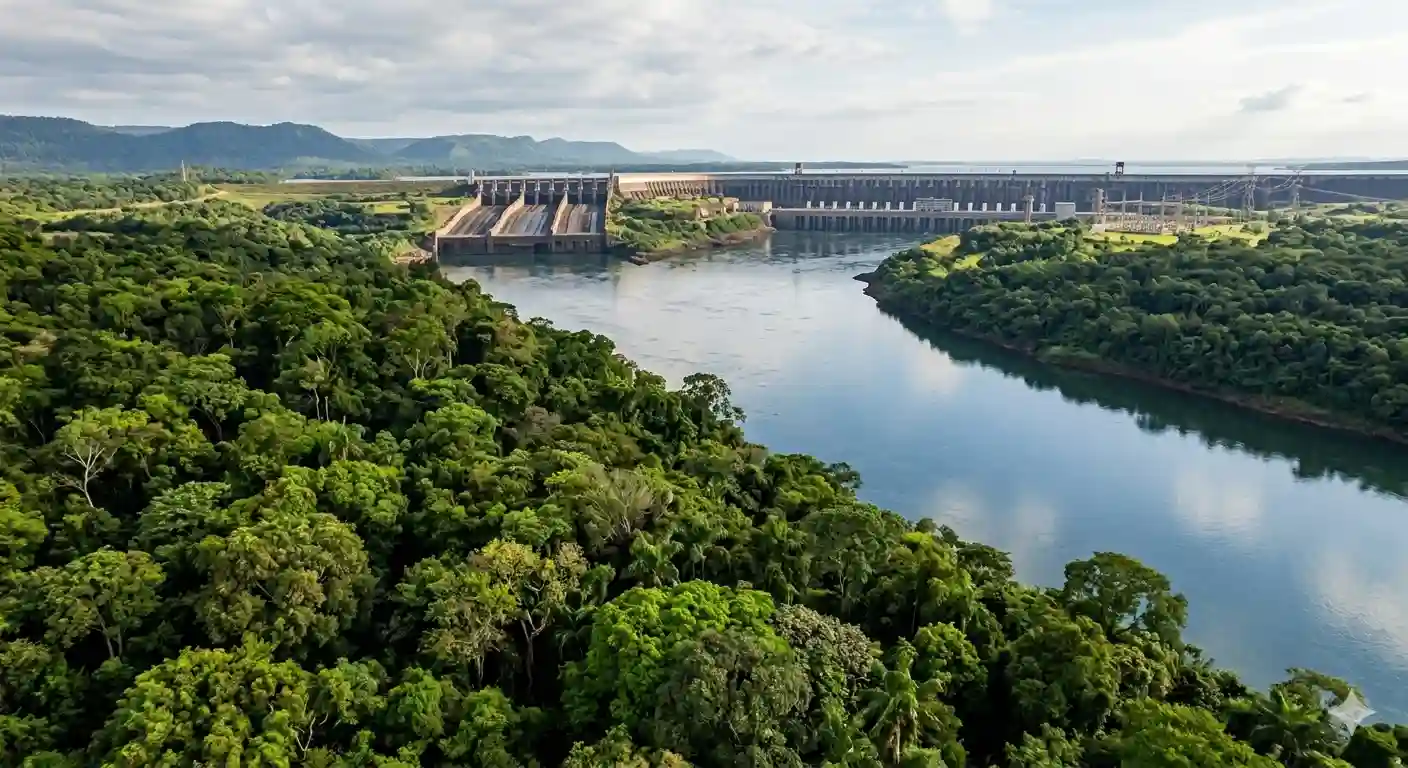
The Paraná River system connects hydropower, agriculture, logistics and cross-border energy relationships. Itaipu is the most visible Brazil-Paraguay infrastructure link.
Agricultural ecosystems
Soy, corn, wheat, poultry and pork value chains dominate large parts of the productive landscape, with growing pressure around traceability, pesticide use and soil conservation.
Where EU standards meet Brazilian agricultural reality
Southern Brazil sits at the intersection of Brazil’s agricultural export strategy and the European Union’s expanding use of environmental standards in trade. Deforestation rules, due diligence requirements and supply-chain transparency are operational issues for exporters, processors and buyers.
The energy transition is also visible in the region. Southern Brazil combines hydropower, wind potential, distributed solar generation and bioenergy exposure. For companies, this means energy is not just a cost factor. It is part of the regional positioning of industrial and agricultural production.
Traceability
Agricultural exporters face more pressure to document origin, land-use history and compliance across complex supplier networks.
Energy transition
Wind, solar, hydropower and bioenergy make Southern Brazil relevant for companies reading Brazil’s cleaner-energy positioning.
Trade conditions
EU requirements increasingly affect practical market access, especially for soy, beef, timber, food and agribusiness-linked value chains.
European and international presence in Southern Brazil
Southern Brazil has a long history of European industrial presence. German and Italian companies established manufacturing operations in the region decades ago, and that presence has deepened through machinery, food processing, automotive components, logistics and industrial supply chains.
The region’s qualified workforce, port access and manufacturing density make it one of Brazil’s most relevant locations for international operations. It is also one of the few parts of Brazil where the Southern Cone is not just a map concept, but a practical business geography.
Manufacturing
Santa Catarina and Paraná host dense manufacturing ecosystems with machinery, textiles, food processing and automotive-component relevance.
Agribusiness
Trading firms, processors and input suppliers are deeply embedded in soy, corn, poultry and pork value chains.
Energy & infrastructure
Ports, hydropower, wind potential and cross-border logistics make infrastructure central to the Southern Brazil market story.
How to read Southern Brazil without flattening it
Southern Brazil should be read through regional layers: industrial clusters, agricultural corridors, port infrastructure, energy systems, water governance and Mercosur proximity. A national Brazil lens is necessary for regulation, taxation and macro context, but it is not enough for market interpretation.
The practical question is not whether Southern Brazil is “representative” of Brazil. The practical question is which sectors, corridors and supply chains make it strategically different from São Paulo, Brasília, the Amazon or the Northeast.
Frequently asked questions about Southern Brazil
Why does Econosur focus on Southern Brazil rather than all of Brazil?
Because Rio Grande do Sul, Santa Catarina and Paraná are the Brazilian states most structurally connected to the Southern Cone through agriculture, industry, logistics, energy systems and Mercosur trade flows.
Which states are included in this Brazil profile?
This page covers Rio Grande do Sul, Santa Catarina and Paraná as the Southern Brazil region relevant to Econosur’s South America and Southern Cone market perspective.
Why is Southern Brazil important for Mercosur?
Southern Brazil connects Brazilian agriculture, industry and logistics with Argentina, Paraguay and Uruguay. It is one of the parts of Brazil where Mercosur is most visible in practical market terms.
Why does Itaipu matter for Southern Brazil?
Itaipu links Brazil and Paraguay through a major hydropower system and shows how water, electricity and infrastructure operate as regional issues in the Southern Cone.
How should companies read Southern Brazil?
Companies should read Southern Brazil as an industrial, agricultural and logistics corridor inside Brazil, but also as a cross-border region connected to Argentina, Paraguay, Uruguay and EU-Mercosur trade dynamics.
Need more than a country profile?
Southern Brazil rewards companies that understand its regional logic before they engage. For market entry, supply-chain exposure, sourcing, sector screening or investment context, the useful view often sits between country profile, sector brief and custom analysis.
Request a Brazil market analysis