
Company Insight · Argentina · Vista Energy · Vaca Muerta · Updated September 2026
Vista Energy: The Listed Vaca Muerta Growth Company
Vista combines an operated shale-oil core with large YPF-operated interests, low operating costs, its own trading arm and growing access to Pacific and Atlantic export infrastructure.
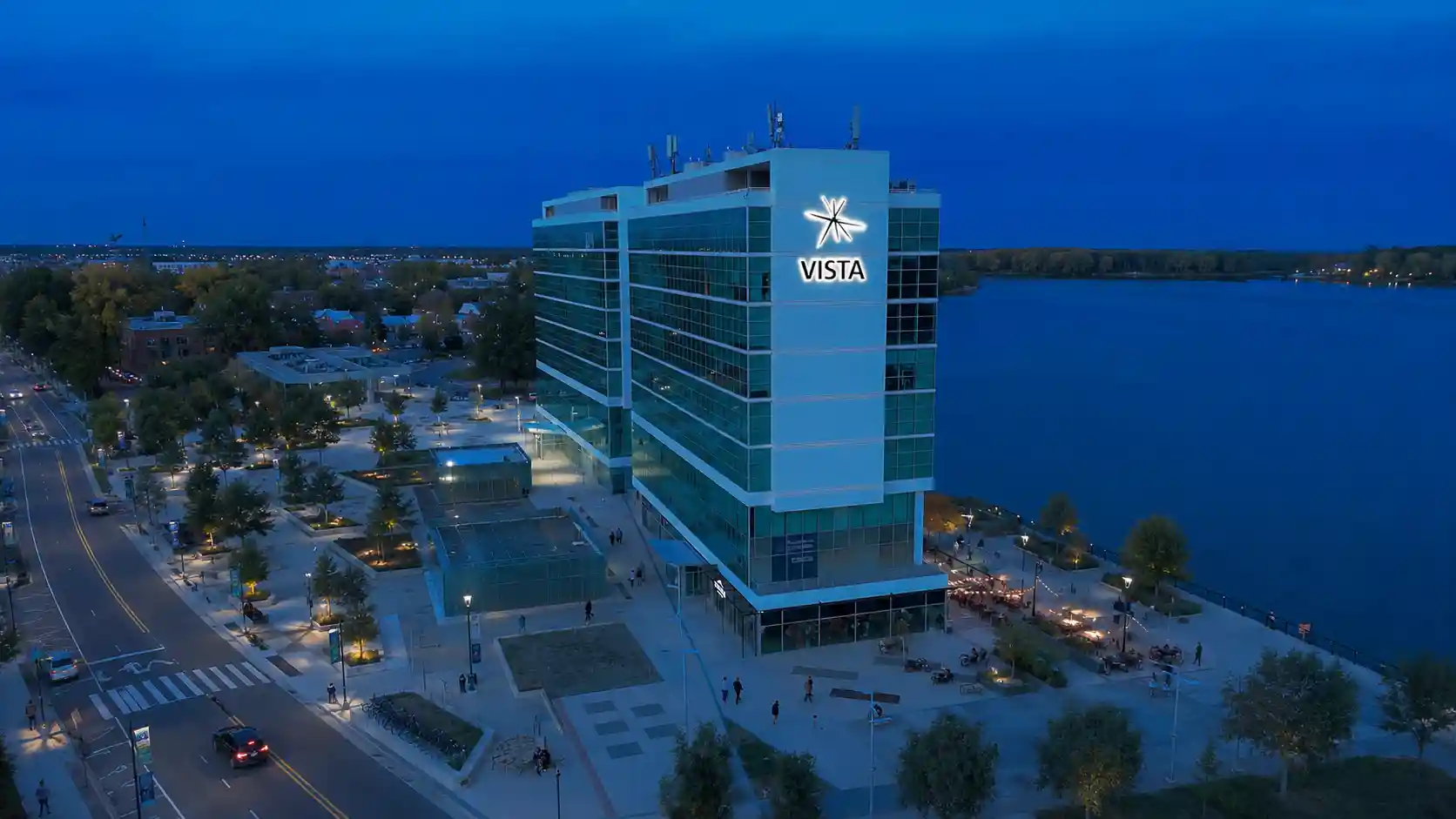
Vista Energy is the listed Vaca Muerta company combining an operated shale-oil core with large non-operated interests and expanding export access.
Bajada del Palo Oeste remains Vista’s operating centre. La Amarga Chica, Bandurria Sur and Bajo del Toro add scale but are operated by YPF. The company therefore combines direct operating control with exposure to assets whose budgets and development timing depend on another operator.
Q2 2026 production reached 156,061 boe/day after Bandurria Sur and Bajo del Toro were consolidated from May 1. Vista exported 72 percent of crude sales volumes and reported a USD 4.5/boe lifting cost. A September reserve update added 66.8 MMboe of estimated P1 reserves for the acquired working interests, taking year-end 2025 proved reserves to 654.9 MMboe on a pro forma basis.
See YPF, Añelo and the Vaca Muerta Pacific Route.
Vista's latest public information changes the reserve and financing picture, but not the latest reported operating quarter.
On September 8, Vista reported 66.8 MMboe of estimated P1 reserves attributable to its 25.1% working interest in Bandurria Sur and 35% working interest in Bajo del Toro. Added pro forma to Vista's previously reported 588.1 MMboe, this produces 654.9 MMboe of year-end 2025 proved reserves.
On September 22, Vista priced an additional USD 400 million of 7.875% senior notes due 2038 through Vista Energy Argentina. The announced closing date is October 9, 2026; until that closing occurs, the additional notes should be treated as priced financing rather than completed outstanding debt.
Vista's September 28 investor presentation continued to use Q2 2026 as the latest reported operating quarter: 156.1k boe/day production, 162k bbl/day of pipeline takeaway capacity and 203k bbl/day of crude treatment capacity.
Core market reading:
Vista is no longer only a low-cost organic-growth case. It is becoming a larger Vaca Muerta operating and capital-allocation platform whose value depends on combining its own blocks, YPF-operated interests, pipeline capacity, international trading and debt-funded expansion.
Company profile: Vaca Muerta-focused and internationally listed
Vista Energy, S.A.B. de C.V. is incorporated under Mexican law and listed in Mexico and New York. Its operating centre is Argentina, where the company concentrates its upstream activity in Vaca Muerta through Argentine subsidiaries.
“Pure play” describes the company’s strategic concentration rather than its legal nationality. Vista is a Vaca Muerta-focused listed independent with both operated and non-operated working interests.
Q2 2026 operating scale
Vista reported Q2 2026 production of 156,061 boe/day, including 135,427 barrels/day of oil. The quarter consolidated the 25.1-percent interest in Bandurria Sur and 35-percent interest in Bajo del Toro from May 1, 2026.
The year-on-year production increase was 32 percent. Vista attributed 20 percentage points to organic growth and 12 percentage points to the newly consolidated interests.
Q2 reported production is therefore the first quarterly figure that includes the Equinor-derived assets. The original 588.1-MMboe year-end 2025 reserve figure predates those interests. Vista subsequently reported 66.8 MMboe of P1 reserves for Bandurria Sur and Bajo del Toro, taking the year-end 2025 total to 654.9 MMboe on a pro forma basis.
| Q2 2026 metric | Reported figure | Interpretation |
|---|---|---|
| Total production | 156,061 boe/day | Includes Bandurria Sur and Bajo del Toro from May 1. |
| Oil production | 135,427 barrels/day | Confirms the company’s strong oil weighting. |
| Operated production | 90,859 boe/day | Production under Vista-operated assets. |
| Non-operated production | 65,202 boe/day | Includes major YPF-operated working interests. |
Bajada del Palo Oeste: Vista’s operated core
Bajada del Palo Oeste is the central asset for understanding Vista’s own operating model. The block produced approximately 67,114 boe/day at Vista working interest in Q2 2026, including 58,802 barrels/day of oil.
At year-end 2025, the block contained approximately 285.3 MMboe of proved reserves, nearly half of Vista’s reported total before the pro forma addition of Bandurria Sur and Bajo del Toro. It is the largest source of operated production and the main reference point for the company’s well productivity, development pace and cost discipline.
Bajada del Palo Este and Aguada Federal provide additional Vista-operated growth. In Q2 2026, they produced approximately 15,107 and 8,009 boe/day respectively.
Bajada del Palo Oeste
Vista’s largest operated producer and reserve base. Q2 working-interest production: approximately 67.1k boe/day.
Vista operatedBajada del Palo Este
Organic development block with Q2 working-interest production of approximately 15.1k boe/day.
Vista operatedAguada Federal
Developing Vista-operated hub with Q2 working-interest production of approximately 8.0k boe/day.
Vista operatedOther operated blocks
Bandurria Norte, Águila Mora and Coirón Amargo Norte add development inventory and optionality.
Vista operatedYPF-operated assets add scale without operational control
Vista’s three largest non-operated shale interests are La Amarga Chica, Bandurria Sur and Bajo del Toro. YPF operates all three.
This structure gives Vista exposure to production, reserves and future drilling inventory without requiring Vista to operate each field directly. It also means YPF controls day-to-day execution, field planning and much of the development sequence, subject to joint-venture governance and contractual rights.
La Amarga Chica
Large producing participation acquired through Petronas E&P Argentina. Q2 production attributable to Vista: approximately 47.8k boe/day.
Operated by YPFBandurria Sur
Producing interest consolidated from May 1, 2026. Q2 reported production attributable to Vista: approximately 13.0k boe/day.
Operated by YPFBajo del Toro
Current production plus longer-term development inventory. Q2 reported production attributable to Vista: approximately 1.2k boe/day.
Operated by YPFNon-operated concentration
Vista receives scale and inventory while carrying partner, budget and execution dependencies.
Joint-venture exposurePetronas and Equinor changed Vista’s portfolio
Petronas transaction: 50 percent of La Amarga Chica
Vista completed the acquisition of Petronas E&P Argentina in April 2025. The acquired company held a 50-percent working interest in La Amarga Chica.
The announced consideration comprised USD 900 million in cash, USD 300 million in deferred payments and Vista ADSs valued at approximately USD 300 million when the transaction was announced. YPF remained operator of the block.
Equinor transaction: Bandurria Sur and Bajo del Toro
Vista closed the Equinor-derived transaction on May 7, 2026 and consolidated the acquired interests from May 1.
Vista reported a USD 712 million base purchase price consisting of USD 387 million in upfront cash, including tax gross-ups, and 6,223,220 Vista ADSs. It also paid USD 131 million for cash, debt, working capital and other closing adjustments, with possible contingent consideration remaining.
The transaction used a back-to-back structure with YPF. The final interests leave Vista with 25.1 percent of Bandurria Sur and 35 percent of Bajo del Toro, while YPF operates both blocks.
Vista bought scale, but not full operating control.
The acquired interests add current production and drilling inventory while increasing dependency on YPF-operated development programmes.
Costs and exports require three separate readings
Vista reported a Q2 2026 lifting cost of USD 4.5/boe. The metric includes production, transportation, treatment and field-support services. It excludes royalties, depreciation, selling expenses, exploration, general administration and several other cost categories.
Lifting cost is therefore an operating-efficiency metric, not an all-in break-even price.
| Export metric | Q2 2026 | What it means |
|---|---|---|
| Exported crude sales volumes | 72% | Share of crude-oil sales volumes physically sold to export markets. |
| Oil and gas export revenues | USD 737.7m | 67 percent of Vista’s total net revenues. |
| Net oil revenues at export parity | 100% | Includes international sales and domestic sales priced at export parity. |
Vista’s wholly owned trading arm, VEISA, began operating in Q4 2025. It manages international delivery and freight structures and is part of the company’s transition from producer to more integrated crude exporter.
Pipeline, treatment and export capacity
Vista's September 2026 investor presentation reports 162,000 barrels/day of crude-oil pipeline takeaway capacity and 203,000 barrels/day of treatment capacity, including 103,000 barrels/day in operated blocks.
For industrial suppliers, however, demand around Vista does not flow through one procurement channel. Econosur’s European Suppliers in Vaca Muerta report maps how suppliers reach Vaca Muerta demand through operators, EPC contractors, engineering firms, integrators, distributors, project companies and local service platforms.
This existing infrastructure is important. VMOS is the next expansion layer, not Vista’s first route to market.
Oldelval Duplicar: direct operating-cost effect
The start-up of Oldelval Duplicar allowed Vista to eliminate trucking by the end of Q1 2025. Vista linked this change directly to lower selling expenses per barrel.
Pacific route: operating contracts
ENAP signed long-term crude contracts with YPF, Vista, Shell and Equinor through June 2033. The combined contracts are expected to cover roughly 35 percent of ENAP’s annual crude requirement.
The 35-percent figure refers to all contracted producers together, not Vista alone. Transport uses the more-than-400-kilometre Transandino system, reactivated in 2023 after 17 years.
VMOS: future Atlantic scale
Vista participates in VMOS together with YPF and other Vaca Muerta producers. The project is a separate multi-company midstream structure designed to connect Neuquén production with the Punta Colorada Atlantic terminal. Vista's September investor presentation shows 50,000 barrels/day of firm VMOS capacity for Vista, with delivery targeted for mid-2027; the company's total pipeline capacity would rise from 162,000 to 212,000 barrels/day if delivered as planned.
Oldelval Duplicar
Existing pipeline expansion that removed Vista’s need for oil trucking and reduced selling costs.
Pacific route
Operating Transandino corridor with long-term ENAP contracts through June 2033.
VMOS
Multi-producer Atlantic export project under construction; not a Vista-only pipeline.
Guidance and financing after the acquisitions
Vista’s May 2026 guidance consolidates Bandurria Sur and Bajo del Toro from May 1. The plan assumes Brent prices of USD 85/barrel for the remainder of 2026, USD 80 for 2027 and USD 75 in real January-2026 terms from 2028.
Production and investment targets should therefore be read as company guidance under stated commodity assumptions, not as fixed outcomes.
In April 2026, Vista Energy Argentina issued USD 500 million of 7.875-percent senior notes due in 2038 under New York law. On September 22, Vista priced a further USD 400 million of notes in the same 2038 series at an issue price of 99.473 percent and a stated yield to average life of 7.950 percent. The announced closing date is October 9, 2026; if completed, the aggregate principal amount of the 2038 series would reach USD 900 million.
At the end of Q2 2026, Vista reported USD 3.661 billion of gross debt, USD 3.057 billion of net debt and a pro-forma net leverage ratio of 1.25x. Cash and short-term investments were approximately USD 605 million. These are June 30 figures and should not be mechanically increased by the September note pricing before the financing closes and the use of proceeds is reflected in a later balance sheet.
Balance-sheet reading:
Vista’s scale is supported by production growth and EBITDA, but acquisitions have made debt, refinancing and capital allocation central parts of the company case.
Vista’s risk structure
Bajada del Palo Oeste and other operated blocks give Vista direct control over a large share of production and development execution.
YPF controls daily operations and much of the development timing at La Amarga Chica, Bandurria Sur and Bajo del Toro.
Oil prices, debt service, refinancing and acquisition integration influence how quickly Vista can fund its stated growth path.
| Risk layer | Vista exposure |
|---|---|
| Commodity risk | Oil-weighted production and guidance tied to stated Brent assumptions. |
| Infrastructure risk | Production growth requires continued pipeline, treatment and terminal expansion. |
| Balance-sheet risk | Acquisitions increase financing, debt and refinancing requirements. |
| Non-operated asset risk | Vista does not control operating decisions at three major YPF-operated interests. |
| Argentina risk | Export duties, capital controls, taxes, exchange rates and regulatory changes affect realized returns. |
Marcus A. Volz perspective
Vista's strategic shift is now visible in the structure of the company, not only in its production growth.
The company still has a clear operated core, but its scale increasingly depends on a hybrid model: Vista-operated shale development, large YPF-operated working interests, contracted midstream capacity, an international trading arm and repeated access to capital markets.
The September reserve update strengthens the asset base behind that model. It does not remove the execution distinction between operated and non-operated barrels. Vista controls drilling, field execution and procurement on its operated blocks; YPF remains the operator at La Amarga Chica, Bandurria Sur and Bajo del Toro. As the non-operated portfolio grows, capital allocation and operator coordination become as important as well productivity.
Export infrastructure is the second structural layer. Oldelval, the Pacific route and VMOS reduce the risk that production growth becomes stranded in the basin, but each route has a different ownership, contractual and execution structure. Vista's commercial position therefore depends on more than upstream performance: treatment capacity, pipeline rights, terminal delivery, freight, trading and export pricing increasingly determine how additional barrels become cash flow.
For suppliers, this means that “selling to Vista” is not one market-access route. The real buying point can sit with Vista, YPF, a project company, an EPC contractor, a midstream operator or a local service provider depending on the package. That distinction is commercially more useful than treating Vista as a single procurement entity.
Three business questions that require deeper research
Bandurria Sur, Bajo del Toro and La Amarga Chica add reserves, production and drilling inventory, but Vista does not control day-to-day operations. The commercially relevant question is how YPF allocates rigs, facilities, capital and timing across these blocks relative to its broader Vaca Muerta portfolio.
Vista currently reports 162,000 barrels/day of pipeline takeaway capacity. VMOS is expected to add 50,000 barrels/day of firm capacity for Vista by mid-2027, while treatment capacity also has to expand with production. Delivery timing, commissioning and contracted access therefore remain part of the growth case.
Public disclosures identify assets, production, reserves and major infrastructure. They do not provide a complete package-level map of who specifies equipment, who qualifies vendors, which contractors hold purchasing authority, when tenders open or where local service requirements change the route to market.
Vista's filings can verify ownership interests, reported production, reserve estimates, financing announcements and company guidance. They do not by themselves verify future production, VMOS delivery dates, complete procurement calendars, vendor qualification decisions or package-level awards. Those questions require project, contractor, procurement and local-source verification.
Research services around Vista Energy and Vaca Muerta
For a defined B2B question, Econosur can extend the public company profile into project, buyer, supplier or procurement research without treating every public signal as an active commercial opportunity.
For broader market access, see European Suppliers in Vaca Muerta and B2B Connections in South America.
- Vista Energy — Investors: current investor calendar, relevant facts, quarterly results, investor presentation and company filings.
- Vista Investor Presentation — September 2026: latest company presentation used for Q2 production, pro forma reserves, well inventory, pipeline capacity, treatment capacity, leverage and VMOS capacity.
- Vista — September 8, 2026 reserve update: 66.8 MMboe of estimated P1 reserves in Bandurria Sur and Bajo del Toro and 654.9 MMboe pro forma total proved reserves at year-end 2025.
- Vista — September 22, 2026 note pricing: USD 400 million additional 7.875% senior notes due 2038, with announced closing expected October 9, 2026.
- Vista Q2 2026 earnings release: production, asset-level output, exports, costs, VEISA, debt and leverage.
- Vista 2025 Form 20-F: company structure, operated and non-operated assets, reserves and risk factors.
- Vista filing — Equinor transaction closing: final working interests, YPF back-to-back structure and purchase-price adjustments.
- Vista filing — updated 2026–2028 guidance and 2030 vision: production, investment and Brent assumptions used in the current growth plan.
- Evidence note: company filings support Vista's reported figures, estimates and stated plans. Reserve estimates remain estimates; guidance is not a guaranteed outcome; a priced financing is not treated as closed until completion is confirmed.
- Vista Operations: company-side overview of current operations and infrastructure indicators.
- VMOS official project site: project-company and Atlantic export infrastructure context.
- ENAP — long-term crude contracts with Vaca Muerta producers: Pacific export route and contract duration through June 2033.
- Evidence note: operator and project-company sources are used for technical scope and contractual context. They do not by themselves prove supplier awards, complete procurement routes or future infrastructure delivery.
Frequently asked questions
What is Vista Energy?
Vista Energy is a Vaca Muerta-focused listed independent incorporated in Mexico and operating primarily through Argentine subsidiaries. Its shares trade in Mexico and its ADSs trade in New York under VIST.
What is Vista's main operated Vaca Muerta asset?
Bajada del Palo Oeste is Vista's operated core. It produced approximately 67,100 barrels of oil equivalent per day at Vista working interest in Q2 2026 and remains the largest part of Vista's operated reserve and production base.
Which major Vista assets are operated by YPF?
YPF operates La Amarga Chica, Bandurria Sur and Bajo del Toro. Vista holds 50 percent, 25.1 percent and 35 percent working interests respectively, but does not control day-to-day operations.
Do Vista's Q2 2026 results include the Equinor assets?
Yes. Vista consolidated Bandurria Sur and Bajo del Toro from May 1, 2026. Their Vista working-interest production averaged approximately 21,200 barrels of oil equivalent per day during May and June.
How many proved reserves does Vista report after the 2026 acquisitions?
Vista reported 588.1 MMboe of P1 reserves at year-end 2025 before the acquired Bandurria Sur and Bajo del Toro interests were added. On September 8, 2026, Vista reported 66.8 MMboe of estimated P1 reserves for those acquired working interests, producing a pro forma year-end 2025 total of 654.9 MMboe.
What changed in Vista's financing in September 2026?
On September 22, Vista Energy Argentina priced an additional USD 400 million of 7.875% senior notes due 2038. The company announced October 9, 2026 as the expected closing date, so the financing should not be treated as completed before that date is confirmed.
How much oil does Vista export?
Vista exported 72 percent of crude-oil sales volumes in Q2 2026. Oil and gas export revenues represented 67 percent of total net revenues, while all net oil revenues were realized at export-parity pricing across export and domestic sales.
What does Vista's lifting cost include?
Vista's Q2 2026 lifting cost was 4.5 dollars per barrel of oil equivalent. It includes production, transport, treatment and field-support services, but excludes royalties, depreciation, selling costs, exploration and general administration.
How much pipeline and treatment capacity does Vista report?
Vista's September 2026 investor presentation reports 162,000 barrels per day of crude-oil pipeline takeaway capacity and 203,000 barrels per day of treatment capacity, including 103,000 barrels per day in operated blocks.
What role does Oldelval Duplicar play for Vista?
Oldelval Duplicar increased pipeline availability and allowed Vista to eliminate trucking by the end of Q1 2025, directly lowering per-barrel selling expenses.
How is Vista involved in VMOS and the Pacific route?
Vista is a shareholder in the multi-producer VMOS Atlantic export project and is also one of the producers supplying ENAP under long-term Pacific-route contracts through June 2033.
What is VEISA?
Vista Energy International S.A. is Vista's wholly owned trading arm. It began operations in Q4 2025 and manages international sales, freight and delivery structures.
What are Vista's main financial risks after the acquisitions?
The main risks are oil-price exposure, infrastructure delivery, acquisition integration, debt and refinancing, Argentina policy risk, and dependence on YPF for the timing and budgets of major non-operated assets.