
Argentina · Vaca Muerta · Fértil Pampa · Urea · Brazil · Updated August 27, 2026
Vaca Muerta to Urea: Fértil Pampa and South America’s Fertilizer Security
Pampa Energía has approved a USD 2.7 billion final investment decision for Fértil Pampa, Argentina’s RIGI Evaluation Committee has cleared the project’s admission, and Bahía Blanca has granted eight years of municipal tax and construction-rights exemptions once the plant is authorized. The remaining test is increasingly an execution test: formal incentive implementation, financing, procurement, construction and regional market access.
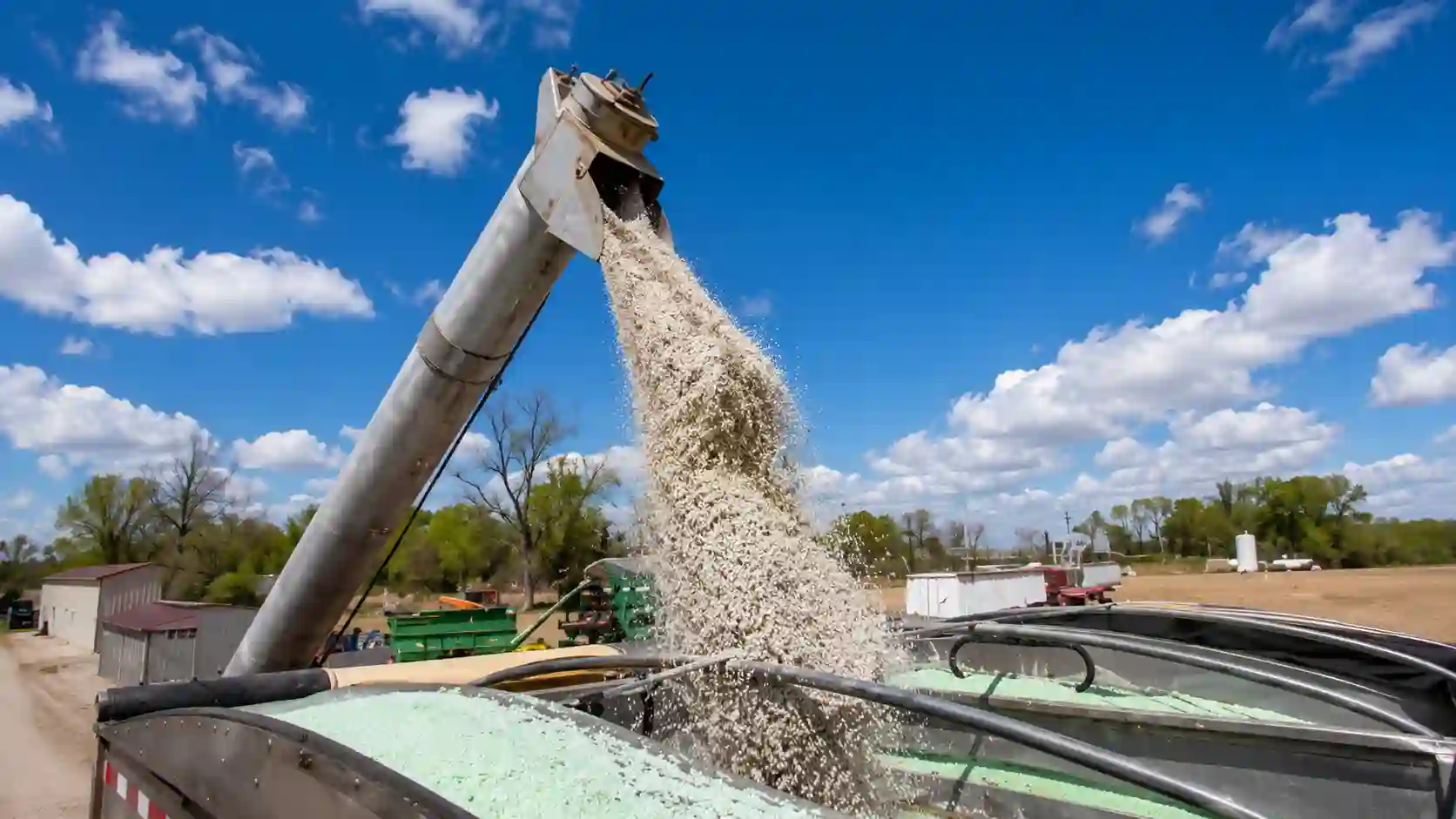
Fértil Pampa turns the Vaca Muerta-to-urea thesis into a board-approved industrial project.
Pampa Energía approved a USD 2.7 billion final investment decision on July 17, 2026 for a 2.1-million-tonne-per-year granular urea complex in Bahía Blanca.
The plant will use natural gas and electricity supplied mainly by Pampa, combine ammonia and urea production with desalination, storage and port logistics, and target Argentina and Brazil.
Final investment decision does not mean every condition has been cleared. The RIGI Evaluation Committee cleared the project’s admission on July 31, and Bahía Blanca has separately approved an eight-year exemption from the municipal Safety and Hygiene Inspection Tax and construction-rights charges once the plant is authorized. Buenos Aires REPIE, the proposed IDB Invest financing and the full execution cycle remain open. As of August 27, Econosur had not located a separate project-specific ministerial RIGI resolution in the Official Gazette.
Core market reading:
The central issue is now execution rather than project intent. Pampa has committed capital, the RIGI Evaluation Committee has cleared admission and Bahía Blanca has added a concrete municipal incentive package. That reduces uncertainty around strategic and local-policy alignment, but it does not remove the remaining gates: formal RIGI publication, REPIE, environmental approvals, financing, engineering, procurement, construction, commissioning and market access.
From a platform thesis to a real project
The original Vaca Muerta fertilizer thesis asked whether Argentina could convert shale gas into a regional nitrogen-fertilizer platform. Fértil Pampa now provides a concrete project around which that thesis can be tested.
The board decision is the most important status change. Pampa has moved beyond preliminary evaluation and approved its largest investment decision to date.
Pampa final investment decision
USD 2.7 billion approved by the board on July 17, 2026.
RIGI Evaluation Committee
The committee cleared Fértil Pampa’s admission on July 31, 2026. Pampa’s August 4 earnings release said publication of the formal approval in the Official Gazette was still pending at that date; Econosur had not located a separate project-specific ministerial resolution by August 27.
Bahía Blanca municipal incentive package
Municipal Ordinance 22,423 and Decree 1,662 approved the project memorandum and granted a full eight-year exemption from the Safety and Hygiene Inspection Tax and construction-rights charges. The exemption period starts once the plant has the corresponding authorization.
Buenos Aires REPIE
The provincial application was submitted on June 10, 2026. No later official approval was located in this update.
IDB Invest financing
Up to USD 1.5 billion remains under appraisal, with no approval or signed date reported.
Environmental and social process
IDB Invest classifies the proposed financing as Category A and is conducting due diligence.
The important change since the original May thesis is not simply that Fértil Pampa has become larger or more official. The risk structure has moved. Pampa has taken the final investment decision, the RIGI Evaluation Committee has cleared admission and Bahía Blanca has granted a concrete local incentive package. Strategic and local-policy alignment are therefore less speculative than they were when the project was still mainly a gas-to-industry thesis.
The remaining uncertainty is increasingly concentrated in the execution layer: formal RIGI publication, provincial REPIE, environmental approvals, financing, package-level procurement, construction and market access. For suppliers, that distinction matters. A project can be strategically endorsed and still be commercially closed at individual packages. The relevant question is no longer whether Fértil Pampa is real, but which execution layers remain open and who controls them.
What Fértil Pampa will contain
Fértil Pampa will be developed by a wholly owned Pampa subsidiary on an 80-hectare site inside the Bahía Blanca Industrial Complex.
Ammonia plant
The project includes a single-train ammonia plant with capacity of 3,430 tonnes per day. Natural gas is converted into hydrogen and then ammonia, creating the nitrogen base for urea production.
Two urea trains
The two granular-urea lines will provide combined nameplate capacity of 6,000 tonnes per day.
Desalination plant
A dedicated desalination facility will supply process water to the industrial complex.
Storage and port loading
Silos and new truck and vessel loading infrastructure connect production with domestic and export markets.
Pampa expects more than 3,500 direct jobs at peak construction and approximately 300 permanent positions once the plant is operating.
Why Vaca Muerta gas matters for urea
Urea is produced from ammonia, and conventional ammonia production depends heavily on natural gas. Gas is both a feedstock and a major energy input.
Pampa states that natural gas and electricity together represent approximately 70 percent of expected urea production costs. Both inputs are intended to be supplied primarily by Pampa.
This is the central integration advantage. Pampa is not only buying feedstock for an isolated fertilizer plant; it is converting gas and power from its existing energy platform into a higher-value industrial product.
Why Bahía Blanca matters
Bahía Blanca provides the industrial geography required by a large urea complex: access to Vaca Muerta gas pipelines, power generation, process water, industrial services, storage and one of Argentina’s main export ports.
A fertilizer platform is therefore more than a factory. It is a connected system of feedstock, utilities, process technology, storage and shipping infrastructure.
The announced port facilities allow the project to serve domestic agriculture by truck while also loading vessels for Brazil and other external markets.
Brazil is the stated primary external market
Brazil is no longer only an analytical demand hypothesis. In its Q2 2026 earnings release, Pampa identified Brazil — with around 8 million tonnes of annual urea imports — and the rest of the Southern Cone, with an annual deficit of around 2 million tonnes, as the project’s primary markets.
Pampa expects approximately USD 1 billion per year in foreign-currency impact through import substitution and exports.
The commercial logic is regional: Argentina provides gas, electricity, industrial production and Atlantic logistics; Brazil provides the largest nearby import market.
Fértil Pampa is designed to turn Argentina’s gas advantage into a regional agricultural input.
Who controls project execution?
Fértil Pampa S.A.U.
Wholly owned Pampa subsidiary and the industrial project vehicle.
SACDE
Responsible for construction under the announced turnkey structure.
Tecnimont / MAIRE
MAIRE announced an approximately EUR 1.3 billion award. Tecnimont’s scope covers engineering, procurement, commissioning and start-up activities.
Nextchem, Stamicarbon, KBR and KT Tech
EUR 140 million of the MAIRE award relates to Nextchem’s technology package. Stamicarbon provides urea melt and granulation technology, KBR provides ammonia technology and KT Tech supplies the primary reformer for syngas production.
The MAIRE award is already a concrete European participation case inside Fértil Pampa: an Italian engineering and technology group has secured a contract worth approximately EUR 1.3 billion before commercial operation begins. For other industrial suppliers, the relevant buying chain is therefore distributed across Fértil Pampa/Pampa Energía, SACDE, Tecnimont and the technology providers rather than concentrated in one procurement desk. Econosur’s European Suppliers in Vaca Muerta report examines comparable procurement routes through direct project access, local service platforms, specialist partners and contractor channels.
Pampa estimates approximately 41 months for completion. That period is a project estimate, not a guaranteed operating date.
RIGI clearance and local incentives: execution gates are narrowing
Fértil Pampa submitted its RIGI application on April 21, 2026. On July 31, Argentina’s RIGI Evaluation Committee cleared the project’s admission. Pampa’s Q2 earnings release, published August 4, stated that formal publication in the Official Gazette was still pending at that date. Econosur had not located a separate project-specific ministerial resolution in the Official Gazette by August 27.
A separate local incentive layer has already moved. On July 23, the Bahía Blanca City Council approved Ordinance 22,423, validating the municipality’s memorandum with Fértil Pampa and granting a full exemption from the Safety and Hygiene Inspection Tax and construction-rights charges for eight years. Decree 1,662 promulgated the ordinance on July 31. The eight-year period starts once the plant has the corresponding authorization.
This municipal package should not be confused with REPIE. The Buenos Aires provincial REPIE application, submitted on June 10, remains a separate gate. No later official REPIE approval was located in this update.
IDB Invest is evaluating a syndicated financing package of up to USD 1.5 billion. The structure could include up to USD 300 million from IDB Invest and up to USD 1.2 billion of mobilized and parallel loans.
As of July 24, 2026, IDB Invest classified the project as proposed, with a projected board date of November 30, 2026 and no approval or signed date.
Status discipline:
FID establishes Pampa’s investment decision, the RIGI Evaluation Committee has cleared admission and Bahía Blanca has approved a local fiscal incentive package. These are three distinct advances. None establishes provincial REPIE approval, IDB financial close, environmental completion, construction completion or commercial operation.
Why the project matters for fertilizer security
Fértil Pampa addresses one segment of fertilizer security: nitrogen. It does not solve phosphate or potash dependence, which follow different mineral and geographic structures.
| Nutrient | Industrial logic | Vaca Muerta relevance |
|---|---|---|
| Nitrogen / urea | Natural gas → hydrogen → ammonia → urea. | High. This is the direct Fértil Pampa opportunity. |
| Phosphate | Phosphate rock and chemical processing. | Low as a Vaca Muerta resource story. |
| Potash | Mining and mineral logistics. | Low. Gas does not replace potash geology. |
Global disruptions around maritime chokepoints have shown why regional nitrogen capacity matters. In May 2026, the EU suspended customs tariffs for one year on several nitrogen-based fertilizers, including urea and ammonia, to reduce costs and diversify supply.
Fértil Pampa will not create fertilizer autonomy for South America. It could, however, become one of the region’s largest new nitrogen-fertilizer platforms and reduce dependence on long-distance imports.
Emissions, methane and CBAM
Conventional ammonia and urea production is emissions-intensive. The project’s competitiveness therefore depends not only on gas price, but also on upstream methane measurement, plant efficiency and credible embedded-emissions data.
The definitive EU Carbon Border Adjustment Mechanism began on January 1, 2026 and includes fertilizers.
Europe is not the project’s primary commercial case. Brazil and Argentina are more immediate. But CBAM already makes emissions measurement relevant for any future European urea sales and influences the reporting standards expected by lenders and international buyers.
IDB Invest’s Category A classification also signals that environmental and social performance will be central to financing due diligence.
Project risk matrix
| Risk layer | Current position | What must happen next |
|---|---|---|
| Investment commitment | Pampa board FID approved. | Maintain capital discipline through execution. |
| RIGI | Evaluation Committee clearance announced July 31; separate project-specific ministerial publication not located by August 27. | Verify formal publication and implementation of benefits. |
| Bahía Blanca municipal incentives | Ordinance 22,423 and Decree 1,662 approved an eight-year exemption from the Safety and Hygiene Inspection Tax and construction-rights charges once the plant is authorized. | Implement the exemption when the corresponding plant authorization becomes effective. |
| Buenos Aires REPIE | Application submitted; no later official approval located in this update. | Secure provincial approval and implement benefits. |
| Financing | IDB Invest structure proposed. | Board approval, syndication and financial close. |
| Construction | Execution structure announced. | Complete engineering, procurement, construction and commissioning. |
| Feedstock and utilities | Pampa plans to supply gas and power. | Secure reliable long-term delivery and pricing. |
| Market access | Brazil identified as primary external market. | Build durable logistics and offtake structures. |
| Environmental credibility | Category A due diligence under way. | Demonstrate emissions, water and social-management performance. |
Project Execution, Supplier & Market Questions
How close is Fértil Pampa to commercial operation after Pampa Energía’s final investment decision?
The project has moved beyond the investment-decision stage, but it is not yet an operating fertilizer complex.
Pampa approved the USD 2.7 billion final investment decision on July 17, 2026, the RIGI Evaluation Committee cleared the project’s admission on July 31, and Bahía Blanca has approved an eight-year municipal tax and construction-rights exemption once the plant is authorized. The remaining execution chain still includes formal RIGI publication, provincial REPIE, environmental approvals, financing, engineering and procurement, construction, commissioning and start-up. Pampa and MAIRE estimate approximately 41 months for completion, but that is a project estimate rather than a guaranteed operating date.
Which procurement and supplier opportunities could Fértil Pampa create for industrial companies in Argentina?
The project combines a 3,430-tonne-per-day ammonia plant, two granular-urea trains, desalination, utilities, storage silos and truck and vessel loading infrastructure. The announced execution structure separates the buying and specification chain across Fértil Pampa/Pampa Energía, SACDE, Tecnimont and the process-technology providers. MAIRE’s approximately EUR 1.3 billion award confirms that a substantial part of the engineering and technology scope is already contracted.
For suppliers, that means the relevant commercial question is not only whether the plant needs a technology, but which organization controls specification, qualification and procurement for that package and whether the package is still commercially addressable.
How important could Fértil Pampa become for Brazil’s urea supply and South America’s fertilizer security?
Pampa identifies Brazil, with around 8 million tonnes of annual urea imports, and the rest of the Southern Cone, with an annual deficit of around 2 million tonnes, as primary markets. Fértil Pampa is designed for 2.1 million tonnes of granular urea per year, giving the project potential regional significance if the plant reaches commercial operation and durable logistics and offtake are established.
The impact should not be overstated. Fértil Pampa addresses nitrogen fertilizer. It does not remove South America’s dependence on phosphate or potash, which follow different raw-material and supply-chain structures.
Public filings and company announcements can establish the project owner, plant design, named EPC and technology partners, incentive applications, proposed financing and target markets.
They do not reliably establish which procurement packages remain open, current vendor lists, incumbent supplier positions, qualification requirements, buyer priorities, local-service expectations or the practical entry route for a specific industrial supplier. Those questions require targeted commercial verification.
Fértil Pampa and Argentina Fertilizer Market Research Services
Marcus A. Volz conducts custom and primary market research for international companies evaluating industrial projects, suppliers and market access in Argentina and Mercosur. Public-source analysis can be extended with targeted verification where the commercial picture is incomplete.
Market interviews
Structured interviews with market participants and industry contacts to test buyer requirements, project timing and commercial assumptions.
Company & competitor research
Research on supplier presence, positioning, local structures, project references and competitive access routes.
Supplier & distributor checks
Verification of potential distributors, service partners, local platforms and existing commercial relationships.
Qualification & procurement research
Identify decision points, procurement structures, qualification routes and the organizations controlling specification and purchasing.
Project verification
Separate announced investment, approvals, financing and construction milestones from commercially active project opportunities.
Market & offtake research
Assess Argentina and Brazil demand structures, logistics, buyer groups, import exposure and the commercial context for regional fertilizer supply.
Which Fértil Pampa procurement packages are still commercially addressable? Who controls specification and vendor qualification? Which suppliers are already positioned? What local service or partner structure is required? Which Brazilian buyer segments and logistics routes matter most for future urea sales?
Where on-the-ground verification is useful, research can include targeted field work in Argentina and Mercosur markets.
Strategic conclusion
Fértil Pampa changes the nature of the Vaca Muerta fertilizer discussion.
The project is no longer only a theoretical opportunity based on gas reserves and Brazilian demand. Pampa has approved the investment decision, selected an execution structure and defined the plant’s industrial and logistics architecture. National RIGI committee clearance and Bahía Blanca’s municipal incentive package show that the project has also accumulated support across more than one policy layer.
That changes the analytical question. The remaining test is less about whether Argentina wants the project and more about whether the project can clear the remaining provincial, environmental and financing gates, convert engineering into executable procurement packages, complete construction and establish competitive regional supply.
Fértil Pampa could turn Vaca Muerta gas into one of South America’s largest new nitrogen-fertilizer platforms — but only if the approved investment becomes an operating plant.
Sources are separated by function. Primary sources originate from the project sponsor, contractors, public authorities, lenders or regulators directly responsible for the facts cited. Secondary sources provide independent sector, emissions or market context.
Primary sources
- Pampa Energía — final investment decision, project design, execution partners, Brazil market and remaining conditions.
- Pampa Energía Q2 2026 earnings release — 3,430 t/day ammonia capacity, Southern Cone market deficit, project schedule and RIGI committee-clearance status.
- Presidency of Argentina — July 31, 2026 confirmation that the RIGI Evaluation Committee approved the project’s admission.
- Municipality of Bahía Blanca / SIBOM — Ordinance 22,423 approving the memorandum with Fértil Pampa and granting an eight-year exemption from the Safety and Hygiene Inspection Tax and construction-rights charges.
- Municipality of Bahía Blanca / SIBOM — Decree 1,662 promulgating Ordinance 22,423 on July 31, 2026.
- MAIRE — EUR 1.3bn Tecnimont award, EUR 140m Nextchem package, commissioning/start-up scope and technology roles.
- IDB Invest — proposed financing structure, project status and Category A environmental and social review.
- Council of the European Union — one-year tariff suspension for key nitrogen fertilizers.
- European Commission — definitive CBAM regime from January 1, 2026, including fertilizers.
Secondary and contextual sources
- International Energy Agency — ammonia production pathways and natural-gas dependence.
- IFPRI — fertilizer-market exposure to geopolitical disruption.
- Dialogue Earth — methane measurement and emissions credibility in Vaca Muerta.
- FARN — methane and climate-risk context in Argentina.
Related Econosur research
From public project data to commercial verification
Public information now shows Fértil Pampa’s scale, execution structure, RIGI committee clearance, Bahía Blanca’s municipal incentive package, remaining provincial and financing steps and target markets. It does not show the full commercial layer: open procurement packages, qualification requirements, incumbent suppliers, buyer priorities or the realistic entry route for a specific technology provider.
Econosur can investigate these questions through custom analysis and primary market research focused on Argentina, Brazil and Mercosur industrial markets.
Discuss a Research QuestionFrequently asked questions
Has Pampa Energía approved the Fértil Pampa investment?
Yes. Pampa’s board approved a USD 2.7 billion final investment decision on July 17, 2026.
What is the current RIGI status of Fértil Pampa?
Argentina’s RIGI Evaluation Committee cleared Fértil Pampa’s admission on July 31, 2026. Pampa’s August 4 earnings release said publication of the formal approval in the Official Gazette was still pending at that date. Econosur had not located a separate project-specific ministerial resolution by August 27, 2026.
How large will the Fértil Pampa ammonia and urea complex be?
The project includes a single-train ammonia plant with capacity of 3,430 tonnes per day and two granular-urea trains with combined capacity of 6,000 tonnes per day, equivalent to 2.1 million tonnes of urea per year.
What role does MAIRE and Tecnimont have in Fértil Pampa?
MAIRE announced an approximately EUR 1.3 billion award for the project. Tecnimont’s scope includes engineering, procurement, commissioning and start-up. EUR 140 million relates to Nextchem’s technology package. SACDE is responsible for construction, KBR supplies ammonia technology and KT Tech supplies the primary reformer for syngas production.
What local incentives has Bahía Blanca approved for Fértil Pampa?
Municipal Ordinance 22,423, promulgated by Decree 1,662 on July 31, 2026, validated the municipality’s memorandum with Fértil Pampa and granted a full eight-year exemption from the Safety and Hygiene Inspection Tax and construction-rights charges. The exemption period begins once the plant has the corresponding authorization.
Is the IDB Invest financing approved?
No. IDB Invest lists the project as proposed, with a projected board date of November 30, 2026 and no approval or signed date.
Why are Brazil and the Southern Cone important to Fértil Pampa?
Pampa identifies Brazil, which imports around 8 million tonnes of urea annually, and the rest of the Southern Cone, with an annual deficit of around 2 million tonnes, as primary markets for the project.
When could Fértil Pampa begin operating?
Pampa and MAIRE estimate approximately 41 months for project completion. The schedule remains dependent on REPIE, financing, engineering, procurement, construction, commissioning and start-up.