
Company Insight · Argentina · YPF · Vaca Muerta · VMOS · LNG · Suppliers · Updated September 2026
YPF: The Company Behind Argentina’s Vaca Muerta Export System
YPF combines Vaca Muerta production, refining, domestic fuels, crude-oil pipelines, Pacific exports and several separate LNG and export-project structures. Its commercial importance increasingly lies in coordinating production with infrastructure, project companies, international partners and large supplier networks.
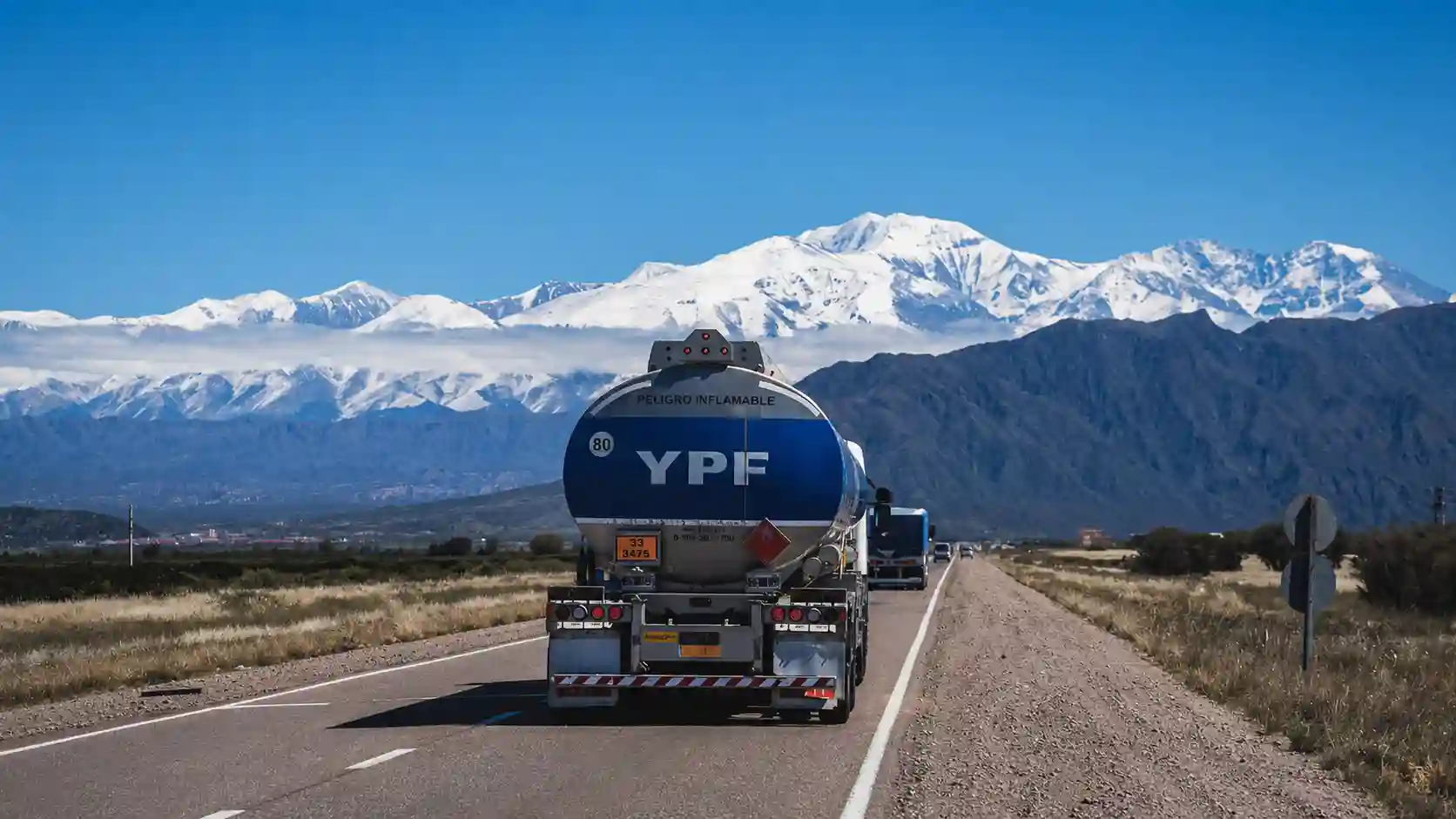
YPF is the central Argentine operating platform linking Vaca Muerta production with refining, domestic fuel supply and multiple export systems.
In Q2 2026, YPF reported average shale-oil production of 212.7 thousand barrels per day, up 47% year on year. Shale oil represented 80% of the company’s crude-oil production.
The export system is no longer one project. VMOS is a multi-producer crude-oil pipeline and terminal under construction. The Pacific route is already operating. LLL Oil is a US$25 billion upstream project submitted to RIGI. Southern Energy is a separate LNG company in which YPF owns 25%. Argentina LNG is the larger YPF–Eni–XRG development, with a US$51 billion RIGI application submitted in August 2026.
This separation is also important for suppliers. Registering with YPF can provide access to YPF procurement, but VMOS, Southern Energy, San Matías Pipeline and other project vehicles have their own corporate, contracting and technical structures.
See European Suppliers in Vaca Muerta, Añelo, Vista Energy and Pampa Energía.
The latest information changes the operating, VMOS and LNG picture materially.
Q2 2026 shale-oil production reached 212.7 kbbl/d, up 4% quarter on quarter and 47% year on year. Shale oil represented 80% of YPF’s crude production.
Refining also reached record levels: 350.8 kbbl/d of crude processed in Q2, with a reported refinery utilization rate of 103.8%.
VMOS had reached approximately 80% construction progress by July 2026 according to YPF’s August results report. YPF now expects first oil exports in early 2027.
Argentina LNG advanced separately. The YPF–Eni–XRG project applied to RIGI in August with an estimated total investment of US$51 billion.
In September, the Argentina LNG project announced that it had received a financing proposal of up to US$6 billion from the Export-Import Bank of the United States. Separately, U.S. EXIM announced a broader framework of up to US$7 billion for priority projects in Argentina.
RIGI application ≠ RIGI approval. Argentina LNG and LLL Oil should remain labelled as submitted until an approval resolution is identified.
Financing proposal ≠ financial close. The US$6 billion EXIM announcement is an important financing signal but should not be treated as completed project financing.
80% construction progress ≠ operation. VMOS remains under construction until commissioning and first oil are confirmed.
YPF’s integrated operating platform
Vaca Muerta oil and gas
YPF operates major unconventional blocks and reported 212.7 kbbl/d of shale-oil production in Q2 2026.
Pipelines and evacuation
VMOS, Oldelval, field pipelines and future dedicated gas pipelines determine how production reaches domestic and export markets.
Refining
YPF processed a record 350.8 kbbl/d of crude in Q2 2026 and reported refinery utilization above 100%.
Fuel distribution
Refining, retail fuels and industrial sales connect Vaca Muerta production with Argentina’s domestic energy market.
Atlantic and Pacific routes
VMOS creates large Atlantic export capacity while the Transandino system provides an operating Pacific route to Chile.
Separate LNG structures
Southern Energy and Argentina LNG are distinct corporate and project structures with different partners, assets and procurement routes.
Q2 2026 operating scale
YPF reported total hydrocarbon production of 544.4 thousand barrels of oil equivalent per day in Q2 2026.
Crude-oil production averaged 265.5 kbbl/d. Of that total, 212.7 kbbl/d came from shale oil.
The shift toward unconventional production is therefore already visible in the production mix: shale oil represented approximately 80% of total crude-oil output during the quarter.
| Q2 2026 metric | Reported figure | Change / interpretation |
|---|---|---|
| Total hydrocarbon production | 544.4 kboe/d | Up 4% quarter on quarter; broadly flat year on year as conventional divestments offset shale growth. |
| Crude-oil production | 265.5 kbbl/d | Up 7% year on year. |
| Shale-oil production | 212.7 kbbl/d | Up 47% year on year and 80% of YPF crude production. |
| Underlying shale-hub lifting cost | US$4.0/boe | YPF underlying metric excluding specified well-servicing costs. |
| Crude processed | 350.8 kbbl/d | Record processing level reported by YPF. |
| Adjusted EBITDA | US$2.804bn | Company-reported Q2 adjusted EBITDA. |
| Free cash flow | US$824m | Positive for the quarter despite higher investment. |
| Net debt | US$7.654bn | Down US$771m quarter on quarter. |
| Net leverage | 1.09x | Lowest level reported by YPF in eleven years. |
The 4x4 strategy is becoming a physical export system
YPF’s 4x4 strategy concentrates the company around four priorities: accelerate profitable Vaca Muerta oil, manage the portfolio actively, increase operating efficiency and develop Argentina LNG.
By 2026, the strategy is visible in physical assets and capital allocation rather than only in presentations.
Portfolio shift: conventional exits and shale concentration
YPF continues to reduce exposure to mature conventional fields.
The company completed its exit from Manantiales Behr in May 2026. In August, it signed agreements to sell the Chachahuen and Mendoza Non-Operated clusters for approximately US$405 million, subject to closing.
YPF stated that, excluding divested assets, approximately 95% of its oil production would come from shale.
The company is concentrating its operating and investment system around Vaca Muerta.
This can improve scale and operating focus, but it also increases dependence on shale execution, water, sand, drilling, fracturing, field facilities, pipelines and export infrastructure.
Oil export system: VMOS, Pacific contracts and LLL Oil
VMOS: around 80% complete in July 2026
VMOS is a separate multi-company infrastructure vehicle. Its shareholders include YPF and several other Vaca Muerta producers.
The project includes an approximately 440-kilometre dedicated oil pipeline between Allen and Punta Colorada, pumping infrastructure, storage tanks and offshore export facilities.
YPF’s Q2 results reported approximately 80% construction progress as of July 2026. The company expected commercial operation toward the end of the fourth quarter and first oil exports in early 2027.
YPF’s latest results therefore provide a later timetable than older VMOS project-site phases that referred to an earlier 2026 start. For current status, the newer YPF disclosure is the more recent evidence.
YPF reported an initial capacity of roughly 180 kbbl/d, rising toward approximately 550 kbbl/d in the second half of 2027.
Pacific route: already operating
The Transandino system provides a separate western route from Vaca Muerta toward Chile.
ENAP signed long-term crude-supply contracts with YPF, Vista, Shell and Equinor through June 2033.
YPF committed an initial volume of approximately 32,000 barrels per day under the contract structure described in company documentation.
See Econosur’s Vaca Muerta Pacific Route to Chile for the wider infrastructure and market context.
LLL Oil: US$25 billion RIGI application
YPF submitted the LLL Oil project to RIGI in May 2026.
The project covers five unconventional blocks, more than 1,150 planned wells and approximately US$25 billion of investment over 15 years.
YPF targets a production plateau of approximately 240 kbbl/d from 2032, with crude intended for export through VMOS.
The company has stated that the scale of the project could require separate project companies for RIGI structuring.
As of September 29, 2026, the public evidence reviewed here supports submitted or under-evaluation status. Submission should not be labelled as RIGI approval.
VMOS
Approximately 80% complete in July 2026; first exports expected in early 2027 according to YPF’s latest quarterly update.
Pacific route
Operating Transandino corridor with long-term ENAP contracts through June 2033.
LLL Oil
US$25 billion upstream project submitted to RIGI; approval not confirmed in the public record reviewed for this update.
YPF’s LNG strategy now has two separate operating structures
Southern Energy: approximately 6 MTPA through two FLNG units
Southern Energy S.A. is a separate LNG company. YPF holds 25% through its subsidiary Sur Inversiones Energéticas.
The other shareholders are Pan American Energy at 30%, Pampa Energía at 20%, Harbour Energy at 15% and Golar at 10%.
The project uses two floating liquefaction units. FLNG Hilli has nominal capacity of approximately 2.45 MTPA. FLNG MKII adds approximately 3.5 MTPA.
Partner disclosures expect Hilli to begin Argentina operations in late 2027, with MKII following in 2028.
Southern Energy’s initial RIGI application was approved in April 2025. The project later expanded with the second vessel.
Southern Energy has also signed long-term gas-supply arrangements and an eight-year LNG sales agreement with Germany’s SEFE for up to 2 MTPA beginning with Hilli operations.
Argentina LNG: 12-MTPA YPF–Eni–XRG project
Argentina LNG is a separate integrated project being developed by YPF, Eni and XRG.
The current base design includes two floating liquefaction units with combined capacity of up to 12 MTPA.
The project also includes dedicated upstream production, gas-treatment infrastructure and a dedicated gas pipeline connecting Vaca Muerta with the Río Negro coast.
Five Vaca Muerta gas blocks have been assigned to the upstream structure. Eni and XRG are expected to hold 32% each and YPF 36%, with YPF remaining operator.
US$51 billion RIGI application
In August 2026, Argentina LNG submitted an application to join RIGI based on an estimated total investment of approximately US$51 billion.
This significantly changes the scale of the project compared with earlier standalone liquefaction-capex descriptions because the RIGI application represents the wider integrated development.
RIGI submission remains different from final approval and from final investment execution.
US EXIM financing signal
In September 2026, the Argentina LNG project said it had received a financing proposal of up to US$6 billion from the Export-Import Bank of the United States.
On September 23, U.S. EXIM separately announced a broader U.S.–Argentina framework designed to mobilize up to US$7 billion through 2027 across priority sectors including energy and critical minerals.
The project-specific US$6 billion proposal is therefore commercially important, but it should not be described as completed financing until contractual closing and conditions are confirmed.
San Matías Pipeline
San Matías Pipeline is a dedicated gas-transport project intended to connect Vaca Muerta gas with LNG facilities on the Río Negro coast.
The project received RIGI approval in June 2026. Public project descriptions use approximately 480 kilometres, 36-inch diameter and design capacity of 27 million cubic metres per day.
Approval establishes the investment-regime status. It does not establish construction completion or commissioning.
| LNG component | Scale | Current status | YPF role |
|---|---|---|---|
| Southern Energy | ~6 MTPA | FID / project execution; Hilli targeted late 2027, MKII 2028 | 25% shareholder and gas supplier |
| Argentina LNG | 12 MTPA base project; potential expansion | Development; US$51bn RIGI application submitted | Project developer and upstream operator |
| UPCO ARLNG I | Five dedicated Vaca Muerta gas blocks | YPF 36%, Eni 32%, XRG 32% structure subject to conditions | Operator |
| San Matías Pipeline | ~480 km / 27m m³/day | RIGI approved; execution still required | Strategic LNG transport link |
Supplier market: YPF is only one procurement route
YPF operates a formal supplier platform covering supplier registration, purchasing and contracting conditions, invoices, contractor controls and supplier-development programmes.
A company can register as a potential supplier through the YPF supplier portal. YPF states that, after registration and qualification, the company may be considered for contracting processes.
Procurement tools include SAP Ariba and YPF’s own supplier and contractor systems.
Registration is only the first layer. Major export projects increasingly sit in separate companies and consortia.
| Demand area | Possible buying structure | Commercial implication |
|---|---|---|
| YPF-operated shale blocks | YPF supply chain, operating teams and contractors | YPF supplier registration can be directly relevant. |
| VMOS | VMOS S.A., EPC contractors and project suppliers | YPF shareholder status does not mean YPF purchases every package. |
| Southern Energy | SESA, Golar, pipeline company, engineering and project contractors | Separate company and project contracts create a different supplier route. |
| Argentina LNG | YPF, Eni, XRG, upstream vehicle, pipeline and future EPC packages | Buyer responsibility changes by upstream, pipeline, treatment and FLNG scope. |
| Refining | YPF refinery purchasing and site contractor systems | Qualification and site-specific contractor controls matter. |
An official supplier-registration portal proves that a formal market-access route exists.
It does not prove that a defined product category is currently tendering, that the registered supplier has been technically qualified, that an EPC contractor has not taken purchasing responsibility or that the final legal buyer is YPF.
Ownership and governance
YPF combines state control with public-market ownership.
The Argentine state controls 51% of the company through the federal government and producing provinces, while the remaining shares trade publicly.
This ownership structure is commercially relevant because YPF simultaneously operates as a listed company, national energy supplier, major Vaca Muerta operator and coordinator of export projects involving private Argentine and international partners.
In August 2026, YPF completed a 10-for-1 split of its locally traded shares and changed the ADR-to-local-share ratio from 1:1 to 1:10. The transaction changed the number and nominal value of shares but not the underlying economic value of each holding.
Risk structure
Rising shale production, record refinery processing and lower leverage provide a substantial operating base for the export strategy.
Future growth increasingly depends on VMOS commissioning, shale ramp-up, LNG financing, pipeline development and large project execution.
Separate SPVs, consortiums, international partners and EPC structures mean ownership, operating responsibility and purchasing authority can sit in different organizations.
| Risk layer | YPF exposure | Why it matters |
|---|---|---|
| Commodity prices | Oil and gas prices affect upstream cash flow and project economics. | Large export projects require durable economics through market cycles. |
| Infrastructure | Production growth requires pipeline, terminal, treatment and LNG capacity. | Upstream output has to reach a monetization route. |
| Capital execution | Argentina LNG and LLL require very large multi-year investments. | RIGI applications and financing proposals still need execution. |
| Partner structure | VMOS, SESA and Argentina LNG involve multiple partners. | Decision rights and procurement routes vary by project. |
| Supplier capacity | Shale growth and infrastructure programmes require large contractor ecosystems. | Local service capacity and technical qualification can become execution bottlenecks. |
Marcus A. Volz perspective
YPF is increasingly becoming a coordinator of interconnected industrial systems rather than a company whose commercial structure can be understood through the parent company alone.
The upstream core is becoming more concentrated. Shale oil reached 80% of YPF’s crude production in Q2 2026, while the company continues to exit conventional assets.
At the same time, the route from the wellhead to the customer is being divided among increasingly specialized structures. VMOS owns the main new Atlantic crude-export project. Southern Energy carries the earlier FLNG system. San Matías Pipeline is a dedicated gas-transport project. Argentina LNG combines YPF with Eni and XRG, while its upstream supply is being placed into a dedicated vehicle.
This structure changes supplier research. A company looking at YPF’s investment programme can identify billions of dollars of apparent demand and still approach the wrong buyer.
For an equipment manufacturer or service provider, the first question should therefore be which legal and technical entity owns the package. The answer can be YPF, VMOS, Southern Energy, a pipeline company, an EPC contractor, an operating joint venture or a local service contractor.
The second question is status. Argentina LNG’s US$51 billion RIGI submission and the EXIM financing proposal are strong investment signals. They are not procurement calendars. VMOS at 80% construction progress is much closer to commissioning than a project still structuring financing.
For Econosur, this is the useful dividing line: public project scale identifies where a market may develop; buyer, package, qualification and timing research determines whether that market is commercially actionable for a particular supplier.
Three Business Questions Around YPF
Who actually buys a defined product or service?
YPF operates its own supplier system, but the export strategy increasingly uses separate project companies. A supplier targeting pumps, compressors, valves, instrumentation, pipelines or marine systems needs to identify whether the purchasing authority sits with YPF, VMOS, Southern Energy, San Matías Pipeline, Argentina LNG, an EPC contractor or another project entity.
Which announced investments have reached executable procurement?
VMOS is already deep into construction. LLL Oil and Argentina LNG have RIGI applications. Argentina LNG has a major financing proposal. These are different commercial stages and should not be combined into one opportunity pipeline without verification.
What does supplier qualification require beyond registration?
YPF provides a public registration route and formal purchasing conditions. Actual market access can additionally depend on technical approval, contractor controls, safety requirements, Ariba processes, local field service, references, project-specific vendor lists and the requirements of EPC or joint-venture partners.
Public sources can verify operating figures, ownership, project companies, broad investment amounts, RIGI status, construction progress and formal supplier-registration routes.
They usually do not provide complete package-level procurement calendars, technical bidder lists, incumbent vendor positions, bid evaluations, project budgets by equipment category or final purchasing authority for every contract.
YPF Company, Buyer and Supplier Research
Econosur can extend this public profile into research around a defined company, product, project package or procurement question.
See also European Suppliers in Vaca Muerta, Company Reports, Custom Market Analysis and B2B Connections in South America.
Añelo
Roads, workers, water, sand, services and industrial infrastructure support the operating system behind YPF and other Vaca Muerta producers.
Read Añelo analysis →Vista Energy
Vista provides a useful comparison between YPF-operated blocks, non-operated interests and export-infrastructure participation.
Read Vista Energy →Brazil gas corridors
LNG is only one monetization route for Vaca Muerta gas. Regional pipeline exports provide a separate commercial structure.
Read Brazil gas analysis →Pacific exports
The Transandino corridor and ENAP contracts provide an operating western route while VMOS develops the larger Atlantic system.
Read Pacific-route analysis →- YPF Q2 2026 results / SEC 6-K: Q2 production, shale-oil output, lifting costs, refining, EBITDA, debt, leverage, portfolio divestments, VMOS progress and Argentina LNG upstream structure.
- YPF Investor Center: current company presentations, filings, shareholder information and investor updates.
- VMOS official project site: project company, route, terminal, shareholders, infrastructure and published phase information.
- Argentina LNG official project site: current project structure, 12-MTPA base capacity, project news, RIGI application and September 2026 financing announcement.
- U.S. EXIM — U.S.–Argentina Build the Future Framework, September 23, 2026: broader framework of up to US$7 billion for priority sectors including energy and critical minerals.
- YPF 2025 Form 20-F: Southern Energy ownership, Hilli and MKII structure, company strategy and LNG commitments.
- Argentina — VMOS RIGI approval: official investment-regime approval.
- Argentina — San Matías Pipeline RIGI approval: official project approval and design context.
- ENAP — long-term Vaca Muerta crude contracts: Pacific-route commercial structure through June 2033.
- Evidence note: company and official sources are used for reported operating figures, project status, ownership, formal approvals and company expectations. Forward-looking targets, financing proposals, RIGI applications and construction schedules are not treated as completed outcomes.
- YPF Suppliers: official supplier portal, purchasing channels and supplier-support systems.
- YPF — Supplier Registration: formal route for companies seeking registration as potential YPF suppliers.
- YPF — Purchasing and Contracting Conditions: contractual requirements, ethics, contractor controls and procurement documentation.
- YPF — Supplier Development: supplier-development programmes, pilot projects, consulting and training.
- YPF Extranet: supplier, contractor, service-allocation and performance systems.
- Evidence note: supplier portals establish formal routes into YPF's procurement ecosystem. They do not establish that a specific tender is open or that YPF itself controls procurement for every project in which it participates.
Need to know who actually buys inside the YPF project system?
YPF’s investment map now includes company-operated shale assets, separate project companies, consortiums, pipelines, LNG vehicles and EPC structures.
Econosur can research the relevant buyer, project status, supplier route, technical decision-maker, incumbent suppliers and qualification requirements for a defined product or service.
Explore Company ReportsFrequently asked questions
Is YPF state controlled or publicly traded?
YPF is publicly traded in Buenos Aires and New York while 51% of the company is controlled by the Argentine state through the federal government and producing provinces.
How much shale oil did YPF produce in Q2 2026?
YPF reported average shale-oil production of 212.7 thousand barrels per day in Q2 2026, up 47% year on year. Shale oil represented approximately 80% of YPF’s total crude production.
What was YPF’s total hydrocarbon production in Q2 2026?
YPF reported average hydrocarbon production of 544.4 thousand barrels of oil equivalent per day.
What is the current status of VMOS?
YPF reported VMOS at approximately 80% construction progress as of July 2026 and expected first oil exports in early 2027. Earlier project schedules showed earlier dates, but YPF’s August quarterly update is the more recent company disclosure.
Has LLL Oil been approved under RIGI?
YPF submitted the US$25 billion LLL Oil project to RIGI in May 2026. As of September 29, 2026, the public evidence reviewed for this analysis supports submitted or under-evaluation status rather than confirmed approval.
What is the current status of Argentina LNG?
Argentina LNG is a 12-MTPA integrated YPF–Eni–XRG project. It submitted a US$51 billion RIGI application in August 2026 and announced a financing proposal of up to US$6 billion from U.S. EXIM in September. These milestones do not equal final project completion or fully closed financing.
Is Southern Energy the same project as Argentina LNG?
No. Southern Energy is a separate LNG company using FLNG Hilli and FLNG MKII, with approximately 6 MTPA of combined liquefaction capacity. YPF owns 25%. Argentina LNG is a separate YPF–Eni–XRG project with a current base design of 12 MTPA.
How can a company become a YPF supplier?
YPF operates an official supplier portal. Companies can register as potential suppliers and, after qualification, may be considered for purchasing and contracting processes. Registration does not guarantee qualification, an invitation or a contract.
Does YPF supplier registration cover VMOS and LNG procurement?
Not necessarily. VMOS, Southern Energy, San Matías Pipeline and other project structures can have separate contracting routes, EPC contractors and project companies. The actual buyer has to be identified for each package.