
Company Insight · Argentina · Tierra del Fuego · Electronics · Food Exports · Consumer Goods
Newsan: Argentina’s Electronics Diversification Case
Newsan is the company case that shows how an Argentine electronics group built around Tierra del Fuego is trying to outgrow its original protection model: appliances, mobile phones, Newsan Food, P&G Argentina, Glaciar Pesquera, mass consumption, energy and export diversification.
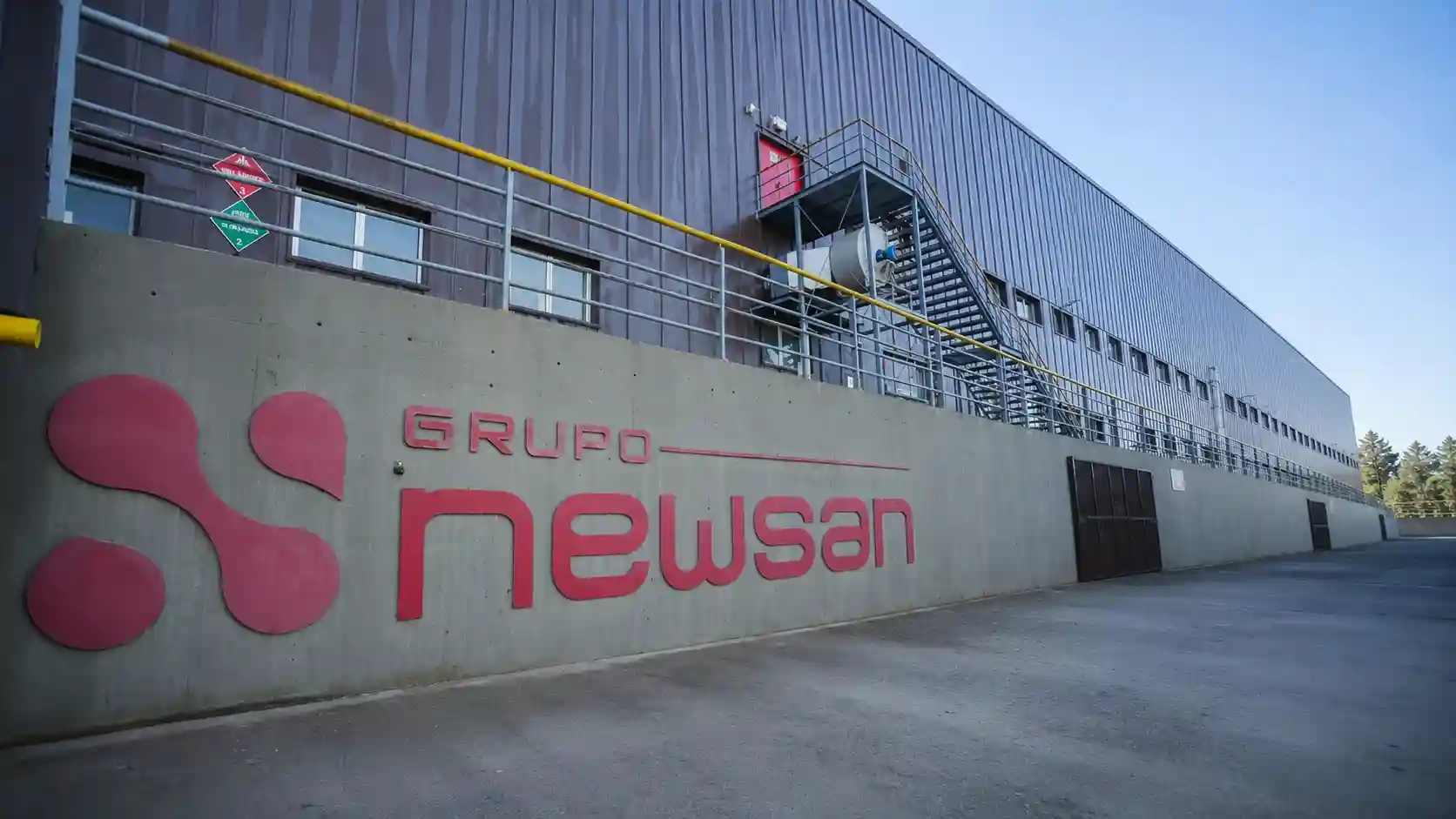
Newsan matters because it shows how a Tierra del Fuego electronics group is diversifying beyond its original protection model.
The company remains strongly tied to consumer electronics, home appliances and the Ley 19.640 industrial regime. But its growth story now also includes Newsan Food, seafood exports, aquaculture, agribusiness, P&G Argentina, mass consumption, Glaciar Pesquera, possible household-cleaning M&A and energy exposure.
The market reading is different from Mirgor. Mirgor answers regime pressure with logistics, port infrastructure and international expansion. Newsan answers with a wider revenue base: electronics, food exports, consumer goods and regulated infrastructure exposure.
Core market reading:
Newsan is not only another electronics company. It is Argentina’s electronics-to-food-to-consumer-goods diversification case after the Tierra del Fuego protection shock.
Why Newsan matters now
Newsan matters now because the original economics of Tierra del Fuego electronics are under pressure.
Argentina’s 2025 tariff changes cut import duties on mobile phones and reduced internal taxes on imported electronics while eliminating internal taxes for some Tierra del Fuego products. Moody’s Local Argentina treats those changes as relevant for Newsan’s profitability and cash-flow generation in 2026.
That pressure makes the company’s diversification strategy more important. Newsan is no longer only a protected electronics manufacturer. It is becoming a multi-sector Argentine group with electronics, home appliances, food exports, mass consumption, P&G brands, fishing assets, agribusiness and energy exposure.
Newsan’s diversification is not decorative.
It is a strategic response to the weakening of the original electronics-protection model and to Argentina’s volatile domestic-consumption cycle.
Company profile: electronics, appliances and brands
Newsan describes itself as a leading Argentine group in the manufacturing, import, marketing and distribution of consumer electronics and home appliances. Its official brand architecture includes owned strategic brands such as Noblex, Siam, Atma, Allure Professional and Philco, along with tactical, licensed and alliance brands.
Moody’s Local Argentina describes Newsan as a leading company in the manufacture, commercialization and distribution of household appliances and electronic products in Argentina, with leadership positions in its main categories. The report cites brands and alliances including Noblex, Motorola, LG, Hisense and Bosch.
The company is privately held, so analysis depends on company information, rating reports, bond-related disclosures, transaction reporting and market sources rather than listed-company reporting.
Tierra del Fuego: Newsan inside Ley 19.640
Newsan’s industrial base is tied to Ley 19.640, the special fiscal and customs regime for Tierra del Fuego. Moody’s Local Argentina describes the promotional benefits under the law as a relevant factor for Newsan’s cash-flow predictability.
The same report also identifies Newsan’s continued high exposure to the Tierra del Fuego promotion regime, despite the company’s vertical expansion and diversification. Four of Newsan’s six industrial plants are located in Tierra del Fuego, while the remaining plants are in Buenos Aires and San Luis.
The regime was extended to 2038, with the possibility of an additional 15-year extension. But tariff changes in 2025 changed the risk profile. The government moved to eliminate import duties on mobile phones in stages and changed internal taxes for imported and Tierra del Fuego-made products.
That is why Newsan’s company story cannot be separated from policy risk. Its diversification is happening while the original electronics framework is being renegotiated in practice.
Mirgor comparison: two answers to the same pressure
Newsan and Mirgor are the two clearest company cases for reading Argentina’s Tierra del Fuego electronics model.
Mirgor shows industrial execution: electronics, automotive components, logistics, international expansion and the private port project in Río Grande. Its response to pressure is partly infrastructure-led.
Newsan’s response is broader. It uses the cash-flow, brand and distribution base of electronics and appliances to build a wider group: food exports, fishing, aquaculture, P&G Argentina, mass consumption, urban mobility and energy.
Both companies reveal the same underlying question: can industrial capability created by a protected regime survive when the protection model becomes politically and economically weaker?
| Company | Core base | Strategic response |
|---|---|---|
| Mirgor | Tierra del Fuego electronics, automotive suppliers and logistics. | Port infrastructure, international expansion and industrial execution. |
| Newsan | Tierra del Fuego electronics, appliances and distribution. | Food exports, P&G Argentina, mass consumption, energy and M&A diversification. |
Financial baseline: why the 2026 Moody’s report matters
The cleanest current financial baseline is Moody’s Local Argentina’s May 2026 Newsan report.
Moody’s reported that Newsan’s revenue reached ARS 1.796855 trillion, equivalent to US$1.231 billion, at December 2025. That compared with ARS 1.747652 trillion, or US$1.287 billion, at December 2024. The report expected revenue near US$1.4 billion for 2026.
Moody’s also reported a 15.9% EBITDA margin in 2025, above 13.8% in 2024, and expected a 12–13% EBITDA margin for 2026. The improvement was linked to a gradual sales-volume recovery, the return of financing options, investment in points of sale and commercial channels, cost efficiency and a strategy to strengthen brand preference.
The same report expected P&G sales to account for more than 30% of Newsan’s revenue in 2026. That is the strongest sign that the mass-consumption move is no longer marginal.
| Metric | Moody’s Local Argentina figure | Interpretation |
|---|---|---|
| Revenue 2025 | ARS 1.796855 trillion / US$1.231bn. | Large private-company scale inside Argentina’s consumer and electronics economy. |
| Expected revenue 2026 | Near US$1.4bn. | Growth depends on integration, demand normalization and mix changes. |
| EBITDA margin 2025 | 15.9%. | Above the 2024 margin and stronger than earlier expectations. |
| Expected EBITDA margin 2026 | 12–13%. | Margin remains exposed to regime changes and demand conditions. |
| Debt / EBITDA 2025 | 1.7x. | Still manageable, but higher than 2024 due to working-capital needs. |
Newsan Food: export dollars from fishing and agribusiness
Newsan Food is the most important proof that Newsan is not only an electronics group.
The official Newsan Food site presents the unit as an Argentine food-export platform reaching more than 70 countries. Its business areas include fishing, aquaculture and agribusiness, with products such as trout, mussels, honey, olive oil and peanuts.
Infobae’s P&G transaction coverage described Newsan Food as one of Argentina’s main exporters of fishing and agricultural products, exporting shrimp, hake, toothfish, squid and other species, as well as honey, olive oil, peanuts, peanut oil and peanut expeller.
Bichos de Campo explains the strategic logic clearly: Newsan Food emerged as a diversification path from electronics, helping the group generate export revenue and reduce exposure to import-dependent domestic electronics cycles.
Newsan Food turns Newsan’s profile from protected electronics into foreign-currency diversification.
That matters in Argentina, where access to dollars, imports, working capital and domestic demand can all shift quickly.
Glaciar Pesquera: premium seafood and France platform
The 2026 Glaciar Pesquera acquisition deepens the Newsan Food thesis.
Infobae reported on June 4, 2026, that Newsan acquired Glaciar Pesquera, a company founded in 1995 by Clearwater Seafoods and Eduardo González Lemmi, adding patagonian scallops to its product portfolio and a France-based operations center to strengthen global distribution.
The acquired company is based in Mar del Plata and specializes in the capture, processing and commercialization of patagonian scallops frozen on board. Infobae reported that it had 170 employees, two factory vessels, a land plant and cold-storage capacity in Ushuaia.
Forbes Argentina added that the transaction was led by Newsan and implemented through its controlling shareholder and Newsan Food S.A.U., which acquired most of the Glaciar Pesquera share package and a France-linked business operation. The agreements were signed on June 4, 2026, and the closing followed shortly after.
The acquisition adds a premium seafood niche to Newsan Food’s export platform.
Glaciar France S.A.S. gives the group a European commercial and distribution layer.
Food exports help balance Argentina electronics exposure with foreign-market revenue.
P&G Argentina: move into mass consumption
The P&G Argentina acquisition changed Newsan’s domestic-market profile.
Infobae reported in July 2024 that Newsan took over Procter & Gamble’s Argentina business, including brands such as Gillette, Pampers, Always, Head & Shoulders and Oral-B. The transaction included P&G’s Villa Mercedes plant in San Luis and offices in Munro.
The acquisition created a new mass-consumption business unit inside Newsan. Galli described the move as a milestone and as the beginning of a new stage in consumer goods.
The Moody’s 2026 report shows why this is not a small side business. P&G sales accounted for 25% of Newsan’s consolidated revenue at December 2025 and were expected to represent more than 30% of total revenue in 2026.
Consumer-goods reading:
P&G Argentina gives Newsan a domestic-consumption platform that is less dependent on mobile-phone and electronics tariff protection than the original Tierra del Fuego model.
Ayudín option: the next consumer-goods step
The possible Ayudín transaction would deepen the same strategy.
Forbes Argentina reported on June 24, 2026, that Newsan was negotiating with Apex Capital to acquire Grupo Ayudín, the household-cleaning and home-care business Apex had bought from Clorox two years earlier. Forbes described Newsan as the main candidate and said the company declined to comment on the transaction.
Because this is a negotiation rather than a completed deal, it should be treated cautiously. But strategically it fits the pattern: after P&G Argentina, Newsan appears to be looking for additional mass-consumption platforms with brands, distribution and local manufacturing relevance.
That would move Newsan further away from being a purely electronics-centered group and closer to becoming a diversified Argentine consumer-and-export company.
Edison Energía: regulated infrastructure exposure
Newsan’s official site also presents energy as a business line through Edison Energía, with exposure to generation, transmission and distribution.
EconoJournal reported in 2025 that the Neuss brothers, together with Rubén Cherñajovsky, Luis Galli and Inverlat investors, created Edison Energía as a new energy holding. The report described acquisitions in electricity distribution and transmission companies in Tucumán, Jujuy and the Litoral, with US$300 million of planned investment over five years.
For Newsan, this matters because energy is not just another consumer category. It is regulated infrastructure exposure. That gives the group a different asset class from electronics, food exports or consumer brands.
Risk layer: what can go wrong
Newsan’s opportunity is large, but the risk layer is also broad.
The first risk is regime exposure. Moody’s Local Argentina explicitly says Newsan retains high exposure to the Tierra del Fuego industrial-promotion regime despite diversification. Tariff and tax changes on phones, televisions and air conditioners can affect profitability and cash generation.
The second risk is domestic demand. Newsan remains exposed to Argentina’s consumer cycle through electronics, appliances and mass-consumption brands. Financing availability, wages, inflation, credit and retail demand all matter.
The third risk is integration. P&G Argentina, Glaciar Pesquera, possible Ayudín negotiations and energy exposure all add complexity. Diversification reduces one kind of risk but creates execution risk.
The fourth risk is currency and working capital. Newsan’s original model is import-sensitive; Newsan Food is export-oriented; P&G and appliances are domestic-demand sensitive. That mix creates a complex FX and inventory-management profile.
The fifth risk is labor and social exposure. In February 2026, local and left-leaning media reported layoffs and suspensions affecting Newsan workers in Buenos Aires province plants. Those claims should be attributed carefully, but they are part of the social-risk context around Argentina’s industrial adjustment.
| Risk layer | How it affects Newsan | Market interpretation |
|---|---|---|
| Tierra del Fuego regime | Electronics economics depend partly on tax and customs treatment. | Policy risk remains central despite diversification. |
| Domestic demand | Appliances, electronics and P&G brands depend on household purchasing power. | Consumption recovery matters for growth quality. |
| Integration | P&G, Glaciar, possible Ayudín and energy add execution complexity. | Diversification must become operating discipline. |
| FX and working capital | Imports, inventories, exports and debt create a mixed currency profile. | Liquidity and inventory management remain critical. |
| Labor exposure | Industrial adjustment can create union, social and reputational pressure. | Growth and restructuring can coexist. |
How Newsan connects Argentina’s industrial and consumer markets
Newsan connects several Argentina themes at once: Tierra del Fuego electronics, industrial policy, tariff risk, retail demand, food exports, seafood, mass consumption, energy and private-company diversification.
It links directly to the Mirgor case. Mirgor explains the industrial-execution side of the same regime. Newsan explains the diversification side.
It also links to Mercado Libre and the retail paradox. Newsan sells into Argentina’s consumer economy, while Mercado Libre shows digital retail infrastructure and payment behavior. P&G Argentina and possible Ayudín expansion make Newsan even more relevant to the household-consumption layer.
Finally, Newsan Food connects to agriculture and food systems, seafood exports, logistics and foreign-currency generation. That makes Newsan one of Argentina’s more interesting private-company cases because it touches both domestic consumption and export diversification.
Newsan is where Argentina’s protected electronics model tries to become a diversified national group.
The question is whether food exports, P&G Argentina, energy and mass-consumption brands can reduce the risk created by a weaker Tierra del Fuego protection model.
The larger market question
The larger market question is not whether Newsan is important. It is.
The real question is whether Newsan’s diversification can outrun the pressure on the business model that originally built its scale.
If the Tierra del Fuego regime remains politically supported and consumer demand recovers, Newsan can use electronics and appliances as the base for a broader Argentine group. If tariff liberalization, weak purchasing power and working-capital pressure intensify, diversification becomes less a growth option and more a defensive necessity.
That is why Newsan deserves a company insight. It is not only an electronics manufacturer. It is a test of whether Argentine industrial groups can convert protected-regime scale into multi-sector resilience.
Newsan shows what happens when a protected electronics company tries to become a diversified Argentine group before the original model weakens further.
Business questions behind Newsan’s diversification
1. Which of Newsan’s newer business lines are actually becoming strong enough to reduce its dependence on Tierra del Fuego electronics?
Public information already shows that diversification is economically meaningful rather than cosmetic. Newsan Food provides an export-oriented layer, the P&G Argentina business accounted for 25% of consolidated revenue at December 2025 and was expected by Moody’s Local Argentina to exceed 30% in 2026, while Glaciar Pesquera adds a premium seafood and European distribution component.
The commercial test is whether those activities can provide durable revenue, margins, cash generation and customer diversification as the economics of protected electronics change. Because Newsan is privately held, public materials do not provide a complete segment-by-segment view of profitability, utilization, customer concentration, working-capital intensity or the contribution of individual acquired businesses. Targeted company, buyer and channel research can test where diversification is genuinely strongest.
2. How strong are Newsan’s commercial positions in food exports and mass-consumption products after the P&G and Glaciar acquisitions?
The acquisitions clearly broaden Newsan’s commercial footprint. P&G Argentina gives the group brands, local manufacturing and mass-consumption distribution exposure, while Glaciar Pesquera adds patagonian scallops, vessels, processing assets and a France-linked commercial platform to Newsan Food.
What public transaction reporting does not fully establish is the quality of those positions: retailer and distributor strength, customer concentration, export-buyer retention, pricing power, plant and vessel utilization, channel overlap, competitive positioning and the extent to which Newsan can cross-sell or share logistics and commercial capabilities across businesses. Those questions can be investigated through buyer, distributor, competitor and supply-chain research.
3. What should suppliers and business partners verify before treating Newsan as a stable multi-sector industrial group?
Newsan now combines business models with very different operating conditions: import-sensitive electronics, domestic consumer goods, export-oriented food and seafood, and energy exposure. That breadth can reduce concentration risk, but it also means suppliers and counterparties should not assume that procurement structures, qualification requirements, payment conditions, demand visibility or investment priorities are the same across the group.
Useful verification can include which business unit controls a purchase, current production and inventory conditions, local versus imported input requirements, supplier qualification, incumbent vendors, payment terms, planned capacity or plant changes, the effect of tariff liberalization on electronics demand, and the integration status of acquired businesses. Primary interviews and local company checks can complement published financial and transaction information.
Company materials, rating reports and transaction coverage establish Newsan’s business lines, selected financial indicators, the importance of P&G Argentina, the expansion of Newsan Food, the Glaciar Pesquera acquisition, tariff exposure and the group’s broader diversification direction. They do not provide a complete current view of segment profitability, customer concentration, distributor performance, export-buyer relationships, supplier economics, procurement responsibilities, plant utilization, commercial terms or the integration quality of individual acquisitions.
Those gaps are where targeted market research becomes useful: company and competitor checks, interviews, buyer and distributor research, supplier mapping, operational verification and local field research can turn a broad diversification story into a commercial assessment.
Newsan company, buyer and supply-chain research
Econosur can extend this public company analysis into targeted research for manufacturers, suppliers, distributors, investors, food and consumer-goods companies, and institutions evaluating Newsan or the markets around it in Argentina.
This company insight uses Newsan official materials, Newsan Food, Moody’s Local Argentina rating reports, Infobae, Forbes Argentina, Bichos de Campo, Bloomberg Línea, EconoJournal and related Argentine business sources. Because Newsan is privately held, financial and operating data should be read through rating reports, company statements, transaction disclosures and market reporting rather than public listed-company filings.
Source note: The factual source base of the original July 3, 2026 company insight is retained. Page structure, research framing and service information were updated on August 17, 2026.
- Newsan official site: group profile, brands, electronics, appliances and business lines.
- Newsan official profile: group overview, international presence and corporate structure.
- Newsan Food official page: food-export platform, markets, product categories and export positioning.
- Newsan Food: seafood, aquaculture and agribusiness export information.
- Moody’s Local Argentina: May 2026 Newsan rating report, revenue, EBITDA margin, debt, Tierra del Fuego exposure and tariff-risk analysis.
- Moody’s Local Argentina / BST: 2025 Newsan rating report, P&G revenue contribution expectations and financial context.
- Infobae: Newsan acquired P&G Argentina, including Gillette, Pampers, Always, Head & Shoulders, Oral-B, Villa Mercedes and Munro assets.
- Infobae / EFE: Newsan acquired Glaciar Pesquera and added a France operations center.
- Forbes Argentina: Glaciar Pesquera acquisition details, CNV communication, Glaciar France and transaction structure.
- Forbes Argentina: Newsan negotiations for Grupo Ayudín and expansion into household cleaning and mass consumption.
- Bichos de Campo: Newsan Food as export diversification from electronics into fishing and agribusiness.
- Newsan official energy page: Edison Energía and energy-sector exposure.
- EconoJournal: Edison Energía, energy-holding structure and planned investment context.
- Bloomberg Línea: Luis Galli and Newsan warning on tariff cuts and Tierra del Fuego mobile-phone production.
- Infobae: Noblex World Cup 2026 campaign as consumer-marketing context.
Examples of questions Econosur can investigate for suppliers, manufacturers, distributors, food exporters, consumer-goods companies, investors and institutions include:
- Which Newsan business lines are contributing the strongest commercially sustainable growth?
- How are tariff changes affecting electronics sourcing, assembly economics, retailer pricing and supplier demand?
- How strong is Newsan’s distribution position after integrating the P&G Argentina business?
- Which retailers, wholesalers and distributors matter most for selected Newsan consumer-goods categories?
- Which export markets and buyer groups are most important for Newsan Food?
- How concentrated are customer relationships in seafood, agribusiness and mass consumption?
- What commercial value does the Glaciar Pesquera acquisition add beyond the announced assets?
- Who controls procurement and supplier qualification across selected Newsan businesses and plants?
- Which suppliers, competitors and substitute channels are most relevant in a defined Newsan market?
- Are acquired businesses being integrated successfully at the operational, channel and customer level?
Need to verify where Newsan’s diversification is commercially strongest?
Public information shows the direction of Newsan’s expansion. Econosur can investigate the commercial reality behind it: buyer demand, distributor strength, export customers, supplier structures, procurement, competitor positions, production conditions and the integration of newer businesses.
Research can combine public-source analysis with primary interviews, buyer and distributor checks, supplier and competitor research, operational verification and targeted field research in Argentina.
Discuss a research questionFAQ
What is Newsan?
Newsan is an Argentine group active in consumer electronics, home appliances, food exports, mass consumption, urban mobility, distribution and energy. It is one of the main companies associated with the Tierra del Fuego electronics model.
Why does Newsan matter for Argentine industry?
Newsan matters because it shows how a company built around the Tierra del Fuego industrial-promotion regime is diversifying into food exports, consumer goods, P&G Argentina, Glaciar Pesquera, energy and other business lines.
How is Newsan different from Mirgor?
Mirgor is an industrial-execution and logistics case built around electronics, automotive components, international expansion and port infrastructure. Newsan is the diversification case: electronics, appliances, food exports, consumer goods, P&G Argentina, fishing and energy exposure.
What is Newsan Food?
Newsan Food is the group’s export platform for Argentine food products. It includes fishing, aquaculture and agribusiness activities and exports products such as seafood, honey, olive oil and peanuts to international markets.
What did Newsan acquire from P&G Argentina?
Newsan acquired the local P&G Argentina business in 2024, including consumer brands and the Villa Mercedes plant associated with Pampers and Always production, while also taking over commercial operations for brands such as Gillette, Pantene, Head & Shoulders and Oral-B.
What is Newsan’s main risk?
The main risk is exposure to the Tierra del Fuego electronics regime and tariff changes affecting imported phones, televisions and air conditioners. Newsan also faces execution risk as it integrates food, consumer goods and energy activities.
Which of Newsan’s newer business lines are actually becoming strong enough to reduce its dependence on Tierra del Fuego electronics?
Public information shows that Newsan’s diversification is already material, including Newsan Food, P&G Argentina and Glaciar Pesquera. A stronger assessment requires segment-level research into revenue quality, margins, cash generation, customer concentration, working capital and the operating contribution of individual businesses.
How strong are Newsan’s commercial positions in food exports and mass-consumption products after the P&G and Glaciar acquisitions?
The acquisitions broaden Newsan’s manufacturing, brand, seafood and distribution footprint, but public transaction reporting does not fully show retailer and distributor strength, export-buyer relationships, customer concentration, pricing power, utilization or integration quality. Those areas require targeted buyer, channel, competitor and supply-chain research.
What should suppliers and business partners verify before treating Newsan as a stable multi-sector industrial group?
Suppliers and partners should verify the relevant purchasing entity, current demand and production conditions, supplier qualification, incumbent vendors, local versus imported input requirements, payment terms, investment priorities, tariff exposure and the integration status of acquired businesses rather than assuming conditions are uniform across the group.