
Company Insight · Argentina · Pluspetrol · La Calera · Bajo del Choique · RIGI · VMOS
Pluspetrol: La Calera, Bajo del Choique and Vaca Muerta Growth
Pluspetrol combines an operating wet-gas and condensate platform at La Calera with a rapidly expanding shale-oil position at Bajo del Choique–La Invernada and direct exposure to Oldelval and VMOS.
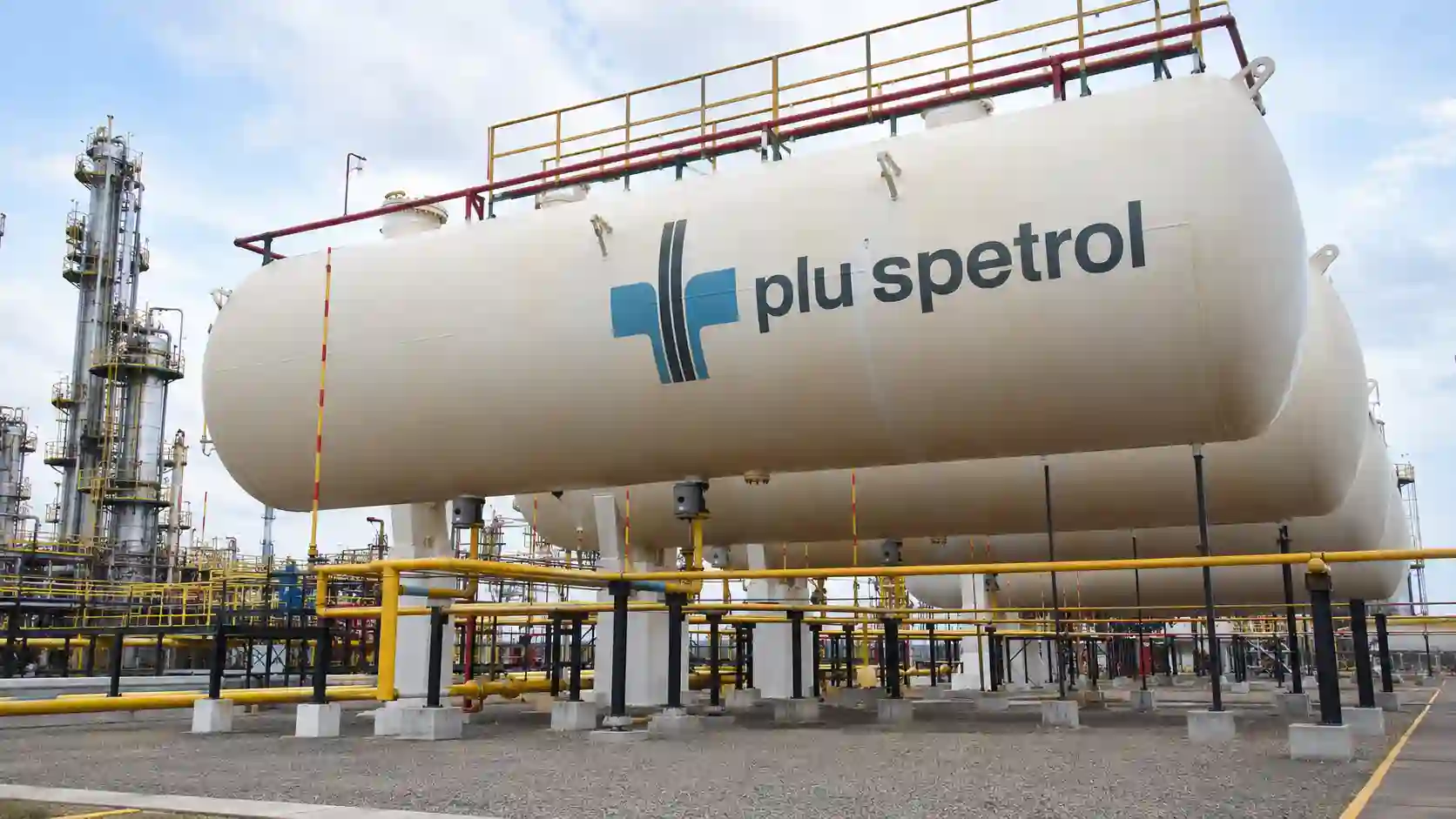
Pluspetrol is a two-platform Vaca Muerta operator.
La Calera is the established wet-gas and condensate platform, with an operating CPF and further capacity expansion planned through 2028.
Bajo del Choique–La Invernada is the shale-oil growth platform, with production rising from 5,600 barrels per day at the end of 2024 to 25,000 barrels per day in 2025 and company targets of 50,000 in 2026 and 70,000 in 2027.
Neuquén reported RIGI evaluation-committee approval for Pluspetrol and GyP on October 2, 2026. The updated plan is USD 12.4 billion over 25 years, more than 620 horizontal wells and four processing plants. These remain development commitments, not completed capacity.
Core market reading:
Pluspetrol’s current company value comes from an operating gas platform, a fast oil ramp, and direct infrastructure exposure. The long-term RIGI plan adds scale, but it should not replace the current operating picture.
Company profile: private operator with limited public disclosure
Pluspetrol is a privately held Latin American oil and gas company. Unlike YPF, Vista Energy or Pampa Energía, it does not publish standardized quarterly investor reporting.
Analysis therefore relies on company operating pages, project announcements, provincial environmental and RIGI documents, infrastructure-company information and public filings from transaction counterparties.
In Argentina, the company’s current Vaca Muerta profile is concentrated around La Calera and Bajo del Choique–La Invernada, supported by its interests in Oldelval and VMOS.
Two operating pillars
La Calera
An established operating platform with 116 drilled wells, a CPF commissioned in early 2025 and further capacity expansion planned through 2028.
Bajo del Choique–La Invernada
A rapidly expanding oil-weighted platform acquired through the ExxonMobil Argentina transaction and linked to a long-term RIGI development.
Oldelval
Pluspetrol’s 21.3-percent interest links current production to the basin’s principal crude-oil transport system.
VMOS
Pluspetrol is a shareholder and contracted-capacity holder in a separate multi-producer Atlantic export system.
La Calera: operating wet gas and condensate
La Calera is located in Vaca Muerta’s wet-gas window. Pluspetrol reports 116 drilled wells by December 2025 and a central processing facility in operation since early 2025.
The current CPF capacity is 14.5 million cubic metres of gas per day and 30,000 barrels of condensate per day. These are capacity figures, not average-production figures.
Pluspetrol plans to expand La Calera by 2028 to approximately 17 million cubic metres of gas per day and 40,000 barrels of condensate per day.
| La Calera metric | Current or planned figure | Status reading |
|---|---|---|
| Drilled wells | 116 by December 2025 | Current operating footprint. |
| Gas-processing capacity | 14.5m m³/day | Existing CPF capacity. |
| Condensate capacity | 30k bbl/day | Existing CPF capacity. |
| 2028 expansion | 17m m³/day gas and 40k bbl/day condensate | Company expansion plan, not current output. |
Bajo del Choique: the shale-oil growth curve
Bajo del Choique–La Invernada entered Pluspetrol’s portfolio through the acquisition of ExxonMobil Exploration Argentina.
Pluspetrol reports that production increased from 5,600 barrels per day at the end of 2024 to 25,000 barrels per day during 2025.
The company targets 50,000 barrels of oil per day and 2.7 million cubic metres of gas per day in 2026, followed by 70,000 barrels and 4.9 million cubic metres in 2027.
These are short-term operating targets. They must remain separate from the full RIGI plan, which extends over 25 years and targets peak production of 100,000 barrels and up to 12 million cubic metres of gas per day.
| Development stage | Oil | Gas |
|---|---|---|
| End of 2024 | 5.6k bbl/day | Not stated as the project-stage headline metric. |
| 2025 reported | 25k bbl/day | Current operating gas average not stated on the same basis. |
| 2026 target | 50k bbl/day | 2.7m m³/day |
| 2027 target | 70k bbl/day | 4.9m m³/day |
| Full RIGI plan | 100k bbl/day | Up to 12m m³/day |
The USD 12.4 billion RIGI development
Pluspetrol and Gas y Petróleo del Neuquén formally submitted the Bajo del Choique–La Invernada project to RIGI on April 23, 2026.
The October approval announcement updates the April application. The original April project figures below describe the development phases, rather than a verified current production rate.
Phase one covers the southern area with two plants, 50,000 barrels of oil per day and 6 million cubic metres of gas per day. Phase two adds the northern area and two more plants.
RIGI status
Evaluation-committee approval reported by Neuquén on October 2, 2026.
Southern development
Two processing plants, 50k bbl/day oil and 6m m³/day gas.
Northern development
Two additional plants and full-project targets of 100k bbl/day and up to 12m m³/day.
Environmental and operating approval path
Neuquén held the public environmental hearing for Bajo del Choique–La Invernada on March 31, 2026.
The hearing was public and non-binding. It formed part of the technical environmental-review process and should not be confused with RIGI approval.
The submitted project scope includes roads, pads, unconventional wells, water and monitoring wells, flowlines, gathering systems, treatment facilities, worker accommodation and production and transport infrastructure.
Completion of a public hearing does not by itself equal final environmental authorization.
Oldelval and VMOS: existing and future evacuation
Oldelval: current basin infrastructure
Pluspetrol reports a 21.3-percent interest in Oldelval. This links its operating assets directly to the principal oil-evacuation system of the Neuquén Basin.
VMOS: contracted Atlantic export capacity
Pluspetrol exercised its option to become a VMOS shareholder and announced firm capacity of 80,000 barrels per day for transport, storage and loading.
VMOS is a separate multi-producer midstream company. Pluspetrol is one participant alongside YPF, Pan American Energy, Vista, Pampa Energía, Chevron, Shell and Tecpetrol.
VMOS’s public site still presents a staged plan: early capacity targeted for Q3 2026 and 390,000 barrels per day around mid-2027, with later expansion. Since the first target date has passed, the schedule alone is not evidence of commissioning or delivered export capacity. Operating status requires a separate completion announcement.
Infrastructure reading:
Oldelval supports current evacuation. VMOS provides future Atlantic export scale. Neither system is a Pluspetrol-only asset.
Portfolio transactions changed the asset map
ExxonMobil Argentina acquisition
Pluspetrol acquired Bajo del Choique–La Invernada, Los Toldos I Sur, Los Toldos II Oeste, Pampa de las Yeguas and the Oldelval interest through the ExxonMobil Exploration Argentina transaction.
Pluspetrol did not publicly disclose a definitive transaction price. The strategic significance lies in the asset and infrastructure perimeter.
YPF asset swap
On January 22, 2026, Pluspetrol agreed to transfer its 50-percent interests in Las Tacanas, Meseta Buena Esperanza and Aguada Villanueva to YPF.
The first transaction leg closed on April 30, giving YPF full control of the Southern Hub. The reciprocal transfer of a 20-percent economic interest in La Escalonada and Rincón La Ceniza to Pluspetrol remained subject to conditions.
JPM Energía transfer
Pluspetrol transferred an 80-percent interest in Los Toldos I Sur and a 50-percent interest in Pampa de las Yeguas I to JPM Energía.
Econosur interprets the transaction as a move toward greater concentration around La Calera and Bajo del Choique–La Invernada. The official transaction notice itself confirms the interests transferred, not the strategic label.
Financing the operating ramp
In February 2026, Pluspetrol placed USD 167.4 million of notes in Argentina at a 6.5-percent rate with maturity in February 2029.
Pluspetrol said the proceeds would support development at La Calera and Bajo del Choique–La Invernada.
Because Pluspetrol is privately held, this financing does not provide a complete view of consolidated debt or liquidity. It does, however, show direct capital-market support for the Vaca Muerta operating ramp.
How Pluspetrol is organizing execution
Pluspetrol describes a concrete operating-resource structure for Bajo del Choique:
- three high-spec drilling rigs for horizontal wells;
- one medium-spec rig for service, surface and intermediate sections;
- a dedicated unit for basalt drilling;
- a permanently deployed fracturing crew from the second half of the programme.
The long-term plan indicates future demand for drilling, completions, processing, compression, automation, water systems, field power, maintenance and environmental services.
These categories do not prove that individual procurement packages are currently open. Supplier access depends on project phase, operator qualification, local presence, contract packaging and procurement timing.
For European industrial suppliers, Pluspetrol is one decision point inside a wider procurement structure. Econosur’s European Suppliers in Vaca Muerta report maps how 24 European supplier cases reach Vaca Muerta demand through operators, EPC contractors, engineering firms, integrators, distributors, project companies and local service platforms.
Risk structure
| Risk layer | Pluspetrol exposure |
|---|---|
| RIGI status | Large long-term plan remains submitted rather than confirmed as approved. |
| Environmental approval | Public hearing completed, but technical review remains separate. |
| Execution scale | More than 600 wells and four plants require long-horizon contractor, equipment and workforce capacity. |
| Infrastructure timing | Production growth depends on Oldelval, VMOS and gas-evacuation systems. |
| Private-company disclosure | Public data is less standardized than for listed peers. |
| Policy and FX risk | Tax, customs, import, currency and provincial-federal implementation affect returns. |
Pluspetrol combines an established wet-gas and condensate platform with shale-oil growth and direct pipeline exposure. The commercial distinction is between existing processing capacity, announced production targets, the approved RIGI development and the contracts required to execute it.
For suppliers, the useful unit of analysis is the individual asset and procurement package. The investment headline does not establish an open purchasing window or an accessible vendor route.
Research Services for Pluspetrol and Vaca Muerta
Econosur can investigate a defined company, sector, project or market question within its South American operating context.
Verify the operating needs of La Calera and Bajo del Choique separately.
Map contractors, service providers, regional decision centres and incumbent suppliers.
Check qualification, local support, documentation and realistic routes to the operator.
Distinguish approved investment, financed phases, active purchasing and commissioned capacity.
For a defined research question, see Custom Market Analysis South America.
Published company and project information establishes the public evidence base. Announced investment, approved capacity, construction, operating output and active procurement are separate stages. Purchasing contacts, current requirements and commercial terms require direct verification.
Primary, Institutional and Secondary Sources
- Pluspetrol Argentina operations — national portfolio and operating context.
- Pluspetrol La Calera and Northern Basin — wells, CPF capacity, Bajo del Choique production and 2026–2027 targets.
- Pluspetrol — ExxonMobil Exploration Argentina asset acquisition.
- Neuquén government — RIGI application, phases, investment and production targets.
- Neuquén government — environmental public hearing and project scope.
- Pluspetrol — VMOS shareholding option and firm capacity.
- VMOS official project site — current participants, phases and capacity schedule.
- Pluspetrol — February 2026 notes issuance and use of proceeds.
- YPF filing — January 2026 asset-swap agreement with Pluspetrol.
- YPF filing — April 2026 closing of the Southern Hub leg and conditional reciprocal transfer.
- Neuquén government — JPM Energía transfer of Los Toldos I Sur and Pampa de las Yeguas I interests.
- Neuquén — October 2, 2026 RIGI committee-approval announcement
Official statistics, regulatory documents, company disclosures and independent reporting serve different purposes. Company targets and sponsor proposals are attributed as such. Data periods are stated beside the relevant claims; historical figures are not presented as October 2026 measurements.
Frequently asked questions
What are Pluspetrol's main Vaca Muerta assets?
La Calera is Pluspetrol's established wet-gas and condensate platform. Bajo del Choique–La Invernada is the company's main shale-oil growth asset and the centre of its 12.4-billion-dollar RIGI development.
What is La Calera's current production capacity?
Pluspetrol states that La Calera's CPF can process 14.5 million cubic metres of gas per day and 30,000 barrels of condensate per day, with expansion plans toward 17 million cubic metres and 40,000 barrels by 2028.
How much oil does Bajo del Choique produce?
Pluspetrol reported an increase from 5,600 barrels per day at the end of 2024 to 25,000 barrels per day in 2025. These are operating figures and should be separated from later production targets.
What are Pluspetrol's 2026 and 2027 production targets?
The company targets 50,000 barrels of oil per day and 2.7 million cubic metres of gas per day in 2026, rising to 70,000 barrels and 4.9 million cubic metres in 2027.
Has the 12.4-billion-dollar RIGI development been approved?
Yes. Neuquén reported evaluation-committee approval on October 2, 2026.
What is the environmental status of Bajo del Choique?
A public environmental hearing was completed on March 31, 2026. The hearing was non-binding and formed part of a separate technical environmental-review process from the RIGI application.
How much of Oldelval does Pluspetrol own?
Pluspetrol reports a 21.3-percent interest in Oldelval, the principal oil-evacuation system for Neuquén Basin crude.
How much VMOS capacity does Pluspetrol hold?
Pluspetrol announced firm capacity of 80,000 barrels per day for transport, storage and loading in the separate multi-producer VMOS system.
What changed in the YPF asset swap?
Pluspetrol transferred its 50-percent interests in Las Tacanas, Meseta Buena Esperanza and Aguada Villanueva to YPF. The reciprocal transfer of a 20-percent economic interest in La Escalonada and Rincón La Ceniza remained conditional.
Which assets were transferred to JPM Energía?
Pluspetrol transferred an 80-percent interest in Los Toldos I Sur and a 50-percent interest in Pampa de las Yeguas I to JPM Energía.
How is Pluspetrol financing its Vaca Muerta expansion?
In February 2026, Pluspetrol placed 167.4 million dollars of notes at 6.5 percent due in February 2029, with proceeds assigned to La Calera and Bajo del Choique–La Invernada.