
Company Insight · Argentina · Pampa Energía · Gas · Power · Oil · Fertilizers · Updated October 16, 2026
Pampa Energía: Argentina’s Integrated Energy-to-Industry Platform
Pampa links Vaca Muerta gas with power generation, regional exports, LNG and a board-approved urea project, while Rincón de Aranda creates a separate RIGI-backed shale-oil export platform.
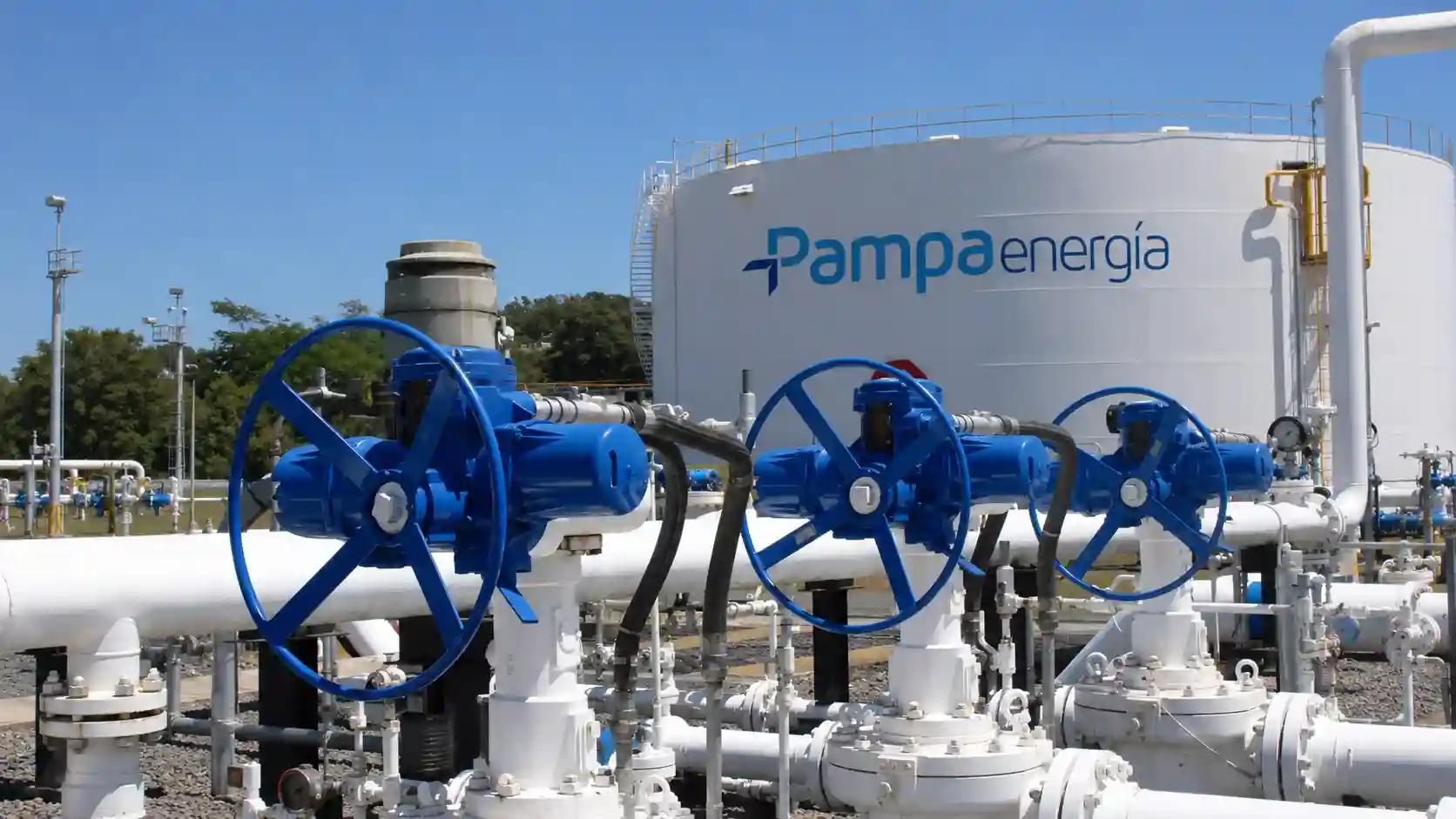
Pampa Energía is building two distinct Vaca Muerta growth platforms.
The gas platform monetizes El Mangrullo and Sierra Chata through power generation, regional exports, Southern Energy LNG and the board-approved Fértil Pampa urea project.
The oil platform is Rincón de Aranda, approved under RIGI as a Long-Term Strategic Export Project with 259 future wells, dedicated processing and transport infrastructure and an estimated USD 4.5 billion investment. In Q2 2026, the block averaged 22.2 thousand barrels per day as the ramp-up continued.
See the wider Oil & Gas in South America structure and the analysis of Vaca Muerta, urea and fertilizer security.
Pampa’s integrated operating platform
Generation at national scale
Pampa’s current corporate profile reports 5,207 MW of generation capacity: approximately 4,093 MW thermal, 673 MW hydro, 427 MW wind and 14 MW cogeneration. The portfolio changed after the HINISA concession expired on July 31, 2026.
El Mangrullo and Sierra Chata
The two core fields supplied about 88 percent of Pampa’s Q1 2026 natural-gas production.
Rincón de Aranda
The shale-oil block adds a dedicated export-growth platform with its own processing and transport requirements.
Southern Energy
Pampa owns 20 percent and has committed gas supply to the two-vessel floating-LNG platform.
Petrochemicals and fertilizer
Existing petrochemicals and Fértil Pampa extend gas and electricity into higher-value industrial products.
Transport and market access
TGS, Transener, Perito Moreno capacity, regional pipelines and VMOS connect production with buyers.
Power generation remains the scale base
Pampa’s current 5,207 MW generation portfolio includes approximately 4,093 MW of thermal capacity, 673 MW of hydro, 427 MW of wind and 14 MW of cogeneration.
The generation business is strategically important because it creates an internal destination for natural gas and exposes Pampa to Argentina’s electricity-market rules.
Pampa’s Q2 2026 results reinforced that integration. Power generation reached 5,363 GWh in the quarter, up 14% year on year, while the company cited higher gas sales to power generation and self-supply under the new electricity-market framework.
Sierra Chata and El Mangrullo: the gas-production base
Pampa produced 14.3 million cubic metres of gas per day in Q2 2026. Sierra Chata reached a quarterly record of 7.4 million cubic metres per day, while El Mangrullo contributed 5.2 million. Together they still accounted for about 88 percent of total gas production.
Rincón de Aranda remains primarily an oil project. Associated gas from Rincón de Aranda and the Parva Negra Este exploratory well contributed about 0.3 million cubic metres per day in Q2. Pampa’s gas-to-power, export, LNG and fertilizer strategies therefore still depend mainly on Sierra Chata and El Mangrullo.
| Gas source | Q2 2026 production | Strategic role |
|---|---|---|
| El Mangrullo | Approximately 5.2m m³/day | Core gas supply for domestic markets and Pampa’s wider monetization system. |
| Sierra Chata | Approximately 7.4m m³/day | Quarterly record in Q2 2026 and a core supply source for Pampa’s wider monetization system. |
| Other fields | Approximately 1.7m m³/day combined | Additional portfolio supply and seasonal flexibility. |
Four gas-monetization routes
1. Own power generation
Pampa can sell gas into its own thermal-generation system. This does not eliminate market and regulatory risk, but it creates an integrated demand channel inside the group’s operating platform.
2. Regional exports to Chile and Brazil
Pampa supplies Chile through GasAndes and Gasoducto del Pacífico. In May 2025, it began firm deliveries of 183,000 cubic metres per day to Chile’s Biobío region, with plans to exceed 400,000, in addition to approximately 1 million cubic metres per day supplied toward Santiago.
The company also completed its first gas shipment to Brazil through Bolivia and reported two Brazilian agreements totaling up to 2 million cubic metres per day. A test shipment and contractual ceiling are not the same as continuous firm delivery.
3. Southern Energy LNG
Pampa owns 20 percent of Southern Energy S.A. The two-vessel FLNG platform includes the 2.45-MTPA Hilli Episeyo and the 3.5-MTPA MKII, creating combined nameplate capacity of almost 6 MTPA.
Southern Energy took final investment decision for the two-vessel structure. Pampa committed to supply up to 6 million cubic metres of gas per day under long-term agreements. On March 4, 2026, Southern Energy and Germany’s SEFE signed a definitive eight-year Sales and Purchase Agreement for 2 million tonnes of LNG per year from late 2027. The original Hilli-stage project received RIGI approval in 2025; construction, commissioning and first LNG remain later operating milestones.
4. Fértil Pampa
Fértil Pampa turns natural gas and electricity into granular urea. Unlike the earlier feasibility-stage presentation, Pampa’s board has now approved final investment decision.
Pampa’s gas strategy now has domestic, regional, global and industrial outlets.
Rincón de Aranda: a separate oil-export platform
Rincón de Aranda covers 237 square kilometres in Vaca Muerta’s black-oil window. Pampa operates the block and is developing it as a dedicated export project rather than merely an extension of the company’s gas portfolio.
The Ministry of Economy approved the project under RIGI in July 2026 as a Long-Term Strategic Export Project. The approved plan includes 259 future wells, an oil-treatment and processing facility with capacity of up to 45,000 barrels per day, gas processing of approximately 800,000 cubic metres per day, pipelines and flowback-water treatment infrastructure.
Estimated investment is approximately USD 4.5 billion through 2041. Pampa expects virtually all project production to be exported and estimates around USD 17 billion in lifetime export revenue.
The 259 wells belong to the approved future project scope. They do not include every historical well already operating at Rincón de Aranda.
Q2 2026 makes the execution phase visible. Pampa reported average Rincón de Aranda production of 22.2 thousand barrels per day, supported by 43 producing wells. Ten additional wells were completed in July and were ready to be tied in during August. The second temporary processing facility increased treatment capacity from 20 to 28 thousand barrels per day while the permanent 45-thousand-barrel-per-day facility remains part of the larger development plan.
This company-level build-out sits inside the wider transition mapped in Econosur’s Argentina’s RIGI Energy Pipeline: The Next Constraint Is Execution: RIGI is increasingly connecting upstream development with processing, pipelines and export infrastructure, making execution capacity a central commercial question.
Project status
Approved as a Long-Term Strategic Export Project in July 2026.
Processing and evacuation
A 45,000-bbl/day facility, pipelines and VMOS access must advance with the well programme.
Commercial destination
Pampa expects virtually all production from the approved project to serve export markets.
Fértil Pampa: final investment decision approved
The September RIGI decision makes the execution sequence more explicit: the submitted investment plan separates engineering and equipment procurement through 2027 from assembly and commissioning in 2028–2029. Suppliers still need to verify individual packages, contracting routes and actual award status.
On July 17, 2026, Pampa’s board approved a USD 2.7 billion final investment decision for a granular urea complex in Bahía Blanca.
The wholly owned Fértil Pampa S.A.U. will develop the project on an 80-hectare site. The announced design includes an ammonia plant, two granular-urea trains with combined capacity of 6,000 tonnes per day, a desalination plant, storage silos and new truck and vessel loading infrastructure.
Annual capacity is planned at 2.1 million tonnes, which would make the facility Latin America’s largest urea plant by production capacity. Pampa estimates approximately 41 months for completion, more than 3,500 direct jobs at peak construction and about 300 operating positions.
Natural gas and electricity represent about 70 percent of the expected urea cost structure and will be supplied primarily by Pampa. This is the clearest proof of the company’s integration thesis: upstream gas and electricity are converted inside a downstream industrial asset.
Brazil is the stated primary external market. Pampa estimates roughly USD 1 billion per year of foreign-currency impact through import substitution and exports.
Status distinction:
Final investment decision was approved in July. Resolution 1468/2026, published on September 7, formally approved Fértil Pampa under RIGI as a Long-Term Strategic Export Project. It sets August 3 as the adhesion date. The Buenos Aires REPIE process, financing execution, construction and commissioning remain separate milestones.
| Fértil Pampa layer | Current status |
|---|---|
| Pampa board decision | Final investment decision approved. |
| RIGI | Formally approved through Resolution 1468/2026, published September 7; adhesion dated August 3. |
| REPIE | Buenos Aires provincial application submitted June 10, 2026; approval pending. |
| IDB Invest structure | Proposed financing process; no financial close confirmed. |
| Construction and commissioning | Approximately 41-month implementation period announced. |
Who controls Fértil Pampa execution?
Fértil Pampa S.A.U.
Wholly owned Pampa subsidiary and project-development vehicle.
SACDE
Responsible for construction under the announced execution structure.
Tecnimont
Responsible for engineering and procurement management under the turnkey arrangement.
Nextchem, Stamicarbon and KBR
Technology providers for the announced ammonia and urea production system.
For European industrial suppliers, this execution structure shows why Vaca Muerta demand cannot be read as one direct operator market. Econosur’s European Suppliers in Vaca Muerta report maps how suppliers reach demand through operators, EPC and engineering structures, integrators, distributors, project companies and local service platforms.
Transport exposure without full consolidation
Pampa holds a 26.9-percent co-controlling interest in TGS and a 26.3-percent indirect interest in Transener. These are strategically important affiliates, not fully consolidated operating subsidiaries in Pampa’s IFRS results.
TGS provides exposure to approximately 9,248 kilometres of gas pipelines and liquids processing. Transener operates and maintains most of Argentina’s high-voltage transmission network.
Pampa also secured 3.2 million cubic metres per day of capacity for 35 years in the Gasoducto Perito Moreno expansion, equal to around 27 percent of the planned new capacity toward Buenos Aires from 2027.
In April 2026, Pampa Energía Soluciones S.A. was registered as a natural-gas marketer. This adds a commercial layer between production, transport access, internal consumption, industrial buyers and exports.
Financing an integrated investment cycle
Pampa reported net debt of about USD 1.3 billion at June 30, 2026, up from USD 801 million at year-end 2025. The company linked the increase primarily to higher capital expenditure at Rincón de Aranda and additional collateral requirements related to oil hedging.
After quarter-end, the company issued USD 200 million of local notes at 5.49 percent and reopened its 2037 international bond for another USD 500 million.
These figures must be read against simultaneous capital demands from Rincón de Aranda, Fértil Pampa, Southern Energy, power assets and transport commitments. Project finance, affiliate structures and staged construction reduce some balance-sheet pressure, but they do not remove execution and refinancing risk.
Project-status matrix and remaining risk
| Project | Status | Main remaining risk |
|---|---|---|
| Rincón de Aranda | RIGI/PEELP approved; in development. | Well delivery, CPF construction, water systems and evacuation capacity. |
| VMOS | Multi-producer export project under construction. | Schedule, commissioning and ramp-up. |
| Southern Energy | Two-vessel FID; original Hilli-stage RIGI approval. | FLNG delivery, pipeline supply and commissioning. |
| Fértil Pampa | Board FID and formal RIGI/PEELP approval established. | REPIE, financing execution, construction and commissioning. |
| IDB Invest financing | Proposed. | Board approval, syndication and financial close. |
| Perito Moreno capacity | Capacity awarded. | Expansion delivery and operating availability. |
Execution is the central company risk.
Pampa must deliver oil wells, treatment infrastructure, gas transport, FLNG supply, a large fertilizer complex and financing structures while remaining exposed to Argentine power, gas, currency and export regulation.
Three business questions that require deeper research
Which parts of Pampa’s investment program are still commercially addressable for suppliers?
Rincón de Aranda, Southern Energy, San Matías, TGS projects and Fértil Pampa sit at different stages. The useful research task is to separate open packages and qualification windows from scopes already allocated to operators, EPC contractors or incumbent suppliers.
Who actually controls purchasing decisions across Pampa’s upstream, LNG, midstream and industrial projects?
The relevant buyer can be Pampa itself, a subsidiary such as Fértil Pampa, an affiliate such as TGS, a joint project company such as Southern Energy or San Matías Pipeline, or an EPC contractor such as Tecnimont or SACDE. Supplier strategy depends on mapping the real package owner.
Where could Pampa’s simultaneous projects create temporary capacity gaps or specialist-supplier opportunities?
The company is scaling oil production while participating in LNG, gas transport, NGL, fertilizer and power infrastructure. Overlapping requirements in processing, pipelines, water, compression, electrical systems, logistics and commissioning can matter more than the headline capex total.
Public company disclosures show project scale and status, but not the complete commercial pipeline.
They do not normally disclose full tender calendars, approved-vendor gaps, incumbent supplier positions, package-level decision makers or the realistic timing for a new international supplier.
Pampa is not merely diversified. It is attempting to convert its own gas and power into LNG and fertilizer while building a separate oil-export system around Rincón de Aranda.
Research Services for Pampa Energía and Connected Projects
Marcus A. Volz can investigate a defined market, company, project, buyer or supplier question through source analysis, targeted interviews and verification.
Identify decisions held by Pampa, Fértil Pampa, Southern Energy, transport affiliates and execution contractors.
Map equipment suppliers, engineering firms, local partners and incumbent positions around a defined requirement.
Check technical documentation, local service requirements and actual purchasing conditions through targeted conversations.
Track RIGI milestones, financing, construction and package awards without treating group investment as an open tender.
See Custom Market Analysis South America or discuss a research question.
Published information establishes the documented context. It does not by itself establish current purchasing needs, supplier positions, confidential contracts, complete qualification requirements or commercial accessibility. Project announcements, approvals, financing, awards, construction and operations remain separate milestones. The scope of any direct research is agreed around the specific question.
Sources and evidence
Source review: October 16, 2026. Reporting periods and the status of proposals, approvals, construction and operations are identified separately. Company statements remain attributable to the issuer.
- Pampa 2025 Form 20-F — company structure, assets, Rincón de Aranda scope, affiliates and risk factors.
- Pampa Q1 2026 results — production, gas fields, generation, debt and affiliate accounting.
- Pampa corporate profile — current generation, production, TGS and Transener exposure.
- Pampa Q2 2026 earnings release — record production, Rincón de Aranda ramp-up, gas-field mix, net debt, San Matías and current project status.
- SEFE — definitive eight-year Southern Energy LNG Sales and Purchase Agreement for 2 Mtpa from late 2027.
- Pampa — Rincón de Aranda RIGI/PEELP approval and official project parameters.
- Pampa — Fértil Pampa final investment decision, design, execution partners and remaining conditions.
- Pampa — Southern Energy two-vessel FID, ownership and gas-supply commitments.
- Resolution 559/2025 — Southern Energy original LNG project RIGI approval.
- Pampa — first gas export to Brazil and contractual ceiling.
- Pampa — firm gas exports to Chile’s Biobío region.
- Pampa — Perito Moreno capacity award and 2026 investment context.
- Resolution 430/2026 — registration of Pampa Energía Soluciones as a gas marketer.
- IDB Invest — proposed financing structure for Fértil Pampa.
- VMOS official project site — multi-producer oil-export infrastructure.
- Resolution 1468/2026, published September 7: formal Fértil Pampa RIGI/PEELP approval, adhesion date and investment stages.
- Pampa, September 7: company confirmation of RIGI approval and announced plant capacity.
Reporting provides context and attributed statements. Official decisions and company filings are used for the corresponding formal milestones.
Frequently asked questions
What is Pampa Energía?
Pampa Energía is a listed integrated Argentine energy company active in power generation, oil and gas, petrochemicals and strategic transport exposure through non-consolidated affiliates TGS and Transener.
What are Pampa's main gas-producing assets?
Sierra Chata and El Mangrullo remain the core gas assets. In Q2 2026 Sierra Chata averaged 7.4 million cubic metres per day and El Mangrullo 5.2 million, together accounting for about 88 percent of Pampa's gas output.
Does Pampa export natural gas?
Yes. Pampa has supplied Chile through GasAndes and Gasoducto del Pacífico and completed its first shipment to Brazil through Bolivia. The company has also signed Brazilian arrangements totaling up to 2 million cubic metres per day.
What is Pampa's stake in Southern Energy?
Pampa owns 20 percent of Southern Energy and has committed gas supply to the two-vessel FLNG platform. Southern Energy also has a definitive eight-year agreement with SEFE for 2 million tonnes of LNG per year from late 2027.
What is the status of Rincón de Aranda under RIGI?
Rincón de Aranda was approved under RIGI as a Long-Term Strategic Export Project in July 2026. The approved project covers 259 future wells, dedicated processing and transport infrastructure and about US$4.5 billion of investment through 2041. Pampa reported average Rincón de Aranda oil production of 22.2 thousand barrels per day in Q2 2026.
Has Pampa approved Fértil Pampa's final investment decision?
Yes. Pampa's board approved a 2.7-billion-dollar final investment decision on July 17, 2026 for a 2.1-million-tonne-per-year granular urea plant in Bahía Blanca.
Is Fértil Pampa already approved under RIGI?
Yes. Resolution 1468/2026 was published on September 7 and formally admitted the Fertilizantes project under RIGI as a Long-Term Strategic Export Project, with adhesion dated August 3, 2026. RIGI approval does not establish completion of construction or commercial production.
Who will build Fértil Pampa?
SACDE is responsible for construction, Tecnimont for engineering and procurement management, and technology will be supplied by Nextchem through Stamicarbon together with KBR.
When could Fértil Pampa begin production?
Pampa announced an approximately 41-month execution period. The RIGI investment plan places engineering and equipment procurement in 2026–2027 and assembly, commissioning and start-up in 2028–2029. These are planned stages, not evidence of an operating plant.
What role does the Perito Moreno pipeline expansion play?
Pampa secured 3.2 million cubic metres per day of capacity for 35 years, equal to about 27 percent of the planned new transport capacity toward Buenos Aires from 2027.
Are TGS and Transener consolidated subsidiaries of Pampa?
No. Pampa has co-controlling strategic interests of about 26.9 percent in TGS and 26.3 percent indirectly in Transener, but both are excluded from Pampa's consolidated IFRS figures.