
Chile · Aquaculture · Salmon · September 2026
Chile’s Salmon Industry: Growth Without More Farms
Chile is exporting more salmon without a comparable expansion in conventional farming capacity. The industry is moving toward a different growth model shaped by productivity, regulation, biological performance, regional shifts and a changing export mix.
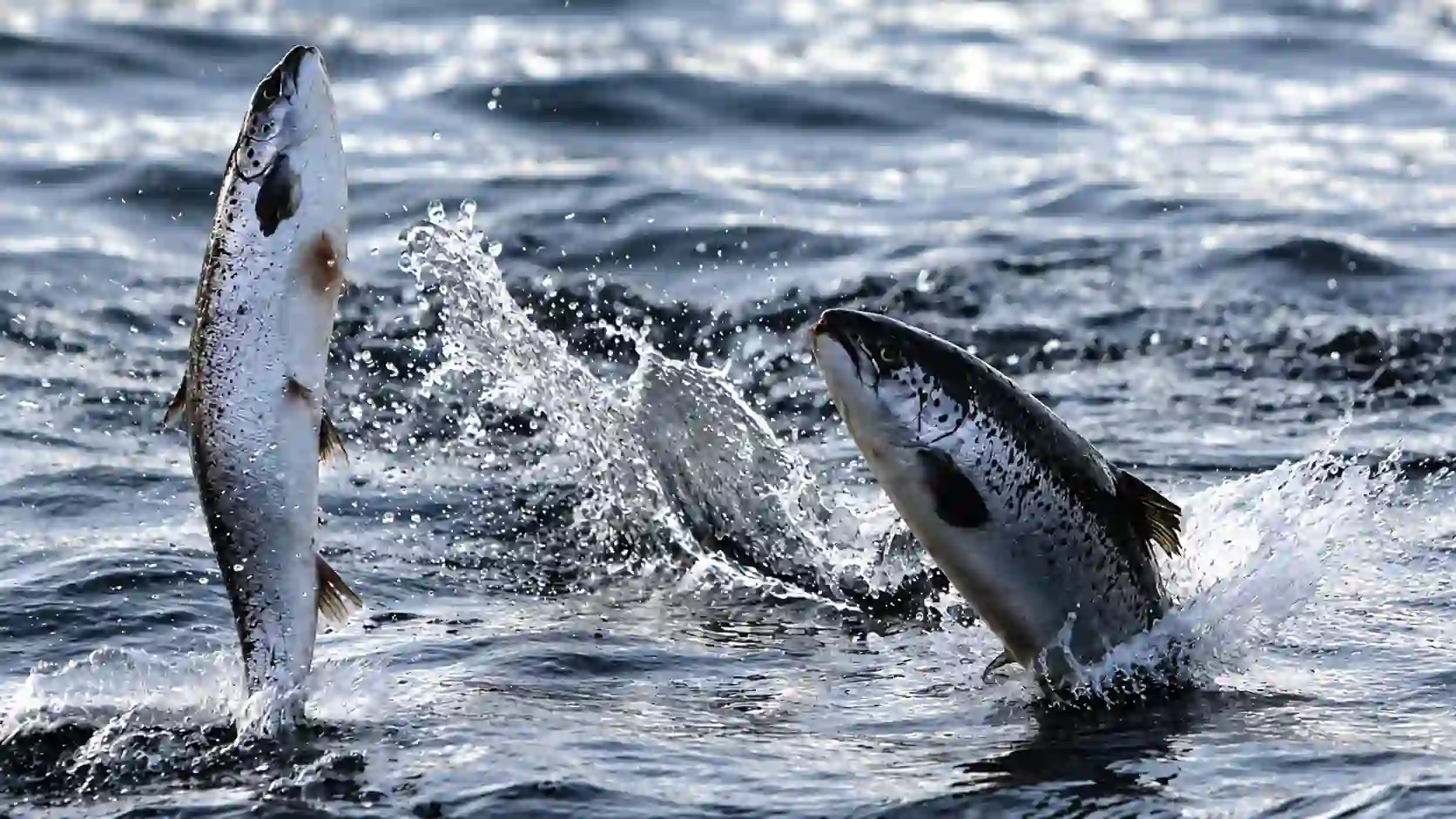
Chile’s salmon industry is still growing, but the source of growth is changing.
Salmon and trout exports reached US$1.99 billion FOB in Q1 2026, according to Banco Central figures reported by InvestChile. InvestChile, citing El Pulso, described it as the strongest first quarter in at least two decades. SalmonChile reported that export volume rose about 19% year on year even though harvested biomass had grown by only about 2% per year on average over the previous five years.
By January–August 2026, ProChile reported US$4.484 billion in salmon and trout exports, up 6.2% year on year. The structural question is therefore not whether Chile can sell more salmon. It is how the industry can keep increasing value and output when conventional capacity expansion is constrained by site availability, regulation, environmental limits and long-running relocation processes.
The capacity-ceiling argument should not be read as a forecast that Chilean harvests will stop growing. Sernapesca data show that harvests can rise sharply in individual periods. The stronger conclusion is that growth in export demand and value is increasingly being separated from simple expansion in conventional farming capacity.
That distinction matters after the August 2026 Constitutional Court ruling on micro-relocations. The Ministry of Economy said the government would pursue alternative administrative and legislative routes after the court rejected the proposed exemption from environmental evaluation for micro-relocations of up to 350 meters. The regulatory bottleneck therefore remains unresolved rather than removed.
Record Exports, Slower Structural Production Growth
Chile entered 2026 with a striking divergence between export performance and the industry’s longer-term production trajectory. Banco Central figures reported by InvestChile put Q1 salmon and trout exports at US$1.99 billion FOB, 8% above the same period in 2025. InvestChile, citing El Pulso, described it as the strongest first quarter in at least two decades. SalmonChile’s export bulletin measured roughly 19% volume growth for the quarter.
The more important number is the five-year comparison. SalmonChile says harvested biomass in Chile increased by only about 2% per year on average over the previous five years, versus about 4% in Norway. A single strong harvest year or quarter does not erase that structural difference. It shows that Chile can improve output within the system, but the system itself is not expanding at the same rate as the headline export numbers.
The most recent trade data reinforce the scale of the market. ProChile, using Servicio Nacional de Aduanas figures, reported US$4.484 billion in salmon and trout exports during January–August 2026, up 6.2% year on year. Salmon remains one of the country’s largest non-mining export systems and a major source of economic activity in southern Chile.
If export markets can absorb more Chilean salmon faster than conventional production capacity can be expanded, where does the next unit of growth come from? Increasingly, the answer is inside the existing production system: feed conversion, survival, fish health, biomass measurement, environmental monitoring, remote operations, processing yield, cold-chain execution and product mix.
What “Capacity Ceiling” Actually Means
The phrase does not mean Chile has reached a fixed biological maximum. It describes a commercial and regulatory structure in which additional conventional capacity is difficult to add quickly. The Consejo del Salmón used the term techo de crecimiento in May 2026 and argued that Q1 growth came from better management of installed capacity rather than production expansion. Its annual review of 2025 similarly described a scenario of productive stagnation in which efficiency, innovation, commercial formats and exchange-rate effects supported export value without materially expanding production capacity.
That interpretation comes from industry associations and should be treated as such. But it aligns with observable regulatory constraints: farming density is actively regulated, concession-group rules are updated by Sernapesca and Subpesca, and relocation processes can remain open for years. In May 2026, Subpesca reported 214 relocation applications in process, with 68 identified as not subject to indigenous coastal-space claims or protected-area management plans.
The practical result is a different growth logic. When new farming area, biomass rights or relocations cannot be assumed, the industry has to generate more value from the production system already in place. Productivity, biological performance, processing and market mix therefore move closer to the center of the growth story.
Growth depends on licensed sites, relocation, environmental conditions and the suitability of existing concessions.
Mortality, disease, oxygen, temperature, harmful algae, lice and fish welfare affect how much value a site can produce.
Feeding, biomass estimation, remote operations, processing, vessels and logistics determine how efficiently installed capacity is used.
Aysén Is Changing the Production Map
The capacity story is also geographic. Sernapesca’s 2025 national inspection report shows that Aysén accounted for 45.5% of Chile’s salmonid harvest, ahead of Los Lagos at 41.4% and Magallanes at 12.9%. Compared with 2024, Aysén gained 8.2 percentage points while Los Lagos lost 10.7 points.
The Q1 2026 Aysén bulletin shows why this matters for the structure of the industry. Harvest volume reached 136,588 tonnes, up 16.6% year on year, while the number of harvested farming centers rose only from 62 to 63. At the same time, biomass stocked during the quarter fell 39.1% and the number of newly stocked centers fell from 59 to 40.
Those figures should not be extrapolated mechanically into a national productivity ratio, but they illustrate the operating reality behind the headline: more harvest can come from a relatively stable site base. A larger Aysén role also changes the geography of Chile’s salmon economy, increasing the weight of more remote southern production while Los Lagos remains the industry’s established processing, services and operational center.
| Region | Share of Chilean salmonid harvest, 2025 | Change vs. 2024 | Industry implication |
|---|---|---|---|
| Aysén | 45.5% | +8.2 percentage points | A larger share of national harvest is moving into a more remote operating geography, raising the strategic importance of logistics and centralized operations. |
| Los Lagos | 41.4% | −10.7 percentage points | Still the established industrial center for processing, services, operations and accumulated sector capabilities. |
| Magallanes | 12.9% | +2.5 percentage points | A smaller but growing southern production base with distinct environmental and operating conditions. |
Regulation Is Part of the Capacity Equation
Chile’s production ceiling is partly a regulatory question. The relocation instrument has existed since 2010, but Subpesca says its application has been limited by the technical and administrative complexity of individual cases. In 2026 the authority made relocation of salmon and mussel farming centers a priority for better maritime spatial organization and project development, while the government tried to accelerate part of that process through a micro-relocation mechanism for small movements of existing concessions.
In August, however, the Constitutional Court rejected the possibility of exempting micro-relocations of up to 350 meters from environmental evaluation. The Ministry of Economy responded that it would study alternative administrative and legislative routes to provide certainty, unlock investment and recover sector dynamism.
For market analysis, the important point is not whether the industry or environmental groups are “right” about expansion. It is that site mobility and permitting remain structural variables. They affect where production can move, how quickly the sector can reorganize its geography and how much future growth can come from conventional expansion rather than from better use of existing capacity.
Environmental monitoring is already part of the institutional and operating architecture of Chilean aquaculture, but proposed 2026 provisions should not be presented as fully settled post-ruling law without checking the final legal text. Earlier official FIPA/Subpesca work examined an online monitoring network for salmon-concession groups, including oxygen and nutrient variables as well as data transmission, reception and storage. Monitoring therefore matters both for production decisions and for the regulatory evolution of the sector.
Productivity Is Becoming the Main Growth Mechanism
Chile’s public investment agency identifies genetic innovation, smart feeding, farming technologies, processing and environmental management as important aquaculture fields. In the context of constrained conventional expansion, these areas matter because they can change how much usable output and value the existing production system generates.
Mowi Chile’s Mowi 4.0 program includes remote operations centers, automatic feeding, real-time biomass monitoring, fish-welfare tracking and machine learning. The company also describes AI applications for lice counting, biomass monitoring and autonomous feeding, alongside robotics, smart cameras and process automation. Its Chonchi operations room, inaugurated on 10 December 2025, was designed to monitor nearly 30 farming centers simultaneously in Los Lagos and Aysén.
In April 2026, Mowi Chile again framed its operating priorities around sustainable volume growth, cost efficiency and digital transformation. The example is useful because it illustrates a wider industry transition: mature salmon production increasingly competes through operating quality, biological performance and process control rather than through site expansion alone.
Camera systems, AI-assisted feeding, pellet detection, feed-conversion optimization and centralized remote feeding.
Real-time biomass, oxygen, water-quality and environmental data improve operational decisions and regulatory evidence.
Diagnostics, vaccines, genetics, lice management, disease surveillance and non-pharmacological treatment systems.
Operations centers, cameras, robotics, net cleaning, automated documentation and decision support reduce dependence on manual site access.
Vision systems, automated grading, yield optimization, food safety, freezing and value-added product development.
Wellboats, workboats, cages, nets, maintenance, refrigerated storage, port handling and export logistics.
Fish Health Is Becoming a Growth Constraint
Health performance is one of the clearest links between biology and commercial capacity. Sernapesca’s 2025 health report shows that infectious causes represented 25.7% of reported Atlantic salmon mortality. Within infectious mortality, Piscirickettsiosis (SRS) accounted for 52.8% and Tenacibaculosis for 31.5%.
The antimicrobial-use report for 2025 covered 315 completed production cycles and 1.152 million tonnes of harvested biomass. It recorded 376.36 tonnes of antimicrobials across those cycles, with large differences by species and region. These figures do not imply that pharmaceuticals are the only health solution. They show why disease prevention, diagnostics, vaccination, genetics, biosecurity, environmental control and non-pharmacological treatment are economically material.
When conventional capacity is difficult to expand, preventing mortality or improving feed conversion can increase usable output without adding a new concession. Fish health therefore becomes part of the industry’s productivity and competitiveness equation rather than a separate veterinary issue.
Processing and Market Mix Are Becoming More Important
Capacity constraints also increase the value of what happens after harvest. SalmonChile reported that frozen products captured 57% of sector foreign-currency revenue in 2025, up from 52% in 2024, while fresh product lost share. The shift matters because frozen formats can support longer-distance maritime logistics, inventory flexibility and different destination markets.
China is one of the clearest 2026 diversification signals. ProChile reported US$68 million in salmon and trout exports to China in January–February, up 96.9% year on year. SalmonChile’s Q1 figures showed an even stronger increase in China-bound value within its own salmon dataset. The exact percentages differ because the datasets and periods are not identical, but both point in the same direction: Asian demand is gaining weight.
This changes the structure of growth after harvest as well. A larger frozen share and stronger Asian demand increase the importance of processing format, storage, transport flexibility, traceability and market access even if farming capacity itself expands slowly.
Chile’s Industrial Ecosystem Is Part of Its Competitive Position
Chile’s salmon sector is not only a collection of farming sites. SalmonChile describes an ecosystem supporting more than 4,000 SMEs, while Chilean aquaculture companies increasingly export technology, services and know-how abroad.
That depth matters because mature export industries are built around accumulated capabilities: processing, marine operations, engineering, software, veterinary expertise, logistics, maintenance, finance and specialized labor. These capabilities can make the sector more resilient even when physical farming expansion slows.
The broader strategic question is therefore whether Chile can convert an established production cluster into sustained productivity gains, more sophisticated processing, stronger export diversification and higher-value industrial capabilities. The industry’s future competitiveness depends on the system around the farm as much as on the farm itself.
What This Shift Means for Chile’s Salmon Industry
- Export growth and capacity growth are no longer the same story. Strong trade figures can coexist with slow expansion of the underlying farming system.
- Aysén is changing the production geography. The industry is becoming more southern and more spatially distributed even while Los Lagos remains its established industrial center.
- Regulation now shapes the growth model directly. Relocation, environmental review and site mobility influence whether future growth comes from new capacity or from better use of existing assets.
- Biological performance is becoming more strategic. Mortality, feed efficiency and fish health affect how much usable output can be generated from a constrained production base.
- Growth continues after harvest. Processing format, frozen product, logistics and destination markets increasingly influence where additional value is created.
- The sector is becoming more mature, not less dynamic. Slower physical expansion shifts competition toward productivity, execution, industrial capability and market positioning.
The most important change in Chilean salmon is not that the industry has stopped growing. It is that growth is changing form.
Record exports, modest long-term harvest growth, the shift toward Aysén and the unresolved relocation debate all point to the same structural transition. Chile can still produce and export more salmon, but the next phase depends less on simply adding conventional farming capacity.
Instead, the growth model is becoming more intensive. Productivity, fish health, operating control, processing, logistics and export-market mix determine how much value can be generated from the existing system. That is a typical transition in a mature export industry: expansion becomes less about adding physical units and more about improving the economics of the system already in place.
This is why the Chilean salmon case matters beyond aquaculture. It shows how a major South American export industry responds when demand remains strong but physical expansion becomes harder. The answer is not zero growth. It is a different kind of growth.
Research Services for Chilean Aquaculture
Econosur can investigate a defined aquaculture, company or market question in Chile within the wider economic and industrial structure of the sector.
Analyze production, exports, processing, demand, regional concentration and structural changes in Chilean aquaculture.
Examine producers, processors, business models, operating footprints, strategic priorities and competitive positioning.
Track the changing roles of Aysén, Los Lagos and Magallanes, including production geography, infrastructure and operating conditions.
Verify concession, density, relocation, health, export, investment and industry claims against Chilean institutional and company sources.
For a defined sector, company, project or market question, see Custom Market Analysis South America.
Capacity boundary: “Capacity ceiling” is an analytical description of constrained conventional expansion, not a claim that Chile cannot increase harvests or exports.
Export boundary: Banco Central/InvestChile, ProChile, SalmonChile and Consejo del Salmón use different product scopes, periods and datasets. Their percentages should not be mixed without preserving those definitions.
Regulatory boundary: the August 2026 Constitutional Court ruling changed the micro-relocation path. Proposed provisions from before the ruling are not treated here as automatically in-force after it.
Technology boundary: Mowi is used as a concrete company example of smart-farming adoption. Its technology stack should not be assumed to represent every Chilean producer.
Interpretation boundary: the article connects trade, production, health, regulation and company evidence to identify a structural shift in the industry. It does not imply that every producer, region or species follows the same operating pattern.
Primary, Institutional and Secondary Sources
- InvestChile — Salmon shipments reach their strongest first quarter, 21 April 2026: cites Banco Central de Chile data of US$1.99 billion FOB in Q1 2026, +8% year on year.
- ProChile — January–August 2026 non-copper/non-lithium exports, 21 September 2026: Servicio Nacional de Aduanas data including US$4.484 billion in salmon and trout exports, +6.2%.
- ProChile — January–February 2026 salmon and trout destinations: rapid growth in China and other diversification markets.
- Sernapesca — Informe de Fiscalización Pesquera y Acuícola 2025: regional salmonid harvest shares for Aysén, Los Lagos and Magallanes.
- Sernapesca — Aysén sector bulletin, Q1 2026: harvest, stocking biomass and farming-center counts.
- Sernapesca — Salmon farming health situation 2025: mortality causes and disease distribution.
- Sernapesca — Antimicrobial use in salmon farming 2025: production-cycle, harvest-biomass and antimicrobial-use data.
- Subpesca — Review of aquaculture-concession relocation requests, 18 April 2026: confirms that the relocation instrument has existed since 2010 and has seen limited application because of technical and administrative complexity.
- Subpesca — National Aquaculture Commission agenda, 8 May 2026: 214 relocation requests in process, including 68 identified as not subject to ECMPO claims or protected-area management plans.
- FIPA / Subpesca — Online monitoring network for aquaculture-concession groups: official technical work covering oxygen, nutrients, monitoring architecture and data transmission, reception and storage.
- Subpesca — Aquaculture regulation database: concession-group, density, environmental and sanitary resolutions.
- Chile Ministry of Economy — response to Constitutional Court ruling, 14 August 2026: government position after the micro-relocation decision.
- InvestChile — Food industry investment opportunities: smart feeding, genetics, farming technology, processing and environmental management as aquaculture investment fields.
- Mowi Chile — Mowi 4.0 Smart Farming: remote operations, feeding, biomass monitoring, welfare, AI, genetics and processing automation.
- Mowi Chile — Chonchi remote operations room: centralized monitoring and feeding infrastructure for Chilean farming centers.
- SalmonChile — 27 April 2026 export bulletin (Q1 figures): +19% export volume and approximately 2% average annual harvest growth over five years; the page headline refers to the first half of 2026, while the figures cited in the article are for Q1.
- Consejo del Salmón — Q1 2026 growth-ceiling analysis: industry-association interpretation of efficiency-led growth and restricted installed capacity.
- Consejo del Salmón — 2025 productive-stagnation analysis: industry view on efficiency, innovation, regulation and export mix.
- SalmonChile — industry ecosystem, March 2026: more than 4,000 SMEs and export of Chilean aquaculture technology, services and know-how.
- SalmonChile — frozen salmon and southern production, July 2026: processing-format shift toward frozen products.
- Salmonexpert — Q1 2026 exporter ranking and customs figures: secondary cross-check on volume and value.
- Evidence note: Econosur separates customs and central-bank trade data, industry-association interpretations, company technology examples and regulatory status. The central analytical frame is the shift from capacity-led expansion toward productivity-led growth.
- Econosur analysis updated 25 September 2026.
Chile Aquaculture & Industry Analysis
Econosur prepares custom research on Chilean aquaculture, companies, production regions, regulation, exports, processing, investment and structural market change.
Research can focus on a defined company, industry segment, regional shift, regulatory question, competitive structure or cross-border market issue.
Explore custom market analysisFrequently Asked Questions
Is Chile's salmon industry still growing?
Yes, exports and harvests can still grow. The capacity-ceiling thesis refers to structural limits on conventional expansion: long-term harvest growth has been modest, concession and relocation processes remain constrained, and recent export gains have relied heavily on better use of existing capacity, efficiency and market mix.
What does a capacity ceiling mean for Chilean salmon farming?
It does not mean production cannot increase. It means that adding conventional farming capacity is harder than simply expanding demand, so productivity per site, fish health, feeding, monitoring, automation, processing and logistics become more important sources of growth.
Why is Aysén increasingly important to Chile's salmon industry?
Sernapesca reported that Aysén accounted for 45.5% of national salmonid harvests in 2025, ahead of Los Lagos at 41.4%. In Q1 2026 Aysén harvested 136,588 tonnes, up 16.6% year on year, while the number of harvested farming centers rose only slightly from 62 to 63.
What is changing in Chile’s salmon growth model?
Growth is becoming less dependent on adding conventional farming capacity and more dependent on productivity inside the existing system, regional shifts toward Aysén, biological performance, processing, product mix and export-market diversification.
What happened to Chile's proposed micro-relocation reform in 2026?
In August 2026 the Constitutional Court rejected the possibility of exempting micro-relocations of up to 350 meters from environmental evaluation. The Ministry of Economy said it would pursue administrative and legislative alternatives, so the issue remains a live regulatory constraint rather than a settled liberalization.
Why does fish health matter to industry growth?
Fish health affects mortality, feed conversion, treatment costs, harvest quality and site productivity. When conventional capacity is hard to expand, better biological performance becomes one of the main ways to increase usable output from the existing production base.