
Uruguay’s Offshore Bet:
The Onshore Economy
Before the Next Exploration Well
Uruguay has no commercial offshore oil discovery. Yet the exploration cycle already creates activity on land through ports, vessels, environmental monitoring, imports, technical services and drilling preparation.
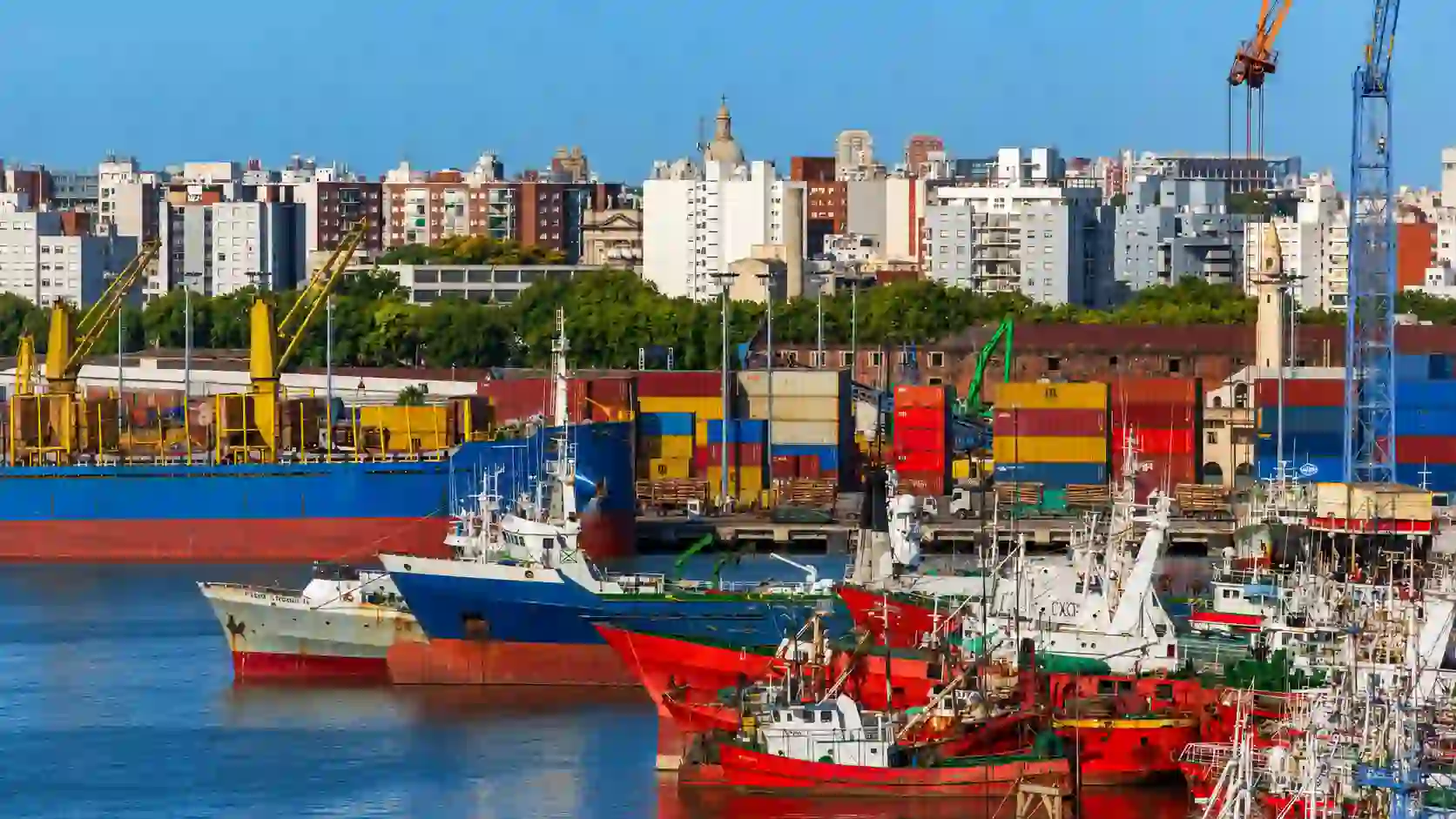
Uruguay’s offshore exploration cycle is already creating an onshore economy, although the country has not made a commercial oil or gas discovery.
The first commercial effects appear through port calls, supply vessels, customs processes, environmental monitoring, marine coordination, technical services and preparation for the next exploration well.
APA Corporation’s OFF-6 well, currently scheduled from September 2027, will test the geology. The procurement and logistics sequence before that well will test whether Uruguay can convert institutional stability into a functioning offshore service environment.
Uruguay is entering a more active phase of offshore exploration. QatarEnergy joined three exploration blocks in 2026, the first season of a new 3D seismic campaign has been completed, and APA Corporation is preparing an exploration well in OFF-6.
None of those steps proves that Uruguay has a commercially viable hydrocarbon resource. They do show that international companies are committing capital, data acquisition and operational planning to test the country’s Atlantic margin.
The immediate economic question sits on land. Exploration vessels need ports. Drilling requires imported equipment, storage, customs coordination, fluids, cement, monitoring, waste handling, technical personnel and marine support. These activities connect the offshore acreage to Uruguay’s domestic institutions and supplier base.
Market reading: QatarEnergy’s farm-in is a capital signal. The 3DUR26 campaign is an operational signal. APA’s planned OFF-6 well will be the geological test. The onshore economy develops through the sequence linking those three stages.
Data update · October 4, 2026
ANCAP’s April 29, 2026 OFF-6 schedule update places the planned start of APA’s exploration well as of September 2027. Its May 7 technical presentation gives a broader Q3 2027–Q1 2028 well window and a Q3 2026–Q1 2027 seismic-work window.
These are planning windows, not evidence that the well has started or that a second seismic season has been completed. The May presentation is used to clarify the range of project timing, not to invent a later operational milestone.
At the October 4 review, the cited evidence still supports an exploration-stage market, not a commercial producing offshore field. Supplier demand must be connected to confirmed campaigns, vessel activity, environmental requirements and contracting decisions rather than inferred from the existence of exploration blocks alone.
QatarEnergy’s entry is a capital vote
QatarEnergy entered Uruguay’s upstream sector on 25 March 2026 through non-operating interests in OFF-2 and OFF-7. Shell retained a 70% operating interest in OFF-2. In OFF-7, Shell retained 40%, while QatarEnergy and Chevron each took 30%.
QatarEnergy completed its three-block portfolio on 14 May 2026 by acquiring an 18% interest in OFF-4. ANCAP published its announcement on 19 May, followed by QatarEnergy’s portfolio statement on 20 May. APA Corporation remains operator of OFF-4 with 50%, while Shell holds 32%.
The transactions place QatarEnergy alongside Shell, APA and Chevron in Uruguay’s Atlantic exploration program. They increase the financial and technical capacity attached to the acreage, but they do not change the underlying geological status. Uruguay still has no commercial offshore discovery.
A farm-in is therefore best read as a willingness to finance further testing. It indicates that another company has reviewed the available seismic information, contractual structure and exploration case and decided that participation is worth the risk.
The earliest commercial signal is the chain of contracts, port calls, vessel support and technical procurement that appears before an exploration well reaches the seabed.
Uruguay’s institutional profile forms part of that calculation. ANCAP has promoted the country’s democratic, economic and legal stability, contract continuity and relatively low above-ground risk as a counterweight to high geological uncertainty.
This fits the broader country logic examined in The Logic of the Small Market. Uruguay cannot compete through domestic scale. It competes through predictable rules, manageable institutions and the ability to coordinate complex projects inside a small administrative system.
The next well will not be Uruguay’s first
Uruguay has already experienced the operational demands of an ultra-deepwater exploration well. TotalEnergies drilled Raya X-1 in 2016 in approximately 3,400 metres of water. The well was completed after around 100 days of operations but did not produce a commercial discovery.
Raya X-1 remains important because it established an operational precedent. ANCAP material from the period records complex port logistics, the construction of mud and cement plants, coordinated import and export procedures, health and safety systems and permanent participation by ANCAP personnel on board.
The previous well shows that the onshore economy is not theoretical. A single exploration program can create temporary demand for port space, specialist facilities, imported materials, transport, accommodation, administration and technical support. Much of that activity disappears when the campaign ends unless further wells or a development project follow.
The 2016 result also explains why the current cycle must be described carefully. Uruguay is testing new prospects and deeper geological concepts informed partly by Atlantic-margin comparisons with Namibia. The presence of major companies increases exploration capacity. It does not reduce the geological risk to zero.
Status distinction: Uruguay has offshore contracts, seismic acquisition and a planned exploration well. It does not yet have a commercial discovery, a field-development decision, offshore production or a permanent upstream supplier market.
The 2026 seismic campaign already used an onshore support chain
The first season of the 3DUR26 campaign provides a current example of how offshore work connects to the economy on land. Viridien operated the survey under a multi-client agreement with ANCAP using the seismic vessel BGP Prospector.
The BGP Prospector was supported by the supply vessel Moonrise G and the Uruguayan-flagged chase boat WP Halle. The first season acquired 1,400 square kilometres of 3D seismic data in OFF-1 between March and April 2026.
The campaign ended with the seismic vessel arriving at the Port of Montevideo on 26 April. This port call is a concrete link between the offshore data program and Uruguay’s domestic logistics system.
The project also required an environmental and fisheries coordination structure. Marine fauna observers recorded 519 sightings and used passive acoustic monitoring. The seismic source was delayed or stopped when animals entered defined mitigation zones.
A fisheries liaison officer operated on board the supply vessel. Other measures included biological monitoring, sound-level measurements, a coastal stranding response network and community engagement.
The campaign involved more than a seismic ship. It connected an international geophysical contractor with vessels, Uruguayan maritime participation, environmental specialists, fisheries coordination, port access and national regulators.
The second season is scheduled to begin in November 2026 in OFF-1 and OFF-4. ANCAP expects the two seasons together to cover around 7,000 square kilometres.
This remains a specialized and temporary market. It nevertheless proves that offshore exploration already generates contractable work before drilling begins.
The OFF-6 well is the next operational threshold
APA Corporation’s OFF-6 exploration well is currently scheduled to commence from September 2027. ANCAP describes the timing as part of a planning process that integrates operational, logistical and regulatory requirements.
The final schedule depends on permits, equipment availability and a suitable meteorological and oceanographic window. The operator must also coordinate the contracting sequence for the drilling unit and specialist services.
The commercial relevance of the well begins before the drillship arrives. Procurement decisions must be made for marine positioning, drilling materials, technical services, environmental management, communications and emergency preparation.
Uruguay’s official offshore operations manual gives a useful picture of the required service chain. It references rig contracting, positioning, mud engineering, mudlogging, directional drilling, measurement and logging while drilling, wireline logging, testing, cementing, coring, drill bits and cuttings management.
The manual also requires extensive operational, geological, safety and environmental reporting. Equipment certification, blowout-control planning, waste procedures and coordination with maritime authorities form part of the same system.
The next market phase depends on operational decisions that remain less visible than the block transactions.
- Which port will serve as the primary logistics base?
- Which services will be contracted internationally?
- Which work can be supplied or supported inside Uruguay?
- How will equipment imports and temporary storage be handled?
- Which environmental and marine-monitoring contracts will be required?
- How much local participation will occur beyond maritime coordination?
- Which suppliers must register directly with operators or major contractors?
The supplier opportunity develops in stages
Uruguay should not yet be treated as a mature offshore supplier market. The opportunity develops through a sequence of project stages, each with a different procurement profile.
Uruguay currently sits between the first and third stages. Seismic acquisition is active. Well preparation is underway. Exploration drilling is scheduled, but the larger appraisal and development markets do not yet exist.
This maturity distinction matters for international suppliers. A company selling production equipment, permanent subsea infrastructure or field-maintenance systems is too early. Providers of exploration services, marine logistics, monitoring, technical documentation, safety systems and project-specific industrial supplies may have a more immediate reason to follow the market.
The wider sector context is covered in Econosur’s Oil & Gas overview, while the port and movement layer connects with the regional analysis of Logistics & Waterways.
The port layer is the first physical market
Ports form the clearest connection between offshore acreage and the Uruguayan economy. The 2026 seismic campaign used Montevideo at the end of its first season. The Raya X-1 campaign also required complex port logistics and temporary mud and cement infrastructure.
The next well will require a defined shore base capable of supporting people, materials, equipment movements and vessel operations. The final configuration has not yet been publicly detailed enough to identify every port, terminal or contractor that will participate.
That uncertainty should remain visible. The presence of a planned exploration well does not automatically imply a major port expansion or a permanent offshore base. The scale of port activity will depend on the drilling unit, contracting model, supply-vessel strategy, imported equipment and the operator’s regional logistics choices.
Montevideo has an established role in national maritime logistics and has already received the seismic vessel. Other locations may enter future discussions, but a supplier analysis should rely on confirmed contracting and operational plans rather than geographical assumptions.
Market-access point: The relevant information will appear through contractor awards, port arrangements, vessel nominations, environmental permits, customs preparation and supplier registration. A block map alone does not reveal the real route into the project.
The port question also links offshore exploration with Uruguay’s broader energy infrastructure. A future discovery would raise much larger questions about production systems, offshore loading, domestic use, exports and integration with existing fuel infrastructure. Those questions remain outside the current exploration phase.
What Uruguay does not have yet
Uruguay has not confirmed a commercial offshore discovery. It has no producing offshore field, no approved offshore development and no permanent upstream service centre comparable with established oil regions.
The current market consists of exploration contracts and temporary project activity. International contractors can bring vessels, equipment and specialist teams from outside the country. The share captured by Uruguayan companies will depend on capability, certification, contractor strategy and the economics of local procurement.
A successful well would still be followed by appraisal work. Operators would need to determine the size, quality and commercial viability of the resource before development planning could advance. Several years could separate an initial discovery from a final investment decision.
An unsuccessful well would reduce or postpone activity. The existing seismic data might still support further exploration, but the anticipated onshore supply chain could remain small and intermittent.
Uruguay is building the capacity to test an offshore petroleum system. It is not yet building a production economy.
Uruguay and Argentina present opposite risk profiles
The regional contrast with Argentina clarifies Uruguay’s position. Argentina already has large proven resources and production growth in Vaca Muerta. Its challenges involve pipelines, export capacity, service congestion, financing and execution.
Uruguay offers a predictable contractual and institutional environment but carries fundamental geological uncertainty. The country must first prove that a commercially viable petroleum system exists.
Argentina therefore offers resource certainty with infrastructure and execution constraints. Uruguay offers institutional certainty with exploration risk.
The difference is visible in the supplier geography. Argentina’s Añelo service economy has developed around sustained drilling and production. Uruguay’s potential service economy remains attached to individual campaigns and a future exploration well.
A second Atlantic comparison comes from the Sea Lion oil project. Sea Lion has moved toward field development and first production planning. Uruguay remains several stages earlier, before any commercial discovery.
What suppliers and investors should watch
The block ownership structure attracts attention, but the next useful signals will come from operational planning.
- Completion and results of the second 3DUR26 seismic season.
- Environmental authorization milestones for the OFF-6 well.
- Selection and availability of the drilling unit.
- Announcement of the shore-base and port logistics model.
- Contracts for supply vessels, positioning and marine services.
- Drilling-service and environmental-monitoring awards.
- Customs, storage and temporary-import arrangements.
- Changes to the September 2027 drilling schedule.
- Any additional farm-ins or portfolio changes.
- Results of the well and decisions on appraisal activity.
These signals reveal where expenditure will occur, who controls access to the project and whether a supplier opportunity is becoming commercially real.
Companies evaluating Uruguay should distinguish between country attractiveness and contract accessibility. Uruguay may offer stable institutions and a clear legal framework, while individual operators and primary contractors still control procurement routes.
The distinction reflects the wider argument in Econosur’s Uruguay market analysis: a small, stable country can attract high-quality international projects, but the addressable supplier market depends on the structure of each project.
Conclusion
Uruguay’s offshore cycle has moved beyond a purely theoretical geological story. International companies hold the exploration acreage, a new 3D seismic campaign is underway, and APA Corporation is planning the next offshore well.
The immediate economy remains onshore. Ports, vessels, environmental monitoring, technical services, imports, reporting systems and drilling preparation create the first contractable layer.
QatarEnergy’s participation strengthens the capital base of the exploration program. The OFF-6 well will provide a more decisive geological signal. Between those two events, Uruguay must demonstrate that its institutional stability can support a technically complex offshore operation and connect it with a credible logistics and supplier system.
Market Reality: Uruguay remains a frontier exploration market without a commercial offshore discovery. Economic activity already appears through seismic acquisition, marine logistics, port operations, environmental services and preparation for the OFF-6 well.
Visibility: International coverage concentrates on QatarEnergy, Shell, Chevron, APA and the geological comparison with Namibia. The less visible layer consists of the contractors, ports, vessels, permits, monitoring systems and procurement routes required before drilling can begin.
Human Interpretation: The supplier opportunity should be read through project maturity. Seismic and marine-logistics work is contractable now; well-related procurement will build toward the OFF-6 campaign. A permanent offshore industrial market still requires a successful well, appraisal work and a later development decision.
Marcus A. Volz perspective
The market opportunity is easier to judge when exploration is separated into operational stages. Seismic acquisition, permitting and drilling create different service requirements; a later discovery and development decision would create a different market again. Treating those stages as one oil-service boom exaggerates the present opportunity.
Uruguay’s practical relevance begins onshore: port support, marine services, customs, storage, environmental monitoring and technical documentation. The commercial question is who contracts each service, when the package becomes active and which qualification conditions apply. This article’s supplier interpretation is an analytical reading of public evidence, not a claim that Econosur has verified open tenders or buyer mandates.
Research services for Uruguay’s offshore exploration and onshore supplier chain
Econosur can turn a defined business question into a sourced brief or a scoped research assignment.
- Sector briefs: Define the exploration stage, planned campaigns and the onshore support chain relevant to a particular supplier category.
- Company reports: Compare operators and service counterparties, their contractual roles and publicly documented project commitments.
- Custom analysis: Map a specific support-service opportunity, its contracting route, qualification conditions and evidence still required.
Public research is the starting point. Direct verification, interviews or additional datasets can be scoped where they are necessary and feasible; they are not implied by this article. The proposal defines deliverables, timing and evidence limits.
This analysis uses official ANCAP and QatarEnergy information, environmental and operational documents, independent reporting and Econosur interpretation of the market stage reviewed through October 4, 2026.
Primary, institutional and company sources
- ANCAP — New partners join offshore areas OFF-2 and OFF-7 — Shell, QatarEnergy and Chevron interests as of March 2026.
- ANCAP — QatarEnergy joins Area OFF-4 — contractual entry effective 14 May 2026; ANCAP announcement published 19 May 2026.
- QatarEnergy — Acquisition of interests in three Uruguay exploration blocks — company portfolio statement published 20 May 2026.
- ANCAP — Update on the OFF-6 exploration well schedule — current September 2027 planning window and logistical conditions.
- ANCAP — First season of the 3DUR26 seismic survey completed — seismic coverage, vessels, monitoring and Port of Montevideo arrival.
- ANCAP — Uruguay Round presentation — Raya X-1 port logistics, mud and cement facilities and operational precedent.
- Uruguay Ministry of Environment — OFF-6 exploration drilling documentation — project and environmental planning material.
- ANCAP — May 7, 2026 technical presentation; planning windows for seismic work and the next exploration well.
Industry and secondary sources
- Reuters — QatarEnergy buys stakes in Uruguay offshore blocks — independent transaction and exploration-status reporting published 20 May 2026.
- ANCAP / GeoExPro — The Rise of Venus in Uruguay’s Pelotas Basin — Raya X-1 history, dry-well result and geological context.
Public coverage observation: Most reporting emphasizes block ownership, company entries and geological potential. The onshore contracting and supplier chain receives substantially less attention.
Econosur interpretation: The market is assessed through project maturity, operational signals, supplier access and the distinction between exploration activity and commercial field development.
From exploration headlines to supplier-market reality
Block ownership and geological potential provide only the first layer of the market. Contractor structures, operational schedules, ports, permits, procurement routes and project maturity determine whether an international supplier has a realistic point of entry.
Econosur prepares market briefs and custom analysis for companies, analysts and institutions evaluating South American energy, infrastructure and industrial-service markets. Possible scopes include Uruguay offshore exploration, contractor mapping, port logistics, supplier categories, regulatory milestones and regional comparisons.
Explore custom market analysisFrequently asked questions
Has Uruguay discovered commercial offshore oil or gas?
No commercial offshore oil or gas discovery has been confirmed in Uruguay. The current cycle remains an exploration program based on seismic acquisition, geological interpretation, farm-in transactions and preparation for a new exploration well.
When is Uruguay’s next offshore exploration well scheduled?
APA Corporation’s exploration well in block OFF-6 is currently scheduled to begin from September 2027. ANCAP states that the timing remains connected to permits, logistics, equipment availability and the optimal meteorological and oceanographic window.
Has Uruguay drilled an offshore exploration well before?
Yes. TotalEnergies drilled the Raya X-1 well in 2016 in approximately 3,400 metres of water. The well was operationally significant but did not produce a commercial hydrocarbon discovery.
Which offshore blocks does QatarEnergy participate in?
QatarEnergy holds 30% interests in the Shell-operated OFF-2 and OFF-7 areas and an 18% interest in APA-operated OFF-4. QatarEnergy is a non-operating partner in all three areas.
Why does offshore exploration create an onshore economy?
Offshore exploration requires port calls, vessel support, imports, storage, technical personnel, environmental monitoring, customs coordination, fuel, maintenance and specialist drilling services. These activities occur before commercial production and connect offshore projects to suppliers and institutions on land.
Which suppliers could become relevant before the next well?
Relevant categories may include port and vessel services, marine logistics, positioning, drilling fluids, cementing, mudlogging, wireline services, testing, safety equipment, waste and cuttings management, environmental monitoring, communications and technical documentation.
Is Uruguay already an established offshore oil service market?
No. Uruguay is still a frontier exploration market. Current demand is project-based and concentrated around seismic work, regulatory preparation and a planned exploration well. A commercial discovery would be required before a larger development and production supply chain could emerge.