
Chile · Copper Mining · Water Infrastructure · November 2026
Water Recovery from Copper Tailings in Chile
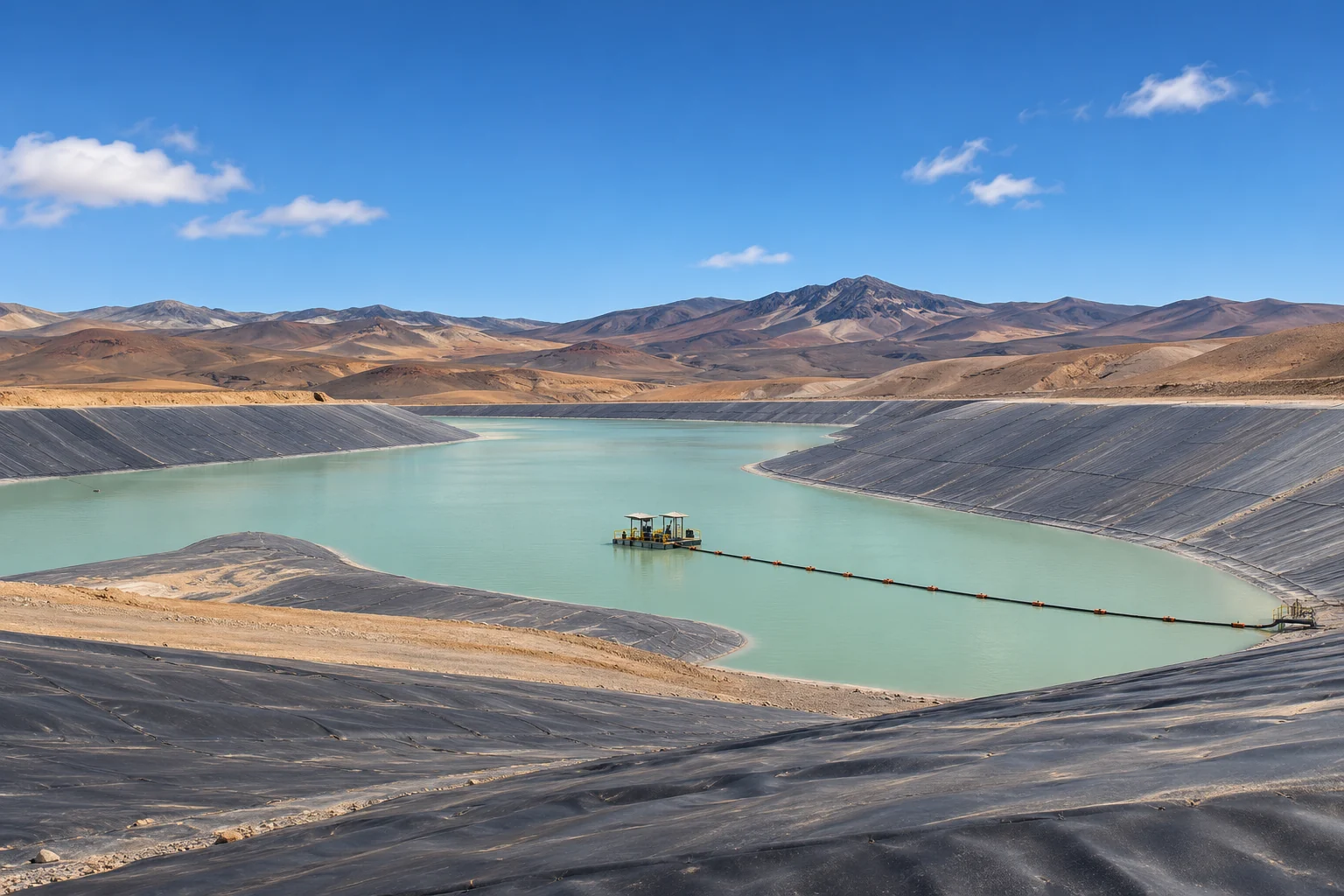
Chile’s copper mines can recover water from the mixture of finely ground rock and water left after ore processing. Centinela shows how that water returns to the plant. How much the mine can use again depends on the water’s quality, the cost of pumping and whether it needs treatment.
 Econosur · Chile
Tailings are the finely ground rock and water left after the plant separates copper-bearing minerals from the ore. Mines can recover water at two points. First, tanks called thickeners let solids settle so some water can be drawn off before the tailings go into storage. More water can be collected from the storage facility and pumped back to the processing plant. In early November 2026, researchers from the University of Chile’s Advanced Mining Technology Center (AMTC) reported work on new flocculants designed to release more water before deposition. The researchers identified manufacturing cost as an obstacle to wider use. [1]
Where Chile’s copper mines recover water
Cochilco recorded 58.17 m³/s of water reuse and recirculation in Chilean copper mining in 2025, equivalent to 72.5% of total water use under its accounting method. This figure covers reuse across several processes, including hydrometallurgy and transfers between tasks. Figure 9 gives the two figures that matter here. Thickeners accounted for 24.91 m³/s of recirculation, and recovery from clear-water ponds accounted for 5.94 m³/s. These are sector totals for reported categories. A mine evaluating a retrofit still needs a water balance for its own circuit. [2]
Centinela shows how water returns to the plant
Centinela is a copper mining operation run by Antofagasta Minerals in the Atacama Desert in northern Chile. At its Sierra Gorda sulphide operation, the system collects surface water and drainage from the thickened tailings facility, routes it through a collection pond and pumps it back to the concentrator. Consejo Minero’s facility sheet, updated in March 2026 with 2025 information, reports around 47 L/s of recirculation through this system. Antofagasta’s annual report places Centinela’s operation-wide water recirculation at 82% in 2025. The flow figure describes a specific return circuit. The percentage covers the wider operation. [3] [4]
Codelco offers an example of how the same approach can be applied to existing facilities. It describes planned works at Ovejería, Carén and Pampa Austral. For its Andina division, Codelco identifies 135 L/s by 2030 as the objective of a project that had advanced from prefeasibility to a feasibility study at the time of the update. This is a project target. [5]
How water quality limits reuse
A return stream has value when it can be used by the receiving process under normal operating conditions. At Las Luces in Taltal, a published study documented the use of seawater mixed with water from the tailings pond for milling and flotation. Dissolved salts rose from 36.0 to 46.4 g/L over the study period. The authors attributed much of that increase to evaporation. The case shows why testing a returned flow over time matters, especially where evaporation can concentrate dissolved salts. [6]
A separate AMTC project tested nanofiltration, adsorption and a bioreactor on real tailings pond water containing contaminants such as sulfates, metals and, in some cases, arsenic. Its integrated prototype was validated in the laboratory, with possible applications in irrigation or aquifer recharge. Those proposed uses call for a different assessment from returning water to a concentrator. [7]
What El Teniente shows about treating acidic water
At Codelco’s El Teniente division, Veolia and its Chilean partner Vapor Procesos worked on another aspect of tailings water management. The project was designed to recover dissolved copper from acidic drainage at the Barahona tailings facilities. Veolia reports a design treatment capacity of 3 million m³ per year. In its 2013 clarification, Codelco identified the ion-exchange facility and put the contract’s copper recovery estimate at approximately 1,680 tonnes over five years. The first figure describes treatment capacity and the second is a contract estimate for recovered metal. This is an example of recovering copper during water treatment. The treatment capacity is the amount the plant was designed to process. [8] [9]
How mines decide which water to recover
| Water stream | What the operator needs to verify | What the mine can change |
|---|---|---|
| Thickener overflow | How much extra water can be separated while maintaining the required characteristics of the thickened tailings? | Adjust how solids settle and how much water is separated before storage |
| Pond water and collected drainage | What return flow is dependable across seasons and operating conditions? | Adjust where and when water is collected and how it is pumped back |
| Acidic or chemically unsuitable water | Which constituents limit reuse, and is the value of recoverable metal material to the project? | Treat the water for its intended use and assess whether it contains recoverable metals |
Marcus A. Volz perspective
The business case starts with the cost per additional cubic metre the concentrator can reliably use. Divide the annualised equipment and operating costs by the extra volume that reaches the point of use and meets the plant’s specification. Compare the result with the cost of the outside water the mine can actually avoid buying or transferring, including pumping. Where a supply contract requires a minimum payment, the immediate value of recovery may lie in keeping the plant running during supply interruptions or in deferring an expansion of its water supply.
The next investment depends on where the mine loses usable water. A thickener upgrade makes sense if the mine can separate more water while maintaining the required tailings properties. A pond-water project depends on how much water the mine can pump back under changing operating conditions. Where dissolved salts or metals limit reuse, the decision moves to treatment cost and the effects on flotation. Any credit for recovered copper should use a measured concentration and expected recovery. [6] [8]
A mine needs to measure the water it can use consistently, including during dry periods. Compare how much water enters the plant, how much is already returned and where the rest is lost. Then check which additional flow can meet the plant’s quality requirements at the times it is needed. For mines at elevation, recovering water on site can also reduce the amount that has to be pumped uphill from the coast. [10] · Econosur analysis of Chile’s seawater infrastructure
Econosur Research Services for Mine Water and Copper Operations
Econosur examines water use and infrastructure at South American mining operations. A brief can compare mines, review a planned water project or assess how water availability affects production and investment.
Compare how Chilean copper mines source, treat and reuse water, and how those choices affect operating costs.
Explore Sector BriefsReview how a specific mine uses water, what its operator reports and which parts of the water system are documented.
Explore Company ReportsReview the stage, design and public evidence for recovery, treatment and desalination projects, from pilot tests to operating systems.
Explore Market BriefsCompare how water availability, geography and infrastructure shape mining operations across South America.
Explore Custom Market AnalysisSources
- AMTC research update
November 2026 research on flocculants for recovering more water during thickening. - Cochilco water report, figure 9
Sector-wide water reuse and its breakdown by process in 2025. - Consejo Minero facility sheet
Centinela’s operating tailings facility, water return circuit and recorded flow. - Antofagasta 2025 annual report
Water recirculation at the operation level. - Codelco’s tailings water programme
Tailings-water projects across multiple divisions and Andina’s 2030 target. - Moreno et al., Minerals Engineering
Historical measurements of salinity in the Las Luces process water circuit. - AMTC laboratory prototype
Laboratory validation of a prototype using water from tailings ponds. - Veolia case study
Treatment design capacity and recovery of dissolved copper in Chile. - Codelco’s 2013 clarification
Clarification of the Barahona contract scope and the five-year copper estimate. - Cochilco energy report
Energy demand for seawater supply to mines at elevation.
Frequently Asked Questions
Can copper mines reuse water from tailings?
Yes. Water separated at thickeners or collected from a tailings facility can be used again when it meets the requirements of the receiving process. Centinela returns collected water to its concentrator.
Does the 72.5% figure measure tailings water recovery?
Cochilco’s 72.5% covers all reported reuse and recirculation in Chile’s copper industry in 2025, including hydrometallurgy and transfers between tasks.
What did Veolia’s project at El Teniente recover?
The Barahona project was designed to recover dissolved copper from acidic drainage. Its published treatment capacity measures how much water the plant can process.
Research a Mine Water Question
Compare how different mines use water, assess a recovery project or examine how water availability affects a copper operation.
Discuss your research question