
Copper Mining in
South America
Chile’s operating mines generate recurring demand for equipment, maintenance, water and logistics. Argentina’s emerging copper projects create demand during engineering and infrastructure development, years before production. Brazil adds industrial capability, while Peru remains a major production benchmark. Across these markets, supplier access depends on project stage, procurement responsibility and the infrastructure connecting a deposit with customers.
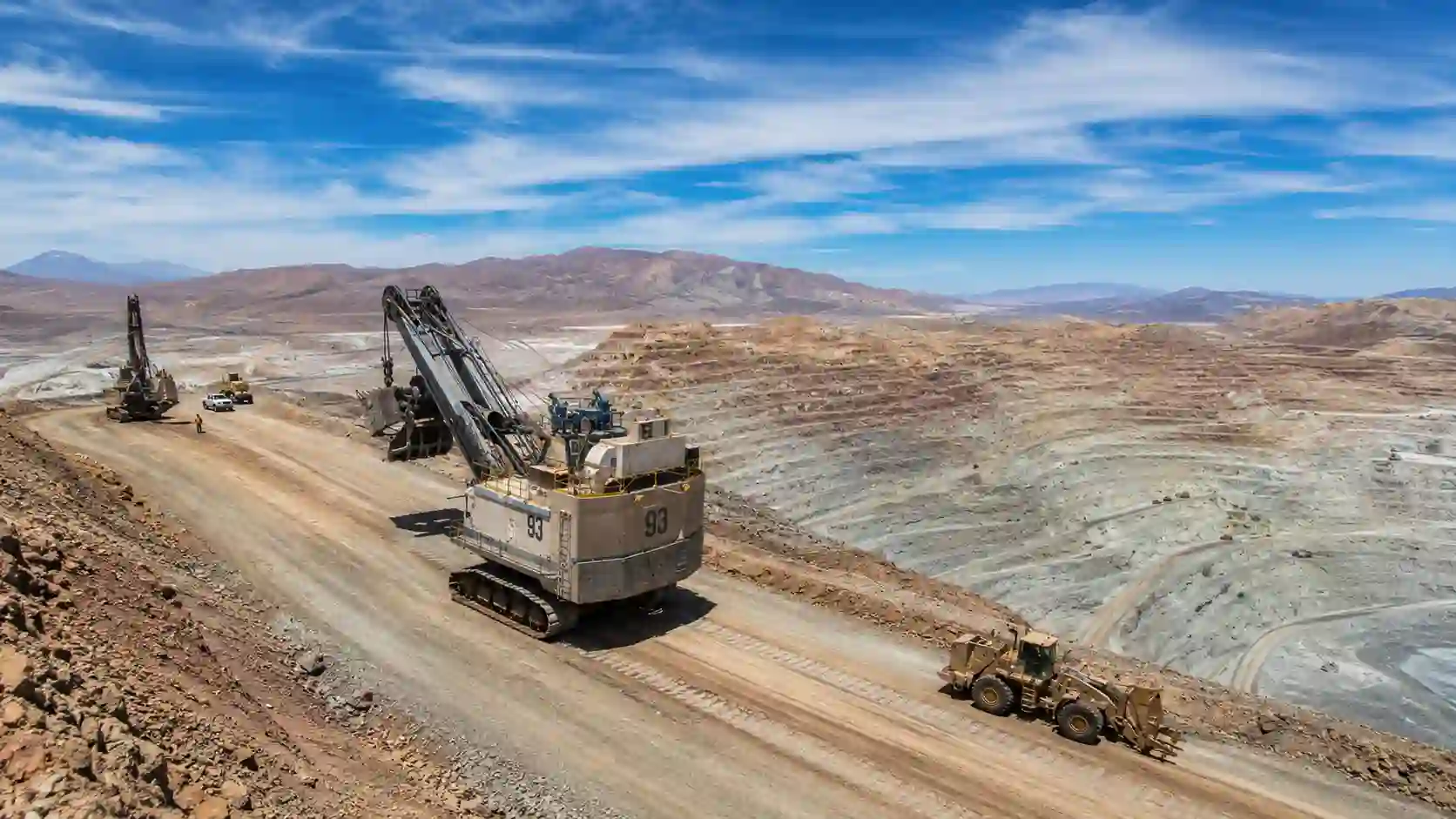
Copper is traded internationally, but selling into its production chain requires a much more specific market view. An equipment supplier approaching an operating Chilean mine faces different buyers, qualification requirements and delivery expectations from a company approaching an Argentine project still arranging engineering and financing.
The relevant distinction is the mine’s stage: exploration, feasibility, financing, infrastructure construction, mine development, operation, expansion, restart or closure. Each stage creates demand for different products and services.
Current market signals: investment is moving through different stages
Chile’s production outlook: Cochilco’s August 11, 2026 forecast puts mined copper output at 5.27 million tonnes in 2026, down 2.6%, and 5.55 million tonnes in 2027. These forecasts reflect operating constraints and expected recovery; they are separate from reported historical production. Cochilco’s August forecast.
Sierra Gorda expansion: KGHM’s October 2 announcement marks the launch of a US$725 million fourth grinding line, lifting planned ore capacity from about 48 to 60 million tonnes annually. KGHM forecasts about 20% more copper and associated-metal output, with completion by end-2029 and full capacity in the second half of 2030. The KGHM–South32 venture reuses established infrastructure; the figures are project expectations. Read Sierra Gorda’s expansion economics.
Copper outlook and Sierra Gorda update: October 8, 2026. The figures below retain their original reporting periods. A review date does not turn a first-half result, an investment estimate or a company forecast into an October operating result.
Chile’s operating base: Cochilco’s production-by-product table reports 5.3882 million tonnes of mined copper in 2025. Codelco reported 564,000 tonnes of own production in the first half of 2026, down 11% year on year. Its August 28 disclosure put Rajo Inca at 97% construction progress, Chuquicamata Underground continuity works at 94% and Diamante at 59%. Andes Norte development and construction remained suspended; this should not be read as a shutdown of the entire El Teniente operation.
Chile’s investment pipeline: Cochilco’s 2025–2034 inventory totals US$104.549 billion. Copper accounts for 89.8% and brownfield projects for 81%. Antofagasta Region accounts for US$40.734 billion. These are portfolio figures covering different readiness stages, rather than a fully financed construction budget.
Large processing investment: BHP’s August 2026 results put Escondida’s proposed new concentrator at US$5.4–6.3 billion, with a final investment decision targeted for 2027–2028 and potential first production in 2031–2032. Its stated annual copper output of 230,000–270,000 tonnes is project output, not automatically an equivalent net addition to Chilean production: the project replaces the Los Colorados concentrator.
Argentina’s development market: Vicuña has awarded the first 63.6 km of its Northern Corridor access road in San Juan. Los Azules has secured a US$240 million term loan for engineering and early works, ahead of full project financing and a final investment decision expected by the company in mid-2027. Taca Taca remains a development project in Salta with an active worker and supplier preparation agenda. Glencore’s half-year guidance expects Alumbrera restart production in the second half of 2027.
New logistics signal: Puerto Antofagasta’s September announcements cover a dredging tender and industrial and logistics land at La Negra. They create separate routes for maritime contractors and businesses serving northern Chile’s mining economy. See Antofagasta’s Logistics Expansion.
The regional copper map is structurally uneven
Chile and Peru form South America’s established production core. Their markets include operating mines, recurring procurement, large contractors, processing plants, export chains and mine-life extension. Peru is included here as a regional benchmark, outside Econosur’s core country coverage.
Argentina’s commercial activity remains concentrated before new large-scale production. Following Alumbrera’s closure in 2018, drilling, studies, permits, financing, infrastructure and supplier qualification became the central market layers. Salta, in northwestern Argentina, hosts Taca Taca. San Juan, on the western border with Chile, hosts Los Azules and the Argentine development base for Vicuña. Catamarca adds a different opportunity through the planned Alumbrera restart.
Brazil is a smaller copper producer than Chile or Peru but contributes engineering, industrial demand, metals processing and an established mining-service base. Paraguay and Uruguay are not major copper producers; their relevance is indirect through trade, logistics, services and regional business structures.
Chile
Operating mines, recurring maintenance and major replacement and expansion projects. The mining investment pipeline is dominated by copper and brownfield investment.
Argentina
Predominantly a project-development market, with Taca Taca in Salta, Vicuña and Los Azules in San Juan, and planned brownfield reactivation at Alumbrera in Catamarca.
Brazil
A smaller copper production base connected with diversified mining groups, domestic engineering, industrial customers, ports and processing capability.
Peru
A major production benchmark with operating mines, contractors and export infrastructure. Included for regional comparison rather than as a core Econosur country profile.
South America offers operating mines, new developments, restarts and infrastructure projects at the same time. Each has its own commercial decision chain.
Operating markets and project markets require different strategies
| Market layer | Operating copper market | Project copper market |
|---|---|---|
| Primary demand | Maintenance, replacement, productivity, bottleneck removal and mine-life extension. | Studies, permitting, engineering, construction packages and commissioning. |
| Typical buyer | Mine operator, central procurement, maintenance team or established contractor. | Project owner, engineering firm, construction consortium or infrastructure developer. |
| Commercial timing | Recurring demand linked to operating budgets, shutdowns and maintenance cycles. | Milestone-dependent demand linked to studies, permits, financing and package awards. |
| Required evidence | Reliability, operating references, local service and safety compliance. | Engineering capability, delivery capacity, project references and specification fit. |
| Main commercial risk | Incumbent suppliers, qualification barriers and lengthy purchasing processes. | Financing gaps, redesign, permit delays and developments that do not reach construction. |
Chile is predominantly an operating market, but its demand extends well beyond routine replacement. Falling ore grades, deeper mining and more complex water systems require major capital investment. Codelco’s structural projects and Escondida’s proposed concentrator illustrate how large engineering and construction packages develop around existing operations.
Smaller new developments coexist with this brownfield agenda. Codelco and Pucobre announced the Tovaku partnership in August 2026, with estimated investment of US$870 million and targeted production of approximately 46,000 tonnes of copper cathodes a year around 2030. Detailed engineering, permits and early works remain distinct steps before operating output.
Argentina’s copper economy develops before new mines begin production because roads, camps, substations, studies and local services are already needed. Taca Taca’s February 2026 technical design starts at 40 million tonnes of ore processing annually and expands to 60 million tonnes from the fifth operating year, with approximately US$5.25 billion in total development capital. That technical plan remains separate from construction authorization, financing and procurement commitments.
Vicuña’s road award is evidence of an actual infrastructure contract. Los Azules’ loan funds a defined engineering and early-works phase. Alumbrera’s restart has a different risk profile because it involves an existing asset. These developments should be assessed individually rather than grouped into a single imminent production boom.
Water and power determine whether a resource becomes a mine
Copper projects require electricity for crushing, grinding, pumping and processing; water for mineral treatment and dust management; roads for equipment and workforce access; and logistics for consumables and exports. Infrastructure can be procured by a different company from the mine owner.
Cochilco projects Chilean copper-mining water demand to rise from 18.5 cubic metres per second in 2024 to 20.6 in 2034. Seawater’s share is projected to increase from 40.7% to 67.6%, including both desalinated water and direct seawater use. The commercial scope includes coastal works, treatment, pipelines, pumping, power supply, monitoring and long-term maintenance. See Chile’s Seawater Mining Infrastructure.
Electricity demand is another constraint. Cochilco projects consumption of 27.6 terawatt-hours in 2025 and 33.2 in 2034, an increase of 20.2%, compared with projected copper production growth of 8.3%. More electricity per unit of production increases the importance of efficient processing, transmission access, power contracts and reliable pumping systems.
Physical progress does not remove permitting risk. Anglo American’s July 2026 results reported that authorizations for Collahuasi’s desalination project had been set aside and that the company was working toward restarting the project. Collahuasi is in Tarapacá Region, north of Antofagasta. It should not be presented as an already operating new water supply system merely because construction was advanced.
In Argentina, the Josemaría Power Corridor illustrates the equivalent electricity issue. Resolution 330/2026 authorized 260 megawatts of transport access for Phase I and the associated expansion, including the 167 km, 500-kilovolt Rodeo–Chaparro line and Chaparro substation in San Juan. Regulatory authorization is a milestone; it does not mean the new transmission infrastructure is already delivering power.
Cross-border infrastructure also requires project-specific verification. A road, port or electricity system located in Chile may be commercially relevant to an Argentine mine, but access rights, customs, capacity, permits and contracts determine whether that route can actually be used.
Antofagasta: port and inland logistics add separate supplier markets
Antofagasta is both a Pacific coastal city and a major mining region in northern Chile. The region’s mines, processing plants, water systems and industrial contractors create demand beyond the mine site itself.
On September 21, Puerto Antofagasta presented the technical requirements for dredging tender 019/26, its second call. The stated scope totals 46,678 cubic metres of sediment and rock. Technical bids are scheduled to open on October 20 and economic bids on October 27, 2026. This is a tender-stage opportunity for maritime works and related services; the announcement does not establish that dredging has started.
The port company is also promoting its approximately 50-hectare La Negra logistics development area inland, near Route 5. Its September 25 announcement described around 30 hectares of serviced land for logistics, industrial and service activities. For mining suppliers, potential uses include storage, spare-parts distribution, workshops, fabrication and heavy-transport support.
The commercial assessment is to separate the routes. A maritime contractor follows the port tender. A distributor or service company examines land, utilities, access and customer demand. A mine-equipment supplier follows operator and engineering procurement. Port investment does not by itself identify the buyer for a mine package.
Nor should all northern Chilean mineral exports be assigned to Puerto Antofagasta. The region includes other ports, including Angamos in Mejillones. Actual routes depend on the producer, product, terminal and contract.
Read Antofagasta’s Logistics Expansion: Mining, Port Infrastructure and New Supplier Demand for the detailed commercial channels.
The commercial copper market extends beyond extraction
Exploration requires drilling, laboratories and geological modelling. Development requires environmental work, engineering, finance and construction planning. Operations require maintenance, consumables, energy, water, logistics and process improvement.
The International Energy Agency’s 2026 analysis also identifies scope for greater regional processing and value creation. Mining output and domestic refining are different market layers. A larger resource base does not establish that additional smelting or refining capacity is financed, permitted or commercially viable.
Exploration and studies
Drilling, laboratories, geological modelling, metallurgy, feasibility studies, environmental baselines and technical consulting.
Mine development
Earthworks, roads, camps, tunnels, crushing systems, concentrators, tailings infrastructure, construction equipment and project management.
Processing
Crushing, grinding, flotation, leaching, solvent extraction, electrowinning, concentrate handling, smelting and refining.
Mine operations
Maintenance, spare parts, tires, explosives, chemicals, safety systems, fleet management, monitoring and industrial services.
Infrastructure
Power lines, substations, water systems, pipelines, roads, ports, warehouses, communications and generation.
Mine-life extension
Bottleneck removal, underground transitions, replacement concentrators, recovery improvements, automation and lower-grade ore treatment.
Commercial assessment: the relevant unit is the project package
South America’s copper resources create strategic potential. Suppliers need a more specific unit of analysis: a processing package, water system, access road, maintenance contract, logistics requirement or planned shutdown.
Each package has an owner, a technical specification, a budget, a purchasing route and a schedule. These may sit with different organizations. A national investment total is useful context, but it cannot establish which customer is ready to buy a particular product.
Chile’s brownfield portfolio, Argentina’s early works and Antofagasta’s logistics developments therefore need separate commercial maps. The broader international context is examined in South America’s Strategic Resource Advantage in a Fragmenting World Economy.
Where supplier opportunities are forming
In Chile, recurring opportunities include maintenance, productivity, automation, processing upgrades and water infrastructure. Large replacement and expansion projects add engineering and construction demand, while established operators retain demanding qualification, safety and service requirements.
Logistics creates an additional layer. Northern Chile’s mining economy needs storage, workshops, equipment transport, spare-parts availability and reliable delivery. The Antofagasta announcements identify a port tender and land offering; the case for opening a local facility still depends on actual customer requirements and operating economics.
In Argentina, Taca Taca’s visible supply chain illustrates how ownership, engineering, infrastructure studies and export logistics can involve different organizations. Salta’s September 10 meeting with First Quantum explicitly addressed preparation of local workers, suppliers, communities and companies.
In San Juan, Vicuña awarded the Northern Corridor’s first 63.6 km to the consortium formed by Contreras, BBC and Construmin. Its announced 2026–2027 Filo del Sol campaign adds approximately 55,500 metres of drilling. These are defined infrastructure and exploration activities, rather than proof that the entire mining district has entered full construction.
Los Azules offers a different signal. McEwen’s August 27 disclosure reported process-package engineering awarded to Metso, the mining-fleet tender in final evaluation and selection of the engineering, procurement and construction management contractor expected in the fourth quarter of 2026. These remain dated company statements until a subsequent award or update is confirmed.
Supporting demand includes environmental monitoring, catering, workforce accommodation, customs, local supplier development, cybersecurity and professional services. Vicuña’s Capital Semilla programme offers grants of US$5,000–50,000 to entrepreneurs and small businesses in Iglesia and Jáchal. The programme develops local capability; a grant is not a mine supply contract.
The supplier market starts before the purchase order
Engineering specifications, contractor relationships and qualification requirements can be defined before a tender becomes visible. A supplier’s first task is to establish who specifies the product, who approves vendors and who purchases the package.
Vicuña’s current Coupa page provides supplier access for purchasing processes, orders, receipts and invoicing. Achilles remains its system for registration, evaluation and prequalification. The two registrations serve different purposes, and Achilles registration does not automatically authorize a supplier to operate through Coupa.
The earlier wording that Coupa “will launch on September 22” is therefore no longer appropriate. The commercially relevant question is now whether the supplier has completed the required onboarding for the process it wants to enter. Registration itself does not guarantee an invitation or award.
Local supplier development needs separate assessment
An internationally engineered project can have a substantial local supplier-development agenda. In October 2025, Salta reported that 89% of suppliers active in Taca Taca’s study phase were from the province.
That historical study-phase figure should not be applied to future construction awards. International suppliers need to identify which requirements can be met locally, where specialist capability is needed, and whether a local service partner is commercially or technically necessary.
How market access differs by country
Chile: qualify for operations and projects
Demonstrate operating references, local service, safety compliance and delivery reliability. Separate recurring mine procurement from expansion, water and third-party infrastructure packages.
Argentina: follow project milestones
Track permits, financing, engineering appointments, package awards and supplier systems. RIGI, Argentina’s large-investment incentive regime, is relevant to project economics but does not replace construction financing or procurement verification.
Brazil: connect mining and industry
Assess mine requirements alongside domestic engineering, processing, industrial buyers, ports and existing commercial networks.
Regional: identify the purchasing entity
The operator, project company, engineering contractor, infrastructure owner and purchasing organization can be different entities with different requirements.
A useful approach identifies the asset, package, project stage, commercial trigger, decision maker, contracting route and local delivery requirement. Geography alone does not answer these questions.
Three business questions that require deeper research
Public sources establish resources, design capacity, announced capital and selected milestones. Suppliers allocating sales resources need to connect those facts with specific buying requirements.
1 · Procurement timing
Which projects are likely to generate relevant purchasing activity next? Examine permits, engineering maturity, financing, contractor appointments, long-lead orders and shutdown schedules. Distinguish a company forecast from an issued tender.
2 · Supplier positioning
Where can a new supplier still enter specification or qualification? Map approved vendors, engineering responsibilities, incumbent contractors, technical requirements and local service expectations.
3 · Infrastructure demand
Which water, electricity and logistics requirements have separate buyers? Check ownership and package scope. Antofagasta’s port tender, La Negra land offering and mine procurement are different commercial routes.
Public sources show project intentions and selected commitments.
They do not provide the complete tender calendar, specification chain, incumbent relationships, qualification barriers or customer demand for a proposed local service operation.
Research services for South America’s copper market
Econosur structures research around a defined project, operating mine, supplier category, infrastructure requirement or procurement question. Work can combine official records, company documents and focused verification with regional participants.
Where the objective is a business connection, Econosur can identify and screen relevant buyers, suppliers, contractors, distributors and partners and facilitate introductions where there is a relevant fit. See B2B Connections in South America.
Project-status verification
Check study maturity, permits, financing, investment decisions, construction progress, restart schedules and the evidence supporting announced milestones.
Supplier and contractor mapping
Identify equipment vendors, engineering firms, construction managers, mining-service companies and infrastructure providers around specific assets.
Procurement and tender research
Track package scope, timing, contracting routes, long-lead equipment, qualification requirements and relevant tender signals.
Infrastructure dependencies
Map power, transmission, desalination, pumping, roads, ports and storage requirements that can determine project timing and create separate demand.
Company and competitor research
Compare owners, strategic partners, technology providers, incumbent suppliers and competing commercial positions.
Buyer and decision-chain mapping
Identify the organizations responsible for specifications, technical approval, purchasing, construction and operational acceptance.
B2B Connections in Mining
Research and screen relevant counterparties and facilitate introductions where the requirement and fit are clear. Explore B2B Connections.
Local capability assessment
Check available local products and services, supplier-development programmes, service requirements and potential capability gaps.
Primary-source and market checks
Test unresolved assumptions through company records and focused conversations with suppliers, contractors, specialists and local industry participants.
External publication: Global Mining Review
On September 14, 2026, Global Mining Review published Marcus A. Volz’s article “Argentina’s copper buildout: Where the supplier opportunity starts before production.” Using Vicuña and Los Azules, it examines supplier positioning during engineering, early works, infrastructure development and procurement.
Frequently asked questions about copper mining in South America
Which South American countries are most important for copper mining?
Chile and Peru form the established production core. Brazil adds a smaller production base and substantial industrial capability. Argentina is developing projects in Salta and San Juan, while the planned Alumbrera restart adds a brownfield reactivation market in Catamarca.
How does Argentina’s copper market differ from Chile’s?
Chile has operating mines, recurring procurement and major replacement and expansion projects. Argentina remains primarily a development market: Vicuña has awarded 63.6 km of access-road construction, Los Azules has secured US$240 million for engineering and early works, and Taca Taca is preparing workers and suppliers. These milestones do not establish that every project has full construction financing or a final investment decision.
Why are water and power central to copper projects?
Copper mines need reliable water and electricity for crushing, grinding, processing and pumping. Cochilco projects seawater’s share of Chilean copper-mining water supply to rise from 40.7% in 2024 to 67.6% in 2034, including both desalinated and directly used seawater.
What does Antofagasta’s logistics expansion mean for mining suppliers?
Antofagasta, in northern Chile, connects a major mining region with coastal and inland logistics. Puerto Antofagasta is tendering dredging works and promoting land at La Negra for logistics, industrial and service activities. These are separate commercial channels; a port tender or land offering does not establish a mine-equipment contract.
What does Taca Taca show about supplier access in Argentina?
Taca Taca shows that ownership, engineering, infrastructure studies, logistics and supplier qualification can involve different organizations. Local supplier development can begin before construction procurement, so suppliers need to identify who specifies, qualifies and buys each package.
Where do supplier opportunities arise in the copper value chain?
Supplier demand spans engineering, construction, electrical equipment, pumping, water treatment, conveying, grinding, automation, environmental monitoring, maintenance, logistics, camps, industrial software and operational services.
Is copper mining in South America only an extraction market?
No. The commercial market also includes exploration, studies, construction, water and power infrastructure, concentration, smelting, refining, transport, maintenance and mine-life extension.
What is the main execution risk for new copper projects?
The main risk is the gap between a mineral resource and an operating mine. Permits, financing, engineering, social acceptance, water, electricity, logistics and construction capacity must align. Announced investment and design capacity are not equivalent to funded construction or operating output.
How does Econosur analyze the copper market?
Econosur separates operating mines, new developments, restarts and infrastructure projects, then examines ownership, project stage, procurement routes, supplier requirements and execution conditions.
Can Econosur help identify mining buyers, suppliers or business partners in South America?
Yes. For a defined commercial requirement, Econosur can research and screen relevant mining buyers, suppliers, contractors, distributors and business partners and facilitate an introduction where there is a relevant fit.
Need project- or supplier-level copper research?
Econosur examines ownership, infrastructure, procurement timing, supplier requirements and execution conditions around a defined commercial question.
Explore custom market analysis