
South America · AI Data Centers · Digital Infrastructure · Fiber · Cloud · Compute
AI Data Centers & Digital Infrastructure in South America
South America’s data-center market is developing through different site-readiness models. Brazil combines operating scale, a very large grid-demand pipeline and an enacted federal data-center tax regime. Chile pairs cloud demand and international connectivity with grid and environmental constraints. Argentina is testing whether large energy resources can support hyperscale projects. Uruguay combines a major Google build with a new Antel AI project, while Paraguay is trying to convert hydroelectricity into dedicated AI and HPC capacity. Colombia and Peru add smaller but increasingly relevant hyperscale and high-density nodes.
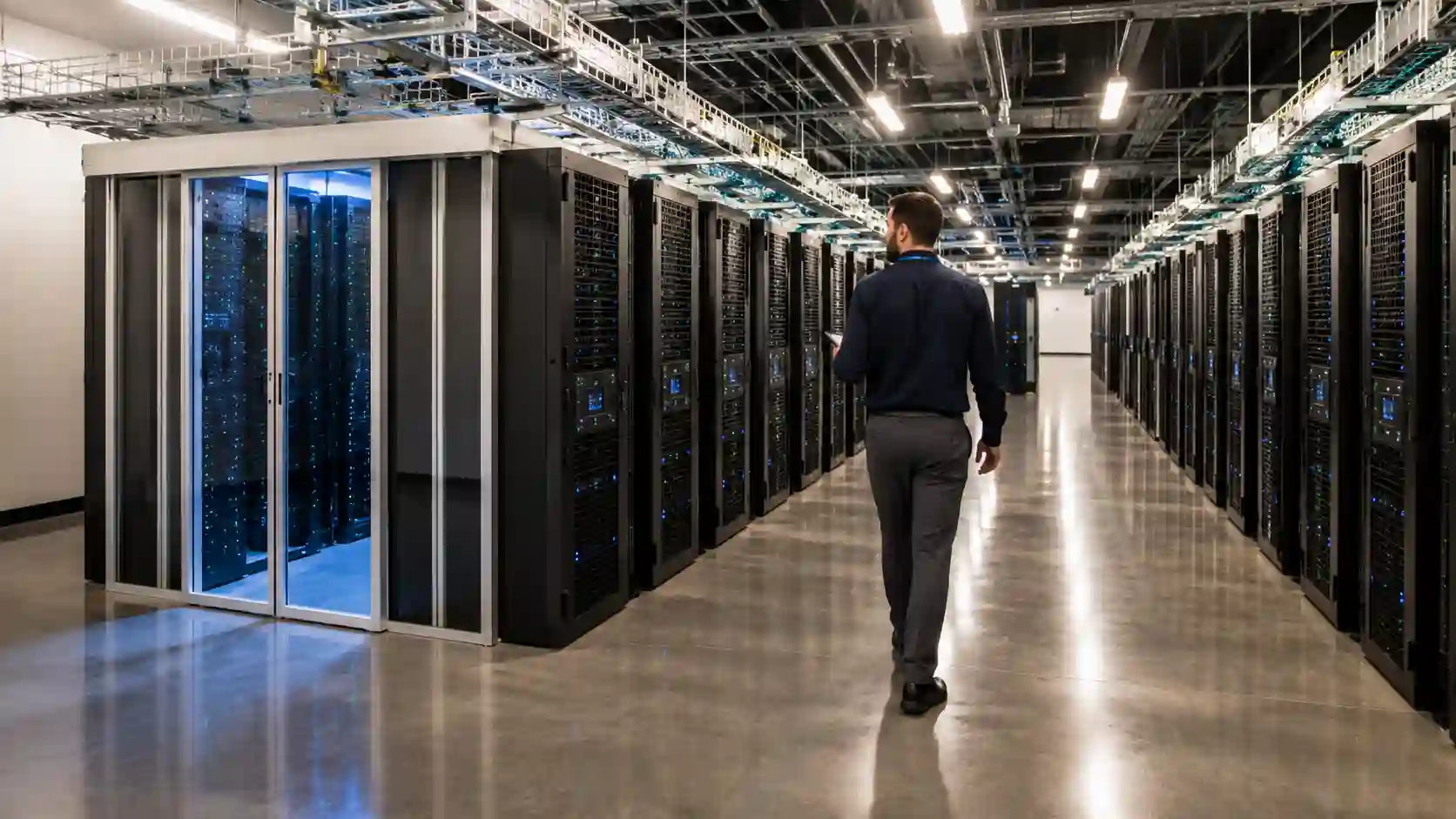
AI data centers in South America are increasingly a site-readiness market: power has to be deliverable, grid-connected, cooled, connected by redundant fiber, permitted and matched with real demand.
Brazil has the region’s deepest current operating ecosystem and the largest visible grid-demand pipeline. Chile combines a mature digital market with strong connectivity but increasingly visible transmission and environmental constraints. Argentina has large energy and land options beside a much smaller operating base. Uruguay combines Google’s US$850 million Canelones build with a separate Antel AI-data-center project. Paraguay is testing hydroelectricity-to-compute models. Colombia is adding hyperscale-grade capacity around Bogotá, while Peru has a smaller but technically AI-ready node in Lima.
The September 27 Econosur analysis Can South America Compete for the Next Generation of AI Data Centers? compares seven markets through site selection, deliverable power, grid access, fiber, cooling, land, regulation and project execution. The earlier AI cost and data-center investment analysis remains the separate economic view of why falling AI unit costs can coexist with rising aggregate infrastructure demand.
Econosur has expanded the regional comparison from five core markets to a seven-market site-selection view. The new South America AI data-center competitiveness analysis adds Colombia and Peru and separates announced IT capacity from the grid capacity and project milestones that determine whether a site can actually be built.
Brazil’s REDATA regime is now law, but the tax detail needs precision. Lei 15.504 sets a five-year horizon for the regime; however, the PIS/Pasep, Cofins and IPI benefits specified in Article 11-C only produce effects through December 31, 2026. Habilitation and co-habilitation procedures still depend on federal regulation. The law also requires at least 10% effective domestic supply, renewable or low-emission electricity, WUE at or below 0.05 L/kWh and R&D investment.
Chile has also tightened the environmental framework. The SEA published its dedicated data-center evaluation criterion on January 20, 2026 and made it effective on February 25. The original Cerrillos environmental approval was relinquished; a redesigned proposal was submitted through a new pertinence consultation in June 2026, using air cooling and retaining substantial emergency-generation infrastructure. AWS still describes its South America (Chile) Region as coming in 2026 rather than operational.
Colombia now provides a useful project-maturity example. ODATA announced 120 MW of IT capacity for BG03, while ANLA’s September 16 environmental licence for the Navarra–Bacatá 220 kV line records 50 MW of assigned connection capacity for the data center. In Peru, Cirion’s LIM2 in Lurín provides a 20 MW high-density facility with redundant fiber and liquid-cooling capability for AI environments.
Data Centers in South America: One Region, Different Infrastructure Models
The phrase “South America data centers” hides several distinct market models. Countries differ in current installed capacity, electricity systems, fiber connectivity, cloud demand, regulation and the maturity of operators and enterprise customers.
This matters because data-center investment pulls in substations, transmission, cooling, fiber, construction, security, monitoring, software, cloud partnerships and long-term energy contracts. The economics of AI strengthen that connection: lower unit costs can support much greater compute use, while the physical system behind that use becomes more capital- and power-intensive.
The five-country AI cost and data-center investment analysis explains the investment economics behind rising compute demand. The newer seven-market site-selection analysis asks a different question: where can power, grid access, connectivity, cooling, land and regulation be converted into bankable operating capacity?
The regional digital-infrastructure stack has three layers: physical infrastructure, operating capability and digital demand. Weakness in any one layer can prevent announced capacity from becoming a viable compute market.
AI Data-Center Site Competition: Seven Markets, Different Constraints
The competitive unit is not the country in the abstract. It is the specific site plus its power source, connection date, transmission capacity, fiber routes, cooling design, environmental pathway, construction capability and customer structure. That is why nominally abundant electricity does not automatically create a competitive AI-data-center market.
| Market | Current strength | Current execution question |
|---|---|---|
| Brazil | Largest regional operating ecosystem, large domestic demand, renewable-heavy power system and major grid-demand queue. | Which requested loads secure transmission, permits, financing and actual delivery dates? |
| Chile | Established operator base, hyperscaler activity and strong international connectivity. | Can transmission, storage and environmental approval keep pace with additional large loads? |
| Argentina | Large energy and land options, domestic digital demand and multiple large proposals. | Which sites become grid-ready, financed and contracted rather than remaining proposals? |
| Uruguay | Highly renewable electricity, Google construction, Antel infrastructure and institutional credibility. | Can a small domestic market support a broader operator and supplier ecosystem? |
| Paraguay | Hydroelectricity, large existing digital loads and emerging sovereign AI/HPC plans. | Can cheap and stable power be converted into Tier III compute, fiber depth and durable demand? |
| Colombia | Bogotá demand and a new hyperscale-grade ODATA expansion. | How quickly can announced IT capacity be matched by firm grid capacity? |
| Peru | Smaller market with a new high-density, AI-ready 20 MW facility in Lima. | Can current technical readiness scale into deeper hyperscaler and enterprise demand? |
The detailed country comparison, including the distinction between announced campus potential, initial phases, grid connection and operating capacity, is in Can South America Compete for the Next Generation of AI Data Centers?.
Argentina and Paraguay: Energy Advantage, Different Evidence States
Argentina and Paraguay remain useful comparison cases because both have strong energy propositions, but the evidence behind their headline megawatts is different.
Argentina’s current capacity depends on dataset and definition. CABASE’s May 2026 infrastructure map identified 13 operating data centers with about 32 MW of installed power capacity, concentrated in Buenos Aires. Cushman & Wakefield published a broader estimate of around 73 MW of operational capacity on August 20. These figures should not be silently merged. Both still show a small operating base beside much larger proposals. OpenAI and Sur Energy signed a letter of intent in October 2025 to explore Stargate Argentina at up to 500 MW and up to US$25 billion at full scale. The Argentine government reported in May 2026 that the project had not submitted a RIGI application at that reporting date.
The pipeline has broadened since the previous version of this page. Reuters reported on September 7 that Pampa Energía is evaluating a data center near its Loma de la Lata power plant in Neuquén with potential consumption of up to 500 MW. Interested investors are first considering a 20–40 MW pilot, while electrical infrastructure for the full scale could cost almost US$900 million. Reuters also identified a 120 MW FlexDomes proposal in Neuquén, a 300 MW first stage proposed by Green Capital in Chubut and a 30 MW first stage linked to an IT park in Bahía Blanca. Most remain early-stage and still depend on financing, formal agreements and infrastructure delivery.
Argentina’s regulatory perimeter has also changed. Decreto 105/2026 explicitly includes artificial intelligence within the RIGI technology sector. That creates a potential incentive route for qualifying projects, but it does not convert an announcement into an approved RIGI project.
Paraguay starts from a different physical base. HIVE Digital Technologies has large operating hydro-powered infrastructure associated mainly with Bitcoin mining. Its separate AI/HPC pathway is still being developed. Earlier company guidance pointed to September 2026 energization for the additional 100 MW Yguazú substation, but HIVE’s more recent filing moved the expected energized footprint increase to the fourth quarter of 2026. The company continues to frame Tier III AI/HPC infrastructure as a future Paraguay pathway rather than current operating AI-data-center capacity.
The Paraguay–Taiwan sovereign AI project remains earlier. MITIC says the first phase would target 10 MW and estimates US$300–500 million of investment, but the ministry still described the project as being in technical feasibility study on August 25, 2026.
Headline megawatts are not interchangeable. Argentina’s Stargate figure is a proposal, Pampa’s 500 MW is an evaluated maximum with a smaller pilot under discussion, HIVE’s existing Paraguay infrastructure is mainly Bitcoin-focused, and the Taiwan-backed 10 MW project is still at feasibility stage. The relevant comparison is operating, contracted, permitted, financed, under construction and announced capacity.
See the Argentina–Paraguay energy-to-compute analysis for the original two-country framework. The broader regional comparison now also includes Brazil, Chile and Uruguay.
Brazil: Operating Scale, Enacted REDATA and Grid Pressure
Brazil is structurally different because it already combines a large digital economy with enterprise cloud demand, platform scale, financial services, telecom infrastructure and a substantial operating data-center base. In June 2026, the Ministry of Mines and Energy said Brazil had 205 data centers in operation.
The requested power pipeline is much larger than the operating base. The ministry cited 38 GW of grid-access requests for data-center projects and said requests had grown 330% between 2024 and 2025. These are connection requests, not 38 GW of committed construction. EPE is already treating the demand as a transmission-planning issue and in June proposed a scalable solution for up to 4 GW of electro-intensive loads in Ceará and Piauí from 2032.
REDATA is now enacted. Brazil sanctioned Lei 15.504 on September 15, 2026, establishing the Regime Especial de Tributação para Serviços de Datacenter. The law gives the Article 11-C regime a five-year horizon, but the PIS/Pasep, Cofins and IPI benefits listed in items I–III only produce effects through December 31, 2026. Participation also depends on federal regulation governing habilitation and co-habilitation. The substantive commitments include at least 10% of effective processing, storage and data-treatment supply for the domestic market, renewable or low-emission electricity, WUE at or below 0.05 L/kWh and investment equivalent to 2% of benefited equipment purchases in research, development and innovation.
The policy change removes one uncertainty that was still open in the September 10 version of this page, but it does not solve the physical bottleneck. Brazil’s current challenge remains coordinating fiscal incentives, transmission expansion, site development, water and cooling, equipment availability and actual customer demand at a scale the power system can support.
The Econosur REDATA analysis should now be read against the enacted law rather than a pending bill. See the Brazil market profile for the wider industrial and infrastructure context.
Uruguay: Construction, Telecom Infrastructure and Technology Investment
Uruguay shows how a smaller domestic market can gain digital-infrastructure credibility through projects that have moved beyond announcement. The latest Uruguay XXI ICT report adds demand-side context: the sector generated US$3.681 billion in revenue in 2024, equivalent to 4.5% of GDP, and exported US$2.323 billion, or 63% of sales.
Google’s Canelones data center remains the clearest physical infrastructure case. Google announced more than US$850 million of investment in 2024, and Uruguay XXI currently states that construction is underway at Parque de las Ciencias. The project’s environmental record identifies air cooling rather than water-based server cooling, making cooling design part of the site’s infrastructure logic.
Antel adds a second layer. In February 2026, Antel and Google Cloud announced that Google Distributed Cloud infrastructure would be hosted at Antel’s Pando data center. In August, the Uruguayan government announced a separate US$70 million Antel data center specialised in AI in Canelones, with construction planned from the first quarter of 2027 and operation targeted for 2028–2029.
The September 22 Praxis +Colonia investment plan belongs in a different evidence category. It is not a data-center or cloud-infrastructure project and should not be counted as digital capacity. Its relevance is broader: Praxis is testing whether Uruguay’s connectivity, institutional environment and proximity to Buenos Aires can attract an international technology community and convert that demand into land purchases, construction, companies and recurring activity.
Uruguay’s proposition therefore combines renewable electricity, telecom infrastructure, cloud deployment, environmental design, a growing technology-sector demand base and institutional execution. The Uruguay digital analysis provides the deeper national infrastructure view; the small-market analysis explains why these functions can matter despite limited domestic scale; and the Uruguay country profile connects the digital story with the wider investment and infrastructure system.
Chile: Operating Scale, Grid Constraints and Cloud Expansion
Chile combines an established data-center market with a strong enterprise and cloud-demand base. Published capacity figures, however, use different market definitions. InvestChile cited a JLL dataset showing 166 MW operating in April 2026, while Cushman & Wakefield reported 279 MW of operational capacity in Santiago for the second half of 2025. The figures should not be silently combined because their geographic scope and provider methodology differ.
The more important current signal is grid delivery. On May 12, Chile’s National Energy Commission warned that expansion of electricity infrastructure was not advancing at the same pace as data-center demand. The regulator highlighted transmission constraints, storage, interruptible loads and the need for better medium-term planning.
AWS continues to describe its South America (Chile) Region as planned for the end of 2026 with three Availability Zones and more than US$4 billion of intended investment over 15 years. AWS’s current global-region documentation still lists São Paulo as the operating South America Region, so Chile should remain classified as planned rather than operational until AWS announces general availability.
Water, cooling and environmental procedure also affect site viability. The original Cerrillos Data Center approval was challenged over groundwater impacts and the developer later relinquished that RCA. In June 2026, Dataluna submitted a new pertinence consultation for the same site. The redesigned proposal uses air cooling and includes 44 emergency generator sets with 120.25 MW of combined installed backup capacity; environmental organisations are asking SEA to require a full environmental assessment. Separately, SEA published a dedicated data-center evaluation criterion on January 20, 2026, which entered into force on February 25. Chile therefore illustrates why renewable generation alone does not determine data-center competitiveness.
Econosur’s Chile power-grid analysis provides the electricity-system context. The Chile SaaS analysis and Fintoc company analysis add the enterprise and transaction-demand layer.
“The usable megawatt is the one that can be connected, cooled, financed and matched with real compute demand.”
Colombia and Peru: Emerging High-Density Nodes
Colombia is adding hyperscale-grade capacity around Bogotá. ODATA announced US$1.3 billion of investment across BG02 and BG03, with 24 MW and 120 MW of announced IT capacity respectively. The important current distinction is grid delivery: on September 16, 2026, ANLA licensed the 1,037-metre Navarra–Bacatá 220 kV transmission line and Navarra substation associated with BG03 and recorded 50 MW of assigned connection capacity for the data center. The environmental licence covers the line and substation, not the data-center building itself.
Peru is smaller in current market scale but has an AI-ready high-density node. Cirion’s LIM2 facility in Lurín is a 20 MW carrier-neutral data center with 12,000 m² of built area, redundant fiber to Cirion’s Lima ecosystem and the capability to deploy liquid cooling for AI environments.
These two markets matter because they widen the regional map beyond the Southern Cone without changing the main conclusion: technical readiness has to be matched by firm power, network depth and sustained customer demand.
Current Company and Operating Cases
| Case | Country / layer | Why it matters | Econosur page |
|---|---|---|---|
| Antel | Uruguay · Telecom / data infrastructure | Shows how fiber, mobile networks, international connectivity, data capacity and public ownership can function as national digital infrastructure. | Explore Antel’s telecom infrastructure model |
| Fintoc | Chile · Payments / APIs | Shows the transaction layer behind the digital economy: account-to-account payments, APIs, reconciliation and programmable financial operations. | Explore Fintoc’s account-to-account payment model |
| Mercado Libre | Regional · Digital demand | Represents the demand side of the digital stack through marketplace activity, Mercado Pago, credit, logistics and seller data. | Explore Mercado Libre’s regional digital platform |
| Argentina–Paraguay AI Infrastructure | Regional · Data centers / power | Tests whether energy advantages and very large announced projects can become operational compute capacity. | Compare Argentina and Paraguay’s AI infrastructure models |
| Uruguay Digital Bet | Uruguay · Telecom / cloud / governance | Connects telecom infrastructure, renewable power, cloud services, AI governance and small-country institutional credibility. | See Uruguay’s fiber, cloud and AI-readiness model |
| ODATA BG03 | Colombia · Hyperscale / grid connection | Separates 120 MW of announced IT capacity from 50 MW of currently assigned connection capacity in the licensed transmission project. | See the regional site-selection comparison |
| Cirion LIM2 | Peru · High-density data center | Provides a 20 MW carrier-neutral facility with redundant fiber and liquid-cooling capability for AI environments. | See the regional site-selection comparison |
| Praxis +Colonia | Uruguay · Adjacent technology investment | Not a data-center case. It tests whether digital connectivity and institutional credibility can support an internationally mobile technology community and physical investment. | See the Praxis +Colonia investment analysis |
| Chile SaaS | Chile · Enterprise demand | Shows how B2B software, fintech and payments generate a commercially relevant demand layer for digital infrastructure. | See Chile’s SaaS and digital-demand structure |
The Physical Infrastructure Stack Behind AI Data Centers
Data centers are infrastructure assets. Their viability depends on much more than headline megawatts.
- Power: grid access, substations, transmission, backup systems and long-term electricity contracts.
- Fiber: backbone capacity, international routes, redundancy, latency and submarine-cable connectivity.
- Cooling: thermal design, water strategy, climate conditions and energy efficiency.
- Sites: land, construction capacity, permitting, physical security and access to equipment.
- Operations: uptime, maintenance, cybersecurity, technical staff and specialized service providers.
This is why the Energy & Infrastructure analysis is directly relevant. Data centers are becoming another large industrial load competing for power-system capacity.
The Digital Demand Stack: Cloud, SaaS, Payments and Platforms
Infrastructure requires customers. Data-center development is stronger when it sits near enterprise cloud use, financial services, platforms, government systems and digitally intensive companies.
Mercado Libre is the clearest Econosur company case for this demand side. In Q2 2026, the company reported US$21.9 billion in GMV, about US$101 billion in total payment volume and 88 million fintech monthly active users. The figures show why digital infrastructure is not only a supply story: large regional platforms create sustained demand for cloud, connectivity, transaction processing, security and data systems.
Together with Fintoc and Chile SaaS, these cases connect physical compute capacity with real transaction and enterprise demand.
What Companies Need to Read Correctly
A South American data-center or digital-infrastructure strategy should identify which layer of the stack creates the opportunity and which layer creates the bottleneck.
- Energy layer: Is reliable power available at the required scale and contract structure?
- Connectivity layer: Does fiber redundancy support the required latency and uptime?
- Site layer: Can cooling, land, construction and permitting support the project?
- Operator layer: Are technical partners, maintenance and specialized staff available?
- Demand layer: Which cloud, AI, enterprise, fintech, platform or public-sector customers justify capacity?
The biggest analytical mistake in this market is to compare headline megawatts or investment amounts as if they represented the same evidence state. Argentina’s 500 MW Stargate figure remains a proposal. Brazil’s 38 GW refers to access requests, not built capacity. ODATA has announced 120 MW of IT capacity for BG03 in Colombia, while the licensed grid project currently records 50 MW of assigned connection capacity. Google’s US$850 million Uruguay project is under construction. Antel’s US$70 million AI center is announced but pre-construction. Paraguay’s Taiwan-backed 10 MW AI center remains at technical-feasibility stage.
Brazil’s REDATA change illustrates why the policy layer must also be dated precisely. The regime became Lei 15.504 on September 15, but the tax mechanics are not simply a five-year blanket exemption: PIS/Pasep, Cofins and IPI benefits specified in the law only produce effects through the end of 2026, and habilitation procedures still require federal regulation.
The site-selection question is therefore more useful than a country ranking. A location needs a defined power source, connection path, transmission capacity, delivery date, cooling, redundant fiber, permits, equipment access, construction capability and a customer. If one link is missing, theoretical energy abundance does not become compute capacity.
The Praxis +Colonia case should remain outside the data-center capacity table. Its relevance is different: it tests whether Uruguay’s technology and connectivity proposition can attract people, capital and companies into a physical development. Mixing that with megawatts would weaken the analysis rather than strengthen it.
Research services for digital infrastructure
Econosur can investigate a defined data-center, cloud, telecom or digital-infrastructure question instead of relying on headline capacity or country-level rankings.
Separate operating, connected, permitted, financed, under-construction, feasibility-stage and announced capacity.
Map transmission, substations, connection status, power contracts, cooling, water, land, fiber and permitting constraints.
Identify equipment suppliers, EPC contractors, utilities, network providers, integrators, operators and package ownership.
Identify cloud, AI, fintech, platform, enterprise and public-sector demand and the decision roles behind commercial buying.
For a defined project or market question, see Custom Market Analysis South America. Where the objective is to identify and qualify customers, suppliers, partners or relevant decision roles, see B2B Connections in South America.
Capacity boundary: operating megawatts, grid-access requests, announced maximum capacity and feasibility-stage capacity are not added together as one regional pipeline.
Brazil boundary: REDATA is now enacted as Lei 15.504/2026. Its five-year regime horizon does not mean every tax benefit runs unchanged for five years: the PIS/Pasep, Cofins and IPI benefits specified in Article 11-C only produce effects through December 31, 2026, and habilitation procedures still require regulation. The law does not prove that individual projects are financed, connected or under construction.
Uruguay boundary: Google’s Canelones project is under construction. Antel’s AI-specialised data center is announced with future construction and operating dates. Praxis +Colonia is a separate technology-investment and urban-development case and is not counted as data-center capacity.
Chile boundary: operating-capacity estimates use different geographic and provider definitions. AWS’s Chile Region remains planned until AWS announces general availability. The redesigned Cerrillos proposal is in a pertinence process; that is not the same as a new environmental approval.
Colombia boundary: ODATA’s 120 MW BG03 figure is announced IT capacity. ANLA’s September 2026 licence records 50 MW of assigned connection capacity for the associated transmission project; the licence covers the electrical infrastructure, not the data-center building.
Peru boundary: Cirion LIM2 demonstrates operating/available high-density infrastructure, but one 20 MW facility does not establish Peru as a market comparable in scale to Brazil or Chile.
Demand boundary: platform, fintech and SaaS activity demonstrate digital demand, but they do not by themselves establish a requirement for a specific new data-center project or site.
Cross-Market Assessment
The regional comparison works best when project maturity and function come first. Operating capacity, construction, signed power agreements, connection requests, feasibility studies, enacted policy regimes and letters of intent are separate evidence states. Only after that distinction is clear does it make sense to compare power cost, grid access, cooling, fiber, operator depth, regulation and customer demand.
The seven-market AI data-center site-selection analysis is now the broadest regional comparison of where new capacity can actually be built. The five-country AI cost and data-center investment analysis remains the economic companion piece. The Argentina–Paraguay analysis provides the original energy-to-compute framework, REDATA adds Brazil’s policy structure, Chile’s power-grid analysis explains transmission constraints, and Uruguay’s digital analysis connects telecom, cloud and institutional execution. The Praxis +Colonia analysis remains adjacent technology-investment context rather than data-center capacity.
The main figures on this page are tied to the status of the underlying projects. Operating capacity, grid-access requests, company expansion plans and letters of intent are kept separate rather than added together as one regional pipeline.
- CABASE — Argentina AI infrastructure map preview, 6 May 2026: 13 operating data centers and approximately 32 MW installed capacity, concentrated in Buenos Aires.
- Argentina Chief of Cabinet Report 145 to Congress: the Economy Ministry reported that Stargate Argentina had not submitted a RIGI application and had no open RIGI evaluation process at the reporting date.
- Sur Energy — Stargate Argentina announcement: October 2025 letter of intent for a project of up to 500 MW and up to US$25 billion at full scale.
- Argentina.gob.ar — Decreto 105/2026: artificial intelligence is explicitly included within the RIGI technology sector.
- Reuters — Patagonia data-center projects, 7 September 2026: Pampa Energía, FlexDomes, Green Capital, Bahía Blanca and current financing and infrastructure hurdles.
- HIVE Digital Technologies — latest Yguazú expansion guidance, August 2026: latest filing expects the additional 100 MW energized footprint in Q4 2026; earlier September guidance is therefore treated as superseded.
- MITIC Paraguay — sovereign AI data-center status, 25 August 2026: the Taiwan-backed 10 MW project remained in technical feasibility study.
- Brazil Ministry of Mines and Energy — data-center investment and grid demand, 1 June 2026: 205 operating data centers and 38 GW of access requests.
- Presidência da República — Lei 15.504/2026: enacted on September 15, 2026, establishing REDATA in federal law.
- Brazil Ministry of Finance — REDATA enacted: tax incentives, domestic-capacity requirement, clean-energy obligation, water-efficiency criteria and R&D commitments.
- EPE — Ceará/Piauí transmission study, 19 June 2026: scalable solution for up to 4 GW of electro-intensive loads from 2032.
- Uruguay XXI — Google Canelones data center: states that construction of Google’s US$850 million project is currently underway.
- Uruguay Presidency — Antel AI data center, 11 August 2026: US$70 million project in Canelones near Routes 5 and 48.
- Antel — Google Distributed Cloud partnership, 25 February 2026: hybrid-cloud infrastructure hosted at Pando.
- Uruguay XXI — ICT in Uruguay 2026: sector revenue of US$3.681bn in 2024, exports of US$2.323bn and current infrastructure and investment context.
- Praxis — Uruguay announcement, 22 September 2026: plans to mobilise US$1bn over three years around +Colonia; used here only as adjacent technology-investment context, not as data-center capacity.
- InvestChile — Chile data-center capacity, 20 April 2026: 166 MW operating and about 15% of the cited Latin American market.
- Chile National Energy Commission — data-center grid challenges, 12 May 2026: warns that electricity-infrastructure expansion is not keeping pace with data-center demand.
- Cushman & Wakefield — Chile Data Center Market Update H2 2025: 279 MW operational capacity in Santiago, 4.3% vacancy and a methodology that differs from the InvestChile/JLL figure.
- Cushman & Wakefield — Argentina Data Center Site Readiness, 20 August 2026: around 73 MW operational in Argentina, compared with 2,100 MW in Brazil and 624 MW in Chile under the provider’s broader methodology.
- SEA Chile — data-center evaluation criterion, 20 January 2026: dedicated environmental guidance for data-center projects; the criterion entered into force on 25 February 2026.
- ANLA Colombia — BG03 Navarra–Bacatá 220 kV project, 16 September 2026: licence for the 1,037-metre transmission line and Navarra substation; 50 MW assigned connection capacity for the ODATA data center.
- ODATA — Colombia expansion: BG02 24 MW and BG03 120 MW announced IT capacity, US$1.3 billion combined investment.
- Cirion Technologies — Lima LIM2: 20 MW, 12,000 m², redundant fiber and liquid-cooling capability for AI environments.
- AWS — South America (Chile) Region announcement: three Availability Zones planned for the end of 2026 and more than US$4 billion of intended investment over 15 years.
- AWS Global Infrastructure — current South America regions: São Paulo remains the operating AWS Region listed for South America as of September 22, 2026.
- Chile Ministry of Energy — Chile Energy Data Hub, 31 July 2026: first public-private coordination meeting with more than 60 senior industry representatives.
- Econosur — Argentina & Paraguay AI Infrastructure: detailed energy-to-compute framework.
- Econosur — Uruguay Digital Bet: fiber, cloud, energy and institutional positioning.
- Econosur — Praxis in Uruguay: adjacent technology-investment context; explicitly separated from data-center capacity.
- Econosur — Logic of Uruguay’s Small Market: institutional and regional-function context for Uruguay’s technology proposition.
- Econosur — Antel: company-level telecom and data-infrastructure analysis.
- Econosur — Chile SaaS: enterprise software and digital-demand analysis.
- Econosur — Fintoc: payments and regulated digital-infrastructure layer.
- Econosur — Mercado Libre: regional digital-demand and platform case.
- BioBioChile — redesigned Cerrillos data-center proposal, September 2026: reports the June 17 pertinence consultation, air-cooling redesign and challenge by environmental organisations; treated as current secondary reporting, not an approval record.
- Evidence note: The analysis distinguishes operating capacity, planned capacity, grid-access requests, regulatory status and company announcements. The regional interpretation — including the maturity comparison used in the Marcus A. Volz perspective — is Econosur analysis.
- Econosur analysis updated 27 September 2026.
South America Data Center & Digital Infrastructure Analysis
Econosur prepares custom analysis covering data-center projects, power and grid access, fiber, cooling, cloud demand, telecom infrastructure, site assessment, suppliers, procurement structures, target accounts and digital-demand systems.
Projects can focus on a country, a data-center location, an infrastructure supplier, a digital-demand segment or a regional investment question.
Explore custom market analysisFrequently Asked Questions
Which countries matter most for data centers in South America?
Brazil has the region’s deepest current operating ecosystem and the largest visible grid-demand pipeline. Chile combines an established market, hyperscaler activity and strong connectivity but faces transmission and environmental constraints. Argentina has a smaller operating base beside very large early-stage proposals. Uruguay combines a Google build, Antel’s AI project and a highly renewable power system. Paraguay is testing hydroelectricity-to-compute models. Colombia is adding hyperscale-grade capacity around Bogotá, while Peru has a smaller but AI-ready high-density node in Lima.
What determines whether a South American site can compete for AI data centers?
The main test is not national electricity potential but site readiness: deliverable power, grid connection, substations, fiber redundancy, cooling and water strategy, land, permitting, equipment access, construction capability, operators, financing and paying demand.
What changed with Brazil’s REDATA regime in September 2026?
Brazil enacted REDATA as Lei 15.504 on September 15, 2026. The law sets a five-year horizon for the regime, but the PIS/Pasep, Cofins and IPI benefits specified in Article 11-C only produce effects through December 31, 2026. Participation also depends on federal regulation governing habilitation and co-habilitation. The law requires domestic capacity, renewable or low-emission electricity, a WUE ceiling and R&D investment.
Is cheap electricity enough to build a data-center market?
No. Competitive electricity is only one layer. Data centers also require grid access, substations, fiber redundancy, cooling, water strategy, operators, hardware access, long-term contracts, permitting and paying demand.
Why is Antel relevant to South American digital infrastructure?
Antel is Uruguay’s state telecom and digital-infrastructure company. Its fiber, mobile networks, international connectivity, data infrastructure, Google Distributed Cloud deployment and announced AI-specialised data center make it a useful company-level case of state capacity supporting a digital market.
How does Praxis +Colonia fit this digital-infrastructure analysis?
Praxis +Colonia is not a data-center project and is not counted as digital-infrastructure capacity. It is included as a separate technology-investment signal because the project tests whether Uruguay’s connectivity, institutional environment and cross-border location can attract an international technology community and convert that demand into physical investment, companies and recurring activity.
What does Fintoc show about digital infrastructure beyond data centers?
Fintoc shows the transaction layer of digital infrastructure. Account-to-account payments, APIs, reconciliation and programmable financial operations depend on banking connectivity, reliable data systems and enterprise adoption.
Why does Mercado Libre matter to digital infrastructure?
Mercado Libre represents the demand side of the regional digital stack. Marketplace activity, payments, credit, logistics and seller data create large-scale demand for cloud, connectivity, payment and data infrastructure.
Which Econosur analyses provide the main digital-infrastructure context?
The broad site-selection analysis is Can South America Compete for the Next Generation of AI Data Centers?. Supporting analysis covers AI cost and investment economics, Argentina-Paraguay energy-to-compute, Brazil REDATA, Chile power-grid and battery constraints, Uruguay’s Digital Bet, Paraguay power-grid regulation and company-level cases such as Antel. Praxis +Colonia remains adjacent technology-investment context rather than data-center capacity.