
Paraguay · Maquila · Manufacturing · Brazil · Mercosur · Industrial Infrastructure
Paraguay’s Maquila Industry and Brazil-Linked Manufacturing
Paraguay is developing several export-oriented production systems at once. The 2025–2026 maquila reform has also changed the legal operating framework: Alto Paraná connects maquila factories to Brazilian demand, while Concepción combines agricultural processing, forestry, river logistics and new industrial infrastructure.
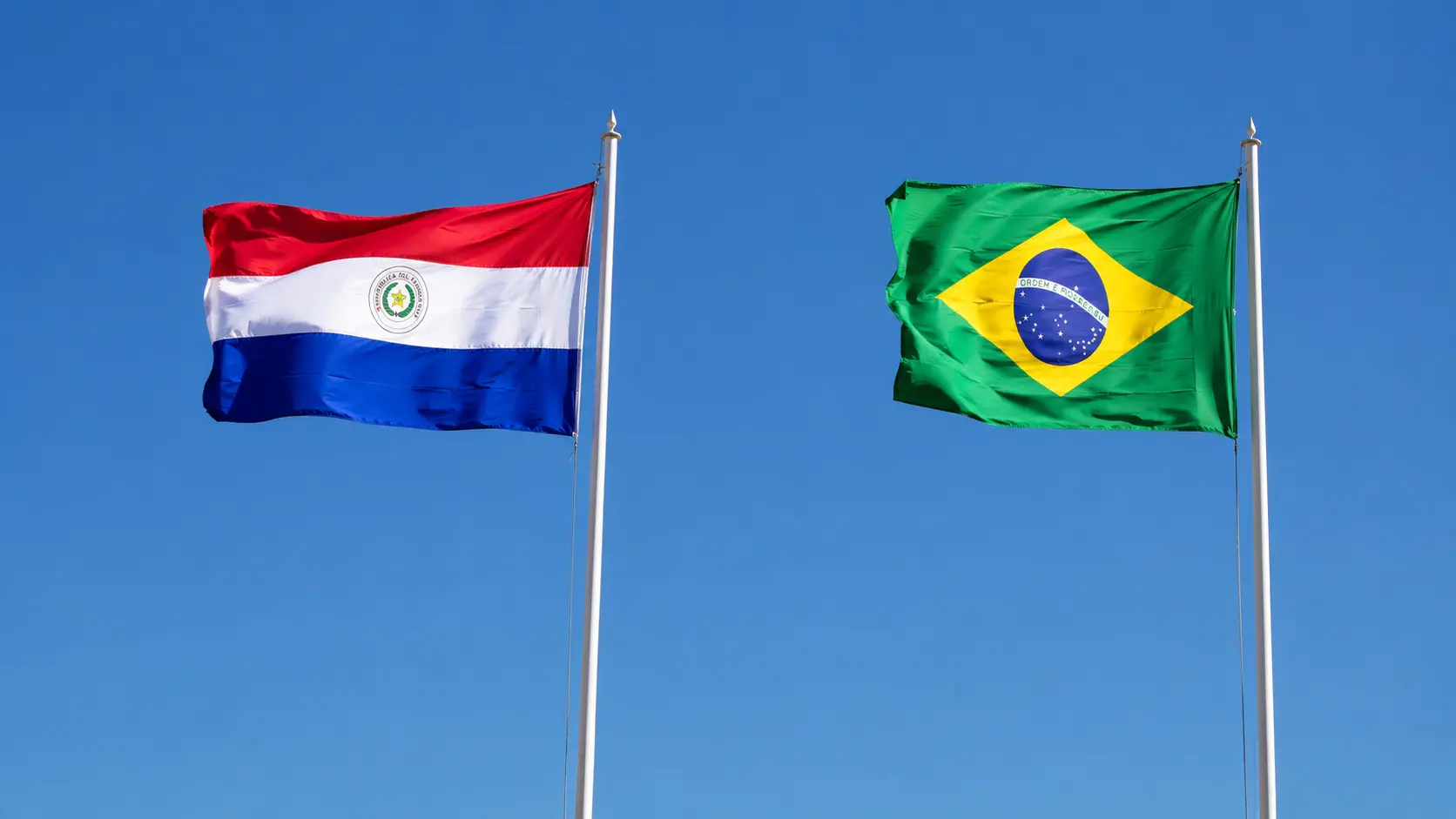
Paraguay’s industrial relevance is larger than its domestic market suggests.
The country can serve as a selective production base next to Brazil. Maquila rules, hydropower, operating costs, border logistics and Mercosur origin rules support components, textiles, packaging, footwear, plastics and other production steps connected to larger regional markets.
The model has two main industrial geographies. Alto Paraná is the Brazil-facing manufacturing corridor, where automotive components and other maquila products connect directly to regional supply chains. Concepción represents an infrastructure and resource-processing corridor built around livestock, forestry, river transport, port infrastructure and new industrial capacity.
The clearest company cases are Yazaki Paraguay in automotive components, Frigorífico Concepción in food processing and Paracel in forestry and industrial infrastructure.
The related Auto-Parts Maquila Corridor analysis examines how Alto Paraná connects Paraguayan production to Brazil’s automotive industry.
The latest official data strengthen the scale argument: maquila exports reached US$1.01 billion between January and August 2026, up 26% year on year, with about 40,000 jobs linked to the regime. Mercosur absorbed 77% of exports through August.
A major 2026 change is the operating framework itself. Law 7547/2025 now governs the maquila regime and Decree 5714/2026 regulates it. The new framework expressly includes both goods and services, retains the 1% maquila tax, formalises electronic programme administration through SIMEX/VUE and allows pure maquila companies to sell up to 10% of the previous year’s exported volume into the domestic market after nationalisation and payment of the applicable taxes.
Paraguay does not need to replace Brazil’s industrial base. Its opportunity lies in extending that system through selected production steps, components, assembly, processing and infrastructure located on the Paraguayan side of the border.
The model is strongest where production can be separated from headquarters, brands and final demand. It is weaker where a project depends on Paraguay alone to provide a large consumer market, a deep supplier network or automatic access to Brazil.
The 2026 legal reform strengthens the operating framework, but it also makes the analytical task more specific: companies now need to distinguish the tax regime, the programme type, the origin rule, the procurement location and the actual value created in Paraguay rather than treating “maquila” as one uniform advantage.
Paraguay Is a Production Location, Not a Large End Market
Paraguay is often assessed through population, domestic demand and GDP. Those measures matter for consumer markets, but they do not explain the country’s growing industrial role.
Paraguay becomes relevant when companies examine where a specific production step should sit. The country combines export-oriented incentives, relatively low operating costs, hydropower, proximity to Brazil and access to the Paraguay–Paraná river system.
Hydropower remains part of Paraguay’s location advantage, but it should no longer be treated as a simple shorthand for guaranteed low-cost industrial electricity. The ATOME Villeta case shows that grid access, tariff design and the durability of the long-term power arrangement can become central investment variables.
ATOME is not a maquila case. Its relevance here is different: it tests the broader industrial-location proposition behind Paraguay’s energy advantage. On September 17, ATOME served a Notice of Dispute concerning the project and its power framework. Paraguay stated that no lawsuit or arbitration had yet been initiated and that a three-month period for an amicable solution is open.
For manufacturers evaluating Paraguay, the practical implication is that energy-sensitive projects require project-level diligence on connection capacity, tariff structure and contract durability. See also Econosur’s power-grid and regulation analysis.
Brazil retains the larger industrial base, stronger brands, deeper supplier networks and much greater final demand. Paraguay can add production capacity where the manufacturing process is labor-intensive, energy-sensitive, modular or compatible with the maquila framework.
“Paraguay’s industrial value comes from location inside a regional production system, not from domestic market scale.”
My reading is that Paraguay’s advantage is becoming more institutional, but not automatically more local. The new maquila framework improves legal clarity and broadens the regime, yet the core commercial question remains where the higher-value functions sit. A plant can manufacture in Paraguay while engineering, purchasing, product ownership and final demand remain in Brazil or at a global headquarters.
For suppliers and investors, this means the useful unit of analysis is not “the Paraguayan maquila market” in general. It is the specific production chain: who owns the programme, who buys the equipment, which origin rule applies, which inputs are local, and which operational capabilities must actually exist in Paraguay.
This explains why the automotive-components corridor in Alto Paraná is strategically important. Paraguay does not need to build a complete vehicle industry to participate in automotive production. It can manufacture selected components for companies and factories embedded in larger regional systems.
Two Industrial Geographies Shape the Market
Paraguay’s industrial development is not concentrated in a single national corridor. Two different geographic systems are emerging.
Ciudad del Este, Hernandarias, Minga Guazú and nearby industrial locations form Paraguay’s clearest border-manufacturing system. Maquila plants can serve Brazilian and regional supply chains through components, cables, textiles, plastics and other manufactured products.
Concepción combines livestock, meat processing, forestry, plantations, river transport, port infrastructure and planned large-scale industrial capacity. Its industrial logic is tied to domestic resources and access to the Paraguay River.
These geographies serve different markets. Alto Paraná depends heavily on Brazil-facing road and border logistics. Concepción depends more on river logistics, raw-material availability, infrastructure development and export routes.
The distinction prevents Paraguay’s industrial expansion from being reduced to one general maquila story. Maquila is central, but it is only one part of the country’s industrial map.
Paraguay has at least two industrial entry points. Alto Paraná provides access to Brazil-linked production chains. Concepción provides access to resource processing, river exports and new infrastructure-led industrial development.
Three Production Models Are Emerging
The industrial expansion can be divided into three operating models. Each model uses different inputs, locations, logistics systems and investment conditions.
Selected production stages are located in Paraguay under an export-oriented regime while brands, buyers, engineering systems and final demand remain tied to Brazil or wider Mercosur markets.
Paraguayan agricultural or biological resources are converted into higher-value export products through processing, certification, cold chains and access to external markets.
Feedstock, roads, energy, ports and processing capacity are assembled around a new industrial project rather than added to an established production ecosystem.
| Industrial model | Core mechanism | Geographic logic | Econosur case |
|---|---|---|---|
| Brazil-linked maquila | Paraguay hosts selected production steps connected to foreign companies and regional demand. | Alto Paraná and other locations linked to Brazil and Mercosur supply chains. | Yazaki Paraguay and the Auto-Parts Maquila Corridor. |
| Resource processing | Domestic agricultural resources are processed into certified export products. | Production zones connected to cold chains, ports, river routes and export markets. | Frigorífico Concepción. |
| Industrial platform | Infrastructure, feedstock and processing capacity are developed around a new large project. | Concepción and the Paraguay River corridor. | Paracel. |
The Maquila Framework Is the Core Manufacturing Mechanism
Paraguay’s maquila regime is now governed by Law 7547/2025, which replaced the previous Law 1064/1997. The law expressly covers both industrial processes and services performed in Paraguay under a contract with a company domiciled abroad, with goods re-exported or services used outside Paraguay.
The core fiscal mechanism remains a 1% maquila tax on national value added or the export invoice, whichever is higher. The law also provides exemptions from several additional national taxes for approved maquila activities and extends the export-VAT credit mechanism to maquila of goods and services, subject to specific limits for services.
The operating structure is broader than a single export factory model. The framework recognises pure maquila, maquila using idle capacity, submaquila and shelter-type structures. A company can therefore place selected production or service processes in Paraguay without transferring the final brand, customer relationship or corporate procurement system.
The regime does not remove commercial risk. Companies still need to resolve rules of origin, customs treatment, product standards, quality requirements, logistics and access to the intended destination market.
A foreign company or buyer can place a production stage in Paraguay without transferring the entire commercial system.
The regime reduces the fiscal burden associated with export production and temporarily imported inputs.
The value of the regime depends on origin rules, product requirements, logistics and the willingness of regional buyers to integrate Paraguayan production.
The 2026 Regulatory Reset: Law 7547, Decree 5714 and SIMEX
The most important legal update is that Paraguay’s maquila system is no longer operating only under the legacy framework. Law 7547/2025 entered into force in September 2025 and Decree 5714/2026, issued on April 6, 2026, regulates the new regime.
The reform matters operationally. It expressly incorporates maquila of services, keeps the 1% tax structure, formalises the roles of the CNIME and its Executive Secretariat and provides a defined framework for programme approval, temporary imports, exports, reporting, sanctions and domestic-market sales.
For pure maquila companies, domestic sales are possible but remain secondary to the export model. Law 7547 and Decree 5714 allow sales into Paraguay of up to 10% of the previous year’s exported volume, subject to prior communication, nationalisation of the relevant goods or inputs and payment of the applicable internal taxes.
Resolution SE-CNIME 14/2026 then translates the law and decree into an operating application process. Programme registration and approval are managed electronically through SIMEX and the Ventanilla Única de Exportación (VUE). The guide requires information on the programme type, production or service process, employment, investment, financing, the foreign parent company and the planned export operation.
Existing programmes were protected during a 12-month transition. MIC states that Law 7547 has been in force since September 8, 2025. Article 42 of the law and Article 54 of Decree 5714 provide that, after those 12 months, programmes approved under the old Law 1064/1997 are incorporated into the new regime by operation of law, without interruption and while retaining the protected rights listed in the transitional provisions. As of September 18, 2026, that transition period has ended.
The reform reduces one type of uncertainty but exposes another. The question is less whether Paraguay has a stable maquila instrument and more whether a specific company can convert that instrument into a resilient regional production position.
In practice, I would test five things before treating a maquila project as commercially attractive: the foreign buyer or parent behind the programme, the applicable origin rule, the real local value added, the location of procurement authority and the logistics path to the destination market. The 1% tax is important, but those five variables decide whether the cost advantage survives outside the spreadsheet.
Brazil Is the Main Demand Corridor
Brazil is the central market behind Paraguay’s maquila expansion. Official MIC data for the first half of 2026 show Brazil absorbing 62% of maquila exports, followed by Argentina with 15%. Mercosur as a whole accounted for 78%.
The August update reinforces the scale of the system. Maquila exports reached US$1.01 billion between January and August 2026, 26% above the same period a year earlier. The MIC reported about 40,000 jobs linked to the regime. Mercosur absorbed 77% of maquila exports through August, with Brazil and Argentina remaining the principal destinations.
This dependence creates opportunity and concentration risk at the same time. Paraguayan plants can connect to a much larger industrial market, but demand conditions, border procedures and policy decisions in Brazil can directly affect factory utilization in Paraguay.
The production mix is also becoming clearer. Through August, the MIC reported that autoparts, apparel, beverages and alcoholic liquids, and aluminium manufactures together accounted for 70% of maquila exports. The same update said 90% of companies with approved programmes were concentrated in Alto Paraná, Central, Capital and Amambay. Paraguay’s industrial diversification is therefore real, but still geographically and commercially concentrated.
Trade.gov provides an important operational distinction. Semi-finished inputs needed by factories in Brazil or Argentina may encounter less resistance than finished goods that compete directly with local manufacturers.
Alto Paraná Is Paraguay’s Main Automotive and Maquila Corridor
Alto Paraná is more than a commercial border region. It is becoming a production corridor linked to the industrial economy across the Paraná River.
Ciudad del Este, Hernandarias, Minga Guazú and Presidente Franco provide proximity to Brazil, industrial parks, transport routes and a labor market shaped by cross-border commerce and manufacturing.
Automotive wiring and electrical components make the corridor visible. These products can be labor-intensive, quality-sensitive and closely integrated into vehicle production systems. They therefore provide a useful test of whether Paraguay can compete beyond simple assembly.
The Paraguay Auto-Parts Maquila Corridor analysis examines the geographic and operating structure in detail. The related Yazaki Paraguay company insight shows how a global automotive supplier fits inside the model.
Yazaki is useful as a market case because automotive wiring combines labor intensity, strict quality control, delivery requirements and integration with external vehicle manufacturers.
The case therefore tests several parts of Paraguay’s industrial proposition at once: workforce reliability, supplier management, logistics, maquila administration and sustained access to regional demand.
Concepción Represents a Different Industrial System
Concepción should not be described as an extension of Alto Paraná’s maquila model. Its industrial structure is based more heavily on domestic resources, river logistics and new infrastructure.
Frigorífico Concepción shows the processing model. Livestock is converted into certified meat products that depend on sanitary controls, industrial processing, cold storage and access to export markets.
Paracel represents a larger infrastructure-led system. Plantations, roads, energy connections, port infrastructure and industrial planning are being developed around a future pulp operation.
The common element is the Paraguay River. Concepción’s industrial potential depends on the ability to move heavy exports and industrial inputs through a river-based logistics system.
This relationship is examined further in Econosur’s Paraguay River Economy analysis and the regional Paraná–Paraguay Waterway analysis.
Which Sectors Fit Paraguay’s Industrial Model?
Paraguay’s advantages are sector-specific. The model works best where production steps can be separated from the final market and where labor, energy, logistics or tax conditions materially affect costs.
| Sector | Why Paraguay can fit | Regional connection | Main constraint |
|---|---|---|---|
| Automotive components | Wiring, cables and selected components can use labor and maquila advantages. | Brazilian and wider Mercosur vehicle and supplier systems provide demand. | Quality, delivery, certification and origin rules are decisive. |
| Textiles and footwear | Labor-sensitive manufacturing can be separated from brand ownership and retail. | Brazilian and regional brands can add Paraguayan production capacity. | Training, scale, logistics and consistent quality limit rapid expansion. |
| Plastics and packaging | Production can serve factories, exporters and regional consumer-goods systems. | Brazil and Mercosur provide larger industrial and commercial markets. | Input prices and transport costs can reduce the operating advantage. |
| Food processing | Domestic agricultural production can be converted into higher-value exports. | International markets, regional buyers and river transport support scale. | Sanitary controls, certification and cold-chain reliability are essential. |
| Forestry and pulp | Land, plantations and river access can support a new export-oriented industrial base. | River ports connect northern Paraguay to downstream logistics and external markets. | Financing, construction, infrastructure and stable operations remain critical. |
| Industrial supplies | New plants require machinery, electrical systems, maintenance, automation and technical services. | International suppliers can serve projects through local distributors or direct project relationships. | Procurement access and local service capacity often matter more than headline market growth. |
The Model Has Clear Limits
Paraguay’s cost and tax advantages do not automatically create a deep industrial economy. A maquila plant can import inputs, assemble a product and export the result without building an extensive domestic supplier network.
This creates a risk of shallow industrialization. Employment and export value can rise while engineering, procurement authority, technology ownership and high-value supplier relationships remain outside Paraguay.
Market access is another constraint. Mercosur membership does not eliminate customs disputes, non-tariff barriers, product-specific rules or political intervention.
Logistics can also neutralize cost advantages. Road conditions, border crossings, inland transport, port access and river levels affect the reliability of industrial supply chains.
Energy can create the same effect for power-intensive projects. National hydropower abundance does not by itself establish the delivered tariff, connection capacity or long-term contractual conditions available to a specific plant. The ATOME dispute makes that distinction visible at project level.
Brazil consistently appears as the main destination for Paraguay’s maquila production.
Automotive components, food processing and forestry infrastructure show that Paraguay is developing more than one industrial model.
Border procedures, roads, river conditions and access to reliable transport determine whether the cost advantage survives.
Production can expand without transferring procurement authority, engineering capability or supplier depth to Paraguay.
Energy-intensive investors need to verify grid access, tariff structure and contract durability instead of treating hydropower abundance as an automatic site advantage.
Why Mercosur Origin Rules Matter
Rules of origin determine whether a Paraguayan production step creates a regional trade advantage. Imported components, Paraguayan processing and the final destination must fit the applicable origin calculation.
Under the updated Mercosur Origin Regime, Paraguay obtained differential treatment allowing a maximum share of non-originating materials of 60% for the relevant origin rules through the end of 2038. The preference is important for production models that combine imported inputs with Paraguayan transformation.
This is not a blanket permission for every product. Product-specific origin requirements remain decisive where they apply, and the applicable rule must be checked at tariff-line and product level. “60%” therefore describes a preferential framework, not automatic Mercosur origin for any maquila output.
For companies, this is not a legal detail. Origin rules affect factory design, sourcing decisions, component selection and the economic value of locating production in Paraguay. A low-cost plant that fails to qualify for the intended regional preference may lose much of its advantage.
- Which Paraguayan plants or industrial projects are realistic buyers for this product or service?
- Who controls procurement and technical specifications: the local plant, Brazil, a global headquarters or an engineering contractor?
- Which incumbent suppliers and competitors are already positioned?
- What must be supplied, stocked, installed or serviced locally?
- Which distributors, representatives or technical partners offer a credible route into the market?
- How do Mercosur origin rules, customs treatment and border logistics affect the commercial case?
- Which industrial locations in Alto Paraná, Concepción or elsewhere offer the strongest fit?
- Is the opportunity strong enough to justify direct outreach, local presence or deeper market-access work?
Targeted conversations with relevant market participants to test demand, operating conditions and commercial assumptions.
Identify manufacturers, industrial groups, competitors, production footprints and market positioning.
Map incumbent suppliers, distributors, technical representatives and potential local or regional service partners.
Establish where purchasing decisions, specifications, qualification and corporate approvals actually sit.
Separate announced industrial projects from operating, financed or commercially addressable opportunities.
Use relevant sector events and industry networks to identify companies, market signals and commercial contacts.
On-the-ground verification in Paraguay and the Southern Cone where physical market conditions, industrial locations or local counterparties need checking.
Translate findings into a practical view of target sectors, buyers, procurement routes, partners, risks and next steps.
Marcus A. Volz conducts custom market research for international companies evaluating Paraguay’s manufacturing base, maquila system and Brazil-linked industrial supply chains. The work connects public market structure with the company-, buyer- and procurement-level information needed for a commercial decision.
Paraguay Manufacturing and Maquila Market Research Services
Official maquila statistics, trade-policy documents and company announcements can show export growth, tax treatment, production locations, visible sectors and major investment cases. They do not reliably show which plants are actively sourcing a specific technology, who controls the specification, which suppliers are already qualified, how a buyer evaluates new vendors, which local service partner is preferred or whether an announced investment is commercially accessible to an outside supplier.
Those questions require company-level research, interviews, supplier and buyer checks, procurement mapping and direct market verification.
What should manufacturers and industrial suppliers verify before entering Paraguay’s maquila market?
The maquila regime improves the production proposition, but it does not guarantee commercial access. Companies should verify target buyers and plants, procurement locations, incumbent suppliers, Mercosur rules of origin, customs treatment, product standards, logistics, industrial-site conditions, labor and power availability, local service requirements and the actual route into Brazilian or wider regional supply chains. For energy-intensive projects, power availability should be broken down further into connection capacity, tariff structure and long-term contract durability.
Rules of origin are particularly important because the commercial value of producing in Paraguay depends on how imported inputs, Paraguayan processing and the intended destination fit the applicable Mercosur framework. A low-cost plant that does not qualify for the intended trade treatment can lose much of its advantage.
How can international suppliers access procurement in Paraguay’s Brazil-linked manufacturing chains?
The first task is to identify the real procurement point. A factory may be located in Paraguay while purchasing authority, engineering standards or corporate approval remain in Brazil, Europe, Asia or North America. The local plant, a Brazilian regional office, a global headquarters or an engineering contractor may control the purchase.
Suppliers therefore need to map the plant, regional purchasing organization, engineering decision-makers, incumbent suppliers and local service requirements. Installation, maintenance, response time, documentation and spare-parts availability can still require Paraguayan or regional capacity even when the commercial decision is made abroad.
Which industries offer the strongest opportunities for international suppliers in Paraguay’s expanding manufacturing base?
The clearest opportunity fields are the industrial systems already visible in the market, not a generic national manufacturing boom. Automotive components and wiring, plastics, packaging, textiles and footwear, food processing, forestry-linked industry and new infrastructure-led projects can generate demand for machinery, industrial electrical systems, automation, testing, maintenance, logistics, certification and technical services.
The geography matters. Alto Paraná is more closely tied to Brazil-facing maquila manufacturing and automotive supply chains. Concepción is more closely tied to resource processing, cold chains, forestry, river logistics, ports, energy and large industrial infrastructure. A supplier should therefore evaluate the relevant industrial system rather than treat Paraguay as one uniform market.
Paraguay’s manufacturing expansion creates commercial possibilities, but the relevant market is not defined by factory count alone. International suppliers need to understand which sectors are expanding, where procurement authority sits and whether Paraguay is the decision market, the production location or one node inside a wider Brazilian or global supply chain.
Industrial Supplier, Procurement & Market-Entry Questions
The Econosur Reading
Paraguay should be read as a system of industrial locations rather than a single national market.
Alto Paraná connects maquila manufacturing to Brazil. Concepción connects agricultural and forestry resources to industrial processing, infrastructure and river exports.
The model is credible because it is already visible across different sectors. Automotive components show regional manufacturing integration. Meat processing shows domestic resource conversion. Paracel shows the attempt to build an entirely new industrial platform.
My main question is no longer whether the maquila model can generate export growth. The 2026 data already answer that. Exports exceeded US$1 billion through August. The more important test is whether the next phase increases local technical depth: engineering capability, domestic supplier participation, maintenance capacity, procurement responsibility and locally retained value.
The ATOME case adds a separate industrial-location lesson. Paraguay can possess an exceptional energy resource and still face a gap between resource advantage and an investment-grade operating framework. For energy-intensive manufacturing, the power contract can be as important as the headline electricity advantage.
The new legal framework gives Paraguay a stronger operating platform. It does not determine how much of the value chain remains in the country. That depends on company-level decisions and on whether Paraguayan plants evolve from cost-efficient production nodes into technically deeper parts of regional industrial systems.
“Paraguay matters when companies stop asking how large the market is and start asking where production, processing and logistics should be located.”
The regulatory and current-market sections rely first on Paraguayan and Mercosur legal texts and official MIC data. Figures refer to the periods stated by each source.
- Biblioteca y Archivo Central del Congreso — Law 7547/2025, new Maquila Regime.
- Ministerio de Industria y Comercio — current Maquila framework, programme types, 1% tax, SIMEX/VUE and legal references.
- Presidency / MIC — Decree 5714/2026 regulating Law 7547/2025.
- SE-CNIME Resolution 14/2026 — programme-application guide and SIMEX/VUE procedure.
- MIC, September 11, 2026 — US$1.01bn January–August maquila exports, +26%, about 40,000 jobs, 77% Mercosur share and current sector mix.
- MIC, July 14, 2026 — Brazil 62% of first-half maquila exports, Mercosur 78%, sector and employment data.
- MERCOSUR CMC Decision 06/23 — Paraguay differential origin treatment, 60% MaxMNO through 2038.
- Paraguay Ministry of Foreign Affairs — implementation context for the updated Mercosur Origin Regime.
- MIC — current Maquila framework and confirmation that Law 7547 has been in force since September 8, 2025.
- ATOME, September 17, 2026 — Notice of Dispute concerning the Villeta project and its power framework; company allegations have not been adjudicated.
- Paraguay Attorney General’s Office, September 17–18, 2026 — no lawsuit or arbitration initiated; three-month amicable-resolution period.
Secondary and contextual sources
- World Trade Organization — Paraguay Trade Policy Review.
- U.S. International Trade Administration — operational context for maquila assembly and distribution.
Related Econosur research
From industrial structure to commercial verification
Public sources can show Paraguay’s maquila framework, visible sectors, export growth and major industrial cases. They do not reliably show the live buyer, supplier and procurement structures that determine whether an international company can actually enter the market.
Econosur provides custom research on manufacturers, competitors, buyers, suppliers, procurement routes, industrial locations, Mercosur rules and Brazil-linked market access.
Explore custom market researchFrequently Asked Questions
Why is Paraguay relevant to Brazilian manufacturers?
Paraguay offers an export-oriented maquila regime, hydropower, lower operating costs and locations close to Brazil. These conditions can support selected production stages that remain connected to Brazilian buyers, factories and distribution systems.
Which regions shape Paraguay’s industrial expansion?
Alto Paraná is the main Brazil-facing manufacturing corridor. Concepción represents a different model based on agricultural processing, forestry, river logistics and new industrial infrastructure.
Which sectors are most visible in Paraguay’s maquila industry?
Through August 2026, autoparts, apparel, beverages and alcoholic liquids, and aluminium manufactures together accounted for 70% of maquila exports. Chemical-pharmaceutical products, plastics, food products and other manufactures add further diversification.
What changed under Paraguay’s new Maquila Law and its 2026 regulation?
Law 7547/2025 replaced the old maquila law and expressly covers both goods and services. Decree 5714/2026 regulates the regime, while Resolution SE-CNIME 14/2026 establishes the application guide through SIMEX and the Ventanilla Única de Exportación. The 1% maquila tax remains central. The 12-month transition period for programmes approved under the old law ended in September 2026; those programmes are incorporated into the new regime by operation of law while retaining the protected rights specified in Article 42.
Does Paraguay’s maquila regime guarantee access to Brazil?
No. Market access still depends on product-specific rules, Mercosur origin requirements, customs procedures, logistics and non-tariff barriers. Semi-finished inputs linked to established regional supply chains may face fewer obstacles than some finished goods.
What does Yazaki show about Paraguay’s industrial model?
Yazaki shows how labor-intensive automotive components can be produced in Paraguay while remaining connected to larger regional vehicle and supplier systems. The case makes the relationship between maquila, workforce quality, border logistics and Brazilian demand visible.
How do Paracel and Frigorífico Concepción fit into the market?
Frigorífico Concepción represents industrial processing of domestic agricultural resources. Paracel represents an infrastructure-led greenfield model combining plantations, energy, roads, port facilities and a planned pulp operation.
Which industries offer the strongest opportunities for international suppliers in Paraguay’s expanding manufacturing base?
The strongest visible opportunity fields are tied to existing industrial systems: automotive components and wiring, plastics, packaging, textiles and footwear, food processing, forestry-linked industry and infrastructure-led projects. Supplier demand can extend to machinery, industrial electrical systems, automation, testing, maintenance, logistics and technical services.
How can international suppliers access procurement in Paraguay’s Brazil-linked manufacturing chains?
They need to identify where procurement authority sits. A plant may operate in Paraguay while purchasing, engineering standards or corporate approvals remain in Brazil or at a global headquarters. Supplier access therefore depends on mapping the local plant, regional purchasing organization, engineering decision-makers, incumbent suppliers and local service requirements.
What should manufacturers and industrial suppliers verify before entering Paraguay’s maquila market?
They should verify target buyers and plants, procurement locations, incumbent suppliers, Mercosur rules of origin, customs treatment, product standards, logistics, industrial-site conditions, labor and power availability, local service requirements and the real route into Brazilian or wider regional supply chains. For energy-intensive projects, grid connection, tariff structure and contract durability also require project-level verification.
Does Paraguay’s hydropower advantage guarantee a competitive industrial power contract?
No. Hydropower remains a structural advantage, but the ATOME Villeta case shows that industrial competitiveness also depends on grid access, tariff design and a durable long-term power contract. ATOME served a Notice of Dispute on September 17, 2026; Paraguay says no lawsuit or arbitration has yet been initiated and that a three-month period for an amicable solution is open.