
Company Insight · Argentina · Banking · Credit · Household Demand · Stabilization Gap
Grupo Financiero Galicia: Argentina’s Credit Transmission Test
Grupo Financiero Galicia is the clearest company lens for Argentina’s stabilization gap because macro repair has to become visible in deposits, loans, credit cards, SME finance, mortgage demand, Naranja X activity, household delinquency and confidence in the banking system.
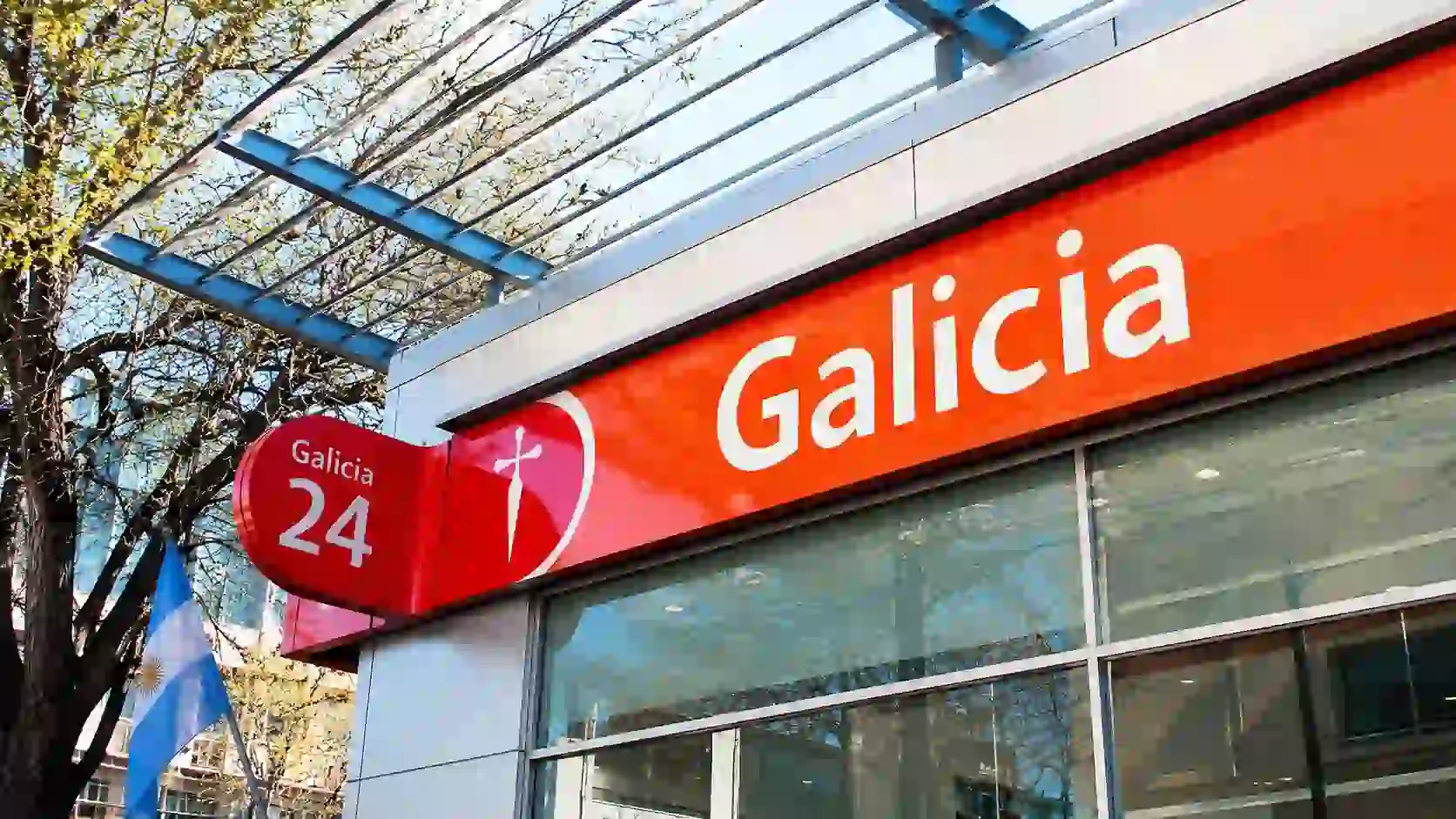
Grupo Financiero Galicia is the best company lens for Argentina’s credit-transmission problem.
Inflation can fall, the exchange-rate regime can stabilize and sovereign risk can improve. The banking system shows whether that repair reaches households and companies through deposits, loans, card use, SME credit, mortgage demand and lower delinquency.
Galicia matters because it combines Banco Galicia, Naranja X, Galicia Seguros, Fondos FIMA and other financial units with the completed HSBC Argentina integration. That makes it one of the clearest places to read whether Argentina’s stabilization is becoming private-sector credit and household confidence.
This company insight connects directly to Econosur’s analysis of Argentina’s stabilization gap, the Argentina market profile and the wider Argentina company-insight series.
Core market reading:
Galicia is where Argentina’s stabilization gap becomes measurable. The signal is not only the bank’s profit. The signal is whether private-sector lending expands without turning household credit quality into the next stress point.
Why Galicia matters now
Argentina’s stabilization story has two layers. The first layer is macro repair: lower monthly inflation, reserves, fiscal discipline, sovereign spreads, exchange-rate credibility and capital-commercial access. The second layer is private-sector repair: deposits, credit, payment behavior, wages, household balance sheets and SME financing.
Grupo Financiero Galicia sits in the second layer. The company gives a practical reading of whether macro repair reaches the financial lives of households and companies.
That makes Galicia a stronger company fit for the stabilization-gap theme than an energy company. Vaca Muerta companies show investment and export capacity. Galicia shows whether confidence, credit and payment capacity are returning inside the domestic economy.
Q2 2026 makes that test more concrete. Grupo Galicia reported Ps.258.3 billion of quarterly net income, up 12% year on year, with ROE of 11.3% and an efficiency ratio of 35.0%. At the same time, the group NPL ratio rose to 10.6% from 9.6% in Q1. Profitability and credit quality were therefore moving in different directions.
Banking is the transmission layer of stabilization.
When stabilization starts to work, it should appear in credit demand, lower credit stress, deposits, card behavior, mortgage interest, SME finance and a broader willingness to hold claims inside the local financial system.
Company profile: Argentina’s private financial-services platform
Grupo Financiero Galicia describes itself as one of Argentina’s leading financial-services holding companies. Through its subsidiaries, the group provides savings, credit, investment, insurance, advisory and digital solutions to individuals and companies.
The group’s platform includes Banco Galicia, Naranja X, Galicia Seguros, Fondos FIMA, Inviu, Galicia Securities, Nera and Galicia Ventures. That structure matters because Galicia is not only a traditional bank. It is a financial-services platform with banking, consumer finance, asset management, insurance, capital markets and digital channels.
Galicia’s official profile also stresses more than 120 years of experience and more than 10,000 employees. That long institutional history gives the company a different role from newer fintech players: it is both an incumbent bank and a digital-consumer-finance platform.
The platform: banking, cards, insurance and savings
Galicia’s platform matters because Argentina’s financial recovery will not move through one channel. It will move through several channels at once: deposits, checking accounts, credit cards, personal loans, SME credit, insurance, mutual funds and digital wallets.
Banco Galicia is the central banking unit. Galicia’s company page describes Banco Galicia as the main private-sector bank controlled by national capital, with more than three million customers and a relevant share of private-sector loans.
Naranja X adds the consumer-finance layer. Galicia’s company information describes Naranja X as a leading card issuer with millions of cards. That makes Naranja X important for reading the household side of the economy: consumption, revolving balances, payment stress, financial inclusion and digital behavior.
Fondos FIMA adds the savings and asset-management layer. In a country where inflation, currency expectations and interest rates shape daily financial decisions, mutual-fund behavior is part of the stabilization signal.
By Q2 2026, the combined Galicia and Naranja X platform reported 20.9 million deposit accounts and 13.3 million credit cards. Its private-sector market share reached 15.9% in loans and 15.6% in deposits, making the group large enough for changes in credit quality and customer behavior to carry system-level relevance.
| Business layer | What Galicia controls | Why it matters for stabilization |
|---|---|---|
| Banking | Banco Galicia. | Deposits, loans, SMEs, mortgages and branch relationships show confidence in the formal banking system. |
| Consumer finance | Naranja X. | Credit-card behavior and digital payments show household stress and consumption recovery. |
| Insurance | Galicia Seguros. | Insurance penetration and product demand reflect disposable income and formalization. |
| Asset management | Fondos FIMA. | Mutual funds show peso-savings behavior and confidence in local financial assets. |
| Capital markets | Inviu and Galicia Securities. | Investment channels matter if stabilization expands beyond bank deposits. |
HSBC Argentina integration: the consolidation signal
The HSBC Argentina acquisition is the central consolidation event in Galicia’s recent history. HSBC announced in April 2024 that it had agreed to sell its Argentina business to Grupo Financiero Galicia for US$550 million, subject to price adjustments.
The deal included banking operations, asset management, insurance and subordinated debt. HSBC described Galicia as the largest private financial group in Argentina at the time of the announcement.
Argentine reporting later described the integration as completed in June 2025 under the Galicia Más brand, with the combined platform reaching more than five million customers, 350 branches and 7,200 employees. The same reporting cited market shares of about 15.2% in private-sector loans and 16.7% in private-sector deposits.
The acquisition matters because it turns Galicia into a banking-system consolidation case. In a market emerging from a long period of volatility, scale can strengthen deposits, branch coverage, customer data, credit distribution and cross-selling. The integration also creates execution risk: systems, customers, culture, risk models and profitability must align.
The HSBC Argentina acquisition expanded Galicia’s reach and strengthened its role as a private financial platform.
Post-integration deposits, private-sector lending and customer activity show whether scale becomes credit transmission.
Systems, product migration, credit policies and customer retention determine whether the acquisition strengthens the platform.
Credit transmission: the cleanest market signal
Credit transmission is the cleanest reason to analyze Galicia.
The BCRA’s June 2026 banking report shows that financial intermediation with the private sector continued to deepen. Across all currencies, the real stock of private-sector credit increased 3.1% from May and 10.1% year on year. In July, peso loans to the private sector rose another 1.2% in real seasonally adjusted terms, again driven primarily by commercial credit.
Bank credit in pesos remained equivalent to 9.2% of GDP in July and reached 12.5% when foreign-currency lending was included. This is a stronger transmission signal than the late-2025 balance-sheet shift alone: the system is continuing to direct more financing toward private companies and households.
For Galicia, the key question is how much of this expansion becomes sustainable lending. Q2 data show private-sector financing of Ps.25.27 trillion for the consolidated Galicia/Naranja X perimeter, 4% above Q1 and 12% above Q2 2025 in constant pesos. But credit growth and credit quality are not moving uniformly across customer groups.
That is why Galicia is a stabilization test. A macro program can reduce headline variables. The bank book shows whether companies and households can borrow and repay under the new conditions.
Credit-transmission reading:
If Argentina’s stabilization works at the household and SME level, Galicia should eventually show healthier loan growth, stable deposits, better asset quality and deeper private-sector financial activity.
Household stress: the hard counter-signal
The strongest counter-signal is household credit stress.
The BCRA’s June 2026 report shows that household credit quality deteriorated further after the early-2026 stress already identified by Reuters. The system-wide irregularity ratio for private-sector financing stood at 7.6%, but the household ratio reached 12.8%, compared with 3.5% for companies.
The June number was slightly lower than in May, but it remained far above the 9.3% household ratio recorded at the end of 2025. The important development is therefore not simply that delinquency rose: the gap between households and companies widened into a structural distinction inside the credit recovery.
This is the key Galicia tension. A bank can grow loans in a stabilizing economy while consumer credit remains impaired. Galicia’s own Q2 group NPL ratio reached 10.6%, while Banco Galicia’s portfolio-quality ratio was 8.3%. Naranja X was substantially weaker at 19.7%, making consumer finance the clearest stress point inside the group.
| Credit signal | What the data shows | Why it matters for Galicia |
|---|---|---|
| Private-sector credit | BCRA reported a larger share of bank assets going to companies and households by end-2025. | Positive signal for financial normalization and private-sector activity. |
| Household delinquency | BCRA reported 12.8% household-financing delinquency in June 2026. | Shows that household credit quality remained the main system stress point. |
| Corporate delinquency | BCRA reported 3.5% delinquency for company financing in June 2026. | Companies remained materially less stressed than households. |
| Galicia Q2 stress | Grupo Galicia reported a 10.6% NPL ratio; Naranja X reached 19.7%. | Consumer-finance exposure remains the sharpest company-level risk. |
Naranja X: why the consumer-finance layer matters
Naranja X is the part of Galicia that makes the household story especially important.
A traditional bank can show deposits, corporate loans and branch activity. Naranja X adds card usage, payment behavior, digital wallet activity and consumer-finance exposure. That gives Galicia a closer view of how middle- and lower-income consumers are managing payments under the stabilization program.
This is useful for market observers because consumer finance often turns before formal macro indicators feel stable. Card balances, missed payments, refinancing, wallet activity and merchant use can show stress or recovery earlier than annual income data.
Naranja X therefore turns Galicia into a broader household-demand signal. The question is whether falling inflation allows consumers to normalize payments, or whether higher tariffs and weak real wages keep household credit quality under pressure.
Q2 2026 shows both sides of that model. Naranja X generated about Ps.35.6 billion of net income, but its non-performing-loan ratio rose to 19.7% from 16.7% in Q1 and 8.7% a year earlier. Coverage stood at 94.1%. Management said in the August earnings call that short-term delinquency indicators were improving and expected the NPL ratio to decline toward 16–17% by year-end, but that remains a forward-looking expectation rather than an achieved result.
Naranja X is Galicia’s household sensor.
Card use and digital-payment behavior show how stabilization is being absorbed by households that still face rent, utilities, food prices and unstable income.
Dividend signal: capital return under a fragile recovery
Galicia’s 2026 dividend notice adds a capital-market signal to the company profile.
The company reported a board decision dated June 30, 2026, based on the shareholders’ meeting of April 28, 2026, to pay a cash dividend totaling Ps. 39,999,772,000. The payment was structured in three equal installments during July, August and September 2026, with local payments through Caja de Valores and ADR-related processing through Bank of New York Mellon.
A dividend does not prove that Argentina’s banking cycle is fully repaired. It does show that Galicia is operating as a listed financial group with capital-return visibility while the system is still digesting household credit stress, integration effects and macro risk.
Capital-market reading:
The dividend is a shareholder signal. The deeper market signal remains credit quality: loan growth is healthy only if repayment capacity improves at the same time.
Risk layer: what can go wrong
Galicia’s opportunity is large because Argentina is underbanked relative to its potential. Its risk is large because household balance sheets remain vulnerable.
The first risk is household delinquency. This is no longer only a system-level warning from late 2025. In June 2026, BCRA household delinquency stood at 12.8%, and within Grupo Galicia the Q2 NPL ratio reached 10.6%. Naranja X’s 19.7% portfolio-quality ratio shows where the stress is concentrated.
The second risk is income recovery. Banks benefit when wages, employment and company cash flows stabilize. If tariff increases, food prices and rent pressure absorb disposable income, private-credit growth becomes harder to sustain.
The third risk is integration. The HSBC Argentina acquisition created scale, but scale has to be converted into efficient operations, risk control, digital migration, product cross-selling and customer retention.
The fourth risk is macro relapse. Argentina’s banking system remains exposed to sovereign risk, currency expectations, regulation, interest-rate shifts and political uncertainty. Reuters reported in July 2026 that investors see Argentina as more capable of handling its 2027 debt wall, but political risk remains central.
| Risk layer | How it affects Galicia | Market interpretation |
|---|---|---|
| Household delinquency | Higher missed payments affect provisions, credit appetite and profitability. | Household recovery is the central company-level test. |
| Credit expansion | Loan growth helps activity but can create stress if income recovery lags. | Quality of growth matters more than headline expansion. |
| HSBC integration | Branch, customer, system and culture integration must produce efficiency. | Consolidation is valuable only if execution is clean. |
| Macro and political risk | Interest rates, FX expectations and sovereign risk affect deposits, valuation and credit. | Galicia remains a leveraged reading of Argentina’s stabilization credibility. |
| Naranja X exposure | Consumer-finance growth can reveal household stress faster than traditional corporate banking. | Useful signal, but also a source of asset-quality pressure. |
How Galicia connects to the broader Argentina market picture
Grupo Financiero Galicia connects the domestic side of Argentina’s market story. Energy companies show exports, pipelines and upstream investment. Galicia shows whether the domestic financial economy is healing.
The company links naturally to Argentina’s stabilization gap because a macro program becomes real only when financial behavior changes: deposits become more stable, credit grows, delinquencies fall, SMEs invest and households regain payment capacity.
Galicia also links to future company profiles. Mercado Libre would show digital commerce and payments. Arcor and Molinos would show household consumption and food-price pressure. IRSA would show shopping centers, real estate and middle-class demand. Galicia sits at the financial center of those signals.
Q2 2026 makes Argentina’s credit recovery look more divided, not more uniform.
Galicia’s profitability improved, efficiency strengthened and private-sector financing continued to expand. At system level, commercial lending was still driving real credit growth into July. But household delinquency reached 12.8% in June, while company delinquency was only 3.5%. Inside Galicia, the same split appears between the bank and Naranja X.
My reading is therefore that credit transmission is working, but unevenly. The stronger signal is currently on the business and formal-banking side; the weaker signal is household repayment capacity. For companies evaluating Argentina, that means domestic recovery should not be inferred from aggregate credit growth alone. The useful question is which borrower segments are taking credit for expansion and which are using finance to bridge continuing income pressure.
The larger market question
The larger question for Galicia is straightforward: can Argentina move from macro stabilization to private-sector financial recovery?
Galicia will not answer that question alone. But Galicia offers one of the clearest company-level readings of the answer. A stronger Argentina should eventually show up in Galicia’s deposits, private-sector lending, household credit quality, Naranja X behavior, mutual funds, SME finance and market valuation.
The same company now reveals both movements at once. Q2 profitability and system-wide credit growth point toward normalization, while Galicia’s NPL ratio, Naranja X’s portfolio quality and the BCRA household data show that the stabilization gap remains open on the consumer side. A broader recovery becomes more credible only when credit growth is accompanied by improving repayment quality.
That makes Grupo Financiero Galicia more than a banking stock. It is a live measure of whether Argentina’s economic repair reaches the domestic economy.
Galicia is where Argentina’s stabilization gap becomes a banking question: who borrows, who saves, who pays, and who falls behind.
Three Business Questions for Banks, Investors and Companies Watching Argentina
1. Which customer and business segments are creating the healthiest credit-growth opportunities for Galicia?
Galicia’s public profile shows credit transmission across Banco Galicia, Naranja X and the wider financial platform, but the quality of growth differs sharply by customer type. By June 2026, BCRA data cited in this analysis showed household-financing delinquency at 12.8%, compared with 3.5% for company financing. That makes the strongest commercial opportunity less about headline loan growth and more about identifying segments where demand is supported by improving cash flow, repayment capacity and productive investment.
For business lending, the most useful distinction is between working-capital demand and longer-term investment finance, and between SMEs, larger corporates and sectors with different exposure to domestic consumption, exports, regulated prices and interest rates. For households, mortgages, personal loans and card finance have different risk profiles and should not be treated as one recovery signal.
What requires primary and commercial research: sector-level SME demand, investment intentions, borrowing purpose, regional differences, credit conditions, approval barriers, borrower confidence and which customer groups are expanding without a corresponding deterioration in repayment quality.
2. How successfully is Galicia converting the HSBC Argentina acquisition into customer retention, cross-selling and stronger market position?
The acquisition clearly changed Galicia’s scale. The public record cited in this company insight describes a combined platform of more than five million customers, around 350 branches and larger reported shares of private-sector loans and deposits after the integration under the Galicia Más brand.
Those figures establish size, but not the commercial quality of the integration. The more important questions are whether former HSBC corporate, SME and affluent-retail customers remain active; whether product relationships deepen across deposits, credit, payments, investments and insurance; whether overlapping branches and systems are being rationalized without service deterioration; and whether the larger customer base improves profitability and competitive positioning.
What requires commercial verification: retention by customer segment, cross-selling, customer migration, service quality, branch and digital integration, corporate relationship continuity, competitor switching and where the combined platform is gaining or losing commercial relevance.
3. What should companies and investors verify before treating Galicia and Naranja X as evidence that Argentina’s domestic economy is recovering?
Galicia and Naranja X are useful because they sit close to deposits, credit, card behavior, digital payments and household repayment. But rising activity does not automatically mean a healthy recovery. The same period can show expanding private credit and worsening household delinquency, as the late-2025 and early-2026 data in this analysis demonstrate.
A credible recovery should therefore be tested through the composition of demand: whether SMEs are borrowing to invest or merely to bridge cash-flow pressure; whether households are normalizing payments or refinancing stress; whether deposits and mutual-fund balances reflect greater confidence in local financial assets; and whether card and wallet activity is driven by stronger real consumption rather than by financing necessity.
What requires market verification: real versus nominal credit growth, SME investment appetite, repayment capacity, refinancing behavior, merchant activity, deposit confidence, regional and income-group differences, and whether financial activity is broadening into productive investment rather than simply extending consumer leverage.
Public sources establish Galicia’s group structure, reported financial results, Q2 2026 company results, system-level credit conditions, the HSBC Argentina transaction and integration scale, household delinquency trends and Naranja X’s strategic role. They do not provide a complete view of live SME demand by sector, former-HSBC customer retention, cross-selling success, regional credit appetite, borrower intentions, competitor switching, customer-level repayment behavior or the commercial reasons behind changes in deposits and payment activity.
Those questions require targeted company, customer, SME, competitor and financial-market research rather than public banking statistics alone.
Argentina Banking, Credit and Company Research
Econosur can extend this public company analysis into targeted research for banks, fintech companies, investors, B2B suppliers, institutions and international companies that need to understand how Argentina’s financial recovery is behaving at company, SME and household level.
Current company figures are anchored in Grupo Galicia’s Q2 2026 results and regulatory filings. System-level credit, delinquency and monetary data are taken from the BCRA. Financial figures under inflation accounting should be read with attention to IAS 29 restatement and reporting dates.
- Grupo Financiero Galicia — Financial Information: quarterly results, financial statements, presentations and investor documents.
- Comisión Nacional de Valores — Grupo Financiero Galicia filings: official Q2 2026 results filing on 25 August and consolidated financial statements filed on 26 August 2026.
- Grupo Financiero Galicia — 2Q 2026 Results Report: Ps.258.3bn quarterly net income, 11.3% ROE, 15.9% private-sector loan share, 15.6% deposit share, group and subsidiary credit-quality ratios.
- Grupo Financiero Galicia — company profile: group structure and institutional background.
- Grupo Financiero Galicia — operating companies: Banco Galicia, Naranja X, Galicia Seguros, Fondos FIMA, Inviu, Galicia Securities, Nera and Galicia Ventures.
- BCRA — Report on Banks, June 2026: private-sector credit growth, deposits, 7.6% aggregate delinquency, 12.8% household delinquency, 3.5% company delinquency, provisions, liquidity and solvency.
- BCRA — Monthly Monetary Report, July 2026: real growth of peso private-sector lending and bank credit as a share of GDP.
- BCRA — Credit Conditions Survey, Q2 2026: bank-reported changes in credit supply and demand for companies and households.
- HSBC — sale of HSBC Argentina to Grupo Financiero Galicia: official 2024 transaction announcement and US$550 million headline price.
- Reuters — Argentina household credit stress, 13 April 2026: independent reporting on the earlier deterioration in household loan performance and household-cost pressures.
- Reuters — Argentina debt and political-risk context, 2 July 2026: external financial-confidence and sovereign-risk context.
- Investing.com — Grupo Galicia Q2 2026 results analysis: secondary reporting on profitability, capital, Naranja X credit quality and management guidance.
- Infobae — Galicia Más integration, June 2025: reported customer, branch, employee and market-share scale after the HSBC Argentina integration.
- Evidence note: Galicia and BCRA sources establish the reported financial and credit-quality figures. The interpretation that Argentina’s credit transmission is currently stronger on the business side than on the household side is Econosur analysis based on the divergence between corporate and household delinquency, system credit growth and Galicia/Naranja X portfolio quality.
- Econosur analysis updated 30 August 2026.
Examples of questions Econosur can investigate for companies and institutions evaluating Argentina’s financial sector and domestic demand:
- Which SME sectors are showing the strongest financing demand, and is it for working capital or investment?
- Where are credit conditions still preventing otherwise viable companies from borrowing?
- How do financing needs differ between Buenos Aires and major provincial markets?
- Are former HSBC Argentina corporate and SME customers remaining with Galicia after integration?
- Which banks or fintech competitors are gaining customers in specific business or consumer segments?
- How is Naranja X being used by merchants and households, and where does usage indicate stress rather than recovery?
- Are deposits and mutual-fund balances reflecting stronger confidence in peso assets?
- Which borrower segments are experiencing improving or deteriorating repayment capacity?
- How much of current private-credit growth reflects productive investment rather than short-term refinancing?
- What do company interviews say about hiring, investment and borrowing intentions over the next 6–12 months?
Need to verify Argentina’s credit recovery beyond public banking data?
Econosur researches the company and customer behavior behind the headline numbers: SME credit demand, borrower confidence, bank competition, HSBC integration, Naranja X, deposits, repayment pressure and regional differences.
Research can combine public financial data with company-level checks, primary interviews, competitor research and targeted local verification in Argentina.
Explore Research OptionsFAQ
What is Grupo Financiero Galicia?
Grupo Financiero Galicia is one of Argentina’s leading financial-services holding companies. Its platform includes Banco Galicia, Naranja X, Galicia Seguros, Fondos FIMA, Inviu, Galicia Securities, Nera and Galicia Ventures.
Why does Grupo Financiero Galicia matter for Argentina’s stabilization gap?
Galicia matters because macro stabilization becomes measurable in bank deposits, private-sector lending, household credit quality, SME finance, credit-card behavior and confidence in the banking system.
What did the HSBC Argentina acquisition change?
The HSBC Argentina acquisition turned Galicia into a larger consolidation platform. HSBC announced the sale for US$550 million in 2024, and Argentine reporting later described the completed integration under the Galicia Más brand.
Why is Naranja X important?
Naranja X gives Grupo Galicia a consumer-finance and digital-payments lens. It is relevant for reading household credit, card use, financial inclusion and the pressure between falling inflation and weak purchasing power.
What is the main risk for Galicia?
The main risk is that credit expands before household income fully recovers. BCRA and Reuters data show that household delinquency became a central stress point in late 2025 and early 2026.
How is Galicia different from an energy-company insight?
Energy-company insights show investment, infrastructure and export capacity. Galicia shows whether Argentina’s macro repair reaches households, SMEs, payment behavior, banking confidence and private-sector credit.
Which customer and business segments are creating the healthiest credit-growth opportunities for Galicia?
The strongest opportunities are likely to be where credit demand is supported by improving cash flow and repayment capacity rather than by short-term household stress. Public system data showed materially lower company-credit irregularity than household irregularity at the end of 2025, making SME and corporate demand an important area for deeper segment-level research.
How successfully is Galicia converting the HSBC Argentina acquisition into customer retention, cross-selling and stronger market position?
The acquisition clearly increased scale, customers, branches and reported loan and deposit shares. Public information does not fully show retention by former HSBC customer segment, cross-selling performance, system migration quality or whether the larger platform is producing stronger commercial relationships across corporate, SME and retail banking.
What should companies and investors verify before treating Galicia and Naranja X as evidence that Argentina’s domestic economy is recovering?
They should distinguish nominal credit growth from healthier real demand and verify repayment capacity, SME investment appetite, household refinancing, card and wallet behavior, deposit confidence, regional differences and the balance between productive borrowing and consumption finance. Galicia and Naranja X are useful signals, but public data alone do not prove a broad-based domestic recovery.