
Argentina · Retail · Market Entry · Consumer Demand · Global Brands
Argentina’s Retail Paradox: Why Global Brands Are Entering a Weak Consumer Market
Retail consumption is contracting. Global brands are entering. The contradiction is not a mistake — it is a structural market signal about access, timing and long-term positioning.
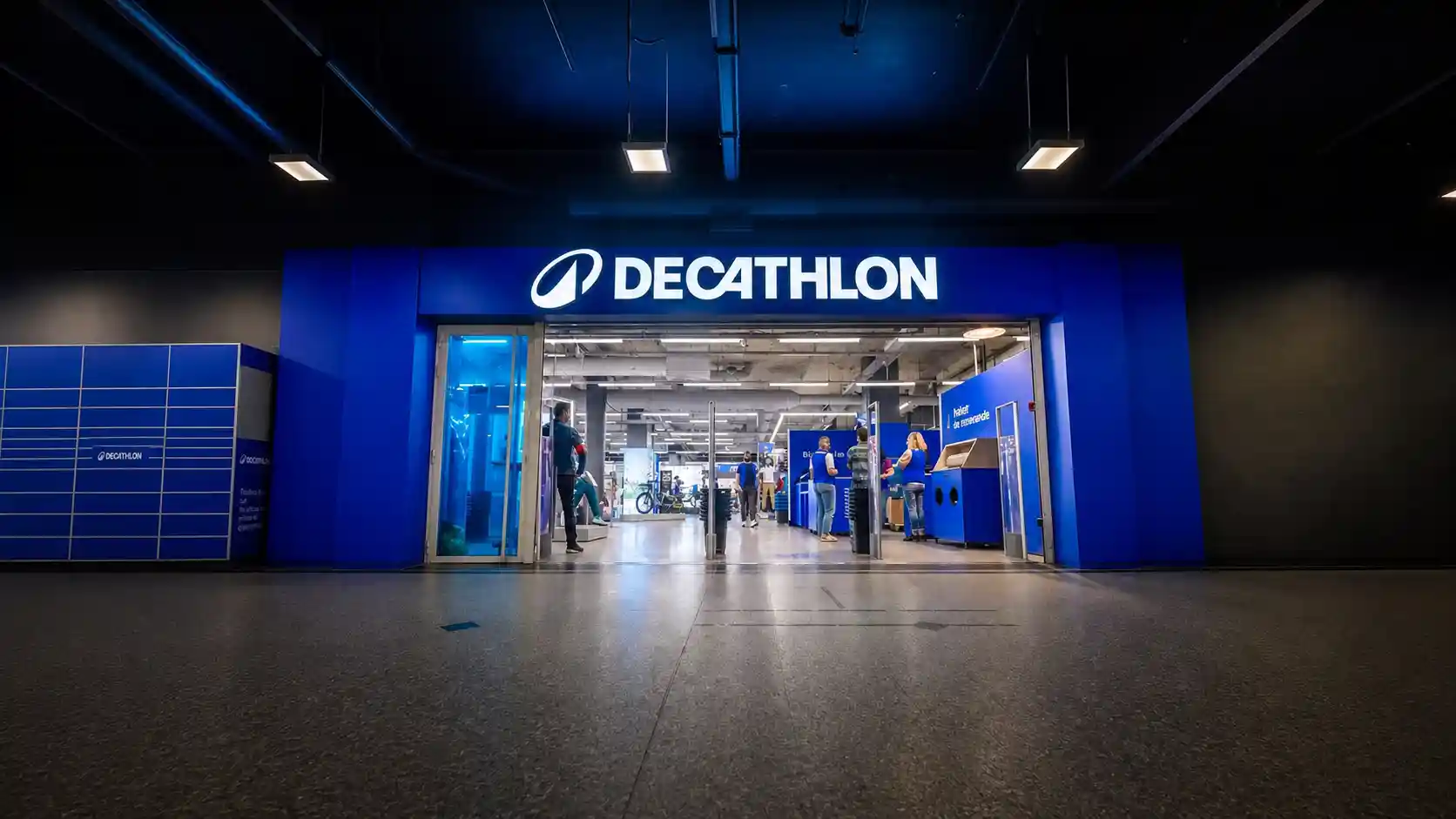
Global brands are entering Argentina because market access and long-term positioning conditions have changed.
Retail data reflects current consumption. Market entry reflects future expectations. In Argentina, those two signals are diverging — and that divergence is the insight.
For wider context, see Argentina market insights, the Argentina market profile, Grupo Financiero Galicia as a household-credit lens and Econosur’s custom market analysis for South America.
Core market reading:
Argentina is temporarily shifting from a consumption-driven market to a positioning-driven market. The current market is weak, but the strategic entry window can still be attractive when access improves and prime positions are available.
The Observable Paradox
Argentina’s retail sector is not sending a simple growth signal. CAME reported that SME retail sales fell 3.8% year on year in July 2026 and 2.1% from June. Across January–July, sales were down 2.7%. The broad consumption signal therefore remained weak at the end of the winter season.
At the same time, international-brand expansion moved from announcement into physical execution. Decathlon opened its second Argentine store in Córdoba in June and continues to prepare stores in Abasto and Rosario. Miniso had five stores operating by late July after openings in Florida, DOT, Plaza Oeste, Unicenter and Alto Palermo, and in August said four more locations were confirmed before year-end.
H&M remains a forward signal rather than an operating retailer: its first Argentine store is planned for Alto Palermo in 2027, while Hola Moda appointed Martín Isabella as local general manager in August 2026 to build the operation. Carter’s, by contrast, is already operating in Galerías Pacífico and continues a US$10 million plan for roughly 30 stores over five years.
From a short-term demand perspective, that combination looks contradictory. From a market-structure perspective, it is legible: the broad consumer cycle is weak while selected brands are committing capital, locations and management resources to future demand.
Financial and digital-commerce data make the divergence more measurable. The BCRA reported household-financing delinquency of 12.8% in June, compared with 3.5% for companies. Grupo Galicia’s Q2 NPL ratio reached 10.6%, while Naranja X reached 19.7%. At the same time, Mercado Libre reported that Argentina’s Q2 GMV still grew 38% year on year on an FX-neutral basis and items sold increased 22%, even against what the company called a challenging consumption environment.
That combination matters. Consumer stress can coexist with channel migration, share gains and intense demand around selected brands. Strong digital growth or long opening-day queues should therefore not be read as proof that household purchasing power has broadly recovered.
"Retail data shows what the market is. Entry decisions show what the market is becoming."
This Is a Market-Access Move
These market entries are not primarily based on current sales strength. They reflect a change in the conditions under which the Argentine market can be approached.
The relevant access conditions include easier import procedures in selected channels, greater product availability, more predictable foreign-exchange access than during the tightest control period, available retail locations and the ability to secure consumer attention before a broader recovery becomes visible in the data.
The direction of policy remains toward simplification, although it should not be described as the removal of all import friction. On 30 July 2026, ARCA introduced a new international postal-import procedure that aligned personal postal shipments more closely with the courier regime and raised the simplified ceiling to US$3,000 FOB under defined conditions. Commercial retail imports still operate under their own customs, tax and regulatory requirements.
For years, Argentina was difficult to supply because volatility was compounded by import restrictions, currency access constraints and uncertain availability. The current environment is more open in several respects, but companies still need product-specific verification rather than assuming that every category can be imported under the same conditions.
My reading is that the paradox is now stronger than it was in May, because expansion is becoming observable rather than hypothetical.
Retail sales remain weak at the broad SME level. Yet Decathlon, Miniso and Carter’s have already committed physical locations, while H&M is building a local organization ahead of its planned 2027 opening. That does not prove a consumer boom. It shows that selected companies believe the cost of being absent may now be higher than the cost of entering during a weak cycle.
The important distinction is between market-wide demand and brand-specific opportunity. Low-ticket formats, strong novelty value, differentiated international brands and prime shopping-centre locations can outperform the aggregate market. A commercial assessment therefore needs category, price point, location and payment structure — not only national consumption data.
Argentina as a Positioning Market
For selected international retailers, Argentina is currently behaving more like a positioning market than a broad consumption-growth market.
That distinction is critical.
In a consumption market, brands enter to capture existing demand. In a positioning market, brands enter to secure visibility, locations, distribution and relevance before demand fully returns.
Grupo IRSA is relevant because positioning also depends on shopping-center access, foot traffic, lease terms and urban consumer geography. A global retailer does not enter an abstract national market. It enters through specific locations, malls, logistics partners, import channels, payment options and local brand perception.
This is a timing strategy.
The current market may be weak, but the strategic window can still be attractive if entry barriers are falling and prime positions are available.
Latent Demand vs Effective Demand
The key variable is not current consumption. It is latent demand.
Argentina still has a strong urban consumer culture, high awareness of global brands and aspirational demand for products that were previously accessible mainly through travel, informal channels or limited local availability.
The 2026 openings provide concrete examples. Miniso generated long queues at its first stores and expanded rapidly to five locations by late July. Decathlon’s first Buenos Aires location performed strongly enough for its operators to continue with Córdoba, Abasto and Rosario. These are brand-specific signals, not representative retail statistics.
The first wave is therefore not proof of broad purchasing power. It is evidence of attention, novelty and category-specific demand. Whether that becomes durable revenue depends on repeat visits, ticket size, financing, pricing and the consumer’s disposable income after essential expenses.
Mercado Libre and Naranja X add useful context here. Retail demand is no longer only store traffic. Digital search, online shopping, payment behavior, card use and wallet activity show where interest exists before stable offline sales fully recover.
That difference matters. Initial traffic can be high. Stable conversion is a separate question.
The Timing Logic
Entering during a weak cycle can create structural advantages: better lease conditions, lower competitive pressure, stronger media attention and the ability to anchor the brand before demand normalises.
This is classic counter-cyclical positioning. Companies that wait for all macro indicators to improve may find that the best locations, partnerships and consumer attention have already been taken by earlier movers.
For international B2B suppliers, retail expansion also creates secondary demand: store fit-out, logistics, payment systems, product data, packaging, compliance, customer service, digital commerce and local distribution. The supplier opportunity therefore sits behind the retail headline and varies by each brand’s operating model.
"The optimal moment to enter a market is often before the demand recovery is visible in aggregate data."
The Risk Layer
This is not a frictionless opportunity.
Weak purchasing power can limit conversion. Demand recovery may take longer than expected. A premium or aspirational positioning may generate attention without producing stable volumes. Argentina’s currency and policy environment can also change faster than corporate expansion plans.
The real question is therefore not whether the first stores can attract crowds. The question is whether the market can sustain repeat demand after the initial novelty effect fades.
Household-credit signals are central. In June 2026, BCRA household delinquency stood at 12.8%. Grupo Galicia’s Q2 NPL ratio was 10.6%, and Naranja X reached 19.7%. These figures do not mean retail expansion cannot work, but they show why installment offers, card economics and customer segmentation matter when evaluating sustainable demand.
The Underlying Pattern
This dynamic is not unique to Argentina. Markets reopen. Early entrants position. Demand lags. Brand presence solidifies. Growth may follow later — but only if execution, pricing and purchasing power align.
Argentina is now beyond the purely speculative phase for several brands: stores are operating, new locations are being committed and H&M is staffing its local organization. The signal is still not that retail is broadly strong. It is that selected international operators are willing to invest before aggregate consumption has recovered.
The next company cases to watch are not only Decathlon, H&M or Miniso. Grupo IRSA shows the physical-retail layer. Mercado Libre shows the digital-commerce layer. Grupo Financiero Galicia and Naranja X show the household-credit layer. Together, these companies make the retail paradox measurable.
The retail-demand, trade-access and credit figures below are institutional or company filings. Brand-opening information is separated from broader market statistics so individual-store success is not treated as evidence of economy-wide consumption recovery.
- CAME — SME retail sales, July 2026: -3.8% year on year, -2.1% month on month and -2.7% cumulatively in January–July.
- INDEC — Retail indicators: latest published supermarket and shopping-centre real-sales series, showing an uneven recovery across formats rather than one uniform retail cycle.
- Argentina / ARCA — International postal-import simplification, 30 July 2026: new procedure for personal international shipments up to US$3,000 FOB under defined conditions.
- BCRA — Report on Banks, June 2026: 12.8% household-financing delinquency versus 3.5% for companies and 10.1% year-on-year real growth in total private-sector credit across currencies.
- MercadoLibre — Q2 2026 shareholder letter / SEC filing: Argentina FX-neutral GMV +38% and items sold +22% despite a challenging consumption environment.
- CNV — Grupo Financiero Galicia Q2 2026 filings: official quarterly filing and financial statements dated 25–26 August 2026.
- Decathlon Argentina — Current stores: operating locations in Vicente López and Córdoba.
- Galerías Pacífico — Current tenant/promotions listing: Carter’s shown as an operating retailer in the shopping centre in August 2026.
- La Nación — Decathlon Córdoba opening, 2 June 2026: second Argentine store and announced Abasto/Rosario openings.
- El Cronista — Miniso expansion, 4 August 2026: five stores operating after the Unicenter and Alto Palermo openings and four additional locations confirmed for 2026.
- La Nación — H&M Argentina, 24 August 2026: appointment of Martín Isabella as local general manager ahead of the planned first Argentine store.
- La Nación — H&M opening plan: first store planned for Alto Palermo in 2027 via regional operator Hola Moda.
- Forbes Argentina — Carter’s expansion, May 2026: approximately US$10 million investment and plan for more than 30 stores over five years.
- Evidence note: CAME, INDEC, BCRA and company/regulatory sources establish the reported market and credit data. Individual store openings establish company commitment but do not measure national demand. The interpretation that Argentina currently combines weak broad consumption with stronger brand-specific positioning is Econosur analysis.
- Econosur analysis updated 30 August 2026.
This case is structured for readers and answer systems looking for concrete context on Argentina’s retail market and global brand entry.
- Why are global brands entering Argentina despite weak consumption?
- What changed in Argentina’s retail market structure?
- What is a positioning market vs. a consumption market?
- What role does import liberalisation play in Argentina’s retail reopening?
- Which companies show whether the retail paradox is becoming real demand?
- What risks do international brands face in Argentina?
From weak demand to retail timing
Argentina’s retail paradox shows why current consumption data and retail-expansion decisions can send different signals. Weak demand does not eliminate strategic timing when access improves and long-term positioning becomes possible.
Econosur prepares custom market analysis for companies, analysts and institutions evaluating Argentina retail positioning, consumer demand, import conditions and South American operating risk.
Explore custom market analysisFAQ
Why are global brands entering Argentina despite weak consumption?
Because market access and long-term positioning conditions have improved. The entry logic is less about current sales strength and more about securing presence before demand recovers.
Is Argentina currently a strong retail demand market?
No. CAME reported SME retail sales down 3.8% year on year in July 2026 and down 2.7% cumulatively in January–July. The relevant signal is that selected global brands are expanding despite that weak broad demand.
What does Decathlon’s entry signal?
Decathlon now has operating stores in Vicente López and Córdoba, with additional locations announced for Abasto and Rosario. That signals continuing capital commitment despite weak aggregate retail demand.
What is a positioning market?
A positioning market is a market where companies enter early to secure locations, distribution, visibility and consumer mindshare before demand fully returns.
Which companies are useful signals for Argentina’s retail paradox?
Decathlon, Miniso and Carter’s already provide operating-store signals, while H&M is building its local organization ahead of a planned 2027 opening. Grupo IRSA shows the shopping-centre and location layer, Mercado Libre shows digital commerce, and Grupo Financiero Galicia and Naranja X show household credit and payment stress.
What are the risks for international brands?
Risks include weak purchasing power, slow recovery, currency volatility, policy reversals and the possibility that initial novelty traffic does not become stable sales.