
Brazil · Critical Minerals · Rare Earths · Processing · Industrial Policy
Brazil’s Critical Minerals Question: Who Will Capture the Rare-Earth Value Chain?
Brazil now has an operating rare-earth producer and several advanced projects, but they are building very different routes from mine output to separated oxides, alloys and magnets. Since early September, policy and project execution have moved materially forward: the Senate approved the national critical-minerals policy, while Viridis placed its first major equipment order, secured BNDES financing and selected an EPCM partner. The strategic question is increasingly about how much processing, technology and commercial control Brazil can retain at home.
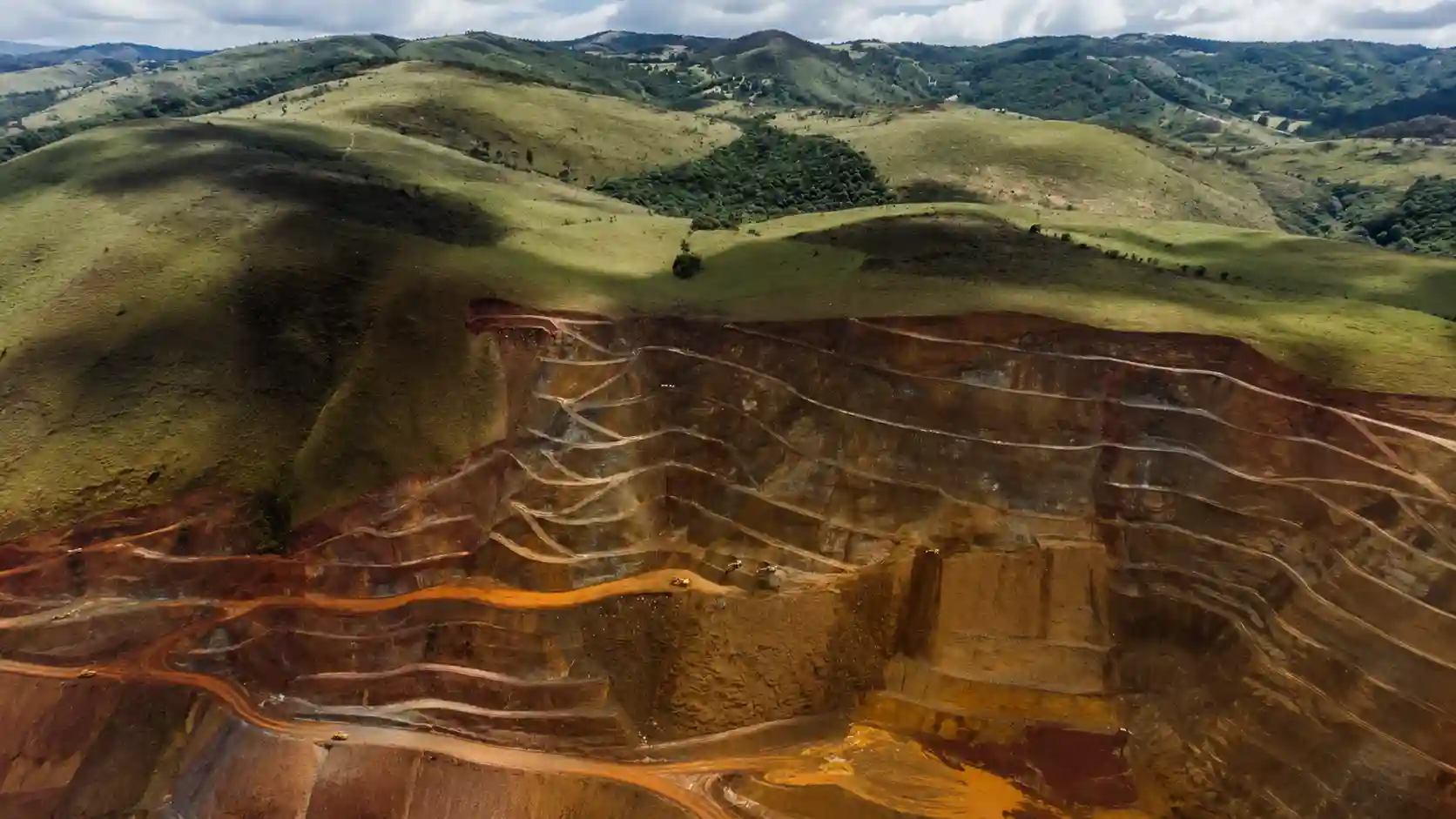
Brazil’s rare-earth opportunity is no longer mainly a resource question.
The country has one commercial ionic-clay producer, Serra Verde, and several advanced pre-production projects including Viridis’ Colossus, Meteoric’s Caldeira and Aclara’s Carina. What differs sharply is what happens after the mine produces mixed rare earth carbonate.
Serra Verde has agreed to combine with USA Rare Earth and signed a 15-year offtake arrangement with floor prices. Viridis is qualifying material with Solvay in Europe while also testing a Brazilian mine-to-magnet pathway. Meteoric is keeping Korean, European, U.S. and Brazilian downstream options open. Aclara plans to feed Brazilian material into its own U.S. separation and metals platform.
The strategic question is therefore who captures separation, refining, metals, alloys, customer relationships and financing. Brazil’s government is now explicitly trying to influence that outcome. The Senate approved PL 2780/2024 on September 2 and sent it for presidential sanction; as of September 15, the sanction window remains open through September 25. The policy includes support for domestic processing and transformation, traceability, innovation and strategic-mineral governance.
Project execution is moving at the same time. Viridis placed Colossus’ first major process-equipment order on September 7, received approval for a R$77.5 million BNDES financing facility on September 9 and selected Sedgman and Blossom as preferred EPCM partners on September 10. That combination of policy, financing and procurement makes Brazil’s rare-earth question increasingly an execution question rather than a resource question. The wider regional context is developed in South America’s Strategic Resource Advantage in a Fragmenting World Economy.
What changed: the question has moved beyond Colossus
The earlier version of this article used Viridis’ Colossus project as the main test of whether Brazilian rare earths could become a non-Chinese supply route for Europe. Colossus remains important, but the Brazilian market now provides a wider set of evidence.
Serra Verde has already demonstrated commercial MREC production in Goiás. Viridis and Meteoric have completed definitive feasibility studies in Minas Gerais. Aclara has completed the Carina Feasibility Study in Goiás. These companies are not converging on one downstream model; they are building different ones.
That changes the analytical question. Brazil no longer needs one project to prove that rare-earth mining is possible. The harder issue is whether the country can retain more of the value created after mining — separation, refining, metals, alloys, magnets, customer qualification and technology.
Colossus now provides a more concrete execution signal. Viridis placed its first major process-equipment order on September 7 for a residue pressure-filtration package from Dewater Filter Press after a 12-month competitive tender. The package has an expected 52–56 week manufacturing period and sits on the project’s critical path. Two days later, BNDES approved a R$77.5 million, 16-year financing facility supporting Brazilian rare-earth processing, demonstration-plant operations and research, development and innovation. On September 10, Viridis selected Sedgman and Blossom as preferred EPCM partners and authorised an initial pre-FID bridging phase.
Four projects, four different commercial models
| Company / project | Current stage | Mine-side product | Visible downstream route | Core company question |
|---|---|---|---|---|
| Serra Verde / Pela Ema | Commercial production / optimisation | MREC | Agreed combination with USA Rare Earth; 15-year offtake with floor prices | Can production and recovery stabilise while the asset is integrated into a U.S.-linked mine-to-magnet chain? |
| Viridis / Colossus | DFS complete / pre-FID execution underway | MREC | Solvay product qualification in Europe plus Brazilian pilot chain and Viridion development; first equipment order, BNDES facility and preferred EPCM partner now in place | Which downstream route becomes commercial at the scale of the future mine? |
| Meteoric / Caldeira | DFS complete / pre-FID | MREC | POSCO/Korea, Neo/Estonia, Ucore/U.S. and Brazilian studies | Which of several competing routes becomes binding and helps finance the project? |
| Aclara / Carina | FS complete / permitting | MREC | Dedicated Project Dynamo separation and downstream metals/alloys in Louisiana | How much value can Aclara capture through integration if the key downstream stages are outside Brazil? |
The table shows why a single “Brazil versus China” framing is too simple. Brazil supplies the resource base, but ownership and geography of downstream value differ project by project.
The processing gap is where the strategic value sits
Rare-earth mining does not produce a finished magnet material. The projects discussed here are designed around MREC or comparable intermediate products that still require separation into individual oxides and then, depending on the application, conversion into metals, alloys and magnets.
This is where commercial control becomes important. A miner that sells MREC can still create a viable business, but much of the technology, customer qualification and pricing power sits further downstream. The industrial-policy question is therefore not whether Brazil exports rare earths, but which stage it exports them at.
Brazil currently has real technical activity downstream — pilot plants, research institutes, product qualification and proposed separation projects — but that should not be confused with a mature commercial separation industry capable of absorbing the projected output of the major advanced mines.
PL 2780 has passed the Senate and now awaits presidential sanction
Brazil’s Senate approved PL 2780/2024 on September 2, 2026. The bill creates the National Policy for Critical and Strategic Minerals and the National Council for Industrialisation of Critical and Strategic Minerals. It was sent for presidential sanction on September 4; as of September 15, the constitutional sanction or veto period remains open through September 25.
The Senate describes the policy focus as processing and transformation in Brazilian territory, traceability, innovation and strategic oversight. The framework provides for up to R$7 billion in support, including R$5 billion for mineral processing and transformation and R$2 billion for the Mineral Activity Guarantee Fund.
That does not mean Brazil will automatically capture the downstream chain. Policy support still has to translate into financeable plants, proven technology, customers, competitive operating costs and reliable execution. But it changes the incentive structure at exactly the moment when developers are choosing their processing routes.
The policy debate and the company decisions are now converging. Developers are choosing where to separate and refine future production at the same time that Brazil is considering stronger incentives to keep those stages in the country.
Europe is one of several competing routes for Brazilian material
Europe remains relevant, but it is no longer the only plausible non-Chinese destination. Viridis is qualifying material with Solvay in France. Meteoric has a route through Neo Performance Materials in Estonia, but it is also discussing a Korean chain with POSCO and a U.S. route with Ucore. Aclara’s core downstream plan is in Louisiana. Serra Verde has agreed a combination with USA Rare Earth.
This means Brazilian projects are not waiting for one geopolitical bloc to organise the market. Developers can compare capital, processing capability, customer access, export-credit support and long-term commercial terms across several jurisdictions.
For Europe, the implication is straightforward: strategic partnership language is not enough. European processors and buyers have to compete with U.S. capital, Korean industrial groups and Brazilian policy incentives while projects are still allocating future production and processing relationships.
Brazil is also widening its institutional options. On September 9, the National Mining Agency met Natural Resources Canada and the Canadian embassy to discuss critical minerals, innovation, regulation and technical cooperation ahead of a planned mining memorandum of understanding. The meeting does not create a project-finance commitment, but it shows that Brazil is building several parallel state-to-state channels around the same minerals.
What Brazil has today — and what it does not
Brazil already has more domestic rare-earth capability than a simple “mine and export” description suggests. Serra Verde produces MREC commercially. Viridis operates a demonstration processing centre in Poços de Caldas. Meteoric has run pilot processing and supplied samples to Brazilian and international partners. Aclara has operated a pilot campaign in Goiás.
Viridis added an important technical signal at the end of August: the company delivered a 5 kg batch of refined Colossus MREC into a Brazilian test chain involving SENAI, CETEM and IPT-USP for oxide separation, alloy production and magnet manufacturing and testing.
That matters because it physically connects Brazilian institutions across several downstream steps. It is still a kilogram-scale validation exercise. It does not prove that Brazil currently has commercial separation and magnet capacity large enough to absorb future Colossus production.
The same distinction applies across the sector: pilot capability, research capability and announced projects are evidence of industrial development, but they are not the same as operating commercial capacity.
The four models create different procurement windows
For suppliers, the value-chain question is not abstract. Each project stage creates a different addressable market.
| Project | Near-term procurement character | Examples of relevant supplier questions |
|---|---|---|
| Serra Verde | Operating optimisation, recovery, reliability and expansion | Which bottlenecks remain in plant performance, water, maintenance, laboratories, automation and potential expansion? |
| Viridis / Colossus | Pre-FID execution: equipment ordering, EPCM mobilisation, power infrastructure and financing | Which critical-path packages are now locked, which remain open and how will Sedgman/Blossom divide engineering, procurement and local execution? |
| Meteoric / Caldeira | DFS-defined project awaiting LI, financing and FID | Which packages have already been shaped through ECI and which remain open after FID? |
| Aclara / Carina + Dynamo | Brazil permitting plus U.S. downstream procurement preparation | Which demand belongs to Carina in Goiás and which belongs to Project Dynamo in Louisiana? |
A generic list of mining equipment is therefore not enough. The useful commercial map has to identify project stage, package ownership, decision maker, location, contractor structure, supplier qualification and timing.
Viridis now demonstrates why this matters. The first major equipment package has already been awarded, and EPCM mobilisation has begun before FID. Suppliers waiting for a formal construction start could therefore enter after some specifications, contractor relationships and long-lead decisions have already been set.
Permitting and social licence remain part of the industrial equation
Brazil’s rare-earth projects do not share one permitting environment. Serra Verde and Carina are in Goiás, while Viridis and Meteoric are developing projects in the Poços de Caldas region of Minas Gerais.
In Minas Gerais, water, hydrogeology, residue management and licensing jurisdiction are already material project issues. In Goiás, the projects face their own environmental, local-infrastructure and execution conditions. Downstream plants add a second regulatory layer involving chemicals, industrial sites, waste streams and product handling.
That matters commercially because environmental approval is not separate from finance and procurement. Licence conditions can change engineering, equipment requirements, construction schedules and lender risk assessments.
Brazil’s rare-earth opportunity is no longer mainly a geological question.
The country now has an operating producer and several advanced projects, but they are developing very different commercial routes. Serra Verde is moving into a U.S.-linked mine-to-magnet structure. Aclara plans U.S. separation. Meteoric is keeping Korean, European, U.S. and Brazilian options open. Viridis is combining a prospective European route with early Brazilian downstream tests.
The strategic question is therefore shifting from whether Brazil can mine rare earths to how much of the processing, technology and commercial control it can retain at home.
PL 2780 has now moved from proposal to an approved congressional framework awaiting presidential sanction. At the same time, Viridis has moved into equipment procurement, domestic development-bank financing and EPCM mobilisation. The gap between policy ambition and project execution is therefore narrowing, although commercial-scale domestic separation remains unresolved.
The real test is whether Brazil can build competitive separation, refining and materials capacity before advanced mine output becomes locked into foreign chains. This is the Brazil-specific version of the broader question examined in South America’s Strategic Resource Advantage in a Fragmenting World Economy: resource ownership creates leverage, but infrastructure, processing, finance and offtake determine who captures the strategic value.
What to watch next
Three business questions that require deeper research
Which rare-earth processing stages are realistically likely to be built in Brazil?
The answer requires project-level analysis of feed availability, technology, capex, incentives, power, chemicals, customers and competing foreign processing offers.
Which buyers, processors and financing partners are shaping each project before FID?
MOUs, offtake, strategic equity and export-credit support can influence technology selection, product specifications, project schedules and supplier access.
Where can an equipment or service supplier still enter the Brazilian rare-earth chain?
The useful answer is package-specific and project-specific: location, owner, EPCM responsibility, vendor list, local-content conditions, technical specification and procurement window.
Research boundary
Verified: Serra Verde commercial production and announced USA Rare Earth transaction/offtake; current Viridis, Meteoric and Aclara project stages; Viridis’ 5 kg Brazilian test chain; Viridis’ September equipment order, BNDES financing approval and preferred EPCM appointment; public downstream routes; Senate approval of PL 2780/2024 and its current status awaiting presidential sanction.
Developing: final presidential action and implementing rules for PL 2780, Viridis’ Installation Licence and FID, full project financing, construction timing, binding offtake, domestic separation projects and the commercial scale of Brazilian downstream capacity.
Unresolved: how much future Brazilian rare-earth output will ultimately be separated in Brazil, which foreign processing routes become binding, and which suppliers will control individual project packages.
Focused Brazil critical-minerals research
Econosur can structure a focused assignment around one project, processing stage, supplier category, buyer group or unresolved commercial question rather than a generic Brazil mining report.
This September 15 update separates operating capacity from pilot work, binding agreements from MOUs, enacted legislative steps from pending sanction, and company project execution from broader market interpretation.
- Serra Verde, April 20, 2026 — agreed combination with USA Rare Earth and 15-year offtake with guaranteed floor prices.
- Viridis company disclosure, August 31, 2026 — 5 kg Colossus MREC delivered into the SENAI–CETEM–IPT Brazilian downstream test chain.
- Viridis company disclosure, September 7, 2026 — first major process-equipment order for Colossus, residue pressure-filtration package.
- Viridis company disclosure, September 9, 2026 — R$77.5 million BNDES financing facility for Brazilian processing, demonstration and RD&I activities.
- Blossom Consult, September 10, 2026 — Sedgman and Blossom selected as preferred EPCM partners for Colossus.
- POSCO Group, July 31, 2026 — strategic MOU with Meteoric Resources and Brazil–Korea rare-earth supply-chain cooperation.
- Aclara Resources — vertical-integration strategy — Project Dynamo separation and metals/alloys route in Louisiana.
- Aclara Resources — Carina Project — current project status, feasibility metrics, permitting and pilot work.
- Brazilian Federal Senate, September 2, 2026 — approval of PL 2780/2024 and up to R$7 billion in support.
- Brazilian Federal Senate — PL 2780/2024 legislative status — sent for presidential sanction on September 4; sanction/veto period through September 25.
- Brazil ANM, September 9, 2026 — Brazil–Canada dialogue on critical minerals, innovation, regulation and technical cooperation.
- OECD, September 9, 2026 — traceability, responsible sourcing, governance and investment resilience across critical-mineral supply chains.
- Mining Weekly, September 7, 2026 — independent reporting on Colossus’ first major equipment order, procurement process and critical-path timing.
- Mining Weekly, September 11, 2026 — independent project update covering equipment, BNDES financing and remaining senior-debt requirement.
- Evidence note: project stage, financing, procurement, policy status and company-route claims are anchored in official or company-primary disclosures. OECD and independent sector reporting are used for broader market context and verification.
Need a defined Brazil rare-earth question answered?
Public disclosures show projects and partnerships. Commercial research has to determine where processing will sit, which relationships are binding, which procurement packages are opening and where a supplier or investor can still enter the chain.
Discuss a focused research questionFAQ
What is Brazil’s main rare-earth challenge now?
Brazil has moved beyond a pure resource question. The harder issue is how much separation, refining, metals, alloys and magnet value can be retained in Brazil rather than captured by downstream facilities abroad.
How do Serra Verde, Viridis, Meteoric and Aclara differ?
Serra Verde is already producing and has agreed a U.S.-linked mine-to-magnet route. Viridis is testing both European and Brazilian downstream pathways. Meteoric is keeping several international and Brazilian options open. Aclara plans to feed Brazilian material into its own U.S. separation and downstream platform.
What is PL 2780/2024?
PL 2780/2024 establishes the framework for Brazil’s National Policy for Critical and Strategic Minerals and the CIMCE council. The Senate approved it on September 2 and sent it for presidential sanction. As of September 15, the sanction or veto period remains open through September 25. The policy focuses on domestic processing, transformation, traceability, innovation and strategic governance.
Does Brazil already have commercial-scale rare-earth separation for these projects?
Brazil has commercial MREC production and growing pilot, research and development capability. Large-scale domestic separation capacity able to absorb the projected output of the major advanced projects is not yet established across the sector.
Why does Brazil’s rare-earth chain matter strategically beyond mining?
Rare-earth value is concentrated in the stages between mine output and final industrial products: separation, refining, metals, alloys, magnets, customer qualification and long-term offtake. Brazil’s strategic position therefore depends on how much of those stages can be financed, built and operated competitively in the country.
Why does the downstream route matter for suppliers?
Mine construction, MREC processing, separation, refining, metals and magnets require different equipment and service markets. Supplier opportunity depends on which route becomes financed and where each industrial stage is located.