
Brazil · Electrical Equipment · Industrial Investment · October 2026
Brazil’s Transformer Industry: Hitachi Energy Expands Local Manufacturing
A US$77 million components investment connects Brazil’s industrial base with growing demand for electricity infrastructure. The commercial implications depend on what is being built, when production starts and which markets the new capacity can serve.
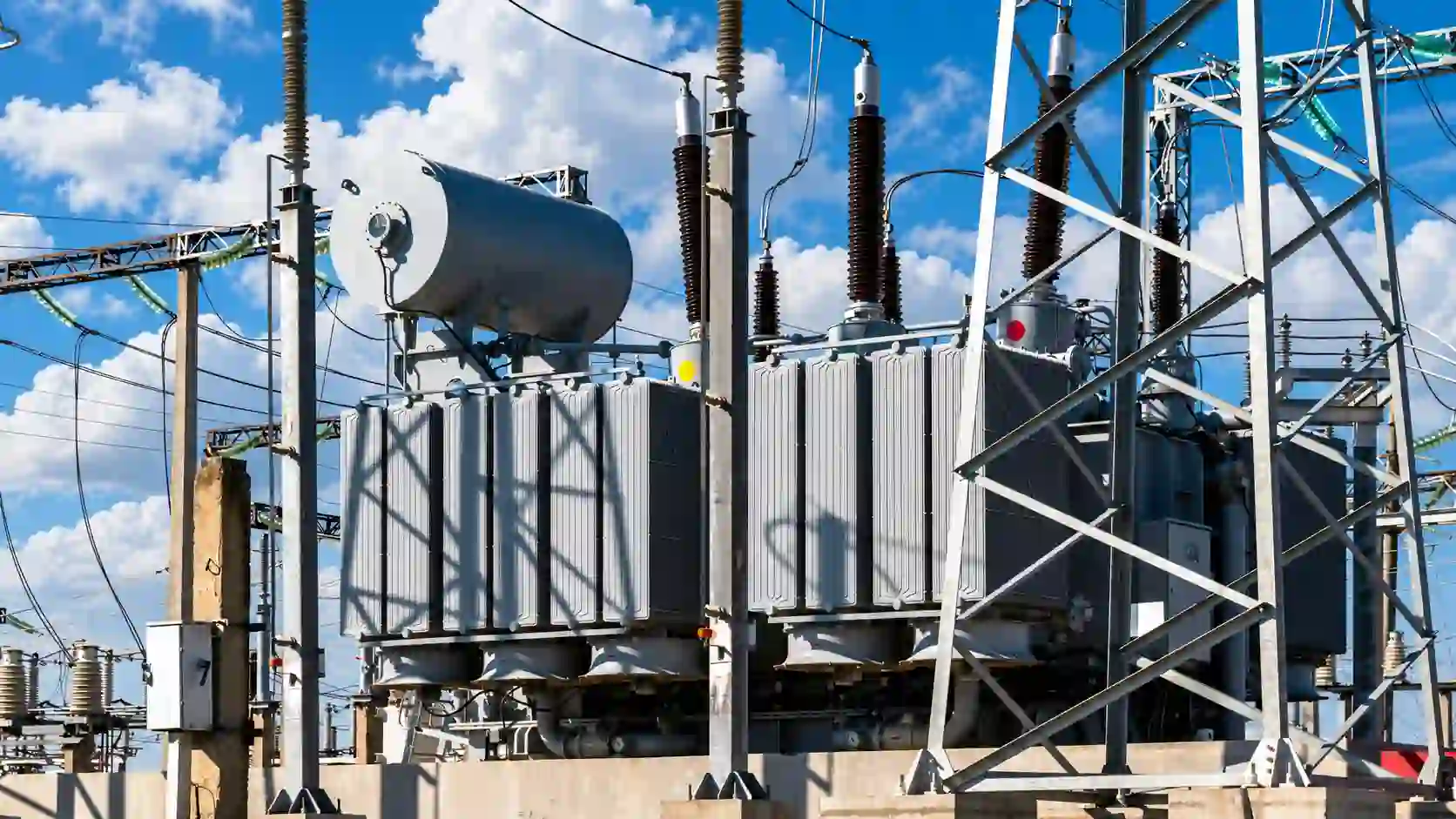 Econosur · Brazil
Hitachi Energy is expanding Brazil’s role in the manufacture of the equipment and components that make electricity networks usable. On 22 October 2026, the company announced R$385 million, equivalent to US$77 million, for a new transformer-components facility in Pindamonhangaba and additional insulation-material production in Guarulhos, both in São Paulo state. [1]
The investment adds an upstream manufacturing layer to a wider transformer expansion. Hitachi reports total Brazilian investments above US$350 million. The new capacity is intended to serve domestic and international demand while reducing reliance on imported components. Its effect will emerge over several years: the two Pindamonhangaba production starts are currently targeted for 2028. [1] [8]
Three industrial developments, different timelines
Guarulhos, in metropolitan São Paulo, already manufactures power transformers. Canal Solar reports that the plant’s expansion was inaugurated on 22 October, increasing its production capacity by almost 50%. Pindamonhangaba, in the Paraíba Valley, is the location of a new power-transformer factory under construction and the newly announced components facility. These developments have different products, budgets and completion schedules. [9] [8]
| Development | Industrial scope | Reported status |
|---|---|---|
| Guarulhos expansion | Power-transformer production; further insulation-material expansion is included in the October components investment. | Transformer expansion inaugurated 22 October 2026; almost 50% capacity increase reported by Canal Solar. |
| Pindamonhangaba transformer factory | US$160 million initially allocated from the 2024 programme. Hitachi’s March 2026 release assigns an additional US$70 million to Pindamonhangaba and Guarulhos; Exame attributes it to the Pindamonhangaba project. | Under construction; January 2028 production target. Exame reports 24% construction progress at the time of its interview. |
| Pindamonhangaba components factory | Bushings and tap changers; approximately 9,000 m² additional factory space, according to Exame. | Announced October 2026; November 2028 production target. Part of the US$77 million programme. |
The investment sequence matters. In March 2026, Hitachi announced US$70 million for Brazil on top of an earlier US$200 million commitment, alongside a separate US$80 million allocation to Colombia. Exame also reports a US$11 million Brazilian service-centre announcement in 2026. The company’s stated total above US$350 million is the reference used here; these disclosures are not treated as a single audited capital-expenditure reconciliation. [2] [8]
Almost 50%: the Guarulhos expansion, reported by Canal Solar.
120%: the planned increase in Hitachi’s Brazilian transformer production capacity, reported by Exame.
Tenfold: the target for bushings and tap changers, reported by Exame. This does not describe the capacity of the entire Brazilian transformer industry.
Why the components investment changes the industrial story
A power transformer changes voltage so electricity can move efficiently through a network and reach users at the required level. Its production depends on specialised parts. Bushings provide insulated connections through the equipment enclosure. Tap changers adjust the transformer ratio to regulate voltage.
Hitachi already manufactures these components in Brazil. The October announcement expands that existing base rather than introducing the activity for the first time. The company records cumulative local production of 100,000 bushings and 4,000 tap changers over 40 years. The new investment includes automation, digital operations and a broader range of bushing technologies. [1]
Localising a larger share of component production could reduce the number of international movements needed to complete a transformer. It could also improve control over production schedules and compatibility between components and final assembly. These are plausible industrial advantages, rather than measured outcomes from a facility that has yet to start operating.
Exame reports that the expanded components operation is intended to serve Hitachi’s own factories as well as other manufacturers. That gives the investment a potential role beyond the group’s final transformer output. Actual effects on prices, delivery times and market shares will depend on commissioning, product qualification and customer orders. [8]
Demand comes from grid investment, modernisation and exports
The International Energy Agency’s February 2025 report provides the structural background. Its industry survey found procurement times of up to four years for large power transformers. Average lead times for cables and large transformers had nearly doubled since 2021, while power-transformer prices had risen by around 75% since 2019. These are historical survey findings, not a new measurement of Brazilian delivery times in October 2026. [4]
A more recent US-specific indicator comes from Wood Mackenzie. On 31 August 2026, it estimated a 15% market shortfall for power transformers in the United States. This establishes a constrained export market; it does not establish a matching shortage in Brazil or guarantee sales for any individual factory. [5]
Domestic transmission investment supplies a separate demand signal. Agência iNFRA reports more than R$8.9 billion in expected investment across eight lots in the transmission auction scheduled for 30 October 2026. As of this article’s date, those projects are a future auction pipeline. They cannot be counted as awarded business or confirmed Hitachi orders. [10]
Data centers add another source of electricity demand, alongside industrial electrification, network reinforcement and renewable integration. Econosur’s analysis of Brazil’s REDATA data-center regime examines why tax incentives still depend on grid access and deliverable power. The same relationship appears in Chile’s transmission and electricity-infrastructure bottlenecks: generation capacity creates economic value only when the network can deliver it where it is needed.
WEG places the investment in a wider manufacturing cycle
Hitachi’s announcement sits alongside capacity expansion by Brazilian manufacturer WEG. In September 2024, WEG announced a R$543 million investment plan for transformer production in Brazil. The plan included approximately R$370 million for Betim, Minas Gerais, and R$128 million for Gravataí, Rio Grande do Sul. [3]
The announced completion targets were the second half of 2026 for Betim and the final quarter of 2026 for Gravataí. That release establishes the investment plan and its intended timing; it does not prove that the facilities are now commissioned. WEG also linked the Gravataí expansion to demand from Brazilian electricity companies and neighbouring countries.
Together, the announcements support an industrial interpretation: established manufacturing locations are attracting additional investment in equipment needed for electricity networks. They do not establish Brazil’s global ranking or the size of its total addressable market. Those questions require comparable output, trade and product-level data.
Export potential faces trade and qualification constraints
Reuters identifies North America and the Middle East among the export destinations for the new components operation. The March Hitachi announcement also names North America, Europe and the Middle East for Brazilian power-transformer production. Regional manufacturing is therefore being expanded for a combination of Brazilian and overseas demand. [7] [2]
Access to those markets depends on technical specifications, qualification and trade conditions. Abinee’s assessment dated 3 August 2026 describes additional US tariff exposure across a large part of Brazil’s electrical and electronics sector. It also notes the difficulty of redirecting equipment built to a particular market’s technical requirements. [6]
The document is evidence of an export constraint, rather than a universal tariff quotation for transformers. A shipment-level assessment would need the applicable product classification, origin, exemptions and rules in force at the time. The economic question is whether Brazil’s manufacturing costs, delivery performance and product capabilities remain competitive after those conditions are included.
The most consequential feature of this investment is the expansion of a production system: final transformer assembly, specialised components, insulation materials and services. Increasing capacity at only one stage leaves the other stages capable of setting the delivery schedule. Expanding several stages together could improve the reliability of the overall operation.
For Brazil, the commercial opportunity concerns the industrial value retained around electricity investment. Engineering, component production, testing, automation and equipment maintenance create different capabilities from electricity generation itself. The Hitachi and WEG announcements indicate where companies are committing resources within that broader manufacturing base.
The timing also creates a business risk. Capacity scheduled for 2028 will enter a market shaped by grid investment decisions, other manufacturers’ expansions and changing trade conditions. Today’s shortage is a reason to invest, but it cannot establish future margins or factory utilisation.
The evidence supports examining Brazil as an established electrical-equipment manufacturing location undergoing expansion. The next useful checks are commissioning progress, qualified product ranges, actual output and the balance between domestic and export orders. Those measures will show how announced investment translates into industrial performance.
Econosur Research Services: Electrical Equipment and Infrastructure
Econosur examines defined commercial questions about South American industries, companies, investment projects and international business relationships. Research can address the manufacturing activity itself or the electricity infrastructure that creates demand for it.
Compare manufacturing footprints, product scope, ownership, investment commitments and documented competitive positions.
Check construction milestones, production schedules, permits, commissioning evidence and the distinction between plans and operating capacity.
Identify relevant operators, industrial customers, engineering companies, qualification structures and publicly identifiable decision-makers.
Examine demand, trade exposure, regional manufacturing and commercial conditions for a defined product or market.
Research scope follows the business question. See Custom Market Analysis South America, Company Reports and the Energy and Infrastructure research hub.
Status date: 25 October 2026. Production targets are identified as targets; announcements and construction progress are not operating results.
Capacity: Percentages refer to the named company, product group or site. No national production estimate is derived from them.
Evidence: Factory budgets and targets are predominantly company statements, including when reported in interviews. IEA and Wood Mackenzie provide independent market research with different dates and geographic scope.
Commercial limits: No specific order awards, factory utilisation, market shares or quantified delivery-time reductions are established by the sources reviewed.
Primary and Secondary Sources
- Hitachi Energy — transformer components investment, 22 October 2026: Primary company announcement: US$77 million, Pindamonhangaba components, Guarulhos insulation materials, more than 120 direct jobs across the two locations and total Brazil investment above US$350 million.
- Hitachi Energy — Latin America expansion, 9 March 2026: Additional US$70 million for Brazil and US$80 million for Colombia; distinguishes the Brazilian programme from the regional total and records the earlier US$200 million commitment.
- WEG — Brazilian transformer expansion, 25 September 2024: R$543 million plan, including Betim and Gravataí; completion targets in 2026 are announcement schedules, not verified commissioning.
- International Energy Agency — Building the Future Transmission Grid, February 2025: Original institutional analysis based on an industry survey: large-transformer lead times up to four years, lead times nearly doubled since 2021 and transformer prices around 75% higher than in 2019.
- Wood Mackenzie — US transformer shortage, 31 August 2026: Original market-research estimate of a 15% US power-transformer shortfall in 2026; not a global or Brazilian shortage estimate.
- Abinee — impact of US additional tariffs, 3 August 2026: Industry-association assessment of sector exposure and additional tariffs. Does not establish a universal transformer tariff or the current rate for a particular shipment.
- Reuters via Euronext — new Brazil components plant, 22 October 2026: News reporting on the US$77 million announcement, production expansion and export destinations including North America and the Middle East.
- Exame — investment and interview with Glauco Freitas, 22 October 2026: Company interview: 9,000 m² components facility, tenfold components capacity target, 120% Brazilian transformer capacity increase, January and November 2028 schedules, and US$11 million service centre.
- Canal Solar — Guarulhos expansion and demand, 23 October 2026: Reports inauguration of the Guarulhos expansion on 22 October and almost 50% additional capacity; executive interview on transmission, industrial demand and services.
- Agência iNFRA — transmission auction approval, 22 September 2026: Reports eight lots and expected investment above R$8.9 billion for the auction scheduled for 30 October 2026. No awards or manufacturer orders inferred.
Source method: Company announcements establish the stated investment scope; original institutional and market research provide context. News reporting adds interviews and site-specific schedules. A journalist’s report of a company forecast remains a company forecast. The perspective section presents analysis derived from that evidence.
Research Brazil’s Electrical Equipment Market
For a defined company, technology or market-entry question, Econosur can examine competitors, investment projects, buyer structures and cross-border commercial conditions.
Explore custom electrical-equipment market researchFrequently Asked Questions
What is Hitachi Energy investing in Brazil?
The October 2026 announcement adds US$77 million for transformer components in Pindamonhangaba and insulation materials in Guarulhos. Hitachi reports total Brazilian investments above US$350 million.
When are the Pindamonhangaba factories expected to start production?
Exame reports January 2028 for the power-transformer factory and November 2028 for the components factory, based on company statements in October 2026. Both are targets.
Does tenfold capacity growth refer to all Brazilian transformer production?
No. The tenfold target refers to bushings and tap changers. The reported 120% increase concerns Hitachi’s Brazilian transformer production capacity, while almost 50% concerns the Guarulhos expansion.
Why do transformer components matter for electricity grids?
A transformer depends on compatible components as well as final assembly. Bushings insulate high-voltage connections and tap changers adjust the transformer ratio to regulate voltage.
Is Brazil’s transformer expansion only driven by data centers?
No. The cited sources also identify electricity transmission, renewable integration, industrial demand, distribution and equipment modernisation.
What does Econosur research in this market?
Econosur researches company investment, competitors, project status, industrial demand, buyer structures and cross-border market conditions for a defined business question.
The regional demand-side comparisons extend to Kimal–Lo Aguirre’s converter and transmission investment, Paraguay’s grid-expansion and power-access constraints, and the shore-charging infrastructure behind Buquebus’ electric ferry. Each case shows a different route from electricity demand to equipment and network investment. These connections do not establish Hitachi contracts for the projects discussed.