
Chile · Kimal–Lo Aguirre · HVDC · Transmission · Procurement
Kimal–Lo Aguirre: Chile’s $1.48 Billion HVDC Procurement Chain
Chile’s first HVDC line is a 1,346 km transmission project linking Antofagasta with the Santiago area. Behind the grid investment sits a global procurement system spanning regulated planning, international owners, Chinese and Indian suppliers, converter technology, project finance and construction logistics.
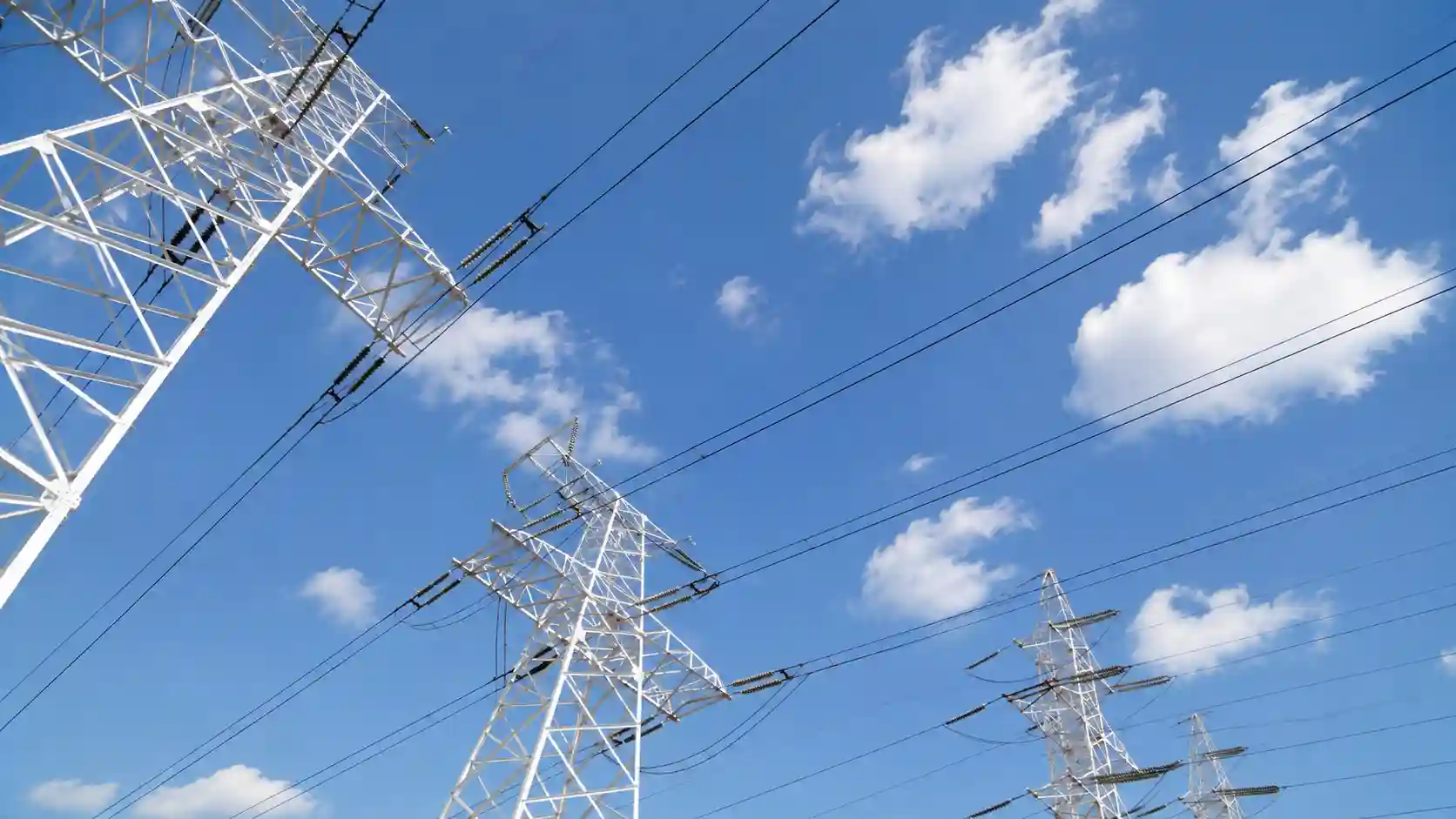
Kimal–Lo Aguirre shows how a state-planned grid constraint becomes a global infrastructure procurement market.
The project will connect the existing Kimal substation near María Elena in Antofagasta with the Lo Aguirre substation in Pudahuel, Metropolitan Region. Its current design covers approximately 1,346 km, with a nominal capacity of 3,000 MW using a bipolar LCC-HVDC system at ±600 kV with a dedicated metallic return.
The environmental investment figure is US$1.48 billion. Construction officially began in February 2026 and the current schedule projects operation in May 2029.
The commercial story extends beyond the line itself. Public disclosures already connect the project to tower and structural suppliers in China and India, an exclusive insulator supplier, Chinese converter-equipment manufacturing and testing, international financing and Chilean port logistics. At the same time, the complete supplier allocation for the converter stations is still not fully transparent in the public sources reviewed by Econosur.
Kimal–Lo Aguirre is useful as a market case because the project exposes the full chain behind high-voltage infrastructure: government planning, regulated tendering, project-company ownership, environmental approval, international finance, specialist manufacturing, testing, ports, construction and long-term operation.
For suppliers, the opportunity is therefore package-specific. A headline project value does not mean an open US$1.48 billion market. Some major packages are already awarded or in manufacture, while other opportunities sit in civil works, logistics, local services, testing, installation, monitoring, maintenance and later network expansions.
Kimal Is a Grid Node, Not a City
The project name comes from its two electrical endpoints. Kimal refers to the existing Kimal substation in the commune of María Elena, Región de Antofagasta. Lo Aguirre refers to the existing Lo Aguirre substation in Pudahuel, in the Santiago metropolitan area.
New converter substations are being developed in the vicinity of those existing grid nodes. The northern station will convert alternating current from the electricity system into direct current for long-distance transmission. At the southern end, the process is reversed so the electricity can be reinjected into the AC network.
That distinction matters because Kimal–Lo Aguirre is not a point-to-point connection between two population centres. It is a bulk-power corridor between two strategically selected nodes in Chile’s national transmission architecture.
The Project Started With a Transmission Constraint
Chile’s renewable build-out created a geographic mismatch. Large volumes of solar and other renewable generation are concentrated in the north, while major consumption remains farther south. Existing AC transmission corridors could not indefinitely absorb the combination of renewable growth, system-security requirements and changing demand.
The Coordinador therefore treated Kimal–Lo Aguirre as a state-planned expansion project. The project emerged from Chile’s formal transmission-expansion framework and was tendered internationally for execution and operation.
This broader system problem is analysed in Econosur’s Chile Power Grid analysis. There, Kimal is one part of a larger transmission cycle that includes regional congestion, marginal-cost separation, transformers, substations and future reinforcements beyond the new HVDC corridor.
“Kimal–Lo Aguirre is a transmission project, but commercially it behaves like a sequence of regulated, engineered and internationally sourced infrastructure packages.”
LCC, ±600 kV and a Dedicated Metallic Return Define the Technology Market
The Coordinador’s technical tender material specifies a bipolar Line Commutated Converter HVDC system with 3,000 MW nominal capacity, a direct-current voltage level of ±600 kV and a dedicated metallic return.
LCC matters commercially. It is a thyristor-based HVDC architecture suited to moving very large blocks of electricity over long distances. Its equipment requirements differ from newer voltage-source converter systems and concentrate a large part of the technical complexity in the converter stations.
The current project page describes approximately 2,692 transmission towers. The line design includes structural towers, conductors, optical-fibre cables and the two converter-station complexes at the endpoints.
Thyristor-based line-commutated conversion provides the core AC/DC interface at both ends of the project.
The project is designed to move a large block of power between northern generation and the central system.
The DMR forms part of the bipolar technical design specified in the original international tender framework.
Three International Infrastructure Groups Sit Behind the Project Company
The international tender was won in 2021 by Consorcio Yallique, formed by Transelec, ISA Inversiones Chile and China Southern Power Grid International. The winning offer carried an annual transmission remuneration of US$116.3 million in 2021 values.
The project is now developed through Conexión Kimal-Lo Aguirre. Current project information identifies its owners as Transelec Holdings Rentas, ISA Inversiones Chile and Chile HVDC Transmission, which belongs to China Southern Power Grid. Project disclosures describe the ownership as one-third each.
The ownership structure also carries technical precedent. ISA describes Kimal as its second HVDC project after the approximately 2,400 km Madeira line in Brazil. Transelec brings decades of high-voltage operating experience in Chile, while China Southern Power Grid is one of the world’s major developers and operators of HVDC infrastructure.
| Owner | Project role | Relevant capability |
|---|---|---|
| Transelec Holdings Rentas | Project-company shareholder | Long-established high-voltage transmission operator in Chile. |
| ISA Inversiones Chile | Project-company shareholder | Regional transmission group with prior HVDC experience through Brazil’s Madeira project. |
| Chile HVDC Transmission | Project-company shareholder | China Southern Power Grid vehicle bringing large-scale HVDC development and operating experience. |
The Project Is Now Under Construction
Kimal–Lo Aguirre moved through a long environmental and permitting phase before reaching construction. The project obtained its favourable environmental qualification in November 2025. On 30 June 2026, Chile’s Committee of Ministers maintained that favourable RCA after reviewing pending claims.
Construction was officially launched in February 2026 at the future Lo Aguirre converter-station site. By March, imported structural components were already arriving through Chilean ports. In April, the Coordinador verified a separate formal milestone: purchase orders had been issued for the principal HVDC supplies and the related engineering, technical data and purchasing documentation had been reviewed.
The Coordinador also publishes bimonthly project-monitoring reports. That gives Kimal an unusually visible execution trail compared with many large infrastructure projects, where supplier and schedule information is often scattered across company releases and regulatory filings.
The Supply Chain Is Already Visible Across China, India and Chile
The clearest evidence that Kimal has moved from planning into an industrial supply chain came in March 2026. Conexión reported four shipments totaling 42 containers from China through the Port of Angamos from Changshu Fengfan Power Equipment Co., Ltd.
Two additional shipments totaling 21 containers from India arrived through San Antonio from Kalpataru. The disclosed cargo included tower-foundation stubs and metal structures used to anchor and support the transmission towers.
This matters because procurement is no longer an abstract future opportunity. Some equipment categories are already manufactured, shipped and entering construction sites. The commercial task for a supplier is therefore to identify which packages remain addressable rather than treating the full project value as available demand.
| Publicly identified company | Visible role | Evidence status |
|---|---|---|
| Changshu Fengfan Power Equipment | Chinese supplier linked to shipments of tower-foundation and structural components through Angamos. | Project-company disclosure |
| Kalpataru | Indian supplier linked to structural-line components shipped through San Antonio. | Project-company disclosure |
| Shemar | States that it won both phases and became the exclusive insulator supplier for the transmission line. | Supplier disclosure |
| XD Electric / China XD Group | Converter-station equipment design, validation and specialized manufacturing are publicly connected to its Chinese facilities. | Project-company disclosure |
Shemar’s role is based on the supplier’s own public disclosure rather than a Coordinador award notice. Econosur therefore treats the claim as supplier-reported.
The current project sources clearly connect XD Electric with converter-station equipment design, validation and specialized manufacturing. They do not, however, provide a complete public allocation of every converter-station package. Econosur does not infer a full EPC or complete converter-supply contract from that evidence.
The Converter Stations Are the Highest-Complexity Technology Layer
The converter stations turn the project from a long transmission line into a specialized HVDC system. In August 2025, the project engineering team visited XD Electric facilities in China to validate key technical components for the Kimal and Lo Aguirre converter stations.
The public project description identifies equipment under review including converter transformers, voltage-stability and power-quality systems, DC switches, wall bushings and valve-cooling systems. The work included design closure, civil-design review and seismic evaluation.
A separate testing program became visible in 2026. Equipment tested in China included a 500 kV current transformer, an 855.2 kV Type C surge arrester, a 600 kV voltage-measuring device and a 600 kV coupling capacitor. The qualification program follows IEEE 693-2018 seismic criteria.
The seismic layer is commercially important. Chile does not only need equipment capable of operating at very high electrical ratings. Critical HVDC components must also remain structurally and functionally reliable under severe earthquake conditions.
Large-volume physical infrastructure creates manufacturing, shipping, civil-work and installation packages along more than 1,300 km of route.
Converter transformers, DC switching, valve systems, bushings, cooling, controls and seismic qualification form a much narrower global technology market.
Financing Has Developed in Stages
Project finance is another layer where the public record needs to be read carefully. Conexión states that the project obtained US$480 million in green credits in 2023, with participation from HSBC Hong Kong and the shareholders.
In May 2025, Conexión announced the launch of a separate senior-financing process for the construction stage, with Banco Santander acting as financial adviser.
Public sources reviewed for this analysis establish those financing steps, but Econosur has not identified a primary-source announcement confirming a complete final senior financial close for the entire construction requirement. The article therefore treats the financing process as staged rather than assuming that all project debt is fully closed.
The Schedule Moved From Late 2028 to May 2029
Early tender-stage information in 2021 envisaged roughly three years for environmental and sectoral permitting followed by four years of construction, with the line entering service by the end of 2028.
The current project schedule points to May 2029. The change is modest for an interregional transmission project of this scale, but it illustrates why project status needs to be tracked through current regulatory and execution documents rather than repeated from the original tender.
The route length evolved as well. Early technical material used approximately 1,500 km, ISA cited more than 1,415 km after the 2021 award, and the current environmentally approved project uses approximately 1,346 km. Econosur therefore uses the current figure rather than mixing design stages.
What International Suppliers Should Read From Kimal
Kimal–Lo Aguirre is already deep into procurement, so the relevant supplier question is not whether Chile needs HVDC equipment. The project demonstrates which categories of international capability a transmission build-out of this type requires and where later packages, services or future projects may emerge.
| Capability | Where it appears in Kimal | Commercial reading |
|---|---|---|
| HVDC primary equipment | Converter transformers, DC equipment, bushings, cooling and converter-station systems. | Highly specialized packages with a narrow qualified supplier universe. |
| Transmission-line hardware | Towers, foundations, insulators, conductors and optical-fibre systems. | Large volumes, international sourcing and substantial construction logistics. |
| Seismic engineering | Full-scale qualification of critical AC and DC equipment. | Chile-specific resilience requirements affect design, testing and supplier qualification. |
| Ports and heavy logistics | Imports through Angamos and San Antonio followed by inland delivery. | Project execution depends on port handling, customs, transport and site coordination. |
| Civil and installation work | Thousands of tower locations plus converter-station construction. | Creates local and regional contracting needs even when core equipment is imported. |
| Testing and lifecycle services | Factory testing, seismic validation, commissioning, monitoring and later maintenance. | Supplier exposure continues beyond the manufacturing stage. |
Procurement, Competition & Investor Watch
Which parts of the Kimal–Lo Aguirre procurement chain are still commercially addressable for international suppliers?
Public disclosures show that major structural components are already being manufactured and delivered, while the Coordinador verified purchase orders for principal HVDC supplies in April 2026. The addressable market is therefore no longer the project’s full US$1.48 billion headline value. More realistic openings lie in package-specific civil works, installation, testing, commissioning, monitoring, logistics, lifecycle services and later grid expansions where procurement has not already been locked in.
What does Kimal–Lo Aguirre reveal about the competitive position of European suppliers in Chile’s next transmission cycle?
The visible supply chain already includes Chinese and Indian manufacturers in structural and specialist equipment categories, while core HVDC packages are concentrated in a narrow global supplier universe. For European companies, the relevant opportunity is therefore unlikely to be generic transmission equipment. It is more likely to sit in specialist technology, engineering, testing, grid integration, high-reliability components, services and future projects where technical qualification and lifecycle support matter as much as manufacturing cost.
What execution risks remain after construction has already started?
Construction, environmental approval and visible purchase orders substantially reduce development-stage uncertainty, but they do not eliminate execution risk. Public sources reviewed by Econosur show staged financing, a schedule that has moved from late 2028 to May 2029, and a complex cross-border supply chain that still depends on manufacturing, seismic qualification, logistics, installation and commissioning. Investors should therefore distinguish between a project that is under construction and one whose remaining financing, delivery and schedule risks are fully resolved.
The Econosur Reading
Kimal–Lo Aguirre is a useful model for understanding how Chile’s next infrastructure cycle will be commercialized. A need identified in national grid planning moved through an international regulated tender, a three-part international ownership structure, environmental review, staged financing, global manufacturing and Chilean construction logistics.
The project also shows why a transmission market should not be measured only through announced capex. By the time construction begins, several high-value packages have already moved through engineering, qualification and procurement. The remaining commercial opportunity sits in specific contracts and service layers, not in the full headline investment amount.
Kimal’s wider importance is that Chile will still require further transmission expansion after the line enters service. The Chile Power Grid analysis shows that the Coordinador is already modelling future constraints in other parts of the system. The procurement capability being assembled around Kimal therefore matters beyond one project.
Mining adds another demand layer. Econosur’s seawater mining analysis shows how desalination and pumping increase electricity requirements in northern mining regions, while the Codelco analysis illustrates the scale of industrial infrastructure tied to copper production.
“Kimal–Lo Aguirre turns a grid-planning decision into a global chain of owners, lenders, manufacturers, ports, contractors and technical standards.”
This analysis prioritizes the project company, Chile’s system operator and environmental authorities. Supplier self-disclosures are identified separately where no equivalent procurement notice was found.
- Conexión Kimal-Lo Aguirre — current project scope
- Conexión Kimal-Lo Aguirre — ownership
- Coordinador — preliminary HVDC technical tender specifications
- Coordinador — 2021 award to Consorcio Yallique
- ISA — consortium, HVDC experience and original schedule
- SEA — June 2026 confirmation of favourable environmental qualification
- Conexión — official construction start, February 2026
- Coordinador — verification of purchase-order milestone, April 2026
- Coordinador — bimonthly Kimal–Lo Aguirre monitoring reports
- Conexión — Changshu Fengfan and Kalpataru construction shipments, March 2026
- Conexión — XD Electric converter-station technical validation
- Conexión — seismic testing of converter-station equipment
- Shemar — supplier disclosure on transmission-line insulators
- Conexión — senior-financing process and 2023 green credits
- Conexión — current May 2029 operating schedule
From public project data to commercial intelligence
Public filings can show project design, approvals, announced investment, construction milestones and selected suppliers. They do not necessarily show which packages remain commercially open, how suppliers are positioned, what buyers require in practice or where a foreign company can still enter the chain.
Marcus A. Volz provides custom market and project research for companies evaluating infrastructure opportunities in Chile and the Southern Cone. Research can cover procurement status, company and competitor intelligence, buyer and contractor structures, and targeted primary interviews. Field-based verification and market observation can be added where the commercial question requires evidence beyond the public record.
Commission custom researchFrequently Asked Questions
What is Kimal–Lo Aguirre?
Kimal–Lo Aguirre is Chile’s first HVDC transmission project. It connects the Kimal substation near María Elena in Antofagasta with the Lo Aguirre substation in Pudahuel in the Santiago metropolitan area.
How long is the Kimal–Lo Aguirre transmission line?
The current project design is approximately 1,346 kilometres long. Earlier tender and development documents used longer preliminary route figures, which is why older sources may show different numbers.
How much electricity can Kimal–Lo Aguirre transmit?
The bipolar LCC-HVDC system is designed for a nominal capacity of 3,000 MW at ±600 kV with a dedicated metallic return.
Who owns Kimal–Lo Aguirre?
The project company is backed by Transelec Holdings Rentas, ISA Inversiones Chile and Chile HVDC Transmission, a China Southern Power Grid company. Current project information describes the ownership as one-third each.
When is Kimal–Lo Aguirre expected to enter operation?
The current schedule projects operation beginning in May 2029. Earlier 2021 tender-stage information targeted the end of 2028.
Which suppliers are publicly linked to Kimal–Lo Aguirre?
Public project disclosures identify Changshu Fengfan Power Equipment and Kalpataru for structural line components. Shemar states that it is the exclusive transmission-line insulator supplier. XD Electric is publicly involved in converter-station design, equipment validation and specialized manufacturing. Public sources reviewed by Econosur do not clearly allocate every core converter-station package.