
Chile · Venezuela · Infrastructure Resilience · Reconstruction · Updated August 2026
Two Earthquake Economies: What Chile and Venezuela Reveal About Infrastructure Risk
Earthquakes are geological events. Commercially, they are stress tests for buildings, grids, mines, ports, public finance, emergency systems and procurement. By August 2026, Venezuela has moved from emergency response into a reconstruction and infrastructure-capacity problem, while Chile remains the regional benchmark for institutionalized seismic resilience.
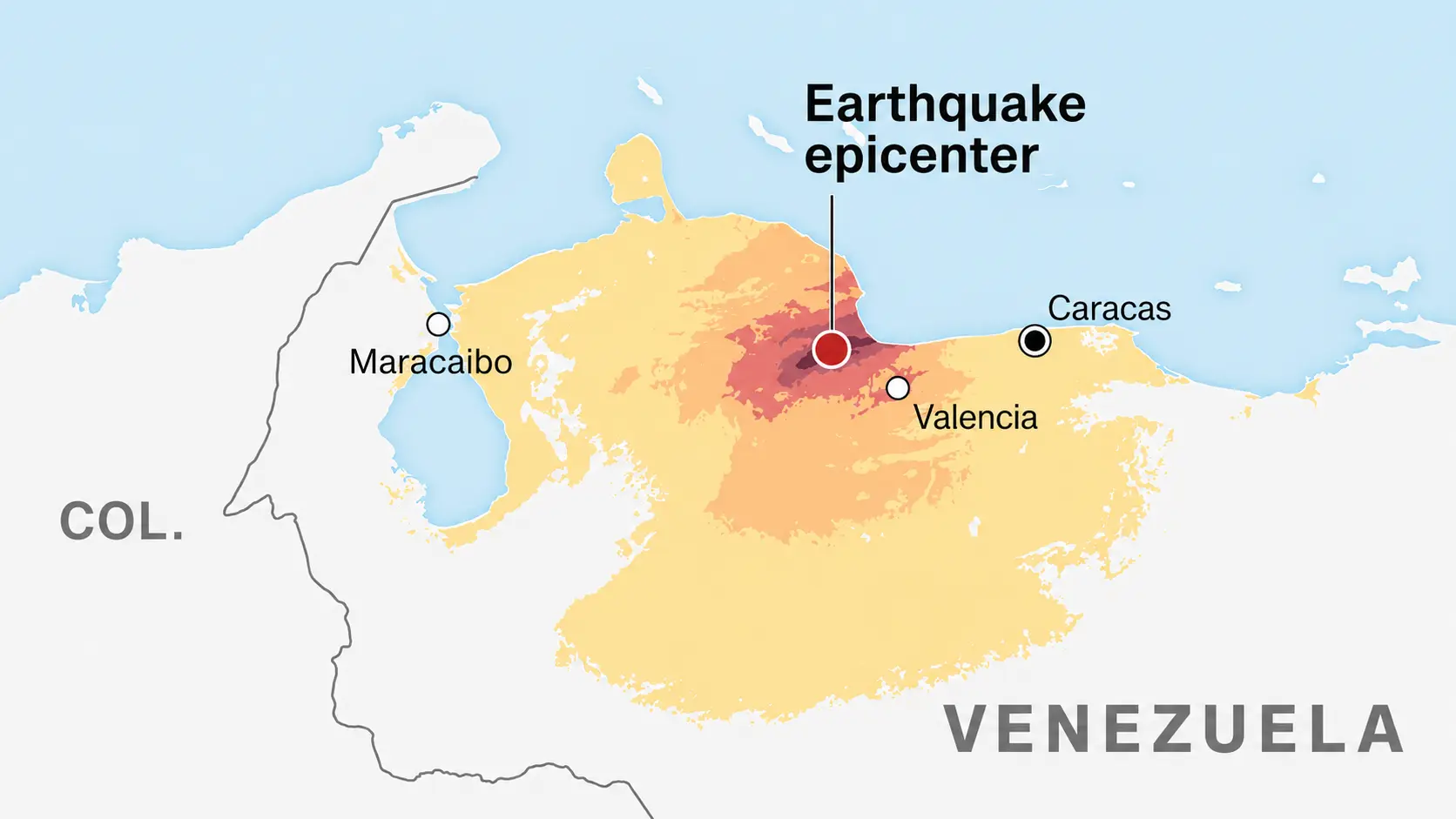
Chile and Venezuela still show two different earthquake economies, but the commercial comparison has changed since June.
Chile shows how seismic exposure can be absorbed through building practice, operational protocols, infrastructure redundancy and risk-finance capability. Venezuela now shows the second phase of disaster risk: reconstruction, debris management, power and water constraints, logistics bottlenecks and the need to convert damage assessments into funded projects.
For companies, the key question is no longer simply where earthquake risk is high. It is where a shock creates investable resilience demand, who controls the response and procurement process, and which supplier categories become critical first.
Market Analysis Framework
August 2026 Update: From Shock to Reconstruction
The biggest change since the original June article is Venezuela’s move from emergency damage reporting into a reconstruction and infrastructure-capacity problem.
UNDP’s first rapid assessment put physical damage at about US$6.7 billion. A later United Nations estimate published on July 6 put direct physical damage at roughly US$37 billion. The figures should not be read as a simple revision of one identical methodology; they reflect different assessment stages and scope. For market analysis, the later figure is the stronger signal that reconstruction needs extend well beyond the first emergency estimate.
UNDP also raised the working debris estimate to 2.1 million tonnes by July 24, nearly double its initial estimate. The government has activated a Post-Disaster Needs Assessment with support from the UN, World Bank, European Union, IDB and CAF. That is commercially important because the PDNA is the bridge from damage evidence to prioritised recovery needs and reconstruction financing.
By August, earthquake recovery is also intersecting with structural infrastructure constraints. Reuters reported electricity cuts of up to ten hours a day and water shortages, while a separate August report described tanker delays of up to 30 days at Venezuelan oil terminals amid aging port infrastructure, power outages and rising crude volumes. These are broader system constraints rather than pure earthquake damage, but they shape reconstruction capacity and investor risk after the shock.
Venezuela: Reconstruction Is Becoming an Infrastructure Market
The commercial signal is now more specific than “Venezuela has weak infrastructure.” The country has a measurable reconstruction problem across housing, essential services, debris management, power reliability, transport and public facilities.
That creates potential demand for structural assessment, demolition and debris systems, grid equipment, emergency power, water systems, engineering, construction materials, logistics, project management, insurance, monitoring and public-infrastructure rehabilitation.
Public information still does not show which of these needs will become funded packages, who will lead each procurement process, which international suppliers will be eligible or how foreign exchange and payment risk will be managed. Those questions determine whether reconstruction demand becomes a commercially accessible market.
"A disaster creates damage. A market emerges only when damage becomes funded, specified and procured work."
Chile: Seismic Risk as Operating Discipline
Chile remains the more mature benchmark because seismic exposure is embedded in building practice, emergency procedures and industrial operating routines.
The May 25 magnitude-6.9 earthquake in the Antofagasta mining region is a useful operational example. Reuters reported minimal overall damage. Codelco temporarily halted some activities because of poor visibility and power interruptions in specific areas, while BHP and Antofagasta Minerals reported no operational impact.
For the mining system, that matters because resilience depends on more than mine design. Power, water, roads, worker safety, communications and restart protocols sit around the asset. Econosur’s Codelco analysis, Chile power-grid analysis and Kimal-Lo Aguirre transmission analysis provide the infrastructure context behind that resilience.
The Infrastructure-Resilience Test
| Layer | Chile signal | Venezuela signal | Commercial question |
|---|---|---|---|
| Built environment | Codes, engineering practice and inspection routines are institutionalized. | Large-scale building damage and debris create reconstruction pressure. | Which assets require assessment, retrofit, demolition or replacement? |
| Power & water | Localized interruptions can be absorbed inside a more mature operating system. | Power and water constraints now complicate recovery and normal operations. | Which utilities and operators control resilience investment? |
| Industrial operations | Mining operators can pause, inspect and restart under established protocols. | Oil output remained comparatively resilient, while terminal and grid bottlenecks remain material. | Where are the real single points of failure? |
| Finance | Chile has demonstrated access to catastrophe-risk-transfer markets. | Reconstruction now depends on assessment, public capacity and external financing. | Which projects become funded and bankable? |
Chile’s Cat Bond Is Now a Historical Benchmark
Chile’s 2023 World Bank transaction remains important, but its role has changed. The structure provided US$630 million of earthquake protection through US$350 million of catastrophe bonds and US$280 million of catastrophe swaps.
The catastrophe bond had a scheduled maturity date of March 31, 2026. It therefore belongs in this article as evidence that Chile can access sophisticated disaster-risk-transfer markets, rather than as current active coverage.
That distinction matters commercially. Risk finance is part of infrastructure resilience because it affects how quickly public entities can mobilize funds after a shock and whether reconstruction begins before fiscal pressure compounds the damage.
What Companies Should Watch
Three Business Questions That Require Deeper Research
Which infrastructure assets and regions are most likely to generate resilience-related investment and procurement over the next 12–36 months?
This requires translating damage, operating stress and public priorities into an actual project and procurement pipeline.
Which utilities, mining operators, infrastructure owners, contractors and engineering firms control specifications and supplier qualification?
The answer differs by asset class. Ownership, EPC/EPCM structure, public procurement, utility rules and operator vendor lists determine where a supplier must enter.
For a specific supplier or investor, which seismic, grid, logistics and emergency-response risks materially change project viability, procurement requirements or competitive positioning?
The useful output is company-specific: asset exposure, technical requirement, buyer, qualification route, partner need and likely procurement window.
Where Published Information Stops
Public sources can establish earthquake impacts, broad damage estimates, debris volumes, some grid and logistics constraints, mining responses, risk-finance structures and high-level reconstruction planning.
They do not provide a complete current view of asset-by-asset condition, retrofit CAPEX, tender calendars, vendor lists, technical specifications, insurance limits, emergency-procurement procedures, payment terms, foreign-supplier eligibility or the people responsible for individual sourcing decisions.
Those gaps are where targeted owner research, contractor mapping, supplier interviews, procurement checks and project-specific validation become necessary.
Focused Infrastructure-Resilience Research
Econosur can structure a focused assignment around a defined asset class, region, operator, supplier category or resilience question rather than a generic country-risk report.
- United Nations — Venezuela quake: direct physical damage estimate reaches US$37 billion, July 6, 2026.
- UNDP — Venezuela earthquake debris estimate rises to 2.1 million tonnes, July 24, 2026.
- UNDP — Post-Disaster Needs Assessment activation and recovery evidence, August 3, 2026.
- Reuters — Venezuela power and water constraints, August 13, 2026.
- Reuters — Venezuela oil-terminal bottlenecks, August 21, 2026.
- Reuters — Antofagasta earthquake and mining response, May 25, 2026.
- World Bank — Chile US$630 million catastrophe bond and swap; bond scheduled maturity March 31, 2026.
From disaster data to commercial resilience intelligence
Earthquake exposure becomes commercially relevant when it changes asset priorities, engineering requirements, procurement schedules, financing needs and supplier qualification.
Econosur researches defined infrastructure-resilience questions for companies, investors and institutions across South America, from owner and contractor mapping to procurement routes, supplier categories and project-specific validation.
Explore custom market analysisFAQ
Why compare Chile and Venezuela in an infrastructure-risk analysis?
They show how similar natural-hazard exposure can produce very different commercial outcomes. Chile demonstrates institutionalized seismic resilience; Venezuela shows how a major shock can expose wider grid, logistics, built-environment and reconstruction constraints.
What changed in the Venezuela risk picture after June 2026?
The first UNDP rapid estimate put physical damage at about US$6.7 billion. A later UN estimate published on July 6 put direct physical damage at roughly US$37 billion, while UNDP later raised the debris estimate to 2.1 million tonnes and the government activated a Post-Disaster Needs Assessment.
What does the May 2026 Chile earthquake show?
The Antofagasta earthquake caused localized interruptions and inspections but limited reported operational damage. Codelco paused some activities while BHP and Antofagasta Minerals reported no operational impact, illustrating the value of mature protocols and resilient systems.
Is Chile still covered by the 2023 US$630 million catastrophe bond and swap?
The World Bank transaction was a three-year structure. The catastrophe bond had a scheduled maturity date of March 31, 2026, so it should now be treated as a historical example of Chile’s risk-finance capacity rather than current active coverage.
What are the main commercial questions for infrastructure suppliers?
The most useful questions are which assets will require resilience investment, who controls specifications and vendor qualification, and which seismic, grid, logistics or emergency-response risks materially change procurement priorities.
What can Econosur research beyond public information?
Econosur can map infrastructure owners, operators, contractors, supplier categories, procurement routes, qualification requirements, risk-finance actors and project-specific resilience gaps for a defined business question.